
Majority of Lynchburg, Virginia Manufacturing Plant Workers File Petition to Oust Chemical Union Bosses
Parker O-Rings & Engineered Seals employees petition to end union’s near 50-year “representation” at facility
Lynchburg, VA (February 17, 2026) – Natera Carter, an employee of Parker O-Ring & Engineered Seals, has filed a petition with the National Labor Relations Board (NLRB) seeking a “decertification” election to remove the International Chemical Workers Union Council (ICWUC) Local 845C labor union from her workplace. The petition was filed with free legal aid from National Right to Work Foundation staff attorneys.
The NLRB is the federal agency responsible for enforcing the National Labor Relations Act, a task that includes administering elections to install (or “certify”) and remove (or “decertify”) unions.
Carter’s petition was signed by the majority of her 51 coworkers, far exceeding the amount required to trigger an NLRB-supervised secret ballot decertification vote. The workers’ election has been scheduled for February 25th, 2026, and will include all hourly production, lab technicians, maintenance, shipping, receiving, and quality inspection employees at the Lynchburg facility. According to the petition, the union gained monopoly power over the workplace in 1980.
“The workers who decided to bring the union into this workplace are no longer here and now it is time for current employees to have our say,” stated Carter. “We’ve seen the union up close and now we’re joining together to remove it.”
Virginia is one of the 26 states with Right to Work protections that safeguard workers by making union affiliation and dues payment strictly voluntary. Yet, even in Right to Work states, union officials can impose exclusive bargaining control upon all workers in a workplace, even those who oppose the union.
“Virginia’s popular Right to Work law means union officials cannot have workers fired for refusing to join or pay dues to the union, but even in Virginia, workers are forced under union monopoly ‘representation’ they don’t want and never asked for,” commented National Right to Work Foundation President Mark Mix. “This case and the many others like it are a reminder that in addition to the overwhelming majority of workers who choose to remain nonunion, countless others are currently forced under a union monopoly they oppose. That’s just plain wrong.”
Walking Dead Production Driver Defends Victory over Teamsters for Unlawful Discrimination in Rigged “Hiring Hall”
Virginia-based driver asks National Labor Relations Board to order notification and compensation of other victims of Teamsters’ discriminatory scheme
Washington, DC (August 27, 2025) – Terringus Walker, a transportation employee for Virginia-based movie and television productions like Walking Dead, is asking the National Labor Relations Board (NLRB) to uphold the central findings of an administrative law judge’s (ALJ) favorable ruling in his case against the Teamsters union.
Walker charged Teamsters Local 592 union officials with retaliating against employees who previously filed Unfair Labor Charges against the union. Walker is receiving free legal aid from National Right to Work Legal Defense Foundation staff attorneys.
The ALJ’s ruling validated Walker’s charge that a “hiring hall” arrangement, run by Teamsters Local 592 union bosses, constituted illegal discrimination under the National Labor Relations Act (NLRA). Union bosses failed to use objective criteria for referring production drivers, instead privileging senior union members over junior members and nonmembers.
Union officials, who negotiated exclusive hiring contracts for certain productions, have denied Walker work since 2020. The ALJ decision now under review by the NLRB agreed with Walker that union officials violated the NLRA by operating a hiring hall in an arbitrary manner without objective criteria, ignoring their duty of fair representation to all unit members.
In a separate filing, Walker asked the NLRB to extend the ALJ’s compensation order to all workers the Teamsters discriminated against, and ensure all affected workers are properly notified of the ruling. Despite acknowledging that the hiring arrangement maintained separate, discriminatory lists that affect hundreds of workers, the ALJ ruling puzzlingly ordered compensation only for Walker himself, ignoring NLRB precedent.
Union Officials Use Suspect Legal Arguments to Attempt to Justify Discrimination
Teamsters Local 592 lawyers have filed their own documents asking for the NLRB to overturn the ALJ decision largely on the grounds that union officials were, somehow, not responsible for the discrimination and retaliation, even though it occurred within the union’s exclusive hiring hall.
Walker’s newest filing refutes the union’s claim. The Teamsters union officials argue that they did not discriminate against Walker, but evidence presented during the trial shows that they and hiring managers used various excuses and false pretenses to string Walker along without ever bringing him back to work, even while other employees quickly gained work.
Union officials are also attempting to pass all responsibility to the production companies. But union officials built the hiring and referral process. It was their duty to include objective criteria in the referral process, which they failed to do.
Foundation staff attorneys have recently aided several groups of workers in efforts to challenge malfeasance by Teamsters union officials or vote the union out completely. These include movie transportation workers in Texas, truck drivers in California and Georgia, Frito-Lay warehouse workers in Ohio, metalworkers in San Diego, nurses in Michigan, and many more. Across the country, workers’ desire to exercise their right to vote out unpopular union bosses is increasing: Worker-filed petitions seeking union decertification votes are up more than 50% from 2020, according to NLRB data.
“Teamsters officials have demonstrated time and again that they are willing to discriminate against workers who don’t subject themselves to union officials’ rules, as well as those who expose their unfair practices,” commented National Right to Work Foundation President Mark Mix. “Production drivers like Mr. Walker who are ready, willing, and able to help bring stories to the silver screen shouldn’t be ignored for exercising their right to free association, or for holding unions accountable to their duty of fair representation.
“We’re humbled by Mr. Walker’s courage to stand up for his rights and encouraged by his victory before the administrative law judge. Further, we are eager to defend that victory and fight for his fellow workers who don’t play by the Teamsters’ illegal and unfair rules,” added Mix.
Hundreds of OH Workers Exit Teamsters as Union Bosses’ Amazon ‘Strike’ Stunt Flounders
The following article is from the National Right to Work Legal Defense Foundation’s bi-monthly Foundation Action Newsletter, March/April 2025 edition. To view other editions of Foundation Action or to sign up for a free subscription, click here.
Teamsters O’Brien tried to take away Christmas cheer, but couldn’t take away Ohio workers’ freedom

Daniel Caughhorn led a scrappy group of his coworkers in voting Teamsters bosses out of their workplace, a scrap metal processing facility in Toledo, OH. They also beat back union bosses’ attempts to overturn their vote.
WASHINGTON, DC – This past December, Teamsters President Sean O’Brien announced the “largest-ever strike against Amazon,” claiming that thousands of workers would heed his strike order, abandon their delivery vehicles and hit the picket lines. O’Brien threatened that Christmas gifts would be delayed unless his demands were met.
Those who took O’Brien’s rhetoric at face value would have thought he was a veritable Grinch stealing Christmas (even though he tried to explain it was Amazon’s fault that the strike had to occur). But even reporting from pro-Big Labor outlets soon revealed that the order was more story than substance: According to Labor Notes, only about 600 employees obeyed the strike order despite Teamsters honchos claiming to “represent” some 7,000 to 10,000 Amazon employees.
Even the small number who did cease work on O’Brien’s command are arguably not employees of Amazon, and likely aren’t under Teamsters control at all: They work primarily for independent contractors that carry out some delivery functions for Amazon. Even if O’Brien’s dubious theory claiming he had control over those delivery drivers was correct, it would have only affected 10 out of the roughly 110 Amazon centers nationwide. Still, National Right to Work Foundation staff attorneys put a special legal notice out to delivery drivers nationwide informing them of their rights if they were illegally coerced to strike.
Workers Defeat Cynical Attempt by Teamsters to Overturn Vote
The December 2024 Teamsters “strike” against Amazon may go down in history as a strained publicity stunt. But the more significant Teamsters news that month was that hundreds of Foundation-backed workers across Northern Ohio took real action by voting to free themselves from unwanted Teamsters officials’ so-called “representation.”
Dusty Hinkle, an employee for Frito-Lay’s plant in Wooster, OH, and Daniel Caughhorn, a worker at scrap metal firm Omnisource’s facility in Toledo, OH, paved the way to freedom for their coworkers by submitting petitions asking the National Labor Relations Board (NLRB) to hold votes among their coworkers to remove or “decertify” Teamsters unions at their facilities. They submitted these in October and August 2024, respectively, with free Foundation legal assistance.
Because Ohio lacks Right to Work protections for its private sector workers, Teamsters officials enforced contracts that required Hinkle, Caughhorn, and their colleagues to pay union dues or fees as a condition of keeping their jobs. In contrast, in Right to Work states, union membership and all union financial support are strictly voluntary.
The NLRB, the federal agency that enforces federal labor law, administered decertification votes at Hinkle’s and Caughhorn’s workplaces after finding that both petitions contained enough employee signatures to trigger a vote under agency rules. Even though clear majorities of workers voted against Teamsters union control in both votes, Teamsters union officials filed objections alleging misconduct by Frito-Lay and Omnisource management in an attempt to overturn the election results.
However, in both cases regional NLRB officials tossed the union objections and certified the workers’ votes. The Omnisource and Frito-Lay employees — over 430 in total — thereby cut all ties with the Teamsters unions. Now both sets of employees are free both of union bosses’ forced-dues demands and their ability to impose one-size-fits-all contracts on the workplace.
In the final months of 2024, Foundation attorneys assisted a number of other workers from across industries with efforts to remove unwanted Teamsters officials. From just October to December 2024, truck drivers from Georgia, California, Virginia, and New Jersey successfully booted out Teamsters union officials or initiated removal efforts with Foundation aid. These cases came despite increasingly hostile rulemaking from the outgoing Biden Administration’s NLRB bureaucrats in 2024, which undid key Foundation-backed reforms that made it easier for workers to request decertification elections.
Teamsters Schemes to Steal Christmas and Workers’ Rights Both Failed
“Sean O’Brien’s Christmas publicity stunt might have made him seem like an attempted stealer of gifts and holiday cheer, but these two Foundation cases from Ohio demonstrate what Teamsters bosses really are: stealers of workers’ rights and freedom,” commented National Right to Work Foundation Vice President Patrick Semmens.
“That Teamsters officials in both these cases attempted to disenfranchise workers who opposed them shows why workers are turning against their power-hungry tactics, and why American workers deserve the Right to Work choice to withhold financial support from union officials who aren’t serving their interests.”
Trucking Company Employees Force Out Teamsters Union Bosses in Virginia, Similar Ouster Could Soon Come in New Jersey
Efforts come in the face of anti-Right to Work push by Teamsters bosses and Teamster-backed Biden-Harris Labor Board rule change to disenfranchise workers
Washington, DC (November 1, 2024) – In two recent efforts by trucking employees across the Eastern Seaboard to free their workplaces from Teamsters union officials, a group of Virginia workers has successfully forced out Teamsters Local 322, while a similar effort by Philadelphia-area workers against Teamsters Local 500 continues.
Nelson Chilson, a truck driver for NAPA Transportation in Richmond, VA, submitted a petition earlier this month in which the majority of his coworkers asked the National Labor Relations Board (NLRB) to hold a vote to remove Teamsters Local 322 union bosses. Just days earlier, a group of Philadelphia-area Penske Logistics truckers led by Shawn Shute also filed a petition demanding the same kind of NLRB election to oust Teamsters Local 500. Both Chilson and Shute are receiving free legal aid from National Right to Work Legal Defense Foundation staff attorneys.
The NLRB is the federal agency responsible for enforcing federal labor law, which includes administering elections to install (or “certify”) and remove (or “decertify”) unions. Both Chilson’s and Shute’s decertification petitions contain employee signatures well in excess of the threshold needed to trigger a decertification vote under the National Labor Relations Act (NLRA).
All truck drivers from each facility are eligible to vote in each union decertification election. However, in Chilson’s workplace it appears that Teamsters Local 332 officials are attempting to flee the workplace ahead of a worker vote, as they’ve filed a “disclaimer of interest” renouncing their desire to continue their power over the Virginia workers, perhaps to avoid a ballot-box embarrassment.
As for the Philly-area Penske Logistics workers, their continued effort is higher stakes because they are based in New Jersey, a state that lacks Right to Work protections. In such states, union officials can enforce contracts that require workers to pay dues or fees as a condition of getting or keeping a job. In contrast, in Right to Work states like Virginia, union membership and dues payment are strictly voluntary.
However, in both Right to Work and non-Right to Work jurisdictions, union bosses can use their monopoly bargaining privileges to subject all workers in a unionized facility to one-size fits-all contracts – even those who voted against the union or otherwise oppose it. A successful decertification election ends union officials’ forced-dues and monopoly bargaining powers in a workplace.
Pro-Union Boss Shifts in NLRB Policy Will Disenfranchise Workers
Despite an over 50% increase in the number of decertification petitions filed annually over the last four years, Biden-Harris NLRB bureaucrats recently repealed key reforms (known collectively as the “Election Protection Rule”) that made it easier for workers to request decertification elections. Now, union officials can manipulate often-unproven allegations against management (also known as “blocking charges”) to stop workers from exercising their right to vote out a union, and can also stop workers from requesting decertification elections to challenge a union’s ascent to power via “card check,” an unsecure process that bypasses the traditional secret-ballot vote process.
The policy shift comes as Teamsters union officials push a vehemently anti-Right to Work political agenda, despite nearly 80% of current union members expressing support for the idea that workers should never be forced to join or pay dues to a union as a condition of employment, according to a recent Rasmussen Media Group poll.
“Despite union boss rhetoric touting ‘solidarity,’ there has never been more evidence that union officials – Teamsters officials especially – are pushing an agenda out of touch with the rank-and-file,” commented National Right to Work Foundation President Mark Mix. “Whether it’s continued worker attempts to decertify Teamsters unions, the Teamsters hierarchy ignoring the rank-and-file’s preferences regarding policies and candidates, or worker-filed unfair labor practice charges against Teamsters militants, employees are growing wise to the fact that the chiefs of their union may prize power and influence far above their individual rights.
“The Foundation’s cases for Mr. Shute and Mr. Chilson are just a couple examples of workers declaring their independence from unwanted union officials, and Foundation attorneys will stand with them and many other workers even in the face of opposition from both union chiefs and hostile federal bureaucrats,” Mix added.
Tire Wholesaler Employees Force RWDSU Union Out of 15 Locations
The following article is from the National Right to Work Legal Defense Foundation’s bi-monthly Foundation Action Newsletter, January/February 2024 edition. To view other editions of Foundation Action or to sign up for a free subscription, click here.
RWDSU union officials abandon 500+ employee unit ahead of vote at tire wholesaler
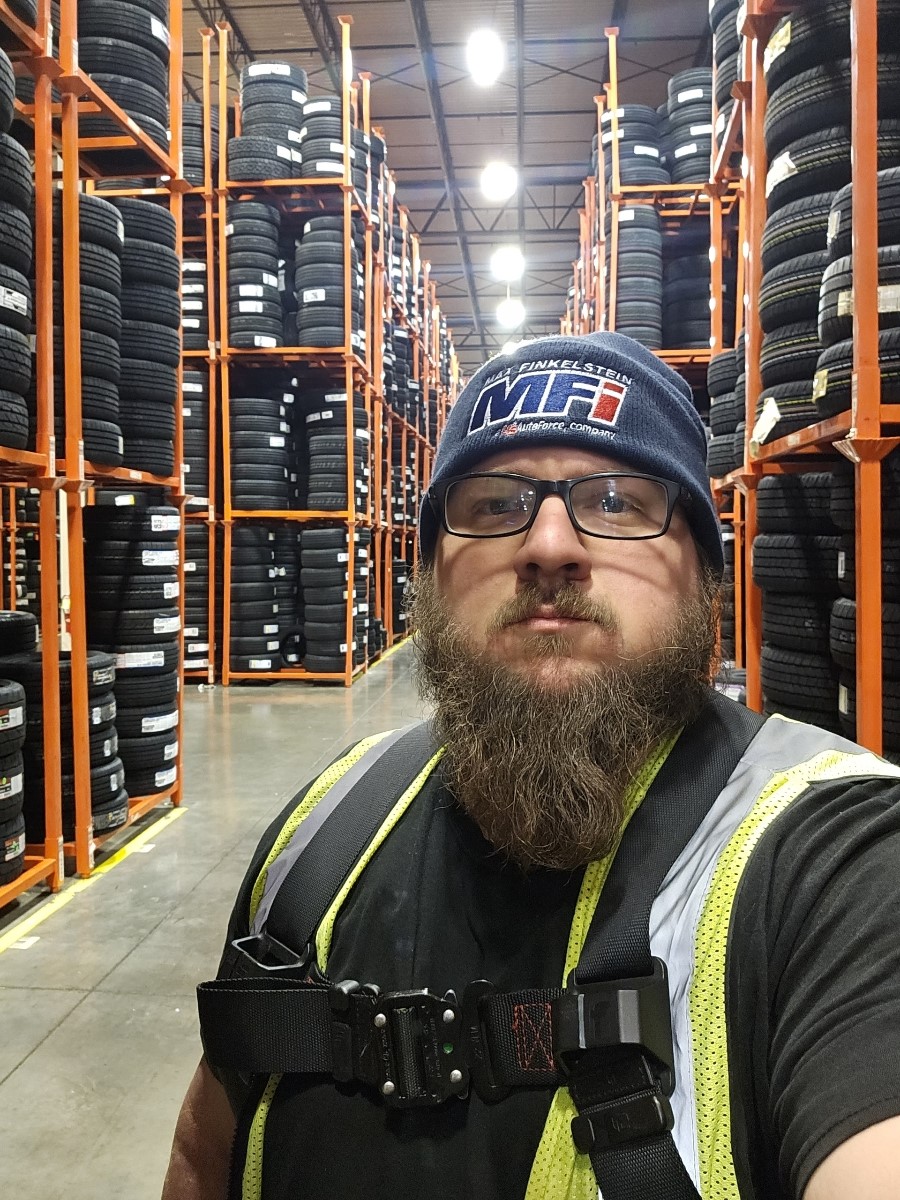
Tire-d of the RWDSU: Chris Dorney submitted a huge number of signatures from his coworkers at tire wholesaler Max Finkelstein when petitioning the NLRB for a vote to remove the RWDSU union.
WINCHESTER, VA – The Biden National Labor Relations Board (NLRB), which includes among its members two former union bosses from the Service Employees International Union (SEIU), is pursuing an agenda that hasn’t exactly been making it easy for workers to vote out a union they don’t want. But that hasn’t stopped workers across the country from going to extraordinary lengths to kick out unions that don’t serve their interests.
In October 2023, Chris Dorney, a Winchester, VA-based employee of tire wholesaler Max Finkelstein, kick-started a cross-country effort to vote the Retail, Wholesale and Department Store Union (RWDSU) out of 15 warehouse facilities across the eastern United States. This work unit included more than 500 employees across Virginia, Maryland, Massachusetts, Pennsylvania, New York, New Jersey, Vermont, Maine, and Connecticut.
Virginia Worker Mustered Strong Showing on Petition for Union Ouster Vote at Tire Wholesaler
With free legal aid from the National Right to Work Foundation, Dorney submitted a petition to the NLRB containing more than enough employee signatures to trigger a vote to remove the union from the large unit.
While Dorney and his fellow Virginia employees enjoyed the Right to Work freedom to opt-out of dues payments to the union, the same couldn’t be said for any of the other employees, all of whom hail from states where dues payments can be mandated as a condition of employment. But voting RWDSU bosses out of power entirely at the tire wholesaler would end the union’s forced-dues power.
“We warehouse workers and drivers at Max Finkelstein may be from many different facilities in many different states, but we are in agreement about one thing: RWDSU union officials don’t represent our interests,” Dorney said of the effort. “It’s our right under federal law to challenge RWDSU’s forced representation power.”
RWDSU Bosses Flee Unit as Union Officials Rack Up Losses Nationwide
However, before the vote could occur, RWDSU union officials disclaimed interest in continuing their monopoly representation powers over the unit, likely to avoid an embarrassing rejection by workers at the ballot box.
Unionized workers are increasingly requesting elections to remove unwanted unions — a potential reason for the Biden NLRB’s efforts to crack down on decertification votes. Additionally, union bosses are increasingly losing these contests. As of last year, filings for union decertification votes had shot up by over 40 percent since 2020. Of decertification elections that occurred, the number which resulted in union bosses losing went up by 72 percent.
“Mr. Dorney and his coworkers’ effort to kick out the RWDSU union, which spanned several states, 15 facilities, and hundreds of workers, is yet another example that workers often want to escape union officials’ one-size-fits-all agenda. It’s also a demonstration that workers will go to great lengths in order to exercise this right,” commented National Right to Work Foundation Vice President Patrick Semmens. “But the Biden NLRB, bent on empowering the President’s union boss political allies, plans to grant unions even more power to defeat workers’ will.”
Max Finkelstein Workers Across East Coast Force RWDSU Union to Abandon 500+ Employee Unit
Work unit spans several states; union bosses disclaimed interest after Winchester, VA-based worker submitted enough employee signatures for ouster vote
Winchester, VA (October 30, 2023) – Employees of tire wholesaler Max Finkelstein from Virginia to Maine have successfully freed themselves from the control of Retail, Wholesale and Department Store Union (RWDSU) officials. The worker victory comes after Winchester, VA-based Max Finkelstein truck driver Christopher Dorney submitted a petition on behalf of his coworkers asking the National Labor Relations Board (NLRB) for a vote to remove the union. Dorney received free legal aid from the National Right to Work Legal Defense Foundation.
The NLRB is the federal agency responsible for enforcing private sector labor law and administering elections to install or remove unions. By NLRB rules, Dorney’s petition contained enough signatures from his colleagues across several states to prompt a union decertification vote.
Because the work unit spans multiple states, the RWDSU union exercised varying amounts of power over Dorney and his coworkers. In states that lack Right to Work protections, such as Maine, New York, and Maryland, RWDSU union officials could enforce agreements with Max Finkelstein management that required workers to pay union dues simply to keep their jobs. In Right to Work states like Virginia, in contrast, union dues payment and union membership are strictly voluntary. However, federal law gives union officials in all states the power to impose their “representation” over every worker in a unionized workplace, even those who are not union members or oppose the union’s agenda.
However, late last week RWDSU officials announced they were departing the work unit, possibly to avoid an embarrassing rejection by workers at the ballot box.
“We warehouse workers and drivers at Max Finkelstein may be from many different facilities in many different states, but we are in agreement about one thing: RWDSU union officials don’t represent our interests,” commented Dorney. “It’s our right under federal law to challenge RWDSU’s forced representation power.”
RWDSU Faces Another Setback as Employees Increasingly Oppose Unions
The RWDSU union has recently tried several high-profile unionization campaigns at Amazon warehouses across the country, most notably at the large Bessemer, AL, facility, where employees voted against the union by substantial margins in both 2021 and 2022. Gallup polling shows that 58 percent of nonunion workers are “not interested at all” in joining a union.
Workers currently under union control are also increasingly seeking to obtain votes to free themselves, often with Foundation aid. Currently, the NLRB’s data shows a unionized private sector worker is far more likely to be involved in a decertification effort than their nonunion counterpart is to be involved in a unionization campaign. NLRB statistics also show a 20% increase in decertification petitions last year versus 2021.
Biden Labor Board Seeks to Stifle Workers’ Right to Vote Out Unwanted Unions
Dorney and his coworkers’ effort comes as the Biden NLRB in Washington, D.C., is attempting to make it more difficult for workers to exercise their right to remove unwanted unions, while giving union officials more tools to gain power in a workplace without even a vote. The NLRB is expected to soon issue a final rule overturning the Election Protection Rule, a Foundation-backed 2020 reform which made commonsense improvements to the decertification process.
The Biden NLRB’s proposed rule, among other things, will give union bosses the power to use “blocking charges,” or unproven allegations of employer misconduct, to prevent workers from voting to decertify a union. The rule will also strip workers of the ability to file for a secret ballot election after a union installs itself via “card check,” a coercive process that bypasses the NLRB’s standard election process and instead permits union bosses to collect cards from workers (often through strong-arm tactics) that are later counted as “votes” for the union.
“Mr. Dorney and his coworkers’ effort to kick out the RWDSU union, which spanned several states, at least 15 facilities, and hundreds of workers, is yet another example that workers often want to escape union officials’ one-size-fits-all agenda. It’s also a demonstration that workers will go to great lengths in order to exercise this right,” commented National Right to Work Foundation President Mark Mix. “But the Biden NLRB, bent on empowering the President’s union boss political allies, plans to grant unions even more power to defeat workers’ will.”
Virginia, Kentucky Workers Slam Union Officials with Charges for Illegal Dues Deductions
The following article is from the National Right to Work Legal Defense Foundation’s bi-monthly Foundation Action Newsletter, January/February 2023 edition. To view other editions of Foundation Action or to sign up for a free subscription, click here.
Union bosses seized full dues over employees’ clear objections, despite state Right to Work laws

“[I]t is time union officials accept that ‘no means no,’” said Buitoni employee Steven Ricketts, who is fighting to stop all dues as provided by Virginia’s Right to Work law.
DANVILLE, VA – For workers under the protection of Right to Work laws, union membership and financial support are supposed to be strictly voluntary. However, as recent cases brought with Foundation legal aid for workers in Kentucky and Virginia demonstrate, even in the 27 states that currently have Right to Work laws, union bosses will often attempt to illegally seize dues over workers’ objections.
“Living in Right to Work Virginia, it is outrageous that we need to take legal action just to stop union dues from being seized against our will,” commented Steven Ricketts, one of two employees at Buitoni Food Company who recently filed charges against United Steelworkers (USW) Local 9555. “I don’t want my money supporting the United Steelworkers union, and it is time union officials accept that ‘no means no’ when a worker resigns from the union and revokes their dues authorization.”
Ricketts and fellow employee Donald Hale each hand-delivered letters to both USW union officials and to their employer, formally resigning their union memberships and revoking their dues check-off authorizations.
Steelworkers Bosses Ignore 75-Year-Old Virginia Right to Work Law
After the workers’ letters were delivered, dues deductions briefly stopped only to quickly resume. In the case of Ricketts, Buitoni Food Company not only restarted union dues deductions but also deducted double the dues amount in a subsequent paycheck. Deductions from Mr. Hale’s paycheck also resumed without his authorization after a short period.
Mr. Ricketts sent an email to the company’s human resources department after the dues seizures restarted and was told to contact union officials about it. Each employee sent another letter to the United Steelworkers union, specifically requesting copies of their dues check-off authorizations. However, money continues to be deducted without their consent and without the union officials producing copies of the authorizations that are legally required before any such deductions can occur.
Eventually the workers filed unfair labor practice charges against both the USW and their employer for their respective roles in the unauthorized union dues deductions.
Regarding the Foundationbacked charges, Hale noted: “I’m grateful for the National Right to Work Foundation assistance in enforcing my legal rights, but it really shouldn’t take a federal case to cease the collection of union dues.”
Meanwhile in neighboring Kentucky, Shiphrah Green, who works at Ford’s Louisville Assembly Plant, filed similar charges with the National Labor Relations Board (NLRB) against the United Automobile Workers (UAW) Local 862 union, as well as the UAW international union and Ford, for illegal union dues deductions.
Kentucky Autoworker Hits UAW Union with Federal Charges
Green notified both Ford and UAW union officials in April 2022 that she was resigning her union membership and cutting off all union dues deductions from her wages, as is her right under Kentucky’s Right to Work law. Instead of honoring her request, Green instead received an email from UAW Local 862’s president notifying her that Green needed to be shown the allegedly “correct” method to leave the union.
During a subsequent meeting with union officials at the UAW union hall, UAW officials subjected Green to interrogation about why she wanted to leave the union, and also demanded she sign a letter listing “benefits” Green would supposedly forgo if she went through with exiting the union. Longstanding NLRB precedent makes such restrictions on resignation illegal, as was the UAW Local 862 president’s coercive statement to Green that “if it were up to me, you’d lose your job for leaving the union.”
Despite Green’s resignation and requests to cut off union dues, UAW and Ford did not stop dues deductions. While Green continued trying to get Ford management to end the dues deductions, her efforts proved futile, as Ford officials gave her several confusing responses and even told her that she could only cease dues deductions in February 2023, even though the previously authorized dues deduction document could be revoked at will.
Finally, after getting the runaround from both Ford and the UAW, Green filed charges with the NLRB in October using free legal aid from the National Right to Work Foundation. As this issue went to print, Labor Board regional officials were conducting an investigation to see if Ford and the union should be prosecuted for illegal dues seizures.
Foundation Attorneys Play Essential Role in Limiting Union Boss Power
“As thousands of Foundation cases have demonstrated — whether in Right to Work states or forceddues jurisdictions, or whether litigated for government employees or private sector workers — limits on union bosses’ power to seize money from workers mean little if they aren’t enforced,” commented National Right to Work Foundation Vice President Patrick Semmens.
“Virginia has had a Right to Work law on the books for over 75 years, while Kentucky’s Right to Work law is barely over five years old, but in both commonwealths, union bosses are illegally seizing union dues,” added Semmens. “These cases show why defending and enforcing workers’ Right to Work protections has been and will remain a top priority of the Foundation.”
Workers Nationwide Press NLRB to Scrap Policy Blocking Right to Vote Out Unions
The following article is from the National Right to Work Legal Defense Foundation’s bi-monthly Foundation Action Newsletter, March/April 2021 edition. To view other editions or to sign up for a free subscription, click here.
Foundation cases contend ‘contract bar’ must be eliminated to protect employee freedom
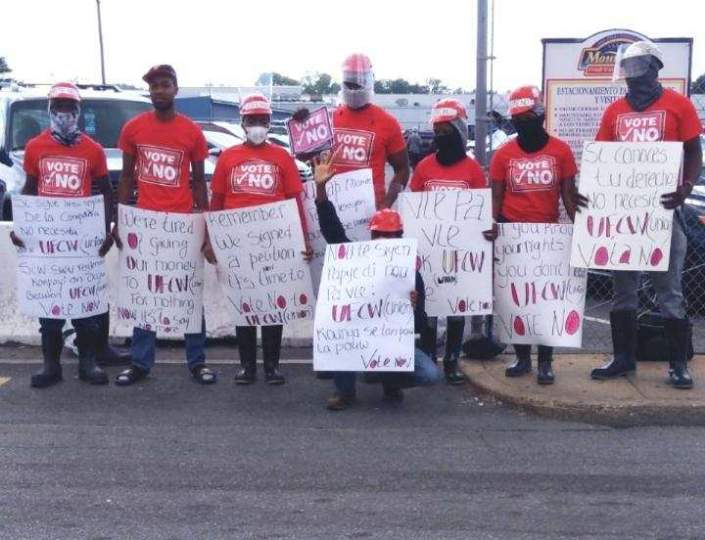
Foundation staff attorneys are assisting Delaware poultry workers in challenging UFCW bosses’ attempts to use the “contract bar” to trap them in union ranks.
WASHINGTON, DC – Foundation attorneys in January filed a Request for Review to the full National Labor Relations Board (NLRB) in Washington, D.C. The Request defends the right of Virginia Transdev workers to have a vote to remove unpopular Office and Professional Employees International Union (OPEIU) Local 2 bosses from power at their workplace.
The Transdev employees, who work at the Fairfax Connector bus service in Northern Virginia, now join Foundation-backed workers in Delaware and Puerto Rico, all of whom are urging the NLRB to eliminate the “contract bar.” That is a non-statutory NLRB policy which forbids employees from exercising their right to vote out an unpopular union in an NLRB-supervised “decertification election” for up to three years after their employer and union finalize a monopoly bargaining contract.
Foundation attorneys point out in each of these cases that the “contract bar” appears nowhere in the National Labor Relations Act (NLRA), the federal law the NLRB is charged with enforcing, and is merely the result of past union boss-friendly decisions by the Board. They also argue that the bar undermines workers’ basic right under the NLRA to remove unions that lack majority support.
“The ‘contract bar’ undermines the fundamental objective of federal labor law: Employee free choice. It makes rank-and-file employees prisoners of an unpopular union, with no way out for up to three years,” commented National Right Work Foundation President Mark Mix. “This inevitably creates an environment in which, as these employees can certainly attest, it’s impossible to hold self-serving union bosses accountable because workers are denied the right to vote them out.”
Unpopular OPEIU Bosses Went Behind Workers’ Backs to Sign Contract
The petitioner in the Transdev workers’ case, Amir Daoud, submitted a petition on November 10, 2020, signed by the necessary number of his coworkers to trigger a “decertification election” in his workplace. This was after news had gotten around that an OPEIU union agent had told some employees in October he had “negotiated a new agreement” with Transdev management and “‘intended’ to sign it without a ratification vote.” Workers had already voted down an earlier union boss-promoted monopoly bargaining contract in June.
Foundation attorneys filed a Request for Review, which notes that the union agent didn’t inform Daoud and his coworkers of when he planned to approve the new contract — until after Daoud filed the petition. The new contract was signed by union agents on October 30 and Transdev representatives on October 31.
NLRB Region 5 in Baltimore dismissed Daoud and his coworkers’ decertification petition on December 22, ruling that the “contract bar” applied because the employees’ petition was submitted just after the new contract was signed, even though the employees had no way of knowing whether or when that signing would occur.
This prompted Daoud to ask the NLRB in Washington to review the case. Because Daoud recently accepted a job with Transdev outside the OPEIU’s monopoly bargaining control, the Request for Review asks the NLRB to recognize his coworker Sheila Currie as the new petitioner to represent the interests of the workers who signed the decertification petition.
The Request exposes the arbitrariness of the “contract bar,” pointing out that the NLRB Regional Director applied it “merely because the Union ‘won the race’ and signed the contract ten days” before Daoud submitted the petition, even though the petition clearly demonstrated the employees’ interest in voting the union out.
VA and Puerto Rico Cases Follow Groundbreaking Effort by DE Poultry Workers
The Virginia Transdev employees, and a Puerto Rico armored transit guard who submitted a similar Request for Review on behalf of his coworkers with Foundation aid in January, are now battling the “contract bar” like Delaware Mountaire Farms poultry worker Oscar Cruz Sosa and his coworkers. For almost a year now, Cruz Sosa and his fellow employees have been fighting United Food and Commercial Workers (UFCW) union bosses’ attempts to use the “contract bar” to block their valid petition for a decertification vote. The Mountaire employees are now waiting for the NLRB to issue a ruling on their case.
In that case, UFCW officials claim that the “contract bar” should apply to bar any elections at Mountaire, despite an NLRB Regional Director’s decision allowing the vote because the union contract contains an invalid forced-dues clause.
When the UFCW bosses asked the full NLRB to review the Region’s order allowing the election, Cruz Sosa’s attorneys filed a brief urging that, if the Board granted review, it should use the opportunity to review the entire non-statutory “contract bar” policy. The Board is now doing just that. The UFCW union bosses are even arguing that the impounded ballots already cast by Mountaire workers should be destroyed, claiming the election should never have been held.
The Requests for Review submitted by Foundation staff attorneys for the Puerto Rico guard and Virginia Transdev employees each request that the NLRB should either grant review or least hold the case until a decision is issued in Cruz Sosa’s case.





