
Starbucks Baristas File Brief Urging Supreme Court to Allow President to Remove Rogue Agency Officers
National Right to Work Foundation-backed federal case for Starbucks employees was first federal case to argue that NLRB officials can’t be shielded from the President’s oversight
Washington, DC (October 20, 2025) – Two Starbucks employees represented by the National Right to Work Legal Defense Foundation have filed an amicus brief at the United States Supreme Court in the case Trump v. Slaughter. The brief argues that restrictions on the President’s authority to fire members of executive bodies, such as the National Labor Relations Board (NLRB) or the Federal Trade Commission (FTC), are unconstitutional, violating the separation of powers.
The amicus brief was filed on behalf of Ariana Cortes and Logan Karam, two New York Starbucks employees who challenged the constitutionality of the structure of the NLRB in a separate federal court case with the assistance of Foundation staff attorneys.
Since 2023, Foundation staff attorneys have pioneered the legal argument that the NLRB’s structure is unconstitutional because it places restrictions on the President’s authority to fire the NLRB’s members, despite it being part of the executive branch of government. This disconnect exemplifies the problem of federal bureaucrats operating as an unaccountable, “headless fourth branch,” something clearly at odds with the government’s constitutional structure.
Now, the Trump Administration is using this same argument as a justification to fire members of the FTC. Rebecca Slaughter, a Biden appointee to the FTC, has sued to be reinstated, and the case is now before the Supreme Court. The Foundation-backed amicus brief argues that as the Court considers the FTC, it must keep in mind that other so-called “independent agencies” that wield executive power, such as the NLRB, must be subject to Presidential control and removal.
Supreme Court May Reverse Humphrey’s, Must Recognize Its Limitations
Trump v. Slaughter provides the Supreme Court an opportunity to reverse its decision in the 1935 case Humphrey’s Executor v. United States, in which the Court crafted an exception to the general rule that the President can remove principal officers at will under Article II of the U.S. Constitution. In theory, Humphrey’s exempted agencies that exercised “quasi-judicial” or “quasi-legislative” power, but not those that exercise executive power.
But regardless of the Court’s reevaluation of the case, “the NLRB fails the Humphrey’s Executor test,” the brief argues.
“The NLRB is a policymaking body that enforces the [National Labor Relations Act] based on its legal conclusions, not scientific or technical judgments,” write Foundation staff attorneys. “[T]he Board does not exercise quasi-legislative or quasi-judicial authority. It exercises executive power in everything it does.”
The brief concludes with the Foundation’s legal argument that Humphrey’s “cannot neuter the President’s ability to supervise those who exercise substantial parts of [executive] power.” Therefore, the Supreme Court “should make clear that the President’s removal power applies to every agency that exercises executive power, including the NLRB.”
Clear Separation of Powers Would Support Workers’ Individual Rights
A proper understanding of the limitations of Humphrey’s when it comes to executive bodies like the NLRB would support workers like Cortes and Karam as they exercise their individual rights. Cortes and Karam are trying to exercise their right to remove local union bosses from their respective workplaces. But non-statutory policies enforced by the pro-Big Labor Biden NLRB have stymied their efforts. Success in this case could help ensure that Cortes and Karam receive a fair judgment from the NLRB in their cases.
“Unaccountable and biased NLRB bureaucrats have caused direct harm to independent-minded workers and their individual rights, and the Supreme Court should rightfully restore the proper separation of powers, including at the NLRB,” commented National Right to Work Foundation President Mark Mix. “We are proud that the very legal arguments made by Foundation attorneys are now being utilized by this administration to dismantle the unaccountable fourth branch of government and restore proper constitutional structure.”
Puerto Rico Police Bureau Employees Foil Anti-Janus Scheme
The following article is from the National Right to Work Legal Defense Foundation’s bi-monthly Foundation Action Newsletter, November/December 2024 edition. To view other editions of Foundation Action or to sign up for a free subscription, click here.
Federal court strikes down discrimination against workers at the Puerto Rico Police Bureau who exercised First Amendment rights
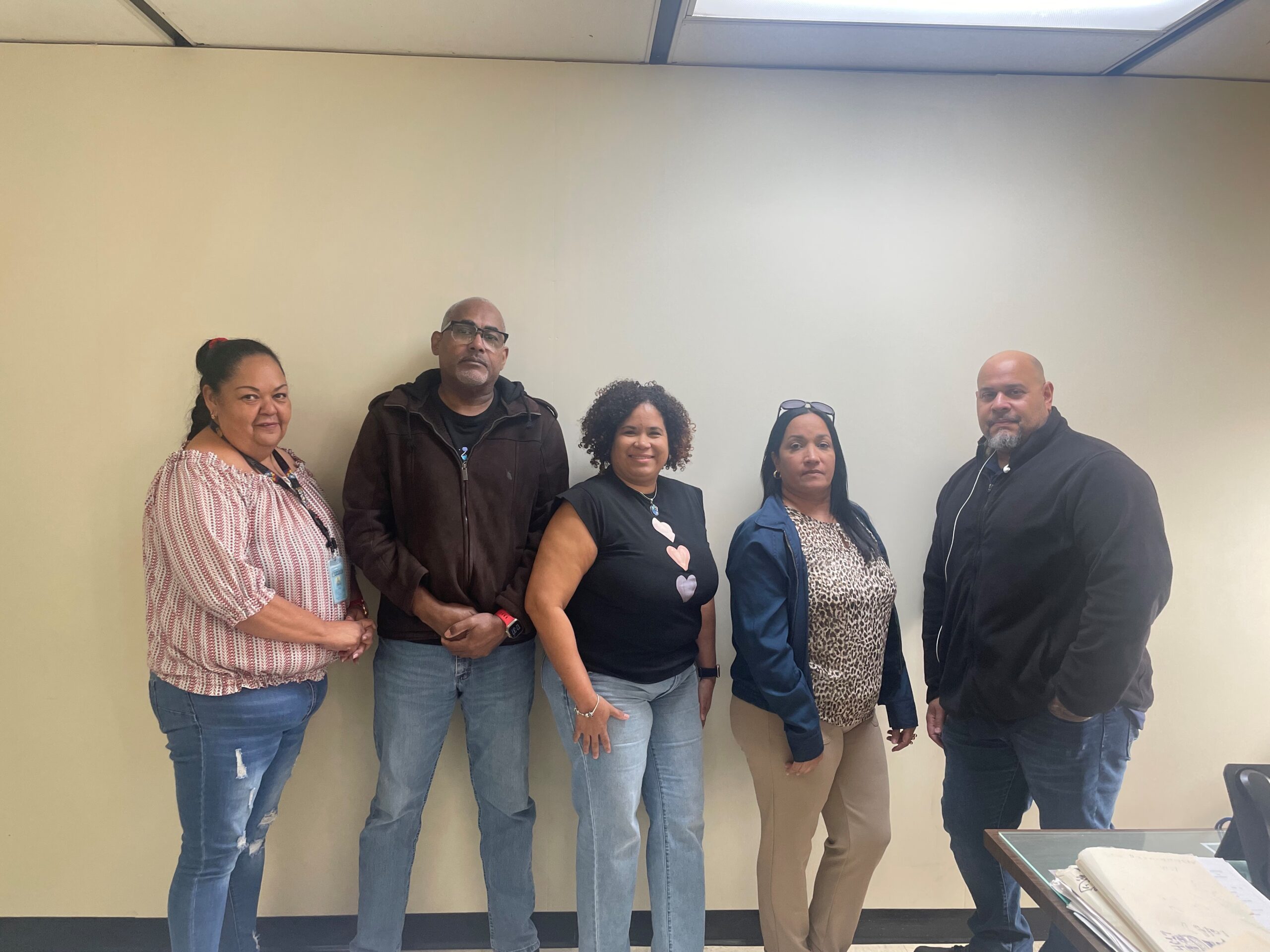
Vanessa Carbonell (center) and other employees of the Puerto Rico Police Bureau won big at the Puerto Rico District Court in September 2024. Their Foundation-won decision forces their employer and the union to stop violating their Janus rights.
SAN JUAN, PR – The National Right to Work Foundation’s 2018 victory at the U.S. Supreme Court in Janus v. AFSCME opened new horizons for employee freedom across the country. For the first time, the Justices recognized that the First Amendment prohibits union bosses from forcing public sector employees to join a union or pay dues as a condition of employment, and that union bosses can only take dues from a worker’s paycheck with their affirmative consent.
Foundation attorneys’ efforts to enforce the landmark decision yielded a big victory this September for a wide swath of civilian employees at the Puerto Rico Police Bureau (PRPB). In a class action federal lawsuit, more than a dozen PRPB employees charged officials of the Union of Organized Civilian Employees with violating their Janus rights by stripping them of an employer-provided health benefit because they refused to join the union.
A recent decision from the District Court of Puerto Rico found in favor of the employees’ arguments, stating that their employer had indeed taken away the health benefit because the employees exercised their right to not join or pay dues to the union.
Scheme Forced Workers to Join Union or Lose Access to Better Healthcare
“This is either retaliation for exercise of non-union members’ post-Janus non-associational rights under the First Amendment under the Constitution or simply discrimination,” said the Court.
According to lead plaintiff Vanessa Carbonell and her colleagues’ original lawsuit, they all exercised their Janus right to opt out of the union at various points after the 2018 Janus decision. They each began noticing that as dues ceased coming out of their paychecks, they also stopped receiving a $25-a-month employer-paid benefit intended to help employees pay for better health insurance.
The lawsuit demonstrated that PRPB officials cut the benefit off to employees who refused union membership — a clear case of discrimination against employees who exercise their First Amendment right to abstain from union affiliation.
Union and Employer Must Stop Discrimination
The District Court’s decision, in addition to declaring that the ploy by PRPB and the Union of Organized Civilian Employees is unconstitutional, orders an injunction to stop PRPB officials from continuing to withhold the benefit from Carbonell and other employees.
“Janus enshrined a very simple First Amendment principle: That union officials need to convince public employees to support their organization and activities voluntarily,” commented National Right to Work Foundation Vice President Patrick Semmens.
Long Beach Worker Files Federal Lawsuit Challenging Structure of Biden Labor Board as Unconstitutional
New lawsuit challenges that National Labor Relations Board’s structure unconstitutionally shields both board members and judges from accountability
Washington, DC (August 22, 2024) – Nelson Medina, a Long Beach, CA-based employee of transportation company Savage Services, has just filed a federal lawsuit against the National Labor Relations Board (NLRB) challenging the Board’s makeup as unconstitutional. Medina, who is represented for free by National Right to Work Foundation staff attorneys, argues that the composition of the NLRB violates separation of powers doctrines enshrined in Article II of the U.S. Constitution because it shields NLRB bureaucrats from being removed by the President.
Medina’s case now joins three other constitutional challenges to the NLRB’s structure from Foundation-backed rank-and-file workers, including the first ever such lawsuit which Foundation attorneys filed on behalf of Buffalo, NY-based Starbucks employees Ariana Cortes and Logan Karam.
Medina’s lawsuit points to recent Supreme Court rulings, including Seila Law LLC v. CFPB and Collins v. Yellen, which emphasized that the President should have direct authority to remove executive officials who exercise significant authority. Medina argues that the NLRB’s structure, as defined by the National Labor Relations Act (NLRA), places unlawful limitations on the President’s power to oust NLRB officials even though they exercise significant executive authority.
The complaint, filed in the U.S. District Court for the District of Columbia, joins a similar suit at the same court from Medina’s colleague, Victor Avila. Both Avila’s and Medina’s lawsuits stem from unfair labor practice charges they each filed with Foundation aid against Teamsters union officials in their workplace, which dealt with illegal threats of violence against workers for not supporting the union and unlawful demands for dues payment, respectively. Both Avila and Medina argue they are entitled to have their cases heard by Board officials whose appointment complies with the requirements of the U.S. Constitution.
Challenge to Constitutionality of Federal Labor Board Targets Board Members and Administrative Law Judges
Medina’s lawsuit is unique in that it contests the NLRB’s removal protections on both Board members and Administrative Law Judges (ALJs). The suit argues that Board members exercise significant executive branch authority, yet are unconstitutionally protected from at-will presidential removal. ALJs, the suit argues, are subject to a removal process controlled by multiple layers of federal bureaucrats whom the President can’t remove at will, a structure prohibited by the Free Enterprise Fund v. PCAOB Supreme Court decision.
Board members are responsible for both creating NLRB policy and reviewing federal labor cases decided by regional NLRB offices, while ALJs conduct hearings in cases where the NLRB has chosen to prosecute a union or employer for violating the law.
Similar Lawsuits Crop Up Among Workers Nationwide
Beyond Savage Services, Foundation-backed Starbucks employees are also pursuing cases challenging the constitutionality of the structure of the NLRB. These employees have attempted to hold decertification votes to remove unwanted Starbucks Workers United (SBWU) union officials from their workplace, but NLRB officials blocked their cases based on unproven union allegations of employer meddling.
Ariana Cortes and Logan Karam, two Starbucks employees from New York, recently filed an appeal to the D.C. Circuit Court of Appeals in their lawsuit. They are appealing a District Court judge’s ruling that they lacked standing to bring their challenge. The ruling didn’t address the core constitutional arguments their lawsuit raised. Another Starbucks employee, Reed Busler, filed another similar lawsuit that is currently pending in the District Court for the Northern District of Texas.
“For too long, independent-minded employees who challenge union boss coercion that violates federal law have had to pursue their claims with unaccountable NLRB bureaucrats who exercise power in violation of the Constitution,” said National Right to Work Foundation President Mark Mix. “The National Labor Relations Board should not be a union boss-friendly kangaroo court run by powerful bureaucrats who exercise unaccountable power in violation of the Constitution, yet for too many workers, including those bringing these legal challenges, that is what the Labor Board has become.”
Foundation Lawsuit: Biden NLRB Structure Violates the U.S. Constitution
The following article is from the National Right to Work Legal Defense Foundation’s bi-monthly Foundation Action Newsletter, November/December 2023 edition. To view other editions of Foundation Action or to sign up for a free subscription, click here.
Groundbreaking suit filed for Starbucks employee who was denied vote to oust unwanted union bosses
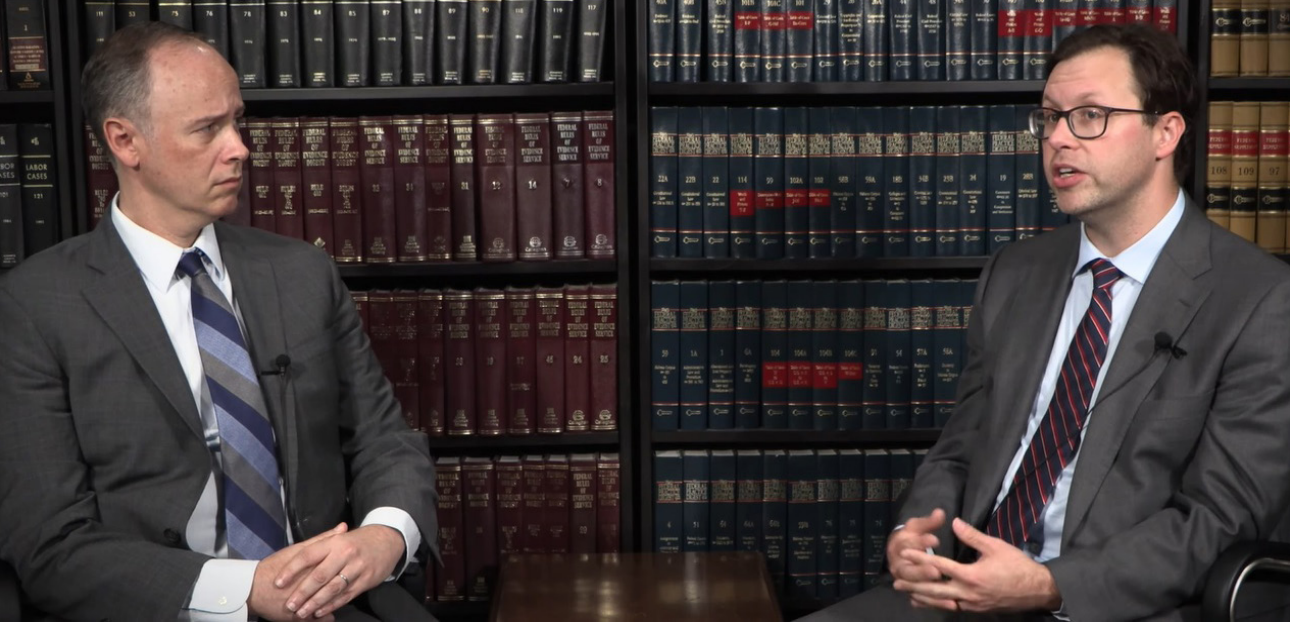
Starbucks employee Ariana Cortes’ Foundation attorney, Aaron Solem (right), is making a cutting-edge argument targeting the NLRB’s lack of accountability.
WASHINGTON, DC – The National Labor Relations Board (NLRB) is supposed to protect the right of workers to freely choose whether to associate with a union or not. The NLRB is also charged with holding unions and employers accountable when they violate worker rights. Too often, however, it has simply acted as an agency that generates policies to entrench union bosses’ power over workers while shielding union bosses from any kind of liability.
A new federal lawsuit from a National Right to Work Foundation-backed Starbucks employee, currently pending at the D.C. District Court, could upend the federal agency and result in a ruling that the current Labor Board’s structure violates the Constitution.
Employee Challenges NLRB Bureaucrats’ Protections from Presidential Removal
Ariana Cortes, a worker at the Buffalo, NY, “Del-Chip” Starbucks branch, hit the NLRB with the groundbreaking lawsuit in October, contending that the federal agency’s current structure violates the separation of powers mandated by the Constitution.
Cortes’ suit follows Foundation attorneys’ defense of her and her coworkers’ petition requesting a vote to remove Starbucks Workers United (SBWU) union officials from their workplace. Regional NLRB officials dismissed Cortes’ majority-backed petition based on SBWU allegations against Starbucks management that have no proven connection to Cortes and her coworkers’ desire for a union decertification vote.
Cortes’ lawsuit argues that because NLRB members cannot be removed at-will by the President, the NLRB’s structure violates Article II of the Constitution. Under Article II, the lawsuit contends, the President must have the power to remove officials that exercise substantial executive power.
Because the NLRB enforces federal labor law, manages union elections, and can issue legally binding rules and regulations, the lawsuit contends that the agency exercises substantial executive power. Therefore, it falls within the scope of the President’s power to remove officials at will. However, the National Labor Relations Act (NLRA), the law that established the NLRB, restricts the President’s ability to remove Board members except for neglect of duty or malfeasance.
“[T]hese restrictions are impermissible limitations on the President’s ability to remove Board members and violate the Constitution’s separation of powers. Thus, the Board, as currently constituted, is unconstitutional,” the complaint states.
Lawsuit: Unconstitutional NLRB Proceedings Must Stop
Cortes’ new federal lawsuit seeks a declaration from the District Court that the structure of the NLRB as it currently exists is unconstitutional.
“For too long the NLRB, especially the current Board, has operated as a union boss-friendly kangaroo court, complete with powerful bureaucrats who exercise unaccountable power in violation of the Constitution,” commented National Right to Work Foundation Vice President and Legal Director William Messenger. “The NLRB’s operation outside constitutional norms is easily exploited by Big Labor.”
“But as the story of Ms. Cortes shows, the NLRB’s unchecked power creates real harms for workers’ rights, especially when workers seek to free themselves from the control of union bosses they disagree with,” Messenger added.
Buffalo Starbucks Worker Files Groundbreaking Lawsuit Challenging Constitutionality of NLRB Structure
Regional NLRB blocked employee and her coworkers from voting out union majority disapproved of, new lawsuit challenges agency’s authority
Buffalo, NY (October 4, 2023) – Buffalo “Del-Chip” Starbucks employee Ariana Cortes has hit the National Labor Relations Board (NLRB) with a federal lawsuit, arguing that the federal agency’s current structure violates the separation of powers. The lawsuit, filed with the District Court for the District of Columbia, follows Cortes’ challenge to an NLRB Regional Director’s dismissal of her and her coworkers’ petition seeking a vote to remove Starbucks Workers United (SBWU) union officials from their store.
Cortes is receiving free legal aid in both proceedings from the National Right to Work Legal Defense Foundation. The lawsuit contends that, because NLRB Board Members cannot be removed at-will by the President, the NLRB’s structure violates Article II of the Constitution.
The National Labor Relations Act (NLRA), the law which established the Board, restricts a president’s ability to remove Board members except for neglect of duty or malfeasance. The complaint argues that “[t]hese restrictions are impermissible limitations on the President’s ability to remove Board members and violates the Constitution’s separation of powers. Thus, the Board, as currently constituted, is unconstitutional.”
“The Supreme Court made clear in Seila Law LLC v. CFPB, 140 S. Ct. 2183 (2020) and Collins v. Yellen, 141 S. Ct. 1761 (2021) that under Article II of the Constitution, the President must be able to remove federal officials who exercise substantial executive power,” the complaint states. “The five-member NLRB exercises substantial executive power because it issues binding rules, adjudicates unfair labor practices and representation disputes, issues subpoenas, and decides whether and how to direct and conduct elections in representation cases.”
Regional NLRB Dismisses Starbucks Employees’ Request to Vote Out Union
On April 28, Cortes filed a petition, backed by the majority of her coworkers, that requests the NLRB conduct a decertification election at her workplace to end the monopoly bargaining power of SBWU union officials. NLRB Region 3 dismissed Cortes’ petition based on unfair labor practice charges SBWU union officials filed against Starbucks, despite there being no proven connection between those allegations and the decertification petition.
Cortes’ Foundation-provided attorneys filed a Request for Review with the Board challenging this dismissal order. That appeal contrasted the standard the NLRB often applies to petitions to certify unions, which usually proceed with little to no delay, with the standard the NLRB applies to petitions to decertify unions, which are often hamstrung and delayed.
New Federal Lawsuit Seeks to Temporarily Enjoin Unconstitutional Proceedings
Cortes’ new federal lawsuit seeks a declaration from the District Court that the structure of the NLRB as it currently exists is unconstitutional, and an injunction halting the NLRB from proceeding with her decertification case until her federal lawsuit is resolved.
“For too long the NLRB, especially the current Board, has operated as a union boss-friendly kangaroo court, complete with powerful bureaucrats who exercise unaccountable power in violation of the Constitution,” commented National Right to Work Foundation President Mark Mix. “As the story of Ms. Cortes shows, the NLRB’s unchecked power creates real harms for workers’ rights, especially when workers seek to free themselves from the control of union bosses they disagree with.”
California Lifeguards Ask Supreme Court to Blow Whistle on Dues-Trap Scheme
The following article is from the National Right to Work Legal Defense Foundation’s bi-monthly Foundation Action Newsletter, November/December 2022 edition. To view other editions of Foundation Action or to sign up for a free subscription, click here.
Union bosses’ ‘maintenance of membership’ scheme drowns California lifeguards’ Janus rights for four years
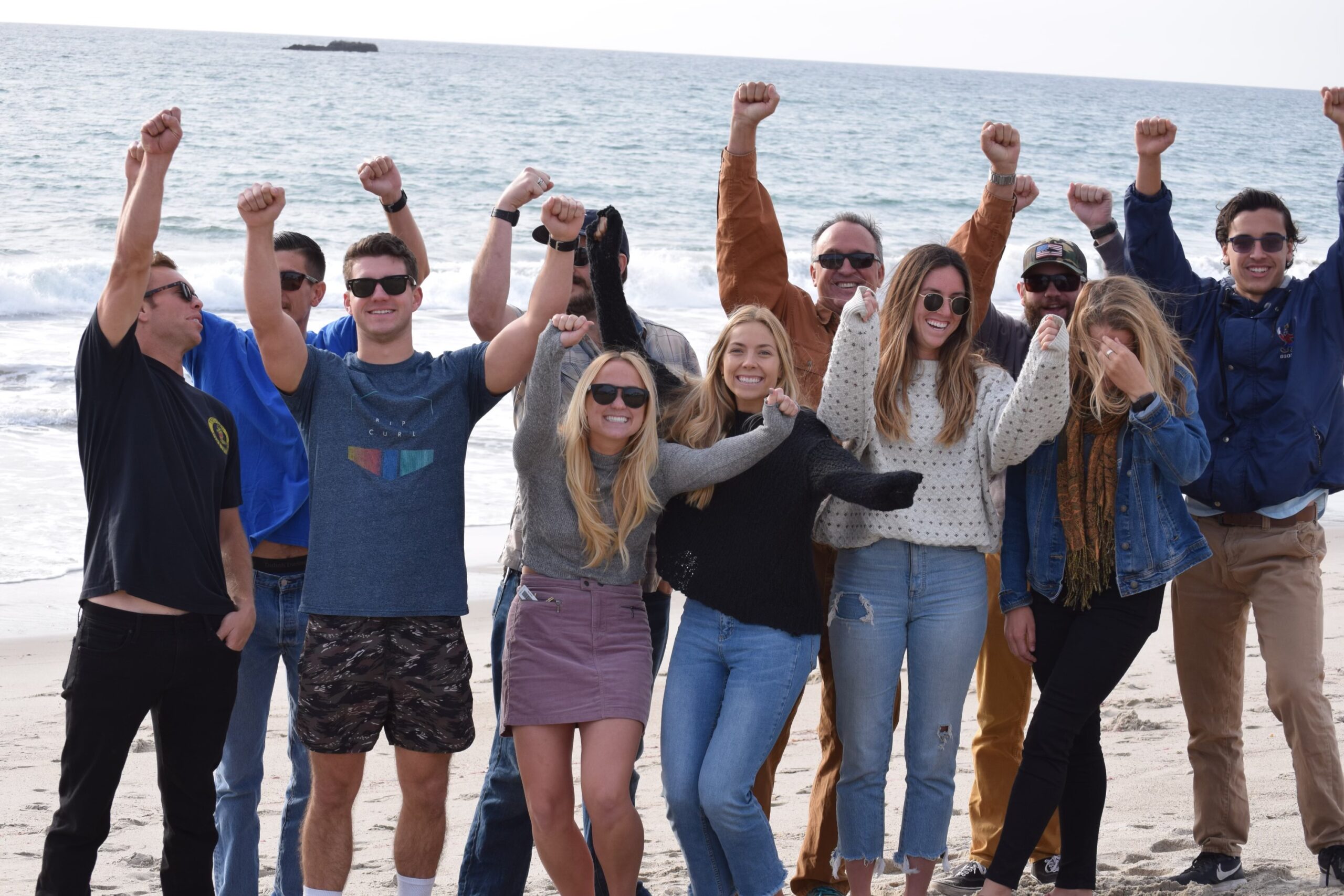
These California lifeguards can ride the waves, but they certainly didn’t “waive” their Janus rights. In their Supreme Court bid, they hope to stop union bosses from locking them out of their First Amendment rights for years.
LOS ANGELES, CA – National Right to Work Foundation client Jennifer Marshall, an Orange County, CA, lifeguard, told the Los Angeles Times in May how hard California Statewide Law Enforcement Agency (CSLEA) union officials pushed union membership on her and her colleagues.
“They really pushed us to sign up for the union without a lot of information behind it,” said Marshall. “It was kind of a sign-the-papers-and-we’ll-talk-about-it-later kind of thing.” After she signed up, she hardly ever saw or heard from union officials again but full union dues were coming out of her paycheck.
What she and many of her colleagues, whom union bosses had cajoled into signing up, didn’t expect was how hard it would be to exit a union that didn’t seem to be doing anything for them. When she and her colleagues tried to resign, CSLEA officials told them that they were stuck in both full union dues payments and full union membership until 2023, pursuant to a so-called “maintenance of membership” requirement.
Marshall, along with lead plaintiff Jonathan Savas and 21 other colleagues, sued CSLEA bosses in federal court in 2020 for violating their constitutional rights. They argued the “maintenance of membership” requirement blatantly infringes on their First Amendment rights under the Foundation-won Janus v. AFSCME Supreme Court decision. In Janus, the Court declared that public sector workers cannot be forced to bankroll a union without voluntarily waiving their First Amendment right to abstain from union payments. The lifeguards also sued the state of California for its role in enforcing the unconstitutional dues deductions.
Secret Union Dues Scheme Has Been Illegal for 45 Years
Marshall, Savas, and their fellow lifeguards are now petitioning the Supreme Court of the United States to hear their case, arguing CSLEA bosses’ restrictive arrangement even violates Supreme Court precedent that predates Janus.
The lifeguards’ Foundation provided attorneys argue in the petition that “maintenance of membership” requirements not only flout Janus’ ban on all forced dues in the public sector, but even violate the Supreme Court’s now-overturned 1977 decision in Abood v. Detroit Board of Education. Abood let union officials force dissenting public sector employees to pay a portion of union dues as a condition of employment.
“Maintenance of membership” requirements – which force public employees to pay full union dues often for years after they try to resign from the union – are worse than anything permitted by Abood, Foundation staff attorneys argue.
The petition also takes to task CSLEA union bosses’ paltry defense that the lifeguards somehow voluntarily agreed to the “maintenance of membership” scheme. In Janus, the Supreme Court ruled that union officials can only take dues from a public employee’s paycheck if that employee gives a “clear and compelling” waiver of Janus rights. Foundation attorneys point out that the CSLEA union’s dues deduction forms contained only a “vague reference” to an unexplained limit on when withdrawal from membership is permitted, which is not even close to satisfying Janus’ waiver requirement.
“A vague reference to unspecified limitations in ‘the Unit 7 contract and State law’ does not establish the Lifeguards contractually consented” to union membership for four years, the petition says.
Supreme Court Must Intervene to Stop Spread of Unconstitutional Restrictions
The petition for Savas and his fellow lifeguards emphasizes how crucial it is for the Supreme Court to strike down cumbersome “maintenance of membership” restrictions, pointing out that California unions and legislators will continue to force public employees to remain formal union members and pay full dues as a condition of employment if the schemes are left unchecked.
“Other states likely will follow suit, such as Pennsylvania, whose laws also authorize maintenance of membership requirements,” the brief states.
Challenged Scheme Gives Union Bosses Control of Workers’ Janus Rights
“‘Maintenance of membership’ restrictions give union officials complete control over when public employees can exercise their rights to end union membership and cut off union dues deductions,” observed National Right to Work Foundation Vice President and Legal Director Raymond LaJeunesse.
“The Supreme Court must intervene in these lifeguards’ case to protect the First Amendment rights of all American public sector employees, and prevent union bosses and their political allies from replicating across the country these patently unconstitutional restrictions.





