
Dartmouth, MIT, Vanderbilt Graduate Students Challenge Forced Unionism
The following article is from the National Right to Work Legal Defense Foundation’s bi-monthly Foundation Action Newsletter, January/February 2025 edition. To view other editions of Foundation Action or to sign up for a free subscription, click here.
Foundation-backed students defend rights as union bosses seek more power at universities

Ben Logsdon is a Ph.D. student in mathematics at Dartmouth College. But it doesn’t take a genius to realize that union officials’ refusals to accommodate his religious objections just don’t add up.
HANOVER, NH – Just weeks after National Right to Work Foundation staff attorneys triumphed in anti-discrimination cases for Jewish Massachusetts Institute of Technology (MIT) graduate students who sought to stop forced dues payments to a radically anti-Israel union, union officials began creating other problems for university students.
In nearby New Hampshire, Dartmouth graduate student Benjamin Logsdon sought free Foundation legal aid against Graduate Organized Laborers of Dartmouth (GOLD-UE) union officials. The GOLD union — which is an affiliate of the same United Electrical (UE) union involved in the Foundation’s MIT cases — is forcing Logsdon to accept the union’s monopoly “representation” powers against his will, even after he voiced his religious objections to the union’s radical stances on the conflict against Israel.
Grad Students Exposed to Union Coercion & Privacy Violations
Meanwhile, several graduate students at Vanderbilt University in Nashville, TN, are pushing back against an attempt by Vanderbilt Graduate Workers United (VGWU, an affiliate of United Auto Workers) union bosses to impose union control over them and their colleagues. Specifically, three students are seeking to intervene in a federal case in which VGWU union officials are illegally demanding the university hand over the students’ private information to aid in their unionization campaign. Foundation staff attorneys filed motions for intervention for these students in October 2024.
Foundation attorneys are arguing that union officials severely violate students’ rights in both of these cases. However, the reason that union officials are in power on college campuses at all traces back to flawed rulings from the National Labor Relations Board (NLRB) under both the Obama Administration and Biden Administration. These rulings subject graduate students to pro-Big Labor provisions of the National Labor Relations Act (NLRA), which create issues for students’ freedom both inside and outside the classroom.
Logsdon, a Christian Ph.D. student in mathematics at Dartmouth, slammed the GOLD union with federal anti-discrimination charges in September 2024 at the Equal Employment Opportunity Commission (EEOC). According to those charges, shortly after the GOLD union finalized its first monopoly bargaining contract with the Dartmouth administration, he sent a letter to United Electrical General Secretary-Treasurer Andrew Dinkelaker explaining that he objected to being affiliated with GOLD on religious grounds and needed an accommodation.
“I sought to be removed from the UE and GOLD-UE bargaining unit as a reasonable accommodation,” Logsdon’s Foundation-backed charges say.
Dinkelaker refused to offer Logsdon an accommodation that “satisf[ied] [his] religious conscience or beliefs,” according to the charges, which violated his rights under Title VII of the Civil Rights Act of 1964.
Courts have recognized a variety of Title VII religious accommodations over the years for men and women who have religious objections to union affiliation, including paying an amount equivalent to union dues to a charity instead of union bosses. However, Logsdon seeks a different accommodation: to remove himself from union bosses’ control entirely.
At Vanderbilt, three students who identify themselves in legal documents as “John Doe 1,” “John Doe 2,” and “Jane Doe 1” are contending in their Foundation-backed motions for intervention that the Family Educational Rights and Privacy Act (FERPA) forbids the Vanderbilt administration from disclosing their personal information to any third parties without their permission, including the VGWU union.
At the union’s behest, NLRB Region 10 has already hit the Vanderbilt administration with a pair of subpoenas demanding personal student info, while ignoring objections from several students expressing concern at the disclosure.
So far Vanderbilt has resisted the NLRB’s subpoenas, and fortunately a federal court has temporarily allowed the university to refuse to comply with them.
The Foundation-backed students’ motions to intervene argue that the subpoenas “are an attempt to violate FERPA’s protections, privileging union interests over the graduate students[’] privacy rights.” It also points out that FERPA allows students to seek “protective action” if a university receives a subpoena seeking their personal information, as in this case.
The Vanderbilt students and their Foundation attorneys are demanding an opportunity to properly defend their privacy interests under FERPA. Foundation attorneys have already filed Requests for Review asking the NLRB in Washington, DC, to weigh in on the matter.
Union Monopoly Power Has No Place at Universities
“Graduate students around the country are discovering that union bosses don’t respect their individual rights and would rather use students as pawns to force their demands on a university administration, or advance an extreme political agenda,” commented National Right to Work Foundation Vice President and Legal Director William Messenger.
“Union monopoly bargaining is a system particularly ill-suited to an academic environment. Indeed, it is wrong for anyone to have a union monopoly imposed on them against their will and then be forced to pay union dues under threat of termination.”
Flight Attendant Fired Over Religious Beliefs at Behest of TWU Union and Southwest Airlines Wins Reinstatement
TWU union and Southwest retaliated against employee for speaking out against political stances and activities of union leadership that violated her religious beliefs
Dallas, TX (December 7, 2022) – With free legal aid from National Right to Work Foundation attorneys, former Southwest Airlines flight attendant Charlene Carter has again triumphed in her federal lawsuit charging Transport Workers Union (TWU) officials and Southwest with illegally firing her over her religious beliefs and opposition to the union’s political activity.
The U.S. District Court for the Northern District of Texas this week ordered Southwest and the union to give Carter the maximum amount of compensatory and punitive damages permitted under federal law, plus back-pay, and other forms of relief that a jury originally awarded following Carter’s victory in a July trial.
“Bags fly free with Southwest,” begins the decision. “But free speech didn’t fly at all with Southwest in this case.”
The Court rejected union and airline arguments and also ordered that Carter should be fully reinstated as a flight attendant at Southwest, writing that “Southwest may ‘wanna get away’ from Carter because she might continue to express her beliefs, but the jury found that Southwest unlawfully terminated Carter for her protected expressions.” If only “front pay,” or what she would be making in wages until she finds a new job, is awarded, the Court reasoned, “the Court would complete Southwest’s unlawful scheme” of firing dissenting employees.
Following the District Court’s decision, National Right to Work Foundation President Mark Mix issued the following statement regarding Carter’s victory:
“Southwest and TWU union officials made Ms. Carter pay an unconscionable price just because she decided to speak out against the political activities of union officials in accordance with her deeply held religious beliefs. This decision vindicates Ms. Carter’s rights – but it’s also a stark reminder of the retribution that union officials will mete out against employees who refuse to toe the union line.
“Ms. Carter’s victory should prompt nationwide scrutiny of union bosses’ coercive, government-granted powers over workers, especially in the airline and rail industries. Even after her victory, she and her colleagues at Southwest and other airlines under union control are forced, as per the Railway Labor Act, to pay money to union officials just to keep their jobs.”
Flight Attendant Called Out Union Officials for Their Political Activities
As a Southwest employee, Carter joined TWU Local 556 in September 1996. A pro-life Christian, she resigned her membership in September 2013 after learning that her union dues were being used to promote causes that violate her conscience and have nothing to do with her workplace.
Carter resigned from union membership, but was still forced to pay fees to TWU Local 556 as a condition of her employment. State Right to Work laws do not protect her and her fellow flight attendants from forced union fees because airline and railway employees are covered by the federal Railway Labor Act (RLA). The RLA allows union officials to have a worker fired for refusing to pay union dues or fees. But it does protect the rights of nonmembers of the union who are forced to associate with a union, including the rights to criticize the union and its leadership, and advocate for changing the union’s current leadership.
In January 2017, Carter learned that Audrey Stone, the union president, and other TWU Local 556 officials used union money to attend the “Women’s March on Washington D.C.,” which was sponsored by political groups she opposed, including Planned Parenthood.
Carter, a vocal critic of Stone and the union, took to social media to challenge Stone’s leadership and to express support for a recall effort that would remove Stone from power. Carter also sent Stone a message affirming her commitment to both the recall effort and a National Right to Work law after the union had sent an email to employees telling them to oppose Right to Work.
After Carter sent Stone that email, Southwest managers notified Carter that they needed to have a mandatory meeting as soon as possible about “Facebook posts they had seen.” During this meeting, Southwest presented Carter screenshots of her pro-life posts and messages and questioned why she made them.
Carter explained her religious beliefs and opposition to the union’s political activities. Carter said that, by participating in the Women’s March, President Stone and TWU Local 556 members purported to represent all Southwest flight attendants. Southwest authorities told Carter that President Stone claimed to be harassed by Carter’s messages. A week after this meeting, Southwest fired Carter.
Flight Attendant Sues Southwest and TWU for Illegal Firing
In 2017, Carter filed her federal lawsuit with help from Foundation staff attorneys to challenge the firing as an abuse of her rights, alleging she lost her job because of her religious beliefs, standing up to TWU Local 556 officials, and criticizing the union’s political activities and how it spent employees’ dues and fees.
This week’s decision, in addition to awarding reinstatement, back-pay, prejudgment interest, and damages to Carter, also hits the TWU union and Southwest with injunctions forbidding them from discriminating against flight attendants for their religious beliefs and from failing to accommodate religious objectors. The decision also explicitly prohibits Southwest and the union from discriminating against Carter for exercising her rights under the RLA. Carter may, under the RLA, object to the forced payment of the part of dues used for political and other lawfully nonchargeable union expenses, pursuant to the National Right to Work Foundation’s U.S. Supreme Court victory in Ellis v. Railway Clerks (1984).
Another recent order in the case sanctions Southwest and union attorneys for failing to obey a court order requiring them to make a witness available for a deposition. Southwest and the TWU union are required to pay Carter more than $25,000 in fees and costs. The Court will later award Carter additional fees and costs as a result of the final judgment in her favor.
SF Security Officer Slams SEIU Union and Allied Universal with Federal Charges for Discrimination & Unfair Labor Practices
Despite informing both management and union of religious objections to union membership and financial support, employer seized money from worker’s paycheck for union
San Francisco, CA (November 10, 2022) – Thomas Ross, a San Francisco-based security officer employed by Allied Universal, has hit union officials affiliated with the Service Employees International Union (SEIU) and his employer with two sets of federal charges for forcing him to join and financially support the union after he told both parties his religious beliefs forbid union support. He is receiving free legal aid from National Right to Work Foundation staff attorneys.
Ross filed both federal discrimination charges, which will now be investigated by the Equal Employment Opportunity Commission (EEOC), and unfair labor practice charges, which will be handled by the National Labor Relations Board (NLRB).
Ross is a Christian and opposes union affiliation on religious grounds. Title VII of the Civil Rights Act of 1964 prohibits unions and employers from discriminating against employees on the basis of religion. Title VII thus forbids forcing individuals to fund or support a union, the activities of which conflict with their religion. It also requires unions and employers to accommodate religious objections to union payments. Yet, according to Ross’ discrimination charges, SEIU union bosses flatly denied a request he made for such an accommodation.
Ross’ unfair labor practice charges, filed at NLRB Region 20, state that SEIU bosses and Allied Universal officials breached basic federal law by telling him that union membership is mandatory. The National Labor Relations Act (NLRA) protects private sector workers’ right to abstain from any or all union activities, and forced union membership is prohibited regardless of an individual worker’s reason for not wanting to affiliate with a union.
California’s lack of Right to Work protections for its private sector workers means that union officials are granted the power to force workers to pay them fees or be fired in workplaces where they maintain power. However, under federal law, employees with religious objections cannot be compelled to pay such fees. In Right to Work states, in contrast, no worker can be fired for refusal to financially support a union.
Union’s Discriminatory Demands Violate Both Title VII and Basic Federal Labor Law
According to his discrimination charges, Ross informed both the SEIU union and Allied Universal when he was hired in 2020 that his religious beliefs disallowed union membership and that he needed an accommodation. In addition to ignoring that request, his charges state that on July 20, 2022, “Allied Universal…demanded that I sign a payroll deduction, join the unions, and pay union dues.”
On August 31, 2022, Ross reminded Allied Universal of his religious objection to paying union dues, but on September 15, 2022, Ross’ “employer stated that union membership was compulsory and deducted union fees” from his paycheck without his consent.
Ross’ unfair labor practice charges state that those deductions violate the NLRA, because that statute prohibits the deduction of union dues and fees unless the employee has signed a written authorization. Ross’ discrimination charges argue that both his employer and the union have also violated his rights “under Title VII of the Civil Rights Act of 1964” and parallel state non-discrimination laws.
Foundation Attorneys Regularly Win Cases for Workers Facing Religious Discrimination
Workers nationwide frequently turn to the National Right to Work Foundation for free legal aid when union chiefs snub their requests for religious accommodations or otherwise discriminate against them based on their religious beliefs.
This past July, Foundation staff attorneys scored a multi-million-dollar jury verdict for former Southwest flight attendant Charlene Carter, whom Transport Workers Union (TWU) officials subjected to ridicule based on her religious opposition to union activities. This March, also with Foundation aid, Fort Campbell custodial worker Dorothy Frame won a settlement gaining a religious accommodation after Laborers’ (LIUNA) union officials unlawfully questioned her religious belief that she could not support financially the union’s political activities.
“The Foundation is proud to help working men and women who courageously stand up for their beliefs even in the midst of union coercion,” commented National Right to Work Foundation President Mark Mix. “However, it’s important to recognize that, regardless of whether an employee’s objection to union affiliation is religious in nature or not, no American worker should ever be forced to subsidize union activities they oppose.”
Flight Attendant Sues Transport Union for Religious Discrimination
The following article is from the National Right to Work Legal Defense Foundation’s bi-monthly Foundation Action Newsletter, January/February 2021 edition. To view other editions or to sign up for a free subscription, click here.
Flight Attendant Sues Transport Union for Religious Discrimination

Please stow your religious objections: TWU union bosses forced Allegiant Air flight attendant Annlee Post to fund the union in violation of her religious beliefs and federal law.
KNOXVILLE, TN – Allegiant Air flight attendant Annlee Post filed a federal lawsuit in November against Transport Workers Union of America Local 577 (TWU) because the union refused to accommodate her religious beliefs. She received free legal aid from National Right to Work Foundation staff attorneys.
Post is a Christian, and she objects to funding the TWU on religious grounds. As recognized in the 2015 EEOC v. Abercrombie & Fitch Supreme Court decision, Post is not required to satisfy any special requirements to merit religious accommodation under Title VII of the Civil Rights Act of 1964.
To exercise her rights, Post sent two letters to union officials making them aware of her objection and asking that her dues payments be redirected to charity.
EEOC Issues “Right to Sue” Letter to Union Objector
When TWU officials refused this request, she filed a charge with the Equal Employment Opportunity Commission (EEOC) against the union.
The EEOC was unable to resolve Post’s charge, but it issued a “Right to Sue” letter in August 2020, allowing her to file a federal lawsuit against the union to protect her rights. Post then filed a complaint in federal court alleging TWU officials illegally discriminated against her by refusing to accommodate her and threatening to revoke her bidding privileges.
Bidding privileges control a flight attendant’s ability to schedule trips, work, vacations and days off. Post asked the court for an order stopping TWU officials from requiring her and other employees to pay union fees that violate their sincere religious beliefs.
Post’s lawsuit also alleges that union officials violated the United States Constitution’s First and Fourteenth Amendments, which require union officials to follow specific procedures to demand forced dues payments. The union did not follow those procedures here.
Union officials did not provide a notice of how the forced-fee amount was calculated and an audit of the union’s financial records. Nor did they give a notice of the procedure to challenge the fee amount.
Federal Law Prevents Union Threats to Workplace Privileges
Even though she lives in Tennessee, which has enacted Right to Work protections so workers who object to union membership can freely abstain from funding union activities for any reason, Post is subject to the Railway Labor Act (RLA) because she works for an airline.
The RLA overrides state Right to Work laws and allows union officials to compel union fees, but only “as a condition of continued employment.” The RLA does not permit forced-dues payments based on any other condition — such as bidding privileges. Post’s Foundation staff attorneys argue that TWU’s monopoly bargaining agreement with Allegiant is invalid because it requires dues payments to maintain bidding privileges, whereas payment “as a condition of continued employment” is the only legal forced unionism agreement under the RLA.
“Annlee Post and others like her should not have to choose between privileges at work and their religious beliefs,” said National Right to Work Foundation Vice President Patrick Semmens. “TWU bosses knew about Ms. Post’s objections, but refused to accommodate them as longstanding federal law requires. They instead threatened to take away her bidding privileges, simply because she would not fund their organization in violation of her religious faith.
“This case is a reminder of why no worker should be forced to fund a union with which he or she disagrees, no matter whether their objection is religious or for any other reason,” Semmens said.
Military Base Employee Charges Union Bosses with Religious Discrimination
Union officials interrogated employee about her beliefs instead of providing federally-mandated exemption

Dorothy Frame opposes funding the LIUNA union due to its stance on abortion. Instead of providing her an accommodation, union bosses questioned her religious beliefs.
CLARKSVILLE, TN – Dorothy Frame, a J&J Worldwide Service Employee, works at Fort Campbell, a military installation on the Kentucky-Tennessee border. In July 2019, she sent Laborers Local Union 576 (LIUNA) bosses at her workplace a letter requesting a “religious accommodation of her objection to joining or financially supporting the union.”
In her letter requesting the exemption in accordance with federal law regarding workplace discrimination, Frame explained that, as a Catholic, she opposes the union’s stance on abortion. Instead of providing her with an accommodation in accordance with federal law, LIUNA bosses rejected her request and demanded in a letter the following month that she “provide a theological defense.”
Now, with free legal aid from National Right to Work Legal Defense Foundation staff attorneys, she has filed a charge with the Equal Employment Opportunity Commission (EEOC) on the grounds that LIUNA officials illegally discriminated against her because of her religious beliefs.
EEOC Asked to Investigate Union Boss Religious Discrimination
Frame’s charge notes that under her Catholic faith she believes abortion is “the unjustified destruction of a human life,” a belief that is rooted in “her understanding of Catholic teaching, scripture, and God’s will.” Because of those sincere beliefs and her knowledge that the union “funds and supports abortion,” her charge states that for her “it would be sinful to join or financially support the union.”
Frame had been a LIUNA member for four years before requesting an accommodation. According to the charge, she converted to Catholicism in 2017 and discovered the conflict between her sincerely held religious beliefs and union officials’ position on abortion “shortly before she wrote her accommodation request.”
Although Kentucky and Tennessee both have Right to Work laws which ensure that union membership and financial support are strictly voluntary, Fort Campbell’s status as an “exclusive federal enclave” overrides those state laws. Thus, the monopoly bargaining contract between J&J Worldwide Service and the LIUNA union requires Frame to pay union dues or fees as a condition of employment.
Union Boss Questions Priest’s Letter Supporting Religious Accommodation Request
LIUNA bosses rebuffed Frame’s request in August 2019, sending her a letter in which a union lawyer told Frame she would need to “provide a theological defense” of her beliefs to meet LIUNA union officials’ supposed standard for a “legitimate justification” for her accommodation request. Frame then provided a letter from her parish priest supporting her religious opposition to abortion, but, according to her charge, “the Union lawyer rejected this evidence based on his supposedly superior religious views.”
Frame’s Foundation-provided attorney also provided evidence to LIUNA officials that abortion violates the teachings of the Catholic Church. But her charge notes that union officials never responded to this additional evidence and continued to take money from her paycheck in violation of her sincere religious beliefs. Her charge alleges this violates her rights under Title VII of the Civil Rights Act of 1964, which prohibits discriminating against an individual based on his or her religious beliefs. If the EEOC finds merit in her charges, Frame could be given a “right to sue” letter, which authorizes her to file a federal lawsuit against LIUNA officials to vindicate her rights.
Foundation staff attorneys regularly aid workers who have a religious objection to supporting a labor union. They recently helped Boston College electrician Ardeshir Ansari secure such an accommodation from his employer and the union, Service Employees’ International Union 32BJ.
“It is outrageous that LIUNA bosses are forcing Ms. Frame to choose between keeping her job and violating her sincere religious beliefs,” commented Raymond LaJeunesse, Vice President and Legal Director of the National Right to Work Foundation. “Although such religious discrimination is a blatant violation of federal law, union boss demands in this case serve as a reminder why no worker in America should be forced to subsidize union activities they oppose, no matter whether their opposition is religious-based or for any other reason.”
Electrician Files Discrimination Lawsuit Challenging Forced Union Fees
The following article is from the National Right to Work Legal Defense Foundation’s bi-monthly Foundation Action Newsletter, January/February 2020 edition. To view other editions or to sign up for a free subscription, click here.
Boston College and SEIU officials ignored reasonable request to accommodate religious beliefs
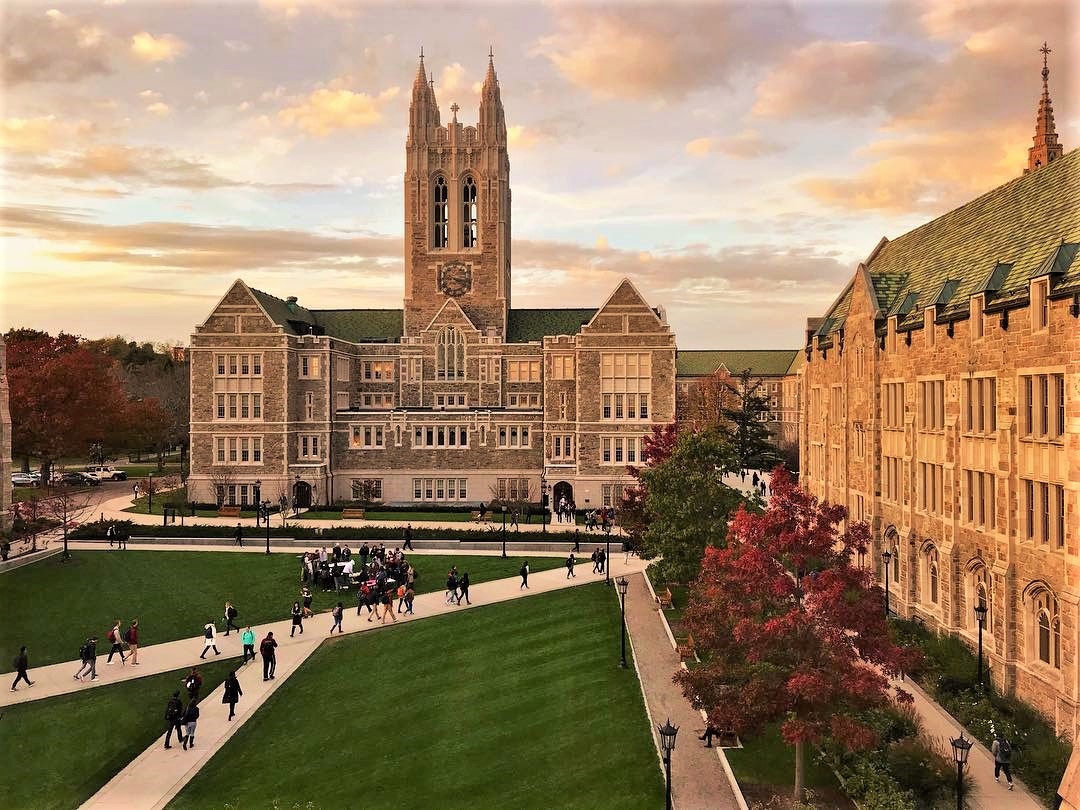 Boston College officials seized union fees from electrician Ardeshir Ansari’s paycheck at the behest of SEIU bosses, even after he had informed them that such fees violate his religious beliefs.
BOSTON, MA – In November, National Right to Work Foundation staff attorneys filed a federal Title VII religious discrimination lawsuit for a Boston College electrician whose rights were violated by the Service Employees International Union (SEIU) in illegally demanding union fees. The lawsuit also names his employer, Boston College, for its role in the discrimination.
Ardeshir Ansari objects to supporting the union based on deeply held religious beliefs. Under the local SEIU’s monopoly bargaining agreement at Boston College, however, he was told that he must join or financially support the SEIU or be fired. To avoid being fired, Ansari unwillingly paid fees to the union in violation of his sincere religious beliefs.
On October 1, 2018, Ansari sent a letter to Boston College and the SEIU, informing them his religious beliefs conflict with joining or financially supporting the union. He asked that his union fees be diverted to charity instead of being sent to the union, an established remedy for such a conflict.
Instead of responding, the college continued to take a cut of his paycheck and send it to SEIU officials in violation of his sincerely held religious beliefs.
In response, Ansari filed charges with the Equal Employment Opportunity Commission (EEOC) against college and union officials. The EEOC then determined that both Boston College and the SEIU had violated Title VII.
Last September, the EEOC gave Ansari a right-to-sue letter, which authorized him to file a lawsuit under Title VII of the Civil Rights Act of 1964. That federal law prohibits employers and unions from discriminating against an individual based on his or her religious beliefs.
In November, Foundation staff attorneys filed a lawsuit for Ansari against Boston College and the SEIU for illegally discriminating against him by failing to reasonably accommodate his religious beliefs, violating his rights under Title VII.
The lawsuit demands that college and SEIU local officials pay all fees deducted from Ansari’s paycheck to a charity mutually agreed upon and seeks damages for the emotional distress he suffered while his rights were violated for more than a year.
EEOC Found Religious Discrimination by SEIU
Moreover, the Title VII lawsuit asks the court to prevent the college from continuing to discriminate against his religious beliefs and that the union be required to inform workers that those with religious objections to the payment of union fees are entitled by law to pay those fees to a charity instead.
“Workers with sincere religious objections to joining or funding a union are legally protected from being forced to violate their conscience,” said National Right to Work Foundation Vice President and Legal Director Ray LaJeunesse. “No one should ever be forced to choose between keeping a job to provide for their family and violating their deeply held religious beliefs by supporting a union.”
“Right to Work laws protect workers like Mr. Ansari from this kind of discrimination. Under those laws, workers can stop paying union fees and resign union membership for any reason and thus avoid illegal religious discrimination,” added LaJeunesse.
Boston College Electrician Hits SEIU Union, College with Lawsuit for Religious Discrimination in Forced Union Fees Requirement
Instead of accommodating employee’s religious beliefs as required by federal law, SEIU union officials and college administrators repeatedly ignored and violated his rights
Boston, MA (November 20, 2019) — Ardeshir Ansari, an electrician who works for Boston College filed a Title VII religious discrimination lawsuit today against the college and Service Employees International Union 32BJ, District 615 (SEIU) with free legal assistance from National Right to Work Legal Defense staff attorneys.
Ardeshir Ansari objects to supporting the union based on deeply held religious beliefs. Under the local SEIU’s monopoly bargaining agreement at Boston College, however, he was told that he must join or financially support the SEIU or be fired. To avoid being fired, Ansari paid fees to the union, despite his sincere religious beliefs. Ansari is invoking Title VII of the Civil Rights Act of 1964, which prohibits discriminating against an individual based on his or her religious beliefs.
On October 1st last year, Ansari sent a letter to Boston College and the SEIU informing them of how his religious beliefs conflict with joining or financially supporting the union. He asked that his union fees be diverted to charity instead of being sent to the union, which is a long-established remedy for such a conflict. Instead of responding, the college continued to take a cut of his paycheck and send it to SEIU officials in violation of his sincerely held religious beliefs.
In January this year Ansari filed charges with the Equal Employment Opportunity Commission (EEOC) against the college and union officials, and the EEOC determined this summer that both Boston College and the SEIU had violated Title VII. In September, the EEOC gave Ansari a right-to-sue letter, which authorized him to file a lawsuit under Title VII against the college and the union.
Consequently, Foundation staff attorneys today filed a lawsuit on Ansari’s behalf against Boston College and the SEIU for illegally discriminating against Ansari for failing to reasonably accommodate his religious beliefs in violation of his rights under Title VII of the Civil Rights Act. The lawsuit further alleges that because Boston College made paycheck deductions for the SEIU despite Ansari’s notice of religious objections, and because Ansari would have been fired if he did not pay the fees, their actions constitute quid pro quo religious harassment.
The lawsuit asks that the college and SEIU local pay all fees deducted from Ansari’s paycheck to a charity mutually agreed upon and pay Ansari for damages for the emotional distress he has suffered while his rights have been violated for more than a year. It also asks the court to prevent the college from continuing to discriminate against his religious beliefs and asks that the union be required to inform workers that those with religious objections to the payment of union fees are entitled to pay those fees to a charity instead.
“Workers who have sincere religious objections to joining or funding a union are legally protected from being forced to violate their conscience,” said National Right to Work President Mark Mix. “No one should ever be forced to choose between keeping a job to provide for their family and violating their deeply held religious beliefs by supporting a union.”
“Ultimately, a Right to Work law that makes all union payments voluntary is the best solution to this type of illegal discrimination. That way, all workers who object to funding union activities are free to cut off such payments whether or not the nature of their opposition to the union is faith-based,” added Mix.





