
Vanderbilt Grad Students Free From Aggressive UAW Campaign
The following article is from the National Right to Work Legal Defense Foundation’s bi-monthly Foundation Action Newsletter, March/April 2025 edition. To view other editions of Foundation Action or to sign up for a free subscription, click here.
Foundation-assisted students challenged union-backed NLRB demand for private info

Notorious UAW President Shawn Fain saw his union rebuffed by many Vanderbilt students concerned about the union’s intrusive organizing methods. Facing legal and political headwinds, UAW bosses dropped their campaign.
NASHVILLE, TN – Union monopoly bargaining creates barriers to freedom for people across the country. It requires workers to accept self-motivated union bosses as their sole “voice” on issues in their workplace. But, in the private sector, it’s unfortunately the law of the land.
That’s not as clear when it comes to colleges and universities. Although the National Labor Relations Board (NLRB) under President Obama upended existing precedent to dubiously let union officials impose monopoly arrangements on graduate students — a ruling continued by the Biden NLRB — the Family Educational Rights and Privacy Act (FERPA) generally bans universities from sharing student information without student permission. This puts FERPA and federal labor law at odds, as such information is something employers are required by the NLRB to produce during a unionization campaign.
After the United Auto Workers (UAW) union launched a campaign in late 2024 to sweep Vanderbilt University’s graduate students under their monopoly power, NLRB officials required the college to fork over the info of thousands of students. But three courageous students stood up with free legal aid from the National Right to Work Legal Defense Foundation, arguing that disclosure without any procedure violated their privacy rights under FERPA.
Now, union officials have backed down and withdrawn the entire union campaign at the college. The three students and others are free from being forced into UAW union monopoly ranks and from the disclosure of their FERPA-protected information.
“The withdrawal of UAW organizers’ petition seeking a vote to unionize us against our will is a welcome victory for us in our defense of our rights and the rights of our fellow graduate students,” commented one of the Foundation-assisted Vanderbilt graduate students, identified as Jane Doe 1 in legal filings to protect her identity.
Students: FERPA Lets Us Protect Private Info From Unionization Scheme
The students’ effort to protect their privacy began in October 2024, when two students identified in filings as John Doe 1 and John Doe 2 moved to intervene in the NLRB case. They argued that FERPA’s language permits students to seek “protective action” if a university receives a subpoena seeking their personal information, as Vanderbilt had from the NLRB. A regional NLRB official denied their motion to intervene. Foundation attorneys submitted an emergency appeal for John Doe 1 and John Doe 2 to the NLRB in Washington, DC, emphasizing that the students needed an opportunity to “address the serious privacy issues raised by the Region’s subpoena.”
Foundation attorneys additionally filed an updated motion to intervene that included Jane Doe 1 as another student seeking to intervene in the case. Several other graduate students also submitted less-formal objections urging the agency not to enforce a subpoena divulging their private information. The District Court for the Middle District of Tennessee issued a ruling on November 22, 2024, temporarily releasing Vanderbilt from its obligation to comply with the NLRB subpoenas. A few weeks later, UAW union officials announced they were withdrawing their petition to unionize Vanderbilt graduate students, meaning the subpoenas seeking student information are effectively null and void.
Foundation Fights Union Malfeasance at Colleges Nationwide
Meanwhile, Foundation attorneys are assisting graduate students at Dartmouth and MIT with fighting attempts by United Electrical (UE)- affiliated unions to demand dues payments from students against their will and in violation of their rights. Kara Rzasa, a Dartmouth graduate student, and Michael Fernandez, an MIT graduate student, have each hit UE local and national affiliates with charges for illegal polices UE officials are utilizing nationwide when demanding forced dues payments.
“While we’re happy that the private information of Vanderbilt grad students is now secure, it’s clearer than ever that the biased NLRB decisions granting union bosses the ability to foist union monopolies over graduate students were wrong,” commented National Right to Work Foundation Vice President and Legal Director William Messenger. “In Foundation cases, we’ve seen union bosses put students’ academic freedom, religious freedom, and privacy protections all at risk, which is why the new appointees to the NLRB need to clarify that students are off-limits to union monopoly power schemes.”
Philly-Area Manufacturing Employees Triumph Over UAW Intimidation Campaign
The following article is from the National Right to Work Legal Defense Foundation’s bi-monthly Foundation Action Newsletter, January/February 2025 edition. To view other editions of Foundation Action or to sign up for a free subscription, click here.
UAW bosses now required to attend federal training after trying to fire non-striking workers
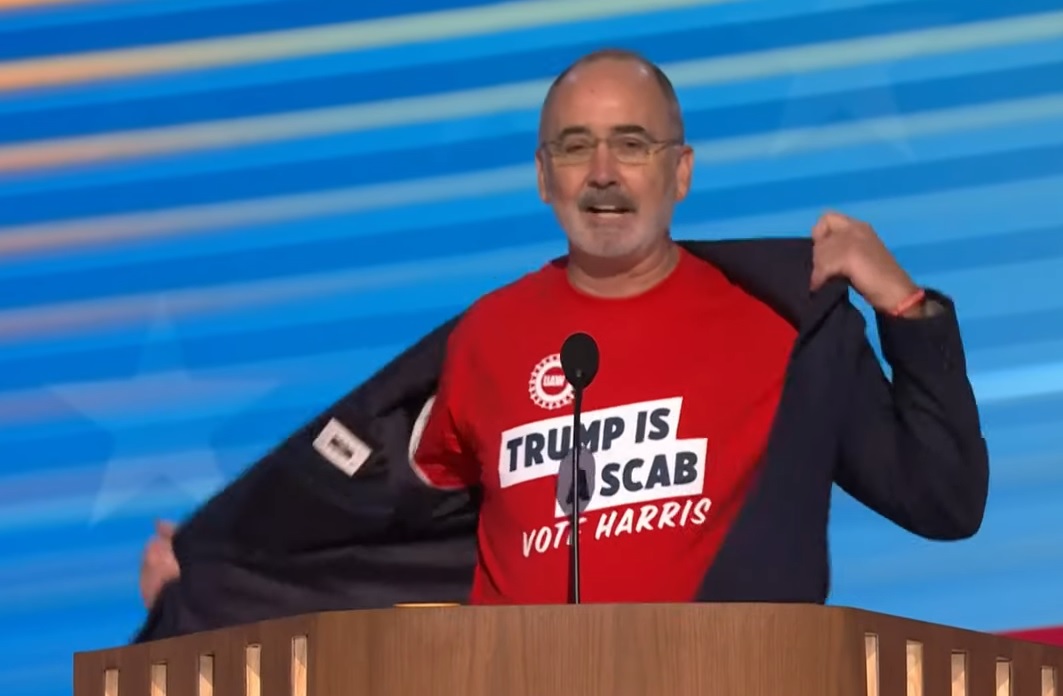
Despite an active federal corruption investigation, UAW President Shawn Fain and his underlings continue to push a radical political agenda using workers’ dues money while ignoring the rights of the rank-and-file employees union bosses claim to “represent.”
PHILADELPHIA, PA – It’s not particularly difficult to see why United Auto Workers (UAW) union officials are having trouble convincing workers that the union has their best interests in mind.
The union’s upper echelon is still reeling from a federal probe that hit about a dozen top union bosses with prison sentences for embezzling workers’ dues, and to this day it appears that UAW President Shawn Fain — a so-called “reformer” — is being scrutinized by federal monitors for manipulating his position to secure personal benefits.
But the corruption within the UAW goes far beyond the union’s top executives. Throughout 2024, National Right to Work Foundation-backed workers for auto accessory manufacturer Dometic fought illegal UAW demands that they strike or be fired.
UAW Union Used Mass Texts, Social Media to Bully Workers
In March 2024, seven Philadelphia-area Dometic employees filed unfair labor practice charges against the UAW Local 644 union, detailing that UAW bosses had ordered a strike and threatened to get fired anyone who decided to keep working.
Despite the employees’ resignation of their union memberships, UAW officials began internal proceedings against each of them soon after the strike began. Federal labor law forbids unions from imposing internal discipline on those who abstain from union membership.
The Dometic workers didn’t back down. With free Foundation legal aid, all the workers won settlements in October 2024 that fully vindicated their rights. UAW officials must now make postings correctly informing workers of their right to abstain from union activities, and the settlement even requires union chiefs to undergo mandatory training on the limits of “a union’s right to impose internal discipline,” among other topics.
As the workers’ legal battle dragged on, the Dometic workers continued to expose ugly details of the UAW’s intimidation campaign surrounding the strike. In April 2024, Dometic employee Mario Coccie filed a second round of charges against UAW Local 644 for a mass text message that threatened all Dometic employees — not just those who had filed charges against the union — with termination if they didn’t strike.
“The information in this text reveals union officials’ real intentions, which is to hurt anyone willing to stand up for themselves,” said Coccie at the time. “What is happening in this case is completely unjust.”
UAW officials also refused to respect Coccie and his coworkers’ rights under the Foundation-won CWA v. Beck Supreme Court decision, which prohibits union officials from requiring workers to pay for the union’s political expenditures just to keep their jobs. Because Pennsylvania lacks Right to Work protections for its private sector workers, UAW bosses can force workers to pay union fees as a condition of employment, but must abide by Beck.
Legal Privileges Enable UAW Corruption
In addition to the notice postings and required training, the Foundation-won settlement orders union officials to delete social media posts threatening workers who refused to strike.
“We’re proud to have helped Mario Coccie and his coworkers vindicate their rights,” commented National Right to Work Foundation Vice President Patrick Semmens. “But it has become all too clear that union corruption — which can take the form of anything from stealing millions in worker dues to intimidating workers to join a picket line — is only made easier when union bosses are granted more legal privileges.
“Policymakers need to protect workers’ freedom to cut off funding for union bosses who don’t serve their interests, and to fully abstain from union activities that individual employees do not see as in their own best interest,” Semmens added.
Foundation-Backed Workers Push Back Against UAW Bosses’ Coercive Tactics
The following article is from the National Right to Work Legal Defense Foundation’s bi-monthly Foundation Action Newsletter, July/August 2024 edition. To view other editions of Foundation Action or to sign up for a free subscription, click here.
New Jersey ouster of UAW comes as union bosses wage aggressive nationwide campaign
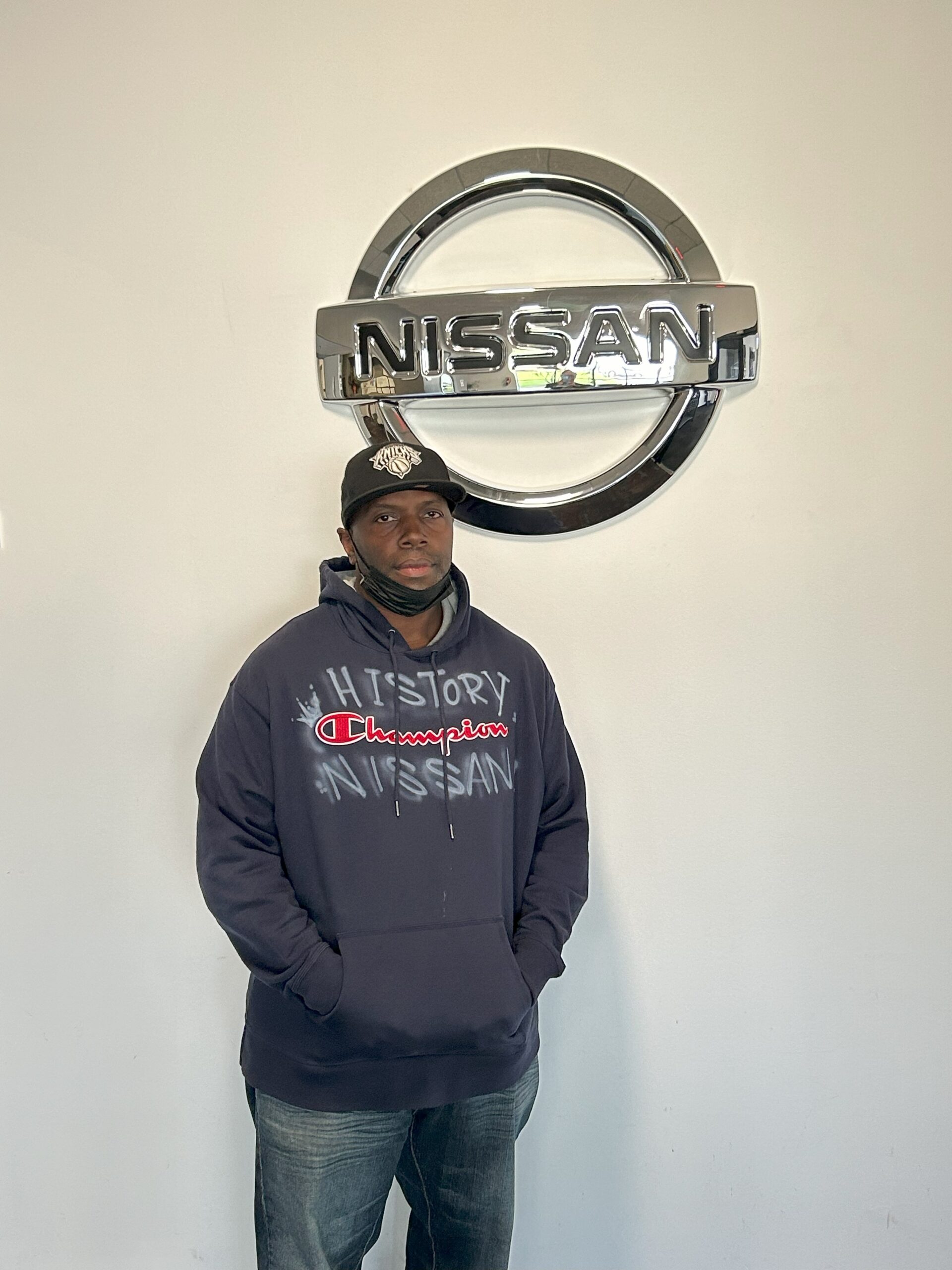
Fain’s Bane: Michael Oliver and his Nissan parts distribution coworkers ousted UAW officials even after they’d tried to force a new contract on the workplace. UAW President Shawn Fain had no response after Oliver’s victory.
SOMERSET, NJ – United Auto Workers (UAW) union bosses this April and May continued marching forward their multi-million-dollar campaign to get auto workers from traditionally nonunion plants under their control. They’ve met with only mixed success — most recently a union election at Mercedes-Benz’s large plant in Vance, Alabama, saw nearly 600 more workers vote against UAW control than for it.
Meanwhile, National Right to Work Foundation staff attorneys helped a large group of New Jersey employees oust the UAW after they’d seen the union’s agenda up close. Michael Oliver and his coworkers successfully exercised their right to vote UAW bosses out of a Nissan parts distribution plant in Somerset, New Jersey. Nearly 70% of the workers who participated in the “decertification vote” at the Nissan facility voted to send the Detroit-based union packing.
“UAW union officials were far more concerned with hoarding power in the workplace than communicating with or listening to workers,” Oliver told The Detroit News of his and his colleagues’ effort. “They kept us completely in the dark about contract negotiations, and treated anyone in the workplace who opposed their agenda or questioned their leadership with a huge amount of arrogance, contempt, and even intimidation.”
Oliver submitted a decertification petition to the National Labor Relations Board (NLRB) in early April, asking the federal agency to hold a vote at his workplace to remove the union. The petition contained signatures from enough of his coworkers to trigger a vote under NLRB rules. The vote took place on April 24.
Even in the midst of widespread worker opposition, UAW officials tried (albeit unsuccessfully) to manipulate NLRB processes in order to remain in power at the Nissan parts distribution plant. Shortly after Oliver submitted the decertification petition, UAW union officials announced that they had ratified a new union contract with Nissan management.
The NLRB’s dubious “contract bar” allows union bosses in many cases to quash decertification efforts for generally up to three years while a union contract is in effect. However, the contract bar didn’t stop Oliver and his coworkers’ requested election, because union officials weren’t able to reach a monopoly bargaining agreement with Nissan before Oliver filed his petition.
Shawn Fain Lost for Words After Nissan Workers Oust UAW Union
Oliver and his coworkers’ endeavor caught UAW President Shawn Fain off-guard. Fain told The Detroit News “I don’t have a response, because that kind of happened under the radar” and claimed that the company somehow played an illicit role in influencing the workers to kick out the union. However, there’s no evidence to support that claim, and UAW officials filed no objections to the election despite having ample time to do so.
Philly-Area Dometic Workers Fight Illegal UAW Strike Threats
Meanwhile, UAW chieftains at the Philadelphia-area plant of auto accessory manufacturer Dometic are facing new worker-filed federal charges for sending a mass text to employees illegally threatening their employment if they exercise their right to continue working during a strike.
These new charges come after several Dometic employees already hit the UAW with charges accusing the union of imposing unlawful disciplinary procedures on them simply because they resigned membership in the union.
Mario Coccie, the Dometic worker who filed the latest round of federal charges against the UAW with free Foundation legal aid, was also in the group of workers who initially charged the union with illegally penalizing workers who resign membership. “The information in this text reveals union officials’ real intentions, which is to hurt anyone willing to stand up for themselves,” commented Coccie. “What is happening in this case is completely unjust.”
“With UAW union bosses spending millions of dollars to expand their influence to nonunion facilities around the country, it’s important to remember that workers who have experienced UAW officials’ ‘representation’ often end up resenting it,” commented National Right to Work Foundation Vice President and Legal Director William Messenger. “Nissan employees in New Jersey and Dometic workers in Pennsylvania are prime examples of this, and their situations demonstrate above all that workers must have more leeway in disaffiliating with or completely voting out union bosses whose agendas harm the workers.”





