
Public Servants Across Country Stand Strong in Defending Janus Rights
The following article is from the National Right to Work Legal Defense Foundation’s bi-monthly Foundation Action Newsletter, January/February 2026 edition. To view other editions of Foundation Action or to sign up for a free subscription, click here.
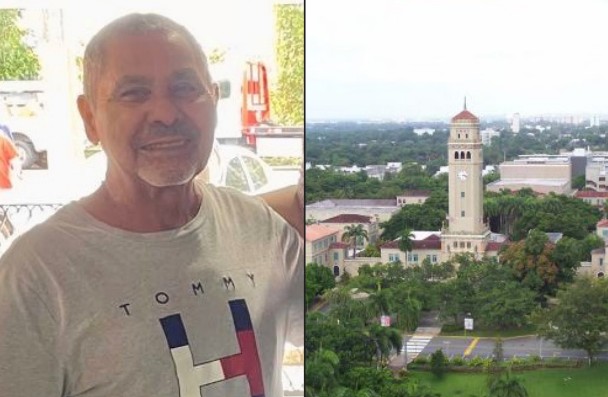
Jose Ramos, a University of Puerto Rico maintenance employee, isn’t going to let union bosses maintain their flimsy defense that they are entitled to keep his hard-earned money in violation of the First Amendment.
As 2025 waned, National Right to Work Foundation staff attorneys brought their expertise to bear as government employees in Washington State and Puerto Rico continued legal battles to get back money that union bosses never should have seized from their paychecks.
These workers are invoking their rights under the Foundation-won Janus v. AFSCME decision, which the Supreme Court handed down in 2018. In Janus, the Justices ruled that all American public sector workers have a First Amendment right to abstain from paying dues to union officials they don’t support.
Despite Janus’ commonsense protections, many union bosses, intent on keeping their coffers stocked with dues money seized from unwilling public employees, are still trying to skirt the Court’s ruling.
AFSCME Bosses Refuse to Return Illegally-Seized Money to Worker
That includes AFSCME union officials in Washington State, whom City of Everett employee Xenia Davidsen is fighting at the Washington State Public Employment Relations Commission (PERC). Davidsen charged AFSCME chiefs with accepting money that City officials had illicitly funneled from her paycheck to the union.
Davidsen had requested dues deductions to stop in 2024 in accordance with Janus, but City officials failed to monitor the email address through which AFSCME directed the City to stop the deductions. This incompetence led to the City seizing dues money from Davidsen at least 12 times without her authorization — and AFSCME union officials have stubbornly refused to admit they must post a notice stating they were wrong to accept the deductions.
“On none of those… instances did the Union stop to question why it was accepting dues that it knew were unauthorized to it,” argue Foundation attorneys in Davidsen’s latest brief before the PERC.
Meanwhile, Foundation attorneys also defended the Janus rights of two groups of Puerto Rico public employees in oral arguments before the First Circuit Court of Appeals last October.
Foundation Challenges Puerto Rico Court’s Refusal to Nix Anti-Janus Statute
In one case, Cruz v. UIA, Puerto Rico Aqueduct and Sewer Authority (PRASA) employee Reynaldo Cruz is trying to reclaim union dues money that officials of the Authentic Independent Union of Water and Sewer Authority Employees (UIA) took in violation of his First Amendment rights.
Cruz’s lawsuit challenges both union bosses’ demands that he pay union dues or lose his job, as well as the Puerto Rico territorial laws that allow such unconstitutional demands. Though UIA union bosses claim they have already deposited the illegally-seized money with a lower federal court, that court confusingly declined to issue a ruling that legally entitles Cruz to collect the funds.
During oral arguments, Cruz’s legal team argued that this legal sleight-of-hand created “a roadmap for civil rights defendants to violate civil rights plaintiffs’ rights.”
Foundation Won’t Let Union Bosses & Bureaucrats Ignore Janus
Also argued before the First Circuit at the end of 2025 was Ramos v. Delgado, in which Foundation attorneys represent Jose Ramos and other University of Puerto Rico maintenance employees who had dues illegally deducted from their paychecks for years.
Ramos and his colleagues are seeking refunds of all dues taken unlawfully since the Janus decision. Puerto Rico continues to be a hotbed for union violations of the Janus decision, but luckily, workers continue to stand up with Foundation legal aid.
Most recently, public employee Luis Rigau filed a federal lawsuit to challenge the Puerto Rico Industrial Commission (PRIC) union’s blatantly illegal reinstatement of automatic forced-dues deductions against nonmembers.
“Despite Janus’ clear constitutional command, union bosses, legislators, and public officials are still trying to do legal gymnastics to end-run the decision,” commented National Right to Work Foundation Vice President and Legal Director William Messenger.
“All public sector workers deserve the free choice that Janus secures, and Foundation attorneys will continue to back them in their court battles for freedom.”
Starbucks Baristas File Brief Urging Supreme Court to Allow President to Remove Rogue Agency Officers
National Right to Work Foundation-backed federal case for Starbucks employees was first federal case to argue that NLRB officials can’t be shielded from the President’s oversight
Washington, DC (October 20, 2025) – Two Starbucks employees represented by the National Right to Work Legal Defense Foundation have filed an amicus brief at the United States Supreme Court in the case Trump v. Slaughter. The brief argues that restrictions on the President’s authority to fire members of executive bodies, such as the National Labor Relations Board (NLRB) or the Federal Trade Commission (FTC), are unconstitutional, violating the separation of powers.
The amicus brief was filed on behalf of Ariana Cortes and Logan Karam, two New York Starbucks employees who challenged the constitutionality of the structure of the NLRB in a separate federal court case with the assistance of Foundation staff attorneys.
Since 2023, Foundation staff attorneys have pioneered the legal argument that the NLRB’s structure is unconstitutional because it places restrictions on the President’s authority to fire the NLRB’s members, despite it being part of the executive branch of government. This disconnect exemplifies the problem of federal bureaucrats operating as an unaccountable, “headless fourth branch,” something clearly at odds with the government’s constitutional structure.
Now, the Trump Administration is using this same argument as a justification to fire members of the FTC. Rebecca Slaughter, a Biden appointee to the FTC, has sued to be reinstated, and the case is now before the Supreme Court. The Foundation-backed amicus brief argues that as the Court considers the FTC, it must keep in mind that other so-called “independent agencies” that wield executive power, such as the NLRB, must be subject to Presidential control and removal.
Supreme Court May Reverse Humphrey’s, Must Recognize Its Limitations
Trump v. Slaughter provides the Supreme Court an opportunity to reverse its decision in the 1935 case Humphrey’s Executor v. United States, in which the Court crafted an exception to the general rule that the President can remove principal officers at will under Article II of the U.S. Constitution. In theory, Humphrey’s exempted agencies that exercised “quasi-judicial” or “quasi-legislative” power, but not those that exercise executive power.
But regardless of the Court’s reevaluation of the case, “the NLRB fails the Humphrey’s Executor test,” the brief argues.
“The NLRB is a policymaking body that enforces the [National Labor Relations Act] based on its legal conclusions, not scientific or technical judgments,” write Foundation staff attorneys. “[T]he Board does not exercise quasi-legislative or quasi-judicial authority. It exercises executive power in everything it does.”
The brief concludes with the Foundation’s legal argument that Humphrey’s “cannot neuter the President’s ability to supervise those who exercise substantial parts of [executive] power.” Therefore, the Supreme Court “should make clear that the President’s removal power applies to every agency that exercises executive power, including the NLRB.”
Clear Separation of Powers Would Support Workers’ Individual Rights
A proper understanding of the limitations of Humphrey’s when it comes to executive bodies like the NLRB would support workers like Cortes and Karam as they exercise their individual rights. Cortes and Karam are trying to exercise their right to remove local union bosses from their respective workplaces. But non-statutory policies enforced by the pro-Big Labor Biden NLRB have stymied their efforts. Success in this case could help ensure that Cortes and Karam receive a fair judgment from the NLRB in their cases.
“Unaccountable and biased NLRB bureaucrats have caused direct harm to independent-minded workers and their individual rights, and the Supreme Court should rightfully restore the proper separation of powers, including at the NLRB,” commented National Right to Work Foundation President Mark Mix. “We are proud that the very legal arguments made by Foundation attorneys are now being utilized by this administration to dismantle the unaccountable fourth branch of government and restore proper constitutional structure.”
Philly-Area Manufacturing Employees Triumph Over UAW Intimidation Campaign
The following article is from the National Right to Work Legal Defense Foundation’s bi-monthly Foundation Action Newsletter, January/February 2025 edition. To view other editions of Foundation Action or to sign up for a free subscription, click here.
UAW bosses now required to attend federal training after trying to fire non-striking workers
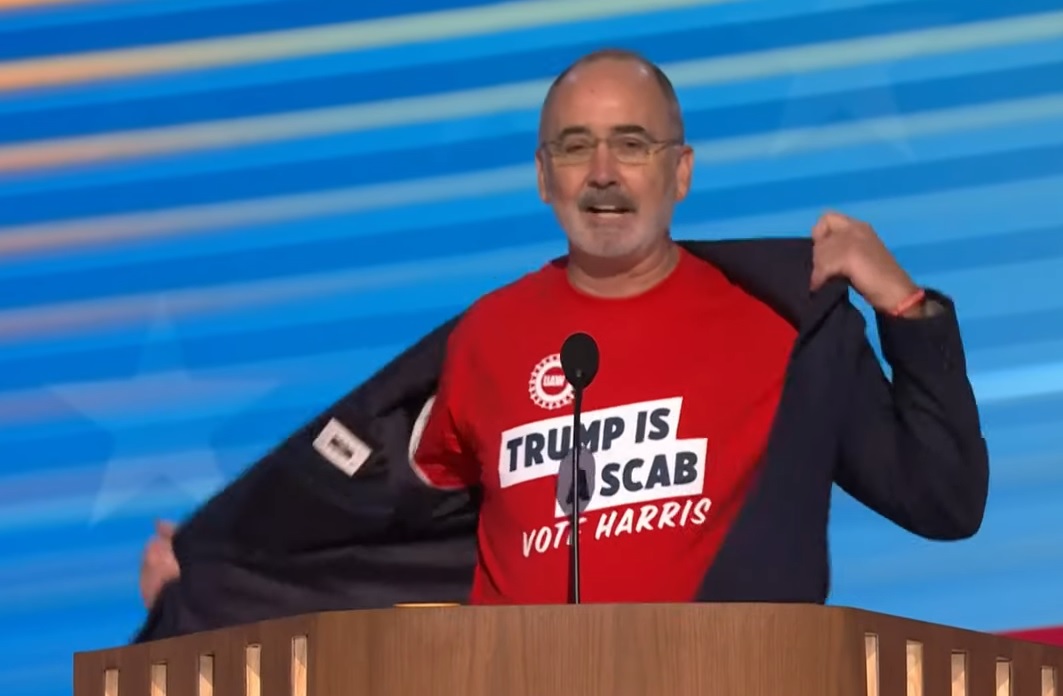
Despite an active federal corruption investigation, UAW President Shawn Fain and his underlings continue to push a radical political agenda using workers’ dues money while ignoring the rights of the rank-and-file employees union bosses claim to “represent.”
PHILADELPHIA, PA – It’s not particularly difficult to see why United Auto Workers (UAW) union officials are having trouble convincing workers that the union has their best interests in mind.
The union’s upper echelon is still reeling from a federal probe that hit about a dozen top union bosses with prison sentences for embezzling workers’ dues, and to this day it appears that UAW President Shawn Fain — a so-called “reformer” — is being scrutinized by federal monitors for manipulating his position to secure personal benefits.
But the corruption within the UAW goes far beyond the union’s top executives. Throughout 2024, National Right to Work Foundation-backed workers for auto accessory manufacturer Dometic fought illegal UAW demands that they strike or be fired.
UAW Union Used Mass Texts, Social Media to Bully Workers
In March 2024, seven Philadelphia-area Dometic employees filed unfair labor practice charges against the UAW Local 644 union, detailing that UAW bosses had ordered a strike and threatened to get fired anyone who decided to keep working.
Despite the employees’ resignation of their union memberships, UAW officials began internal proceedings against each of them soon after the strike began. Federal labor law forbids unions from imposing internal discipline on those who abstain from union membership.
The Dometic workers didn’t back down. With free Foundation legal aid, all the workers won settlements in October 2024 that fully vindicated their rights. UAW officials must now make postings correctly informing workers of their right to abstain from union activities, and the settlement even requires union chiefs to undergo mandatory training on the limits of “a union’s right to impose internal discipline,” among other topics.
As the workers’ legal battle dragged on, the Dometic workers continued to expose ugly details of the UAW’s intimidation campaign surrounding the strike. In April 2024, Dometic employee Mario Coccie filed a second round of charges against UAW Local 644 for a mass text message that threatened all Dometic employees — not just those who had filed charges against the union — with termination if they didn’t strike.
“The information in this text reveals union officials’ real intentions, which is to hurt anyone willing to stand up for themselves,” said Coccie at the time. “What is happening in this case is completely unjust.”
UAW officials also refused to respect Coccie and his coworkers’ rights under the Foundation-won CWA v. Beck Supreme Court decision, which prohibits union officials from requiring workers to pay for the union’s political expenditures just to keep their jobs. Because Pennsylvania lacks Right to Work protections for its private sector workers, UAW bosses can force workers to pay union fees as a condition of employment, but must abide by Beck.
Legal Privileges Enable UAW Corruption
In addition to the notice postings and required training, the Foundation-won settlement orders union officials to delete social media posts threatening workers who refused to strike.
“We’re proud to have helped Mario Coccie and his coworkers vindicate their rights,” commented National Right to Work Foundation Vice President Patrick Semmens. “But it has become all too clear that union corruption — which can take the form of anything from stealing millions in worker dues to intimidating workers to join a picket line — is only made easier when union bosses are granted more legal privileges.
“Policymakers need to protect workers’ freedom to cut off funding for union bosses who don’t serve their interests, and to fully abstain from union activities that individual employees do not see as in their own best interest,” Semmens added.
Puerto Rico Police Bureau Employees Foil Anti-Janus Scheme
The following article is from the National Right to Work Legal Defense Foundation’s bi-monthly Foundation Action Newsletter, November/December 2024 edition. To view other editions of Foundation Action or to sign up for a free subscription, click here.
Federal court strikes down discrimination against workers at the Puerto Rico Police Bureau who exercised First Amendment rights
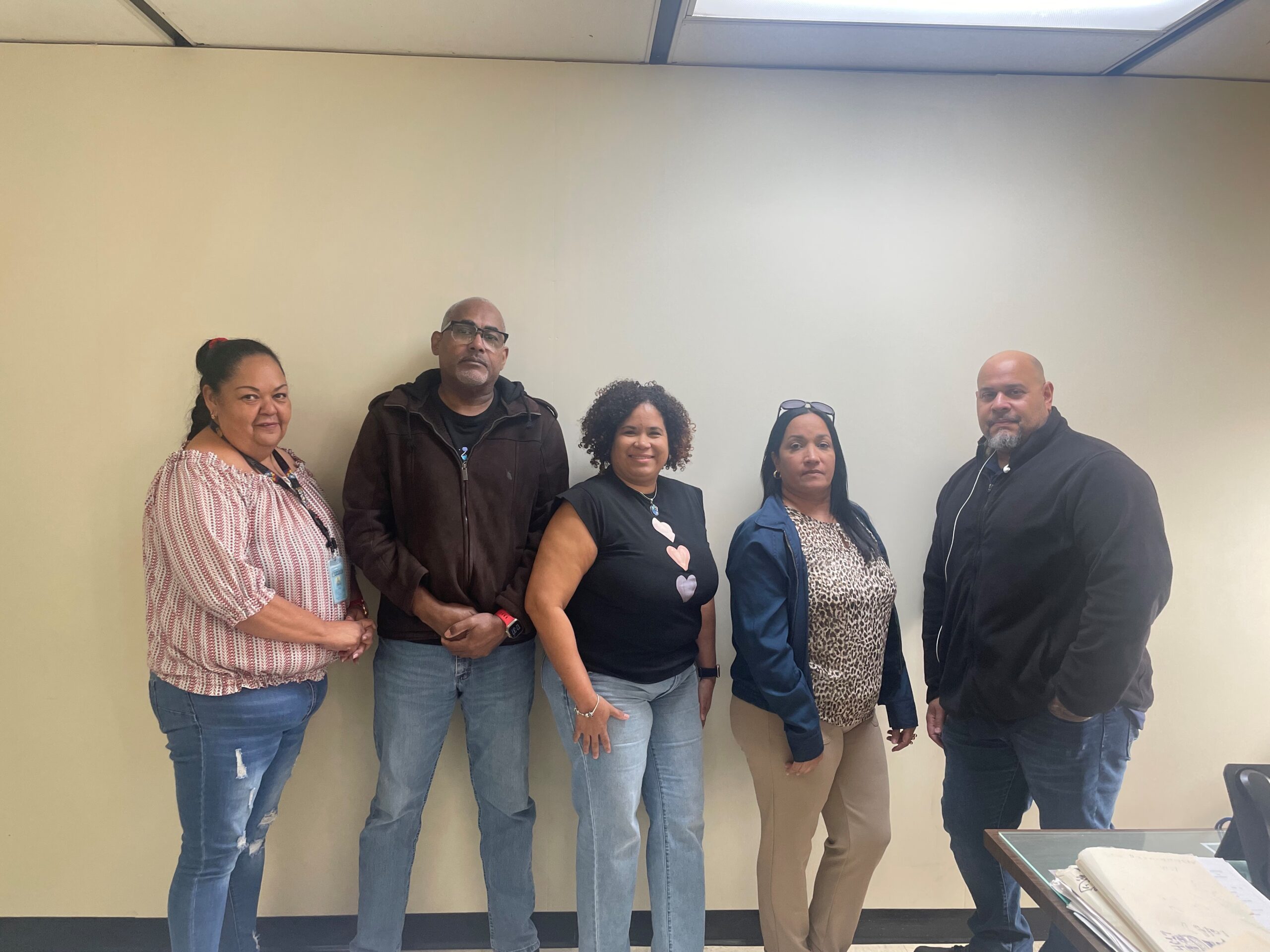
Vanessa Carbonell (center) and other employees of the Puerto Rico Police Bureau won big at the Puerto Rico District Court in September 2024. Their Foundation-won decision forces their employer and the union to stop violating their Janus rights.
SAN JUAN, PR – The National Right to Work Foundation’s 2018 victory at the U.S. Supreme Court in Janus v. AFSCME opened new horizons for employee freedom across the country. For the first time, the Justices recognized that the First Amendment prohibits union bosses from forcing public sector employees to join a union or pay dues as a condition of employment, and that union bosses can only take dues from a worker’s paycheck with their affirmative consent.
Foundation attorneys’ efforts to enforce the landmark decision yielded a big victory this September for a wide swath of civilian employees at the Puerto Rico Police Bureau (PRPB). In a class action federal lawsuit, more than a dozen PRPB employees charged officials of the Union of Organized Civilian Employees with violating their Janus rights by stripping them of an employer-provided health benefit because they refused to join the union.
A recent decision from the District Court of Puerto Rico found in favor of the employees’ arguments, stating that their employer had indeed taken away the health benefit because the employees exercised their right to not join or pay dues to the union.
Scheme Forced Workers to Join Union or Lose Access to Better Healthcare
“This is either retaliation for exercise of non-union members’ post-Janus non-associational rights under the First Amendment under the Constitution or simply discrimination,” said the Court.
According to lead plaintiff Vanessa Carbonell and her colleagues’ original lawsuit, they all exercised their Janus right to opt out of the union at various points after the 2018 Janus decision. They each began noticing that as dues ceased coming out of their paychecks, they also stopped receiving a $25-a-month employer-paid benefit intended to help employees pay for better health insurance.
The lawsuit demonstrated that PRPB officials cut the benefit off to employees who refused union membership — a clear case of discrimination against employees who exercise their First Amendment right to abstain from union affiliation.
Union and Employer Must Stop Discrimination
The District Court’s decision, in addition to declaring that the ploy by PRPB and the Union of Organized Civilian Employees is unconstitutional, orders an injunction to stop PRPB officials from continuing to withhold the benefit from Carbonell and other employees.
“Janus enshrined a very simple First Amendment principle: That union officials need to convince public employees to support their organization and activities voluntarily,” commented National Right to Work Foundation Vice President Patrick Semmens.
Jewish CUNY Professors’ Groundbreaking Bid at Supreme Court Challenging Forced Union Association Fully Briefed
Profs challenge NY law forcing them under ‘representation’ of anti-Semitic union officials; seek First Amendment ruling against union coercion of public employees
Washington, DC (December 23, 2024) – The final brief has been submitted urging the U.S. Supreme Court to hear six City University of New York (CUNY) professors’ First Amendment case challenging the monopoly representation powers of Professional Staff Congress (PSC) union officials. The professors, five of whom are Jewish, want to dissociate completely from PSC based on public statements and other actions the professors find highly anti-Semitic and anti-Israel, but New York state law forces the professors to accept the union’s so-called “representation.”
The professors, Avraham Goldstein, Michael Goldstein, Frimette Kass-Shraibman, Mitchell Langbert, Jeffrey Lax, and Maria Pagano, are receiving free legal aid from the National Right to Work Legal Defense Foundation and The Fairness Center. The lawsuit challenges aspects of New York State’s “Taylor Law”, which grants union bosses monopoly bargaining power in the public sector. This gives union bosses the power to speak and contract for public workers, including those that want nothing to do with the union. In addition to opposing the union’s extreme ideology, the professors oppose being forced into a “bargaining unit” of instructional staff who share the union’s objectionable beliefs or have employment interests diverging from their own.
The professors’ original petition for writ of certiorari, filed in July, points out that the High Court has, for decades, recognized how public sector monopoly bargaining burdens workers’ First Amendment freedom of association rights. In 1944, the Supreme Court’s decision in Steele v. Louisville & Nashville Railway Co. recognized how rail union bosses were manipulating their powers over the workplace to discriminate against African-American railway workers. The Supreme Court restated its concerns most recently in the 2018 Foundation-won Janus v. AFSCME decision, calling monopoly bargaining “a significant impingement on associational freedoms.”
In the latest filing, Foundation attorneys continue attacking PSC lawyers’ theory that the Supreme Court’s 1984 decision in Minnesota State Board for Community Colleges v. Knight – a case that dealt with the unrelated topic of whether public employees who had abstained from union membership had a right to attend union meetings – should dictate an unfavorable outcome for the professors in this case.
“This case squarely presents the question whether it violates the First Amendment for a state to prohibit individuals from dissociating from a union’s representation to protest that union’s expressive activities.… As the Professors stated in their complaint and briefs, by compelling them to remain under the yoke of PSC’s representation, PSC and CUNY quash the Professors’ ability to express their revulsion with PSC’s advocacy. They should be free to completely dissociate themselves from that advocacy group.”
Law Forces Jewish CUNY Professors to Associate with Anti-Israel PSC Union
The professors’ original complaint recounted that several of the professors chose to dissociate from PSC based on a host of discriminatory actions perpetrated by union agents and adherents, including a June 2021 union resolution that the professors viewed as “anti-Semitic, anti-Jewish, and anti-Israel.”
The complaint said Prof. Michael Goldstein “experienced anti-Semitic and anti-Zionist attacks from members of PSC, including what he sees as bullying, harassment, destruction of property, calls for him to be fired, organization of student attacks against him, and threats against him and his family.” Goldstein has needed a guard to accompany him on campus, the complaint noted.
Prof. Lax, the complaint explained, already received in a separate case a letter of determination from the Equal Employment Opportunity Commission (EEOC) “that CUNY and PSC leaders discriminated against him, retaliated against him, and subjected him to a hostile work environment on the basis of religion.” Prof. Lax “has felt marginalized and ostracized by PSC because the union has made it clear that Jews who support the Jewish homeland, the State of Israel, are not welcome,” said the complaint. As their petition of certiorari notes, these conflicts have significantly increased since October 7, 2023.
SCOTUS Asked to Overturn Laws Imposing Union Power on Public Workers
The petition asks the Supreme Court to take up the case and stop CUNY and the State of New York from letting PSC union bosses impose their “representation” on the professors. It also demands that the Court declare unconstitutional Section 204 of New York’s Taylor Law to the extent that it compels the professors under union power.
University faculty and students across the country are increasingly seeking out Foundation legal aid to counter union coercion within the academic sphere – especially coercion relating to anti-Semitic or anti-Israel agendas that union bosses are pushing. In August, five Jewish Massachusetts Institute of Technology (MIT) graduate students won favorable settlements after pro-BDS Graduate Student Union (GSU-UE) officials tried to force them to pay for the union’s activities despite their requests for religious accommodations under the Civil Rights Act of 1964. A mathematics Ph. D. student at Dartmouth is pursuing a similar religious discrimination case with Foundation aid.
“No public worker should be forced to associate with union officials who denigrate their culture and identity. But unfortunately this is exactly what New York State’s Taylor Law and many similar laws around the country allow,” commented National Right to Work Foundation President Mark Mix. “The Supreme Court has expressed concerns with monopoly bargaining for decades, and it’s high time that the justices finally acknowledge the First Amendment protects government employees from being forced to accept ‘representation’ they adamantly oppose.”
Professors Launch Landmark SCOTUS Bid to End Forced Union Association
The following article is from the National Right to Work Legal Defense Foundation’s bi-monthly Foundation Action Newsletter, September/October 2024 edition. To view other editions of Foundation Action or to sign up for a free subscription, click here.
NY law unconstitutionally forces professors under “representation” of anti-Semitic union
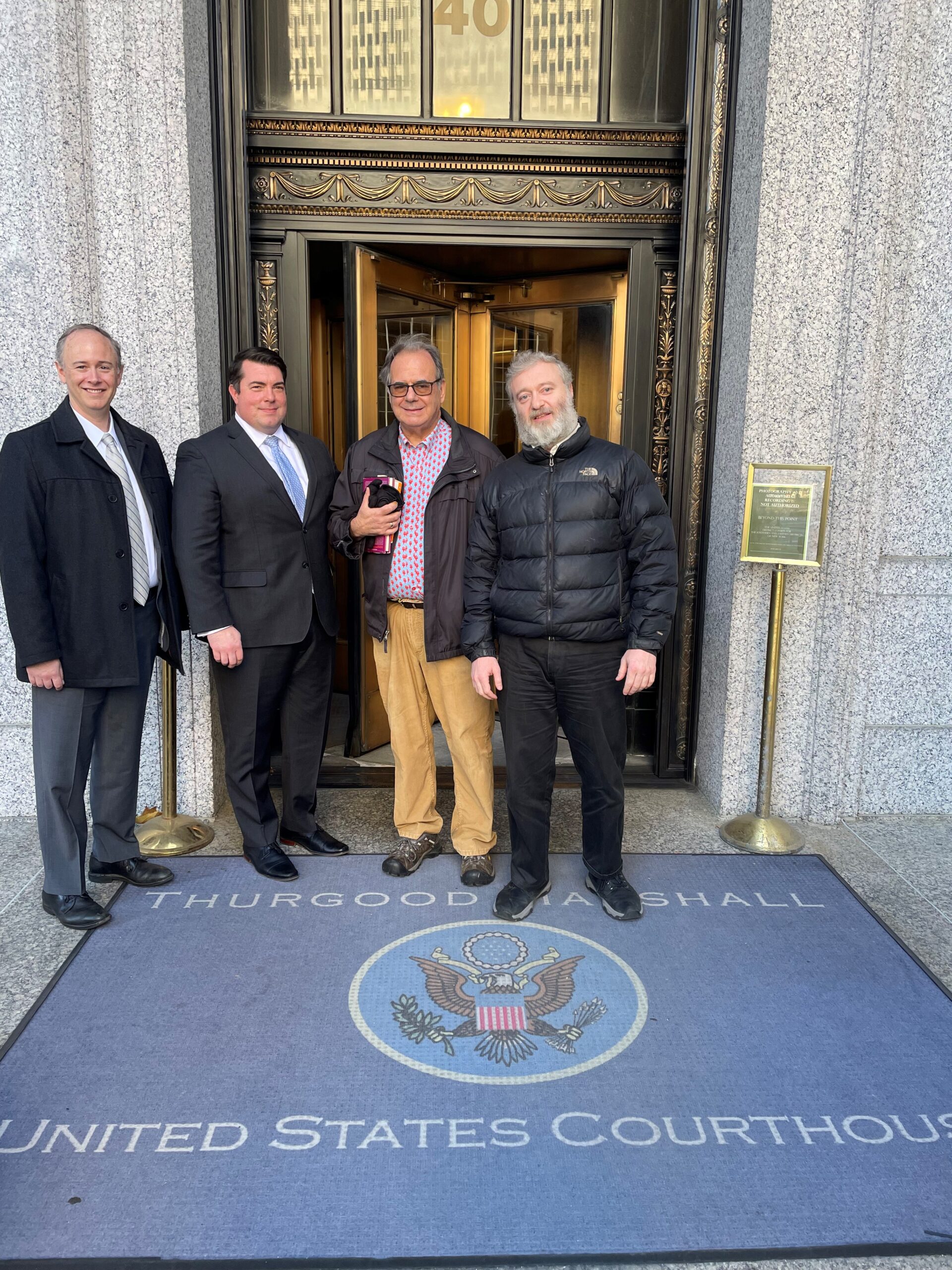
Together, (from left) Foundation Legal Director William Messenger, Fairness Center General Counsel Nathan McGrath, and CUNY Professors Mitchell Langbert and Avraham Goldstein seek to establish new protections against forced union association.
WASHINGTON, DC – Avraham Goldstein, a mathematics professor at the City University of New York (CUNY), wrote in a 2022 Wall Street Journal op-ed about the predicament that he and many of his Jewish colleagues face because New York law forces them under the “representation” of an anti-Israel union: “I had paid thousands of dollars in union dues for workplace representation, not for political statements or attacks on my beliefs and identity. I decided to resign my union membership and naively thought I could leave the union and its politics behind for good . . . I was wrong.”
It was this situation that led Avraham Goldstein, along with fellow professors Michael Goldstein, Frimette Kass-Shraibman, Mitchell Langbert, Jeffrey Lax, and Maria Pagano, to file a federal lawsuit against the Professional Staff Congress (PSC) union, CUNY, and State of New York officials in 2022. That lawsuit challenged New York State’s “Taylor Law,” which grants union bosses monopoly bargaining power in the public sector. Such power permits union bosses to speak and contract for public workers — including those that want nothing to do with the union.
Professors’ Petition: First Amendment Protects Union Dissenters
Staff attorneys from the National Right to Work Foundation and The Fairness Center have litigated the professors’ case up through the federal court system. Now they’re asking the U.S. Supreme Court to take their case and clarify that the First Amendment forbids union officials from foisting their voice and values on public sector workers who oppose the union.
“The core issue in this case is straightforward: can the government force Jewish professors to accept the representation of an advocacy group they rightly consider to be anti-Semitic? The answer plainly should be ‘no,’” the petition begins.
The High Court has recognized for decades how public sector monopoly bargaining burdens workers’ First Amendment freedom of association rights. In 1944, the Supreme Court’s decision in Steele v. Louisville & Nashville Railway Co. recognized how rail union bosses were manipulating their powers over the workplace to discriminate against African-American railway workers. The Supreme Court restated its concerns most recently in the 2018 Foundation-won Janus v. AFSCME decision, with the majority calling monopoly bargaining “a significant impingement on associational freedoms.”
Original Complaint Detailed Union Bosses’ Discrimination
The professors’ original complaint, filed in the U.S. District Court for the Southern District of New York, recounted that several of the professors chose to dissociate from PSC based on a host of discriminatory actions perpetrated by union agents and adherents — including a June 2021 union resolution that the professors viewed as “anti-Semitic, anti-Jewish, and anti-Israel.”
The complaint said Prof. Michael Goldstein “experienced anti-Semitic and anti-Zionist attacks from members of PSC, including what he sees as bullying, harassment, destruction of property, calls for him to be fired, organization of student attacks against him, and threats against him and his family.” Goldstein has needed a guard to accompany him on campus, the complaint noted.
Prof. Lax, the complaint explained, already received in a separate case a letter of determination from the Equal Employment Opportunity Commission (EEOC) “that CUNY and PSC leaders discriminated against him, retaliated against him, and subjected him to a hostile work environment on the basis of religion.” As their petition at the Supreme Court notes, these conflicts have significantly increased since the events of October 7.
Professors Could Create Groundbreaking Precedent
The petition asks the Supreme Court to take up the case and stop CUNY and the State of New York from letting PSC union bosses impose their “representation” on the professors.
“New York’s legal scheme forces these CUNY professors to associate with union officials who insult their identity and create a work environment rife with bullying and harassment. It’s hard to think of a more obvious violation of the First Amendment,” commented National Right to Work Foundation President Mark Mix. “It’s high time that the Justices finally acknowledge the First Amendment protects government employees from being forced to accept political ‘representation’ they adamantly oppose.”
Foundation to Justices: Workers Opposing Unions Isn’t ‘Harm’ to be Eliminated
The following article is from the National Right to Work Legal Defense Foundation’s bi-monthly Foundation Action Newsletter, May/June 2024 edition. To view other editions of Foundation Action or to sign up for a free subscription, click here.
Brief in Starbucks-related SCOTUS case counters Labor Board attempts to impose union control
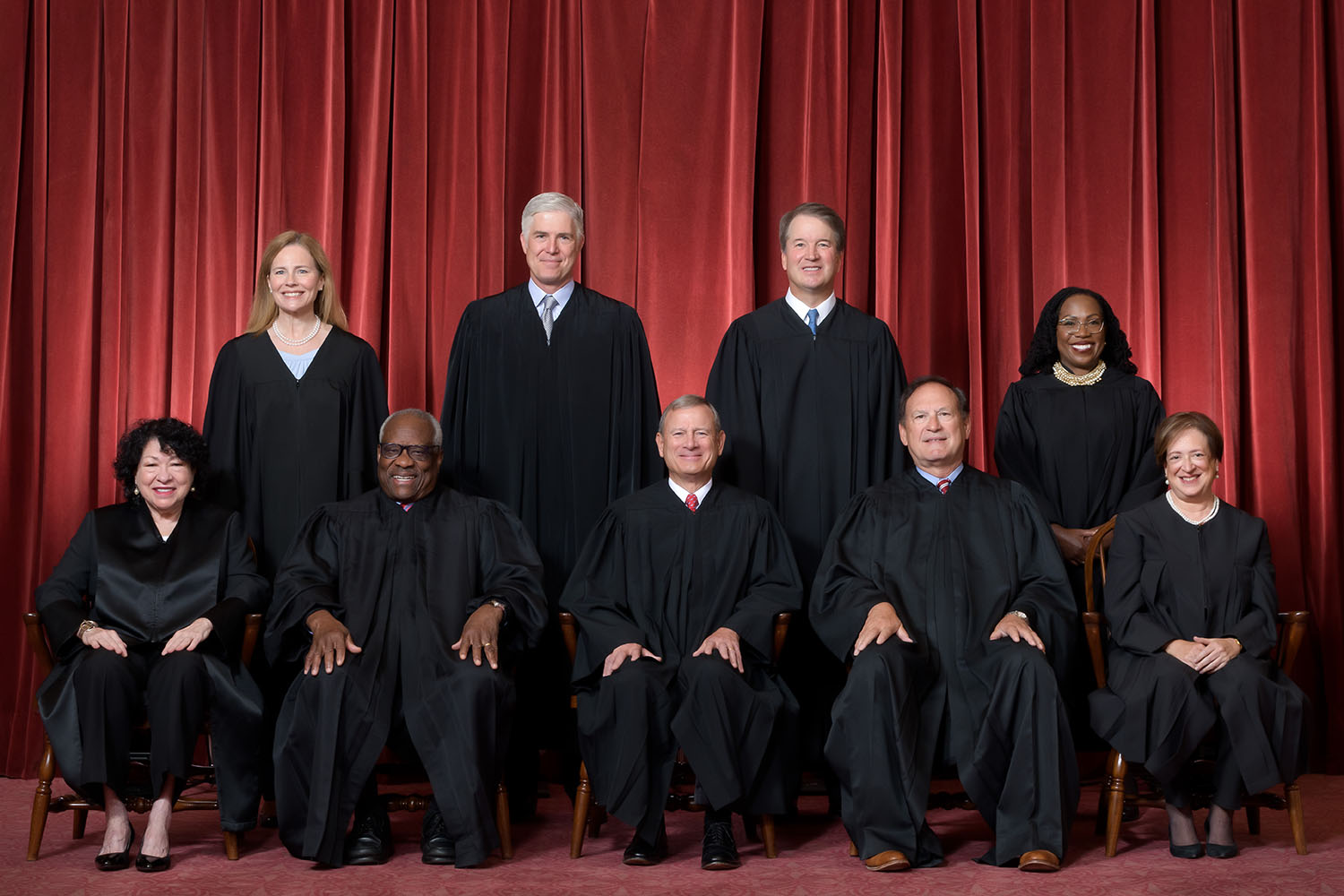
With the Supreme Court reviewing the standard used when the NLRB seeks injunctions that cement unions in power, the Foundation told the High Court such injunctions should not be allowed to infringe on workers’ legitimate right, under federal labor law and the Constitution, to oppose unionization.
WASHINGTON, DC – “Heads I win, tails you lose”: That’s how a brief filed by National Right to Work Foundation staff attorneys with the U.S. Supreme Court describes the Biden National Labor Relations Board’s (NLRB) argument that worker opposition to a union should count as a reason to impose union bosses’ demands on a workplace. The Supreme Court agreed to hear a case on this issue in January, with arguments scheduled for late April.
“Evidence that employees support a union is taken to mean they want to support the union,” the brief says. “Evidence that employees oppose a union is taken to mean their employer must have wrongfully caused the employees not to support the union. All evidence conveniently leads to the conclusion desired by current NLRB leadership: employees should support unions.”
The Foundation’s brief before the High Court in Starbucks v. McKinney discusses how NLRB officials use this radical assumption to urge federal courts to hit employers with “10(j) injunctions” that coerce the employers to give into certain union-demanded behavior. As Foundation attorneys explain, the NLRB often tells courts that worker discontent with a union is a “harm” that the courts should rectify with a 10(j) injunction.
Foundation in Starbucks Case: Worker Opposition to a Union is a Basic Right
Foundation staff attorneys push back on this theory in their legal brief, arguing that an employee’s decision to not support a union is not a “harm,” but a “legitimate choice [they] have a right to make” under both the National Labor Relations Act (NLRA) and the First Amendment to the Constitution.
Union bosses and their allies in the NLRB want the U.S. Supreme Court to establish a rule in Starbucks v. McKinney that permits injunctions against employers if their alleged conduct could potentially coerce workers into not supporting a union. Foundation attorneys instead argue that “the Court must require the NLRB to prove employees were unlawfully coerced not to support a union because, absent such proof, employees have every right to make that choice” (emphasis added).
Starbucks Workers Challenging NLRB Constitutionality
In addition to fighting cynical attempts by Biden NLRB bureaucrats to turn worker opposition to unions into a reason to beef up union officials’ coercive power, Foundation attorneys are assisting two groups of Starbucks workers with federal lawsuits challenging the constitutionality of the Biden NLRB as a whole.
The newest effort comes from San Antonio, TX-area Starbucks employee Reed Busler and his coworkers. They submitted a petition to the NLRB containing enough employee signatures to prompt a vote to “decertify,” or remove, the SBWU union. But an NLRB Regional Director blocked the vote based on union allegations of employer misconduct that have no proven connection to Busler and his colleagues’ effort to vote out the union. Busler himself noted in an NLRB filing that the move to decertify started “because the Union was a divisive force in our store” and ignored workers.
Busler has filed a federal lawsuit against the NLRB arguing its structure violates the Constitution’s separation of powers doctrine because NLRB Board Members are insulated from at-will removal. The lawsuit seeks an injunction that halts the NLRB from proceeding with his decertification case until his federal lawsuit is resolved.
“Starbucks is becoming ‘ground zero’ for several key battles over worker freedom,” commented National Right to Work Foundation Vice President Patrick Semmens. “Underlying a large portion of the drama is the NLRB’s flawed theory that workers’ exercise of their right to oppose unions is an evil to be eradicated, which unions and their allies in the NLRB bureaucracy are trying to use to force down their agenda on workplaces across the country.
“An even bigger issue, however, is the fact that the NLRB has for decades operated as a kangaroo court run by powerful bureaucrats who exercise unaccountable power in violation of the Constitution,” Semmens added. “American employees shouldn’t be forced to fight for their rights in such a pro-union boss environment.”
IUOE Union Bosses Hit With Federal Charge for Illegal Termination
The following article is from the National Right to Work Legal Defense Foundation’s bi-monthly Foundation Action Newsletter, January/February 2024 edition. To view other editions of Foundation Action or to sign up for a free subscription, click here.
Longstanding law protects against mandatory dues deductions, formal union membership

Firestop inspector Alexandra Le isn’t going to let IUOE union bosses snuff out her livelihood over her refusal to join or support the union. She’s filed federal charges with Foundation aid.
PLEASANTON, CA – Sometimes, even the extraordinary power to demand payments from workers under threat of termination isn’t enough for union bosses, who frequently go beyond what is legal to coerce workers into membership and dues payment.
Alexandra Le, an employee of Construction Testing Services (CTS), found herself on the receiving end of such illegal demands from International Union of Operating Engineers (IUOE) officials in October. But Le is now fighting back, hitting IUOE bosses and her employer with federal charges at National Labor Relations Board (NLRB) Region 32 with free legal aid from the National Right to Work Foundation.
Union Misinformed Worker About Rights
Le’s charges state that IUOE bosses got her fired after she rebuffed their demands to formally join the union. Additionally, Le’s charges maintain that union officials unlawfully deducted union dues from her paycheck without her permission and failed to inform her of her right to pay reduced union dues as a non-member — a right secured by the Foundation-won CWA v. Beck Supreme Court victory.
Because California lacks Right to Work protections for its private sector workers, Le and her coworkers can be forced to pay some fees to the union to keep their jobs, even if they’ve abstained from formal union membership. However, as per Beck, in non-Right to Work states, union officials can’t force nonmember employees to pay for union expenses (such as union politics) that go beyond what the union claims goes to bargaining.
Other Supreme Court precedents require union bosses to seek workers’ express consent before deducting dues directly from their paychecks.
In Right to Work states, all union financial support is voluntary and the choice of each individual worker.
Employee Demands Federal Injunction to Reverse Illegal Union-Ordered Firing
“It’s outrageous that IUOE union officials believe they can get me fired simply because I don’t agree with their organization and don’t want to support or affiliate with them,” Le said. “IUOE union officials have been far more concerned with consolidating power in the workplace and collecting dues than caring about me and my coworkers, and I hope the NLRB will hold them responsible for their illegal actions.”
Le’s charge against the IUOE union states that, after she refused to affiliate with the union, IUOE bosses “caused Charging Party to be removed from the work schedule by her Employer as of October 2nd.” The NLRB v. General Motors Corp. U.S. Supreme Court decision protects the right of workers to refuse formal union membership, even in a non-Right to Work state.
As a remedy, the charge asks the NLRB Regional Director in Oakland to “invoke its authority under Section 10(j)” of the National Labor Relations Act (NLRA), which empowers the Board to seek an injunction from a federal court to stop IUOE and CTS management from committing the unfair labor practices.
Workers Need More Protections Against Union Boss Coercion
“Ms. Le’s case shows why Right to Work protections are important,” commented National Right to Work Foundation Vice President and Legal Director William Messenger.
“Even if IUOE union officials had followed federal labor law in this case, Ms. Le would still be forced to contribute to the activities of an organization she clearly doesn’t want to be part of.
“As Ms. Le’s case demonstrates, union bosses often value workers merely as sources of dues revenue and will go to extraordinary lengths to keep the money flowing,” Messenger added. “Workers deserve more protections against union boss coercion, not fewer.”
Right to Work Foundation SCOTUS Brief: Workers Exercising Right to Oppose Unions Isn’t “Harm” to Be Eliminated
In case to be heard by Court, Foundation argues NLRB wrongly asserts that independent-minded opposition to unions can justify injunctions
Washington, DC (February 29, 2024) – The National Right to Work Foundation has filed an amicus brief in Starbucks Corporation v. McKinney, a case set to be argued before the U.S. Supreme Court later this term that has major implications for the rights of workers who oppose union power in their workplaces.
In the brief, Foundation staff attorneys argue that federal courts should reject National Labor Relations Board (NLRB) requests for preliminary injunctions when the Labor Board claims employee discontent with a union is a “harm” that should be redressed. These injunctions, called 10(j) injunctions, are frequently used by the NLRB to force employers into certain union-demanded behavior, despite the NLRB not having fully adjudicated the underlying union allegations.
The brief points out that an employee’s decision not to support a union is not a harm that needs to be addressed, but rather a “legitimate choice employees have a right to make” under both the National Labor Relations Act (NLRA) and the First Amendment to the Constitution.
“Only if the NLRB can prove an employee was coerced by an employer to oppose a union against his or her will can that employee’s lack of support for the union be considered any sort of a harm to be redressed,” the brief says. “If the NLRB cannot muster such evidence, then the fact that employees are exercising their statutory and constitutional rights…provides no basis for [an] injunction.”
Foundation: Courts Shouldn’t Accept NLRB’s Assumption that Workers Want to Join Unions
In the Starbucks v. McKinney case, the NLRB sought an injunction at the behest of Starbucks Workers United (SBWU-SEIU) union officials against Starbucks for unfair labor practices the company allegedly committed at a location in Memphis, Tennessee. A major reason cited by the NLRB for the requested injunction was the fact that workers may choose to oppose the union if the injunction isn’t issued.
The case presents the question of what standard courts should use when evaluating whether to grant NLRB-requested injunctions under the NLRA. The Foundation brief opposes the lax standard that the NLRB and union officials are urging courts to use when deciding whether to issue injunctions.
That standard asks only whether alleged unfair labor practices could potentially coerce workers into not supporting a union. Foundation attorneys argue that “the Court must require the NLRB to prove employees were unlawfully coerced not to support a union because, absent such proof, employees have every right to make that choice” (emphasis added).
Foundation-Backed Starbucks Workers Disprove Specious NLRB Theory
Foundation staff attorneys are currently representing Starbucks employees at several locations across the country who seek to vote out (or “decertify”) the SBWU union. In the brief, Foundation attorneys point out that the NLRB in a similar case (Leslie v. Starbucks Corp.) cited a Foundation-backed union decertification case as a reason that an injunction should be issued against the company – despite the fact that the workers themselves say their opposition to the union had nothing to do with the conduct the union was challenging in that case.
“In taking this position, the NLRB has created a self-satisfying ‘heads I win, tails you lose’ dynamic for itself,” the brief reads. “Evidence that employees support a union is taken to mean they want to support the union. Evidence that employees oppose a union is taken to mean their employer must have wrongfully caused the employees not to support the union. All evidence conveniently leads to the conclusion desired by current NLRB leadership: employees should support unions.”
The case is set to be argued before the Supreme Court on Tuesday, April 23, with a decision expected by the end of the High Court’s term in June.
“The Biden NLRB is working hand in glove with unions to advance a standard that treats worker dissent from unions as a harm to be eradicated, rather than a decision made by competent adults,” commented National Right to Work Foundation President Mark Mix. “The Supreme Court in Starbucks v. McKinney must reject the idea that NLRB bureaucrats can simply twist evidence of legitimate worker discontent with unions into a tool to aid union bosses in gaining leverage over businesses and employees.”
Foundation Asks Supreme Court to Take on Widespread Janus Violations
The following article is from the National Right to Work Legal Defense Foundation’s bi-monthly Foundation Action Newsletter, November/December 2023 edition. To view other editions of Foundation Action or to sign up for a free subscription, click here.
Brief: Pending case should be used to underscore need to obtain workers’ consent to dues
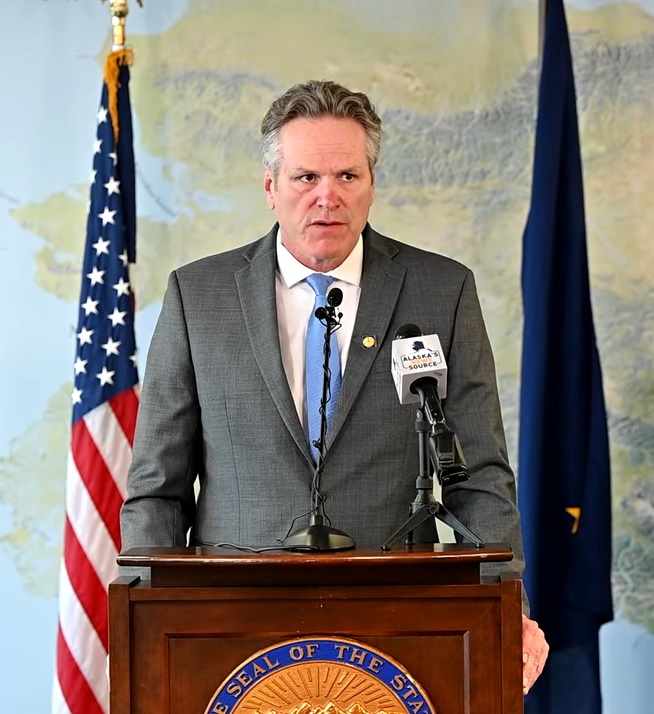
In 2019, Alaska Gov. Mike Dunleavy took proactive steps to protect Janus, but dues-hungry ASEA union bosses fought his actions all the way up to the Supreme Court.
WASHINGTON, DC – The National Right to Work Foundation’s victory in the 2018 Janus v. AFSCME Supreme Court case set a monumental First Amendment precedent. In Janus, the Justices recognized that no public sector worker can be forced to pay union dues as a condition of employment, and that unions cannot deduct union dues from a public sector worker’s wages unless that worker waives his or her Janus rights.
Now the Foundation is asking the U.S. Supreme Court to, five years after Janus was issued, take another case to clarify and fortify the Janus precedent against numerous misinterpretations by greedy union officials, union-backed state politicians, and, most worryingly, some lower court judges.
Alaska Takes Lead on Janus Rights Only to Face Union Boss Resistance
The Foundation’s brief asks the Supreme Court to weigh in on an Alaska lawsuit that started when union officials sought to nullify Alaska state officials’ attempt to fully protect the First Amendment rights of public employees. Union officials challenged the state’s arrangement which ensured that the state didn’t deduct dues from any public employee who had not knowingly waived their rights under Janus.
After the Janus decision, Alaska Gov. Mike Dunleavy issued an executive order requiring the state to obtain proof of consent from workers each year to deduct union dues from their paychecks. The requirement was designed to prevent union bosses from deducting dues money from the wages of a worker who didn’t fully understand their legal rights under Janus. Many workers, for example, may have authorized dues deductions years before the Supreme Court recognized that mandatory payments to unions as a condition of government employment violate the Constitution.
Unwilling to comply with even this modest check on their power to deduct union dues directly from government employees’ paychecks, Alaska State Employees Association (ASEA) officials battled the State of Alaska in state court. Eventually, ASEA union lawyers were able to get the state’s highest court to block the arrangement. But the Supreme Court has the ability to fix the Alaska State Supreme Court’s misinterpretation of Janus.
Following the State of Alaska’s petition asking the U.S. Supreme Court to hear arguments in the case, Foundation attorneys filed a legal brief of their own, urging the Justices to uphold Alaska’s safeguards on Janus and correct the misinterpretations of Janus made by an increasing number of courts and state governments around the country.
Brief: States and Courts Are Ignoring Janus, Need to Be Reined In
The Foundation’s argument notes that, after the Janus decision, at least seventeen states either changed their laws to require government employers to enforce union boss-invented restrictions on when employees can stop union dues deductions, or enforced dues deduction restrictions already on the books. Both lead to unacceptable restraints on public sector workers’ Janus rights, the amicus brief argues.
The amicus brief further contends that lower courts, especially the Ninth Circuit Court of Appeals with jurisdiction over Alaska, have misinterpreted Janus by not mandating government employers notify public workers of their Janus rights before taking union dues from their paychecks. For a waiver of one’s rights to be effective, a person must know what those rights are — just as police officers “Mirandize” suspects they arrest by informing them of their “right to remain silent.”
Union Bosses Value Dues-Funded Politicking Over Public Servants’ Rights
The amicus brief also points out that the Ninth Circuit has issued decisions that free public employers from any obligation to prove that union bosses obtained authentic consent from workers before dues are taken from their wages — opening the door for forged or fake dues deduction cards.
“Unless the Court grants review and breathes new life into Janus’ waiver requirement, unions and their government allies will continue to severely restrict the right of millions of employees to stop subsidizing union speech,” the amicus brief concludes.
“Public sector union bosses, who prize their own dues-funded political influence far above the individual rights of the employees they claim to ‘represent,’ have tried everything in their power to dodge the Janus ruling and keep siphoning money from workers,” commented National Right to Work Foundation Vice President Patrick Semmens. “The Supreme Court
has an opportunity in the State of Alaska’s case to set the record straight and ensure that workers’ free association rights can’t simply be molded according to their own schemes.”





