
Airline Workers Contest Union ‘Opt-Out’ Requirement for Political Dues
The following article is from the National Right to Work Legal Defense Foundation’s bi-monthly Foundation Action Newsletter, July/August 2019 edition. To view other editions or to sign up for a free subscription, click here.
Union bosses bullied and illegally threatened to discipline employee who defied strike demands

United Airlines fleet service employee Arthur Baisley (left) and JetBlue pilot Christian Popp (right) are challenging union boss “opt-out” rules that make nonmembers pay for union political spending without their consent.
AUSTIN, TX – United Airlines fleet service employee Arthur Baisley and JetBlue Airlines pilot Christian Popp have filed federal lawsuits against the International Association of Machinists (IAM) and Air Line Pilots Association (ALPA) unions, respectively, challenging union officials’ “opt-out” requirements designed to make non-members pay for union political activities without their consent.
Austin, TX-based Baisley and Fort Lauderdale, FL-based Popp filed their lawsuits with free legal aid from the National Right to Work Foundation. Their Foundation staff attorneys argue that the “opt-out” schemes perpetrated by IAM and ALPA bosses violate workers’ rights under the Railway Labor Act (RLA) and the First Amendment under the standard laid out in the landmark 2018 Supreme Court decision Janus v. AFSCME.
“No employee or private citizen should be trapped in a deliberately-complex system that funnels their money into political speech of which they disapprove. Unfortunately, that is exactly what IAM and ALPA union officials are doing to non-member workers across America,” commented National Right to Work Foundation Vice President and Legal Director Ray LaJeunesse.
The lawsuits contend that under Janus and the 2012 Knox v. SEIU Supreme Court case – both of which were argued and won by Foundation staff attorneys – no union dues or fees can be charged for union political activities without a worker’s affirmative consent.
Popp and Baisley, despite working in the Right to Work states of Florida and Texas, must still pay fees to their respective unions as the RLA preempts state law and permits forced dues. But, even in the absence of Right to Work protections, established Supreme Court precedent forbids unions from putting those compulsory fees towards ideological activities like lobbying or politics.
According to the lawsuits, the processes that IAM and ALPA union bosses require independent-minded workers to go through simply to exercise their constitutional right not to fund “nonchargable” activities are convoluted and typically involve having to “decipher” the opt-out requirements of the union.
Even worse, after Baisley submitted a letter to IAM agents in November 2018 objecting to funding all union political activities, the union officials only accepted his objection for 2019, and told Baisley he would be required to renew his objection to full dues and fees the next year or else be charged for full union dues.
The two complaints challenge these union boss-created policies on the grounds that they “require employees to opt-out of paying union fees that they have no legal obligation to pay” and thus violate workers’ First Amendment rights.
The complaints also allege that the “opt-out” requirements violate the RLA, which governs labor in the air and rail industries and “protects the right of employees to ‘join, organize, or assist in organizing’ a union of their choice as well as the right to refrain from any of those activities.”
Both suits are class-action, and seek court orders requiring union officials to ask for affirmative employee consent for any dues charged for political or ideological purposes in the future.
“These lawsuits show that although Janus’ most direct impact was to secure the First Amendment rights of public employees not to be required to fund Big Labor, the implications don’t stop there,” observed LaJeunesse. “Because the Janus decision made clear workers must opt-in to all political and ideological activity, Foundation staff attorneys are able to cite it in defense of airline workers covered by the Railway Labor Act.”
National Mediation Board Issues Foundation-Advocated ‘Commonsense Reform’ to Union Decertification Rules
Today the National Mediation Board (NMB) issued its final rule simplifying the process workers under the Railway Labor Act can use to decertify a union they oppose. National Right to Work Legal Defense Foundation President Mark Mix issued the following comment regarding the rule change:
At long last the National Mediation Board is providing airline and railroad workers covered by the Railway Labor Act a straightforward way to remove unwanted union “representation” through a decertification vote.
The previous system – where workers had to create a “straw man” union just to challenge an incumbent union – only served to stymie workers’ rights and demonstrated the historic bias of the NMB in favor of compulsory unionism. In fact, it wasn’t until the Foundation-won case of Russell v. NMB in 1983 that workers even had an established legal right to throw off their union “representative,” albeit only through the unnecessarily complicated strawman system which is now finally being replaced with a simplified process to allow workers to exercise that right.
The Foundation has long advocated this type of change in the union decertification process and we are pleased the NMB has – as we called upon it to do in comments filed earlier this year – finally made this commonsense reform.
The full rule can be read here.
In April the Foundation submitted formal comments during the NMB’s rulemaking procedure. Those comments can be read here.
Check out the lead article in the January/February 2017 Foundation Action Newsletter “Foundation Cases Poised to Challenge Forced Dues at Supreme Court”
Foundation Cases Poised to Challenge Forced Dues at Supreme Court
Cases to overturn forced dues could quickly reach Supreme Court with new Trump Justice
To read the rest of the January/February 2017 issue, please click here.
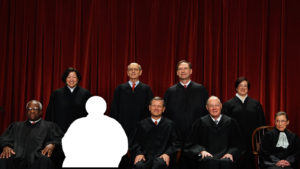
Washington, D.C. – Over the past few months, Foundation staff attorneys have been busy litigating hundreds of cases on the behalf of independent-minded workers across the country. Two of those cases have the potential to reach the Supreme Court this year and answer the unresolved questions left in the wake of the 4-4 split in the Fredrichs v. California Teachers Association.
One of those cases, Janus v. AFSCME, stems from an executive order from Illinois Governor Bruce Rauner that placed any union fees that nonunion members were forced to pay into an escrow account until the constitutionality of those fees was resolved. Governor Rauner subsequently filed a lawsuit in U.S. District Court for the Northern District of Illinois and argued that collecting forced dues or fees from state employees as a condition of employment violated the First Amendment of the Constitution.
Foundation staff attorneys then filed a motion to intervene as plaintiffs for Mark Janus and other state employees who are forced to pay union fees as a condition of employment. A Judge eventually ruled that Governor Rauner did not have standing in court but let the Foundation-represented employees continue to challenge the constitutionality of forced fees.
After the Supreme Court reached a 4-4 deadlock in a similar case earlier this year, Friedrichs v. CTA, a District Judge ruled against Janus and the other state employees. Foundation attorneys immediately filed an appeal to the Seventh Circuit Court of Appeals and are awaiting a decision. It is possible that a petition for a writ of certiorari could be filed with the Supreme Court later this year.
The second case, Serna v. Transportation Workers Union (TWA), is a class-action lawsuit brought by several American Eagle Airlines and Southwest Airlines employees U.S. District Court for the Northern District of Texas was pending with the Supreme Court as this issue of Foundation Action went to press. That suit challenges the constitutionality of the Railway Labor Act’s sanction of agreements that require compulsory union fees as a condition of employment.
Even though these employees work in the private sector, the Supreme Court has previously ruled that because the Railway Labor Act (RLA) effectively mandates forced fees for railway and airline workers, it effectively fosters the same Constitutional issues as were raised for government employees in Friedrichs. Therefore, success in Serna on the First Amendment claims against forced dues would effectively overturn forced dues for public sector workers.
After the Fifth Circuit Court of Appeals ruled against the airline employees citing the Friedrichs deadlock, Foundation staff attorneys filed a petition for a writ of certiorari with the Supreme Court. The Court was scheduled to consider the petition on January 6 and a decision whether to take the case or not could follow shortly after, or the Justices may decide to hold the case in light of the potential for a 4-4 tie until a ninth Justice is seated.
“Both of these cases have the potential to answer the ultimate question that was left unresolved by Friedrichs and that is whether or not it is constitutional to force workers to pay union bosses tribute to get or keep a job,” National Right to Work Foundation President Mark Mix said.
In addition to Serna and Janus, National Right to Work Foundation staff attorneys have two additional cases working their way through the courts – one on behalf of university professors in Massachusetts and one for school employees in Kentucky – that directly challenge the constitutionality of mandatory union dues. More cases directly challenging the constitutionality of government-mandated forced union dues are expected to be filed by Foundation staff attorneys in 2017.





