
Starbucks Barista Asks Labor Board to Overturn Regional Official’s Decision to Continue Blocking Vote to Remove Union
With original case cited as grounds for blocking vote settled, worker pushes for decertification election to oust SBWU
Oklahoma City, OK (November 20, 2024) – Starbucks employee Amy Smith has filed a Request for Review with the National Labor Relations Board (NLRB) in Washington, D.C., asking the agency to review a regional NLRB order tossing her petition seeking an election to remove the Starbucks Workers United (SBWU) union from her Oklahoma City store. Amy Smith, who works at the Nichols Hills Starbucks location, is receiving free legal representation from National Right to Work Legal Defense Foundation staff attorneys.
Smith’s appeal challenges the regional NLRB’s refusal to reinstate her decertification petition, which it is still stonewalling despite the resolution of SBWU union officials’ charges against Starbucks that were ostensibly the justification for blocking the workers’ petition for a vote to remove the union. Smith argues that the decision is inconsistent not only with the Board’s past reasons for holding up the petition, but also with workers’ right under federal labor law to promptly have an election to remove a union they do not want.
Starbucks Employee Challenges Labor Board’s Unreasonable Stalling
In October 2023, Smith filed a petition asking the NLRB to hold a decertification election so she could vote to remove SBWU from her workplace. Her petition had enough of her coworkers’ signatures to meet the 30% threshold necessary to trigger a decertification vote. However, at SBWU union officials’ request, the NLRB dismissed the petitions “subject to reinstatement” until the unfair labor practice case Starbucks Corporation (01-CA-305952) was resolved. That case has now been settled, and the NLRB closed the case.
Last month, Smith had asked the NLRB Regional Directors in Region 14 (covering Oklahoma City) to reinstate her petition so the NLRB can promptly schedule a secret ballot election to determine whether a majority of workers want to end union officials’ monopoly power at her store. However, instead of reinstating Smith’s petition, regional NLRB officials instead came up with a different unfair labor practice case against Starbucks to scuttle the election again, without even giving Smith a hearing to defend her petition.
“This standard has proved not only to contradict the plain text of [federal labor law], but has failed to appropriately account for the Board’s statutory mandate to conduct an election,” the Request for Review says.
Growing Momentum for Decertification
Oklahoma is a Right to Work state, meaning union payments must be voluntary and cannot be required as a condition of employment. However, under federal law, SBWU officials’ monopoly bargaining powers still allow them to impose a union contract on all employees at the store, even those who are not union members and who oppose SBWU’s so-called “representation.” A successful decertification vote would strip union officials of that extraordinary monopoly bargaining power.
The growing movement among Starbucks partners to eject unwanted union officials from their stores is part of a larger trend, with an over 50% increase in the number of decertification petitions filed annually over the last four years. Already, National Right to Work Foundation staff attorneys have assisted Starbucks employees in over a dozen stores seeking votes to remove the SBWU union. However, union officials have so far manipulated federal labor law to block any decertification votes from being held.
“Employees like Amy Smith should have the fundamental right to decide who represents them in the workplace, free from unnecessary delays and bureaucratic roadblocks,” commented Mark Mix, president of the National Right to Work Foundation. “The NLRB’s refusal to allow a timely vote is a clear disregard for the principles of employee free choice. We are committed to defending workers’ rights to hold unions accountable and ensuring that workers’ voices are heard.”
Austin Worker Files Federal Constitutional Challenge Against Biden-Harris Labor Board
National Labor Relations Board facing numerous worker-brought lawsuits citing unconstitutional structure
Fort Worth, TX (November 2, 2024) – Dallas Mudd, an employee of Aunt Bertha (d/b/a FindHelp), has launched a federal lawsuit against the National Labor Relations Board (NLRB) on the grounds that the agency’s structure violates the U.S. Constitution. National Right to Work Legal Defense Foundation staff attorneys representing Mudd filed the suit in the U.S. District Court for the Northern District of Texas. The lawsuit joins a string of cases challenging the NLRB’s structure on separation of powers principles.
Mudd’s case comes on the heels of his own employer’s suit against the NLRB. In that case, a federal district court judge ruled in favor of FindHelp and granted an injunction to halt proceedings against the company.
Mudd filed a decertificiation petition with the NLRB back in September, requesting a vote to remove the Office & Professional Employees International Union (OPEIU) from his workplace. Instead of allowing the vote to proceed, NLRB officials blocked the election, leaving the workers indefinitely trapped in a union they oppose. Mudd is appealing that decision to the full Board in Washington DC.
Mudd’s federal lawsuit argues he is entitled to have his appeal adjudicated before a federal agency that is accountable to the president. The case joins four other constitutional challenges to the NLRB’s structure from Foundation-backed rank-and-file workers, including the first-ever such lawsuit challenging NLRB Board Member removal protections, which is currently being briefed at the DC Circuit Court of Appeals by Foundation attorneys representing Buffalo, NY-based Starbucks employees Ariana Cortes and Logan Karam.
Mudd’s lawsuit points to recent Supreme Court rulings, including Seila Law LLC v. CFPB and Collins v. Yellen, which emphasized that the President has direct authority to remove executive officials who exercise significant authority. Mudd argues that the NLRB’s structure, as defined by the National Labor Relations Act (NLRA), places unlawful limitations on the president’s power to oust NLRB officials who exercise significant executive authority.
The complaint, filed in the U.S. District Court for the Northern District of Texas, joins a similar suit at the same court from Reed Busler. Similar to Mudd, Busler, a Starbucks employee, filed a petition asking the NLRB to hold a vote to remove the incumbent Starbucks Workers United (SBWU) union, only to have the vote blocked by NLRB officials. In all the cases the employees argue they are entitled to have their cases heard by Board officials who are not exercising powers in violation of the Constitution.
“Independent-minded workers should not be forced to depend on biased agencies staffed by bureaucrats, that exercise power in violation of the Constitution, just to free themselves of unwanted union affiliation,” said National Right to Work Foundation President Mark Mix. “The Constitution does not permit a powerful federal agency to operate as the judge, jury, and executioner without oversight, and these legal challenges seek to ensure that the Labor Board functions within the law, for the sake of all workers.”
Tire Wholesaler Employees Force RWDSU Union Out of 15 Locations
The following article is from the National Right to Work Legal Defense Foundation’s bi-monthly Foundation Action Newsletter, January/February 2024 edition. To view other editions of Foundation Action or to sign up for a free subscription, click here.
RWDSU union officials abandon 500+ employee unit ahead of vote at tire wholesaler
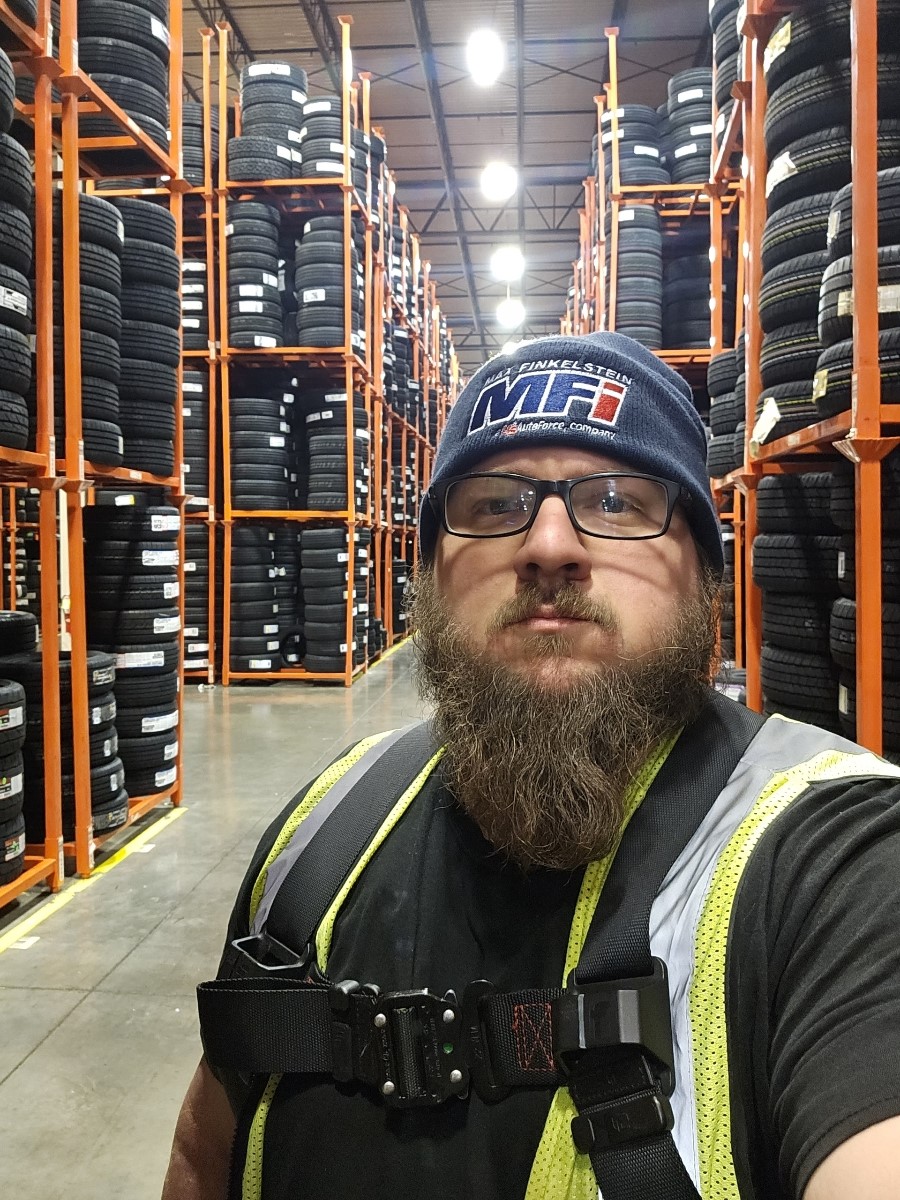
Tire-d of the RWDSU: Chris Dorney submitted a huge number of signatures from his coworkers at tire wholesaler Max Finkelstein when petitioning the NLRB for a vote to remove the RWDSU union.
WINCHESTER, VA – The Biden National Labor Relations Board (NLRB), which includes among its members two former union bosses from the Service Employees International Union (SEIU), is pursuing an agenda that hasn’t exactly been making it easy for workers to vote out a union they don’t want. But that hasn’t stopped workers across the country from going to extraordinary lengths to kick out unions that don’t serve their interests.
In October 2023, Chris Dorney, a Winchester, VA-based employee of tire wholesaler Max Finkelstein, kick-started a cross-country effort to vote the Retail, Wholesale and Department Store Union (RWDSU) out of 15 warehouse facilities across the eastern United States. This work unit included more than 500 employees across Virginia, Maryland, Massachusetts, Pennsylvania, New York, New Jersey, Vermont, Maine, and Connecticut.
Virginia Worker Mustered Strong Showing on Petition for Union Ouster Vote at Tire Wholesaler
With free legal aid from the National Right to Work Foundation, Dorney submitted a petition to the NLRB containing more than enough employee signatures to trigger a vote to remove the union from the large unit.
While Dorney and his fellow Virginia employees enjoyed the Right to Work freedom to opt-out of dues payments to the union, the same couldn’t be said for any of the other employees, all of whom hail from states where dues payments can be mandated as a condition of employment. But voting RWDSU bosses out of power entirely at the tire wholesaler would end the union’s forced-dues power.
“We warehouse workers and drivers at Max Finkelstein may be from many different facilities in many different states, but we are in agreement about one thing: RWDSU union officials don’t represent our interests,” Dorney said of the effort. “It’s our right under federal law to challenge RWDSU’s forced representation power.”
RWDSU Bosses Flee Unit as Union Officials Rack Up Losses Nationwide
However, before the vote could occur, RWDSU union officials disclaimed interest in continuing their monopoly representation powers over the unit, likely to avoid an embarrassing rejection by workers at the ballot box.
Unionized workers are increasingly requesting elections to remove unwanted unions — a potential reason for the Biden NLRB’s efforts to crack down on decertification votes. Additionally, union bosses are increasingly losing these contests. As of last year, filings for union decertification votes had shot up by over 40 percent since 2020. Of decertification elections that occurred, the number which resulted in union bosses losing went up by 72 percent.
“Mr. Dorney and his coworkers’ effort to kick out the RWDSU union, which spanned several states, 15 facilities, and hundreds of workers, is yet another example that workers often want to escape union officials’ one-size-fits-all agenda. It’s also a demonstration that workers will go to great lengths in order to exercise this right,” commented National Right to Work Foundation Vice President Patrick Semmens. “But the Biden NLRB, bent on empowering the President’s union boss political allies, plans to grant unions even more power to defeat workers’ will.”
Philly Public Defender Beats Illegal UAW Dues Deduction Scheme
The following article is from the National Right to Work Legal Defense Foundation’s bi-monthly Foundation Action Newsletter, September/October 2023 edition. To view other editions of Foundation Action or to sign up for a free subscription, click here.
UAW boss threatened to reduce workers’ wages for not signing dues card
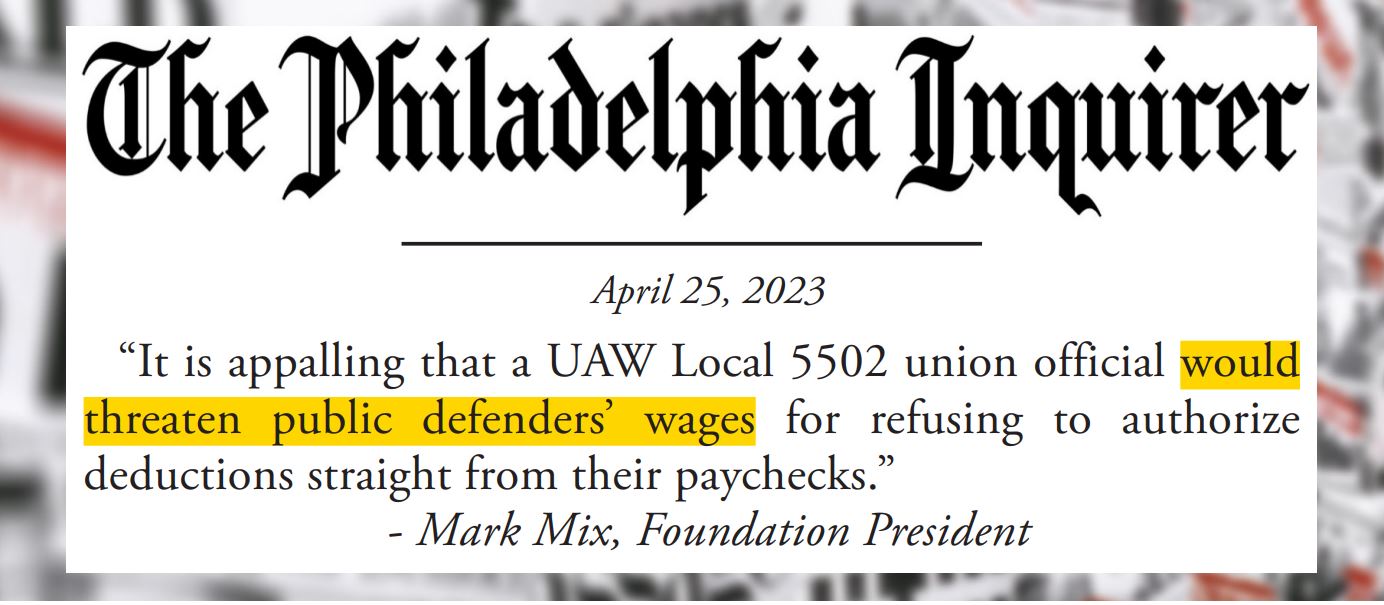
Philly Public Defender Brunilda Vargas surely didn’t feel “represented” by UAW bosses when they sought to reduce her and her colleagues’ pay just for not signing dues cards. Mark Mix expressed the outrageousness of this scheme to The Philadelphia Inquirer.
PHILADELPHIA, PA – Brunilda Vargas, a public defender for the City of Philadelphia, staunchly objected when United Auto Workers (UAW) Local 5502 union bosses sought to gain power over her and her colleagues at the Defender Association of Philadelphia.
After UAW union officials were installed in her workplace, things only got worse for her. A UAW union official threatened Vargas and her coworkers that, if they didn’t sign cards authorizing the direct deduction of union dues from their paychecks, their wages would be reduced. This threat was a blatant violation of federal law.
Vargas challenged UAW officials’ illegal demands with free legal aid from the National Right to Work Legal Defense Foundation. Union bosses quickly backed down, and in June entered into a settlement approved by National Labor Relations Board (NLRB) Region 4 which fully vindicates Vargas’ and her coworkers’ rights.
Public Defender Hits UAW with Federal Charges Following Intimidation
On April 18, 2023, Vargas filed her federal unfair labor practice charge with NLRB Region 4 for the threats made against her and her colleagues at the Defender Association of Philadelphia. UAW officials issued these threats against public defenders who chose not to sign automatic dues deduction authorization forms.
Even though Vargas works in the non-Right to Work state of Pennsylvania and can be forced to pay some union dues as a condition of employment, federal law prohibits forcing workers to authorize automatic dues deductions from their paychecks. Had Vargas lived in a Right to Work state, not only would she have the right to refrain from automatic dues deductions from her paycheck, but she could also refrain from financially supporting the union altogether. In Right to Work states, workers are fully protected from mandatory union membership and financial support, both of which must be completely voluntary.
Settlement Forces Union Bosses to Fully Abandon Illegal Threats
Now, pursuant to settlements, the UAW must email and post notices informing workers that the union will not work with the workers’ employer to reduce wages of nonmembers that do not sign automatic dues deductions forms. The union must also not suggest failure to sign a dues deduction card could lead to a worker’s termination. Finally, the union must not coerce or restrain individuals from expressing their rights under Section 7 of the National Labor Relations Act.
“[UAW] will not threaten objecting non-members that we will notify the Employer it can seek refunds of their contractual salary increases if they do not sign a dues deduction authorization form. Neither employees nor members are legally required to execute a dues deduction authorization form,” the notice reads.
“While we are happy that we were able to help Vargas and her coworkers fight UAW misconduct, this instance is but the tip of the iceberg when it comes to UAW malfeasance,” commented National Right to Work Foundation Vice President Patrick Semmens. “The recent federal probe into UAW officials stealing and misusing workers’ money has sent multiple top UAW bosses to jail, and uncovered a shocking culture of contempt for workers’ rights.”
“Fortunately, the numerous victims of UAW boss abuses need not fight alone,” continued Semmens. “They have an ally in the National Right to Work Foundation.”
Foundation Defends Michigan Workers with Forced Dues Looming
The following article is from the National Right to Work Legal Defense Foundation’s bi-monthly Foundation Action Newsletter, July/August 2023 edition. To view other editions of Foundation Action or to sign up for a free subscription, click here.
With Right to Work repeal law passed, workers seek to escape mandatory payments
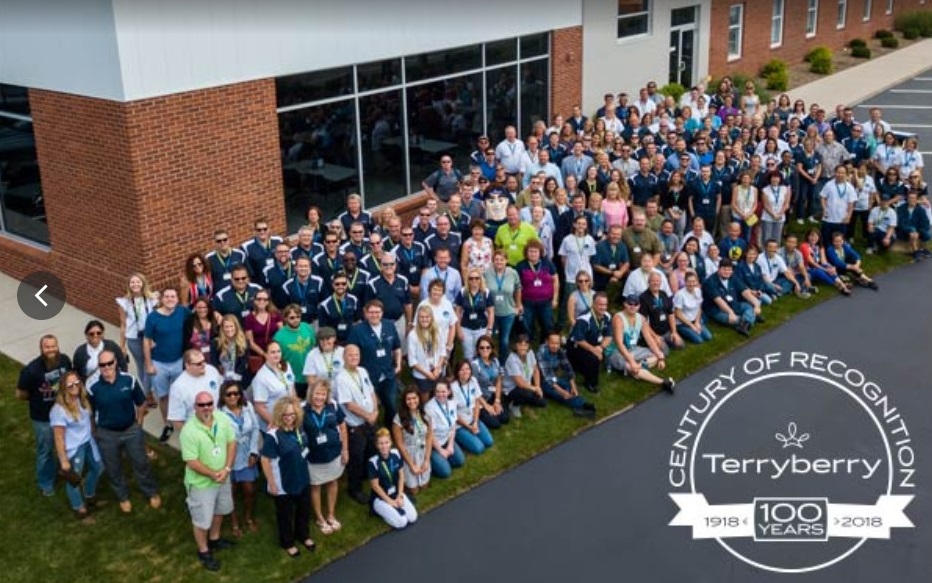
Michigan legislators’ unpopular decision to repeal the state’s Right to Work law helped prompt Mary Soltysiak and her coworkers’ move to vote out the IAM union.
LANSING, MI – Despite poll after poll showing 70 percent of Michiganders wanted Michigan’s decade-old Right to Work law left in place, Gov. Gretchen Whitmer and union cronies in the Michigan Legislature voted to strip Wolverine State workers of their right to refrain from funding unwanted union bosses in March. In response, the Foundation sprang into action, issuing a Special Legal Notice to Michigan workers advising them of their legal options as the state transitions to a forced-dues regime. The notice reminded workers that, despite what union bosses may claim, the state’s Right to Work law remains in effect until 90 days after the legislative session ends later this year — and also what they can do in advance of forced dues being legal again. Unsurprisingly, given Right to Work’s popularity even among union households, Michigan workers are stepping up and taking action to defend their rights against coercive unionism.
Michigan Workers Battle Forced-Dues Schemes Ahead of Repeal
For example, Foundation attorneys are currently assisting Grand Rapids-area Kroger employee Roger Cornett’s challenge to an illegal dues scheme perpetrated by United Food and Commercial Workers (UFCW) union officials. Cornett hit UFCW bosses with federal charges this May, accusing them of ignoring a letter in which he exercised his right to cut off dues deductions from his paycheck. Cornett’s charges also maintained that UFCW bosses sought to seize money from him using a form that blatantly violates existing federal law. Cornett’s charge says the form is illegal because of its “dual purpose” nature, meaning just one signature confusingly locks a worker into both membership and dues deductions. Federal law requires any authorization for union dues deductions to be voluntary and separate from a union membership application. UFCW bosses’ contempt for longstanding federal protections in Cornett’s case likely indicates how aggressively union officials will pursue forced dues under a non-Right to Work regime. The Foundation’s legal notice also counsels workers that they can avoid forced-dues arrangements entirely by petitioning the NLRB to hold “decertification elections” at their workplaces, in which workers can vote unpopular unions out.
Legal Notice Counsels Workers of Right to Vote Out Unwanted Unions
Mary Soltysiak, who opposes forced dues, heard news of the upcoming repeal and filed a petition to decertify the International Association of Machinists and Aerospace Workers (IAM) District Lodge 60/Local Lodge 475 union with free legal aid from Foundation staff attorneys. Soltysiak and her colleagues work at Terryberry, a manufacturing firm in Grand Rapids, MI.
Soltysiak stated that she and some of her colleagues “contacted [a Foundation attorney] and filled out paperwork to get out of paying union dues around the year 2018 because of the Right to Work . . . law.”
“The union has done nothing but hurt my paycheck and my vacation hours,” Soltysiak added.
Soltysiak and her coworkers achieved victory this May, when the NLRB certified their majority vote ousting the IAM union. Hopefully, their success portends the future success of the growing number of workers in Michigan and across the country looking to decertify the unions in their workplaces.
Foundation Also Defending Public Sector Right to Work Protections
As noted in the Foundation’s legal notice, the Michigan Right to Work repeal does not affect public sector Michigan employees. Under the Foundation-won Janus v. AFSCME Supreme Court decision, no public worker in America can be forced to subsidize a union as a condition of employment. But, as the repeal is looming, Michigan public sector union officials are nonetheless seeking to undermine public employees’ freedom to refrain from union support through so-called “fee-for-grievance” schemes.
This April, the Foundation submitted a brief in the Michigan Supreme Court case Technical, Professional and Officeworkers Association of Michigan (TPOAM) v. Renner, in which TPOAM officials are trying to enforce a “fee-for-grievance” policy against Saginaw County employee Daniel Renner. Under it, union bosses strip nonmember public employees of any power to file grievances themselves, and instead mandate that they pay fees sometimes exceeding yearly union dues to use the union’s grievance system.
Michigan legislators’ unpopular decision to repeal the state’s Right to Work law helped prompt Mary Soltysiak and her coworkers’ move to vote out the IAM union.
In the brief, Foundation staff attorneys refute the union’s claims for this newfound power, stating that “fee-for-grievance” schemes were never authorized by the Michigan Legislature and are inconsistent with federal law.
Foundation Attorneys Will Defend Worker Freedom in Michigan
“Michigan union officials and their allies in the state legislature have contempt for workers’ individual rights that knows no bounds,” commented National Right to Work Foundation Vice President and Legal Director William Messenger. “That was made clear by the repeal of the popular Right to Work law, and the attempt to undermine Right to Work protections for public sector employees which are safeguarded by the First Amendment under the Foundation’s Janus U.S. Supreme Court victory.”
“Michigan workers have a long road ahead to restore their rights against union coercion, but Foundation attorneys are fighting alongside these workers, and will continue to fight until no Michigan worker can be forced to pay union bosses they disapprove of just to keep a job,” Messenger added.





