
Mountain West Holding Company Traffic Safety Workers Across Montana Vote LIUNA Union Bosses Out of Power
Employees reject union by over 3-1 margin in vote to free more than 150 workers from union bosses’ forced-dues ranks
Butte, MT (April 6, 2026) – Workers at traffic safety equipment firm Mountain West Holding Company have overwhelmingly voted Laborers International Union (LIUNA) Local 1686 union officials out of power at their Montana workplaces. The final vote tally was 62-19. Employee John Fisher led his colleagues’ effort to free themselves of the union by filing a union decertification petition with the National Labor Relations Board in January. Fisher received free legal aid from the National Right to Work Legal Defense Foundation.
The NLRB is the federal agency responsible for enforcing private sector labor law, a task that includes administering elections to install (or “certify”) and remove (or “decertify”) unions. Fisher’s petition received more than the required threshold of his coworkers’ signatures to trigger the process for the NLRB to schedule a decertification vote. Pursuant to a stipulated election agreement approved by the NLRB, the decertification vote took place among employees at Mountain West Holding Company’s facilities in Billings, Butte, Bozeman, and Missoula.
Montana lacks Right to Work protections for its workers, meaning that union officials can enforce contracts that force private sector employees to pay money to the union or be fired. In contrast, in Right to Work states like Montana’s neighbors Idaho, Wyoming, South Dakota, and North Dakota, union membership and dues payment are strictly voluntary and the choice of each worker.
Now that Fisher and his colleagues have voted to remove the LIUNA union from their facilities, they are free of union chiefs’ forced-dues power. They are also free of the LIUNA’s exclusive “representation,” a legal privilege that lets union officials dictate work conditions for every employee in a work unit, even those who voted against or otherwise oppose the union.
“LIUNA union officials’ agenda both inside and outside the workplace didn’t resonate with me and a huge number of my coworkers. It was even worse that they could force us to pay them just to keep our jobs,” commented Fisher. “Our overwhelming vote against the union demonstrates pretty clearly that we’d had enough, and we look forward to continuing to support ourselves and our families free of the union.”
LIUNA Rejected by Mountain West Workers Twice in Handful of Years
This isn’t the first time that Mountain West employees have voted to escape the clutches of LIUNA Local 1686. In 2024, a unit of Mountain West equipment operators based in Billings, MT, led by Michael Horsman, voted to decertify the union in a near-unanimous vote. Horsman also received free Foundation legal assistance.
Foundation attorneys have noticed a marked increase in worker requests for help in decertifying unpopular unions. NLRB statistics indicate that in 2025, decertification petition filings were up almost 40 percent from 2020.
“Mr. Fisher and his colleagues sent a strong message to LIUNA union officials with their vote, as their work unit spanned well over 150 workers all across the Big Sky State,” commented National Right to Work Foundation President Mark Mix. “Foundation attorneys were proud to help them exercise their right to free themselves. But it’s outrageous that, despite how heavy the opposition to the union was among his coworkers, LIUNA bosses still had the power to force them to pay dues as a condition of employment.
“Workers in Montana and across America deserve the protection of a Right to Work law, so they can freely decide whether or not union officials at their workplace have earned their financial support,” Mix added.
Sixteen States Back Foundation’s Petition to High Court in Chicago Educator Case
The following article is from the National Right to Work Legal Defense Foundation’s bi-monthly Foundation Action Newsletter, September/October 2021 edition. To view other editions of Foundation Action or to sign up for a free subscription, click here.
Amicus brief: Unions “refuse to stop collecting dues despite unequivocal employee demands”
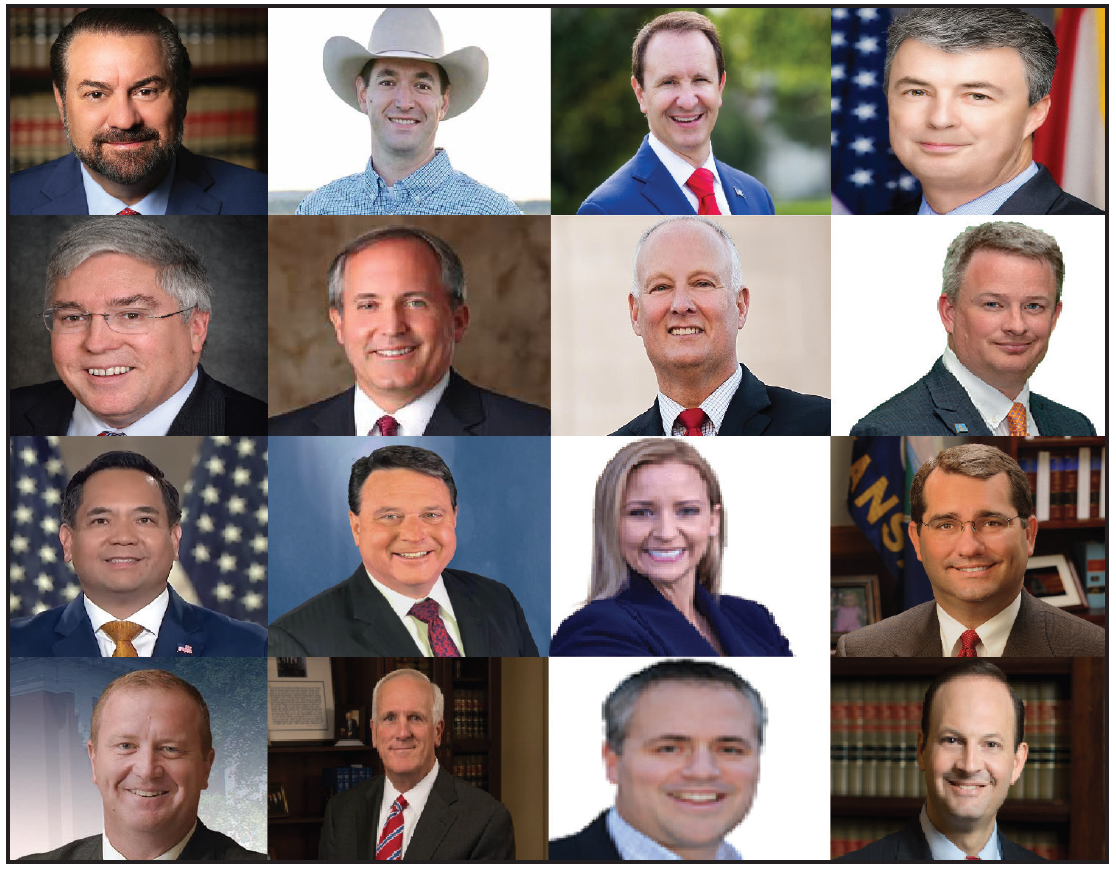
“Janus has been ignored,” wrote sixteen attorneys general in their amicus brief supporting Ifeoma Nkemdi and Joanne Troesch’s petition pressing the Supreme Court to hear their case and declare “escape periods” a First Amendment violation.
WASHINGTON, DC – In July, sixteen attorneys general threw the support of their states behind Chicago Public Schools educators Ifeoma Nkemdi and Joanne Troesch, who are urging the U.S. Supreme Court to hear their case defending their First Amendment right to cut off union financial support as recognized in the Foundation-won Janus v. AFSCME decision.
In an amicus brief encouraging the High Court to hear the case, attorneys general from Alaska, Alabama, Arizona, Arkansas, Indiana, Kansas, Louisiana, Missouri, Montana, Nebraska, South Carolina, South Dakota, Tennessee, Texas, Utah, and West Virginia argue that “escape period” restrictions like the one that Chicago Teachers Union (CTU) bosses foisted on Troesch and Nkemdi are a widespread threat to public employees’ rights under the Janus Supreme Court decision.
In 2018, the Supreme Court ruled in Janus v. AFSCME that public employees’ First Amendment rights are violated when they are forced to fund a union as a condition of employment. The Court also held that union dues can only be taken from a public employee with an affirmative and knowing waiver of that employee’s First Amendment right not to pay.
Unions Are Seizing Money from ‘Tens of Thousands’ Unconstitutionally, Brief Says
The CTU-concocted “escape period” Nkemdi and Troesch are challenging blocks employees from exercising their First Amendment Janus right to end union financial support except during one month per year. The educators’ petition for writ of certiorari presses the High Court to hear their case to affirm that Janus does not permit union bosses to profit from schemes that constrict workers’ constitutional right to refrain from subsidizing a union.
The states’ amicus brief emphasizes how glaringly union officials have flouted Janus with restrictions, as well as how widespread the schemes are: “Janus has been ignored. Across the country public-sector unions have resisted Janus’s instructions and devised new ways to compel state employees to subsidize union speech. Unions place onerous terms on dues forms that prohibit state employees from opting out of paying dues except during narrow (and undisclosed) windows during the year.”
The brief continues: “Unions refuse to inform state employees that they have a First Amendment right not to pay union dues. And unions refuse to stop collecting dues despite unequivocal employee demands. The result is that tens of thousands of state employees across the country are having dues deducted to subsidize union speech without any evidence that they waived their First Amendment rights . . . .”
Nkemdi and Troesch’s case “implicates these precise concerns” and the Court must hear it, the brief maintains.
In addition to the states’ brief, policy groups Goldwater Institute, Cato Institute, Freedom Foundation, and Liberty Justice Center filed amicus briefs backing the case.
Justices May Already Be Showing Interest in Foundation-Backed Case
In late July, the Supreme Court ordered lawyers for CTU and the Chicago Board of Education to file a response brief to Troesch and Nkemdi’s petition, a signal that some Justices may be interested in taking up the case.
Also pending at the High Court is Foundation attorneys’ anti- “escape-period” case for Susan Fischer and Jeanette Speck, two New Jersey teachers. Both that case and Troesch and Nkemdi’s case are expected to be fully briefed in October, after which the Justices will decide whether to take them.
“As union bosses continue to use deceptive ‘escape period’ arrangements to keep worker money flowing unconstitutionally into their coffers, support continues to roll in from across the country for Troesch and Nkemdi, who are sticking up for independent-minded public servants who simply want to serve their communities without being forced to fund union activities,” observed National Right to Work Foundation President Mark Mix. “The High Court must weigh in to affirm that public workers’ First Amendment rights cannot be confined to union officials’ arbitrary schedules.”





