
Missouri Shangri-La Dispensary Workers Officially Free of Unwanted UFCW Union Boss “Representation”
Labor Board certifies workers’ victory in case to remove UFCW after union officials disclaim representation and walk away
Columbia, MO (September 2, 2025) – The National Labor Relations Board (NLRB) has just issued an order that officially removes United Food and Commercial Workers (UFCW) Local 655 as the exclusive “representative” of a unit of Shangri-La dispensary workers. The order makes official the workers’ victory in their legal effort to remove UFCW union officials from their workplace.
The case started when Travis Hierholzer, with free legal aid from National Right to Work Foundation staff attorneys, filed his petition with the NLRB requesting a “decertification” election to remove UFCW union bosses at his workplace. Hierholzer’s petition was signed by nearly all of his fellow workers at the dispensary. The filing of the petition triggered an election process to determine whether the UFCW would remain the dispensary workers’ exclusive representative.
The NLRB is the federal agency tasked with enforcing federal labor law and with adjudicating disputes between employers, unions, and individual workers. Workers are able to initiate an election administered by the NLRB if their petition gathers the signatures of 30% or more of their fellow employees.
The election was close to being scheduled in September among all full-time and regular part-time patient consultants, patient consultant supervisors, and inventory specialists employed at the Columbia, MO, dispensary. However, rather than proceed with the election, UFCW union bosses apparently decided to avoid the embarrassment of a nearly unanimous vote by workers against them, instead “disclaiming” their status and removing the union as the dispensary’s so-called representative.
Missouri is one of the 24 states without Right to Work protections that make union affiliation and dues payment fully voluntary, meaning Hierholzer and his coworkers could have been forced to pay dues or fees to UFCW union officials or else be fired. Now that the union has been officially decertified, union officials lack the authority to impose a forced-dues requirement on the employees.
“Workers across the country, and especially in states where union bosses can force them to pay dues or else be fired, continue to exercise their legal right to free themselves of unwanted union representation,” stated National Right to Work Foundation President Mark Mix. “The National Right to Work Foundation will continue to stand up for American workers wherever they may be, by providing free legal aid to help defend their rights and remove unwelcome union bosses from their workplace.”
Workers in Missouri and Minnesota Challenge Union Bosses’ Scheme to Coerce Workers into Funding Union Political Activities
Cases against AFSCME, Guards Union, are latest to argue federal law prohibits “window periods” that trap nonmembers in full union dues payments
Kansas City, MO & Bloomington, MN (August 14, 2025) – Tina Delkamp, an employee of Honeywell FM&T in Kansas City, MO, and Meriem LeClair, an employee of Cornerstone Advocacy Center in Bloomington, MN, have each filed federal charges challenging union officials’ policies in their respective workplaces that coerce nonmember workers into funding union political activities. Delkamp and LeClair filed their charges at the National Labor Relations Board (NLRB) with free legal aid from National Right to Work Legal Defense Foundation staff attorneys.
Both charges state that union officials breached federal labor law by demanding that the employees “affirmatively opt-out of paying for political and ideological activities, instead of opting-in to make political and ideological contributions.” Under the Foundation-won Communications Workers of America v. Beck Supreme Court decision, union bosses cannot force workers who have opted out of union membership to pay fees for union political or ideological expenditures.
While the National Labor Relations Act (NLRA) protects workers’ right to abstain from formal union membership, states like Minnesota and Missouri that lack Right to Work laws permit unions to force workers to pay dues or fees just to keep their jobs. However, Beck limits this forced-dues amount to only what union bosses spend on bargaining functions, and these so-called “chargeable expenses” can never include money for union political or ideological activities. In both cases, union officials have attempted to get around Beck by neglecting to inform the employees of their rights.
Unions Can’t Force Funding for Political Activities Automatically
Delkamp’s charges, filed against International Guards Union of America Local 172, state that union officials are unlawfully withholding financial information she needs to verify what she has to pay as a non-member under Beck. Additionally, the charges challenge union officials for telling Delkamp that her inclusion of her employer on emails concerning her Beck rights was somehow a violation of federal law.
“I tried to exercise my right not to fund political activities I oppose, and the union threatened me for it,” said Delkamp. “Union officials shouldn’t be able to take my wages for their partisan activities without asking me first. They need to take responsibility for respecting my rights, instead of making me fight them on it.”
Union officials often neglect to inform workers of their Beck rights, and sometimes don’t even seek worker consent before deducting full dues (including dues for political expenses) from their paychecks. Recent federal charges filed by Delkamp, LeClair, and other workers with free Foundation legal aid give the NLRB an opportunity to enforce a new federal standard that would require union officials to seek clear consent from workers before extracting full union dues payments from their paychecks.
Union Used “Window Periods” to Keep Worker Trapped
LeClair’s charges, filed against AFSCME Council 5, also allege that the union “refused to recognize withdraw of union membership, except during ‘window periods,’” imposing an arbitrary restriction on the exercise of her Beck rights. Union-created “window periods,” in which union members can withdraw membership, are a stonewalling tactic with no basis in federal law.
“I didn’t want my union dues funding political activities I oppose, so I tried to resign my union membership, only for officials to tell me I had to wait,” commented LeClair. “If I have a right guaranteed under federal law, that right should apply all the time, not only on the days and weeks convenient for union bosses.”
“Across the country, Big Labor officials are using legally dubious schemes to force unwilling workers to fund a radical political agenda that is completely contrary to the priorities of most rank-and-file employees,” commented National Right to Work Foundation President Mark Mix. “The best way to ensure workers’ freedom is, of course, through Right to Work protections that make all union payments completely voluntary.
“Until Right to Work is the law of the land, the NLRB needs to step up to protect workers from being trapped in full forced dues, including the portion used for union political activism,” added Mix. “Workers who have already declined formal union membership should not have to also navigate arbitrary ‘window periods’ just to ensure they are not funding union boss political spending.”
KIPP St. Louis Charter High School Educators to Vote This Week on Whether to Oust AFT Union Bosses
Union decertification election will take place among wide swath of school employees, including teachers, advisors, administrative staff, and others
St. Louis, MO (May 14, 2024) – Teachers, advisors, nurses, and other employees at KIPP St. Louis High School will vote this week on whether to remove American Federation of Teachers (AFT) union officials from power at the school. The union decertification vote follows KIPP teacher Robin Johnston’s submission of a “decertification petition” earlier this month to National Labor Relations Board (NLRB) Region 14 in St. Louis. Johnston filed the decertification petition with free legal aid from the National Right to Work Foundation.
The NLRB is the federal agency responsible for enforcing federal labor law, which includes administering elections to install (or “certify”) and remove (or “decertify”) unions. Johnston’s petition contains signatures from enough of her coworkers to trigger a decertification vote under NLRB rules.
Because Missouri lacks Right to Work protections for its private sector workers (which includes employees at public charter schools like KIPP), union officials have the legal privilege to enforce contracts that force workers to pay union dues or fees as a condition of getting or keeping a job. In contrast, in Right to Work states, union membership and union financial support are strictly voluntary.
However, in both Right to Work and non-Right to Work states, union officials in a unionized workplace are empowered by federal law to impose a union contract on all employees in the work unit, including those who oppose the union. A successful decertification vote strips union officials of both their forced-dues and monopoly bargaining powers.
Vote Set to Take Place May 17
“AFT union officials haven’t stood up for us,” commented Johnston. “I think the majority of my coworkers agree that they’ve only made it harder for us to help our students succeed, especially through a divisive strike order, and that’s a trend I hope we can reverse with this vote. We hope the election proceeds without delay and without interference from union officials.”
The NLRB has scheduled a vote to occur on Friday, May 17. According to Johnston’s petition, the vote will occur among “College and Career Advisors, English Language Learners, Leads, Lead Teachers, Learning Support Teachers, Mental health Professionals, School Nurses, Special Ed. Teachers, Specials Teachers, Speech Language Pathologists, Virtual Learning Facilitators, Behavior Support Specialists, High School Registrars, Long Term Subs, Office Coordinators, Paraprofessionals, Permanent Building Subs and Receptionists” at the school.
Foundation attorneys have recently aided other charter school educators in efforts to remove unwanted union officials, most recently in San Diego, CA, where employees of Gompers Preparatory Academy prevailed in 2023 after a nearly four-year effort to vote out the San Diego Education Association (SDEA) union, an affiliate of the National Education Association (NEA).
“Top teacher union officials, including Randi Weingarten of the AFT and Becky Pringle of the NEA, seem to regularly make headlines for political radicalism and not for anything related to helping teachers, which seems to be a reality on the ground at KIPP St. Louis,” commented National Right to Work Foundation President Mark Mix. “Ms. Johnston and her fellow educators join a growing number of workers across the country who are realizing that union boss agendas don’t align with what’s best for them, and Foundation attorneys are proud to help them exercise their right to vote away unwanted union control.”
Sixteen States Back Foundation’s Petition to High Court in Chicago Educator Case
The following article is from the National Right to Work Legal Defense Foundation’s bi-monthly Foundation Action Newsletter, September/October 2021 edition. To view other editions of Foundation Action or to sign up for a free subscription, click here.
Amicus brief: Unions “refuse to stop collecting dues despite unequivocal employee demands”
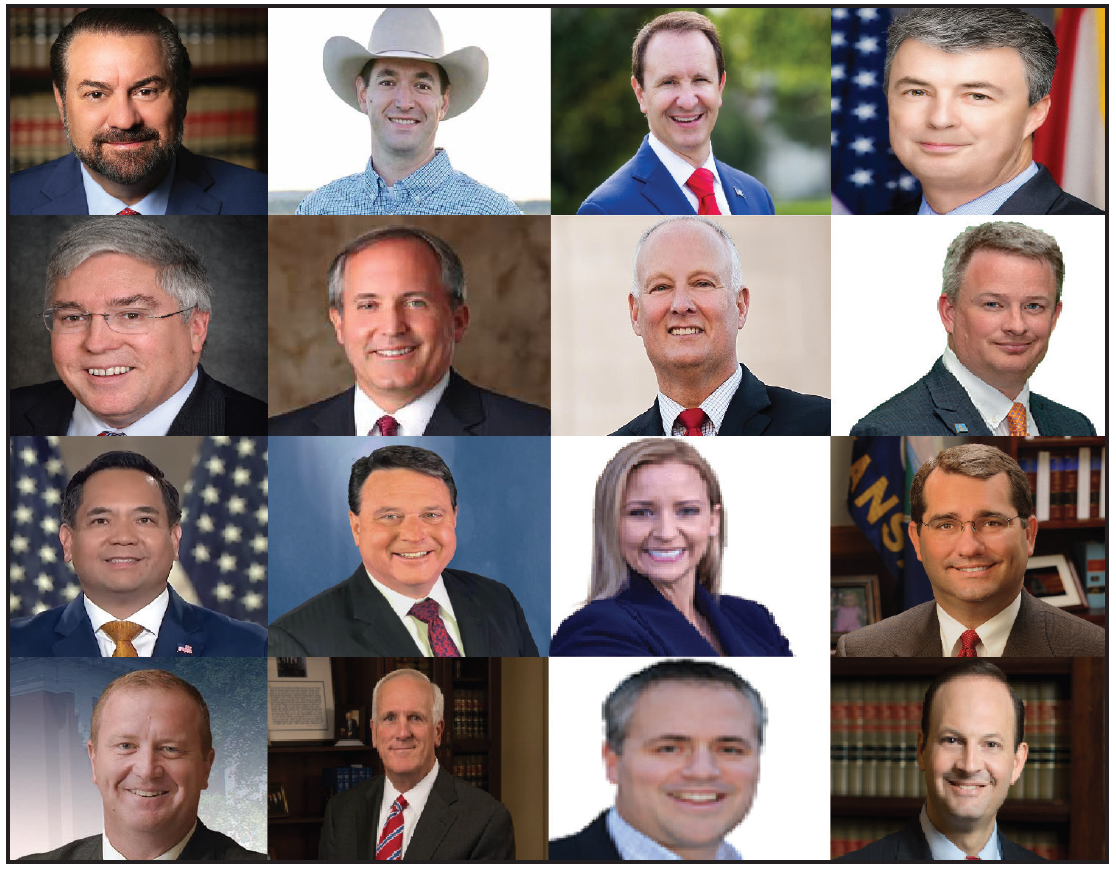
“Janus has been ignored,” wrote sixteen attorneys general in their amicus brief supporting Ifeoma Nkemdi and Joanne Troesch’s petition pressing the Supreme Court to hear their case and declare “escape periods” a First Amendment violation.
WASHINGTON, DC – In July, sixteen attorneys general threw the support of their states behind Chicago Public Schools educators Ifeoma Nkemdi and Joanne Troesch, who are urging the U.S. Supreme Court to hear their case defending their First Amendment right to cut off union financial support as recognized in the Foundation-won Janus v. AFSCME decision.
In an amicus brief encouraging the High Court to hear the case, attorneys general from Alaska, Alabama, Arizona, Arkansas, Indiana, Kansas, Louisiana, Missouri, Montana, Nebraska, South Carolina, South Dakota, Tennessee, Texas, Utah, and West Virginia argue that “escape period” restrictions like the one that Chicago Teachers Union (CTU) bosses foisted on Troesch and Nkemdi are a widespread threat to public employees’ rights under the Janus Supreme Court decision.
In 2018, the Supreme Court ruled in Janus v. AFSCME that public employees’ First Amendment rights are violated when they are forced to fund a union as a condition of employment. The Court also held that union dues can only be taken from a public employee with an affirmative and knowing waiver of that employee’s First Amendment right not to pay.
Unions Are Seizing Money from ‘Tens of Thousands’ Unconstitutionally, Brief Says
The CTU-concocted “escape period” Nkemdi and Troesch are challenging blocks employees from exercising their First Amendment Janus right to end union financial support except during one month per year. The educators’ petition for writ of certiorari presses the High Court to hear their case to affirm that Janus does not permit union bosses to profit from schemes that constrict workers’ constitutional right to refrain from subsidizing a union.
The states’ amicus brief emphasizes how glaringly union officials have flouted Janus with restrictions, as well as how widespread the schemes are: “Janus has been ignored. Across the country public-sector unions have resisted Janus’s instructions and devised new ways to compel state employees to subsidize union speech. Unions place onerous terms on dues forms that prohibit state employees from opting out of paying dues except during narrow (and undisclosed) windows during the year.”
The brief continues: “Unions refuse to inform state employees that they have a First Amendment right not to pay union dues. And unions refuse to stop collecting dues despite unequivocal employee demands. The result is that tens of thousands of state employees across the country are having dues deducted to subsidize union speech without any evidence that they waived their First Amendment rights . . . .”
Nkemdi and Troesch’s case “implicates these precise concerns” and the Court must hear it, the brief maintains.
In addition to the states’ brief, policy groups Goldwater Institute, Cato Institute, Freedom Foundation, and Liberty Justice Center filed amicus briefs backing the case.
Justices May Already Be Showing Interest in Foundation-Backed Case
In late July, the Supreme Court ordered lawyers for CTU and the Chicago Board of Education to file a response brief to Troesch and Nkemdi’s petition, a signal that some Justices may be interested in taking up the case.
Also pending at the High Court is Foundation attorneys’ anti- “escape-period” case for Susan Fischer and Jeanette Speck, two New Jersey teachers. Both that case and Troesch and Nkemdi’s case are expected to be fully briefed in October, after which the Justices will decide whether to take them.
“As union bosses continue to use deceptive ‘escape period’ arrangements to keep worker money flowing unconstitutionally into their coffers, support continues to roll in from across the country for Troesch and Nkemdi, who are sticking up for independent-minded public servants who simply want to serve their communities without being forced to fund union activities,” observed National Right to Work Foundation President Mark Mix. “The High Court must weigh in to affirm that public workers’ First Amendment rights cannot be confined to union officials’ arbitrary schedules.”
Pro-Right to Work Missouri Workers File Lawsuits Challenging Language of Union Boss-Backed Forced Dues Ballot Measures
Outgoing Secretary of State approved Big Labor-backed measures hours before leaving office in apparent political kickback
Jefferson City, MO (January 23, 2017) – With free legal aid from National Right to Work Foundation staff attorneys three Missouri workers filed legal challenges against ten separate initiative-petitions that could wipe out a potential Missouri Right to Work law and strip away any newly-won Right to Work protections for them and hundreds of thousands of other Missouri workers.
Although statutorily required to draft summary statements to inform petition signers and voters of the effect of the proposed amendments, former Secretary of State Kander’ s midnight actions seem designed to hide from Missouri voters the ballot measures would put in Missouri’s constitution. None of the proposals even mention the Right to Work law that they are designed to render unconstitutional.
With a Right to Work bill likely to pass the Missouri Legislature in the coming weeks, and Governor Eric Greitens pledging to sign the bill into law, union bosses scrambled to put numerous initiative-petitions to kill the law on Big Labor friendly Jason Kander’ s desk for his approval before he left office. Secretary Kander approved all ten just hours before vacating his office. They would appear on the 2018 general election ballot if they obtain a sufficient number of voter’s signatures.
Mark Mix, president of the National Right to Work Foundation, issued the following statement:
These deliberately misleading initiative petitions are nothing more than an attempt by Big Labor to confuse voters in hope that the confusion will result in overturning popular Right to Work protections.
Missourians should be outraged that outgoing Secretary of State Jason Kander, who was supported by thousands of dollars of forced dues in his recent unsuccessful Senate campaign, granted union bosses this huge political payoff just before stepping out of office. All workers should have the right to get or keep a job without having to pay tribute to a union boss, and those rights should not be put in jeopardy because of a political favor given to union hours before he leaves office.
Missouri Judge Strikes Down Ballot Language of 10 Union Boss Anti-Right to Work Amendments
Ballot language rejected as “unfair and insufficient” was authorized as an eleventh-hour political kickback by former MO Secretary of State
St. Louis, MO (March 24, 2017) – National Right to Work Legal Defense Foundation President Mark Mix released the following statement regarding the Cole County, Missouri, Circuit Court’s decision in the case Hill v. Ashcroft:
“This ruling is an important step in defending Missouri’s recently-passed Right to Work protections for workers. Show Me State citizens overwhelmingly oppose giving union officials the power to have a worker fired solely for refusing to pay union dues or fees, which is why Big Labor is trying to be intentionally deceptive about their efforts to overturn the state’s new Right to Work law.”
In the case a group of Missouri citizens, with free legal assistance from National Right to Work Legal Defense Foundation staff attorneys, challenged misleading ballot language put forth by union officials designed to overturn the state Right to Work law.
Missouri Workers File New Lawsuit to Defend Right to Work Law From Deceptive Repeal Petition
Union officials seek to continue their forced dues powers over Missouri workers through misleading ballot questions
Jefferson City, MO (April 11, 2017) – With free legal aid from National Right to Work Foundation staff attorneys three Missouri workers have filed a legal challenge against an AFL-CIO proposed petition that could repeal Missouri’s new Right to Work law and strip away Right to Work protections from them and hundreds of thousands of other Missouri workers. The plaintiffs, police officers Roger Stickler and Michael Briggs, and nurse Mary Hill, are opposed to mandatory union payments. Each has experienced forced unionism abuses in the past, and could again without the protection of a Missouri Right to Work law. Their lawsuit challenges the deceptive ballot language proposed to overturn the law.
Mike Louis, President of the Missouri AFL-CIO has submitted a repeal petition to the Missouri Secretary of State’s office, seeking to delay the enforcement of the recently passed Right to Work bill and submit the issue to the general election ballot in 2018. This petition has been approved by MO Sec. State Jay Ashcroft, and would appear on the 2018 ballot if union organizers obtain a sufficient number of signatures. The workers’ lawsuit challenges the proposed summary statement language as deceptive to voters.
“Once again, rather than be upfront with the Missouri citizens about their intention of restoring their forced unionism powers to have a worker fired for refusing to tender union dues or fees, Missouri union officials are pushing deceptive ballot language,” said Mark Mix, president of the National Right to Work Foundation. “Right to Work is popular with the people of the state, so Big Labor is hoping to mislead voters into undoing the protections Right to Work provides workers.”
This is not the first legal challenge National Right to Work Foundation staff attorneys have filed for workers who back Missouri’s Right to Work law that will make union membership and dues payment strictly voluntary. Before the Right to Work bill was signed into law on February 6, AFL-CIO top boss Louis also submitted ten state constitutional amendments to kill the law and give forced unionism state constitutional protection.
Those ten amendments were sent to the desk of former Missouri Secretary of State Kander who approved them just hours before vacating his office. These same three workers sued to challenge the deceptive language that Kander approved. On March 24, the Cole County Circuit Court judge ruled that the ballot language was “unfair and insufficient,” and rewrote the language that will appear on the ballot in 2018 if union bosses collect enough signatures. The unions have appealed the ruling, and National Right to Work Foundation staff attorneys are continuing to defend against the appeal to protect the lower court ruling.
Missouri Workers Head to Court to Defend Right to Work Law from Misleading Ballot Amendments
MO Right to Work supporters object to deceptive proposed constitutional amendment language approved by former Secretary of State
St. Louis, MO (May 24, 2017) – A group of Missouri workers have a hearing today in their lawsuit challenging the deceptive ballot language on a set of constitutional amendments that would effectively repeal Missouri’s popular new Right to Work law. The three Missourians are represented by a staff attorney from the National Right to Work Legal Defense Foundation.
Seeing the writing on the wall for passage of a Missouri state Right to Work law making union membership and dues payment strictly voluntary, Mike Louis, the Missouri AFL-CIO’s top official, submitted to the Missouri Secretary of State ten proposed amendments to the state constitution. Each of the proposals seek to overturn Missouri’s Right to Work law enacted in February.
The workers’ lawsuit challenges the summary statements and ballot language for the amendments as confusing and misleading. The language was approved by outgoing Secretary of State Jason Kander who ran a failed U.S. Senate campaign that was funded by hundreds of thousands of dollars in union contributions. He approved the ballot language just hours before vacating office, ignoring the fact that none of the petitions even mentioned the Right to Work law that they are designed to nullify. The amendments would appear on the 2018 ballot if union organizers obtain a sufficient number of signatures.
If any of the Big Labor-backed constitutional amendments are put on the ballot and approved by the voters, they would repeal the new Right to Work law and block future passage of any state legislation to protect workers from mandatory union fees. Any future attempt to pass Right to Work would first require another amendment of the state constitution.
In late March, in response to the lawsuit filed by three pro-Right to Work employees with free legal representation provided by the National Right to Work Legal Defense Foundation, Judge Beetem of the Cole County Circuit court ruled that the proposed language was “unfair and insufficient.” He ordered that the ballot language be rewritten to be more balanced and clearly reflect that the proposed constitutional amendments would repeal Right to Work in Missouri.
The workers then filed a technical appeal so that they can defend the Circuit Court’s decision from union lawyers’ efforts to overturn it and reinstate the misleading language. The hearing in the appeal will be in the Western Division of the Missouri Court of Appeals’ courthouse in Kansas City at 1:30 p.m. Central Time.
“Big Labor continues to resort to any tactic in an attempt to block Missouri’s new Right to Work law,” said Mark Mix, President of the National Right to Work Foundation. “Big Labor knows that the citizens of Missouri believe it is wrong for an employee to be fired simply for refusing to pay union dues or fees to a union boss. That’s why the union bosses are so intent on confusing voters about their goal of restoring their forced dues powers.”
The workers have also filed a lawsuit opposing the language proposed for a Right to Work law repeal referendum filed by the AFL-CIO. That lawsuit alleges that the approved language of the repeal referendum, which would put Missouri’s Right to Work law on hold pending a statewide vote, amazingly, includes grammatical errors and does not meet the statutory requirements that govern the process.





