
MI Kroger Employee Hits UFCW Union, Kroger with Federal Charges for Illegally Requiring Dues Payments, PAC Contributions
Worker contends that union lacks valid contract and thus can’t demand any money from workers, despite recent MI Right to Work repeal
Detroit, MI (April 16, 2024) – An employee of Kroger’s supermarket in the Prospect Hill Shopping Center in Milford, MI, has just hit United Food and Commercial Workers (UFCW) Local 876 union officials and Kroger management with federal charges. The employee, Roger Cornett, charges that Kroger declared it would fire him unless he signed a union membership form, and authorized union dues deductions and contributions to the union’s Political Action Committee (PAC) from his paycheck. Cornett notably points out that UFCW lacks a legal basis to demand money from any worker.
Cornett’s charges are now pending with the National Labor Relations Board (NLRB), the federal agency responsible for governing private sector labor relations. Cornett’s charge recounts that, despite his requesting a copy, neither union officials nor Kroger produced a copy of a union contract containing a so-called “union security clause,” more accurately called a “forced-dues clause.”
Under longstanding federal law, even in a state without Right to Work protections, union officials can only enforce a contract requiring employees to pay dues as a condition of employment if the contract contains a forced-dues clause. To be valid, federal law requires that such clauses have a 30-day grace period before union bosses’ “pay-up-or-be-fired” demands can be enforced.
Since Kroger and UFCW cannot produce a contract that contains such a clause, union demands for dues money should be illegal. This is true notwithstanding Michigan’s repeal of its Right to Work law, a provision that made union membership and union financial support strictly voluntary.
Under federal law, no employee can be required to authorize payroll deductions of union dues or to pay money to a union PAC used to fund union boss-backed political candidates. Additionally, the National Labor Relations Act (NLRA) and U.S. Supreme Court cases like General Motors v. NLRB safeguard the right of workers to abstain from formal union membership, while the Foundation-won CWA v. Beck Supreme Court decision forbids union officials from forcing nonmember workers to pay money for any expenses outside the union’s core bargaining functions, which includes political expenses.
UFCW Union Unleashed Pressure Campaign on Nonmember Workers After Right to Work Repeal
Michigan’s Right to Work law, which prevented union officials from having workers fired for refusing to join or pay dues to a union, was officially repealed on February 13, 2024. According to Cornett’s charges, in February he asked if there was an updated version of the union contract that would require him and other nonmembers to pay dues as a condition of employment in light of the repeal. Neither UFCW nor Kroger provided Cornett with such a contract in response to his request.
Union officials threatened Cornett and other workers that it was a condition of employment for them to become union members, authorize direct deductions of union dues from their pay, and “sign all or part of the three-part Union membership application and checkoff form,” the latter of which included a page authorizing deductions for the union’s PAC.
Worker Faced Termination After Being Threatened to Contribute to Union PAC
Cornett’s charges state that he received a letter from management on February 28 “informing him that…Kroger terminated [him] for failure to become a member of the Union.” This termination took place within the statutorily-required 30-day grace period before forced-dues contracts can be enforced against union nonmembers – meaning the firing would be illegal even if the union had a valid contract that allowed it to require dues payments as a condition of employment.
Cornett says in his charges that he signed the three-part form in order to keep his job. His charges state that the union’s threats and pressuring of employees “violate the [NLRA], and threaten, restrain, and discriminate against Charging Party and similarly situated employees in the exercise of their Section 7 right to refrain from [union activity].”
“Here we have yet another example of union bosses browbeating the very Michigan workers they claim to ‘represent’ as soon as Right to Work protections are gone,” commented National Right to Work Foundation President Mark Mix. “Security guards at government buildings across Western Michigan are already banding together to oppose forced-dues demands from UGSOA union officials, and we now see UFCW union officials trying to squeeze dues money out of Kroger employees using coercive tactics that are forbidden even in a non-Right to Work environment.
“Especially concerning is Cornett’s charge that he was forced to sign his money away for the union’s PAC, a demand that blatantly violates several federal laws while paying no regard for workers’ free choice,” continued Mix. “Foundation staff attorneys will get to the bottom of this and defend Mr. Cornett’s rights.”
National Right to Work Foundation Highlights Michigan Workers’ Legal Options as Right to Work Repeal Looms
Legal notices: Though forced dues will again be legal in the private sector, Michigan workers can still reject union boss demands to join union and fund union political activities
Lansing, MI (February 9, 2024) – The National Right to Work Legal Defense Foundation has issued special legal notices to public and private sector workers in Michigan, which explains what rights workers still have to resist union boss demands as the repeal of the state’s Right to Work law takes effect.
In March 2023, the Michigan Legislature voted against the will of over 70% of Michiganders and repealed the state’s protections against being forced to pay union dues or fees as a condition of employment. The repeal formally takes effect on February 12, 2024.
The legal notices are available at the Foundation’s website: https://www.nrtw.org/michigan-private-sector-notice/ (for private sector workers) https://www.nrtw.org/michigan-public-sector-notice/ (for public sector workers).
MI Public Sector Workers Can Still Refrain from Union Membership and Dues Payment
By repealing Michigan’s Right to Work law, Michigan politicians granted union officials the power to compel private sector workers to pay money to a union to keep their jobs. The legal notice explains that, despite this massive expansion of government-granted power for Michigan union bosses, private sector workers still have rights under federal law to refrain from formal union membership and to refuse to pay for union political or ideological expenditures, among other rights.
“[U]nder the National Labor Relations Act (NLRA) workers subject to these forced fee arrangements cannot lawfully be compelled to be actual union members or pay full union dues to keep their jobs,” the notice reads.
As for public sector workers, the legal notice informs Michiganders that even though Michigan’s politicians have undone the state’s statutory protection against being forced to pay union bosses as a condition of employment, the repeal “does not—and cannot—strip [public sector] workers of their constitutional right” to refrain from funding union activities. The Supreme Court recognized public employees’ First Amendment right to abstain from union financial support in the 2018 Foundation-won Janus v. AFSCME ruling.
MI Union Bosses Still Can’t Force Private Sector Workers to Become Formal Members or Directly Support Union Politics
The notices inform Michigan private sector employees that, under the U.S. Supreme Court’s decision in Pattern Makers v. NLRB, independent-minded workers have a right to refrain from formal union membership. The Foundation-won CWA v. Beck Supreme Court ruling further holds that the most that union bosses can force nonmember workers to pay is a fee equal to “what the union can prove is its costs of collective bargaining, contract administration, and grievance adjustment with their employer.” This fee cannot include union expenses for political and ideological activities.
“Unions often fail to meet their legal obligation to inform workers of their right not to be a union member and to object to paying full union dues,” the notice reads. “In fact, unions oftentimes mislead workers to believe that they must join the union to keep their jobs.”
MI Private Sector Workers Have Right to Vote Out Unpopular Union Bosses
Private sector employees also have the right to petition for National Labor Relations Board-supervised “decertification elections,” which can strip union officials of their coercive powers of monopoly control over a work unit entirely.
Foundation attorneys assist hundreds of workers every year in exercising their legal right to obtain a vote to decertify unions of which they disapprove.
“Union boss allies in the Michigan Legislature foisted this repeal on workers for one reason: To enlarge the coffers of their favorite special interest,” commented National Right to Work Foundation President Mark Mix. “Instead of letting Michigan workers continue to enjoy the right to freely choose whether or not union officials have earned a cut of their hard-earned pay, Michigan legislators have granted union bosses a power that strips away basic free speech and association rights.”
“The truth is, even with this great expansion of their powers, Michigan union bosses will still try to look for ways to expand their powers beyond the law and compel more workers to associate with them,” Mix added. “That’s why it’s important for Michiganders to know their rights in this new legal landscape; they should also know that Foundation attorneys stand ready to defend the rights of any Michigan worker opposing union coercion.”
Foundation Defends Michigan Workers with Forced Dues Looming
The following article is from the National Right to Work Legal Defense Foundation’s bi-monthly Foundation Action Newsletter, July/August 2023 edition. To view other editions of Foundation Action or to sign up for a free subscription, click here.
With Right to Work repeal law passed, workers seek to escape mandatory payments
Michigan legislators’ unpopular decision to repeal the state’s Right to Work law helped prompt Mary Soltysiak and her coworkers’ move to vote out the IAM union.
LANSING, MI – Despite poll after poll showing 70 percent of Michiganders wanted Michigan’s decade-old Right to Work law left in place, Gov. Gretchen Whitmer and union cronies in the Michigan Legislature voted to strip Wolverine State workers of their right to refrain from funding unwanted union bosses in March. In response, the Foundation sprang into action, issuing a Special Legal Notice to Michigan workers advising them of their legal options as the state transitions to a forced-dues regime. The notice reminded workers that, despite what union bosses may claim, the state’s Right to Work law remains in effect until 90 days after the legislative session ends later this year — and also what they can do in advance of forced dues being legal again. Unsurprisingly, given Right to Work’s popularity even among union households, Michigan workers are stepping up and taking action to defend their rights against coercive unionism.
Michigan Workers Battle Forced-Dues Schemes Ahead of Repeal
For example, Foundation attorneys are currently assisting Grand Rapids-area Kroger employee Roger Cornett’s challenge to an illegal dues scheme perpetrated by United Food and Commercial Workers (UFCW) union officials. Cornett hit UFCW bosses with federal charges this May, accusing them of ignoring a letter in which he exercised his right to cut off dues deductions from his paycheck. Cornett’s charges also maintained that UFCW bosses sought to seize money from him using a form that blatantly violates existing federal law. Cornett’s charge says the form is illegal because of its “dual purpose” nature, meaning just one signature confusingly locks a worker into both membership and dues deductions. Federal law requires any authorization for union dues deductions to be voluntary and separate from a union membership application. UFCW bosses’ contempt for longstanding federal protections in Cornett’s case likely indicates how aggressively union officials will pursue forced dues under a non-Right to Work regime. The Foundation’s legal notice also counsels workers that they can avoid forced-dues arrangements entirely by petitioning the NLRB to hold “decertification elections” at their workplaces, in which workers can vote unpopular unions out.
Legal Notice Counsels Workers of Right to Vote Out Unwanted Unions
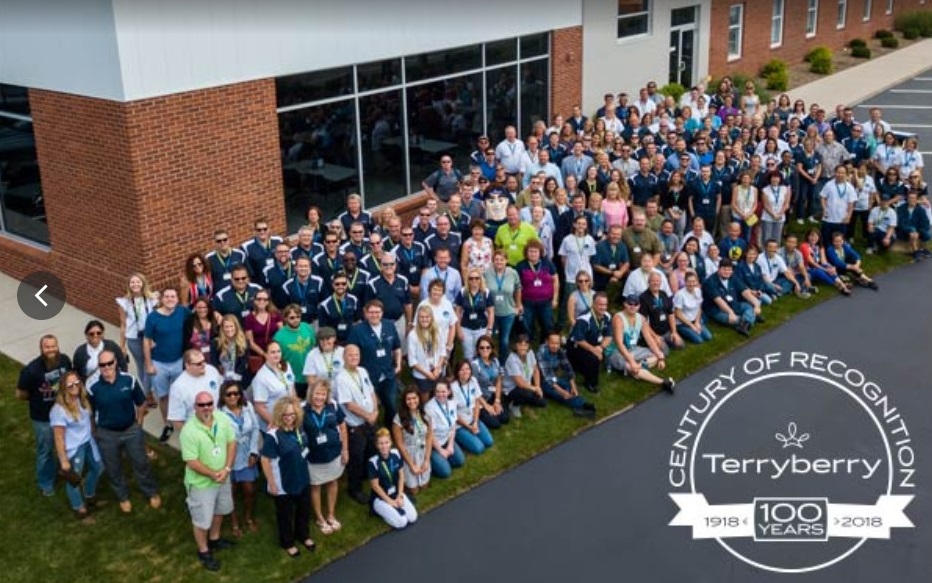
Mary Soltysiak, who opposes forced dues, heard news of the upcoming repeal and filed a petition to decertify the International Association of Machinists and Aerospace Workers (IAM) District Lodge 60/Local Lodge 475 union with free legal aid from Foundation staff attorneys. Soltysiak and her colleagues work at Terryberry, a manufacturing firm in Grand Rapids, MI.
Soltysiak stated that she and some of her colleagues “contacted [a Foundation attorney] and filled out paperwork to get out of paying union dues around the year 2018 because of the Right to Work . . . law.”
“The union has done nothing but hurt my paycheck and my vacation hours,” Soltysiak added.
Soltysiak and her coworkers achieved victory this May, when the NLRB certified their majority vote ousting the IAM union. Hopefully, their success portends the future success of the growing number of workers in Michigan and across the country looking to decertify the unions in their workplaces.
Foundation Also Defending Public Sector Right to Work Protections
As noted in the Foundation’s legal notice, the Michigan Right to Work repeal does not affect public sector Michigan employees. Under the Foundation-won Janus v. AFSCME Supreme Court decision, no public worker in America can be forced to subsidize a union as a condition of employment. But, as the repeal is looming, Michigan public sector union officials are nonetheless seeking to undermine public employees’ freedom to refrain from union support through so-called “fee-for-grievance” schemes.
This April, the Foundation submitted a brief in the Michigan Supreme Court case Technical, Professional and Officeworkers Association of Michigan (TPOAM) v. Renner, in which TPOAM officials are trying to enforce a “fee-for-grievance” policy against Saginaw County employee Daniel Renner. Under it, union bosses strip nonmember public employees of any power to file grievances themselves, and instead mandate that they pay fees sometimes exceeding yearly union dues to use the union’s grievance system.
Michigan legislators’ unpopular decision to repeal the state’s Right to Work law helped prompt Mary Soltysiak and her coworkers’ move to vote out the IAM union.
In the brief, Foundation staff attorneys refute the union’s claims for this newfound power, stating that “fee-for-grievance” schemes were never authorized by the Michigan Legislature and are inconsistent with federal law.
Foundation Attorneys Will Defend Worker Freedom in Michigan
“Michigan union officials and their allies in the state legislature have contempt for workers’ individual rights that knows no bounds,” commented National Right to Work Foundation Vice President and Legal Director William Messenger. “That was made clear by the repeal of the popular Right to Work law, and the attempt to undermine Right to Work protections for public sector employees which are safeguarded by the First Amendment under the Foundation’s Janus U.S. Supreme Court victory.”
“Michigan workers have a long road ahead to restore their rights against union coercion, but Foundation attorneys are fighting alongside these workers, and will continue to fight until no Michigan worker can be forced to pay union bosses they disapprove of just to keep a job,” Messenger added.
Oakland County Employee Slams Union with Federal Charges Over Illegal Seizure of Dues
As Right to Work repeal looms, Milford, Michigan, Kroger employee challenges UFCW union membership form designed to coerce dues deductions
Milford, MI (May 3, 2023) – Michigan Kroger employee Roger Cornett recently filed a federal unfair labor practice charge with the National Labor Relations Board (NLRB) against United Food and Commercial Workers (UFCW) Local 876. Cornett is receiving free legal aid from National Right to Work Legal Defense Foundation staff attorneys.
On April 26, Kroger employee Roger Cornett charged UFCW union officials with illegally seizing union dues from his paycheck. According to his charge, Cornett was presented with a “union membership application” form to complete during an employee orientation.
The form indicated that signing it would authorize both union membership and dues deductions. Cornett’s charge says the form violates federal labor law because of its “dual purpose” nature, as the law requires any authorization for union dues deductions to be voluntary and separate from a union membership application.
Cornett attempted to resign his union membership and revoke his dues deduction authorization around March 8. He successfully resigned his membership, but the union refused to stop deducting dues from Cornett’s paycheck, alleging that Cornett could only exercise his right to stop dues deductions within a tiny “window period” enforced by union officials.
Cornett’s charge comes as Michigan legislators have decided to repeal Michigan’s popular Right to Work law, which prohibits union officials from forcing workers to join or pay dues to a union to get or keep a job. Once the repeal becomes effective, Michigan union officials will again be able to get workers fired for refusal to pay union fees.
The Foundation published a legal notice to Michigan workers, stating “after the repeal statute takes effect, it will be legal under Michigan law for private-sector employers and unions to enter into agreements that compel workers to pay fees to unions as a condition of employment.” The notice also informs Michigan Workers of their legal options after the repeal of Right to Work.
“Union boss pressures will only increase as the repeal of Right to Work nears. Foundation staff attorneys will continue to assist Mr. Cornett in navigating his case,” states Mark Mix, President of the National Right to Work Legal Defense Foundation. “In less than a year, Michigan union bosses will once again have the power to demand workers be terminated merely for refusing to support the union’s agenda with their hard-earned money.”
“The Michigan legislature and Governor Whitmer, both of whom genuflect to union boss lobbyists, made a huge mistake in repealing the Right to Work law previously protecting individual workers. Numerous polls have shown Michiganders’ overwhelming support for the Right to Work law, and yet the Michigan Legislature chose to ignore the will of the people and the rights of workers,” continued Mix. “However, even as the demise of the Right to Work law in Michigan looms, Michigan workers can still reach out to National Right to Work Foundation staff attorneys to learn what rights they have to oppose union coercion, and to request help in exercising those rights.”
With Right to Work Repeal Coming, Michigan Workers Seek a Vote to End Union ‘Representation’ They Oppose
Majority of TerryBerry employees in Grand Rapids signed decertification petition seeking to oust machinist union
Grand Rapids, MI (April 25, 2023) – TerryBerry Company employee Mary Soltysiak filed a petition for dozens of her coworkers with the National Labor Relations Board Region 7 (NLRB) seeking a vote to remove the International Association of Machinist of Aerospace Engineers (IAM) District Lodge 60/Local Lodge 475 union officials’ forced representation powers.
This workers’ decertification petition comes in the wake of Michigan legislators ramming through a bill to repeal their state’s decade-old and highly popular Right to Work law. When the repeal law takes effect, union officials will once again have the power to force workers to pay up or be fired in workplaces where the union has forced “representation” powers.
Mary Soltysiak and her coworkers at TerryBerry Company filed for a decertification vote on April 14, 2023, with free legal aid from National Right to Work Legal Defense Foundation staff attorneys. Previously, she had been under the protections of the Michigan Right to Work law since 2018. Her decertification petition contained signatures of a majority of the employees in the unit.
Under federal labor law, workers can trigger such a decertification vote with the support of 30% of workers in a unionized workplace. The NLRB should then promptly schedule a secret ballot election to determine whether a majority of workers want to end union officials’ power to impose a contract, including forced dues, on workers.
National Right to Work Foundation-backed reforms the NLRB adopted in 2020 made it somewhat easier for workers to exercise their right to hold votes to remove unwanted union officials. However, the Biden-appointed NLRB is currently engaging in rulemaking to roll back these protections and make it much harder to decertify a union.
Even under the 2020 “Election Protection Rule” overcoming union tactics to block such votes can often be difficult, which is why workers are encouraged to contact the Foundation for free legal representation in navigating the process. Worker interest in removing unwanted unions is growing nationwide, especially in Michigan. The National Right to Work Legal Defense Foundation staff attorneys field numerous requests for free legal assistance in decertification cases, like the one brought by Soltysiak and her coworkers.
The NLRB’s own data shows that, currently, a unionized private sector worker is far more likely to be involved in a decertification effort as a nonunion worker is to be involved in a unionization campaign. NLRB statistics also show a 20% increase in decertification petitions last year versus 2021.
“Poll after poll showed that Michigan voters overwhelmingly supported Michigan’s Right to Work law, which doesn’t prevent a single person from voluntarily joining or paying dues to a union, but merely protects workers from being fired for non-payment,” observed Mark Mix, President of the National Right to Work Legal Defense Foundation. “Instead of listening to voters and trusting workers to decide whether or not to subsidize union activities, anti-Right to Work legislators and Governor Whitmer decided to cater to politically-connected union bosses and gave them the power to extort workers to pay up or be fired.”
“As Michigan workers again face the prospect of mandatory union dues, we expect more will follow these TerryBerry workers and seek an end to union officials’ so-called ‘representation’ in their workplaces,” continued Mix. “Being forced under a union you oppose is bad enough, but then being told to pay up or be fired is even worse. Michigan workers should know that National Right to Work Foundation staff attorneys stand ready to assist them in exercising their right to decertify unwanted unions.”
National Right to Work Foundation Files Brief at Michigan Supreme Court Blasting TPOAM Union’s Forced Fee Scheme
Union “fee-for-grievance” scheme unlawfully pressures employees to become union members; Right to Work repeal does not make scheme legal
Lansing, MI (April 21, 2023) – The National Right to Work Foundation filed an amicus brief at the Michigan Supreme Court, opposing a scheme used by Technical, Professional, and Officeworkers Association of Michigan (TPOAM) union officials that weaponizes the union’s control over the grievance process to force nonmember public employees into paying fees to the union.
The case at issue is Technical, Professional and Officeworkers Association of Michigan (TPOAM) v. Daniel Lee Renner, in which Saginaw County employee Daniel Renner is challenging TPOAM union bosses’ so-called “fee-for-grievance” arrangement. Under it, union officials deprive Renner and other nonmember public employees of any power to file grievances themselves, and instead mandate that they pay fees to use the union’s grievance system – fees which often amount to a sum far greater than union dues.
Both the Michigan Employment Relations Committee (MERC) and the Michigan Court of Appeals have already rejected union officials’ arguments that they can refuse to file grievances for nonmembers unless nonmembers pay union fees. In Renner’s case, union officials demanded $1,290 from him simply to process his grievance to the first stage. Additionally, the union made clear to Renner that if the actual costs were higher as the proceeding continued, he would be responsible for more payments.
The current filing is the second amicus brief that the Foundation has submitted in the case. Notably, it addresses how Michigan legislators’ recent move to repeal the state’s popular Right to Work laws does not save the “fee-for-grievance” scheme from illegality. Michigan’s Right to Work protections prohibit union bosses from forcing workers to pay union dues or fees as a condition of employment, and remain valid until the repeal takes effect 90 days after the legislature adjourns, which is expected to be sometime in early 2024.
Forcing Nonmembers to Pay into Union Grievance System Violates Free Choice Rights
The brief refutes union arguments that the “fee-for-grievance” scheme does not restrain or coerce Renner or other union nonmembers in violation of their right under Michigan’s Public Employment Relations Act (PERA) to refrain from union activity. The National Labor Relations Act (NLRA), the federal law that PERA is based on, has consistently been interpreted “more broadly than simply prohibiting union or employer violence or heavy handed reprisals,” the brief points out.
The brief notes that the 1953 National Labor Relations Board (NLRB) case Hughes Tool Co. specifically held that a union’s refusal to process a nonmember’s grievance because he did not pay a fee violates workers’ right to refrain from union activity under the NLRA. “The NLRB has consistently reaffirmed these principles and Hughes Tool remains good law today,” the brief says.
In addition to ignoring a long line of NLRB precedents, the brief concludes, “TPOAM cavalierly defends its illegal fee on the basis that Renner made a choice to be a nonmember and he is the one requesting TPOAM assistance.” However, because Renner has a right under Michigan law to abstain from union activity, “[t]he fact TPOAM treated him differently because he exercised that statutory right is evidence it committed an unfair labor practice, not a defense.”
“TPOAM union officials’ scheme forcing nonmember public employees to pay into a union grievance system is illegal, just as it was both before and during Right to Work’s enactment in Michigan,” commented National Right to Work Foundation President Mark Mix. “As the Foundation’s amicus brief shows, TPOAM’s position ignores mountains of precedent and lets union bosses keep mandating fees designed to force dissenting workers into full union membership, in obvious violation of their rights.”
“Michigan public employees should also know that, as per the landmark Foundation-won Janus v. AFSCME U.S. Supreme Court decision, they can’t be fired for refusal to join or financially support a union,” Mix added.
Foundation Helps Healthcare Workers Remove Unwanted Unions
The following article is from the National Right to Work Legal Defense Foundation’s bi-monthly Foundation Action Newsletter, September/October 2022 edition. To view other editions of Foundation Action or to sign up for a free subscription, click here.
Evidence of union boss “serious financial malpractice” exposed as workers seek to vote out SEIU

Nurse Brittany Burgess (front, center) led her fellow Mayo Clinic nurses in decertifying the Minnesota Nurses Association (MNA) union. She’s “extremely grateful” for Foundation support.
DETROIT, MI – Workers across America are increasingly fed up with union bosses’ self-serving so-called “representation.” National Right to Work Foundation legal aid requests are spiking from workers seeking assistance in filing decertification petitions to end union monopoly bargaining control in their workplaces. In 2021 alone, Foundation attorneys provided legal assistance in 54 National Labor Relations Board (NLRB) decertification efforts, which together sought to end union boss control of more than 7,000 workers.
This increased demand has continued in 2022, with healthcare workers in particular seeking the Foundation’s legal aid in exercising their legal right to free themselves from union ranks. In one such ongoing case, Foundation staff attorneys assisted Crystal Harper, an employee at Detroit’s Sinai-Grace Hospital, who along with coworkers battled to oust SEIU Healthcare Michigan union officials.
Harper’s initial petition was rejected after an NLRB regional official dubiously dismissed the petition on the grounds that “Midnight, February 8th” in the union monopoly contract was actually unambiguously a reference to the minute after 11:59 p.m. on May 7. This questionable interpretation of union officials’ sloppily written contract meant that the petition filed on the 8th was actually late under the controversial NLRB-created “contract bar” policy.
Undeterred, that decision was appealed and a second petition for a decertification vote was filed in May after the contract bar had expired and a vote was scheduled. Meanwhile, “substantiated allegations of serious financial malpractice” have come to light involving the SEIU local that were so glaring even SEIU International President Mary Kay Henry couldn’t ignore them, as she was pushed to use the SEIU’s “trusteeship” procedures to oust local officials and take full control of the local.
As a result, in June, Foundation President Mark Mix formally asked the Department of Labor and Department of Justice to investigate the serious allegations of financial and other wrongdoing by SEIU local officials. The letter calling for the federal investigation noted that “any internal SEIU International investigation will be insufficient [given the] long history of union officials attempting to ignore or downplay corruption in their own ranks.”
Foundation Counters Union Legal Tricks to Block Vote
Elsewhere in Michigan, lab technicians at Ascension Providence Rochester Hospital have finally won their effort to be free of unwanted so-called “representation” by union officials of the Office and Professional Employees International Union (OPEIU) Local 40.
During the protracted process, Foundation staff attorneys successfully fought off OPEIU union lawyers’ efforts to block the vote which cited the pending sale of the facility by Ascension to LabCorp as grounds for rejecting the workers’ request for an election. Union lawyers had urged the NLRB regional office to block a vote whether to remove the union on the grounds of an upcoming “cessation of operations” by the employer, a policy previously applied only to certification elections.
In briefs to the NLRB, Foundation staff attorneys countered that union attempts to block the vote were unjustified as a matter of law. Foundation attorneys also noted that the attempt to block the vote was likely a cynical attempt to keep power over the bargaining unit. If the sale ultimately went through, the union would have likely sought to block a decertification vote citing the NLRB-created “successor bar” that insulates union officials from decertification votes after a workplace’s change in ownership.
The Board ultimately rejected the union lawyers’ arguments and scheduled a decertification vote by mail-in ballot. However, rather than go forward with a vote they seemingly knew they were going to lose, OPEIU officials instead disclaimed interest in the unit, finally giving the workers the freedom from unwanted union representation they sought.
Meanwhile in Minnesota, multiple groups of healthcare workers are seeking decertification votes with Foundation legal aid. At the Mayo Clinic Health System in Mankato, Minnesota, approximately 500 nurses filed a petition for a vote to remove the Minnesota Nurses Association (MNA) union, while two separate units of Cuyuna of the lawsuit, Regional Medical Center healthcare workers located at facilities in Crosby, Baxter, Longville, and Breezy Point, Minnesota, filed for decertification votes to free themselves from the SEIU.
Hundreds of Minnesota Nurses Petition to Be Union Free
“I’m extremely grateful to have the free legal assistance of the National Right to Work Foundation in fighting for our right to hold a vote to remove the union,” commented Mayo Clinic Mankato nurse Brittany Burgess. “I can’t wait until the day when we are all finally free of the MNA.”
One likely reason for the increased decertification activity is Foundation-advocated reforms that were adopted by the NLRB in 2020 to curtail union officials’ abuse of so-called “blocking charges,” which they use to delay or block workers from exercising their right to decertify a union. However, with the Biden-appointed NLRB majority recently announcing it was starting rulemaking to overturn those reforms, Foundation staff attorneys are now gearing up to challenge the Biden Board’s attempt to give union bosses more power to trap workers in union ranks they oppose.
“Foundation staff attorneys will continue to assist workers in exercising their rights under federal law to hold decertification elections to remove so-called ‘representation’ opposed by most workers,” commented National Right to Work Foundation Vice President and Legal Director Raymond LaJeunesse. “The Biden NLRB is clearly prioritizing union boss power to the detriment of the rights of rank-and-file workers. Look no further than the fact that just as the Board seeks to expand the ability of union officials to impose unionization on workers through coercive ‘Card Checks’ without even secret-ballot votes, it simultaneously plans to make it easier for union lawyers to block workers from holding votes to remove a union.”





