
Cannabis Workers Send UFCW Union Packing at Holistic Industries Monson Facility
Majority of workers at plant requested vote to remove union, UFCW bosses fled facility after attempts to block the vote failed
Springfield, MA (February 25, 2026) – Packaging associates and delivery drivers at cannabis company Holistic Industries’ Monson plant have successfully removed United Food and Commercial Workers (UFCW) union officials from their workplace. The victory comes after a majority of Holistic employees backed a petition asking the National Labor Relations Board (NLRB) to administer a vote to remove the UFCW union from the facility (also known as a union “decertification” vote).
Scott Browne, a Holistic packaging associate, submitted the petition with free legal aid from National Right to Work Foundation staff attorneys. The NLRB is the federal agency responsible for enforcing private sector labor law, a task that includes holding votes to install (or “certify”) and remove (or “decertify”) unions.
Rather than face a potentially lopsided loss at the ballot box, UFCW union officials instead submitted correspondence February 20 disclaiming interest in continuing their exclusive “representation” powers over the Holistic Industries workers.
Because Massachusetts lacks Right to Work protections for its private sector workers, UFCW officials were empowered to require Browne and his colleagues to pay union dues or fees as a condition of getting or keeping a job. In contrast, in Right to Work states, union membership and all union financial support are strictly voluntary and the choice of each individual worker.
However, in both Right to Work and non-Right to Work states, union bosses’ government-granted exclusive representation powers let them control the working conditions of all workers in a unionized workplace, even those who voted against or otherwise oppose the union. Browne and his colleagues are now free from UFCW bosses’ forced-dues demands and exclusive representation powers.
UFCW Union Officials Filed Specious Charges to Block Ouster Vote
Browne’s petition, which he submitted in June 2025, contained employee signatures well in excess of the necessary threshold to trigger the decertification election, but UFCW union officials filed so-called “blocking charges” with the NLRB in July 2025 in an attempt to block the vote and cling to power.
Regional NLRB officials blocked the vote for months at union bosses’ behest. Foundation attorneys filed a Request for Review with the NLRB in Washington, DC, arguing that the NLRB’s current policy surrounding blocking charges allows unsubstantiated and unrelated claims of employer interference – like those in the charges UFCW chiefs filed – to block workers’ right to vote on a union. The filing requested that the blocking charge policy be overturned.
“The blocking charge policy allows the Board to arbitrarily refuse to process an election, which undermines employees’ statutory rights and free choice,” Browne’s Request for Review read.
However, after litigation between Holistic Industries management and UFCW officials over the blocking charges wrapped up this month, UFCW union bosses disclaimed interest in Browne’s unit, likely aware that they would not win the decertification election.
“We at the Foundation are proud to have helped Mr. Browne and his colleagues escape the monopoly power of UFCW union officials,” commented National Right to Work Foundation President Mark Mix. “But there’s no reason that UFCW bosses should have been able to delay this result for the better part of a year.”
“The current NLRB’s ‘blocking charge’ rules, created during the Biden-era NLRB, allow union officials to use unsubstantiated and unrelated claims of so-called unfair labor practices to trap workers in union ranks,” added Mix. “Trump’s new appointees to the NLRB must work swiftly to reform the agency’s standards to better protect the rights of workers to remove unions as they wish.”
Holistic Industries Cannabis Packing and Delivery Workers Overwhelmingly Request Vote to Remove UFCW Union
Effort comes as UFCW union officials try to rush contract to establish control over Western Mass facility
Springfield, MA (June 20, 2025) – A majority of production employees at cannabis company Holistic Industries’ Monson facility have requested a vote to remove United Food and Commercial Workers (UFCW) Local 1459 union officials from their workplace. Packaging associate Scott Browne submitted the union decertification petition to the National Labor Relations Board (NLRB) on behalf of his colleagues with free legal aid from National Right to Work Foundation staff attorneys.
The NLRB is the agency responsible for enforcing federal labor law, a task that includes administering votes to install (or “certify”) or remove (or “decertify”) unions. The National Labor Relations Act (NLRA) stipulates that a decertification petition must contain signatures from at least 30% of employees in a work unit to prompt a decertification election. Browne far exceeded this threshold, submitting a showing of interest that contained signatures from over 70% of his work unit.
Because Massachusetts lacks Right to Work protections for its private sector workers, union officials can enforce contracts that require employees to pay union dues or fees as a condition of getting or keeping a job. In contrast, in Right to Work states, union membership and all union financial support are strictly voluntary and the choice of each individual worker. However, in both Right to Work and non-Right to Work states, union monopoly bargaining contracts control the working conditions of all workers in a unionized workplace, even those who voted against or otherwise oppose the union.
“UFCW union officials are trying to strike a deal with our employer that will require us to pay fees out of our wages just to stay employed here. But with this petition, I and all of my coworkers have made our position clear: We don’t want or need a union,” commented Browne. “UFCW bosses haven’t convinced us that they’re going to deliver on the promises they made when they first came to our workplace, and the prospect of being forced to pay for that kind of ‘representation’ isn’t exactly appealing.”
UFCW Bosses Rush Contract Despite Worker Opposition
UFCW Local 1459 recently called a vote on a contract drafted by union officials. Union officials will often rush to finalize a contract in order to trigger the “contract bar,” a non-statutory NLRB policy that bars workers from requesting a union decertification vote while a union contract is active, up to three years.
Because there is no legal requirement to abide by the results of a worker contract vote, situations sometimes arise in which union officials ratify a contract that workers rejected to keep them trapped in the union under the NLRB’s non-statutory “contract bar” policy. However, because Browne submitted his decertification petition before any contract ratification occurred, Holistic Industries employees have likely avoided this situation.
Union-Label Legislators Seek to Strip Cannabis Workers Nationwide of Freedom to Resist Unionization
Foundation staff attorneys recently assisted employees of Green Thumb Industries – a New Jersey-based cannabis company – in filing a petition to remove UFCW union officials from power at their facility. Foundation attorneys have also opposed state legislative schemes that would require cannabis companies to grant union bosses special access to their workers just as a condition of operating. Such arrangements – misleadingly called “labor peace agreements” – infringe workers’ right to freely decide for or against union control, yet have become law in California, New York, and other states. Massachusetts legislators filed a bill last legislative session to establish such a framework.
“Holistic Industries workers have joined the groundswell of workers nationwide who are exercising their right to declare independence from union bosses who don’t represent their interests,” commented National Right to Work Foundation President Mark Mix. “While we’re confident that they will succeed in their effort to oust UFCW officials, union-label legislators are trying to stifle cannabis industry employees’ rights across the country as a sop to their union boss political allies.
“State lawmakers have no shortage of factors to wrestle with when deciding whether to greenlight the cannabis industry, but one thing should be non-negotiable: Letting the industry take root shouldn’t mean that workers’ individual rights go up in smoke,” Mix added.
Massachusetts Trader Joe’s Employees Battle Divisive Union Organizing Campaign
Trader Joe’s workers demand vote to oust union, blast union bosses in Congress and media
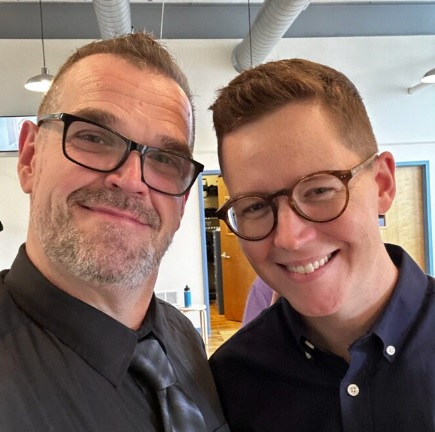
Trader Joe’s employees Les Stratford (left) and Michael Alcorn want to restore the fun and independent work environment that existed in the store before union officials sowed discord.
HADLEY, MA – Union bosses and Big Labor-allied media cheered when the Hadley, MA, branch of supermarket chain Trader Joe’s became the first unionized location in the country in 2022. But what all their celebration concealed was the fact that union officials had swept to power at the location through a deeply deceptive campaign that demonized both the company and many employees. Now many of the Hadley-based Trader Joe’s employees are fighting to kick the union out.
“Officials of this union have sowed division and smeared both our workplace and anyone who dissents from the union’s agenda pretty much from the time the campaign began to unionize the store,” Trader Joe’s employee Les Stratford told Supermarket News about the situation.
Michael Alcorn, another Hadley Trader Joe’s worker who simply wanted to have a conversation with his coworkers about the ramifications of unionizing, said that union militants “weren’t going to have a meeting with us…immediately it was like ‘you either accept the union, or you don’t, and we’re not going to talk about it all together because if you don’t accept it, we don’t trust you.’”
Now, with free legal aid from the National Right to Work Foundation, Stratford, Alcorn, and many other Hadley Trader Joe’s employees are backing an effort to vote the union out of power at the store. Stratford in August submitted a union decertification petition asking the National Labor Relations Board (NLRB) to hold an election among his coworkers on whether to remove the union, which contained well over the support needed to trigger a decertification vote under NLRB rules.
Because Massachusetts lacks Right to Work protections for its private sector workers, the union has the legal privilege to enforce contracts that require Trader Joe’s employees to pay dues or fees as a condition of keeping their jobs.
In Right to Work states, in contrast, union membership and financial support are strictly voluntary. A vote by the majority of Hadley Trader Joe’s employees against the union would free them from both the union’s forced-dues and monopoly bargaining powers.
Trader Joe’s Employee Exposes Union Tactics on Capitol Hill
In May, Alcorn brought the concerns many of the Hadley Trader Joe’s employees had directly into the halls of Congress when he was called by the U.S. House Committee on Education and the Workforce to testify about coercive tactics union bosses use to gain power and stay in power.
In addition to describing the union’s vilification of any skeptical employee, he noted that union organizers tried to foist union control of the workplace through “card check” — a process that bypasses the NLRB’s secret ballot election system and lets union officials aggressively solicit “cards” that are later counted as votes for the union.
Union organizers also “made inaccurate and incomplete press releases, creating false narratives about our workplace to promote their own agenda and personal vendettas,” Alcorn said.
Workers Need More Freedom to Oust Abrasive Union Bosses
The Hadley Trader Joe’s workers’ efforts come as the Biden-Harris NLRB announced a final rule which will make it much harder for rank-and-file workers to exercise their right to vote out union officials they oppose. The final rule, among other things, lets union officials prevent decertification votes from going forward by filing unverified “blocking charges” alleging employer interference.
While the Trader Joe’s employees’ petition will be unaffected by the rule change, the new policy will likely quash or substantially delay similar efforts in the future. “The situation at the Hadley, MA, Trader Joe’s store shows exactly why workers’ right to vote to remove a union they oppose must be protected,” commented National Right to Work Foundation Legal Director and Vice President William Messenger.
“During a union campaign, union officials often employ aggressive tactics and ‘us vs. them’ or hate-the-boss rhetoric that cause division and prioritize union bosses’ agenda over workers’ freedoms and individual choices.
“That the Biden-Harris Administration stripped workers of what few rights they had to challenge union officials that perpetrate these acts shows they are on the side of Big Labor, not individual workers,” Messenger added.
Jewish MIT Graduate Students Force Anti-Israel Union to Abandon Discriminatory Demands for Dues Payment
Settlement includes requirement that GSU union inform 3,000+ students of their right to refrain from paying for radical union political activities
Boston, MA (August 21, 2024) – Several Jewish graduate students at the Massachusetts Institute of Technology (MIT) have prevailed in their legal cases to cut off financial support to the MIT Graduate Student Union (GSU), an affiliate of the United Electrical (UE) union. The students, all of whom received free legal assistance from National Right to Work Foundation staff attorneys, objected to GSU union officials’ anti-Israel activities, particularly their support for the Boycott, Divestment, Sanctions (BDS) movement.
Because Massachusetts lacks Right to Work protections that make union membership and financial support voluntary, union officials at unionized private colleges like MIT can force graduate students to financially support a union under threat of losing their academic positions and work. However, this power is subject to limitations under federal anti-discrimination law and some Supreme Court decisions.
Foundation staff attorneys litigated federal charges at the Equal Employment Opportunity Commission (EEOC) in March for William Sussman, Joshua Fried, Akiva Gordon, Adina Bechhofer, and Tamar Kadosh Zhitomirsky, each of which stated that the union had demanded full dues payments even after they had each stated their religious objection to funding the union and asked for an accommodation as per Title VII of the Civil Rights Act of 1964. Such accommodations vary, but often take the form of letting the objector divert the dues from the offensive union to a 501(c)(3) charity instead.
Shortly after those filings, Foundation staff attorneys also filed federal unfair labor practice charges at the National Labor Relations Board (NLRB) for Katerina Boukin, who objected on political grounds to the GSU’s ideological activity and sought to exercise her rights under the Foundation-won Communications Workers of America v. Beck Supreme Court decision. In Beck, the Court ruled that union officials cannot force those who opt out of formal union membership (like Boukin) to pay dues or fees for union expenses not directly related to collective bargaining, even in a non-Right to Work state. GSU bosses denied Boukin’s Beck request on the specious grounds that she had missed a short union-concocted “window period” in which such an objection would be accepted.
Settlement Blocks Union Bosses from Using Student Money to Support Extremism
The students have now won a favorable NLRB settlement, and a favorable outcome of the EEOC charges, that fully vindicate their rights. The students who voiced religious objections (Sussman, Fried, Gordon, Bechhofer, and Zhitomirsky) have obtained accommodations under which they will pay no money to the union and will instead pay money to charities of their choice, despite initial pushback from union bosses. The charities include American Friends of Magen David Adom and American Friends of Leket.
Foundation attorneys scored for Katerina Boukin a settlement that will require GSU bosses to inform the entire MIT graduate student body of their rights to invoke the Beck decision. GSU bosses must declare by email that they will not restrict the ability of those who resign their union memberships to cut off dues payments for political expenses and pay a reduced amount to the union. This email notice will go out to approximately 3,000 MIT students.
The Jewish students’ efforts to assert their rights put on display the radicalism of GSU union officials. The students who asserted religious objections to supporting the union initially received form letters as responses to their requests, which callously claimed that “no principles, teachings or tenets of Judaism prohibit membership in or the payment of dues or fees to a labor union” and that no religious conflict existed because the founder of GSU’s parent union was himself Jewish. Through the Foundation-backed litigation, the students’ religious objections to supporting GSU were accommodated.
MIT Students Expose GSU Misdeeds to Congress & Nation
Both Will Sussman and Katerina Boukin publicly commented on how the GSU union’s public image was synonymous with political extremism and had little to do with academics. Boukin stated that she was deeply offended by the union’s “opposition to Israel and promotion of Leninist-Marxist global revolution” and that “[t]he GSU’s political agenda has nothing to do with my research as a graduate student at MIT, or the relationships I have with my professors and the university administration, yet outrageously they demand I fund their radical ideology.”
In July, Will Sussman appeared before the U.S. House Committee on Education and the Workforce to reveal even more details about his and his colleagues’ distressing experience with the GSU union. As Sussman testified, after the October 7 attacks on Israel, GSU union representatives voiced support for Hamas’ bloody “rebellion” and the GSU Vice President was even arrested for her behavior at an anti-Israel protest. “She was banned from campus but remains on [dues-funded] paid ‘union leave,’” Sussman stated.
“The Foundation-backed MIT graduate students who fought these legal battles have earned well-deserved victories. But defending basic free association rights shouldn’t require such lengthy litigation, and meaningful reforms are necessary to ensure union support is truly voluntary,” commented National Right to Work Foundation President Mark Mix. “Forcing GSU union officials to abandon their blatantly discriminatory dues practices is only the tip of the iceberg: Because Massachusetts lacks Right to Work protections, GSU still has the power to force the vast majority of MIT graduate students to subsidize some portion of their activities.
“Foundation attorneys are continuing to provide legal aid for all those who challenge the imposition of radical union agendas at places such as the University of Chicago, Dartmouth, and Johns Hopkins, and they are doing so for adherents of both Judaism and Christianity. But this ordeal at MIT should remind lawmakers that all Americans should have a right to protect their money from going to union bosses they don’t support, whether those objections are based on religion, politics, or any other reason,” Mix added.
Tire Wholesaler Employees Force RWDSU Union Out of 15 Locations
The following article is from the National Right to Work Legal Defense Foundation’s bi-monthly Foundation Action Newsletter, January/February 2024 edition. To view other editions of Foundation Action or to sign up for a free subscription, click here.
RWDSU union officials abandon 500+ employee unit ahead of vote at tire wholesaler

Tire-d of the RWDSU: Chris Dorney submitted a huge number of signatures from his coworkers at tire wholesaler Max Finkelstein when petitioning the NLRB for a vote to remove the RWDSU union.
WINCHESTER, VA – The Biden National Labor Relations Board (NLRB), which includes among its members two former union bosses from the Service Employees International Union (SEIU), is pursuing an agenda that hasn’t exactly been making it easy for workers to vote out a union they don’t want. But that hasn’t stopped workers across the country from going to extraordinary lengths to kick out unions that don’t serve their interests.
In October 2023, Chris Dorney, a Winchester, VA-based employee of tire wholesaler Max Finkelstein, kick-started a cross-country effort to vote the Retail, Wholesale and Department Store Union (RWDSU) out of 15 warehouse facilities across the eastern United States. This work unit included more than 500 employees across Virginia, Maryland, Massachusetts, Pennsylvania, New York, New Jersey, Vermont, Maine, and Connecticut.
Virginia Worker Mustered Strong Showing on Petition for Union Ouster Vote at Tire Wholesaler
With free legal aid from the National Right to Work Foundation, Dorney submitted a petition to the NLRB containing more than enough employee signatures to trigger a vote to remove the union from the large unit.
While Dorney and his fellow Virginia employees enjoyed the Right to Work freedom to opt-out of dues payments to the union, the same couldn’t be said for any of the other employees, all of whom hail from states where dues payments can be mandated as a condition of employment. But voting RWDSU bosses out of power entirely at the tire wholesaler would end the union’s forced-dues power.
“We warehouse workers and drivers at Max Finkelstein may be from many different facilities in many different states, but we are in agreement about one thing: RWDSU union officials don’t represent our interests,” Dorney said of the effort. “It’s our right under federal law to challenge RWDSU’s forced representation power.”
RWDSU Bosses Flee Unit as Union Officials Rack Up Losses Nationwide
However, before the vote could occur, RWDSU union officials disclaimed interest in continuing their monopoly representation powers over the unit, likely to avoid an embarrassing rejection by workers at the ballot box.
Unionized workers are increasingly requesting elections to remove unwanted unions — a potential reason for the Biden NLRB’s efforts to crack down on decertification votes. Additionally, union bosses are increasingly losing these contests. As of last year, filings for union decertification votes had shot up by over 40 percent since 2020. Of decertification elections that occurred, the number which resulted in union bosses losing went up by 72 percent.
“Mr. Dorney and his coworkers’ effort to kick out the RWDSU union, which spanned several states, 15 facilities, and hundreds of workers, is yet another example that workers often want to escape union officials’ one-size-fits-all agenda. It’s also a demonstration that workers will go to great lengths in order to exercise this right,” commented National Right to Work Foundation Vice President Patrick Semmens. “But the Biden NLRB, bent on empowering the President’s union boss political allies, plans to grant unions even more power to defeat workers’ will.”
Brockton Visiting Nurse Staff Petition to Remove Unwanted SEIU Officials from Workplace
Mail-in ballots must be returned by close of business on June 2, 2022
Brockton, MA – Home healthcare staff at Brockton Visiting Nurse in Brockton, Massachusetts have filed a petition seeking the removal of Service Employees International Union Local 1199 from their workplace. The workers’ decertification petition was filed with the National Labor Relations Board (NLRB) Region 1 with free legal representation from National Right to Work Legal Defense Foundation staff attorneys.
Brockton Visiting Nurse employee Ann Pircio filed the decertification petition for her coworkers who want to oust the disliked union. Massachusetts is not a Right to Work state, meaning all workers in a unionized workplace can legally be required to pay dues or fees to a union as a condition of keeping their jobs. If the workers’ vote is upheld by the NLRB, SEIU union officials will be stripped of their monopoly “representation” powers used to impose forced union dues.
Under federal law, when at least 30% of workers in a bargaining unit sign a petition seeking the removal of union officials’ monopoly bargaining powers, an NLRB-conducted secret ballot vote whether to remove the union is triggered. If a majority of workers casting valid ballots do not vote for the union, the union is stripped of its government-granted monopoly “representation” powers. Those powers let union officials impose contracts on all workers in the workplace, even workers who are not union members and oppose the union.
The election for Brockton Visiting Nurse staff is scheduled as a mail-in vote. All ballots will be mailed by the NLRB to eligible voters who must mail back their votes. Workers’ votes must arrive by close of business on June 2, 2022, to be counted.
National Right to Work Foundation staff attorneys have recently assisted workers in numerous successful decertification efforts across the nation, including for workers in Indiana, Illinois, and New Jersey. Foundation-backed reforms to the rules for decertification elections that the NLRB adopted in 2020 have curtailed union officials’ abuse of so-called “blocking charges” used to delay or block workers from exercising their right to decertify a union. Such charges are often based on unproven allegations made against an employer, completely unrelated to workers’ desire to free themselves of the union.
“Workers everywhere should know they can turn to the Foundation for free legal aid to help enforce their right to free themselves from unwanted union so-called ‘representation,” commented National Right to Work Foundation President Mark Mix. “No matter the outcome of this decertification vote, the many workers at Brockton who are opposed to the union should never have been required to fund the activities of union officials with whom they want nothing to do. That is why Massachusetts workers deserve the protection of a Right to Work law that makes union financial support strictly voluntary.”
Nurses at Massachusetts Hospital Move to Boot Union After Divisive Strike
The following article is from the National Right to Work Legal Defense Foundation’s bi-monthly Foundation Action Newsletter, March/April 2022 edition. To view other editions of Foundation Action or to sign up for a free subscription, click here.
Union bosses caught red-handed illegally demanding dues from workers

Many St. Vincent Hospital nurses reported the MNA union’s 300+ day strike was filled with bullying and division. “Do we want to keep the MNA and continue that same behavior?” asked Nurse Richard Avola on Spectrum News 1.
WORCESTER, MA – Earlier this year, hundreds of nurses at St. Vincent Hospital in Worcester, MA, backed a petition to the National Labor Relations Board (NLRB), demanding a vote to oust Massachusetts Nurses Association (MNA) union officials from the facility. The effort followed a grueling, nearly year-long strike ordered by MNA bosses. As this issue of Foundation Action went to press, nurses were in the process of submitting ballots in the election.
Nurse Richard Avola submitted the petition to the NLRB in January. It contained enough employee signatures to trigger an NLRB-supervised decertification vote at the hospital. Soon after, he sought free legal aid from National Right to Work Foundation staff attorneys in defending the petition.
“People want change,” Avola told a Spectrum News 1 Worcester reporter in January about the push for a vote. “They want change for our patients.”
Protracted and Political Strike Rife with Intimidation, Many Nurses Report
Avola and his colleagues’ endeavor came after a 300-day strike ordered by MNA chiefs against the hospital — the longest strike in Massachusetts history. In response to inquiries from nurses impacted by the union bosses’ strike order, Foundation staff attorneys in March 2021 issued a legal notice informing St. Vincent nurses of their right to work during the strike and to cut off dues payments to the MNA hierarchy. The notice offered free legal aid to St. Vincent nurses who encountered union pushback in the exercise of their individual rights.
The union boss-ordered strike was intensely acrimonious. Union agents reportedly engaged in many harassing acts against nurses who exercised their right to continue working during the strike, including putting photographs of working nurses on strike paraphernalia and taking illicit pictures of nurses’ license plates. Despite the union-instigated campaign against rank-and-file nurses, high-profile elected officials, including U.S. Senators Ed Markey and Elizabeth Warren, vocally sided against nurses who continued treating patients while exercising their right to rebuff the union strike demands.
MNA Union Agents Admitted to Illegally Demanding Union Dues During Strike
As the push for a vote to decertify MNA gained momentum, evidence emerged that union officials had demanded dues payments from nurses for periods during the strike when no contract existed between hospital management and the MNA union. Demanding dues during a contract hiatus is forbidden by longstanding federal law.
In response, St. Vincent nurse Regina Renaud hit the MNA union with Foundation-backed federal charges in January, maintaining that MNA agents had sent such illegal demands to her and other nurses. Just one day after Renaud filed her charges, MNA union officials effectively admitted their dues demands had breached federal labor law. They mailed hundreds of “error” letters to nurses dubiously claiming the illegal bills were an “oversight.” The union stated that it needed to “clean up” its records and warned that other similar demands might still go out to nurses.
While Renaud abstains from union membership, she is still forced to pay some dues to the union to keep her job because Massachusetts lacks Right to Work protections for private sector workers. However, this requirement does not exist in the absence of an active monopoly bargaining contract with a forced-dues clause. In Right to Work states, union membership and financial support are always strictly voluntary.
Ugly Strike and Illegal Dues Divide Nurses and Community
“It’s easy to see why Mr. Avola and so many of his coworkers want to oust MNA operatives from St. Vincent Hospital: Union bosses forced nurses to endure a gruelingly long strike that divided the hospital and the community, while those who went back to work and refused to abandon their patients faced harassment and intimidation tactics,” observed National Right to Work Foundation Vice President Patrick Semmens. “Ms. Renaud’s charges show that MNA officials ignored even the most basic legal protections for workers who do not wish to financially support a union.”
“Foundation attorneys will continue to fight for St. Vincent nurses’ rights, including the right to dispense with unwanted union representation, and will ensure any MNA union boss legal tactics do not stifle the nurses’ voices,” Semmens added.
Massachusetts Educators Ask State High Court to Take Legal Challenge to Public Sector Forced Union Dues
Case argues forcing state employees to subsidize union officials’ speech violates First Amendment protections
Boston, MA (June 27, 2017) – With free legal assistance from National Right to Work Legal Defense Foundation staff attorneys, a group of Massachusetts educators are asking the Massachusetts Supreme Judicial Court to hear their case challenging payments they are currently forced to make to union officials.
In 2014, four University of Massachusetts and Hanover School Committee educators filed a series of prohibited practice charges with the Massachusetts Department of Labor Relations (DLR) against their employers and the union that holds monopoly bargaining contracts at their facilities. The charges challenge the constitutionality of the compulsory union fees that they are forced to pay.
The four plaintiffs have chosen to refuse union membership, but all must pay fees to National Educators Association union officials as a condition of their employment. The lead plaintiff in the lawsuit, Dr. Ben Branch, is a Finance professor. His colleague and fellow plaintiff, Dr. Curtiss Conner, is a Chemistry professor, both at the University of Massachusetts Amherst.
Plaintiff Dr. Andre Melcuk is Director of Departmental Information Technology at the Silvio O. Conte National Center for Polymer Research at the University. Dr. Melcuk was born in the Soviet Union and opposes the union based on his dislike of collectivist organizations.
Plaintiff Deborah Curran is a long-term teacher in the Hanover Public Schools. She had the union officials who supposedly “represent” her attempt to invalidate her promotion to a position mentoring new teachers and push to have her investigated and suspended. She ultimately spent nearly $35,000 of her own money battling union officials just to protect her job.
All of these employees believe they would be better off without union representation and desire to be released from paying for the unwanted representation. Their charges at the Massachusetts DLR were dismissed on February 23, 2015, but only recently did the DLR formally transmit the record to the Court of Appeals.
Foundation staff attorneys now seek direct review of the educators’ case by the Massachusetts Supreme Judicial Court. Ultimately the issue of the constitutionality of forced union fees for public employees will have to be decided by the U.S. Supreme Court.
“These are dedicated teachers and professors who are being forced to pay dues and fees to union bosses who do not have their best interests in mind,” said Mark Mix, President of the National Right to Work Legal Defense Foundation. “The fact that one of these educators had to pay forced fees to union officials, while the same officials were pushing for her termination, demonstrates the injustice of mandatory union payments for employees who never asked for or wanted union officials’ so-called ‘representation.’”
In addition to this case, Foundation staff attorneys have six other cases in federal court seeking a ruling that forced union payments for public employees violate the First Amendment. One of those cases, Janus v. AFSCME, is currently at the Supreme Court on a petition for certiorari.





