
Cornell Univ. Graduate Students Hit UE and GSU Unions with Discrimination Charges for Harassing Religious Objectors to Compulsory Unionism
EEOC Charges: Instead of respecting valid requests for religious accommodation, union officials sent harassing “questionnaires” to illegally interrogate students’ beliefs
Ithaca, NY (June 19, 2025) – Two Cornell University graduate students have just slammed the Cornell Graduate Student Union (GSU) and its parent the United Electrical (UE) union with federal antidiscrimination charges. The students, David Rubinstein and Louie Gold, maintain that union officials are illegally harassing graduate students who submit valid religious objections to paying union dues.
Rubinstein and Gold are both Jewish and believe affiliating with or financially supporting the UE unions conflicts with their sincerely held religious beliefs. The graduate students filed their charges at the Equal Employment Opportunity Commission (EEOC) with free legal representation by National Right to Work Foundation staff attorneys.
In their charges, Rubinstein and Gold explain that they are targets of an illegal practice in which UE union officials harass and interrogate religious objectors rather than comply with Title VII of the Civil Rights Act of 1964, which prohibits employment discrimination, including on the basis of religion.
As their charges explain, rather than comply with their valid requests for religious accommodations, UE union bosses instead sent “questionnaires” containing invasive and legally irrelevant questions to religious objectors. The questionnaires include intrusive demands like, “[P]lease include the name and address of the organization sponsoring the [religious] services you attend and the name of the faith leader(s),” and “How long have you had your religious belief?” The end of the questionnaire indicates that union officials may not even respect a student’s religious objection after completion of the form, stating ominously that “The UE national union will review your religious objection upon receipt and may have follow-up questions” (emphasis added).
Union Officials Ignored Students’ Valid Exercise of Religious Freedom
Rubinstein and Gold argue in their charges that they and other students who received this dubious questionnaire already discharged their legal duties when they informed the union of their objections to paying dues. Title VII of the Civil Rights Act of 1964 provides that objectors must only describe a sincere religious objection to union affiliation, which Rubinstein and Gold both did in letters to the national UE union. Federal law requires union officials to provide a religious accommodation to such objectors. An accommodation often permits the objector to divert an amount of money equal to dues to a 501(c)(3) nonprofit charity instead.
“Both nationwide and on the Cornell campus, the UE, CGSU, and their other campus affiliates have been at the forefront of demonizing Israel, seeking its destruction, and supporting Hamas’s violent and barbaric terrorism against Israel and its inhabitants,” the charges read. “The unions had no objective or bona-fide reasons to doubt the basis for my accommodation request or to question my sincerely held religious beliefs, observances, and practices.”
Because New York lacks Right to Work protections, UE and Cornell GSU union officials are enforcing a contract that requires graduate students to pay union dues or fees just to keep their work. While Title VII creates an exception for those like Gold and Rubinstein who have sincere religious objections to union affiliation, Right to Work states provide even more protection by making union membership and financial support a voluntary choice.
Jewish Graduate Students at MIT Forced GSU and UE to Back Off Illegal Dues Practices
Since 2023, National Right to Work Foundation staff attorneys have assisted dozens of Christian and Jewish graduate students across the country in defending their religious freedom from union forced-dues demands – particularly demands from UE union officials. In 2024, five Foundation-backed Jewish graduate students from the Massachusetts Institute of Technology (MIT) scored religious accommodations that allowed them to pay money to pro-Israel charities instead of to the UE union hierarchy. In a related case for another MIT graduate student, Foundation attorneys secured a settlement that required union officials to inform the entire MIT graduate student body (over 3,000) of their rights under the Communications Workers of America v. Beck Supreme Court decision. Beck permits nonmembers to cut off dues payments for union political or ideological activities.
“This situation at Cornell again shows students and the public at large exactly what GSU and UE union officials’ priorities are: radical political mobilization and agitation, not respecting the individual rights of the students they claim to ‘represent,’” commented National Right to Work Foundation President Mark Mix. “Union bosses may not like it, but federal law is clear that they must comply with valid requests for a religious accommodation based on sincerely held objections to union affiliation, and cannot harass and interrogate those who object to the union’s activities on religious grounds.
“While the battle to preserve the right of religious students and workers to opt out of objectionable union support is certainly important, true reform is needed to ensure that no one is forced to associate with union bosses or their agendas, whether their objection to the union is political, religious, financial, or otherwise,” added Mix.
Netflix Spy Kids Production Driver Demands Review From Federal Labor Board in Case Challenging Teamsters Discrimination
Texas-based driver exposes “hiring hall” scheme that operates in violation of federal law
Austin, TX (June 9, 2025) – Jeff Norris, a transportation employee for Texas-based Netflix streaming productions like Spy Kids: Armageddon, is asking the National Labor Relations Board (NLRB) to review an administrative law judge’s (ALJ) ruling in his case. Norris is charging Teamsters Local 657 union officials with discriminating against employees who have abstained from formal union membership and against union members who have spoken out against union officials’ agenda. Norris is receiving free legal aid from the National Right to Work Legal Defense Foundation.
Norris’ filing attacks Teamsters Local 657 union bosses’ “hiring hall” arrangement, in which they refer production drivers for jobs based on various “lists” that divide employees up by, among other things, member vs. nonmember status. Norris contends that prioritizing the hiring of union members over nonmembers is a form of discrimination that the National Labor Relations Act (NLRA) forbids.
Evidence presented during trial showed that, using this arrangement, it was virtually impossible for a nonmember to he hired for a driver job before a member.
Netflix Driver’s Brief: Workers Targeted by Teamsters Union’s Discrimination Deserve Compensation
The ALJ decision now under review by the NLRB agreed with Norris on his discrimination argument. However, Norris’ newest filing seeks to counter Teamsters lawyers’ position that the NLRB should reverse that holding. The brief also demands a ruling that all employees who experienced discrimination under this “hiring hall” scheme receive compensation, a form of relief that the ALJ puzzlingly decided not to grant.
Norris – whom Teamsters Local 657 President Frank Perkins sought to have booted out of the union – is also taking exception to the ALJ’s ruling that Perkins did not discriminate against Norris by seeking his removal.
Norris, who has been a longtime critic of Teamsters Local 657 leadership, argues that the expulsion attempt “was not the result of a good faith attempt to enforce the Union’s constitution and bylaws,” but involved trumped-up charges designed to punish him for speaking out and filing charges against the union. Similarly, Norris is contesting the ALJ’s rejection of his argument that Teamsters officials slow-walked referring him for a job on Spy Kids: Armageddon due to his advocacy against union bosses’ schemes.
Foundation staff attorneys have recently aided several groups of workers in efforts to challenge malfeasance by Teamsters union officials or vote the union out completely. These include truck drivers in California and Georgia, Frito-Lay warehouse workers in Ohio, metalworkers in San Diego, nurses in Michigan, and many more. Across the country, workers’ desire to exercise their right to vote out unpopular union bosses is increasing: Worker-filed petitions seeking union decertification votes are up more than 50% from 2020, according to NLRB data.
“While it’s all too common to see union officials use their government-granted exclusive ‘representation’ powers to discriminate against workers who decide not to be members, members who expose illegal union boss activities or otherwise question union boss misdeeds are also frequent targets of union abuse,” commented National Right to Work Foundation President Mark Mix. “Netflix production drivers who are ready, able, and willing to help bring stories to the silver screen don’t deserve to be passed over simply for being at odds with union leadership, or because they choose to exercise their right not to affiliate with a union under Texas’ popular Right to Work law.
“We’re proud to help Mr. Norris in his legal battle to ensure that dissident union members and workers who refuse to associate with the Teamsters are not illegally targeted by union bosses,” added Mix.
Dartmouth Ph.D. Student Hits Graduate Student Union With Federal Charges for Illegal Religious Discrimination
Student opposes union’s anti-Israel activities; charges that union officials refused to provide religious accommodation
Hanover, NH (September 30, 2024) – Benjamin Logsdon, a Ph.D. student in mathematics at Dartmouth College, has slammed the Graduate Organized Laborers of Dartmouth (GOLD-UE) union with federal anti-discrimination charges for failing to accommodate him and his religious beliefs. Logsdon filed the charges at the Equal Employment Opportunity Commission (EEOC) with free legal aid from National Right to Work Legal Defense Foundation staff attorneys.
Logsdon is a Christian whose sincere religious beliefs put him at odds with GOLD union officials and the radical activity and ideological positions they are promoting. Logsdon’s charges state that he is opposed not only to being forced to pay union dues, but also to GOLD-UE union officials’ monopoly representation powers that affect him as part of the graduate student body.
A series of rulings by the National Labor Relations Board (NLRB) during the Obama and Biden Administrations gave union officials the ability to seize monopoly bargaining power over graduate students, and at private institutions like Dartmouth, unionized graduate students are subject to federal private sector labor law. Such law allows union officials to force those under their power to pay dues or fees as a condition of employment in a state like New Hampshire (where Dartmouth is located) that lacks Right to Work protections.
However, Title VII of the Civil Rights Act of 1964 requires union officials to provide religious objectors like Logsdon religious accommodations. While such accommodations vary from case to case, they often free the objector from any further obligation to provide financial support to the union.
Logsdon seeks an accommodation in his case that will free him both from any forced union payments and from being forced to accept the GOLD union’s “representation.”
GOLD Union Officials Fail to Provide Reasonable Accommodation to Religious Objector
According to Logsdon’s charges, shortly after the GOLD union finalized its first monopoly bargaining contract with the Dartmouth administration, he sent a letter to United Electrical (UE, GOLD’s parent union) General Secretary-Treasurer Andrew Dinkelaker explaining that he objected to being affiliated with GOLD on religious grounds and needed an accommodation. “I sought to be removed from the UE and GOLD-UE bargaining unit as a reasonable accommodation,” Logsdon’s charges say.
Dinkelaker denied his requested accommodation in an August 30, 2024 message, refusing to offer Logsdon an accommodation that satisfies his sincere religious beliefs. Logsdon’s charges state that the union’s proposal “does not satisfy my religious conscience or beliefs,” and the refusal to accommodate him violates his rights under Title VII.
Foundation Attorneys Recently Scored Victory for Jewish MIT Students in Similar Case
Foundation staff attorneys recently prevailed in a similar batch of cases for five Jewish graduate students at the Massachusetts Institute of Technology (MIT), who objected to the anti-Israel activity of the MIT Graduate Student Union on campus (GSU, also an affiliate of UE). Notably, UE General Secretary-Treasurer Andrew Dinkelaker similarly refused to provide accommodations to each of those students when asked, telling the students that “no principles, teachings or tenets of Judaism prohibit membership in or the payment of dues or fees to a labor union.” However, UE officials quickly backed down after Foundation legal involvement.
“Mr. Logsdon is just one of many university students and staff across the country that are appalled by the divisive and inflammatory activity that union bosses have been engaging in, and have called on the Foundation for help in defending their freedom from these union hierarchies,” commented National Right to Work Foundation President Mark Mix. “Union officials shouldn’t be able to manipulate their forced-dues and forced-representation powers to make graduate students choose between keeping their academic positions and honoring their sincere religious beliefs.
“As the political and ideological temperature skyrockets at college campuses, the frequency of these stories is unfortunately likely to continue growing across the country. We encourage those on college campuses who seek to protect their religious freedom from union boss coercion to contact the Foundation for free legal aid,” Mix added.
Jewish MIT Graduate Students Force Anti-Israel Union to Abandon Discriminatory Demands for Dues Payment
Settlement includes requirement that GSU union inform 3,000+ students of their right to refrain from paying for radical union political activities
Boston, MA (August 21, 2024) – Several Jewish graduate students at the Massachusetts Institute of Technology (MIT) have prevailed in their legal cases to cut off financial support to the MIT Graduate Student Union (GSU), an affiliate of the United Electrical (UE) union. The students, all of whom received free legal assistance from National Right to Work Foundation staff attorneys, objected to GSU union officials’ anti-Israel activities, particularly their support for the Boycott, Divestment, Sanctions (BDS) movement.
Because Massachusetts lacks Right to Work protections that make union membership and financial support voluntary, union officials at unionized private colleges like MIT can force graduate students to financially support a union under threat of losing their academic positions and work. However, this power is subject to limitations under federal anti-discrimination law and some Supreme Court decisions.
Foundation staff attorneys litigated federal charges at the Equal Employment Opportunity Commission (EEOC) in March for William Sussman, Joshua Fried, Akiva Gordon, Adina Bechhofer, and Tamar Kadosh Zhitomirsky, each of which stated that the union had demanded full dues payments even after they had each stated their religious objection to funding the union and asked for an accommodation as per Title VII of the Civil Rights Act of 1964. Such accommodations vary, but often take the form of letting the objector divert the dues from the offensive union to a 501(c)(3) charity instead.
Shortly after those filings, Foundation staff attorneys also filed federal unfair labor practice charges at the National Labor Relations Board (NLRB) for Katerina Boukin, who objected on political grounds to the GSU’s ideological activity and sought to exercise her rights under the Foundation-won Communications Workers of America v. Beck Supreme Court decision. In Beck, the Court ruled that union officials cannot force those who opt out of formal union membership (like Boukin) to pay dues or fees for union expenses not directly related to collective bargaining, even in a non-Right to Work state. GSU bosses denied Boukin’s Beck request on the specious grounds that she had missed a short union-concocted “window period” in which such an objection would be accepted.
Settlement Blocks Union Bosses from Using Student Money to Support Extremism
The students have now won a favorable NLRB settlement, and a favorable outcome of the EEOC charges, that fully vindicate their rights. The students who voiced religious objections (Sussman, Fried, Gordon, Bechhofer, and Zhitomirsky) have obtained accommodations under which they will pay no money to the union and will instead pay money to charities of their choice, despite initial pushback from union bosses. The charities include American Friends of Magen David Adom and American Friends of Leket.
Foundation attorneys scored for Katerina Boukin a settlement that will require GSU bosses to inform the entire MIT graduate student body of their rights to invoke the Beck decision. GSU bosses must declare by email that they will not restrict the ability of those who resign their union memberships to cut off dues payments for political expenses and pay a reduced amount to the union. This email notice will go out to approximately 3,000 MIT students.
The Jewish students’ efforts to assert their rights put on display the radicalism of GSU union officials. The students who asserted religious objections to supporting the union initially received form letters as responses to their requests, which callously claimed that “no principles, teachings or tenets of Judaism prohibit membership in or the payment of dues or fees to a labor union” and that no religious conflict existed because the founder of GSU’s parent union was himself Jewish. Through the Foundation-backed litigation, the students’ religious objections to supporting GSU were accommodated.
MIT Students Expose GSU Misdeeds to Congress & Nation
Both Will Sussman and Katerina Boukin publicly commented on how the GSU union’s public image was synonymous with political extremism and had little to do with academics. Boukin stated that she was deeply offended by the union’s “opposition to Israel and promotion of Leninist-Marxist global revolution” and that “[t]he GSU’s political agenda has nothing to do with my research as a graduate student at MIT, or the relationships I have with my professors and the university administration, yet outrageously they demand I fund their radical ideology.”
In July, Will Sussman appeared before the U.S. House Committee on Education and the Workforce to reveal even more details about his and his colleagues’ distressing experience with the GSU union. As Sussman testified, after the October 7 attacks on Israel, GSU union representatives voiced support for Hamas’ bloody “rebellion” and the GSU Vice President was even arrested for her behavior at an anti-Israel protest. “She was banned from campus but remains on [dues-funded] paid ‘union leave,’” Sussman stated.
“The Foundation-backed MIT graduate students who fought these legal battles have earned well-deserved victories. But defending basic free association rights shouldn’t require such lengthy litigation, and meaningful reforms are necessary to ensure union support is truly voluntary,” commented National Right to Work Foundation President Mark Mix. “Forcing GSU union officials to abandon their blatantly discriminatory dues practices is only the tip of the iceberg: Because Massachusetts lacks Right to Work protections, GSU still has the power to force the vast majority of MIT graduate students to subsidize some portion of their activities.
“Foundation attorneys are continuing to provide legal aid for all those who challenge the imposition of radical union agendas at places such as the University of Chicago, Dartmouth, and Johns Hopkins, and they are doing so for adherents of both Judaism and Christianity. But this ordeal at MIT should remind lawmakers that all Americans should have a right to protect their money from going to union bosses they don’t support, whether those objections are based on religion, politics, or any other reason,” Mix added.
Former Connecticut State Trooper Wins Over $250,000 in Political Discrimination Suit
The following article is from the National Right to Work Legal Defense Foundation’s bi-monthly Foundation Action Newsletter, July/August 2023 edition. To view other editions of Foundation Action or to sign up for a free subscription, click here.
CSPU union upended trooper’s career after he refused to fund union politics
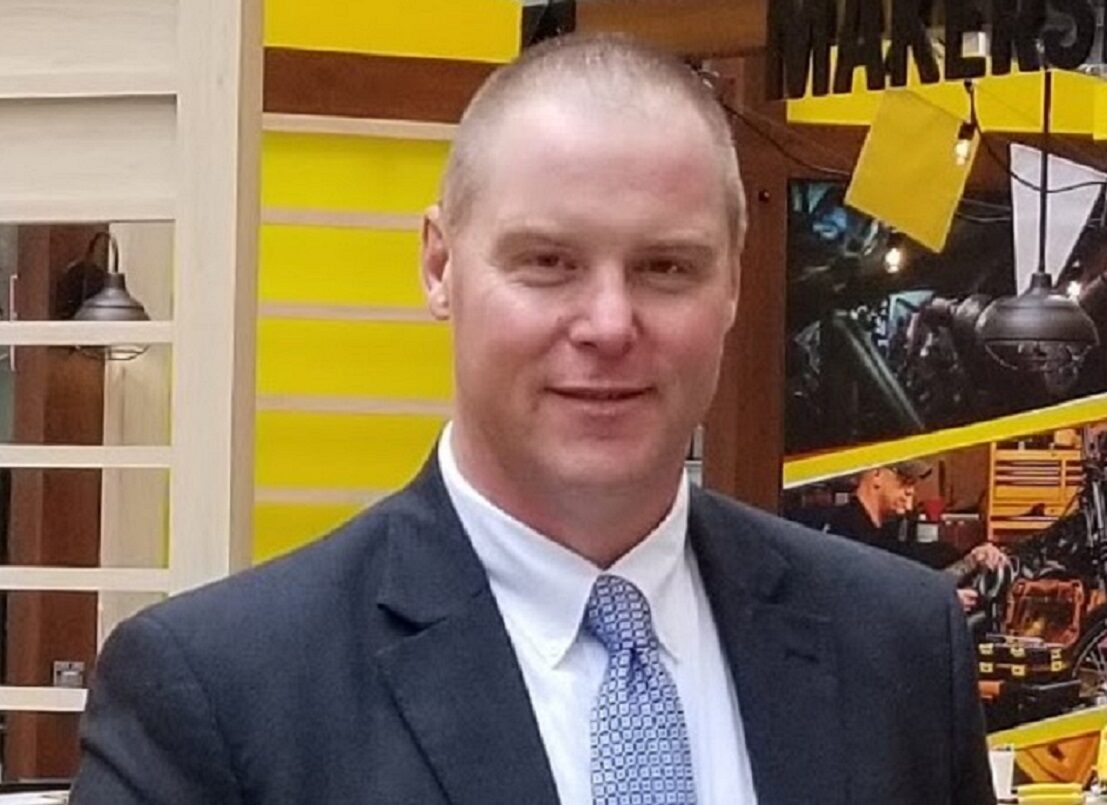
Joseph Mercer fought back with free Foundation legal aid when the CSPU union blocked his promotion because he challenged union political activities and told others about their rights.
HARTFORD, CT – In 2015, then-Connecticut State Trooper Joseph Mercer received a promotion to Operations Sergeant of the Emergency Services Unit, a position that gave him significant responsibility over emergency services training and field operations. Mercer gained this prestigious position through his seventeen years of experience as a trooper, which included a tense situation with an armed suspect barricaded in a hotel.
But behind the scenes, Mercer was a target of Connecticut State Police Union (CSPU) officials, who resented Mercer because of his resistance to funding union politics with his own money. After CSPU President Andrew Matthews filed two baseless grievances against Mercer, the Department of Emergency Services and Public Protection (DESPP) demoted him to a position that offered fewer overtime opportunities and involved less time in the field.
Mercer slammed CSPU and DESPP officials with a federal lawsuit in 2016 with free legal aid from the National Right to Work Foundation, accusing police union officials of retaliating against him for exercising his right to stop funding union politics.
This April, Foundation attorneys forced CSPU and DESPP to back down and settle the case. Both parties must now pay $260,500 as a condition of ending the suit.
CSPU Union President Targeted Dissident Trooper Immediately After Promotion
Just a month after Mercer received his promotion, CSPU President Matthews filed a grievance over Sergeant Mercer’s appointment.
Matthews’ grievance claimed that there had been no “selection process” to fill the position, despite the fact that none of Sergeant Mercer’s union-member predecessors had undergone any particular kind of selection process before they got the job. Matthews also filed a second baseless grievance, alleging Mercer had mismanaged the incident involving the armed suspect barricaded in a hotel. State police officials had never expressed dissatisfaction with how Mercer handled the situation.
In October 2015, after meeting in private with the union president, then-DESPP Commissioner Dora Schriro transferred Mercer out of his Operations Sergeant position to an administrative post. Prior to this demotion, Mercer had received no warnings, reprimands, or other disciplinary actions regarding the incident referenced in Matthews’ grievance. Mercer filed his lawsuit with Foundation aid in February 2016.
Mercer’s Foundation attorneys cranked up the heat on both the union and DESPP officials in May 2022, when a District Court judge ordered DESPP Commissioner James Rovella, who had replaced Schriro, to turn over additional documents that might provide insight into the circumstances surrounding Mercer’s firing.
Rather than follow through with the judge’s discovery order and continue the fight against Mercer, CSPU and DESPP reversed course and settled the case in April 2023. The settlement categorizes the vast majority of the $260,500 payout as “compensatory damages” due directly to Mercer.
Settlement Underscores Importance of Public Servants’ Janus Rights
“We are proud to have defended Sergeant Mercer’s rights and secured him a settlement that vindicates his free association,” commented National Right to Work Foundation Vice President and Legal Director William Messenger. “However, it’s disgraceful that CSPU union officials targeted Mercer, a dedicated public safety officer, with such a retribution scheme in the first place. Public servants should not have to endure multi-year lawsuits just so they can refrain from supporting union politics they oppose.”
“Situations like these demonstrate why the Foundation-won Janus v. AFSCME decision, which the U.S. Supreme Court decided while Mercer’s case was ongoing, is so important,” Messenger added. “As demonstrated in Mercer’s case, unelected union officials often wield their enormous clout over government to serve the union’s self interests over the public interest and employee interests. That’s why it’s vital that public employees can exercise their First Amendment Janus right to cut off all financial support for union officials this way.”
CUNY Professors’ Lawsuit Challenging Forced Association with Antisemitism-Linked Union Continues at Second Circuit
City University professors challenge NY law that forces them to be represented by hostile union hierarchy
New York, NY (June 5, 2023) – Six City University of New York (CUNY) professors have taken their federal civil rights lawsuit against Professional Staff Congress (PSC) union officials to the Second Circuit Court of Appeals. The professors, Avraham Goldstein, Michael Goldstein, Frimette Kass-Shraibman, Mitchell Langbert, Jeffrey Lax, and Maria Pagano, charge PSC union bosses with violating the First Amendment by forcing them to accept the union’s monopoly control and “representation” – “representation” the professors not only oppose, but find extremely offensive and in contradiction to their personal beliefs.
The professors, five of whom are Jewish, are receiving free legal aid from the National Right to Work Foundation and The Fairness Center. They seek to overturn New York State’s “Taylor Law,” which grants public sector union bosses the power to speak and contract for workers, including those that want nothing to do with the union. In addition to opposing the union’s extreme ideology, the professors oppose being forced into a “bargaining unit” of instructional staff who share the union’s beliefs or have employment interests diverging from their own.
The professors’ opening brief at the Second Circuit argues that a lower court’s reliance on the U.S. Supreme Court’s 1984 decision in Minnesota State Board for Community Colleges v. Knight was misguided. Knight, the brief states, dealt primarily with public employees’ ability to participate in union meetings and not with the professors’ legal argument that being forced to accept the bargaining power and “representation” of union officials is a violation of First Amendment free association rights.
The brief also maintains that the Supreme Court in the 2018 Foundation-won Janus v. AFSCME Supreme Court decision acknowledged that public sector monopoly bargaining is “a significant impingement on associational freedoms.” Other Supreme Court decisions as early as 1944 also recognized problems with monopoly bargaining, the brief notes, including the Steele v. Louisville & Nashville Railway Co. decision, in which African-American railway workers challenged a rail union’s racially discriminatory hiring and promotion policies.
“If the First Amendment prohibits anything, it prohibits the government from dictating who speaks for citizens in their relations with the government,” reads the brief. “The State Appellees and CUNY thus necessarily infringe on the Professors’ speech and associational rights by forcing them to accept a hostile political group, which they view as anti-Semitic, as their exclusive agent for speaking and contracting with their government employer.”
Lawsuit: Professors Compelled to Associate with Union Even After Bullying and Threats
The professors’ original complaint recounted that several of the professors chose to dissociate from PSC based on a June 2021 union resolution that they viewed as “anti-Semitic, anti-Jewish, and anti-Israel,” and a host of other discriminatory actions perpetrated by union agents and adherents.
The complaint said Prof. Michael Goldstein “experienced anti-Semitic and anti-Zionist attacks from members of PSC, including what he sees as bullying, harassment, destruction of property, calls for him to be fired, organization of student attacks against him, and threats against him and his family.” Goldstein has needed a guard to accompany him on campus, the complaint noted.
Prof. Lax, the complaint explained, already received in a separate case a letter of determination from the Equal Employment Opportunity Commission (EEOC) “that CUNY and PSC leaders discriminated against him, retaliated against him, and subjected him to a hostile work environment on the basis of religion.” Prof. Lax “has felt marginalized and ostracized by PSC because the union has made it clear that Jews who support the Jewish homeland, the State of Israel, are not welcome,” said the complaint.
Suit Seeks Overturn of New York State Law Forcing Union Power on Professors & Damages
The lawsuit seeks to stop the defendants from “certifying or recognizing PSC, or any other union, as Plaintiffs’ exclusive representative without their consent” and “enforcing any provisions…that require Plaintiffs to provide financial support to PSC.” It also demands that the court declare “Section 204 of the Taylor Law…unconstitutional under the First Amendment to the United States Constitution to the extent that it requires or authorizes PSC to be Plaintiffs’ exclusive representative…”
“No American worker should be forced to associate with union officials and union members that openly denigrate their identities and deeply-held beliefs,” commented National Right to Work Foundation President Mark Mix. “Yet, New York State’s Taylor Law grants union officials the power to force dissenting workers under the ‘exclusive representation’ of a union hierarchy. As these CUNY professors have experienced, granting union officials the power to nullify public employees’ free association rights in this way breeds serious harm and discord among employees.”
“Not just in Janus v. AFSCME, but in decisions going back decades, the Supreme Court has questioned the constitutionality of union monopoly bargaining,” Mix added. “Federal courts must take action to ensure that government employees can freely exercise their right to dissociate from an unwanted union for religious, cultural, financial, or any other reasons.”
“Our clients want to vindicate their First Amendment rights and win their independence from a union they believe hates them,” commented Fairness Center President and General Counsel Nathan McGrath. “If successful, their lawsuit could transform the relationship between public-sector unions and employees in New York and, potentially, beyond.”
Flight Attendant Fired Over Religious Beliefs at Behest of TWU Union and Southwest Airlines Wins Reinstatement
TWU union and Southwest retaliated against employee for speaking out against political stances and activities of union leadership that violated her religious beliefs
Dallas, TX (December 7, 2022) – With free legal aid from National Right to Work Foundation attorneys, former Southwest Airlines flight attendant Charlene Carter has again triumphed in her federal lawsuit charging Transport Workers Union (TWU) officials and Southwest with illegally firing her over her religious beliefs and opposition to the union’s political activity.
The U.S. District Court for the Northern District of Texas this week ordered Southwest and the union to give Carter the maximum amount of compensatory and punitive damages permitted under federal law, plus back-pay, and other forms of relief that a jury originally awarded following Carter’s victory in a July trial.
“Bags fly free with Southwest,” begins the decision. “But free speech didn’t fly at all with Southwest in this case.”
The Court rejected union and airline arguments and also ordered that Carter should be fully reinstated as a flight attendant at Southwest, writing that “Southwest may ‘wanna get away’ from Carter because she might continue to express her beliefs, but the jury found that Southwest unlawfully terminated Carter for her protected expressions.” If only “front pay,” or what she would be making in wages until she finds a new job, is awarded, the Court reasoned, “the Court would complete Southwest’s unlawful scheme” of firing dissenting employees.
Following the District Court’s decision, National Right to Work Foundation President Mark Mix issued the following statement regarding Carter’s victory:
“Southwest and TWU union officials made Ms. Carter pay an unconscionable price just because she decided to speak out against the political activities of union officials in accordance with her deeply held religious beliefs. This decision vindicates Ms. Carter’s rights – but it’s also a stark reminder of the retribution that union officials will mete out against employees who refuse to toe the union line.
“Ms. Carter’s victory should prompt nationwide scrutiny of union bosses’ coercive, government-granted powers over workers, especially in the airline and rail industries. Even after her victory, she and her colleagues at Southwest and other airlines under union control are forced, as per the Railway Labor Act, to pay money to union officials just to keep their jobs.”
Flight Attendant Called Out Union Officials for Their Political Activities
As a Southwest employee, Carter joined TWU Local 556 in September 1996. A pro-life Christian, she resigned her membership in September 2013 after learning that her union dues were being used to promote causes that violate her conscience and have nothing to do with her workplace.
Carter resigned from union membership, but was still forced to pay fees to TWU Local 556 as a condition of her employment. State Right to Work laws do not protect her and her fellow flight attendants from forced union fees because airline and railway employees are covered by the federal Railway Labor Act (RLA). The RLA allows union officials to have a worker fired for refusing to pay union dues or fees. But it does protect the rights of nonmembers of the union who are forced to associate with a union, including the rights to criticize the union and its leadership, and advocate for changing the union’s current leadership.
In January 2017, Carter learned that Audrey Stone, the union president, and other TWU Local 556 officials used union money to attend the “Women’s March on Washington D.C.,” which was sponsored by political groups she opposed, including Planned Parenthood.
Carter, a vocal critic of Stone and the union, took to social media to challenge Stone’s leadership and to express support for a recall effort that would remove Stone from power. Carter also sent Stone a message affirming her commitment to both the recall effort and a National Right to Work law after the union had sent an email to employees telling them to oppose Right to Work.
After Carter sent Stone that email, Southwest managers notified Carter that they needed to have a mandatory meeting as soon as possible about “Facebook posts they had seen.” During this meeting, Southwest presented Carter screenshots of her pro-life posts and messages and questioned why she made them.
Carter explained her religious beliefs and opposition to the union’s political activities. Carter said that, by participating in the Women’s March, President Stone and TWU Local 556 members purported to represent all Southwest flight attendants. Southwest authorities told Carter that President Stone claimed to be harassed by Carter’s messages. A week after this meeting, Southwest fired Carter.
Flight Attendant Sues Southwest and TWU for Illegal Firing
In 2017, Carter filed her federal lawsuit with help from Foundation staff attorneys to challenge the firing as an abuse of her rights, alleging she lost her job because of her religious beliefs, standing up to TWU Local 556 officials, and criticizing the union’s political activities and how it spent employees’ dues and fees.
This week’s decision, in addition to awarding reinstatement, back-pay, prejudgment interest, and damages to Carter, also hits the TWU union and Southwest with injunctions forbidding them from discriminating against flight attendants for their religious beliefs and from failing to accommodate religious objectors. The decision also explicitly prohibits Southwest and the union from discriminating against Carter for exercising her rights under the RLA. Carter may, under the RLA, object to the forced payment of the part of dues used for political and other lawfully nonchargeable union expenses, pursuant to the National Right to Work Foundation’s U.S. Supreme Court victory in Ellis v. Railway Clerks (1984).
Another recent order in the case sanctions Southwest and union attorneys for failing to obey a court order requiring them to make a witness available for a deposition. Southwest and the TWU union are required to pay Carter more than $25,000 in fees and costs. The Court will later award Carter additional fees and costs as a result of the final judgment in her favor.
Faced with Prosecution, NY IATSE Film Production Union Bosses Settle Case Over Illegal Discrimination Against Nonmembers
National Labor Relations Board settlement pulls back curtain on pervasive discriminatory practices among entertainment industry unions
New York, NY (November 2, 2022) – New York-based movie production electrician James Harker has scored a victory against International Alliance of Theatrical Stage Employees (IATSE) Local 52 union officials, who have been unlawfully denying jobs to non-union film industry workers. With free legal assistance from the National Right to Work Legal Defense Foundation, Harker has won a settlement requiring IATSE Local 52 officials to stop a series of discriminatory practices designed by union officials to sideline nonmembers in favor of union members.
IATSE Local 52, based in New York City, has monopoly bargaining agreements with film production companies that give it control over movie, television, and commercial shoots in New York, New Jersey, Connecticut, and parts of Pennsylvania and Delaware. Harker filed these NLRB charges against IATSE Local 52 in March 2021 and January 2022.
National Labor Relations Board (NLRB) Region 29 has agreed that many of the practices cited in Harker’s charges violate the law. The NLRB issued a complaint in May 2022 against the union, which is the NLRB’s formal step towards prosecuting infringements of federal law before an NLRB Administrative Law Judge.
The complaint, issued by the NLRB Regional Director, stated that IATSE union officials had broken federal law by forbidding production companies to hire nonmembers without permission from union bosses, forcing nonmembers to go through the union to apply for jobs, requiring union members with hiring authority to exhaust all union member hiring options before hiring nonmembers, and more.
Most notably, IATSE union officials facilitated a practice called “bumping,” in which the union required employers to release from work any crewmembers on a film shoot who were not members of the union when a union member became available to work and wanted that position. The complaint says that this and other practices violate employees’ rights to refrain from all union activity and causes “employers to discriminate against employees,” both of which are prohibited by the National Labor Relations Act (NLRA).
Settlement Requires IATSE Bosses to Stop Letting Members Kick Nonmembers Off Jobs
Now, to stop the case from proceeding to trial, IATSE Local 52 union officials have entered into an NLRB settlement that includes requirements that they cease these illegal activities and notify workers of the rights the union’s practices infringed on. The settlement vindicates Harker, who filed the charges after seeing the ongoing illegal practices harm fellow production workers.
The settlement orders IATSE Local 52 to comply with a number of requirements, including that union bosses will no longer “require nonmember…employees to obtain work through the Union,” “will not interfere with employers and their agents hiring nonmembers without first obtaining approval from the Union,” and “will not require employers to allow members to bump nonmembers off of productions because of the nonmembers’ lack of membership with the Union.”
IATSE union officials are required to disseminate the settlement notice to union members and nonmembers under the union’s control, as well as to production companies. The settlement notice must also appear in IATSE Local 52’s newsletter, and IATSE union officials are ordered to attend mandatory training on employee rights and hiring procedures.
“IATSE union officials’ scheme to keep nonmember production workers off the job is a classic example of union officials prioritizing power and control over workers’ individual rights,” commented National Right to Work Foundation President Mark Mix. “The Foundation was proud to back Mr. Harker, who recognized the patent injustice of this arrangement.”
“Film crew members who have exercised their right not to affiliate with a union should know that they can’t be required to go through union officials to look for work, and can’t be ‘bumped’ off a job just so a union member can get it,” Mix added. “Unfortunately, Foundation attorneys’ experience is that these types of unlawful schemes are ubiquitous in the entertainment industry, where near-total union boss control combined with the fear of union retaliation keeps most victims too scared to defend their rights.”





