
Dissident Philly Port Worker Successfully Defeats ILA Union Attempt to Exclude Him from Federal Case Defending Win at NLRB
Labor Board found Longshoremen Local 1694 illegally blacklisted worker for raising concerns to national union official over operation of the union and its hiring hall
Wilmington, DE and Philadelphia, PA (July 27, 2026) – The United States Third Circuit Court of Appeals has granted a motion to intervene by Stanford Fowler, a longshore worker at the Ports of Philadelphia and Wilmington, in a suit between the National Labor Relations Board (NLRB) and International Longshoremen’s Association (ILA) Local 1694. The successful motion, filed with assistance from National Right to Work Foundation staff attorneys, comes over the objection of union lawyers, who attempted to keep Fowler out of a federal case that arose from his legal victory against that union at the NLRB.
Fowler filed unfair labor practice charges with the NLRB against ILA Local 1694, located in Wilmington, DE, in August of 2021, arguing that he had been discriminated against for voicing dissent against the union, including going to the national ILA Secretary-Treasurer when local officials ignored his complaints regarding operation of the hiring hall. The NLRB is the federal agency responsible for enforcing the National Labor Relations Act, a task which includes adjudicating disputes between employers, unions, and individual employees.
An NLRB Administrative Law Judge found largely in Fowler’s favor. A unanimous decision from a bipartisan panel of NLRB Members affirmed and ordered the union to pay Fowler five years of back pay to remedy the loss of work due to its discrimination. ILA Local 1694 lawyers appealed the decision to the Court of Appeals. Fowler then moved to intervene in that appeal to preserve the legal and financial victory that he had won before the NLRB.
Union Bosses Deprived Longshoreman of Work and Seniority for Expressing Concerns
Fowler was the victim of a series of union moves that hindered his ability to get better benefits. He consistently accrued hours through the hiring hall, but also sent an inquiry to the Secretary-Treasurer of the ILA, complaining about issues with a recent union merger. When Local 1694 union bosses found out about the inquiry, they aggressively confronted him and refused to let him participate in their hiring hall. Union bosses continually interfered with Fowler’s ability to gain work, including by attempting to ban him from the Port of Wilmington without sufficiently explaining their actions, to the point that he had to begin seeking work at the Port of Philadelphia instead.
“We are proud to assist Mr. Fowler as he fights for his right to work, free of interference from the malicious actions of union bosses,” commented National Right to Work Foundation President Mark Mix. “Mr. Fowler raised common sense concerns regarding his treatment both before and after his original ILA Local was merged into another, yet rather than take his concerns seriously and treat him fairly, union bosses began a campaign of retaliation designed to prevent him from working to put food on the table.
“We are proud to help him defend his NLRB victory at the court of appeals, and have already overcome the union’s underhanded attempt to block him from participating in the continuation of his own legal case,” added Mix.
Delaware Wells Fargo Branch Employees Latest to Remove CWA Union
Labor board officially revoked union certification after workers overwhelmingly petitioned to end union boss ‘representation’
Wilmington, DE (May 18, 2026) – Employees at a Wells Fargo branch in Wilmington, Delaware, have successfully ousted Communications Workers of America (CWA) union bosses from their workplace. The effort to remove the union was initiated when bank employee Nancy Horsky filed a petition with the National Labor Relations Board (NLRB), seeking a “decertification” election to remove the CWA as the bargaining representative at her Wells Fargo branch. Horsky filed the petition for her coworkers with free legal aid from the National Right to Work Foundation.
The NLRB is the federal agency responsible for enforcing federal labor law, a task that includes administering elections to install (or “certify”) and remove (or “decertify”) unions. Horsky’s petition was signed by a clear majority of her coworkers at Wells Fargo’s Concord Pike branch, prompting the NLRB to schedule a union decertification vote.
The workers requested that the NLRB schedule a secret-ballot election among all full-time and regular part-time tellers, personal bankers, and premier bankers employed by Wells Fargo at the Wilmington branch. The workers were looking to vote on whether to remove the so-called “Wells Fargo Workers United” union (an affiliate of the CWA).
However, shortly before the election was scheduled by the NLRB, CWA union officials declared that they “disclaim interest” in the Wilmington Wells Fargo employees. CWA union officials, perhaps expecting an overwhelming election loss, abandoned their status as the workers’ so-called “representatives.”
Delaware is one of 24 states without Right to Work protections, which make union affiliation and dues payment fully voluntary, meaning that Horsky and her coworkers could have been forced to pay union dues or fees or else be fired, so long as the workplace remained under CWA union control. The Wilmington Wells Fargo employees are the latest in a growing number of workers who have approached the Foundation seeking to exercise their legal right to remove union officials that claim to “represent” workers’ interests.
This year alone, Foundation staff attorneys have assisted successful Wells Fargo employee efforts to remove unwanted CWA union bosses in Spring Hill, Florida, Seaside Park, New Jersey, and Bradenton, Florida. Another group of workers in Apex, North Carolina, also successfully removed the union in March.
Meanwhile, in Casper, Wyoming, Wells Fargo workers overwhelmingly backed a petition requesting that the NLRB administer a secret-ballot election to remove the CWA from their branch. However, before an election could be scheduled, CWA union bosses filed “blocking charges” in an attempt to prevent the employees from having their requested vote.
“We are pleased to have been able to assist Ms. Horsky and her coworkers in exercising their right to remove unwanted CWA union bosses,” commented National Right to Work Foundation President Mark Mix. “Clearly Wells Fargo employees across the country are coming to the realization that, despite CWA union bosses’ claims, they are better off without the union interfering in their relationship with their employer.
“Other Wells Fargo employees who want to join their colleagues in ejecting unwanted CWA union officials from their locations should feel free to contact the National Right to Work Foundation for free legal assistance,” added Mix.
Federal Charge: Union Official Threatened Violence Against Concrete Workers Seeking to Vote Out Union
Delaware GFP Mobile Mix Supply driver attacked for opposing the IUOE Local 542 Union
Wilmington, DE (March 20, 2023) – GFP Mobile Mix employee Tanner Bradigan has filed federal charges against the International Union of Operating Engineers (IUOE) Local 542 after union officials threatened violent retribution against workers who refused to support the union and later led an effort to remove it. Bradigan and his coworkers are receiving free legal aid from the National Right to Work Legal Defense Foundation in this and a related case.
On March 8, 2023, Foundation attorneys filed an unfair labor practice charge with the National Labor Relations Board (NLRB) for Bradigan against the union. In the charges, Bradigan stated that IUOE union officials threatened to physically attack every worker who opposed union control in a December union meeting.
According to the charge, some of the Mobile Mix workers, including Bradigan, went to the union meeting in an attempt to learn more about what union officials were claiming it could obtain for employees at the bargaining table. When they stated that they would not be supporting the union, IUOE union officials became aggressive and began screaming at Bradigan and his coworkers, threatening to fight anyone who refused to support the union.
Vance Pennington, Bradigan’s coworker, later submitted a petition on February 2 to the NLRB requesting a decertification election whether to formally remove the union from their workplace. Their petition included the signatures of more than the enough workers in the bargaining unit to trigger the decertification election.
Threatening opponents of the union with violence isn’t the only tactic IUOE union officials have deployed in their attempt to counter the decertification effort, however. IUOE officials have so far been able to stop the vote from taking place using so-called “blocking charges,” a commonly used union tactic meant to delay or shut down decertification petitions entirely.
Foundation staff attorneys recently responded to the union’s allegations by submitting five affidavits from Mobile Mix workers corroborating that the petition for dismissal was completely unrelated to the allegations in the union’s blocking charges against GFP Mobile Mix, but rather legitimate grievances, like the union official’s threats of violence.
The supply drivers at Mobile Mix are not the only workers who are attempting to remove an unwanted union. The NLRB’s own data show that, today, a unionized private sector worker is more than twice as likely to be involved in a decertification effort as a nonunion worker is to be involved in a unionization campaign.
Unfortunately, the NLRB’s union decertification process is prone to Board-created roadblocks, with the Mobile Mix workers’ situation being just the latest example. However, Foundation-backed NLRB reforms from 2020 have made it somewhat easier for workers to remove unwanted union officials.
Without these Foundation-backed reforms, workers could have their decertification votes delayed virtually automatically by any unproven union blocking charges, giving union bosses the power to trap workers in union ranks they oppose nearly indefinitely. Under the Foundation-backed reforms most votes will take place promptly, with union blocking claims adjudicated later after the votes have been counted.
“The Foundation will not stop fighting for the workers of Mobile Mix regardless of the malicious union tactics at play in this case,” stated Mark Mix, President of the National Right to Work Legal Defense Foundation. “Workers should never fear retaliation from union bosses for exercising their rights—physical or otherwise.”
“The very fact that IUOE bosses will physically threaten workers who oppose them shows these workers have ample reason, independent of whatever claims union lawyers have made in blocking charges, for wanting to end this union’s so-called ‘representation,’” added Mix.
Workers Nationwide Press NLRB to Scrap Policy Blocking Right to Vote Out Unions
The following article is from the National Right to Work Legal Defense Foundation’s bi-monthly Foundation Action Newsletter, March/April 2021 edition. To view other editions or to sign up for a free subscription, click here.
Foundation cases contend ‘contract bar’ must be eliminated to protect employee freedom
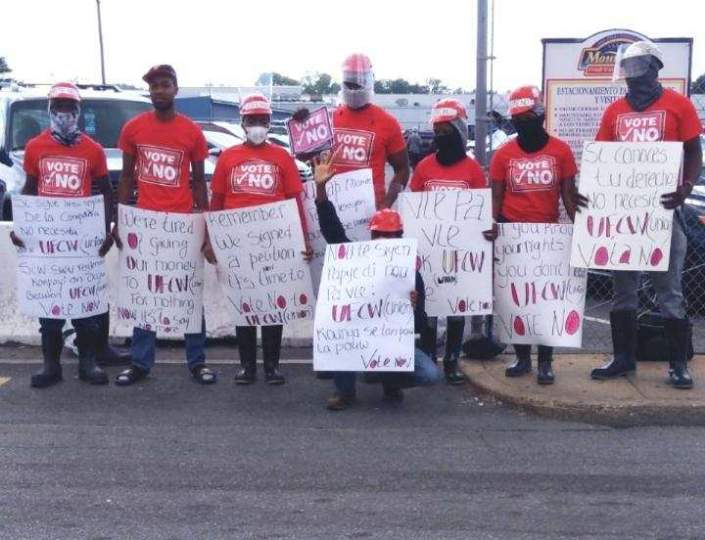
Foundation staff attorneys are assisting Delaware poultry workers in challenging UFCW bosses’ attempts to use the “contract bar” to trap them in union ranks.
WASHINGTON, DC – Foundation attorneys in January filed a Request for Review to the full National Labor Relations Board (NLRB) in Washington, D.C. The Request defends the right of Virginia Transdev workers to have a vote to remove unpopular Office and Professional Employees International Union (OPEIU) Local 2 bosses from power at their workplace.
The Transdev employees, who work at the Fairfax Connector bus service in Northern Virginia, now join Foundation-backed workers in Delaware and Puerto Rico, all of whom are urging the NLRB to eliminate the “contract bar.” That is a non-statutory NLRB policy which forbids employees from exercising their right to vote out an unpopular union in an NLRB-supervised “decertification election” for up to three years after their employer and union finalize a monopoly bargaining contract.
Foundation attorneys point out in each of these cases that the “contract bar” appears nowhere in the National Labor Relations Act (NLRA), the federal law the NLRB is charged with enforcing, and is merely the result of past union boss-friendly decisions by the Board. They also argue that the bar undermines workers’ basic right under the NLRA to remove unions that lack majority support.
“The ‘contract bar’ undermines the fundamental objective of federal labor law: Employee free choice. It makes rank-and-file employees prisoners of an unpopular union, with no way out for up to three years,” commented National Right Work Foundation President Mark Mix. “This inevitably creates an environment in which, as these employees can certainly attest, it’s impossible to hold self-serving union bosses accountable because workers are denied the right to vote them out.”
Unpopular OPEIU Bosses Went Behind Workers’ Backs to Sign Contract
The petitioner in the Transdev workers’ case, Amir Daoud, submitted a petition on November 10, 2020, signed by the necessary number of his coworkers to trigger a “decertification election” in his workplace. This was after news had gotten around that an OPEIU union agent had told some employees in October he had “negotiated a new agreement” with Transdev management and “‘intended’ to sign it without a ratification vote.” Workers had already voted down an earlier union boss-promoted monopoly bargaining contract in June.
Foundation attorneys filed a Request for Review, which notes that the union agent didn’t inform Daoud and his coworkers of when he planned to approve the new contract — until after Daoud filed the petition. The new contract was signed by union agents on October 30 and Transdev representatives on October 31.
NLRB Region 5 in Baltimore dismissed Daoud and his coworkers’ decertification petition on December 22, ruling that the “contract bar” applied because the employees’ petition was submitted just after the new contract was signed, even though the employees had no way of knowing whether or when that signing would occur.
This prompted Daoud to ask the NLRB in Washington to review the case. Because Daoud recently accepted a job with Transdev outside the OPEIU’s monopoly bargaining control, the Request for Review asks the NLRB to recognize his coworker Sheila Currie as the new petitioner to represent the interests of the workers who signed the decertification petition.
The Request exposes the arbitrariness of the “contract bar,” pointing out that the NLRB Regional Director applied it “merely because the Union ‘won the race’ and signed the contract ten days” before Daoud submitted the petition, even though the petition clearly demonstrated the employees’ interest in voting the union out.
VA and Puerto Rico Cases Follow Groundbreaking Effort by DE Poultry Workers
The Virginia Transdev employees, and a Puerto Rico armored transit guard who submitted a similar Request for Review on behalf of his coworkers with Foundation aid in January, are now battling the “contract bar” like Delaware Mountaire Farms poultry worker Oscar Cruz Sosa and his coworkers. For almost a year now, Cruz Sosa and his fellow employees have been fighting United Food and Commercial Workers (UFCW) union bosses’ attempts to use the “contract bar” to block their valid petition for a decertification vote. The Mountaire employees are now waiting for the NLRB to issue a ruling on their case.
In that case, UFCW officials claim that the “contract bar” should apply to bar any elections at Mountaire, despite an NLRB Regional Director’s decision allowing the vote because the union contract contains an invalid forced-dues clause.
When the UFCW bosses asked the full NLRB to review the Region’s order allowing the election, Cruz Sosa’s attorneys filed a brief urging that, if the Board granted review, it should use the opportunity to review the entire non-statutory “contract bar” policy. The Board is now doing just that. The UFCW union bosses are even arguing that the impounded ballots already cast by Mountaire workers should be destroyed, claiming the election should never have been held.
The Requests for Review submitted by Foundation staff attorneys for the Puerto Rico guard and Virginia Transdev employees each request that the NLRB should either grant review or least hold the case until a decision is issued in Cruz Sosa’s case.
Push to Remove UFCW Union Could End Pro-Union Boss “Contract Bar” Policy
The following article is from the National Right to Work Legal Defense Foundation’s bi-monthly Foundation Action Newsletter, September/October 2020 edition. To view other editions or to sign up for a free subscription, click here.
Non-statutory NLRB policy hinders workers’ right to vote out an unwanted union
 Employees at the Selbyville, DE, Mountaire Farms plant rally to vote out unpopular UFCW honchos from their workplace, as union lawyers scramble to block the workers’ votes from being counted.
WASHINGTON, DC – The National Labor Relations Board (NLRB) has announced that it will review the so-called “contract bar” doctrine, which prevents employees from exercising their right to vote an unpopular union out of their workplace for up to three years if union officials and their employer have finalized a monopoly bargaining contract.
This is the latest development in a case by a Selbyville, Delaware-based Mountaire Farms poultry employee, Oscar Cruz Sosa, against the United Food and Commercial Workers (UFCW) Local 27 union. Cruz Sosa submitted a petition in February for a vote on whether Local 27 should be removed as monopoly bargaining agent in his workplace. The petition was signed by hundreds of his coworkers, more than the percentage required to trigger such a vote.
Worker Obtains Foundation Help after Union Attempts to Block Vote
After he submitted the petition, UFCW bosses immediately claimed that the “contract bar” should block Cruz Sosa and his coworkers from even having an election, because the monopoly bargaining agreement between Mountaire and the union had been signed less than three years earlier.
Cruz Sosa then obtained free legal assistance from National Right to Work Foundation staff attorneys in defending his and his coworkers’ right to vote. With Foundation aid, he also hit UFCW agents with federal unfair labor practice charges for imposing an illegal forced-dues clause on the workplace and threatening him after he submitted the petition.
When the NLRB Regional Director in Baltimore heard the election case, he ruled that the union contract contains an unlawful forced-dues clause that mandates workers immediately pay union dues upon hiring or be fired. Under NLRB precedent, an illegal forced-dues clause means the “contract bar” cannot apply, allowing the vote to proceed.
UFCW’s Desperate Attempt to Block Vote Triggers NLRB Review of “Contract Bar”
Despite the longstanding precedent supporting the Regional Director’s ruling, UFCW union lawyers filed a Request for Review, asking the full NLRB to reverse the Regional Director and halt the election.
In response, Cruz Sosa’s Foundation staff attorneys opposed the union’s efforts to block the vote. They also argued that, if the Board were to grant the union’s Request for Review, it should also reconsider the entire “contract bar” policy, which has no statutory basis in the NLRA. The Foundation’s legal brief noted that the “contract bar” runs counter to the rights of workers under the NLRA, which explicitly include the right to vote out a union a majority of workers oppose.
Just hours after the voting process in the decertification election had begun, the NLRB issued its order granting the union’s Request for Review, while also accepting the Foundation’s request to reconsider the entire “contract bar” doctrine. The order noted “that it is appropriate for the Board to undertake in this case a general review of its ‘contract bar’ doctrine.”
Given the precedential import of this case, the NLRB solicited amicus briefs on whether the “contract bar” should be allowed to stand. UFCW officials, still desperate to throw a wrench in Cruz Sosa and his coworkers’ effort to vote them out, demanded that the NLRB rescind its request for amicus briefs in the case, but that effort was quickly rebuffed.
“We urge the NLRB to swiftly overturn this outrageous non-statutory policy, which lets union bosses undermine for up to three years the free choice of workers that is supposed to be at the center of federal labor law,” commented National Right to Work Foundation Vice President and Legal Director Raymond LaJeunesse. “The very premise of the NLRB-created ‘contract bar,’ that union bosses should be insulated from worker decertification efforts, is completely backwards.”
LaJeunesse added: “Union officials across the country use all types of tactics to get workers into unions but rely on government power and legal tricks to prevent them from getting out.”
Delaware Poultry Worker Charges UFCW Brass with Illegal Dues Deductions, Threats
The following article is from the National Right to Work Legal Defense Foundation’s bi-monthly Foundation Action Newsletter, July/August 2020 edition. To view other editions or to sign up for a free subscription, click here.
Foundation attorneys assist worker leading effort to oust unpopular union
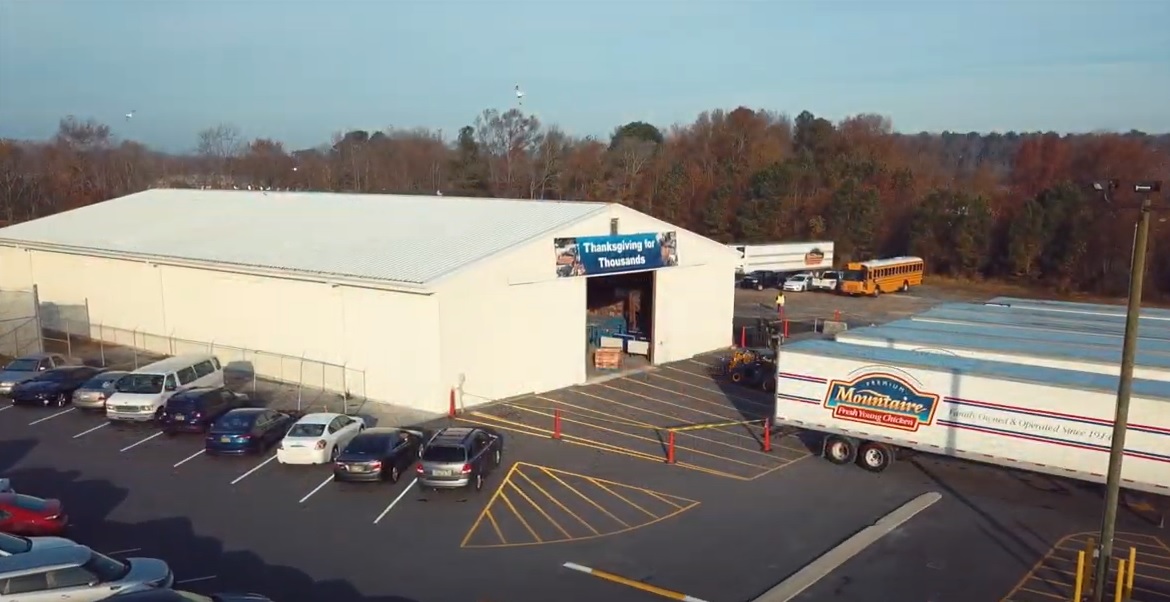
Employees at the Selbyville, DE, Mountaire Farms plant were subjected to an illegal forced-dues clause by UFCW union bosses, who for months have also tried to block their right to vote on whether union officials deserve to stay.
SELBYVILLE, DE – With free legal aid from National Right to Work Foundation staff attorneys, Mountaire Farms employee Oscar Cruz Sosa hit United Food and Commercial Workers (UFCW) Local 27 union bosses with federal unfair labor practice charges. The charges assert that union officials violated his and his coworkers’ rights by enforcing an illegal forced-dues provision in the monopoly bargaining contract, and that union bosses threatened him for spearheading a petition for a vote to remove the union.
Cruz Sosa’s charges come after the National Labor Relations Board (NLRB) Region 5 Director in Baltimore rejected union arguments that the decertification election Cruz Sosa and his coworkers requested should be blocked. Under a controversial NLRB-created policy known as the “contract bar,” employees’ statutory right to hold a decertification vote to remove a union can be blocked for up to three years when a union contract is in place.
However, under longstanding precedent the “contract bar” to decertification does not apply when the monopoly bargaining contract in place contains an unlawful forced-dues clause.
Worker Deflects Union Legal Attack by Exposing Illegal Forced-Dues Clause
Prior to this charge, the NLRB Region 5 Director found that the contract between Mountaire Farms and UFCW union officials illegally required workers to immediately pay union dues upon being hired, instead of providing new hires a 30-day grace period the federal labor statute and longstanding precedent require. Because Delaware lacks Right to Work protections for its employees, Cruz Sosa and his coworkers can be required to pay union fees to keep their jobs.
The NLRB Region 5 Director thus ruled that the vote Cruz Sosa and his coworkers requested should proceed, and scheduled the vote to decertify the union. Cruz Sosa’s unfair labor practice charge, citing that decision’s finding that the forced-dues clause is unlawful, asks the NLRB to order union officials to refund all dues and fees seized from him and his coworkers under the auspices of that illegal clause.
Even after they were unable to block the election with the “contract bar,” UFCW union officials did not give up. In fact, union lawyers have initiated at least three other “blocking charges” against the employer in a last-ditch effort to block the vote, another common tactic used by union bosses to halt or delay workers’ attempts to vote them out.
UFCW union officials’ attempts to stifle the decertification effort didn’t end there. They also asked that any vote be delayed and changed to a“mail-in” vote, even though it had already been scheduled to take place in person on the premises where the workers work every day. In the responses to the union attempts to scuttle the planned vote, Cruz Sosa’s Foundation-provided attorneys argued that the vote should go forward as scheduled, because on-site elections are the NLRB’s preferred method for conducting elections, and the on-site vote was announced to workers weeks ago.
Cruz Sosa also alleged that a UFCW agent came to his house uninvited back in March. The agent warned him “that the decertification process being undertaken was ‘illegal’” and that a court battle was coming, according to his charge filed at NLRB Region 5.
Union Agents Threaten Worker after He Attempts to Exercise Rights
Cruz Sosa’s charge states that this was “threatening” and “coercive behavior” and a clear attempt to restrain him and his coworkers in the exercise of their right under the National Labor Relations Act to vote out an unwanted union.
“The threats and dues deductions in this case show how union bosses regularly trample workers’ rights in order to keep forced dues rolling into their coffers,” observed National Right to Work Foundation Vice President Patrick Semmens. “We hope that NLRB Region 5 will immediately prosecute the union for these violations, and ultimately order the union to refund all dues and fees collected from Mountaire Farms workers under the unlawful forced-dues clause.”
Semmens continued: “While UFCW officials were caught red-handed in this case, these types of forced union dues abuses will continue until Delaware workers have the protection of a Right to Work law, which ensures that all union membership and financial support are strictly voluntary.”





