
Case Closed: Nurse Prevails in 11-Year Legal Fight Over Forced Dues
The following article is from the National Right to Work Legal Defense Foundation’s bi-monthly Foundation Action Newsletter, January/February 2022 edition. To view other editions of Foundation Action or to sign up for a free subscription, click here.
100 Rhode Island hospital employees win refund of dues illegally seized for union lobbying

After over a decade of battling power-hungry UNAP union bosses in court, Jeanette Geary has secured not only refunds of dues seized for union politics, but a First Circuit decision clarifying non-members can never be charged for union lobbying.
WARWICK, RI – Jeanette Geary finally achieved a total victory in her 11-year legal battle against union bosses. She and 99 other current and former nurses at Kent Hospital in Rhode Island received refunds of forced dues that were illegally used to support union lobbying in state legislatures. Foundation attorneys represented Geary throughout her fight.
Geary’s journey began when she grew frustrated with United Nurses and Allied Professionals (UNAP) union bosses in her workplace. “I realized what the union was doing,” Geary explained. “The union leadership had no interest in nurses or our professional work. Their only interest was collection of dues and fees.”
Geary resigned her union membership, but union dues were still extracted from her paycheck because Rhode Island is a forced unionism state that lacks Right to Work protections. However, thanks to the Foundation-won CWA v. Beck Supreme Court decision, nonmember workers can only be forced to pay fees for union activities “germane” to union monopoly bargaining. They cannot be forced to pay the portion of dues that funds activities like union lobbying.
Nurse Harassed for Standing Up to Union Bosses
Geary demanded a breakdown of the union’s expenditures, but union bosses refused to give her a legally required independent auditor’s verification of how they calculated non-members’ reduced forced fees. Like many who speak up against union bosses, Geary became a target for union harassment. “They laughed at me. They had their workplace reps ridicule me on the job and tell me I could file grievances that would be thrown away and said so with a big smile,” Geary recalled.
In 2009, Geary filed federal charges against union officials. The trial revealed UNAP officials were charging non-member nurses for lobbying in state legislatures. Despite the Supreme Court’s clear mandate in Beck that non-members’ money could not be used to fund political causes, union lawyers argued the lobbying was “germane” to the union’s monopoly bargaining.
Thanks to delays caused by President Obama’s illegal recess appointments to the National Labor Relations Board (NLRB), Geary had to file two petitions with the U.S.
Court of Appeals in Washington, D.C., and didn’t get a final NLRB ruling for nearly a decade. Finally, in March 2019, the NLRB ruled 3-1 that union officials cannot charge non-members for lobbying of any kind. It also ruled that union officials must provide independent verification that the union expenses they force non-members to pay have been audited.
Union Bosses Ridiculously Claimed Some Union Lobbying Wasn’t Political
Union officials still wouldn’t abandon their argument that nonmembers could be forced to pay for some union lobbying as a condition of employment. Union lawyers appealed the NLRB’s decision to the U.S. Court of Appeals for the First Circuit. A three-judge panel that included retired Supreme Court Justice David Souter ruled unanimously in Geary’s favor, saying “we see no convincing argument that legislative lobbying is not a ‘political’ activity.”
Union officials made a last-ditch attempt to overturn the decision, requesting an en banc hearing by the entire Court of Appeals, but that request was denied. In September 2021, union bosses finally paid back, with interest, thousands of dollars taken from Geary and 99 other current and former Kent Hospital nurses who were not union members but were charged for the union’s lobbying, bringing the decade-long case to a close.
“Jeanette Geary faced workplace ridicule for her decision to stand up to union bosses, yet she persevered for eleven years,” said National Right to Work Foundation Vice President and Legal Director Raymond LaJeunesse. “In the process, she won important legal precedents that will protect thousands of other workers from having their money illegally used to fund union politics.”
Oregon ABC Cameraman Wins Ruling Against Illegal Dues-Seizing NABET Bosses
The following article is from the National Right to Work Legal Defense Foundation’s bi-monthly Foundation Action Newsletter, March/April 2021 edition. To view other editions or to sign up for a free subscription, click here.
Administrative Law Judge orders union boss to refund all illegally taken money
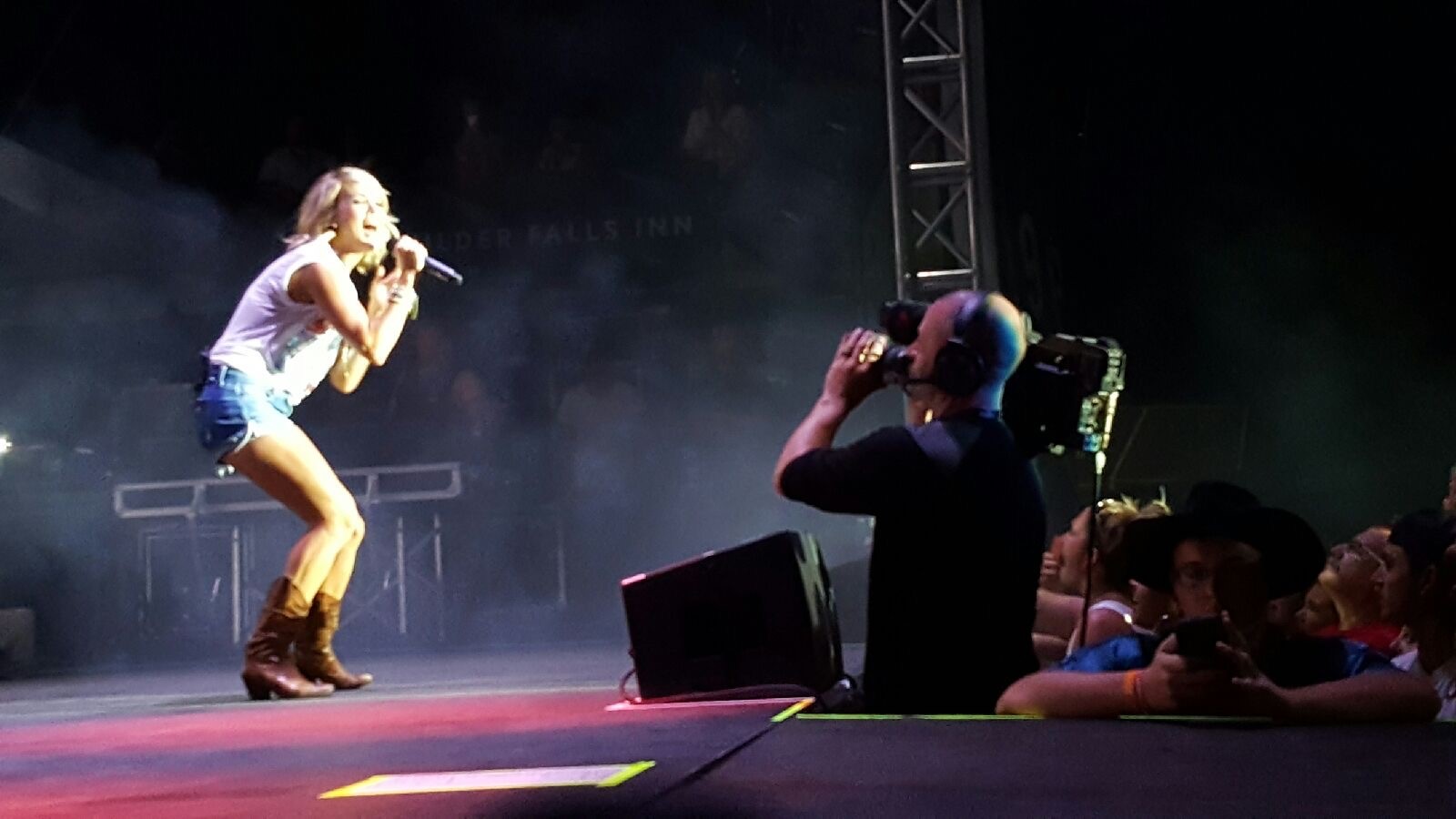
He’s done playing games: After cameraman Jeremy Brown sought free legal aid from the Foundation, an NLRB Administrative Law Judge ruled against NABET bosses for violating his Beck rights for years.
PORTLAND, OR – Jeremy Brown, a “daily hire” cameraman for ABC who had worked on and off for the company since 1999, would not have thought that a new president taking over the National Association of Broadcast Employees and Technicians (NABET) Local 51 union would mean anything for him when he resumed work in 2016. After all, he had worked for ABC for nearly three years, and the union had never even contacted him and he had never joined the union.
Then, in 2019, he received a series of letters from the new union honcho, demanding he pay nearly $10,000 in initiation fees and so-called “back-agency dues.” Brown quickly obtained free legal aid from National Right to Work Legal Defense Foundation staff attorneys and asserted his rights under the Foundation-won CWA v. Beck Supreme Court decision.
Beck prevents private sector union bosses from forcing employees who have abstained from formal union membership to pay for anything unrelated to the union’s bargaining functions, such as political expenses. Moreover, it requires union officials to provide information on the union’s fee calculation and expenditures to non-members.
New NABET Chief Demanded Thousands, Then Snubbed Cameraman’s Beck Rights
Because Brown works primarily in non-Right to Work states, he can be legally forced as a condition of employment to pay some fees to union bosses.
After receiving the baffling, belated dues demands, Brown emailed the new union president, Carrie Biggs-Adams, asking for clarification. He also exercised his Beck rights by objecting “to the collection and expenditure by the union of a fee for any purpose other than” certain bargaining activities. Believing that he would be fired if he did not agree to pay union dues, he filled out a form authorizing NABET to take full dues from his paycheck, but did so under duress.
Biggs-Adams ignored several follow-ups by Brown. According to legal documents, she “believed Local 51 had no obligation to [reply to Brown] because Beck objections” are handled only by the union’s national headquarters under NABET rules. Even so, she never apprised Brown of NABET’s national mailing address, or provided him the dues reduction or any of the information mandated by Beck.
In December, Brown won a decision from a National Labor Relations Board (NLRB) Administrative Law Judge (ALJ) about the union’s Beck rights violations. The ALJ’s decision holds the NABET union violated Brown’s rights under the National Labor Relations Act (NLRA) through its officials’ omissions and the failure to reduce his dues.
The ALJ ordered NABET Local 51 to provide Brown with “a good faith determination of the reduced dues and fees objectors must pay,” and “reimburse Brown for all dues and fees collected” beyond what is required under Beck, with interest.
“While this decision vindicated Mr. Brown’s legal rights, it also demonstrates why every American worker deserves the protection of a Right to Work law to shield them from union boss threats to pay up or be fired,” commented National Right to Work Foundation Vice President Patrick Semmens.





