
DOJ Attorney Battles Biden Admin Union Power Grab Over Justice Department
The following article is from the National Right to Work Legal Defense Foundation’s bi-monthly Foundation Action Newsletter, March/April 2025 edition. To view other editions of Foundation Action or to sign up for a free subscription, click here.
Foundation attorneys challenge last minute DOJ unionization in violation of FLRA case law

NTEU union bosses backed Kamala Harris for President, but when voters rejected her, NTEU union officials and the Biden-Harris Administration hastily moved to install the union at the DOJ in an apparent attempt to obstruct Trump’s priorities.
WASHINGTON, DC – In states across the country, union officials go to great lengths to gain more political influence, and will often violate established law to do so.
As veteran Department of Justice attorney Jeffrey Morrison is discovering, federal agencies are no exception. Morrison is challenging a last-minute attempt by National Treasury Employees Union (NTEU) bosses to gain monopoly bargaining control over attorneys at both the DOJ Civil Rights Division (CRT, where Morrison is employed) and the DOJ Environment and Natural Resources Division (ENRD).
The unionization campaign was fast-tracked just days after Trump’s November election victory, in an apparent attempt to formally hand NTEU union officials power over the divisions prior to inauguration day. Morrison’s legal action asks the Federal Labor Relations Authority (FLRA) to formally review the actions by the Biden DOJ and NTEU officials. The FLRA is the federal agency responsible for adjudicating disputes between federal employees, union officials, and agencies within the federal government.
Brief: DOJ Holdovers and NTEU Bosses Colluded to Flout Existing Law
Morrison, who is receiving free legal aid from the National Right to Work Foundation, contends in filings before the FLRA that the NTEU’s scheme violates an existing FLRA decision in which the agency ruled that CRT attorneys did not comprise a work unit appropriate for unionization.
DOJ management raised this exact concern about the CRT unit with the FLRA after NTEU union bosses began their campaign, but the DOJ dropped its opposition just days after the November federal elections.
Morrison is asking the FLRA to review the decision of the Regional Director to allow the election to go forward in the CRT and ENRD divisions without properly considering if these divisions are an appropriate unit under the law.
Morrison’s filings (called “Applications for Review”) came after DOJ management and NTEU union officials agreed that the CRT and ENRD were work units appropriate for unionization. His Applications for Review point out that a prior FLRA decision, Antitrust Division, held that CRT lawyers “did not have a separate and distinct community of interest from other DOJ trial attorneys” and for that reason couldn’t stand as a distinct bargaining unit.
“[T]he Authority determined this very unit to not be an appropriate unit…The Regional Director’s failure to comply with current, binding Authority precedent is in error and must be reversed,” the Application for Review says regarding the CRT attorneys. This same argument is applied to the ENRD division because it is similarly situated to CRT in the DOJ hierarchy.
FLRA Failed to Conduct Investigation Into NTEU’s Union Scheme
Morrison’s applications also contend that the FLRA “fail[ed] to conduct an independent investigation into the appropriateness of the unit,” despite the law requiring that the FLRA make such a finding.
“An agency agreeing with a union that a unit is appropriate does not mean that unit is actually appropriate. Agencies, like DOJ here, cannot usurp the Authority’s role in deciding unit appropriateness…” say the Applications for Review.
“Right before power changed hands in Washington, DC, NTEU union bosses and DOJ bureaucrats appear to have colluded to flout longstanding precedent that says Justice Department attorneys cannot legally be unionized division by division,” commented National Right to Work Foundation President Mark Mix.
“The FLRA has ignored established precedent to let this hasty unionization attempt go through, and our attorneys are proud to assist Mr. Morrison in opposing this maneuver.”
Hundreds of OH Workers Exit Teamsters as Union Bosses’ Amazon ‘Strike’ Stunt Flounders
The following article is from the National Right to Work Legal Defense Foundation’s bi-monthly Foundation Action Newsletter, March/April 2025 edition. To view other editions of Foundation Action or to sign up for a free subscription, click here.
Teamsters O’Brien tried to take away Christmas cheer, but couldn’t take away Ohio workers’ freedom

Daniel Caughhorn led a scrappy group of his coworkers in voting Teamsters bosses out of their workplace, a scrap metal processing facility in Toledo, OH. They also beat back union bosses’ attempts to overturn their vote.
WASHINGTON, DC – This past December, Teamsters President Sean O’Brien announced the “largest-ever strike against Amazon,” claiming that thousands of workers would heed his strike order, abandon their delivery vehicles and hit the picket lines. O’Brien threatened that Christmas gifts would be delayed unless his demands were met.
Those who took O’Brien’s rhetoric at face value would have thought he was a veritable Grinch stealing Christmas (even though he tried to explain it was Amazon’s fault that the strike had to occur). But even reporting from pro-Big Labor outlets soon revealed that the order was more story than substance: According to Labor Notes, only about 600 employees obeyed the strike order despite Teamsters honchos claiming to “represent” some 7,000 to 10,000 Amazon employees.
Even the small number who did cease work on O’Brien’s command are arguably not employees of Amazon, and likely aren’t under Teamsters control at all: They work primarily for independent contractors that carry out some delivery functions for Amazon. Even if O’Brien’s dubious theory claiming he had control over those delivery drivers was correct, it would have only affected 10 out of the roughly 110 Amazon centers nationwide. Still, National Right to Work Foundation staff attorneys put a special legal notice out to delivery drivers nationwide informing them of their rights if they were illegally coerced to strike.
Workers Defeat Cynical Attempt by Teamsters to Overturn Vote
The December 2024 Teamsters “strike” against Amazon may go down in history as a strained publicity stunt. But the more significant Teamsters news that month was that hundreds of Foundation-backed workers across Northern Ohio took real action by voting to free themselves from unwanted Teamsters officials’ so-called “representation.”
Dusty Hinkle, an employee for Frito-Lay’s plant in Wooster, OH, and Daniel Caughhorn, a worker at scrap metal firm Omnisource’s facility in Toledo, OH, paved the way to freedom for their coworkers by submitting petitions asking the National Labor Relations Board (NLRB) to hold votes among their coworkers to remove or “decertify” Teamsters unions at their facilities. They submitted these in October and August 2024, respectively, with free Foundation legal assistance.
Because Ohio lacks Right to Work protections for its private sector workers, Teamsters officials enforced contracts that required Hinkle, Caughhorn, and their colleagues to pay union dues or fees as a condition of keeping their jobs. In contrast, in Right to Work states, union membership and all union financial support are strictly voluntary.
The NLRB, the federal agency that enforces federal labor law, administered decertification votes at Hinkle’s and Caughhorn’s workplaces after finding that both petitions contained enough employee signatures to trigger a vote under agency rules. Even though clear majorities of workers voted against Teamsters union control in both votes, Teamsters union officials filed objections alleging misconduct by Frito-Lay and Omnisource management in an attempt to overturn the election results.
However, in both cases regional NLRB officials tossed the union objections and certified the workers’ votes. The Omnisource and Frito-Lay employees — over 430 in total — thereby cut all ties with the Teamsters unions. Now both sets of employees are free both of union bosses’ forced-dues demands and their ability to impose one-size-fits-all contracts on the workplace.
In the final months of 2024, Foundation attorneys assisted a number of other workers from across industries with efforts to remove unwanted Teamsters officials. From just October to December 2024, truck drivers from Georgia, California, Virginia, and New Jersey successfully booted out Teamsters union officials or initiated removal efforts with Foundation aid. These cases came despite increasingly hostile rulemaking from the outgoing Biden Administration’s NLRB bureaucrats in 2024, which undid key Foundation-backed reforms that made it easier for workers to request decertification elections.
Teamsters Schemes to Steal Christmas and Workers’ Rights Both Failed
“Sean O’Brien’s Christmas publicity stunt might have made him seem like an attempted stealer of gifts and holiday cheer, but these two Foundation cases from Ohio demonstrate what Teamsters bosses really are: stealers of workers’ rights and freedom,” commented National Right to Work Foundation Vice President Patrick Semmens.
“That Teamsters officials in both these cases attempted to disenfranchise workers who opposed them shows why workers are turning against their power-hungry tactics, and why American workers deserve the Right to Work choice to withhold financial support from union officials who aren’t serving their interests.”
Following Foundation Legal Arguments, Trump Fires Biden-Appointed NLRB Bureaucrats
The following article is from the National Right to Work Legal Defense Foundation’s bi-monthly Foundation Action Newsletter, March/April 2025 edition. To view other editions of Foundation Action or to sign up for a free subscription, click here.
Foundation constitutional lawsuit first to argue presidents can remove Board members

President Trump appears intent on ending union bosses’ reign at the NLRB. One of his first actions was to axe Jennifer Abruzzo and Gwynne Wilcox, both ex-union bosses who constantly sought to beef up their cronies’ powers over employees.
WASHINGTON, DC – Joe Biden, a career lackey of Big Labor union bosses, spared no moment of his administration ensuring that his cronies at the top of America’s largest unions gained power at the expense of independent-minded workers.
Only minutes after being inaugurated in 2021, he began setting the stage for a Big Labor takeover of the federal government: He immediately fired Peter Robb, the general counsel for the National Labor Relations Board (NLRB) during Donald Trump’s first term. With Robb gone, Biden’s acting general counsel quickly quashed multiple National Right to Work Foundation-backed cases that would have otherwise received full NLRB consideration. When Biden filled the general counsel position, he picked Jennifer Abruzzo — a radical ex-Communications Workers of America (CWA) lawyer who was confirmed only because then-Vice President Kamala Harris broke a party-line deadlock in the Senate.
And Biden wasn’t finished. He filled two vacancies on the Board itself with Gwynne Wilcox and David Prouty — who had both worked for the radical Service Employees International Union (SEIU).
Biden’s crusade against worker freedom arguably culminated in the disastrous Cemex Construction Materials Pacific NLRB decision, which gave union officials the power to seize monopoly bargaining power in a workplace without winning a secret-ballot election among employees. The Biden Board also repealed key Foundation-backed reforms that (among other things) stopped union bosses from using so-called “blocking charges” alleging employer malfeasance to stop workers from voting in union removal elections they had requested.
Sudden End of Radical Biden Majority Creates Opportunities for Foundation Litigation
But, just a week after re-ascending to the White House, President Trump took immediate action to undo the damage to worker freedom caused by the historically-radical Biden NLRB. In late January, Trump took the crucial step of giving both Abruzzo and Wilcox the boot. That, combined with the fact that the Senate did not confirm Biden NLRB Chairman Lauren McFerran for another term, means Trump has the opportunity to appoint a pro-freedom majority to the Board before it considers any other cases.
“We hope that this signals the opening of a new chapter at the NLRB, where the agency will fulfill its statutory mandate to protect workers’ right to associate with unions if they choose, but will equally defend their right to refrain from all union activity,” commented National Right to Work Foundation President Mark Mix.
Trump Admin, Others Follow Foundation Lead in Arguing for Structural Board Change
By removing Wilcox, the Trump Administration is relying on arguments made in the Foundation’s groundbreaking cases challenging the structure of the NLRB. Foundation-backed Starbucks employees Ariana Cortes and Logan Karam filed the first-ever federal suit arguing that, as per the Constitution’s separation of powers principles, the president should be able to remove them at-will.
Cortes and Karam’s suit is currently pending at the D.C. Circuit Court of Appeals. Big Labor backers argue that board members like Wilcox have statutory protections that make them removable only in certain circumstances. But Board member protections are constitutionally questionable.
“President Trump made an excellent and decisive move to protect the freedom of American workers. Abruzzo’s and Wilcox’s track records were devastating for independent-minded employees,” observed Mix.
“We’re also encouraged by the Trump Administration’s apparent reliance on National Right to Work Foundation-backed workers’ cases to affirm the idea that NLRB members — like Wilcox — should be removable by the president at will. “The Foundation still has considerable legal work to do to reverse the damage done by the Biden NLRB, and removing a union partisan like Wilcox from the Board is just the first step towards restoring the rights and freedoms of workers opposed to union affiliation,” added Mix.
New York Farmworkers Seek to Challenge ‘Card Check’ & Uproot UFW Union Bosses
The following article is from the National Right to Work Legal Defense Foundation’s bi-monthly Foundation Action Newsletter, January/February 2025 edition. To view other editions of Foundation Action or to sign up for a free subscription, click here.
Farmworkers fight union argument that New York labor law lets union bosses trap workers forever
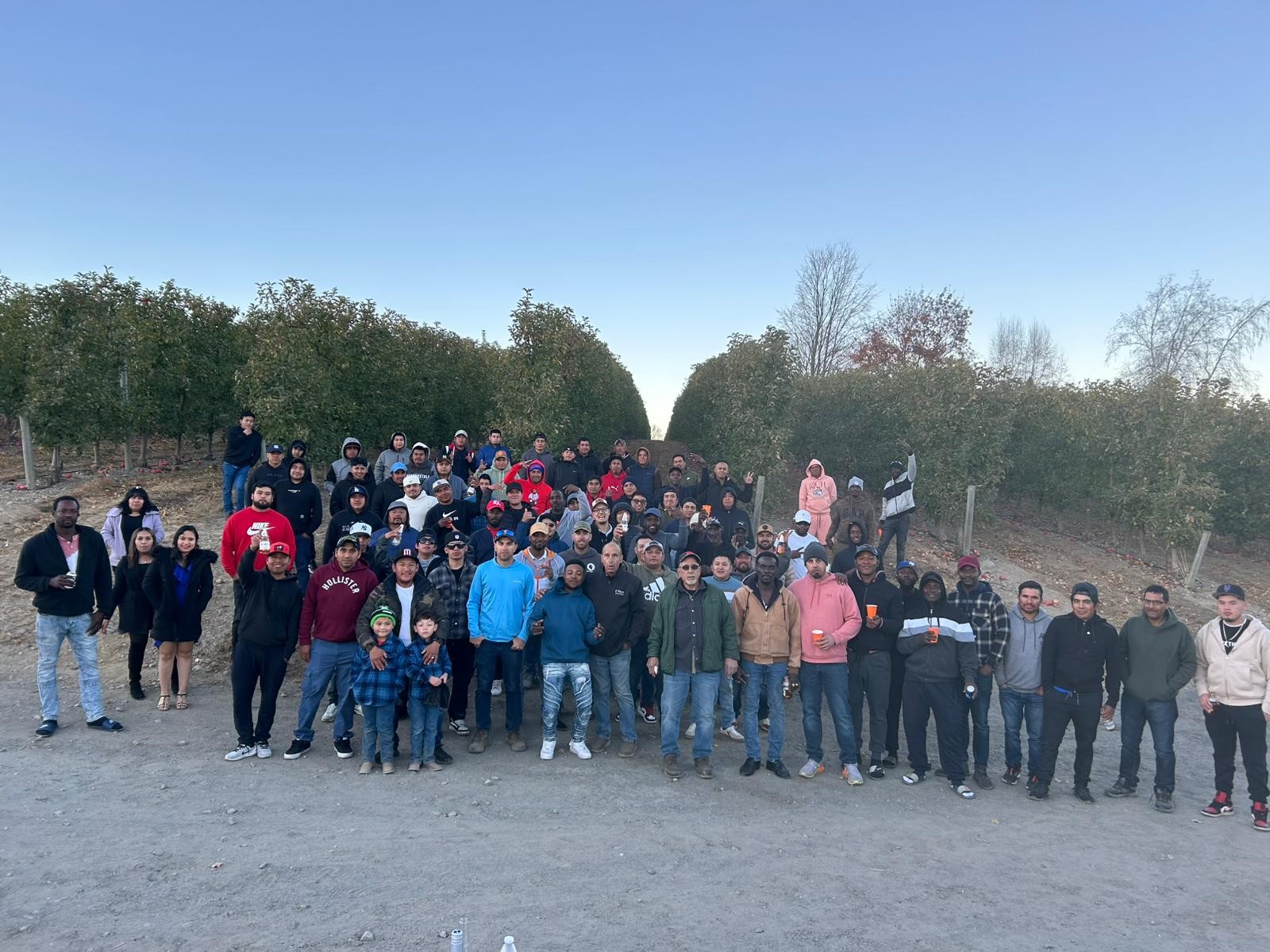
Porpiglia Farms workers, who were targeted by an aggressive UFW ‘card check’ campaign against the farmworkers, are banding together to vote the union out and ensure that union officials reap what they have sown.
MARLBORO, NY – In 2020, the New York State Assembly passed a Big Labor-backed law that granted union officials sweeping new powers to impose their monopoly bargaining control over the state’s farmworkers. Since New York is one of 24 states that lacks a Right to Work law, the law authorizes union bosses to force farmworkers to pay union dues or else be fired.
But that’s not all: New York labor law went even further by mandating “card check” organizing, in which union officials deny workers a secret ballot union vote and instead claim majority support by submitting cards ostensibly showing worker support. These cards are often collected through pressure tactics, intimidation, or even threats.
But even that dramatic increase in power over the agricultural sector and agricultural workers is not enough for United Farm Workers (UFW) union officials.
UFW tyrants are advancing the cynical argument that, under New York law, workers can be forced into union ranks but can never escape forced unionism. They argue this to counter a recent National Right to Work Foundation-backed union decertification case for employees of Porpiglia Farms, an apple farm in the Hudson Valley of New York.
NY Fruit Farmworkers Seek Union Ouster After ‘Card Check’
Porpiglia employee Ricardo Bell submitted a petition last year in which he and his coworkers asked the New York Public Employment Relations Board (PERB) to hold a vote at the orchard on whether to remove the UFW. (Despite its name, PERB is responsible for enforcing labor law in both New York’s public and agricultural sectors.)
In late 2024, Foundation attorneys filed a brief for Bell countering union officials’ absurd argument that one card check drive should lock employees in a union forever. Additionally, more Foundation-backed decertification cases are sprouting up in both New York and other Big Labor-dominated states for farmworkers who are rejecting UFW officials’ card check schemes.
Brief Challenges Theory That Workers Have No Right to Remove Incumbent Union
Bell filed his decertification petition with Foundation legal aid after UFW union officials seized power at his workplace through a hasty card check unionization drive. His newest filing attacks union bosses’ contention that once a union is certified as the monopoly union “representative” of a work unit, there can be no option to remove it.
“[New York labor law] does not indicate that employees have a single chance at self-organization,” the brief says. “If that were the case, the very action of choosing a representative under [New York labor law] would deprive employees of the ability to exercise [their rights] in perpetuity….”
Foundation-Backed Workers Battle UFW ‘Card Checks’ Across Country
Since Bell’s filing, Foundation attorneys have also assisted in a union decertification effort for workers at Cherry Lawn Fruit Farms near Rochester, NY, who were targeted by a similar UFW card check campaign. These two groups of New York farmworkers join Foundation-backed employees of Wonderful Nurseries in California in challenging the UFW’s tactics.
Wonderful Nurseries workers still have multiple unfair labor practice charges pending against UFW bosses for deceptive behavior during an early 2024 card check drive. The charges detail UFW agents lying about the true purpose of cards that they collected from workers, and harassing workers who now back an effort to vote the union out.
“The aggressive and often demeaning tactics that UFW union officials use to seize control over agricultural workers show clearly why ‘card check’ is a bad idea in the agricultural sector, the public sector, and in any sector,” commented National Right to Work Foundation Vice President and Legal Director William Messenger. “UFW officials are arguing that workers should have little or no chance at all to challenge a union’s ascent to power by this process.
“The idea that workers have no ability to eject a union once it is installed in power further demonstrates that this is not about workers’ choices at all, only about union bosses’ power over workers, even when workers overwhelmingly want nothing to do with union bosses’ so-called ‘representation,’” added Messenger.
Chicago-Area Chemical Plant Worker Asks National Labor Board to End Policy Letting Union Bosses Trap Workers in Unions
Employees submitted valid petition requesting vote to remove Teamsters union, but union bosses manipulated unproven charges against employer to block vote
Chicago, IL (May 8, 2025) – An employee of Rowell Chemical Corporation, a chemical plant based in Willow Springs, is asking the National Labor Relations Board (NLRB) to overturn a regional labor board’s decision blocking a vote to remove the Teamsters Local 710 union. The worker, Jeffrey Johnston, is receiving free legal aid from the National Right to Work Legal Defense Foundation.
The NLRB, based in Washington, D.C., is the federal agency responsible for administering elections to install (or “certify”) and remove (or “decertify”) unions, as well as adjudicating disputes between employers, union officials, and individual employees. Johnston’s Request for Review argues that regional NLRB officials blocked his and his coworkers’ requested union removal vote based on dubious “blocking charges” Teamsters union officials filed against Rowell management.
Union officials often file blocking charges to delay or cancel union decertification votes, despite the fact that their charges are often unproven and have little, if any, connection to the reasons workers cite for wanting to get rid of a union. The NLRB in 2020 adopted Foundation-backed reforms that gave workers a chance to vote before the agency handled litigation related to the election, but the Biden NLRB adopted a new rule in 2024 that lets union officials manipulate blocking charges to stop election proceedings completely.
Request for Review: NLRB “Blocking Charge” Policy Violates Multiple Federal Laws
Johnston’s Request for Review contends that the NLRB should eliminate the Biden-era rule permitting blocking charges and schedule a union decertification election for him and his coworkers as soon as possible. Johnston argues that holding up an election pursuant to blocking charges violates the text of the National Labor Relations Act (NLRA), the statute that the NLRB is supposed to enforce, which states that a decertification election should occur if there is a question concerning representation. Johnston also argues that the Biden-era rule violates the Administrative Procedure Act (APA) on multiple grounds.
At the very least, Johnston’s Request for Review maintains, the NLRB should hold a hearing into whether the employer misconduct alleged by Teamsters union officials actually has a connection to Johnston and his coworkers’ desire to kick the union out. The regional NLRB did not order such a hearing and simply blocked the vote.
“My coworkers and I requested a vote to remove this union almost two months ago and somehow the NLRB is letting Teamsters bosses throw around specious charges to stop us from doing so,” commented Johnston. “My coworkers and I have spent two years under Teamsters control, and I believe that the vast majority of us agree that the Teamsters don’t represent our interests. It’s not fair that union bosses and the NLRB can trump our free choice.”
“The NLRB, through its ‘blocking charge’ rule has let union officials stifle the rights of the very workers they claim to ‘represent’ in violation of the statute the NLRB is supposed to enforce,” commented National Right to Work Foundation President Mark Mix. “Mr. Johnston speaks for workers across the country in challenging this NLRB-invented policy, which is completely antithetical to the idea expressed in federal labor law that employees should choose the union, not the other way around.”
Starbucks Employee’s Constitutional Challenge to Labor Board Structure Fully Briefed at DC Circuit Court of Appeals
Trump recently removed a Biden NLRB appointee relying on constitutional arguments first raised by NY Starbucks workers’ lawsuit against the NLRB
Washington D.C. (February 24, 2025) – New York Starbucks employees Ariana Cortes and Logan Karam have filed the final brief with the D.C. Circuit Court of Appeals in their landmark lawsuit asserting that the structure of the National Labor Relations Board (NLRB) violates the U.S. Constitution.
The case, which is being litigated by National Right to Work Foundation staff attorneys, is especially notable after the Trump Administration asserted the very same legal arguments in its efforts to reform the NLRB. President Trump on January 28 fired NLRB Board Member Gwynne Wilcox, criticizing the same removal protections that Cortes and Karam’s first-in-the-nation lawsuit targeted for violating the Constitution.
The Foundation lawsuit, initially filed by Cortes, and later joined by Karam, states that the National Labor Relations Act of 1935 (NLRA) violates Article II of the Constitution by shielding NLRB Board Members from being removed at the discretion of the president. The appeal challenges a District Court decision that dismissed the lawsuit on the grounds that the plaintiffs lack legal standing. That decision did not address the underlying claim regarding whether the Labor Board’s structure complies with the requirements of the Constitution.
With the case now fully briefed, oral arguments are expected soon. A ruling in favor of Cortes and Karam could help cement making the Board more accountable to independent-minded employees and their rights.
Case Filed After NLRB Denied Starbucks Employees Right to Vote Out Unwanted Union
On April 28, 2023, Cortes submitted a petition, supported by a majority of her colleagues, asking the NLRB to hold a decertification election at her Buffalo-area “Del-Chip” Starbucks store to remove Starbucks Workers United (SBWU) union officials’ bargaining powers over workers. However, NLRB Region 3 rejected Cortes’ petition, citing unfair labor practice accusations made by SBWU union officials against the Starbucks Corporation. Notably, there was no established link between these allegations and the employees’ decertification request.
Similarly, Karam filed a decertification petition seeking a vote to remove the union at his Buffalo-area Starbucks store. Like Cortes’ petition, NLRB officials refuse to allow the vote to take place, citing claims made by SBWU officials. As a result the workers remain trapped under union “representation” they oppose.
“This case demonstrates the direct harm caused to workers rights by unaccountable and biased NLRB bureaucrats that have stifled attempts to remove unwanted union representation,” commented National Right to Work Foundation President Mark Mix. “NLRB officials may not like it, but federal labor law is not exempt from the requirements of the highest law in the land, the Constitution.”
“We are proud that the very legal arguments first made by Foundation attorneys in this case have now been utilized by President Trump to rein in the biased Biden NLRB,” added Mix. “The NLRB’s refusal to process these workers’ decertification petitions, paired with its unchecked authority, exemplifies why reform is overdue.”
Bus Driver Asks National Labor Relations Board to Overturn “Merger Doctrine” Used by Union Bosses to Block Worker-Requested Votes
By “merging” smaller individual bargaining units into mega-units, union officials block workers’ right to escape unwanted “representation” and forced dues
Battle Ground, Washington (February 14, 2025) – Theresa Hause, a school bus driver for First Student Inc. in Battle Ground, Washington, has just filed an appeal asking the National Labor Relations Board (NLRB) in Washington, DC, to overturn the so-called “merger doctrine” that is being used to block Hause and her colleagues from holding a vote to end forced union dues at their workplace. Hause’s Request for Review was filed with free legal assistance from National Right to Work Legal Defense Foundation staff attorneys.
The NLRB’s non-statutory “merger doctrine” allows union officials to “merge” employees in a smaller bargaining unit into much larger one. This legal tactic prevents rank-and-file employees exercising their rights under federal law to hold votes to remove unions (known as “decertification elections”) or to end forced-union dues requirements (known as “deauthorization elections”).
Because employees are suddenly part of a much larger and frequently geographically-dispersed “bargaining unit” with workers they have never met and likely don’t even know the names of, once “merged” it becomes effectively impossible for employees to ever reach the 30% threshold of signatures needed to trigger decertificiation or deauthorization elections.
Teamsters and other union officials frequently use non-statutory “merger doctrine” to trap workers in union ranks, forced-dues payments
In previous First Student cases, the “merger doctrine” was wielded by Teamsters officials to block votes at multiple locations on the grounds the workers there were actually part of one massive bargaining unit with over 22,000 drivers in over 100 locations in 33 different states. In another example, a group of less than 10 Wisconsin workers filed a majority-backed petition to remove (i.e. “decertify”) the Teamsters as soon as allowed by federal law, only to be stymied by the “merger doctrine” because they had been secretly “merged” into a multi-company unit of around 24,000 workers.
Hause’s request to end the non-statutory “merger doctrine” follows a decision by a NLRB Regional Director applying the doctrine to her request for a deauthorization election to end Teamsters Local 58 union officials power to require all drivers to pay fees or else be fired. Such a vote is necessary because Hause and her colleagues work in Washington State, which lacks Right to Work protections that make union financial support strictly voluntary.
Hause collected signatures from over 30% of First Student drivers at the facilities in Battle Ground and Hockinson, which is the unit originally organized by Teamsters Local 58 before First Student was even the employer. Rather than let the vote take place, Teamsters lawyers invoked the merger doctrine to disenfranchise the drivers. The Teamsters lawyers argued Hause and her coworkers are only a tiny fraction of First Student drivers under a “National Master First Student Agreement” involving Teamster affiliates across the country.
After the Regional Director sided with the Teamsters to block the workers from voting, an appeal was filed to the five-seat National Labor Relations Board in Washington, DC. Currently the NLRB lacks a quorum to act because there are only two Board members. However, President Trump could appoint three new Members who could then rule on Hause’s request for review once they are confirmed by the United States Senate.
“This case shows how Teamsters bosses, aided by biased NLRB-concocted rules, disenfranchise workers and trap them in union ranks and forced dues payments, effectively in perpetuity,” said National Right to Work Foundation President Mark Mix. “It’s time for the NLRB to overhaul the arbitrary rules, including the so-called ‘merger doctrine,’ that are being used to eviscerate workers’ statutory rights under the National Labor Relations Act to hold a vote to remove a union opposed by a majority of employees or vote to end forced-dues requirements.”
“Quickly ending the ‘merger doctrine’ would be an excellent way for the incoming Trump NLRB majority to signal that, instead of prioritizing coercive union boss power as the Biden NLRB did, the Trump Labor Board will be putting employee rights and freedoms front and center,” added Mix.
Puerto Rico Police Bureau Employees Foil Anti-Janus Scheme
The following article is from the National Right to Work Legal Defense Foundation’s bi-monthly Foundation Action Newsletter, November/December 2024 edition. To view other editions of Foundation Action or to sign up for a free subscription, click here.
Federal court strikes down discrimination against workers at the Puerto Rico Police Bureau who exercised First Amendment rights
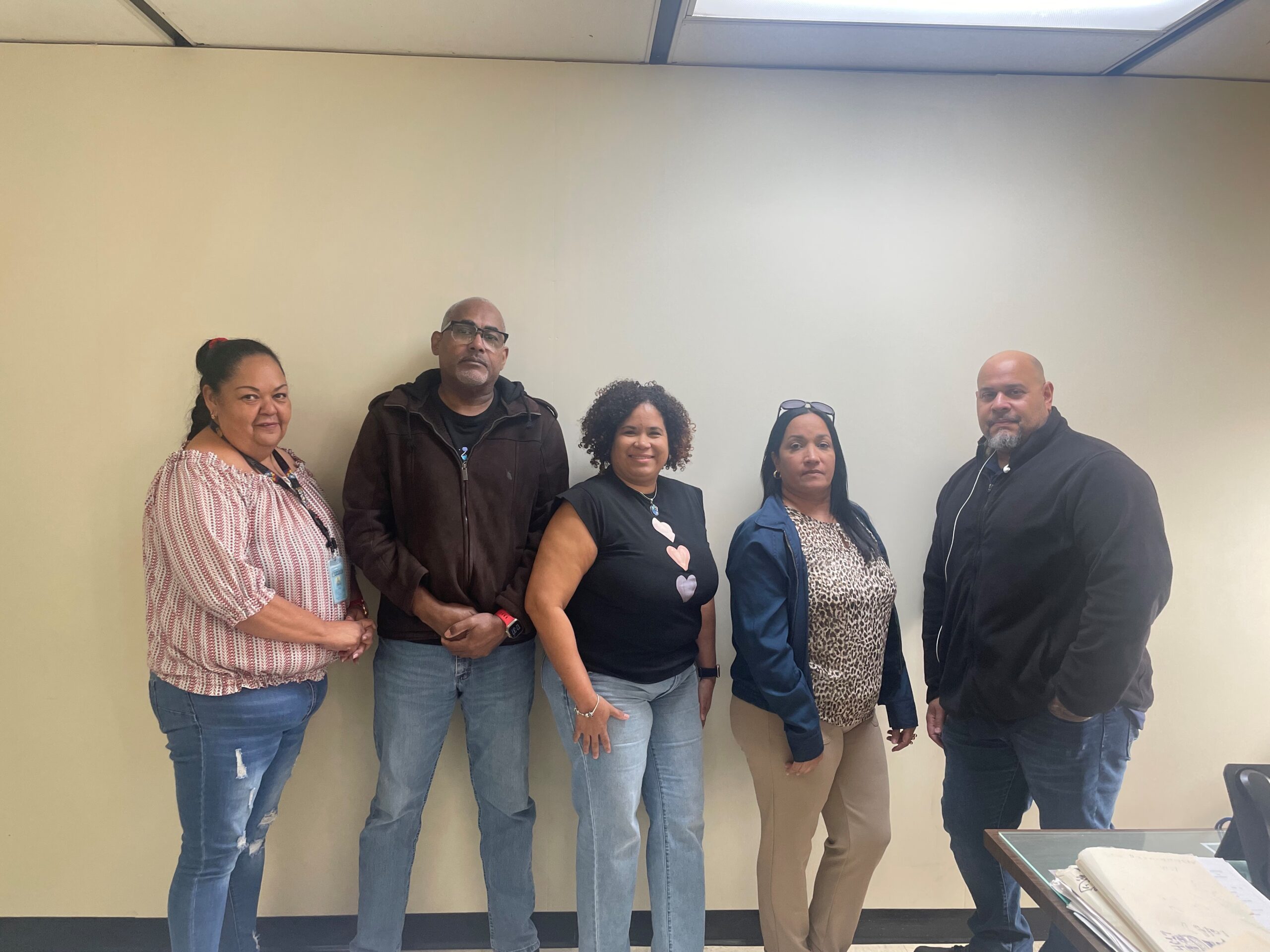
Vanessa Carbonell (center) and other employees of the Puerto Rico Police Bureau won big at the Puerto Rico District Court in September 2024. Their Foundation-won decision forces their employer and the union to stop violating their Janus rights.
SAN JUAN, PR – The National Right to Work Foundation’s 2018 victory at the U.S. Supreme Court in Janus v. AFSCME opened new horizons for employee freedom across the country. For the first time, the Justices recognized that the First Amendment prohibits union bosses from forcing public sector employees to join a union or pay dues as a condition of employment, and that union bosses can only take dues from a worker’s paycheck with their affirmative consent.
Foundation attorneys’ efforts to enforce the landmark decision yielded a big victory this September for a wide swath of civilian employees at the Puerto Rico Police Bureau (PRPB). In a class action federal lawsuit, more than a dozen PRPB employees charged officials of the Union of Organized Civilian Employees with violating their Janus rights by stripping them of an employer-provided health benefit because they refused to join the union.
A recent decision from the District Court of Puerto Rico found in favor of the employees’ arguments, stating that their employer had indeed taken away the health benefit because the employees exercised their right to not join or pay dues to the union.
Scheme Forced Workers to Join Union or Lose Access to Better Healthcare
“This is either retaliation for exercise of non-union members’ post-Janus non-associational rights under the First Amendment under the Constitution or simply discrimination,” said the Court.
According to lead plaintiff Vanessa Carbonell and her colleagues’ original lawsuit, they all exercised their Janus right to opt out of the union at various points after the 2018 Janus decision. They each began noticing that as dues ceased coming out of their paychecks, they also stopped receiving a $25-a-month employer-paid benefit intended to help employees pay for better health insurance.
The lawsuit demonstrated that PRPB officials cut the benefit off to employees who refused union membership — a clear case of discrimination against employees who exercise their First Amendment right to abstain from union affiliation.
Union and Employer Must Stop Discrimination
The District Court’s decision, in addition to declaring that the ploy by PRPB and the Union of Organized Civilian Employees is unconstitutional, orders an injunction to stop PRPB officials from continuing to withhold the benefit from Carbonell and other employees.
“Janus enshrined a very simple First Amendment principle: That union officials need to convince public employees to support their organization and activities voluntarily,” commented National Right to Work Foundation Vice President Patrick Semmens.
National Right to Work Foundation Issues Special Legal Notice to Port Employees Impacted by ILA Union Boss Strike Order
Foundation notifies employees that those wishing to continue working during a strike should resign their memberships before returning to work
Washington DC (October 3, 2024) – The National Right to Work Legal Defense Foundation has released a special legal notice to the roughly 50,000 port employees reportedly affected by the strike order issued by International Longshoremen’s Association (ILA) union officials this week.
The Foundation’s legal notice informs East and Gulf port employees of their rights, including their right to rebuff the strike order and to keep working to support their families as the strike is ongoing. The notice discusses why workers across the country frequently turn to the National Right to Work Foundation for free legal aid in such situations.
“The situation presents serious concerns for employees who believe there is much to lose from a union-ordered strike,” the notice reads. “That is why workers confronted with strike demands frequently contact the National Right to Work Legal Defense Foundation to learn how they can avoid fines and other harsh union discipline for continuing to report to work to support themselves and their families.”
The full notice is available at www.nrtw.org/ILAstrike
The notice outlines the process that employees should follow if they want to exercise their right to return to work during the strike and avoid punishment by union bosses, complete with sample union membership resignation letters. The notice reminds workers that ILA union officials have no disciplinary power over workers who are not union members, and advises employees who wish to work during a strike to resign their memberships before returning to work.
“Union officials can (and often do) fine actual union members who work during a strike,” the notice says. “So, you should seriously consider resigning at least one day BEFORE you return to work during a strike, which is the best way to avoid these union fines and discipline.
“If possible, use certified mail, return receipt requested, and save copies of your letters and the return receipt to prove delivery,” the notice continues, adding that workers who choose to submit their union resignations to union officials in person should have a reliable witness present to combat potential false claims from union officials that they did not actually receive a worker’s resignation.
“ILA union officials have a history of corruption and seeking to increase their own power instead of doing what’s right for rank-and-file workers,” commented National Right to Work Foundation President Mark Mix. “Given a strike order that may last weeks or even months, many port workers may decide that remaining on strike is not the best course of action for them, and Foundation attorneys stand ready to aid these workers in defending their right to continue working and providing for their families.”
Full Foundation Action September/October 2023 Newsletter Now Online
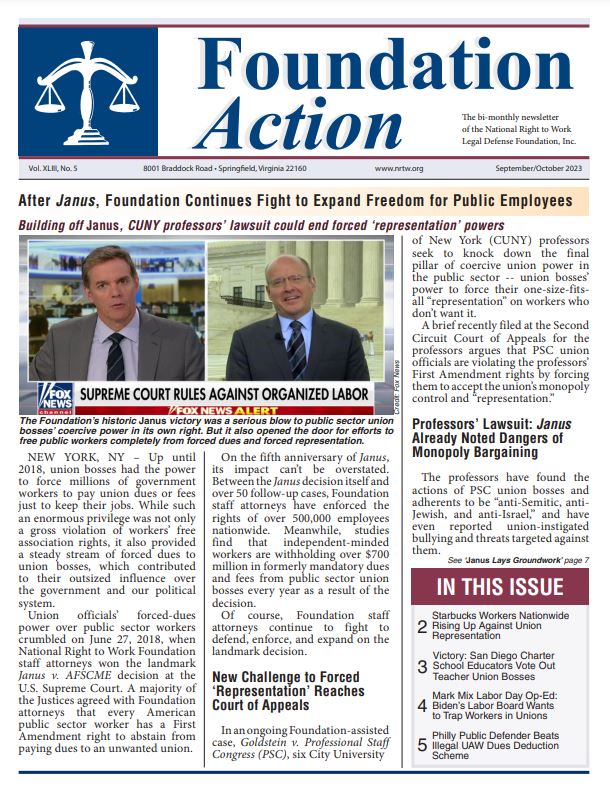 All articles from the September/October issue of Foundation Action are now online.
In this issue:
- After Janus, Foundation Continues Fight to Expand Freedom for Public Employees
- Starbucks Workers Nationwide Rising Up Against Union Representation
- Victory: San Diego Charter School Educators Vote Out Teacher Union Bosses
- Mark Mix Labor Day Op-Ed: Biden’s Labor Board Wants to Trap Workers in Unions
- Philly Public Defender Beats Illegal UAW Dues Deduction Scheme
Recent articles can be found here. To sign up for a free copy of the newsletter via mail please see the form at the bottom of this page.





