
Foundation to Justices: Workers Opposing Unions Isn’t ‘Harm’ to be Eliminated
The following article is from the National Right to Work Legal Defense Foundation’s bi-monthly Foundation Action Newsletter, May/June 2024 edition. To view other editions of Foundation Action or to sign up for a free subscription, click here.
Brief in Starbucks-related SCOTUS case counters Labor Board attempts to impose union control
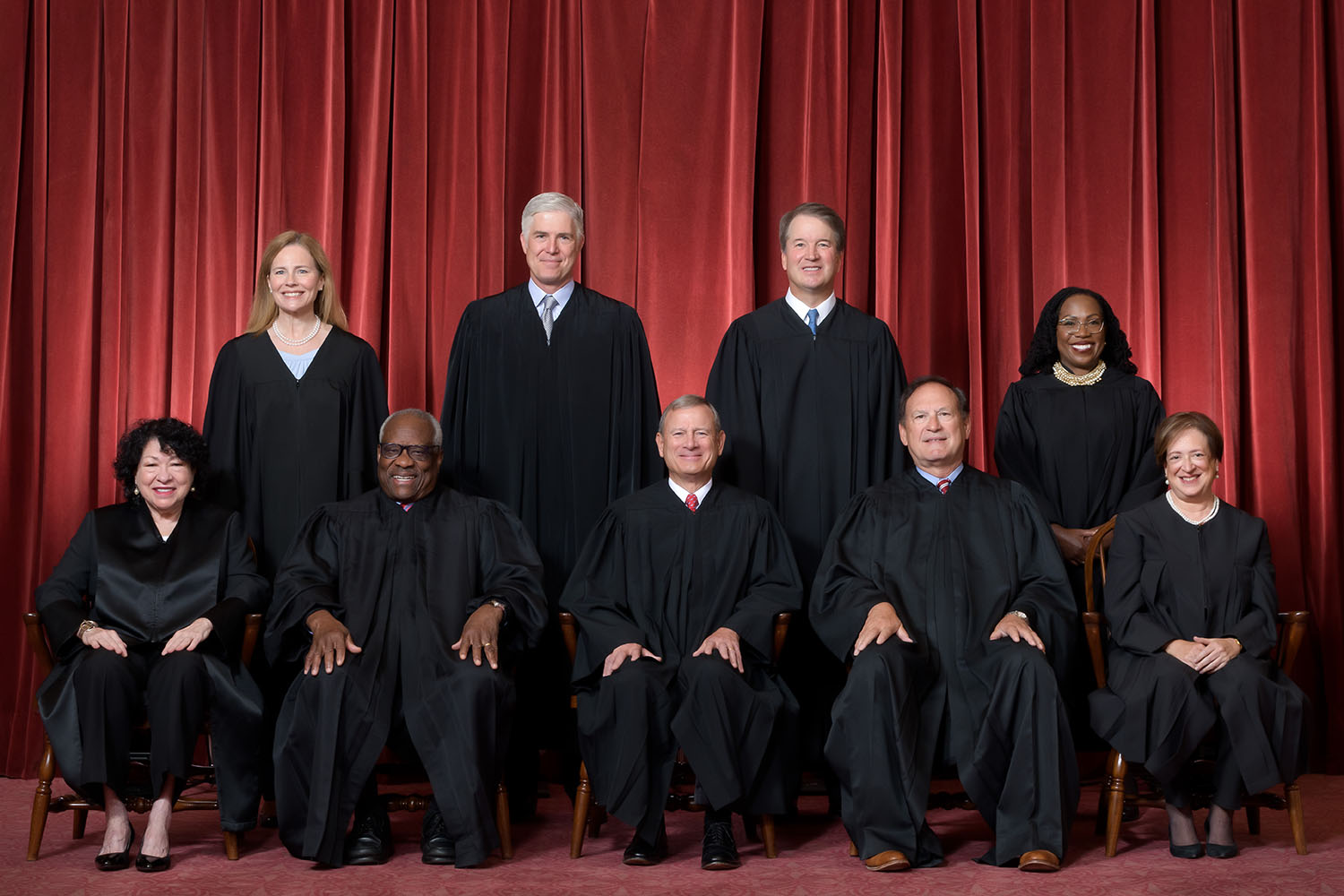
With the Supreme Court reviewing the standard used when the NLRB seeks injunctions that cement unions in power, the Foundation told the High Court such injunctions should not be allowed to infringe on workers’ legitimate right, under federal labor law and the Constitution, to oppose unionization.
WASHINGTON, DC – “Heads I win, tails you lose”: That’s how a brief filed by National Right to Work Foundation staff attorneys with the U.S. Supreme Court describes the Biden National Labor Relations Board’s (NLRB) argument that worker opposition to a union should count as a reason to impose union bosses’ demands on a workplace. The Supreme Court agreed to hear a case on this issue in January, with arguments scheduled for late April.
“Evidence that employees support a union is taken to mean they want to support the union,” the brief says. “Evidence that employees oppose a union is taken to mean their employer must have wrongfully caused the employees not to support the union. All evidence conveniently leads to the conclusion desired by current NLRB leadership: employees should support unions.”
The Foundation’s brief before the High Court in Starbucks v. McKinney discusses how NLRB officials use this radical assumption to urge federal courts to hit employers with “10(j) injunctions” that coerce the employers to give into certain union-demanded behavior. As Foundation attorneys explain, the NLRB often tells courts that worker discontent with a union is a “harm” that the courts should rectify with a 10(j) injunction.
Foundation in Starbucks Case: Worker Opposition to a Union is a Basic Right
Foundation staff attorneys push back on this theory in their legal brief, arguing that an employee’s decision to not support a union is not a “harm,” but a “legitimate choice [they] have a right to make” under both the National Labor Relations Act (NLRA) and the First Amendment to the Constitution.
Union bosses and their allies in the NLRB want the U.S. Supreme Court to establish a rule in Starbucks v. McKinney that permits injunctions against employers if their alleged conduct could potentially coerce workers into not supporting a union. Foundation attorneys instead argue that “the Court must require the NLRB to prove employees were unlawfully coerced not to support a union because, absent such proof, employees have every right to make that choice” (emphasis added).
Starbucks Workers Challenging NLRB Constitutionality
In addition to fighting cynical attempts by Biden NLRB bureaucrats to turn worker opposition to unions into a reason to beef up union officials’ coercive power, Foundation attorneys are assisting two groups of Starbucks workers with federal lawsuits challenging the constitutionality of the Biden NLRB as a whole.
The newest effort comes from San Antonio, TX-area Starbucks employee Reed Busler and his coworkers. They submitted a petition to the NLRB containing enough employee signatures to prompt a vote to “decertify,” or remove, the SBWU union. But an NLRB Regional Director blocked the vote based on union allegations of employer misconduct that have no proven connection to Busler and his colleagues’ effort to vote out the union. Busler himself noted in an NLRB filing that the move to decertify started “because the Union was a divisive force in our store” and ignored workers.
Busler has filed a federal lawsuit against the NLRB arguing its structure violates the Constitution’s separation of powers doctrine because NLRB Board Members are insulated from at-will removal. The lawsuit seeks an injunction that halts the NLRB from proceeding with his decertification case until his federal lawsuit is resolved.
“Starbucks is becoming ‘ground zero’ for several key battles over worker freedom,” commented National Right to Work Foundation Vice President Patrick Semmens. “Underlying a large portion of the drama is the NLRB’s flawed theory that workers’ exercise of their right to oppose unions is an evil to be eradicated, which unions and their allies in the NLRB bureaucracy are trying to use to force down their agenda on workplaces across the country.
“An even bigger issue, however, is the fact that the NLRB has for decades operated as a kangaroo court run by powerful bureaucrats who exercise unaccountable power in violation of the Constitution,” Semmens added. “American employees shouldn’t be forced to fight for their rights in such a pro-union boss environment.”
Sofitel Lafayette Square Employees Have Successfully Obtained Secret Ballot Vote to Remove Unite Here Union from Hotel
Hotel employees’ petition seeks to challenge union’s installation without a vote through abuse-prone “card check” process
Washington, DC (May 28, 2024) – After Unite Here union officials imposed union control over hotel employees without a secret ballot vote, workers at Sofitel Washington DC Lafayette Square have successfully obtained an election to remove the union. Sofitel employee Mwandu Chibwe submitted on May 15 a petition asking the National Labor Relations Board (NLRB) to hold a decertification election at her workplace. Ms. Chibwe is receiving free legal aid from the National Right to Work Legal Defense Foundation.
The NLRB is the federal agency responsible for enforcing federal labor law, which includes administering elections to install (or “certify”) and remove (or “decertify”) unions. Ms. Chibwe’s decertification petition contains well over the threshold of employee signatures needed to trigger a decertification vote under NLRB rules. The agency has now scheduled a vote to take place at her workplace on June 6, 2024.
Unite Here Local 25 union officials gained power in Ms. Chibwe’s workplace in March through a process called “card check,” which bypasses workers’ right to have an NLRB-administered secret ballot election and instead grants monopoly bargaining power to union officials on the basis of union-solicited “authorization cards.” During a card check drive, union officials can confront workers directly and demand they sign cards, a process that is often rife with threats and misinformation from union officials. Even AFL-CIO organizing manuals admit that workers often sign authorization cards during a card check drive to “get the union off my back.”
Because the District of Columbia lacks Right to Work protections for its private sector workers, Unite Here union officials have the legal privilege to enforce contracts that require employees to pay dues or fees as a condition of getting or keeping a job. In Right to Work states, in contrast, union membership and financial support are strictly voluntary. A successful decertification vote strips union officials of their monopoly bargaining and forced-dues powers.
Biden Administration Attacking Reforms That Give Workers Opportunity to Vote Out Unions
“I believe that the majority of my fellow employees actually oppose this union and don’t want union bosses trying to speak for them,” Ms. Chibwe commented. “While I wish Unite Here had just respected our right to vote from the beginning, I’m glad we’re getting a chance to vote now.”
Ms. Chibwe and her colleagues were able to obtain an election to remove the union under the auspices of the Election Protection Rule (EPR), a set of Foundation-backed reforms that safeguards workers’ right to have secret ballot votes in the face of various coercive union tactics. The EPR gives workers 45 days after the conclusion of a card check campaign to challenge the union’s claims of majority support by filing petitions for union decertification elections. This process was pioneered by Foundation staff attorneys in the 2007 Dana Corp. NLRB decision; though the Obama NLRB overturned that decision, “Dana elections” were reestablished with the EPR.
The EPR also limits union officials’ ability to delay or stop worker-requested union decertification votes by filing so-called “blocking charges” alleging employer misconduct.
The NLRB adopted the EPR in 2020. However, the Biden NLRB is in the process of rulemaking to eliminate the EPR, as part of its broader agenda to give union bosses more tools to corral workers into unions despite polling showing most American workers are “not interested at all” in joining a union.
“Lafayette Square Sofitel employees successfully petitioned for a vote on whether to remove Unite Here officials, and they did so just steps away from the residence of the man whose administration is trying to strip them of that right – Joe Biden,” commented National Right to Work Foundation President Mark Mix. “We’re proud that Ms. Chibwe and her colleagues will get their requested union decertification vote. But it’s outrageous that the Biden NLRB will soon condemn workers to a future where they can be forced into union-controlled ranks with little or no opportunity to vote in secret or otherwise challenge union bosses’ power grabs, and then become subject to forced-dues obligations and other union demands.”
Foundation Brief Exposes ILA Union Scheme to Destroy 270 Nonunion Port Jobs
Note: After this article was originally published, the Supreme Court declined to hear the case. The following article is from the National Right to Work Legal Defense Foundation’s bi-monthly Foundation Action Newsletter, January/February 2024 edition. To view other editions of Foundation Action or to sign up for a free subscription, click here.
Biden NLRB gutted union boycott prohibition under guise of ‘work preservation’
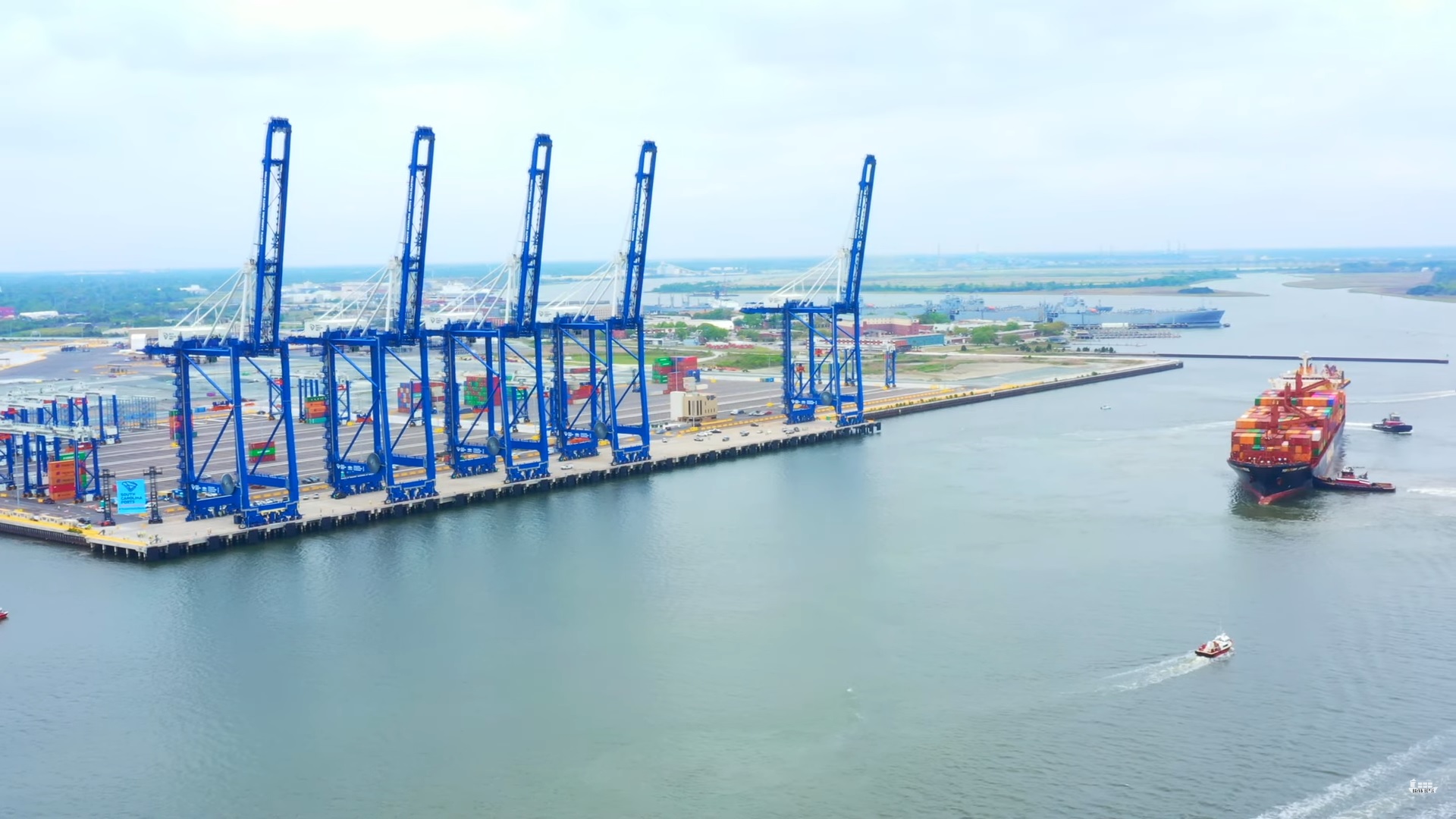
Despite employing hundreds of both union and nonunion employees and being a big boon to the Palmetto State’s economy, ILA union bosses want to shut down Charleston’s Leatherman Terminal until they gain a monopoly on jobs at the port.
CHARLESTON, SC – Charleston’s Hugh K. Leatherman shipping terminal represents the State of South Carolina’s roughly $1 billion investment to expand the state’s shipping sector. The terminal sports five massive ship-to-shore cranes, which rank among the tallest on the East Coast. Nonunion crane operators — state employees who have handled such work since Leatherman opened in 2021 and for years before that at other port facilities — work alongside unionized private sector employees to keep the port running.
But union bosses of the International Longshoremen’s Association (ILA) think that the port should be effectively shut down until they get control over all jobs at the facility — even the crane jobs that the union’s members have never performed. They’ve backed up that coercive vision by suing any cargo carrier that docks at Leatherman until the union gains control of
all crane lift equipment jobs at the facility. In December 2022, the Biden National Labor Relations Board (NLRB) outrageously ruled 2-1 against a challenge by the South Carolina Ports Authority (SCPA), holding that ILA union bosses’ secondary boycott scheme was lawful. Then the U.S. Court of Appeals, also by a 2-1 vote, affirmed that disastrous ruling.
Foundation Highlights Workers’ Plight After Disastrous Decision
As the U.S. Supreme Court now decides whether to hear the case, National Right to Work Foundation staff attorneys filed a legal brief with the High Court highlighting how the Biden NLRB’s rejection of longstanding precedent will let 270 nonunion state employees at Leatherman be put out of work. That’s despite them having done nothing wrong when performing crane work exactly as they have for years.
“In short, the decisions below, if affirmed, will cause grievous harm to 270 non-union Ports Authority workers and their families,” the brief reads. “The Foundation submits this brief to provide a voice for the otherwise voiceless non-union Ports Authority workers, so the Court has a clear view of the stakes involved for the workers and their families if the decisions below stand.”
Job-Destroying ILA Union Gambit Breaks Federal Law
The brief states that the ILA union’s scheme, if allowed to continue, would require South Carolina to both fire the nonunion state employees of the port, and then turn control of crane jobs over to a private company with an ILA union contract. That’s because South Carolina protects its public sector employees by banning union monopoly bargaining.
If the union’s gambit succeeds, the devastating effects for current employees would go beyond just getting fired. The brief reveals that, even if terminated state workers were to seek new employment at Leatherman with the private company under the union’s control, the ILA would likely give hiring priority to its existing unionized workers above the former state workers under the union seniority provisions and hiring hall referral rules contained in the contract.
“Crane and lift operators who have spent years as non-union Ports Authority employees will likely find themselves at the bottom of any ILA hiring hall list behind the union’s 2,000 current members,” the brief notes.
Additionally, the brief points out that the ILA union’s scheme violates the prohibition on secondary boycotts in the National Labor Relations Act (NLRA), the federal law the NLRB is responsible for enforcing. Secondary boycotts involve union agents targeting a neutral employer (in this case, cargo carriers) in order to win a labor dispute that the neutral employer isn’t even party to.
Finally, the brief notes, by granting the ILA control over the jobs of state employees who have never chosen to affiliate with the ILA, the NLRB is undermining the NLRA’s fundamental premise of employee free choice — the rule that “the employees pick the union; the union does not pick the employees.”
Supreme Court Must Intervene to Defend Worker Rights
“ILA union officials have a well-earned reputation for valuing power over the well-being of workers,” commented National Right to Work Foundation Vice President and Legal Director William Messenger. “While pursuing monopolistic schemes like this that upend the livelihoods of innocent nonunion workers, union agents were also organizing deals in which mob-linked longshoremen from New York and New Jersey could get paid for 27 hours of ‘work’ per day.
“The ILA union’s gambit here should be deemed no less illegal than their interactions with mob members, and the Biden NLRB’s greenlighting such a scheme effectively invites other union bosses to try unlawful secondary boycotts that end with workers and businesses suffering needless harm,” Messenger added.
Tire Wholesaler Employees Force RWDSU Union Out of 15 Locations
The following article is from the National Right to Work Legal Defense Foundation’s bi-monthly Foundation Action Newsletter, January/February 2024 edition. To view other editions of Foundation Action or to sign up for a free subscription, click here.
RWDSU union officials abandon 500+ employee unit ahead of vote at tire wholesaler
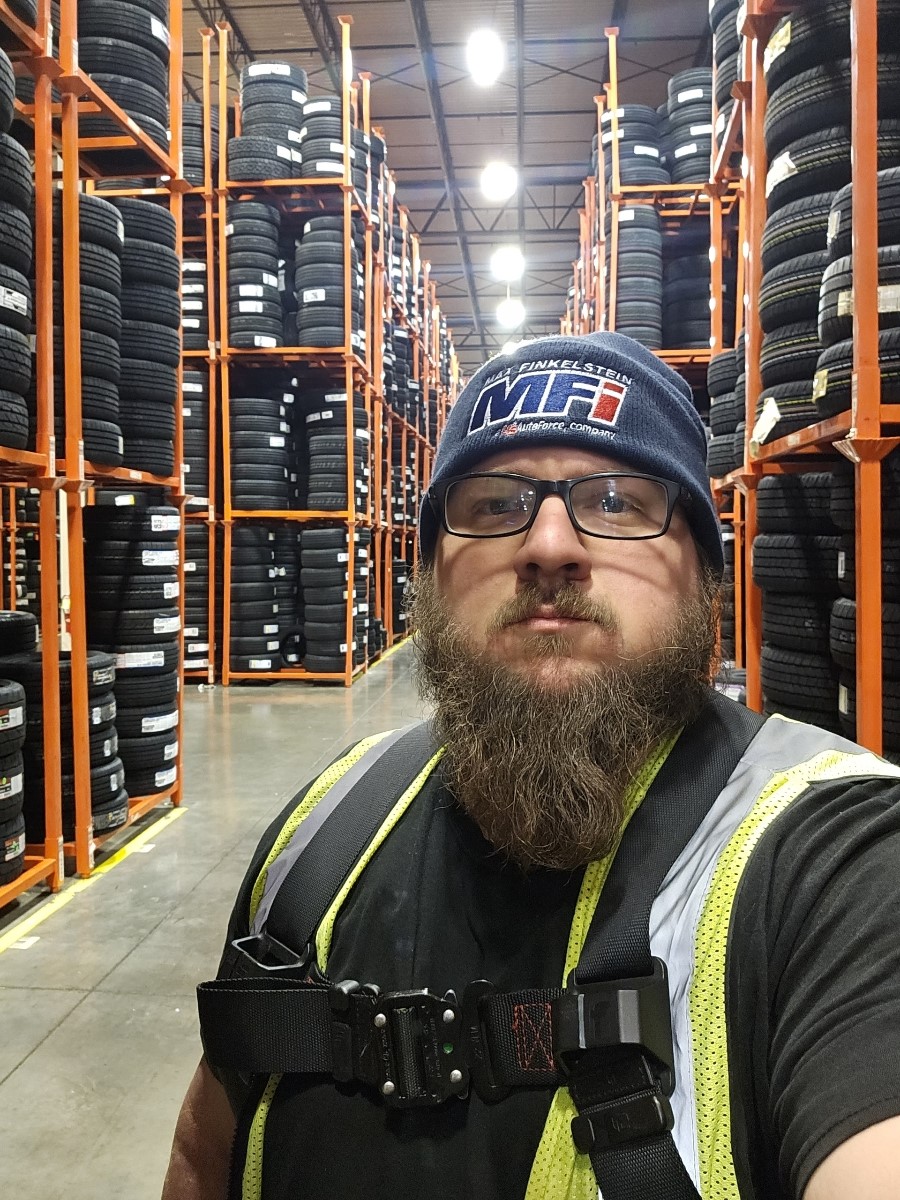
Tire-d of the RWDSU: Chris Dorney submitted a huge number of signatures from his coworkers at tire wholesaler Max Finkelstein when petitioning the NLRB for a vote to remove the RWDSU union.
WINCHESTER, VA – The Biden National Labor Relations Board (NLRB), which includes among its members two former union bosses from the Service Employees International Union (SEIU), is pursuing an agenda that hasn’t exactly been making it easy for workers to vote out a union they don’t want. But that hasn’t stopped workers across the country from going to extraordinary lengths to kick out unions that don’t serve their interests.
In October 2023, Chris Dorney, a Winchester, VA-based employee of tire wholesaler Max Finkelstein, kick-started a cross-country effort to vote the Retail, Wholesale and Department Store Union (RWDSU) out of 15 warehouse facilities across the eastern United States. This work unit included more than 500 employees across Virginia, Maryland, Massachusetts, Pennsylvania, New York, New Jersey, Vermont, Maine, and Connecticut.
Virginia Worker Mustered Strong Showing on Petition for Union Ouster Vote at Tire Wholesaler
With free legal aid from the National Right to Work Foundation, Dorney submitted a petition to the NLRB containing more than enough employee signatures to trigger a vote to remove the union from the large unit.
While Dorney and his fellow Virginia employees enjoyed the Right to Work freedom to opt-out of dues payments to the union, the same couldn’t be said for any of the other employees, all of whom hail from states where dues payments can be mandated as a condition of employment. But voting RWDSU bosses out of power entirely at the tire wholesaler would end the union’s forced-dues power.
“We warehouse workers and drivers at Max Finkelstein may be from many different facilities in many different states, but we are in agreement about one thing: RWDSU union officials don’t represent our interests,” Dorney said of the effort. “It’s our right under federal law to challenge RWDSU’s forced representation power.”
RWDSU Bosses Flee Unit as Union Officials Rack Up Losses Nationwide
However, before the vote could occur, RWDSU union officials disclaimed interest in continuing their monopoly representation powers over the unit, likely to avoid an embarrassing rejection by workers at the ballot box.
Unionized workers are increasingly requesting elections to remove unwanted unions — a potential reason for the Biden NLRB’s efforts to crack down on decertification votes. Additionally, union bosses are increasingly losing these contests. As of last year, filings for union decertification votes had shot up by over 40 percent since 2020. Of decertification elections that occurred, the number which resulted in union bosses losing went up by 72 percent.
“Mr. Dorney and his coworkers’ effort to kick out the RWDSU union, which spanned several states, 15 facilities, and hundreds of workers, is yet another example that workers often want to escape union officials’ one-size-fits-all agenda. It’s also a demonstration that workers will go to great lengths in order to exercise this right,” commented National Right to Work Foundation Vice President Patrick Semmens. “But the Biden NLRB, bent on empowering the President’s union boss political allies, plans to grant unions even more power to defeat workers’ will.”
Foundation Lawsuit: Biden NLRB Structure Violates the U.S. Constitution
The following article is from the National Right to Work Legal Defense Foundation’s bi-monthly Foundation Action Newsletter, November/December 2023 edition. To view other editions of Foundation Action or to sign up for a free subscription, click here.
Groundbreaking suit filed for Starbucks employee who was denied vote to oust unwanted union bosses
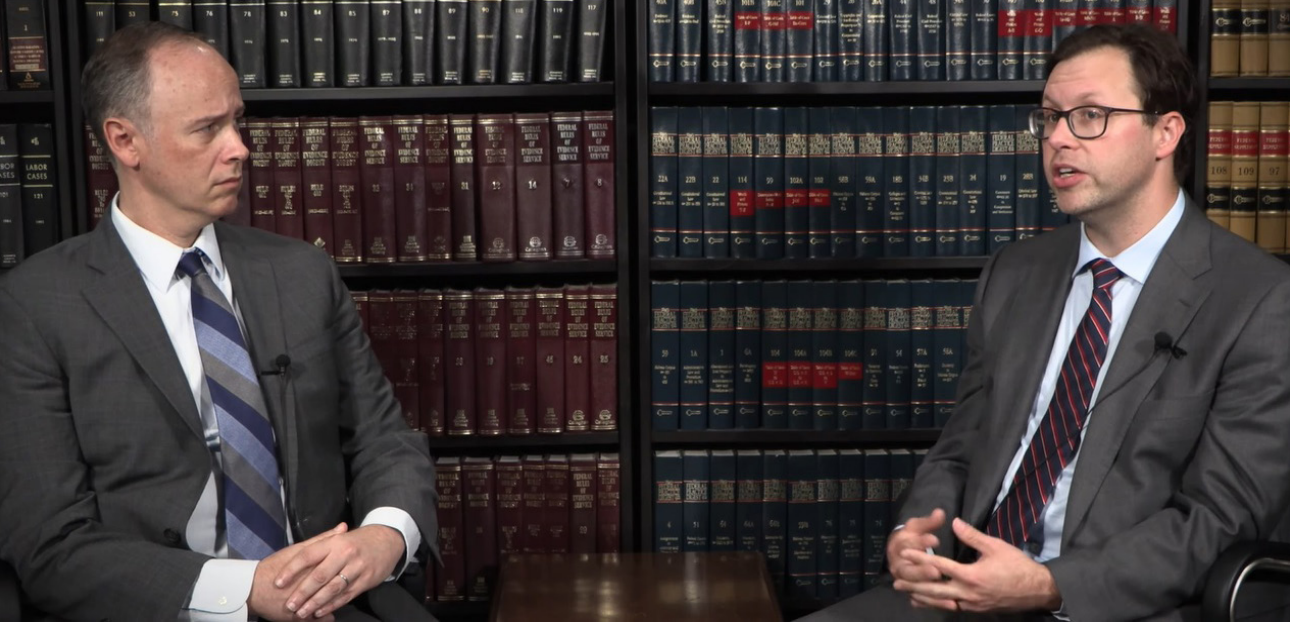
Starbucks employee Ariana Cortes’ Foundation attorney, Aaron Solem (right), is making a cutting-edge argument targeting the NLRB’s lack of accountability.
WASHINGTON, DC – The National Labor Relations Board (NLRB) is supposed to protect the right of workers to freely choose whether to associate with a union or not. The NLRB is also charged with holding unions and employers accountable when they violate worker rights. Too often, however, it has simply acted as an agency that generates policies to entrench union bosses’ power over workers while shielding union bosses from any kind of liability.
A new federal lawsuit from a National Right to Work Foundation-backed Starbucks employee, currently pending at the D.C. District Court, could upend the federal agency and result in a ruling that the current Labor Board’s structure violates the Constitution.
Employee Challenges NLRB Bureaucrats’ Protections from Presidential Removal
Ariana Cortes, a worker at the Buffalo, NY, “Del-Chip” Starbucks branch, hit the NLRB with the groundbreaking lawsuit in October, contending that the federal agency’s current structure violates the separation of powers mandated by the Constitution.
Cortes’ suit follows Foundation attorneys’ defense of her and her coworkers’ petition requesting a vote to remove Starbucks Workers United (SBWU) union officials from their workplace. Regional NLRB officials dismissed Cortes’ majority-backed petition based on SBWU allegations against Starbucks management that have no proven connection to Cortes and her coworkers’ desire for a union decertification vote.
Cortes’ lawsuit argues that because NLRB members cannot be removed at-will by the President, the NLRB’s structure violates Article II of the Constitution. Under Article II, the lawsuit contends, the President must have the power to remove officials that exercise substantial executive power.
Because the NLRB enforces federal labor law, manages union elections, and can issue legally binding rules and regulations, the lawsuit contends that the agency exercises substantial executive power. Therefore, it falls within the scope of the President’s power to remove officials at will. However, the National Labor Relations Act (NLRA), the law that established the NLRB, restricts the President’s ability to remove Board members except for neglect of duty or malfeasance.
“[T]hese restrictions are impermissible limitations on the President’s ability to remove Board members and violate the Constitution’s separation of powers. Thus, the Board, as currently constituted, is unconstitutional,” the complaint states.
Lawsuit: Unconstitutional NLRB Proceedings Must Stop
Cortes’ new federal lawsuit seeks a declaration from the District Court that the structure of the NLRB as it currently exists is unconstitutional.
“For too long the NLRB, especially the current Board, has operated as a union boss-friendly kangaroo court, complete with powerful bureaucrats who exercise unaccountable power in violation of the Constitution,” commented National Right to Work Foundation Vice President and Legal Director William Messenger. “The NLRB’s operation outside constitutional norms is easily exploited by Big Labor.”
“But as the story of Ms. Cortes shows, the NLRB’s unchecked power creates real harms for workers’ rights, especially when workers seek to free themselves from the control of union bosses they disagree with,” Messenger added.
Seattle Mariners Retail Employee Challenges Seattle NLRB Officials’ Refusal to Certify Overwhelming Vote Against Union
By not certifying vote of over 80+ percent against UFCW, NLRB Region 19 officials permit union to dodge legal consequences of losing vote
Seattle, WA (October 20, 2023) – Following an overwhelming workplace vote to remove United Food and Commercial Workers (UFCW) union officials, Seattle Mariners MLB retail employee Tami Kecherson filed a Request for Review defending the election result at the National Labor Relations Board (NLRB) in Washington, DC. The Request for Review comes after NLRB Region 19 officials in Seattle refused to certify the 50-9 vote result, and instead permitted UFCW union officials to “disclaim” interest in the bargaining unit and avoid restrictions on regaining control over the employees that normally apply to unions that lose elections.
National Right to Work Foundation staff attorneys are providing free legal aid to Kecherson in her effort to defend the election victory. The Request for Review recounts that, after the worker-requested union decertification vote finally took place, UFCW union officials filed “blocking charges” against Mariners management in an attempt to delay the certification of the vote. “Blocking charges” contain unverified and often groundless allegations of employer interference in a union election.
NLRB Region 19’s investigation of UFCW officials’ “blocking charges” delayed the certification of the employees’ vote for months, the Request for Review notes, but in September UFCW bosses withdrew their apparently frivolous blocking charges and instead filed paperwork announcing they were “voluntarily” leaving the facility.
When Foundation attorneys contacted NLRB Region 19 to determine when the vote certification would occur now that the meritless charges were withdrawn, NLRB officials instead declared that certification would not occur, presumably because the union had just disclaimed interest and walked away. Further, NLRB officials effectively stated that the UFCW union would be allowed to skirt the statutory one-year restriction on regaining control in the workplace that applies to unions that lose elections, and would only be barred from the workplace for a much shorter period.
“This is akin to an employee fired for insubordination yelling ‘you can’t fire me, I quit,’ but only much worse,” the Request for Review argues. “That is so because Region 19 is arbitrarily allowing Local 3000 to get away with a rather grotesque form of gamesmanship…This cannot be allowed to occur under the [National Labor Relations Act] and the Board’s rules.”
Union Legal Maneuvering Shouldn’t Be Allowed to Diminish Worker Vote
Foundation-backed reforms that the NLRB adopted in 2020 (also known as the “Election Protection Rule”) permitted the Seattle Mariners employees to challenge UFCW officials’ ascent to power, which the union accomplished via “card check” – a scheme that bypasses the NLRB secret-ballot election process. The Election Protection Rule permitted the employees to petition for a secret ballot decertification election and vote the union out after the card check occurred. However, the Biden NLRB has already announced a proposal to repeal the “Election Protection Rule” and make card check organizing drives much harder for employees to contest.
In light of that, the one-year period of freedom from union control that the NLRB denied the Seattle Mariners workers is absolutely vital. Without it, UFCW officials could move to foist the union back on the employees through card check in less than a year, and, if the Election Protection Rule has been wiped out by then, the workers may be unable to challenge the card check with a secret ballot vote.
“The game UFCW union officials are playing with Seattle Mariners employees’ rights is sinister, but obvious: Game the system to avoid the full consequences of losing an election among the workers they claimed to ‘represent,’” commented National Right to Work Foundation President Mark Mix. “It doesn’t help that the Biden NLRB is simultaneously pursuing policies that make it nigh impossible for employees to free themselves of the control of union officials who attempt such manipulation.”
“Refusing to certify an overwhelming worker vote against a union due simply to union legal maneuvering is disrespecting workers’ free choice rights, plain and simple,” Mix added.
Passaic, NJ, Woodworking Employees Win Two-Year Legal Battle to Oust Unwanted Carpenters Union Officials
Patella employees’ ordeal shows how union officials trap workers in unions they oppose, yet Biden NLRB is moving to make union decertification even harder
Passaic, NJ (September 8, 2023) – Following the third attempt by employees of Passaic-based woodworking firm Patella to obtain a vote to remove them, Carpenters Local 252 union officials have backed down and abandoned the facility. The union’s disclaimer of interest, received last week by National Labor Relations Board (NLRB) Region 22, caps off a years-long legal battle between Patella employees and recalcitrant Carpenters union officials. The workers ousted the union with free legal aid from staff attorneys at the National Right to Work Legal Defense Foundation.
Patella employee Steve Urso led the effort to vote out the union, which began in July 2021 with the filing of a petition requesting an NLRB-administered vote to decertify the Carpenters union. Union officials used unverified allegations of employer misconduct, also known as “blocking charges,” to derail attempts by Urso and his colleagues to oust the union. Urso filed the most recent decertification petition near the end of August 2023, and instead of seeking to continue their control over the clearly dissatisfied Patella workers, Carpenters union officials finally moved to leave the facility.
Because New Jersey lacks Right to Work protections for its private sector workers, Carpenters union officials had the power to force Urso and his coworkers to pay at least some union dues as a condition of keeping their jobs. In contrast, in states with Right to Work laws, union bosses can’t enter agreements with employers that force employees to fork over a portion of their paychecks to the union just to get or keep a job.
Carpenters Union Used Unproven Allegations Against Management to Block Employees from Voting
“Carpenters union bosses completely ignored our wishes for years, and apparently thought violating our rights and continuing to collect dues was better than simply letting us vote on whether we thought they deserved to stay,” Urso commented. “It’s extremely unfair that Carpenters officials were able to manipulate NLRB rules and processes for as long as they did to keep us trapped under union ‘representation’ that we opposed, but we didn’t give up and we’re glad we’re finally out.”
After Urso submitted the first employee-backed decertification petition in July 2021, an election did occur, but the ballots were never tallied after Carpenters officials filed “blocking charges” against the employer. Carpenters union bosses stopped a vote from occurring at all after Urso’s second attempt, again using “blocking charges.” Patella management settled the charges in February, but afterward Carpenters union officials did not request any bargaining sessions with the employer.
The Carpenters union’s disclaimer of interest followed Urso’s third petition. Now that the NLRB has certified the disclaimer, Urso and his colleagues are finally free of the unwanted union.
Biden NLRB Seeks to Empower Union Officials While Undermining Workers Who Seek Votes
Urso and his colleagues’ hard-fought victory comes as the Biden NLRB in Washington, D.C., is attempting to make it even more difficult for workers to obtain votes to remove unwanted unions, while giving union officials more tools to gain power in a workplace without a vote. The NLRB will soon issue a final rule overturning the Election Protection Rule, a Foundation-backed 2020 reform which made commonsense improvements to the decertification process.
The Rule’s repeal will grant union officials even greater power to use “blocking charges” to stop union decertification elections from happening. The repeal will also block workers from seeking a union decertification vote for a year after union bosses attempt to impose unionization by “card check.”
The card check process lets union officials bypass the NLRB’s traditional secret ballot vote procedures and instead allege majority support by collecting union authorization cards directly from workers – often using coercive or intimidating tactics. Foundation attorneys are currently aiding a group of paramedics and EMTs in Sonora and Groveland, California, who were unionized by card check only to vote to remove Steelworkers union bosses a few months later.
“Instead of defending the individual rights of workers across the country who are seeking to vote out union officials they oppose, the Biden NLRB is instead trying to make it harder than ever for workers to obtain an election,” commented National Right to Work Foundation President Mark Mix. “As Mr. Urso, his colleagues, and countless other workers can attest, the NLRB process for workers to remove a union they oppose is already far too difficult.”
“The Biden NLRB’s continued moves to stifle worker decertification efforts demonstrate yet again that they and their union boss allies are focused on gaining greater control over workers and their pocketbooks – not on employees’ freedom of association,” added Mix.
Foundation Slams NLRB, ILA Union Officials in Brief to Fourth Circuit Court
The following article is from the National Right to Work Legal Defense Foundation’s bi-monthly Foundation Action Newsletter, July/August 2023 edition. To view other editions of Foundation Action or to sign up for a free subscription, click here.
Foundation defends union-free SC port workers who would lose their jobs under NLRB ruling
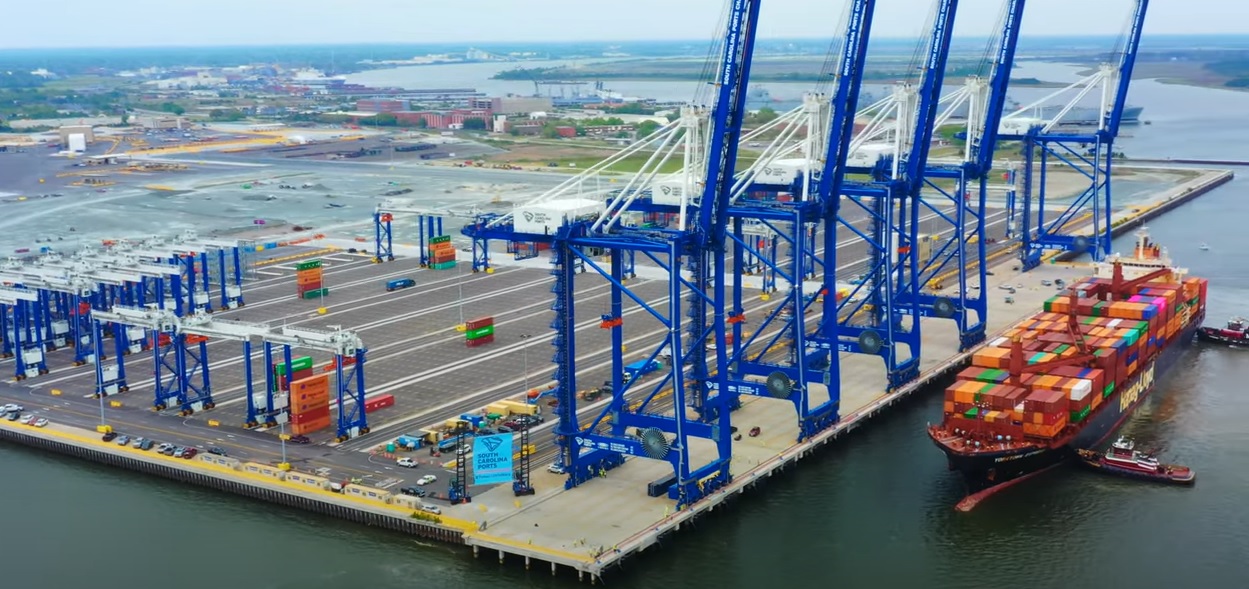
Foundation staff attorneys are fighting to ensure that Charleston’s state-of-the-art Hugh K. Leatherman Terminal doesn’t become a safe harbor for ILA union bosses’ anti-worker schemes.
CHARLESTON, SC – National Right to Work Foundation staff attorneys have joined the fight against the International Longshoremen’s Association (ILA) union’s ongoing gambit to idle Charleston’s state-of-the-art Hugh K. Leatherman Terminal if the union can’t get control of all jobs at the facility.
Hostile Union Power Play Seeks to Put Non-Union Workers Out of Job
The Foundation recently filed a legal brief with the Fourth Circuit Court of Appeals in the case South Carolina Ports Authority (SCPA) v. National Labor Relations Board (NLRB). In the case, the SCPA is challenging the Biden NLRB’s ruling permitting ILA union bosses to file multi-million-dollar lawsuits against any cargo carrier that docks at Leatherman until the union gains control of all crane lift equipment jobs at the facility.
Since its opening in March 2021, some of the work at Leatherman Terminal has been performed by non-union state employees, some of whom have worked for the SCPA for years. The brief argues that if ILA union bosses’ power grab succeeds, it will “cause grievous harm to 270 State port workers and their families.”
The Foundation “submits this brief to provide a voice for the otherwise voiceless non-union State employees, and to give the Court a unique perspective on the stakes involved for those workers and their families,” the brief states. The brief highlights the dire consequences of the ILA maneuver for control of Leatherman’s 270 employees, who are otherwise protected by state law from monopoly union control.
According to the brief, South Carolina spent over $1 billion to develop the terminal, but due to the ILA’s power grab “the only way for South Carolina’s $1 billion Leatherman Terminal to be usable would be for the State to turn the facility over to a private employer with an ILA contract and discharge the 270 State employees.” The devastating effects for current employees and their families wouldn’t stop there if the ILA is victorious in the case. Even if the fired state workers were to seek new employment at Leatherman with a private contractor under the union’s control, the ILA union’s seniority provisions and hiring rules would likely bar them from being rehired.
ILA Union Officials Have History of Corruption
The attempt by ILA union officials to seek total control over workers at the Leatherman terminal is hardly the only underhanded tactic the ILA has been linked to. In 2022, the New York Daily News reported ILA chiefs negotiated “deals” where mob-linked longshoremen in New York and New Jersey could get paid for 27 hours of “work” per day.
“ILA union officials, with assistance from the NLRB, are directly working to destroy the livelihoods of these 270 South Carolinians,” commented National Right to Work Foundation Vice President Patrick Semmens. “The NLRB’s blatant disregard of the rights and wellbeing of workers and siding with union tyrants is outrageous.”
“The non-union port workers who have called Leatherman their workplace for over a decade must be protected,” added Semmens.
Foundation Blasts Biden NLRB’s Proposed Rule to Trap Workers in Unions
The following article is from the National Right to Work Legal Defense Foundation’s bi-monthly Foundation Action Newsletter, May/June 2023 edition. To view other editions of Foundation Action or to sign up for a free subscription, click here.
Former union lawyers target Foundation-backed reforms easing removal of unpopular unions
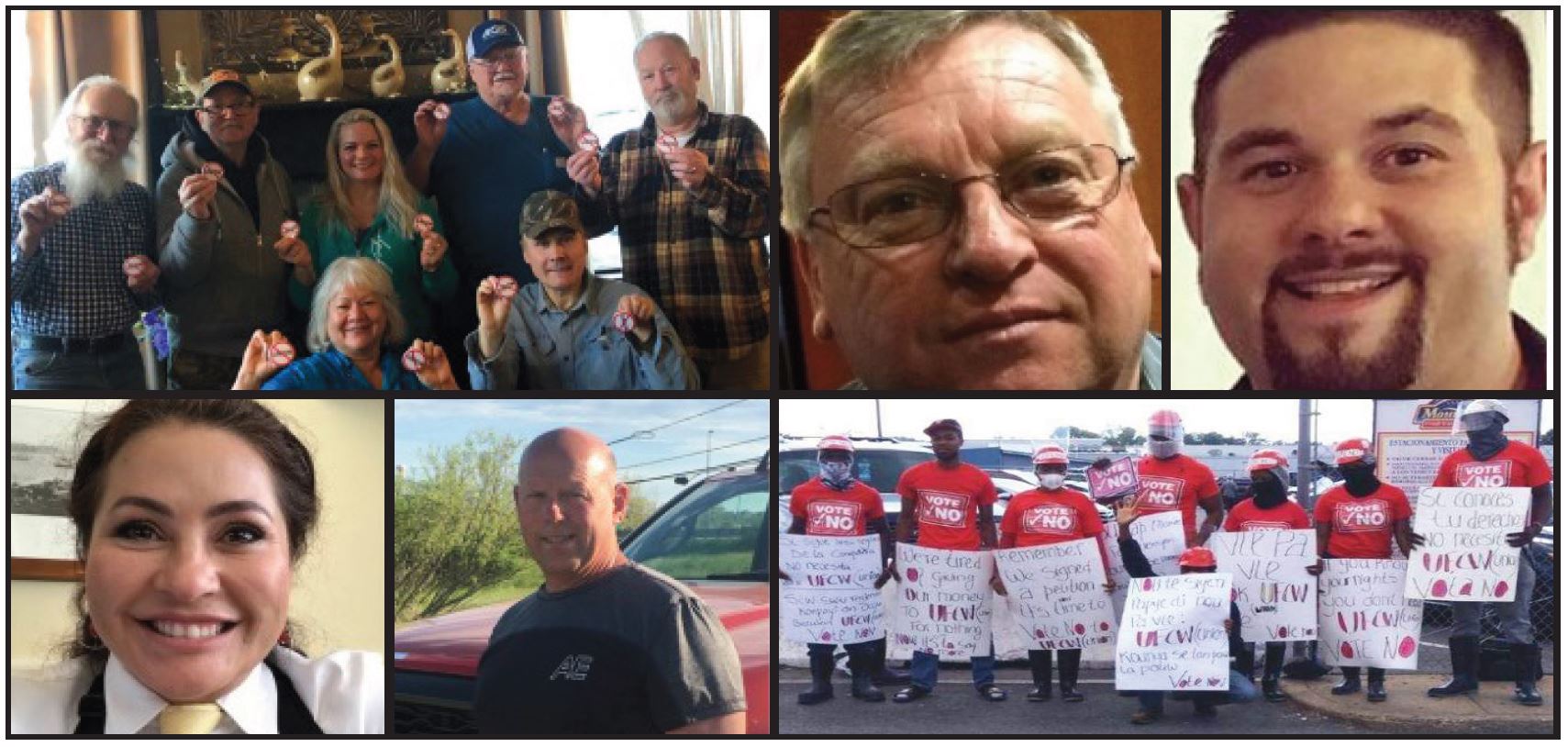
In its comments to the NLRB, the Foundation emphasized its leading role in defending workers’ right to vote out unwanted unions. Above are just a few workers whom Foundation attorneys have aided recently in decertification efforts.
WASHINGTON, DC – Bureau of Labor Statistics data show that over 90 percent of American workers have chosen not to affiliate with a union, and recent polling by Gallup shows non-union workers are overwhelmingly “not interested at all” in unionization. This isn’t a surprise considering modern day union officials’ overwhelming focus on politics, the way that monopoly “representation” often disadvantages the best employees, and union bosses’ “pay up or be fired” demands leveled at workers in non-Right to Work states, among other reasons.
The National Right to Work Foundation helped create an easier path for employees to vote out union officials they oppose by filing comments in support of the “Election Protection Rule,” which the National Labor Relations Board (NLRB) adopted in 2020. The Foundation-backed Rule eliminated several non-statutory NLRB policies that union officials manipulate to block any attempt by employees to vote them out of a workplace.
Now, former union lawyers Biden appointed to the NLRB are repaying the President’s union boss political allies by moving to eliminate the Election Protection Rule, thus restoring to union officials several coercive methods used to trap workers in unions they oppose by making it more difficult for employees to successfully petition for a decertification election.
The Foundation slammed the plan in February comments filed with the NLRB, maintaining that the rule change will trample workers’ statutory right to vote out unions they oppose while entrenching unpopular union officials. Foundation attorneys followed up with reply comments in March, which refuted several arguments union officials and Biden’s NLRB General Counsel put forth in comments supporting the Election Protection Rule’s elimination.
Biden NLRB Will Again Let Union Officials Weaponize Unproven ‘Blocking Charges’
The Foundation’s comments explain that, if the Election Protection Rule is tossed, union officials will again be able to exploit often-unproven allegations of employer unlawful behavior to delay employee-requested union decertification votes. Prior to the 2020 reforms, union officials could often stall a decertification vote for months or even years by filing these so-called “blocking charges.”
The 2020 Election Protection Rule overturned the blocking charge policy, so workers are currently allowed in most cases to cast ballots in a decertification vote before the NLRB deals with any allegations surrounding the election. This procedure eliminates the incentive outright deception. Once recognized via this card check process, under the NLRB proposal there will be a year-long non-statutory bar, during which unions are immunized from decertification attempts.
The Election Protection Rule gives employees the opportunity to challenge the union’s claim of majority support during a 45-day window period beginning upon notice of recognition. If workers collect a sufficient showing of interest for an election and file it during the 45-day window, the NLRB will hold an election in that bargaining unit. This provides a check against the most egregious card check campaigns. Barring these worker-submitted union decertification petitions “only shields what may well be a minority union from challenge” and “destroys employees’ [statutory] rights,” the Foundation’s comments say.
Worker Majority Support Doesn’t Matter for Union Elites
The comments also oppose the Biden NLRB’s plan to let union officials subject construction workers to monopoly union so-called “representation” without providing evidence of any individual worker’s support for such control, let alone a majority.
“The move to eliminate the Election Protection Rule will re-impose arbitrary policies that trample workers’ rights and allow union bosses to maintain power despite the overwhelming opposition of rank-and-file workers,” observed National Right to Work Foundation Vice President Patrick Semmens.
“The Biden NLRB, now stocked with former union lawyers, is putting on full display that its priorities lie with top D.C. union brass, not rank-and-file American workers.”





