
Jewish CUNY Professors’ Groundbreaking Bid at Supreme Court Challenging Forced Union Association Fully Briefed
Profs challenge NY law forcing them under ‘representation’ of anti-Semitic union officials; seek First Amendment ruling against union coercion of public employees
Washington, DC (December 23, 2024) – The final brief has been submitted urging the U.S. Supreme Court to hear six City University of New York (CUNY) professors’ First Amendment case challenging the monopoly representation powers of Professional Staff Congress (PSC) union officials. The professors, five of whom are Jewish, want to dissociate completely from PSC based on public statements and other actions the professors find highly anti-Semitic and anti-Israel, but New York state law forces the professors to accept the union’s so-called “representation.”
The professors, Avraham Goldstein, Michael Goldstein, Frimette Kass-Shraibman, Mitchell Langbert, Jeffrey Lax, and Maria Pagano, are receiving free legal aid from the National Right to Work Legal Defense Foundation and The Fairness Center. The lawsuit challenges aspects of New York State’s “Taylor Law”, which grants union bosses monopoly bargaining power in the public sector. This gives union bosses the power to speak and contract for public workers, including those that want nothing to do with the union. In addition to opposing the union’s extreme ideology, the professors oppose being forced into a “bargaining unit” of instructional staff who share the union’s objectionable beliefs or have employment interests diverging from their own.
The professors’ original petition for writ of certiorari, filed in July, points out that the High Court has, for decades, recognized how public sector monopoly bargaining burdens workers’ First Amendment freedom of association rights. In 1944, the Supreme Court’s decision in Steele v. Louisville & Nashville Railway Co. recognized how rail union bosses were manipulating their powers over the workplace to discriminate against African-American railway workers. The Supreme Court restated its concerns most recently in the 2018 Foundation-won Janus v. AFSCME decision, calling monopoly bargaining “a significant impingement on associational freedoms.”
In the latest filing, Foundation attorneys continue attacking PSC lawyers’ theory that the Supreme Court’s 1984 decision in Minnesota State Board for Community Colleges v. Knight – a case that dealt with the unrelated topic of whether public employees who had abstained from union membership had a right to attend union meetings – should dictate an unfavorable outcome for the professors in this case.
“This case squarely presents the question whether it violates the First Amendment for a state to prohibit individuals from dissociating from a union’s representation to protest that union’s expressive activities.… As the Professors stated in their complaint and briefs, by compelling them to remain under the yoke of PSC’s representation, PSC and CUNY quash the Professors’ ability to express their revulsion with PSC’s advocacy. They should be free to completely dissociate themselves from that advocacy group.”
Law Forces Jewish CUNY Professors to Associate with Anti-Israel PSC Union
The professors’ original complaint recounted that several of the professors chose to dissociate from PSC based on a host of discriminatory actions perpetrated by union agents and adherents, including a June 2021 union resolution that the professors viewed as “anti-Semitic, anti-Jewish, and anti-Israel.”
The complaint said Prof. Michael Goldstein “experienced anti-Semitic and anti-Zionist attacks from members of PSC, including what he sees as bullying, harassment, destruction of property, calls for him to be fired, organization of student attacks against him, and threats against him and his family.” Goldstein has needed a guard to accompany him on campus, the complaint noted.
Prof. Lax, the complaint explained, already received in a separate case a letter of determination from the Equal Employment Opportunity Commission (EEOC) “that CUNY and PSC leaders discriminated against him, retaliated against him, and subjected him to a hostile work environment on the basis of religion.” Prof. Lax “has felt marginalized and ostracized by PSC because the union has made it clear that Jews who support the Jewish homeland, the State of Israel, are not welcome,” said the complaint. As their petition of certiorari notes, these conflicts have significantly increased since October 7, 2023.
SCOTUS Asked to Overturn Laws Imposing Union Power on Public Workers
The petition asks the Supreme Court to take up the case and stop CUNY and the State of New York from letting PSC union bosses impose their “representation” on the professors. It also demands that the Court declare unconstitutional Section 204 of New York’s Taylor Law to the extent that it compels the professors under union power.
University faculty and students across the country are increasingly seeking out Foundation legal aid to counter union coercion within the academic sphere – especially coercion relating to anti-Semitic or anti-Israel agendas that union bosses are pushing. In August, five Jewish Massachusetts Institute of Technology (MIT) graduate students won favorable settlements after pro-BDS Graduate Student Union (GSU-UE) officials tried to force them to pay for the union’s activities despite their requests for religious accommodations under the Civil Rights Act of 1964. A mathematics Ph. D. student at Dartmouth is pursuing a similar religious discrimination case with Foundation aid.
“No public worker should be forced to associate with union officials who denigrate their culture and identity. But unfortunately this is exactly what New York State’s Taylor Law and many similar laws around the country allow,” commented National Right to Work Foundation President Mark Mix. “The Supreme Court has expressed concerns with monopoly bargaining for decades, and it’s high time that the justices finally acknowledge the First Amendment protects government employees from being forced to accept ‘representation’ they adamantly oppose.”
UConn Professor Receives Over $5,000 in Post-Janus Settlement
The following article is from the National Right to Work Legal Defense Foundation’s bi-monthly Foundation Action Newsletter, July/August 2019 edition. To view other editions or to sign up for a free subscription, click here.
Foundation-backed rule clarification takes aim at SEIU’s illicit $100 million per year money grab
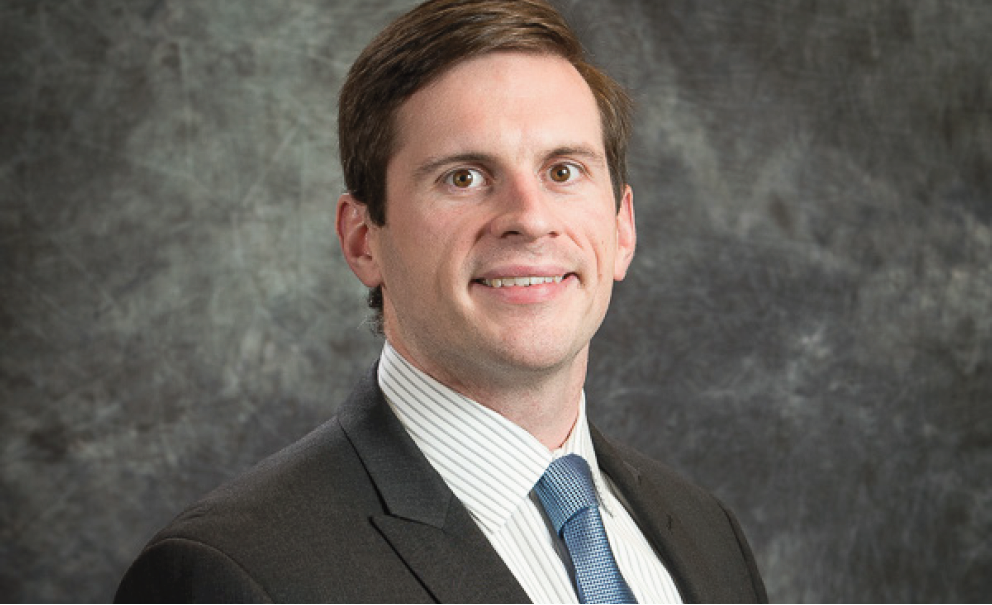
Rather than face Foundation staff attorneys in court, union bosses refunded the forced dues seized from UConn professor Steven Utke in violation of his First Amendment rights.
STORRS, CT – Steven Utke, an accounting professor at the University of Connecticut, has received a settlement for $5,251.48 from American Association of University Professors (AAUP) union officials in his action, claiming the AAUP seized union dues in violation of his First Amendment rights. National Right to Work Foundation staff attorneys forced AAUP to settle after filing a federal lawsuit for Utke.
The case joins other Foundation-won settlements for workers who were forced to pay union fees in violation of their First Amendment rights. Despite those victories, Foundation staff attorneys continue to litigate about 30 other cases, seeking to enforce various aspects of the Foundation’s 2018 Janus v. AFSCME U.S. Supreme Court victory, with more being added every month as workers contact the Foundation seeking to exercise their Janus rights.
Utke started teaching at the University of Connecticut in 2015, and exercised his right to refrain from membership in the AAUP from the beginning of his employment. However, because Connecticut lacks a Right to Work law making union financial support strictly voluntary, AAUP officials began deducting union fees immediately from Utke’s paycheck despite the fact he was not a member.
When the Supreme Court ruled in Janus that requiring public sector workers to pay any union dues or fees as a condition of employment is a breach of the First Amendment, AAUP stopped the compulsory fee deductions. However, AAUP officials did not return the forced fees seized in violation of the First Amendment from the professor prior to the June 2018 Supreme Court decision.
Utke reached out to the National Right to Work Foundation for free legal aid, and on January 14, 2019 Foundation staff attorneys filed a lawsuit for Utke in federal court to force the union officials to refund the money they seized from him without his consent.
In April, rather than face Foundation staff attorneys in federal court, AAUP backed down and settled the case. Now, as stipulated by the terms of the settlement, AAUP officials have paid Utke more than the union fees seized in violation of his rights from 2015 to 2018.
Also as part of the settlement, they are required not to collect any dues or fees from Utke’s future wages, unless he affirmatively chooses to become a member of AAUP and authorizes such deductions.
“Steven Utke’s victory represents yet another landmark in the fight to enforce the Janus decision, but with dozens of additional Janus enforcement cases still pending, much work remains to force Big Labor to comply with the Supreme Court’s decision,” observed National Right to Work Foundation Vice President and Legal Director Ray LaJeunesse. “Foundation staff attorneys will not rest until every worker in America is free to exercise the right to decide whether or not to fund union activities.”





