
Pennsylvania EMS/Rescue Workers Unanimously Vote to Remove Teamsters Union After Union Boss Delay Tactics
Emergency workers submitted multiple petitions asking for vote to escape Teamsters union officials’ exclusive “representation” powers and demands for money
North Huntingdon Township, PA (March 10, 2026) – Following months of union-instigated delays, Shannon Martin and her coworkers at North Huntingdon EMS/Rescue unanimously voted Teamsters Local 205 union officials out of power at their workplace. Martin obtained the vote by filing a union decertification petition at the National Labor Relations Board (NLRB) with free legal assistance from National Right to Work Foundation staff attorneys.
The NLRB is the federal agency responsible for enforcing private sector labor law, a task that includes administering elections to install (or “certify”) and remove (or “decertify”) unions. In response to her colleagues’ staunch opposition to the union, Martin filed a total of three union decertification petitions with Foundation legal aid, all of which either showed unanimous worker support for a union decertification vote or otherwise passed the threshold to trigger a vote under NLRB rules.
However, NLRB Region 6 in Pittsburgh blocked Martin and her colleagues from having a vote for months at Teamsters officials’ behest. Regional NLRB officials cited the so-called “voluntary recognition bar” as the justification for delaying the vote. The voluntary recognition bar stops workers from exercising their right to vote out a union for a year or more after union officials have installed themselves via “card check,” a process that bypasses the traditional secret-ballot union election process.
Under card check, union officials can demand “union authorization cards” directly from workers, which are later counted as “votes” for the union. Unsurprisingly, this process leaves workers open to threats and manipulation from union officials. Even union organizing handbooks recognize that card check is not indicative of how workers would vote in a standard union election. Martin and her coworkers were unfortunately trapped in a work unit that had been organized via card check.
To make matters even worse, Pennsylvania lacks Right to Work protections, meaning Teamsters union bosses were empowered to impose monopoly bargaining contracts that forced Martin and her colleagues to pay money to the union as a condition of employment. In contrast, in Right to Work states, union membership and all union financial support are strictly voluntary.
Flawed NLRB Policy Let Union Bosses Stay in Power Despite Obvious Worker Opposition
In mid-February – over a year after the Teamsters union had established itself via card check in Martin’s workplace – Martin filed her third decertification petition with Foundation aid, which finally resulted in the NLRB scheduling a vote to remove the union. On March 3, Martin and her coworkers voted unanimously to dethrone Teamsters union bosses.
The Foundation has consistently advocated for the elimination of the voluntary recognition bar, as well as other NLRB policies that appear nowhere in the text of federal labor law and serve only to stifle workers’ free choice. The Foundation supported the NLRB’s promulgation of the Election Protection Rule during the first Trump Administration, which gave independent-minded workers a chance to request a secret-ballot vote to challenge union officials’ claims of majority support following a card check campaign. However, the Biden NLRB repealed the Election Protection Rule.
“Ms. Martin and her coworkers’ dedication to winning back their freedom from unwanted Teamsters officials is admirable, and we were proud to help them win,” commented National Right to Work Foundation President Mark Mix. “But her case exposes the anti-worker nature of the so-called ‘voluntary recognition bar.’ This misguided NLRB policy let Teamsters bosses stay in power long after it was clear that there was uniform opposition to them in the workplace.
“Trump’s new appointees should look to situations like Ms. Martin’s as prime examples of why NLRB policies should be reformed to prioritize secret-ballot elections and worker free choice,” Mix added.
National Right to Work Foundation Issues Legal Notice to Detroit-Area Corewell Nurses Subject to Teamsters Strike Order
Notice reminds nurses wishing to return to work that they must resign their union memberships to avoid potentially ruinous strike fines
Detroit, MI (March 6, 2026) – Today, the National Right to Work Legal Defense Foundation issued a special legal notice for Detroit-area nurses subject to Teamsters Local 2024 union bosses’ potential strike order. The strike order is projected to cover roughly 10,000 nurses across nine different Corewell medical facilities.
The legal notice informs these workers of rights that union officials often do not want them to know. First and foremost, nurses have the right to resign their union memberships and keep working to support their families, thereby avoiding union fines and internal discipline.
“The situation presents serious concerns for nurses who believe there is much to lose from a union-ordered strike and may not want to abandon their patients,” the legal notice reads. “That is why employees confronted with strike demands frequently contact staff attorneys at the National Right to Work Legal Defense Foundation to learn how they can avoid fines for continuing to work during a strike to support themselves and their families.”
According to reports, one major sticking point during contract talks has been Teamsters officials’ demands that Corewell management impose a forced-dues clause (often misleadingly referred to as a “union security” clause) over the roughly 10,000 nurses in the work unit, and collect dues for the union. Such a clause would require Corewell to fire nurses who refuse to financially support the union. The Foundation’s notice also contains information about what rights nurses have to rebuff union officials’ forced-dues demands, if the contract ends up allowing them to make such demands.
The notice is available at: https://www.nrtw.org/corewell/.
Foundation: Resign Union Membership Before Returning to Work to Avoid Fines and Discipline
Most importantly, the notice informs nurses who want to keep working that the safest way to avoid strike fines and other punishment by union bosses is to resign their union memberships before returning to work. “If an employee is not a union member, union officials have no power to fine or otherwise discipline him or her,” the notice says. “Employees who are union members, or are unsure as to what they might have signed, have a legal right to resign their membership at any time.”
The Foundation’s special legal notice provides nurses sample union resignation letters, as well as information on how to exercise their right under the CWA v. Beck Supreme Court decision to opt out of paying dues for union politics, if union officials succeed in their push to impose a forced-dues contract. “Due to the recent repeal of Right to Work [in Michigan], Teamsters union officials may try to threaten that they can get workers fired for refusal to pay full union dues,” the notice reads. “This is false…workers even in non-Right to Work states can’t be forced to pay dues for anything unrelated to the union’s bargaining functions.”
The notice also gives workers information on the process to submit a “decertification petition,” in which employees request a workplace election to remove the union.
“Since Michigan legislators foolishly repealed the state’s Right to Work law, union officials across the state have engaged in increasingly aggressive tactics to control workers,” commented National Right to Work Foundation President Mark Mix. “Teamsters union officials’ potential strike order against Corewell medical facilities is no exception, and many nurses may rightly think that an order taking thousands of nurses away from their jobs is a bad move for themselves, their families, their patients, and the Detroit community as a whole.
“Corewell nurses should know – regardless of what Teamsters officials may tell them – that they have the right to resign their union memberships and rebuff the union strike order, as well as the right to refrain from paying any dues to support the union’s political activities,” Mix added.
St. HOPE Charter School Teachers Win Effort to Remove Union Officials From Power
Having failed to stop decertification vote requested by majority of teachers, Sacramento City Teachers Association union bosses concede defeat and leave
Sacramento, CA (March 5, 2026) – Following an effort in which a majority of teachers demanded a vote to remove the union, charter school educators at St. HOPE Public Schools have successfully ousted Sacramento City Teachers Association (SCTA) union officials from the school system.
Rather than face a union decertification vote that a federal labor board had scheduled to take place on March 11, SCTA union bosses instead disclaimed interest in maintaining their exclusive representation powers over the St. HOPE educators. Now, over 50 teachers from PS7 Elementary School, PS7 Middle School, and Sacramento Charter High School are free of the unwanted union’s control.
St. HOPE teacher Beth Simonton led the removal effort, submitting a petition to the National Labor Relations Board (NLRB) in January requesting a vote to remove the union. The NLRB is the agency responsible for enforcing private sector labor law, a task that includes administering votes to install (or “certify”) and remove (or “decertify”) unions. Private organizations like St. HOPE, even if they operate public charter schools, are often subject to federal labor law as opposed to state labor laws.
Simonton’s petition, which she submitted in January with free legal aid from National Right to Work Foundation staff attorneys, contained signatures from the majority of her colleagues – well over the threshold needed under federal law to trigger a union decertification vote. On February 25, NLRB Region 20 rejected arguments by the union and ordered a union decertification election to take place among the St. HOPE educators.
Then, only days before the scheduled election, SCTA union officials sent correspondence announcing that they were ending their monopoly bargaining control over the facility, likely in an attempt to avoid an embarrassing lopsided loss at the ballot box. St. HOPE teachers are now free of SCTA union bosses’ power to dictate their contract terms and work rules.
“I’m truly grateful that my colleagues and I were able to band together and send SCTA union officials on their way,” commented Simonton. “So much of their activity at St. HOPE involved pitting teachers against each other and finding ways to bend the rules so they could maintain their control. They did not represent the interest of the educators at St. HOPE, and we look forward to being independent from the union. We are FAMILY!”
NLRB Order: CA Charter Schools Aren’t Exempt From Federal Labor Law
As litigation over the scheduled vote went on, NLRB Region 20 notably rejected arguments from SCTA union lawyers that the St. HOPE system is a “political subdivision” subject to the California Public Employment Relations Board (PERB) and not the NLRB. Union officials prefer operating under the PERB, where rules are rigged against workers seeking decertification, effectively letting union legal tactics trap employees in union ranks for years even when a majority is on record as wanting the union removed.
In rejecting the union’s argument, NLRB officials turned to the U.S. Supreme Court’s ruling in Natural Gas Utility District of Hawkins County v. NLRB, under which an employer is a “political subdivision” only if it was directly created by the state, or if it is administered by individuals who are accountable to the public or public officials.
Applying this standard, NLRB Region 20 found that a private individual founded St. HOPE, and that public officials have little, if any, control over St. HOPE’s board of directors. For those reasons, the Regional Director ruled that “[St. HOPE] is an employer within the meaning of Section 2(2) of the [National Labor Relations Act] and is not exempt under the test set forth in Hawkins County.”
While SCTA union officials fled St. HOPE Public Schools before the NLRB-ordered vote could take place, NLRB Region 20’s ruling could be significant going forward for employees of other California charter schools who wish to decertify unions in their workplaces. Foundation attorneys have helped charter school employees in a number of other states in efforts at the NLRB to remove unwanted unions, including in Missouri and New York.
CA Charter School Teachers Have More Options to Escape Unions
“Ms. Simonton and her fellow St. HOPE educators should be commended for their success in breaking free from SCTA union officials,” commented National Right to Work Foundation President Mark Mix. “But their effort – which also included attempts years ago to vote SCTA out – exposes how focused California labor law is on solidifying union boss power, even in the face of clear evidence that workers want a union gone.
“Bureaucrats on the California PERB blocked the St. HOPE teachers from ousting the union for years on end, simply because SCTA union bosses filed unsubstantiated charges of employer misconduct,” Mix added. “These charades forced Simonton and her coworkers to resort to an entirely different agency in the hopes of finally making their voices heard.
“No workers should have to face challenges like this simply to vote a union out,” Mix continued. “But, following St. HOPE educators’ success, charter school educators across the Golden State should know they have more options for seeking a union decertification election, and should not hesitate in contacting Foundation attorneys if they want to exercise this important right.”
Public Servants Across Country Stand Strong in Defending Janus Rights
The following article is from the National Right to Work Legal Defense Foundation’s bi-monthly Foundation Action Newsletter, January/February 2026 edition. To view other editions of Foundation Action or to sign up for a free subscription, click here.
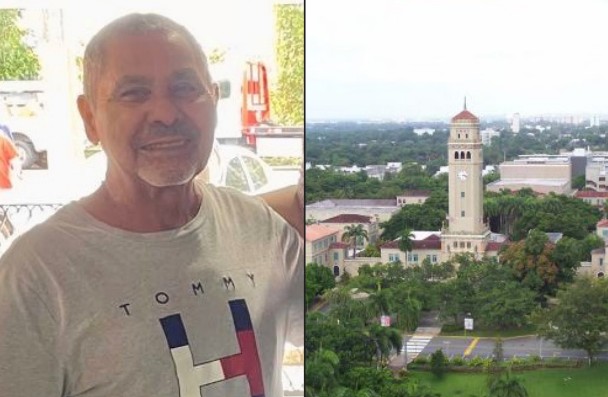
Jose Ramos, a University of Puerto Rico maintenance employee, isn’t going to let union bosses maintain their flimsy defense that they are entitled to keep his hard-earned money in violation of the First Amendment.
As 2025 waned, National Right to Work Foundation staff attorneys brought their expertise to bear as government employees in Washington State and Puerto Rico continued legal battles to get back money that union bosses never should have seized from their paychecks.
These workers are invoking their rights under the Foundation-won Janus v. AFSCME decision, which the Supreme Court handed down in 2018. In Janus, the Justices ruled that all American public sector workers have a First Amendment right to abstain from paying dues to union officials they don’t support.
Despite Janus’ commonsense protections, many union bosses, intent on keeping their coffers stocked with dues money seized from unwilling public employees, are still trying to skirt the Court’s ruling.
AFSCME Bosses Refuse to Return Illegally-Seized Money to Worker
That includes AFSCME union officials in Washington State, whom City of Everett employee Xenia Davidsen is fighting at the Washington State Public Employment Relations Commission (PERC). Davidsen charged AFSCME chiefs with accepting money that City officials had illicitly funneled from her paycheck to the union.
Davidsen had requested dues deductions to stop in 2024 in accordance with Janus, but City officials failed to monitor the email address through which AFSCME directed the City to stop the deductions. This incompetence led to the City seizing dues money from Davidsen at least 12 times without her authorization — and AFSCME union officials have stubbornly refused to admit they must post a notice stating they were wrong to accept the deductions.
“On none of those… instances did the Union stop to question why it was accepting dues that it knew were unauthorized to it,” argue Foundation attorneys in Davidsen’s latest brief before the PERC.
Meanwhile, Foundation attorneys also defended the Janus rights of two groups of Puerto Rico public employees in oral arguments before the First Circuit Court of Appeals last October.
Foundation Challenges Puerto Rico Court’s Refusal to Nix Anti-Janus Statute
In one case, Cruz v. UIA, Puerto Rico Aqueduct and Sewer Authority (PRASA) employee Reynaldo Cruz is trying to reclaim union dues money that officials of the Authentic Independent Union of Water and Sewer Authority Employees (UIA) took in violation of his First Amendment rights.
Cruz’s lawsuit challenges both union bosses’ demands that he pay union dues or lose his job, as well as the Puerto Rico territorial laws that allow such unconstitutional demands. Though UIA union bosses claim they have already deposited the illegally-seized money with a lower federal court, that court confusingly declined to issue a ruling that legally entitles Cruz to collect the funds.
During oral arguments, Cruz’s legal team argued that this legal sleight-of-hand created “a roadmap for civil rights defendants to violate civil rights plaintiffs’ rights.”
Foundation Won’t Let Union Bosses & Bureaucrats Ignore Janus
Also argued before the First Circuit at the end of 2025 was Ramos v. Delgado, in which Foundation attorneys represent Jose Ramos and other University of Puerto Rico maintenance employees who had dues illegally deducted from their paychecks for years.
Ramos and his colleagues are seeking refunds of all dues taken unlawfully since the Janus decision. Puerto Rico continues to be a hotbed for union violations of the Janus decision, but luckily, workers continue to stand up with Foundation legal aid.
Most recently, public employee Luis Rigau filed a federal lawsuit to challenge the Puerto Rico Industrial Commission (PRIC) union’s blatantly illegal reinstatement of automatic forced-dues deductions against nonmembers.
“Despite Janus’ clear constitutional command, union bosses, legislators, and public officials are still trying to do legal gymnastics to end-run the decision,” commented National Right to Work Foundation Vice President and Legal Director William Messenger.
“All public sector workers deserve the free choice that Janus secures, and Foundation attorneys will continue to back them in their court battles for freedom.”
National Labor Relations Board Schedules Vote for St. HOPE Charter School Teachers Seeking to Remove SCTA Union
Despite union’s legal attempt to block vote, NLRB schedules election for March 11 in response to majority-backed petition from teachers to decertify union
Sacramento, CA (March 2, 2026) – In response to a petition from the majority of St. HOPE Public Schools educators requesting such a vote, a federal labor board has ordered an election to remove Sacramento City Teachers Association (SCTA) union officials from the school system to take place on Wednesday, March 11. The vote will take place among over 50 teachers from PS7 Elementary School, PS7 Middle School, and Sacramento Charter High School.
In January, St. HOPE educator Beth Simonton submitted a petition to the National Labor Relations Board (NLRB), asking the federal agency to administer a vote to end SCTA union bosses’ exclusive representation powers over her and her colleagues. The NLRB is the agency responsible for enforcing private sector labor law, a task that includes administering votes to install (or “certify”) and remove (or “decertify”) unions. Private organizations like St. HOPE that operate public charter schools are generally subject to federal labor law.
Simonton’s petition, which she submitted with free legal aid from National Right to Work Foundation staff attorneys, contained signatures from the majority of her colleagues – well over the threshold needed under federal law to trigger a union decertification vote. Following a hearing conducted January 26-28, NLRB Region 20 issued an order on February 25 ordering an election to be held.
“SCTA union officials have been extremely divisive and have not had a positive impact on teachers, students, or the St. HOPE community as a whole,” commented Simonton. “They’ve spent much more time trying to demonize school leadership than simply standing up for our interests. I’m proud to represent the majority of educators at St. HOPE who are standing up and saying ‘enough is enough.’”
NLRB Rejects Union Argument That St. HOPE is Exempt From Federal Labor Law
NLRB Region 20’s election order notably rejected arguments from SCTA union lawyers that the St. HOPE system is actually a “political subdivision” under the jurisdiction of California’s Public Employment Relations Board (PERB) and not subject to the NLRB. The U.S. Supreme Court ruled in Natural Gas Utility District of Hawkins County v. NLRB that an employer qualifies as such a “political subdivision” only if it was directly created by the state, or if it is administered by individuals who are accountable to the public or public officials.
The election order points out that a private individual founded St. HOPE and that public officials have little, if any, control over St. HOPE’s board of directors. “I find that [St. HOPE] is an employer within the meaning of Section 2(2) of the [National Labor Relations Act] and is not exempt under the test set forth in Hawkins County,” the NLRB Regional Director’s decision reads. “Accordingly, I am directing an election among the employees in the agreed upon appropriate unit.”
The Foundation has aided numerous charter school employees over the years in opposing unwanted union hierarchies. Elsewhere in California, charter school teachers at Gompers Preparatory Academy in San Diego sought Foundation aid in obtaining a vote to remove San Diego Education Association (SDEA) union officials from the school. After two such efforts to remove the union (one in 2019 and another in 2023) and much litigation over SDEA union bosses’ delay tactics, the educators finally voted the SDEA out in 2023.
“We at the Foundation are proud to assist St. HOPE educators in finally getting a chance to exercise their right to vote SCTA union officials out of power at their schools,” commented National Right to Work Foundation President Mark Mix. “But it’s ridiculous that it took a herculean effort and several years for St. HOPE teachers just to get to this point. Biased bureaucrats at the California PERB blocked them from having a union removal vote for several years based on dubious allegations of employer misconduct – and St. HOPE educators are hardly the only workers in California that PERB has subjected to such stonewalling.
“We hope that Ms. Simonton’s effort is not only the first step in St. HOPE educators freeing themselves from SCTA union chiefs, but also the first step toward freeing California educators from the oppressive California labor bureaucracy,” Mix added.
Cannabis Workers Send UFCW Union Packing at Holistic Industries Monson Facility
Majority of workers at plant requested vote to remove union, UFCW bosses fled facility after attempts to block the vote failed
Springfield, MA (February 25, 2026) – Packaging associates and delivery drivers at cannabis company Holistic Industries’ Monson plant have successfully removed United Food and Commercial Workers (UFCW) union officials from their workplace. The victory comes after a majority of Holistic employees backed a petition asking the National Labor Relations Board (NLRB) to administer a vote to remove the UFCW union from the facility (also known as a union “decertification” vote).
Scott Browne, a Holistic packaging associate, submitted the petition with free legal aid from National Right to Work Foundation staff attorneys. The NLRB is the federal agency responsible for enforcing private sector labor law, a task that includes holding votes to install (or “certify”) and remove (or “decertify”) unions.
Rather than face a potentially lopsided loss at the ballot box, UFCW union officials instead submitted correspondence February 20 disclaiming interest in continuing their exclusive “representation” powers over the Holistic Industries workers.
Because Massachusetts lacks Right to Work protections for its private sector workers, UFCW officials were empowered to require Browne and his colleagues to pay union dues or fees as a condition of getting or keeping a job. In contrast, in Right to Work states, union membership and all union financial support are strictly voluntary and the choice of each individual worker.
However, in both Right to Work and non-Right to Work states, union bosses’ government-granted exclusive representation powers let them control the working conditions of all workers in a unionized workplace, even those who voted against or otherwise oppose the union. Browne and his colleagues are now free from UFCW bosses’ forced-dues demands and exclusive representation powers.
UFCW Union Officials Filed Specious Charges to Block Ouster Vote
Browne’s petition, which he submitted in June 2025, contained employee signatures well in excess of the necessary threshold to trigger the decertification election, but UFCW union officials filed so-called “blocking charges” with the NLRB in July 2025 in an attempt to block the vote and cling to power.
Regional NLRB officials blocked the vote for months at union bosses’ behest. Foundation attorneys filed a Request for Review with the NLRB in Washington, DC, arguing that the NLRB’s current policy surrounding blocking charges allows unsubstantiated and unrelated claims of employer interference – like those in the charges UFCW chiefs filed – to block workers’ right to vote on a union. The filing requested that the blocking charge policy be overturned.
“The blocking charge policy allows the Board to arbitrarily refuse to process an election, which undermines employees’ statutory rights and free choice,” Browne’s Request for Review read.
However, after litigation between Holistic Industries management and UFCW officials over the blocking charges wrapped up this month, UFCW union bosses disclaimed interest in Browne’s unit, likely aware that they would not win the decertification election.
“We at the Foundation are proud to have helped Mr. Browne and his colleagues escape the monopoly power of UFCW union officials,” commented National Right to Work Foundation President Mark Mix. “But there’s no reason that UFCW bosses should have been able to delay this result for the better part of a year.”
“The current NLRB’s ‘blocking charge’ rules, created during the Biden-era NLRB, allow union officials to use unsubstantiated and unrelated claims of so-called unfair labor practices to trap workers in union ranks,” added Mix. “Trump’s new appointees to the NLRB must work swiftly to reform the agency’s standards to better protect the rights of workers to remove unions as they wish.”
Four Colorado Safeway Workers Slam UFCW Union Officials With More Federal Charges for Illegal Strike Fines
Charge: UFCW Local 7 unlawfully subjected nonmember employees to ‘internal disciplinary’ fines for not abiding by a union boss-ordered strike
Denver, CO (February 23, 2026) – Four employees at three separate Safeway grocery stores located near Denver have filed federal charges with the National Labor Relations Board (NLRB) against the United Food and Commercial Workers (UFCW) Local 7 union.
The workers’ charges were filed with free legal aid from National Right to Work Foundation staff attorneys in response to union bosses illegally threatening the workers and their colleagues with fines for choosing to exercise their right to work despite a union boss-ordered strike action. The NLRB is the federal agency responsible for enforcing the National Labor Relations Act (NLRA) and adjudicating disputes between employers, unions, and individual employees.
Claire Jordan, who works at Safeway in Greeley, Rebecca White, who works at Safeway in Longmont, and Dustin Mattos and Rebecca Lawless-Mattos, who both work at a Lakewood Safeway location, are demanding that NLRB Region 27 investigate and prosecute UFCW Local 7 union bosses for violating their rights under the NLRA.
According to the charges, after the workers validly resigned their union membership in June 2025, union officials informed the workers around January 9, 2026 that they would be subject to “internal union charges…for, among other things, crossing the picket line while being a union member.”
The workers resigned their memberships in order to continue working after UFCW Local 7 union bosses ordered grocery workers at more than 40 Safeway stores and a distribution center in Colorado to strike in June 2025. Longstanding law says union bosses cannot impose “union discipline,” which frequently means four- or five-figure monetary fines, against workers who are not voluntary union members.
In addition to retaliating against nonmember workers, the charges say that UFCW Local 7 union officials have failed to comply with federal law by not providing the workers with the required financial disclosures under the Foundation-won Beck decision, which allows nonmember workers to withhold the portions of their forced dues that go to the UFCW’s political activities.
Colorado is one of the 24 states that lack Right to Work protections for workers, which allows UFCW union bosses to impose monopoly bargaining contracts that force employees to pay union fees as a condition of employment. By contrast, in Right to Work states like neighboring Arizona, Utah, Nebraska, Kansas, and Oklahoma, union membership and union financial support are strictly voluntary.
The Safeway strike order came months after UFCW Local 7 had similarly ordered a strike at 79 King Soopers grocery stores in February 2025. As happened following the Safeway strike, King Soopers employees also turned to the National Right to Work Foundation for assistance in filing charges against the UFCW, in response to union officials issuing illegal fine threats against nonmembers for exercising their right to work during a strike.
The Foundation has seen a growing number of workers seeking aid in cases involving illegal retaliation from UFCW union bosses. Foundation attorneys assisted nonmember King Soopers employees targeted following a 2022 strike, and have secured numerous victories against UFCW, including for illegal strike fine threats during a union-ordered strike against Stop & Shop stores in New England.
“Once again, UFCW Local 7 union bosses are turning to threats and intimidation tactics against workers who chose to rebuff union strike orders and work to support themselves and their families,” commented National Right to Work Foundation President Mark Mix. “The Foundation will continue to assist grocery workers defending themselves against these recidivist UFCW union bosses.”
UAW Faces Prosecution For Illegal Firing of Worker Who Objected to Funding Union Boss Political Activities
Without Right to Work to ensure dues payments are voluntary, Michigan employees are having to take legal action to defend their legal rights against Big Labor
Grand Rapids, MI (February 19, 2026) – A recent legal action by National Right to Work Foundation staff attorneys on behalf of a Grand Rapids-based General Electric (GE) Aviation worker demonstrates United Auto Workers (UAW) union bosses’ greed for dues money and disregard for workers’ individual rights in the Great Lakes State.
Richard Howard, a GE Aviation Systems employee, recently scored a victory in his Foundation-backed case challenging UAW Local 330 officials’ demands that he be terminated for declining to join the union and pay full union dues by direct paycheck deduction. The National Labor Relations Board (NLRB), the federal agency responsible for enforcing private sector labor law, has just issued a complaint against the UAW and GE Aviation to formally prosecute them for their behavior.
According to unfair labor practice charges Howard filed at the NLRB, GE management fired Howard at UAW chiefs’ behest when he refused to sign a UAW membership and dues “checkoff” form that would have given UAW bosses direct access to his paycheck. Howard’s charges noted that UAW officials also violated his rights under the Foundation-won CWA v. Beck Supreme Court decision. Under Beck, union officials cannot force workers who have opted out of union membership to pay dues for the union’s “nonchargeable” expenses, which include political and ideological activities.
Michigan legislators repealed the state’s popular Right to Work protections in a party-line vote in 2023. Michigan’s Right to Work law prevented union bosses from enforcing contracts that require workers to pay union dues or fees as a condition of keeping their jobs. After the repeal, union officials can force the firing of workers for refusal to pay money to the union, although this union privilege is somewhat limited by Beck. In addition, federal law forbids forcing workers to authorize the deduction of union dues directly from their paychecks.
Howard’s charges alleged that union officials never informed him of or granted him his Beck rights, even after he had specifically objected to paying dues for politics and other nonchargeable expenses on several grounds. The UAW’s unlawful demands came immediately after the repeal of Michigan’s Right to Work law took effect.
Grand Rapids UAW Bosses Face Prosecution For Getting GE Aviation Worker Fired
At the end of January, the NLRB issued a complaint prosecuting UAW bosses for making these illegal demands, and for forcing GE management to terminate Howard’s employment. The complaint, which will soon go before an NLRB Administrative Law Judge (ALJ), asks that the ALJ order UAW Local 330 to “make [Howard] whole for any loss of earnings and other benefits suffered as the result of his discharge” and return any dues taken from his paycheck illegally for nonchargeable expenses, among other forms of relief. The complaint also prosecutes GE Aviation Systems for its role in Howard’s illegal firing.
“Mr. Howard’s case is Exhibit 1 for why workers need more – not less – protection from union boss coercion,” commented National Right to Work Foundation President Mark Mix. “UAW officials apparently view Michigan’s lack of Right to Work as a license to make any demands they want of workers – including unlawful demands to fund the UAW’s radical politics. The bottom line is that Michigan workers deserve protection from being forced to subsidize unwanted union bosses, whether they oppose them for political reasons, corruption-related reasons, or any other reason. Michigan’s Right to Work law provided that protection, and the decision to repeal it was a sop to union special interests, plain and simple.
“Workers like Rick Howard are now paying the price,” Mix added.
Cornell Ph.D. Student’s Appeal to NLRB’s Top Prosecutor Urges Agency to End Union Control Over Graduate Students
Case attacks Obama-era federal ruling that exposed graduate students to union boss power and forced dues
Ithaca, NY (February 18, 2026) – Russell Burgett, a Ph.D. candidate in chemistry and chemical biology at Cornell University, is asking newly-seated National Labor Relations Board (NLRB) General Counsel Crystal Carey to issue a complaint and ask the NLRB to free graduate students across the country from being forced to fund and associate with union bosses.
Burgett filed an Appeal to the General Counsel on February 10, with free legal aid from National Right to Work Foundation staff attorneys. In his filing, Burgett presses the General Counsel to have the NLRB reconsider the disastrous 2016 Columbia University decision, a controversial Obama-era ruling that classified graduate students as “employees” subject to the National Labor Relations Act (NLRA). Under Columbia University, union bosses are permitted to gain one-size-fits-all exclusive “representation” powers over graduate students at private universities.
“A graduate student’s primary relationship with his or her school is as a customer of that school’s educational instruction and services, not as a statutory employee,” reads Burgett’s Appeal. “[U]niversities forcing graduate students to pay union dues to act as teaching and research assistants interferes with their ability to complete their course of studies and earn their degrees. Here, the [union contract] effectively makes financially supporting [the union] a condition of receiving a Cornell graduate degree.”
Burgett, who is not a member of the Cornell Graduate Student Union (CGSU-UE, an affiliate of United Electrical), opposes the radical ideology and agitation of CGSU agents on campus. Because New York, where Cornell is located, is not a Right to Work state, CGSU bosses can legally force students (mischaracterized as “employees”) to pay money to the union to complete their graduate programs.
Adding insult to injury, CGSU union officials rejected Burgett’s request to opt-out of paying the portion of dues that goes toward the union’s politics, which is a right guaranteed to workers under the Foundation-won CWA v. Beck Supreme Court decision. CGSU union bosses speciously claimed that Beck objections could only be submitted during a narrow, union-concocted “window period” of 30 days per year.
NLRB Must Reexamine Union Powers Over Students, Including Forced-Dues Mandates
Burgett’s Appeal asks the NLRB General Counsel to prosecute CGSU union officials and Cornell management on the grounds that the union contract is blocking the university from doing business with students who abstain from union membership or union financial support. Union agreements that require an entity to cease doing business with those who refuse union association blatantly violate the NLRA.
The Appeal’s argument hinges on the Board reaffirming that students have a “business and academic” relationship with their universities and are not “employees” was wrongly held in Columbia University.
In addition to his primary argument, Burgett’s Appeal contends that the NLRB should prosecute CGSU union officials for arbitrarily limiting when students can exercise their Beck right to opt out of funding union politics.
“It is unconscionable that current NLRB case law allows union officials, like those from CGSU-UE, to upend the academic careers of students who refuse to associate with them,” commented National Right to Work Foundation President Mark Mix. “Union bosses’ one-size-fits-all bargaining schemes have no place in the world of academia, where freedom of thought and association should be paramount.
“We’re proud to stand behind Mr. Burgett, and urge the Board to affirm the commonsense idea that graduate students are students and were never intended to be subjected to the NLRB’s forced unionism regime,” Mix added.
Majority of Lynchburg, Virginia Manufacturing Plant Workers File Petition to Oust Chemical Union Bosses
Parker O-Rings & Engineered Seals employees petition to end union’s near 50-year “representation” at facility
Lynchburg, VA (February 17, 2026) – Natera Carter, an employee of Parker O-Ring & Engineered Seals, has filed a petition with the National Labor Relations Board (NLRB) seeking a “decertification” election to remove the International Chemical Workers Union Council (ICWUC) Local 845C labor union from her workplace. The petition was filed with free legal aid from National Right to Work Foundation staff attorneys.
The NLRB is the federal agency responsible for enforcing the National Labor Relations Act, a task that includes administering elections to install (or “certify”) and remove (or “decertify”) unions.
Carter’s petition was signed by the majority of her 51 coworkers, far exceeding the amount required to trigger an NLRB-supervised secret ballot decertification vote. The workers’ election has been scheduled for February 25th, 2026, and will include all hourly production, lab technicians, maintenance, shipping, receiving, and quality inspection employees at the Lynchburg facility. According to the petition, the union gained monopoly power over the workplace in 1980.
“The workers who decided to bring the union into this workplace are no longer here and now it is time for current employees to have our say,” stated Carter. “We’ve seen the union up close and now we’re joining together to remove it.”
Virginia is one of the 26 states with Right to Work protections that safeguard workers by making union affiliation and dues payment strictly voluntary. Yet, even in Right to Work states, union officials can impose exclusive bargaining control upon all workers in a workplace, even those who oppose the union.
“Virginia’s popular Right to Work law means union officials cannot have workers fired for refusing to join or pay dues to the union, but even in Virginia, workers are forced under union monopoly ‘representation’ they don’t want and never asked for,” commented National Right to Work Foundation President Mark Mix. “This case and the many others like it are a reminder that in addition to the overwhelming majority of workers who choose to remain nonunion, countless others are currently forced under a union monopoly they oppose. That’s just plain wrong.”





