
Rush University Medical Center Maintenance Workers Decisively Vote Out Unwanted Teamsters Union
Series of successful worker-led decertifications of Teamsters union bosses nationwide follow federal labor board rule change simplifying process
Chicago, IL (July 26, 2021) – Maintenance workers at Rush University Medical Center in Chicago have successfully removed Teamsters Local 743 union officials from their workplace, following a vote in which more than 70% of those who cast ballots voted to free themselves from the Teamsters’ monopoly bargaining power. The election was held after worker Tim Mangia submitted a petition to National Labor Relations Board (NLRB) Region 13 in Chicago demonstrating sufficient support among his coworkers for a decertification vote.
Mangia received free legal aid in filing the petition from a National Right to Work Legal Defense Foundation staff attorney. The successful ouster is the latest in a string of successful worker-led decertifications of Teamsters officials across the country. Just last month, Frito-Lay salesmen voted Teamsters Local 657 officials out of their monopoly bargaining status in Del Rio, TX, and Eagle Pass, TX, a removal which followed Santa Maria, CA Allied Central Coast Distributing delivery drivers’ April dethroning of Teamsters Local 986 bosses. The workers who submitted petitions requesting decertification votes in each of these cases received legal help from Foundation staff attorneys.
Mangia and his coworkers are employed by Jones Lang Lasalle Americas, Inc. Mangia gathered the necessary signatures from his coworkers and on May 17, 2021 submitted the petition requesting that NLRB Region 13 supervise a secret ballot vote to remove the union. The ballots were counted on July 8 and by July 16 NLRB Region 13 confirmed that the workers had voted 25-8 to eject Teamsters bosses from their workplace.
For almost a year workers have been enjoying an easier pathway to exercising their right to remove unwanted union officials. The NLRB in Washington, DC, in July 2020 enacted new rules governing decertification elections which, drawing from comments Foundation attorneys submitted to the agency earlier that year, now forbid union bosses from indefinitely stalling worker-requested votes based on “blocking charges.” Those charges are allegations against an employer that are often unproven and unrelated to workers’ desire to oust union officials.
In Mangia’s case, the new rules may have prevented union officials from submitting “blocking charges,” as filing them would have neither delayed the election nor stopped the results of the vote from being released.
Had the effort by Mangia and his colleagues to oust Teamsters Local 743 officials been blocked, every full-time employee in Mangia’s workplace would have been forced to continue to suffer under union boss monopoly power. Additionally, the employees would have been forced to pay money from their wages to fund the union boss hierarchy because Illinois lacks Right to Work protections for its workers.
Right to Work protections ensure that no worker can be required to join or pay dues to a union as a condition of keeping his or her job. In a non-Right to Work state like Illinois, workers who choose not to affiliate with a union can still be forced to pay at least a portion of union dues as a condition of employment.
“Although Foundation-backed NLRB rule changes eliminated some of the barriers faced by Mr. Mangia and his coworkers in removing the Teamsters union from their workplace, we shouldn’t lose sight of the fact that it is wrong for so-called union ‘representation’ to be imposed on even one worker who doesn’t want it,” observed National Right to Work Foundation President Mark Mix. “States like Illinois which lack Right to Work protections compound the injustice of letting union officials force workers under union representation against their will by also empowering union bosses to threaten workers to pay union dues or else be fired.”
“We will continue to work towards a day when unions can neither impose their so-called ‘representation’ on individual workers against their will, nor force them to fund union activities,” Mix added.
Labor Board Ruling Keeps Union Bosses in Power Despite Unanimous Opposition of Rank-and-File Workers
Every single worker petitioned to remove Carpenters Union bosses as monopoly bargaining ‘representative’ but NLRB won’t even allow a vote
Washington, DC (July 20, 2021) – In March, Region 13 of the National Labor Relations Board (NLRB) rejected a petition by a group of Indiana construction workers who wanted to remove union bosses from their workplace. This week, the full NLRB in Washington, DC, sided with union officials and left in place the Region’s decision to dismiss the petition, which had unanimous support from the company’s workers.
None of the employees at Neises Construction Company in Crown Point, Indiana are members of the Indiana/Kentucky/Ohio Regional Council of Carpenters union (IKORCC), but federal law empowers IKORCC union bosses to represent these employees as their “exclusive bargaining representative.” With free legal aid from National Right to Work Legal Defense Foundation attorneys, Neises employee Mike Halkias submitted a petition to decertify IKORCC officials as the monopoly bargaining agent for him and his coworkers.
Though the petition bore the signature of every member of the bargaining unit, the NLRB regional office rejected the petition, pointing to ongoing litigation between IKORCC and Neises. At the behest of IKORCC officials, the NLRB is seeking to force Neises to bargain with union officials for a union monopoly contract, even though no Neises employee is an IKORCC member or supports the union. The Region used the pending case against the employer to justify dismissing the workers’ petition for a decertification vote.
Foundation attorneys argued in their appeal to the full NLRB that the employer’s dispute with IKORCC bosses did not take away the workers’ right to remove the unwanted union. As the appeal stated, “Halkias and his fellow employees are not children, but freethinking individuals who have the right to dislike the Union for a host of reasons having nothing to do with Neises or the Union’s unproven, unadjudicated allegations.” The appeal implored the Board to, at the very least, investigate whether the alleged employer wrongdoing had diminished the employees’ ability to make an informed choice about union boss “representation.”
Instead, the Board denied the appeal, accepting the Region and union officials’ reasoning that the pending employer charges should block the workers’ request for a vote, leaving the nine workers under union “representation” they unanimously oppose.
“It is simply outrageous that federal law lets union bosses force workers to accept unions’ so-called ‘representation’ against their will – even when workers unanimously oppose the union,” said National Right to Work Legal Defense Foundation President Mark Mix. “Federal law purports to protect workers’ ‘freedom of association’ and to ensure union representation ‘is of their own choosing,’ however, as this case demonstrates, the NLRB frequently protects union boss power to the detriment of workers’ freedom.”
“This outcome shows how federal labor law is broken,” added Mix. “These workers simply want a vote to remove a union they oppose, yet the NLRB response is not only to block any such vote but also to seek to force their employer to bargain further with a union supported by precisely zero rank-and-file workers.”
Las Vegas Hospital Staff Vote to Oust SEIU after Union Bosses Attempted to Block Election
Union lawyers withdrew dilatory election objections after worker obtained assistance from Foundation attorneys
Las Vegas, NV (July 13, 2021) – Tammy Tarantino, a respiratory therapist at Desert Springs Hospital Medical Center in Las Vegas, successfully petitioned for a vote to remove SEIU union bosses from her workplace. The National Labor Relations Board (NLRB) Nevada Regional office initially delayed Tarantino’s vote request, but scheduled an election once she obtained free legal representation from National Right to Work Legal Defense Foundation staff attorneys.
SEIU bosses had a monopoly over contract bargaining for Tarantino and her coworkers, all technical employees at the hospital. Tarantino filed a petition for a decertification election to remove SEIU bosses with NLRB Region 28 after collecting the requisite number of signatures from dozens of her coworkers. The Region initially resisted her petition, telling her it might not be possible to schedule a vote. In their effort to stop the workers from voting, SEIU lawyers raised issues designed to block the election, relying on pending and past charges it had filed against the hospital. Though these charges did not allege anything illegal affecting Tarantino’s petition the Union argued the election must be blocked.
Tarantino eventually enlisted the free legal assistance of Foundation staff attorneys, who filed a response to union lawyers’ arguments. The response pointed out that the union lawyers were ignoring updates to the NLRB’s rules on “blocking charges,” charges against employers used to block workers’ votes to oust union officials. Thanks to reforms pushed by the Foundation, decertification elections now can proceed more quickly and the results are announced sooner. Under the old rules, “blocking charges” that had no impact on employees’ desire to decertify the union could still be used to stall decertification votes.
Tarantino’s response further argued union lawyers hadn’t filed their objections in a timely manner, which thus could not be considered even if they hadn’t relied on outdated rules. Once the response was filed, SEIU lawyers signed a stipulated election agreement allowing the decertification vote to move forward.
During the NLRB-supervised election, which took place over July 7-8, the members of Tarantino’s unit voted 39-13 to remove SEIU bosses from their workplace. Employees must now wait until July 15 to see whether the union files “objections.”
“Instead of respecting the will of the workers they supposedly represent, SEIU bosses took advantage of the system and attempted to block the vote requested by Tammy Tarantino and her coworkers,” said National Right to Work Legal Defense Foundation President Mark Mix. “No worker should be forced to accept the so-called representation of union bosses they do not support. While we’re pleased that Tarantino got her vote, and that Foundation-backed blocking charge reforms worked as intended, workers shouldn’t need the assistance of an attorney to prevent unpopular union bosses from bargaining for them.”
School Bus Driver’s Legal Fight Forces Teamsters Officials to Reveal Union Financial Information to Workers
New settlement requires union bosses to provide workers information on how union is spending their money
Buffalo, NY (July 13, 2021) – With free legal representation from National Right to Work Legal Defense Foundation staff attorneys, Lockport, NY-based Student Transportation of America school bus driver Cynthia Roszman has won a settlement in her case charging the Teamsters Local 449 union with failing to provide information about how worker dues are spent.
As part of the settlement, Teamsters union officials must provide Roszman and her coworkers who have refrained from formal union membership sufficient information to decide whether to challenge the union’s dues calculation for nonmembers.
National Labor Relations Board (NLRB) Region 3 in Buffalo is enforcing the settlement. Roszman, who resigned her union membership in May 2018, first hit Teamsters bosses with federal charges in September of that same year, asserting that they had not provided her with an independently-verified breakdown of the union’s expenditures and accompanying information about the process for disputing union officials’ calculation of the reduced dues rate for nonmembers.
The NLRB ruled in 1995 that under the 1988 Foundation-won CWA v. Beck case private sector union officials must provide nonmember employees with this information. Beck mandates that private sector union bosses cannot, as a job condition, force workers who have abstained from union membership to pay dues for anything beyond the union’s core representational activities.
In states that have Right to Work protections for their employees, union membership and financial support are completely voluntary and union bosses cannot force workers to pay any portion of dues as a condition of keeping a job. Even though New York lacks such protections, union bosses still must follow the requirements of Beck to justify their forced dues demands.
To avoid prosecution, Teamsters Local 449 officials initially entered into a settlement in the case in January 2019. They agreed to only deduct from Roszman the nonmember dues rate based on the Teamsters national union’s financials, so they could rely on the national union’s breakdown as opposed to providing one themselves. However, after about a year union bosses reneged on this agreement and resumed demanding Roszman pay Local 449’s nonmember rate, yet refused to give her the legally-mandated financial breakdown and information for challenging that rate.
The latest Foundation-won settlement now compels Teamsters Local 449 officials to give Roszman and her coworkers who have decided not to associate with the union “information that is relevant and sufficient to enable the objector to determine whether to challenge the calculation” of the union’s dues amount for nonmembers. Union officials must also post a notice at Roszman’s workplace informing employees of the settlement.
“Although this favorable outcome for Ms. Roszman is good news, no workers should have to battle union bosses for years just to get basic information on how the union is spending their money, and on how they can contest what union officials force them to contribute just to keep their jobs,” commented National Right to Work Foundation President Mark Mix. “All American workers deserve the protection of a national Right to Work law, which would ensure that no worker could legally be forced to pay dues or fees to a union boss just to get or keep a job.”
Multiple Units Oust Teamsters Bosses Thanks to Foundation-Backed NLRB Rule
The following article is from the National Right to Work Legal Defense Foundation’s bi-monthly Foundation Action Newsletter, May/June 2021 edition. To view other editions of Foundation Action or to sign up for a free subscription, click here.
Unpopular Teamsters officials voted out of California, New Jersey workplaces
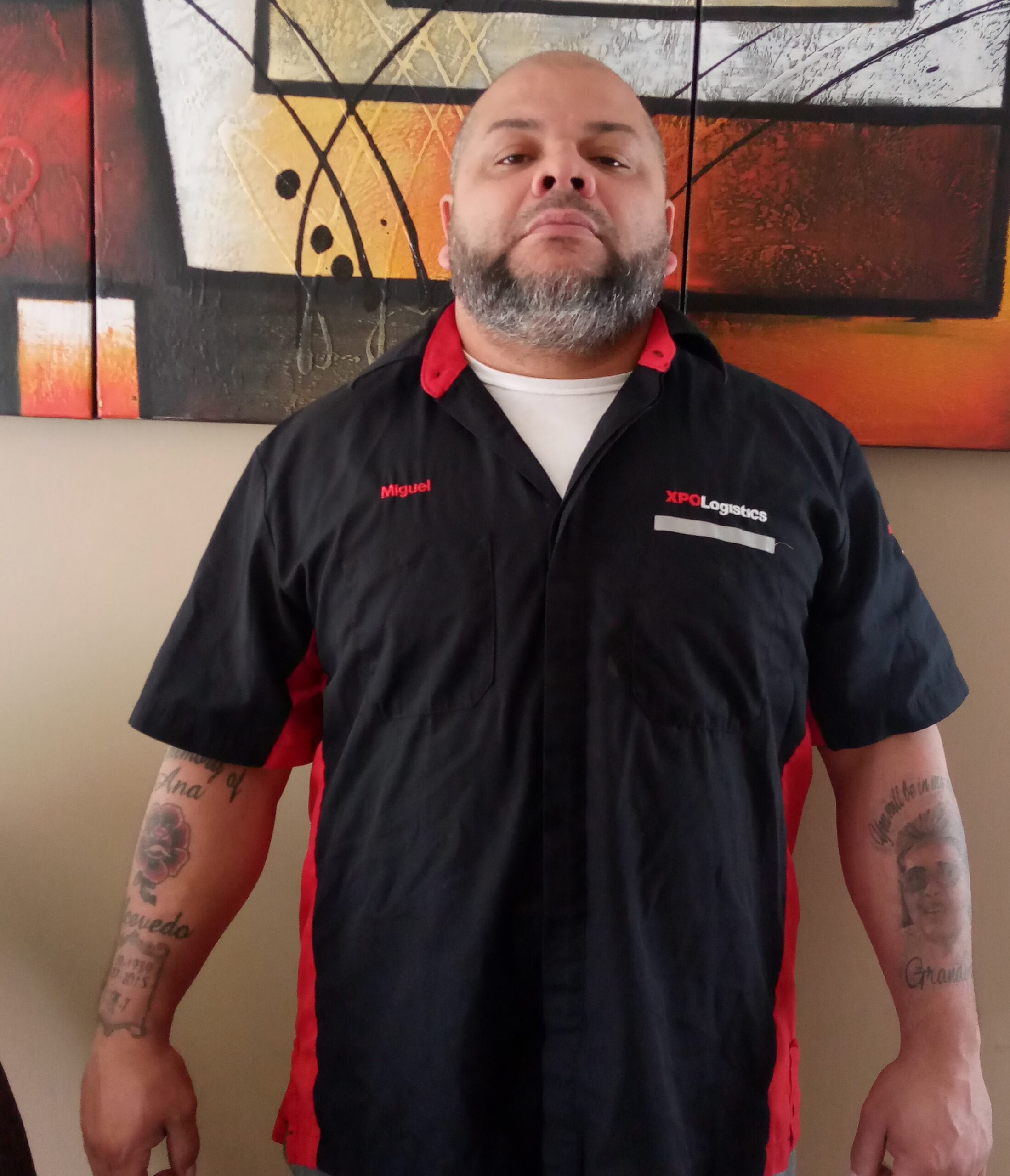
Reforms urged by Foundation staff attorneys eased Miguel Valle and his coworkers’ near-unanimous effort to vote out unpopular Teamsters officials, who tried to use “blocking charges,” ultimately to no avail.
WASHINGTON, DC – Workers in California and New Jersey who were previously subject to Teamsters bosses’ monopoly bargaining authority have freed themselves from unwanted union control.
The workers received free legal aid from Foundation staff attorneys, and benefited from rule changes at the National Labor Relations Board (NLRB) in Washington pushed for by the Foundation.
In California, Eliseo Haro, an employee at Los Angeles-based KWK Trucking, Inc., submitted a decertification petition with the NLRB because he and his coworkers were being ignored by Teamsters bosses. As Haro puts it, “The union never came in to talk to us, or negotiate a contract, or represent us. They disappeared.”
Haro’s petition was signed by nearly 80 percent of the workers in the 119-employee bargaining unit and called for an NLRB-supervised decertification election, in which KWK employees could vote out the unpopular union officials.
Rather than face an overwhelming defeat in the decertification election, Teamsters bosses chose to walk away. The union disclaimed interest in the unit, and NLRB Region 21 revoked Local 986’s certification as the workers’ monopoly bargaining agent.
New Jersey Decertification Effort Succeeds Despite Union Stall Tactics
In Cinnaminson, New Jersey, Teamsters officials did not immediately leave when a decertification petition was filed by Miguel Valle and his coworkers at a branch of XPO Logistics. Instead, Teamsters lawyers used nearly two months of unnecessary court proceedings to delay the election.
They demanded the vote be held in person at the Teamsters union hall. Foundation attorneys argued that the union lawyers’ requests were merely an effort to delay the vote. Ultimately, as expected, the NLRB’s Regional Director ruled that the election would be conducted by mail.
When Valle and his coworkers finally had their election, they voted 16-2 to remove Teamsters bosses from their workplace.
Foundation-Backed Rule Changes Reduce Needless Election Delays
For workers, just getting a decertification election is often difficult. In some cases, union bosses have created multi-year delays to stymie decertification efforts, trapping workers under union monopoly “representation” and often forced-dues payments they oppose, while they wait for a vote.
Union officials frequently attempt to delay or block decertification votes by filing “blocking charges,” unfair labor practice charges that can be used to hold up an election, even when they have nothing to do with the employees’ dissatisfaction with the union.
Union officials’ ability to use this tactic to block or delay votes has been limited by recent NLRB rulemaking, finalized in 2020. Under the NLRB’s new policy, which draws on comments filed by the National Right to Work Foundation, union charges cannot indefinitely stall employee votes, and in most instances votes occur without delay.
Additionally, as the Foundation advocated in its comments, instead of ballots being impounded for months or even years while “blocking charges” are resolved, the NLRB modified its original proposed rule so that in most cases ballots are tallied and the results are announced after employees vote.
“Union bosses can stick around for years, even when they face overwhelming opposition from rank-and-file workers, because of the legal barriers that protect union officials from decertification votes,” said National Right to Work Foundation Vice President and Legal Director Raymond LaJeunesse.
“Thanks to Foundation-backed reforms to the NLRB’s ‘blocking charge’ policy, union officials’ ability to trap workers in union ranks through legal trickery despite overwhelming opposition has been significantly curtailed.”
WV, TX Employees Defend Rights as Biden NLRB Appointee Attempts to Block Cases
The following article is from the National Right to Work Legal Defense Foundation’s bi-monthly Foundation Action Newsletter, May/June 2021 edition. To view other editions or to sign up for a free subscription, click here.
‘Acting’ GC tries to stop prosecution of union bosses for illegal dues, secret-organizing deal

Marissa Zamora is challenging the authority of NLRB “Acting” General Counsel Peter Ohr, who was installed by Pres. Biden in an unprecedented power grab and began attacking the rights of workers opposed to associating with union officials.
WASHINGTON, DC – President Biden’s unprecedented removal of National Labor Relations Board (NLRB) General Counsel Peter Robb, and subsequent installation of forced-unionism zealot Peter S. Ohr as Robb’s “Acting” replacement, quickly threatened workers’ individual rights. It also threatened the independence of the Board itself, including in multiple ongoing cases brought with National Right to Work Foundation legal aid.
In two cases brought by Foundation staff attorneys that are already before the NLRB, Ohr is attempting to stop the Board from ruling against union officials. One is a case for Texas-based nurse Marissa Zamora, which challenges union officials’ ability to hide secret “neutrality agreements” that limit workers’ rights. The other, brought for West Virginia Kroger employee Shelby Krocker, seeks to prosecute union officials for coercing workers into signing dues checkoff authorizations that are supposed to be voluntary.
Former NLRB General Counsel Peter Robb, who supported the workers in both of these cases, was removed by President Biden just minutes after his inauguration, despite the fact that Robb still had nearly 11 months remaining in his Senate-confirmed four-year term.
This unprecedented and possibly illegal maneuver flies in the face of the law creating the NLRB, which envisioned an independent General Counsel. Since the office of NLRB General Counsel was established in 1947, no sitting General Counsel of the NLRB has ever been fired by a president before the end of their term, even when the White House changed hands.
Zamora’s case progressed to the full NLRB in Washington, D.C., after an NLRB Administrative Law Judge (ALJ) dismissed a complaint that former NLRB General Counsel Peter Robb had issued, prosecuting the National Nurses Organizing Committee (NNOC) for refusing to disclose to represented employees its secret “neutrality agreement.”
TX Nurse Fights Biden Appointee Move to Shield Union’s Secret Deal
Though Zamora’s Foundation-provided attorneys and Robb had both filed exceptions urging the full Board to reverse the ALJ’s decision, NLRB Acting General Counsel Peter Ohr filed a motion on February 23, 2021, seeking unilaterally to send the complaint back to the NLRB Fort Worth regional office to be dismissed.
So-called “neutrality agreements” are organizing deals struck between union officials and employers, usually without the knowledge of employees in a workplace. They frequently contain provisions that require employers to silence opposition to unionization. In Zamora’s situation, the neutrality agreement was used to limit her ability to inform her coworkers about their right to vote out the union.
Zamora’s opposition brief challenges Ohr’s attempt to kill the case. It argues that the case is already before the full Board, and she “is a full party with a right to have her pending exceptions decided by the Board.” It notes that letting Ohr shut her out at this stage would “infringe on the Board’s exclusive power to adjudicate violations of” federal labor law.
Further, the brief contends that because of Robb’s unlawful removal, Ohr lacks the legal authority to even ask the NLRB to end the case. Allowing “the President to fire the General Counsel at will would do irreparable damage to the NLRB’s function as an independent agency,” the brief says.
In Krocker’s case, NLRB Region 6 in Pittsburgh initially dismissed Krocker’s charge challenging United Food and Commercial Workers Union (UFCW) checkoff cards which falsely stated that they “MUST BE SIGNED.”
West Virginia Kroger Employee Stands Up to Union-Allied Ohr
Foundation attorneys successfully appealed this dismissal to General Counsel Peter Robb, who sustained the charge and ordered NLRB Region 6 to issue a complaint prosecuting UFCW Local 400 for the violation.
In fact, Robb ordered Region 6 to issue the complaint on several additional grounds, including maintenance of a checkoff that prohibited employees from ending dues deductions after the expiration of a contract.
After an ALJ declined to rule that UFCW Local 400 officials violated the law with their “MUST BE SIGNED” demands and other unlawful provisions, Krocker’s Foundation staff attorneys and General Counsel Robb both appealed the case to the NLRB. Their appeals have been fully briefed before the Board since September.
After Ohr’s appointment, Region 6 entered into an inadequate informal settlement over Krocker’s objection and filed a motion to send the case back to Region 6.
Biden Appointee Shielding Union Boss Privileges
Krocker’s opposition to that motion argues, as does Zamora’s, that her case is already pending before the full NLRB and that Ohr lacks the authority to divert it away from the Board’s judgment.
“‘Acting’ NLRB General Counsel Peter Ohr’s unabated attacks on Foundation cases seeking to defend workers’ individual rights clearly show how imminent a threat our cases are to union bosses’ coercive and greedy behavior,” commented National Right to Work Foundation Vice President Patrick Semmens. “Ohr demonstrates repeatedly that he has no problem with turning the NLRB into the Biden Administration’s tool for stifling the rights of independent-minded workers who dare to stand up to Biden’s union boss allies.”
California Worker Hits Back after Regional Labor Board Tosses Out Concerns of Mail Vote Tampering by Teamsters Union Officials
Teamsters officials pushed to have union representation vote by mail as opposed to in-person, worker presents evidence of union using system to illegally solicit ballots
Los Angeles, CA (July 2, 2021) – Nelson Medina, an employee at transportation company Savage Services’ Wilmington, CA, facility, has just filed a Request for Review to the National Labor Relations Board (NLRB) in Washington, DC. He is demanding the Board review an NLRB Regional Director’s discarding of his objections to a mail ballot election pushed by Teamsters Local 848 union officials. This vote resulted in the Teamsters gaining monopoly bargaining power in Medina’s workplace, despite significant evidence that union officials manipulated the less-secure nature of mail elections to illegally solicit ballots, and despite evidence of other voter disenfranchisement that occurred due to flaws in the process.
Medina, who is represented for free by National Right to Work Foundation staff attorneys, in his brief reiterates evidence that at least 12 of his fellow employees never had their votes counted purely due to errors by the US Post Office and the NLRB regional office. He also details that a union lawyer had “access to the tracking numbers for two of the ballots” which were originally considered late, indicating unlawful vote harvesting by union officials.
Medina seeks to have the NLRB in Washington overturn the NLRB Regional Director’s decision and order a hearing on voter disenfranchisement. His brief argues that, if the Board orders such a hearing and “ultimately finds merit to some, but not all of these objections, there is a chance that the ballot solicitation objections” involve enough ballots to invalidate the mail election win that Teamsters officials claim they have. He also demands that a rerun vote be administered for him and his coworkers.
On the issue of voter disenfranchisement, Medina’s brief states: “the evidence will show that the timing of the mail ballot election during the pandemic and the U.S. Presidential election” led to a substantial number of votes not being counted. The circumstances surrounding the election also didn’t meet any of the criteria the NLRB set forth in its Aspirus Keweenaw standard for administering a mail vote, the Request for Review argues. The NLRB generally prefers the security of in-person elections to mail ballot ones.
With regard to ballot solicitation, Medina’s brief contends that the Teamsters lawyer’s possession of the tracking numbers of the untimely ballots “is highly suspect and creates an inference that the Union was involved in or assisted with the mailing of those two ballots,” and that the Regional Director’s decision to reject these concerns and those about voter disenfranchisement without a hearing to evaluate the issues is impossible to justify.
Earlier in 2021, Foundation staff attorneys filed an amicus brief for Medina in Professional Transportation, another NLRB case in which workers asserted that union officials were soliciting and collecting ballots illegally. That brief pointed out that the under the NLRB’s Fessler precedent “unions faced with mail ballot elections are likely to engage in voter solicitation knowing that…they are unlikely to ever get caught,” even though employers would almost certainly be punished for attempting the same thing.
“Union bosses prefer mail ballots for unionization elections over in-person NLRB-monitored secret ballot votes for the same reason Big Labor advocates for ‘card check’ unionization: without direct NLRB oversight it is easier for union agents to apply pressure tactics, threats, and other coercive measures,” commented National Right to Work Foundation President Mark Mix. “Mr. Medina and his coworkers deserve a secure in-person election so they can freely choose who will speak for them in the workplace, and Foundation staff attorneys will keep fighting for them until they get it.”
Chicago Educators Press Seventh Circuit, Supreme Court to Stop Anti-Janus Schemes
The following article is from the National Right to Work Legal Defense Foundation’s bi-monthly Foundation Action Newsletter, May/June 2021 edition. For updates in the case for Troesch and Nkemdi, click here. To view other editions of Foundation Action or to sign up for a free subscription, click here.
Teachers continue battling Chicago teacher union “escape period,” file brief with Supreme Court

“I want people’s constitutional rights, the right to work to be established,” Ifeoma Nkemdi told the Chicago Tribune in 2020 about her and Joanne Troesch’s battle against CTU union boss-devised schemes to trap teachers in forced dues.
CHICAGO, IL – With free legal aid from National Right to Work Foundation staff attorneys, Chicago Public Schools (CPS) educators Ifeoma Nkemdi and Joanne Troesch are appealing to the U.S. Seventh Circuit Court of Appeals their class-action civil rights lawsuit against the Chicago Teachers Union (CTU) and The Board of Education of the City of Chicago (Board) for unconstitutional dues seizures.
The suit challenges a union policy that blocks teachers from exercising their First Amendment right under the Foundation-won Janus v. AFSCME decision to stop payments to the union outside of the month of August. It also seeks refunds of all dues seized from dissenting educators by the Board.
In Janus, which was argued by one of Troesch and Nkemdi’s Foundation staff attorneys, the High Court struck down mandatory union fees as a violation of government employees’ First Amendment rights. The Court ruled that taking any dues without a government worker’s affirmative consent violates the First Amendment, and further made it clear that these rights cannot be restricted absent a clear and knowing waiver.
The appeal comes after the U.S. District Court for the Northern District of Illinois dismissed Troesch and Nkemdi’s lawsuit on February 25, 2021. The court sided with CTU and Board officials, ruling they didn’t violate Janus by forbidding the two educators from exercising their First Amendment right to cut off union dues except for one month a year. This prompted Foundation attorneys to appeal the case to the Seventh Circuit.
CTU Bosses Pilfered from Paychecks Even after Educators Opted out
Troesch and Nkemdi’s lawsuit explains that they “did not know they had a constitutional right not to financially support” the union hierarchy until the fall of 2019. The pair independently discovered their First Amendment Janus rights while they were researching how to exercise their right to continue working during a strike that CTU bosses ordered in October 2019, the lawsuit notes. They sent letters the same month to CTU officials to exercise their Janus right to resign union membership and cut off all dues deductions.
Both educators received no response until November of that year. CTU officials then confirmed receipt of the letters but said that they would continue to seize dues from the educators’ paychecks “until September 1, 2020.” CTU bosses relied on the fact that Troesch and Nkemdi had not submitted their letters within a union boss-created “escape period,” which limits when teachers can exercise their First Amendment right to end dues deductions.
Troesch and Nkemdi contend that CTU and Board officials’ attempt to curb employees’ right to stop dues deductions with an “escape period,” and the Board’s seizure of dues after they dissociated from the union, both violate the First Amendment. Their lawsuit seeks to make the CTU union and the Board stop enforcing the “escape period,” and notify all bargaining unit employees that they can end the deduction of union dues at any time and “retroactively exercise that right.”
Troesch and Nkemdi’s efforts to defeat union boss-concocted “escape period” schemes don’t stop at their lawsuit. The pair submitted an amicus brief in Belgau v. Inslee, which is currently pending on a petition for certiorari at the U.S. Supreme Court.
New Legal Brief Backs SCOTUS Challenge to Union “Escape Period” Scheme
Belgau involves a group of Washington State employees, led by Melissa Belgau, who are fighting similar policies imposed by Washington Federation of State Employees (WFSE) union officials and the State of Washington.
University of California Santa Barbara employee Cara O’Callaghan, Maumee City (Ohio) School District employee Chelsea Kolacki, and Springfield (Ohio) Local School District employee Michelle Cymbor also joined this brief. All of them have been subjected to First Amendment violations similar to those at issue in Belgau and the Chicago educators’ case.
Foundation staff attorneys provided free legal aid in filing the brief, and currently represent public servants in at least 14 cases where union officials have tried to confine their First Amendment Janus rights to an “escape period.”
“Each day that the courts fail to fully enforce Janus is another day that union bosses are allowed to seize the hard-earned money of dissenting public servants in clear violation of their First Amendment rights,” commented National Right to Work Foundation President Mark Mix. “The Foundation is proud to stand with Ms. Troesch and Ms. Nkemdi, and will continue to defend all educators who simply want to serve their students and community without being forced to subsidize union activities.”
Photo Credit: Terrence Antonio James/Chicago Tribune/TCA
National Right to Work Foundation Celebrates Third Anniversary of Janus Ruling Protecting Public Employees from Forced Union Dues
Foundation continues to assist workers fighting union boss violations of landmark First Amendment Supreme Court decision
Washington, DC (June 25, 2021) – Three years ago, the Supreme Court issued its decision in the landmark Janus v. AFSCME case, holding that it is unconstitutional to force public sector workers to pay money to a union as a condition of employment. In that case the plaintiff, Mark Janus, was represented by veteran National Right to Work Legal Defense Foundation staff attorney William Messenger, who presented oral arguments before the High Court in February 2018.
Foundation President Mark Mix issued the following statement to commemorate the decision’s three year anniversary on June 27:
“Today we celebrate a victory for public sector workers across the country. In Janus v. AFSCME, the Supreme Court affirmed that it is unconstitutional to force public sector workers to pay money to unions just to keep their jobs. The Court held that public sector union officials cannot take workers’ money without first obtaining their affirmative consent. For decades, union bosses hadn’t bothered to get workers’ consent, taking money even from those who object to unions and their efforts to influence public policy.
Yet, despite the High Court’s clear ruling, even three years later, Big Labor continues the widespread violation of workers’ First Amendment Janus rights.
From coast-to-coast, union bosses and their allies in state and local government have enacted policies to trap workers into forced dues by declaring that workers can only stop paying dues during an ‘escape period’ that often lasts only a few days each year. These policies turn the Constitution on its head, by claiming that so long as you permit someone to exercise their First Amendment rights for a brief designated time, you can deliberately deny those rights the rest of the year.
This blatant violation of the law is frustrating, but it’s what you’d expect when Big Labor spends billions in members’ dues money lobbying the government and hiring an army of lawyers to argue against workers’ rights in court. Luckily, the National Right to Work Foundation is fighting back for independent-minded workers.
Foundation attorneys successfully defeated several union boss ‘escape period’ schemes, including one that affected nearly 30,000 Ohio public employees. But we haven’t stopped there, the Foundation now has 14 active cases challenging ‘escape periods,’ including two cases for teachers in New Jersey and Chicago that have been appealed to the Supreme Court. If either of these cases ends in another Foundation Supreme Court victory, it would eliminate ‘escape period’ schemes across the country and further solidify the groundbreaking protections won for public sector workers in the Janus case. Though union bosses will continue to resist, the Foundation will not stop fighting until the First Amendment rights of every worker in America are honored.”
National Right to Work Foundation President Says Cedar Point Nursery SCOTUS Decision One Step in Nixing Coercive Union Power
Yesterday the U.S. Supreme Court ruled 6-3 in Cedar Point Nursery v. Hassid that a California law forcing farmers to let union agents occupy their property for solicitation to workers violates farmers’ private property rights.
National Right to Work Foundation President Mark Mix emphasized that there is still a long battle ahead in eliminating the many government-granted special privileges given only to union officials:
“While the Court’s ruling ends one example of a special power granted to unions but not any other type of private organization in the country, there remains much to do to roll back the numerous other government-granted coercive powers that union bosses use to expand their power over American workplaces, often in violation of individual workers’ rights.
“Union officials can still force their so-called ‘representation’ on workers who do not want and never asked for it, force employers to hand over workers’ private contact information even over workers’ objections, and, in states that lack Right to Work laws, force nonmember workers to pay money to the union under threat of termination.”
Recently, Foundation staff attorneys have represented rank-and-file workers for free in many cases challenging these privileges, including a case for Indiana workers who were forced under union “representation” despite them unanimously voting to oust the union, a case for a Rhode Island nurse who was defending her right not to pay for union lobbying as a condition of employment, and a case where a Delaware worker is challenging union officials’ ordering his employer to turn over his private information.
Click here for the National Right to Work Foundation’s list of “Big Labor’s Top Ten Special Privileges.”





