
Tennessee AT&T Workers Avert ‘Card Check’ Catastrophe with Foundation Aid
The following article is from the National Right to Work Legal Defense Foundation’s bi-monthly Foundation Action Newsletter, May/June 2024 edition. To view other editions of Foundation Action or to sign up for a free subscription, click here.
CWA union officials tried to lock workers in inescapable unit without vote

President Biden, a longtime ally of radical CWA union officials, has stocked the National Labor Relations Board with ex-union lawyers who are manipulating labor law to give union bosses more options to trap workers in unions without a vote.
TENNESSEE – Over the years, National Right to Work Foundation staff attorneys have successfully represented countless workers across the country who have opposed union officials’ attempts to force them under monopoly bargaining via the coercive “card check” process. Unsurprisingly, workers prefer to cast ballots in secret, as opposed to having that right snatched in favor of a scheme where union bosses can intimidate workers into signing a card “authorizing” union control.
Fortunately, workers can turn to the Foundation for free legal aid in fighting coercive card check unionization. For example, in March, Denis Hodzic and his fellow In-Home Experts from AT&T Mobility locations across Tennessee successfully challenged a card check campaign by Communications Workers of America (CWA) union bosses that would have almost certainly confined them in the union for the rest of their careers with the company.
Union Bosses Tried to Trap Workers, Then Fled When Faced with Actual Vote
CWA agents installed themselves over Hodzic’s work unit — which was comprised of over 100 AT&T In-Home Experts — by card check. Shortly after, however, Hodzic filed a petition asking the National Labor Relations Board (NLRB) to hold a “decertification vote” to remove the union. Roughly two-thirds of his work unit signed the petition demanding a secret-ballot vote on the union’s presence.
CWA union officials filed objections in an attempt to stop the election, but an NLRB Regional Director rejected these and ruled that a decertification election should go forward. Before the vote could occur, CWA union officials filed paperwork disclaiming interest in continuing their control over the workers — likely to avoid an embarrassing rejection by employees at the ballot box.
Had Hodzic and his coworkers’ effort not succeeded, NLRB documents indicate that they would have been integrated into a nationwide bargaining unit comprised of thousands of employees, which would have made petitioning for a vote to kick out the union virtually impossible.
Biden NLRB Boosting Card Check Despite Unreliability
Cases like Hodzic’s serve as potent reminders that card check doesn’t represent the true will of workers vis-à-vis bringing in a union. Even AFL-CIO organizing guidelines admit that employees often sign cards during a card check to “get the union off my back.”
Despite this, the Biden NLRB is rapidly increasing union bosses’ ability to corral workers into a union via card check while cutting down workers’ ability to vote in secret-ballot union elections. In the August 2023 Cemex decision, the agency greatly expanded union bosses’ power to overturn elections that don’t go in their favor if an employer requests such an election to challenge a card check.
The Biden NLRB is also conducting rulemaking to overturn the Election Protection Rule (EPR), a set of Foundation-backed reforms that the NLRB adopted in 2020. The EPR permits employees to submit decertification petitions within a 45-day window after the finalization of a card check. This process was originally established by Foundation attorneys in the 2007 Dana Corp. NLRB case. Though this decision was later overturned by the Obama NLRB, “Dana elections” were codified in the EPR.
Hodzic and his colleagues were able to request their election under the auspices of this policy.
“The NLRB Election Protection Rule was essential for us to rely on as we went through the process of seeking resolution to our tricky situation,” Hodzic commented. “The 45-day petition window needs to remain regardless of which group holds the majority position in Washington . . . . [W]e hope that lawmakers see the necessity of having this rule in place, and that both unions and employers abide by the laid-out NLRB processes to ensure fair representation and protection of workers.”
“While Mr. Hodzic’s story had a happy ending, his situation illustrates just how dire things will get once the Biden NLRB’s anti-freedom agenda is fully realized,” commented National Right to Work Foundation Vice President and Legal Director William Messenger. “While American union bosses may desire a world in which they can force employees into inescapable work units without even a vote, Foundation attorneys will continue to fight for workers’ right to choose freely whether they want union control or not.”
Foundation to Justices: Workers Opposing Unions Isn’t ‘Harm’ to be Eliminated
The following article is from the National Right to Work Legal Defense Foundation’s bi-monthly Foundation Action Newsletter, May/June 2024 edition. To view other editions of Foundation Action or to sign up for a free subscription, click here.
Brief in Starbucks-related SCOTUS case counters Labor Board attempts to impose union control
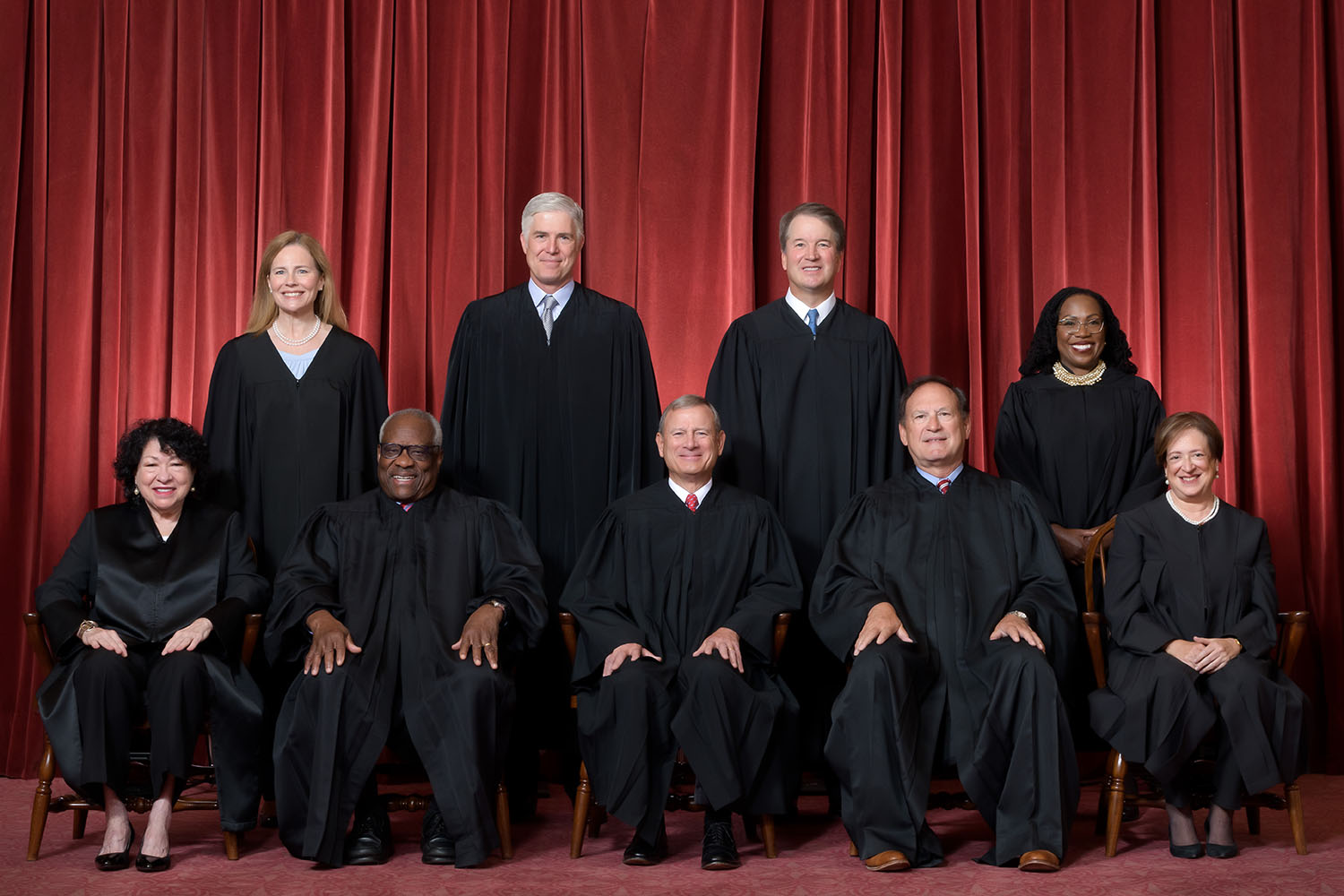
With the Supreme Court reviewing the standard used when the NLRB seeks injunctions that cement unions in power, the Foundation told the High Court such injunctions should not be allowed to infringe on workers’ legitimate right, under federal labor law and the Constitution, to oppose unionization.
WASHINGTON, DC – “Heads I win, tails you lose”: That’s how a brief filed by National Right to Work Foundation staff attorneys with the U.S. Supreme Court describes the Biden National Labor Relations Board’s (NLRB) argument that worker opposition to a union should count as a reason to impose union bosses’ demands on a workplace. The Supreme Court agreed to hear a case on this issue in January, with arguments scheduled for late April.
“Evidence that employees support a union is taken to mean they want to support the union,” the brief says. “Evidence that employees oppose a union is taken to mean their employer must have wrongfully caused the employees not to support the union. All evidence conveniently leads to the conclusion desired by current NLRB leadership: employees should support unions.”
The Foundation’s brief before the High Court in Starbucks v. McKinney discusses how NLRB officials use this radical assumption to urge federal courts to hit employers with “10(j) injunctions” that coerce the employers to give into certain union-demanded behavior. As Foundation attorneys explain, the NLRB often tells courts that worker discontent with a union is a “harm” that the courts should rectify with a 10(j) injunction.
Foundation in Starbucks Case: Worker Opposition to a Union is a Basic Right
Foundation staff attorneys push back on this theory in their legal brief, arguing that an employee’s decision to not support a union is not a “harm,” but a “legitimate choice [they] have a right to make” under both the National Labor Relations Act (NLRA) and the First Amendment to the Constitution.
Union bosses and their allies in the NLRB want the U.S. Supreme Court to establish a rule in Starbucks v. McKinney that permits injunctions against employers if their alleged conduct could potentially coerce workers into not supporting a union. Foundation attorneys instead argue that “the Court must require the NLRB to prove employees were unlawfully coerced not to support a union because, absent such proof, employees have every right to make that choice” (emphasis added).
Starbucks Workers Challenging NLRB Constitutionality
In addition to fighting cynical attempts by Biden NLRB bureaucrats to turn worker opposition to unions into a reason to beef up union officials’ coercive power, Foundation attorneys are assisting two groups of Starbucks workers with federal lawsuits challenging the constitutionality of the Biden NLRB as a whole.
The newest effort comes from San Antonio, TX-area Starbucks employee Reed Busler and his coworkers. They submitted a petition to the NLRB containing enough employee signatures to prompt a vote to “decertify,” or remove, the SBWU union. But an NLRB Regional Director blocked the vote based on union allegations of employer misconduct that have no proven connection to Busler and his colleagues’ effort to vote out the union. Busler himself noted in an NLRB filing that the move to decertify started “because the Union was a divisive force in our store” and ignored workers.
Busler has filed a federal lawsuit against the NLRB arguing its structure violates the Constitution’s separation of powers doctrine because NLRB Board Members are insulated from at-will removal. The lawsuit seeks an injunction that halts the NLRB from proceeding with his decertification case until his federal lawsuit is resolved.
“Starbucks is becoming ‘ground zero’ for several key battles over worker freedom,” commented National Right to Work Foundation Vice President Patrick Semmens. “Underlying a large portion of the drama is the NLRB’s flawed theory that workers’ exercise of their right to oppose unions is an evil to be eradicated, which unions and their allies in the NLRB bureaucracy are trying to use to force down their agenda on workplaces across the country.
“An even bigger issue, however, is the fact that the NLRB has for decades operated as a kangaroo court run by powerful bureaucrats who exercise unaccountable power in violation of the Constitution,” Semmens added. “American employees shouldn’t be forced to fight for their rights in such a pro-union boss environment.”
Employees at Eight Philadelphia International Airport Restaurants May Soon Vote Out Unite Here Union Bosses
Federal labor board in Philadelphia rejected all union arguments for blocking employee-requested election; vote now scheduled for July 17
Philadelphia, PA (July 10, 2024) – After almost five months of litigation, Kale Mulugeta and her coworkers at various restaurants throughout Philadelphia International Airport will finally get a chance to vote on whether to remove Unite Here Local 274 union officials from power. Mulugeta, who is receiving free legal aid from National Right to Work Foundation staff attorneys, spearheaded the effort by filing a petition requesting such a vote – which is known as a “decertification election” – with National Labor Relations Board (NLRB) Region 4 in Philadelphia in February.
Mulugeta’s petition contained signatures from over 60% of her coworkers at New York Ice Cream, Inc., which operates two Dunkin Donuts locations, three Smashburger locations, two Jamba Juice locations, and one Bruegger’s Bagels location at Philadelphia International Airport. NLRB rules only require that 30% of a work unit express interest in having a union decertification election in order to trigger such an election.
After months of delay caused by union litigation, NLRB Region 4 announced in a June 27 Decision and Direction of Election that the election will occur on July 17 at Philadelphia International Airport.
Because Pennsylvania lacks Right to Work protections for its private sector workers, Unite Here union officials are empowered by law to demand Mulugeta and her coworkers pay union dues just to keep their jobs. In contrast, in Right to Work states, union membership and union financial support are strictly voluntary. If a majority of the New York Ice Cream employees vote on July 17 to remove the Unite Here union, they will be free from both the union’s bargaining power and forced-dues demands.
Union Bosses Tried to Portray Dues-Paying Employee as “Manager’s Agent” to Stop Vote
NLRB Region 4’s Decision and Direction of Election puts an end to nearly five months of litigation over Mulugeta’s petition. Unite Here union officials tried to argue that Mulugeta, who in addition to other restaurant duties often serves as a translator between managers and Amharic-speaking restaurant staff, was ineligible to submit the petition because she was an agent of the manager and not a rank-and-file employee. The union claimed she was ineligible despite the fact that she pays money to the union as a condition of staying employed.
The NLRB Region 4 Director rejected these union arguments, stating that “the record is devoid of any witness testimony from employees showing their perception of Mulugeta’s authority, or whether they believed that Mulugeta spoke for and on behalf of the Employer…”
“As such, Mulugeta’s role as a bilingual employee serving solely as the Employer’s interpreter is insufficient to elevate her status to that of an agent or apparent agent [of the employer],” the decision states.
The decision also threw out union contentions that Mulugeta and some of her other colleagues were “managerial employees” and thus outside the bargaining unit and ineligible to vote. “There is no evidence that Mulugeta [and her colleagues] attend any management meetings…or that they have any authority to formulate or effectuate high-level policy on behalf of the Employer,” the decision states.
Unite Here Local 274 Facing Second Removal Attempt by PHL Employees Since 2023
Mulugeta and her coworkers aren’t the only workers at Philadelphia International Airport that Foundation staff attorneys have aided recently in voting out Unite Here Local 274. In May 2023, employees at the airport’s location of Guava & Java voted to remove the union 32-9 after obtaining a vote with free Foundation legal aid.
“Ms. Mulugeta and her coworkers’ situation demonstrates the struggles that rank-and-file employees face when trying to exercise their right to free themselves from a union hierarchy that they don’t believe serves their interests,” commented National Right to Work Foundation President Mark Mix. “Workers face legal resistance from union lawyers themselves. But it also doesn’t help that the perennially pro-union boss Biden NLRB has been pushing policy after policy designed to aid union bosses in trapping workers under union ‘representation.’
“Ms. Mulugeta and her coworkers deserve this chance to finally exercise their rights, and Foundation staff attorneys are proud to help them,” Mix added.
Michigan Security Guards Fight to End Union Bosses’ Forced-Dues Power
The following article is from the National Right to Work Legal Defense Foundation’s bi-monthly Foundation Action Newsletter, May/June 2024 edition. To view other editions of Foundation Action or to sign up for a free subscription, click here.
Worker blasts state Right to Work repeal: ‘Now… [we] must join or lose our jobs’

Freedom Fighter: Security guard James Reamsma is disappointed that the Right to Work repeal re-imposes forced-dues payments, but he and his coworkers still have a shot to restore their liberty.
GRAND RAPIDS, MI – In February, Big Labor allies in the Michigan Legislature and union partisan Gov. Gretchen Whitmer saw their plans to enrich union bosses at the expense of workers come to fruition. The repeal of the state’s Right to Work law — which Whitmer and state legislators backed despite polling showing that 70% of Michiganders wanted the law to remain in place — became effective that month.
Michigan’s Right to Work law, which took effect in 2013, was popular for a reason: It protected the state’s private sector workers from being forced to pay union dues as a condition of employment. Michigan then experienced substantial economic gains while the law was effective. Now that union bosses can again force Michigan workers to pay dues or be fired, it’s no surprise that National Right to Work Foundation staff attorneys are seeing worker backlash to the change.
Despite Repeal, Western MI Guards Can Still Restore Worker Freedom
In a rebuke to the Right to Work repeal, security guards from government buildings across Western Michigan in February backed a “deauthorization petition” that will kick off a process that could strip union officials of the United Government Security Officers of America (UGSOA) of their forced-dues powers. In a non-Right to Work state, deauthorization is the only option that workers have to remove union bosses’ forced-dues power apart from voting the union out in a decertification election.
Similar to the decertification process, workers who petition the National Labor Relations Board (NLRB) for a deauthorization vote must obtain signatures from 30% or more of their colleagues to trigger a vote. James Reamsma, the security guard who submitted the deauthorization petition with free Foundation legal aid, had signatures far beyond this threshold.
“UGSOA union officials have threatened to have everyone who does not join the union fired,” commented Reamsma. “Many of us are retired police officers, or military, working part time, supplementing our income by providing security for government buildings across Michigan.
“When Right to Work was in place, guards were never forced to join the union. Now part-time guards are expected to pay the same high dues as full-time guards and all guards must join or lose our jobs,” decried Reamsma.
According to the petition, the requested deauthorization vote will take place among “all full-time and regular part-time security guards . . . performing services for the Company . . . in and around the cities of Alena, Cadillac, Petoskey, Traverse City, West Branch, Flint, Bay [C]ity, [Big] Rapids, Ludington, Mount Pleasant, Owosso, Saginaw, Escanaba, Houghton, Ironwood, Marquette, Sault Ste. Marie, Grand Rapids, Holland, and Muskegon, Michigan.”
In addition to providing free aid to Wolverine State workers like Reamsma and his colleagues who are taking legal action to counter forced dues, the Foundation also issued a legal notice in February to all Michigan workers explaining the new legal landscape.
In New Anti-Freedom Environment, Foundation Keeps MI Workers Informed
The notice explains that while union bosses again have forced-dues power in the private sector, private sector workers can still object to paying dues for union political purposes as per the Foundation-won CWA v. Beck Supreme Court decision, or end forced dues in their workplace entirely by decertifying or deauthorizing the union.
As for public sector workers, the Foundation’s 2018 victory at the Supreme Court in Janus v. AFSCME ensures that their freedom from forced dues is still protected by the First Amendment despite the cynical Right to Work repeal.
“Within weeks of Michigan’s Right to Work repeal, we see the harm Big Labor’s coercive policy agenda inflicted on rank-and-file workers,” commented National Right to Work Foundation President Mark Mix. “Mr. Reamsma and his colleagues, who will be providing security to Western Michigan’s government buildings during what is likely to be another turbulent election year, don’t deserve to be forced into financially supporting a union they disapprove of, nor does any Michigan private sector employee.
“While union boss powers have greatly expanded since the Right to Work repeal, workers still have some rights to resist union boss coercion, and Foundation attorneys stand ready to help them exercise those rights,” Mix added.
Healthcare Workers at HRI Hospital Win Campaign to Remove Unwanted SEIU Union Bosses
SEIU 1199 officials concede defeat after a majority of employees sign petition backing Federal Labor Board-run decertification election
Brookline, MA (June 24, 2024) – Employees at HRI Hospital, Inc in Brookline, MA have won their freedom from Service Employees International Union (SEIU) Local 1199, which also calls itself the “United Healthcare Workers” union. HRI Hospital employee Veronica Kpodo filed a petition on behalf of a majority of the 100 healthcare workers seeking a vote to remove the union. The decertification petition was filed with free legal aid from the National Right to Work Legal Defense Foundation.
Kpodo filed the petition on June 17 with the National Labor Relations Board (NLRB), the federal agency responsible for enforcing federal labor law, which includes administering elections to install (or “certify”) and remove (or “decertify”) unions. Kpodo’s petition contained support from a majority of employees in the bargaining unit made up of registered nurses, mental health workers, unit secretaries, dietary, utility servers, and switchboard workers.
Rather than contest the election, which had the backing of a majority of employees who would have been eligible to vote, SEIU union officials conceded defeat days after the decertification petition was filed by announcing their intention to disclaim recognition. Soon after, on June 24, 2024, the NLRB officially recognized that the SEIU was no longer the monopoly bargaining representative of the employees, meaning Kpodo and her colleagues had won their campaign to remove the union.
Massachusetts is not a Right to Work state, meaning that union officials have the power to force employees, like those at HRI Hospital, to pay fees to a union as a condition of keeping their jobs. In contrast, in Right to Work states union membership and financial support are strictly voluntary.
However, even in Right to Work states, federal law grants union officials the power to impose their “representation” on all workers in a unit, even those who oppose the union or voted against its presence. To end that forced representation, workers can choose to exercise their right under federal law to decertify a union they oppose.
“We are glad to hear these employees successfully exercises their right to cut ties with unwanted SEIU union bosses,” said National Right to Work Foundation President Mark Mix. “Obviously SEIU officials saw the writing on the wall, which is why they quickly conceded defeat and walked away.”
“This is just the latest example of the growing demand among workers across the country for Foundation assistance in exercising their legal rights to remove unwanted unions from the workplace,” added Mix. “We encourage other workers who want to learn about their workplace rights, including the right to decertify an unwanted union, to contact the Foundation for free legal information and assistance.”
California Transportation Worker Files Lawsuit Challenging Constitutionality of National Labor Relations Board
Lawsuit joins challenges by three other employees against NLRB on grounds that structure of agency violates Article II of the Constitution
Los Angeles, CA (June 14, 2024) – On Tuesday, Victor Avila, an employee of Savage Services Corporation in California, filed a federal lawsuit challenging the structure of the National Labor Relations Board (NLRB) as a violation of the U.S. Constitution. Avila is receiving free legal assistance from the National Right to Work Legal Defense Foundation.
Avila filed Unfair Labor Practice charges with the NLRB against the Teamsters Local 848 union in August 2023. On February 9, NLRB Region 21 in Los Angeles issued a complaint against Teamsters Local 848 on the grounds that the union violated Avila’s rights when the Teamsters, through an agent, had “threatened unit employees with physical violence for not supporting the Union.”
This week a National Labor Relations Board Administrative Law Judge began hearing that case. Soon after that hearing began, Avila’s federal lawsuit was filed in the United States District Court for the District of Columbia, where the NLRB is based. The lawsuit raises fundamental constitutional concerns regarding the removal power vested in the President under Article II of the Constitution. Avila contends that the NLRB, composed of five members with limited removal authority, infringes upon the President’s constitutional prerogative to oversee and remove executive officials who wield substantial executive power. The complaint states that “Avila is entitled to have a constitutionally structured Board, properly accountable to the President, adjudicate his case and rule on his unfair labor practice charge.”
Avila’s lawsuit points to recent Supreme Court rulings, including Seila Law LLC v. CFPB and Collins v. Yellen, which underscored the necessity for presidential control over executive officials exercising significant authority. Avila argues that the NLRB’s structure, as defined by the National Labor Relations Act (NLRA), places impermissible limitations on the President’s removal power, thereby violating the Constitution’s separation of powers doctrine.
Starbucks Employees Also Challenging Federal Labor Board Structure in Two Federal Lawsuits
Avila’s case is not the only federal lawsuit filed by employees challenging the structure of the NLRB as unconstitutional with free legal aid from the National Right to Work Legal Defense Foundation. Three Starbucks employees, each of whom has had their attempt to hold decertification votes to remove unwanted Starbucks Workers United (SBWU) union officials from their workplace blocked by NLRB officials, have made similar arguments in federal lawsuits.
Ariana Cortes and Logan Karam, two Starbucks employees from New York, recently filed an appeal to the D.C. Circuit Court of Appeals in their lawsuit. They are appealing a District Court judge’s ruling that they lacked standing to bring their challenge. The ruling didn’t address the core constitutional arguments their lawsuit raised. Another Starbucks employee, Reed Busler, filed another similar lawsuit that is currently pending in the Northern District Court in Texas.
“Labor law cannot and should not be immune from the requirements of the U.S. Constitution and Mr. Avila is entitled to have his case adjudicated by a constitutionally accountable body,” said Foundation President Mark Mix. “Too often the Biden NLRB has operated like a taxpayer-funded arm of the AFL-CIO, and this case is just one of many where employees are seeking to defend their rights against a biased agency that acts as if it’s power has no limits.”
Michigan Meijer Employee Hits Supermarket with Federal Charges for Forcing Him to Join UFCW Union or Be Fired
Charges come as more workers challenge union bosses’ forced-dues power in wake of Michigan Right to Work repeal
Sault Ste. Marie, MI (June 11, 2024) – Joseph Arnold, an employee at the 3 Mile Road branch of Meijer in Sault Ste. Marie, has just slammed the supermarket’s management with federal charges for threatening to fire him if he didn’t complete a United Food and Commercial Workers (UFCW) union membership form. Arnold filed the charges at Region 7 of the National Labor Relations Board (NLRB) with free legal aid from National Right to Work Foundation staff attorneys.
The NLRB is the federal agency responsible for enforcing federal labor law in the private sector. Under federal law and U.S. Supreme Court decisions like General Motors v. NLRB, neither union officials nor employers can compel workers to maintain formal union membership as a condition of getting or keeping a job.
This applies even in non-Right to Work states like Michigan, where union bosses have legal privileges to enforce contracts that require workers to pay union dues or fees as a condition of employment. Employees in non-Right to Work states who choose to abstain from formal union membership also have the right under the Foundation-won Communications Workers of America v. Beck Supreme Court decision to object to paying union fees for anything unrelated to the union’s bargaining functions, such as political activities.
In contrast, in Right to Work states like neighboring Indiana and Wisconsin, all union financial support is strictly voluntary.
With the demand that Arnold sign a UFCW membership form or else be fired, Meijer officials appear to be imposing both full union membership and full union dues payments on him. Other workers have reported receiving similar demands to join or be fired.
Workers Across Michigan Challenge Forced-Dues Schemes
“Even though Michigan isn’t a Right to Work state anymore, that doesn’t give my employer agency to dictate my options,” commented Arnold. “Through ignorance or intent, Meijer threatening my job because I don’t want to associate with the union is unacceptable. If Meijer truly respects our rights they would present us with all options, as it is the job of the union to advocate my interests with my employer, not the job of my employer to advocate the interests of the union with me.”
Since the state’s Right to Work law was repealed earlier this year, Foundation attorneys have handled a flurry of cases for Michigan workers seeking to end coercive union influence in their workplaces. One such case involves illegal UFCW practices at a Kroger in Milford, Michigan, where employee Roger Cornett has levied federal charges against both the union and the store for jointly enforcing a scheme that forces employees to contribute to the union’s Political Action Committee (PAC) to stay employed.
Elsewhere in Michigan, Grand Rapids-area security guard James Reamsma is currently defending his and his coworkers’ recent “deauthorization vote” to nullify the forced-dues power of a United Government Security Officers of America (UGSOA) union. The UGSOA currently holds monopoly bargaining power over security guards posted at government buildings across Western Michigan, including in Sault Ste. Marie. Even though more of Reamsma’s colleagues voted for the deauthorization of the UGSOA than against it, litigation continues over the results. Reamsma’s case is one of many where Michigan workers are seeking to end union bosses’ power to compel payment of union dues or fees, and return to voluntary dues payments, as was protected under Michigan’s popular Right to Work law.
“Based on the cases that Foundation attorneys have already fielded in the short time that Michigan’s Right to Work law has been repealed, it’s clear that Michigan workers need more protection from coercive union power, not less,” commented National Right to Work Foundation President Mark Mix. “Union officials and complicit employers will often push the boundaries of what’s legal in an attempt to extend union power over workers regardless of whether they want or asked for the union.”
Starbucks Employee Takes Case Challenging Federal Labor Board Structure as Unconstitutional to Court of Appeals
NY Starbucks workers are challenging NLRB that refuses to let them hold decertification votes to remove unwanted SBWU union
Washington D.C. (June 10, 2024) – Ariana Cortes and fellow plaintiff Logan Karam, two Starbucks employees from New York, are taking their groundbreaking lawsuit against the National Labor Relations Board (NLRB) to the D.C. Circuit Court of Appeals. The lawsuit, initially filed by Cortes, and later joined by Karam, follows NLRB officials’ refusal to process their respective petitions requesting a vote to remove Starbucks Workers United (SBWU) union officials from their workplace.
The lawsuit, filed with free legal aid from the National Right to Work Legal Defense Foundation, argues that the NLRA violates Article II of the Constitution by shielding NLRB Board Members from being removed at the discretion of the President. The appeal challenges the District Court decision that dismissed the lawsuit on the grounds that the plaintiffs lack legal standing. That decision did not address the underlying claim regarding whether the Labor Board’s structure complies with the requirements of the Constitution.
Multiple Starbucks Employees Are Suing the NLRB
On April 28, 2023, Cortes submitted a petition, supported by a majority of her colleagues, asking the NLRB to hold a decertification election at her workplace to remove SBWU union officials’ bargaining powers over workers at the store. However, NLRB Region 3 rejected Cortes’ petition, citing unfair labor practice accusations made by SBWU union officials against Starbucks. Notably, there was no established link between these allegations and the employees’ decertification request.
Similarly, Karam filed a decertification petition seeking a vote to remove the union at his Buffalo-area Starbucks store. Like Cortes’s petition, NLRB officials refuse to allow the vote to take place, citing claims made by SBWU officials. As a result the workers remain trapped under union “representation” they oppose.
Their lawsuit is not the only instance where Starbucks employees are challenging the constitutionality of the NLRB with free legal representation by National Right to Work Foundation staff attorneys. Reed Busler, an employee at the “Military Highway” Starbucks in Shavano Park, TX, brought a similar federal lawsuit against the NLRB in January, contending that the agency’s structure violates the separation of powers. Busler’s petition seeking a vote to remove the SBWU remains pending before the NLRB.
“Workers should never be trapped in union ranks they oppose, and they certainly shouldn’t be trapped on the whims of powerful bureaucrats who exercise unaccountable power in violation of the U.S. Constitution,” stated Mark Mix, President of the National Right to Work Foundation. “Despite the wishes of Big Labor and the NLRB who appear intent on squashing free speech and exercising unfettered power, federal labor law is not exempt from the requirements of the highest law of the land.”





