
Nurse Files Federal Charges Challenging Union Policy that Conditions Contract Vote Participation on Signing Union Card
Nurse contends that union rule disenfranchising nonmembers is unlawful restraint on Section 7 right to refuse union membership protected by federal law
Baltimore, MD (September 22, 2026) – Jennifer Delaney, a nurse at Ascension Health’s St. Agnes Hospital in Baltimore, has filed federal charges with the National Labor Relations Board (NLRB) challenging a common union boss tactic designed to coerce employees into signing union membership and dues cards. The charges were filed with free legal aid from the National Right to Work Legal Defense Foundation.
Delaney’s charges argue that when union officials block nonmembers from voting on contracts that will apply to them, the union violates the National Labor Relations Act’s (NLRA’s) prohibition on unions restraining or coercing employees’ Section 7 right to refrain from union membership. Though the NLRB has long looked the other way when union officials engage in such discrimination during contract ratification votes, the charges argue that the Board can no longer brush aside this clear violation of the text of the NLRA in light of the U.S. Supreme Court’s 2024 ruling in Loper Bright Enterprises v. Raimondo.
The charges were filed after National Nurses Organizing Committee-National Nurses United (NNOC/NNU) officials prevented Delaney and other nonmember nurses from participating in a vote on September 17 over whether to ratify a monopoly union contract that would apply to both member and nonmember nurses alike. Delaney, with the assistance of her National Right to Work Foundation staff attorneys, filed similar charges in April 2025 when union officials disenfranchised nonmembers from voting on a “partial deal” regarding a contract proposal. Those charges remain pending.
Because Maryland lacks Right to Work protections for its private sector workers, NNOC/NNU officials are empowered to enforce union contracts on all of the approximately 600 nurses at St. Agnes that could require every nurse to make payments to the union or else be fired. Although this particular contract does not include a forced dues provision, union officials were nevertheless blocking nonmembers from voting on the monopoly bargaining contract unless they joined the union and authorized automatic dues deductions.
Nurse’s Challenge Follows Previous Discrimination Charge, Attempt to Vote Union Out
Ever since NNOC/NNU union officials gained power at the hospital, they have been a divisive force, with many nurses opposing the union. In January 2025, around 200 nurses voted to remove the union in a decertification election, but the union was narrowly able to maintain power despite less than half of eligible voters (244 out of 573) backing the union.
Delaney explains why so many nurses wanted nothing to do with NNOC/NNU: “This union proved itself to be a divisive force as soon as it began campaigning at our hospital. Many of the nurses opposed its agenda from the very beginning, and it is still making things difficult for both us and our patients. Little has changed since the union got in and now we are being denied a say over our own contract terms.”
Both the latest charge and the pending charge filed in April 2025 are being investigated by NLRB Region 5 officials based in Baltimore.
“The whole point of Section 7 is that workers get to decide for themselves whether or not to join a union, free of pressure from union officials,” commented National Right to Work Foundation President Mark Mix. “For too long, union bosses have weaponized their monopoly bargaining power over all employees in a workplace, effectively imposing a poll tax on workers by conditioning voting eligibility on union membership and dues payment.
“If NNOC/NNU bosses are unwilling to let nonmember nurses vote, then they are free to renounce their power to impose their one-size-fits-all contract on nonmembers,” added Mix. “Until that happens, it is vital the NLRB enforce the clear letter of federal law and protect these nurses from union policies designed to coerce them into signing away their legal rights.”
Workers Nationwide Urge Trump NLRB to End Policies Trapping Them Under Union Power
The following article is from the National Right to Work Legal Defense Foundation’s bi-monthly Foundation Action Newsletter, May/June 2025 edition. To view other editions of Foundation Action or to sign up for a free subscription, click here.
NLRB-invented policies currently allow union bosses to block worker-requested votes

Theresa Hause, an Oregon-based school bus driver, wants the Trump NLRB to end the so-called “merger doctrine” that grants union officials the power to combine workplaces into giant, inescapable mega-units.
WASHINGTON, DC – During the Biden Administration, biased, pro-Big Labor National Labor Relations Board (NLRB) bureaucrats went out of their way to undermine the idea that workers and workers alone should choose whether or not they want a union. Rolling back multiple National Right to Work Foundation-backed reforms that made it easier for workers to vote out unions they didn’t want was a prime example of this.
But the Biden NLRB’s extremism is only the latest example of how federal labor law is biased against workers opposed to union affiliation. The truth is that biased bureaucrats on the NLRB have, for decades, burdened independent-minded workers with arbitrary barriers to freeing themselves from union influence. Many of these policies — which are the inventions of NLRB decisions and appear nowhere in the National Labor Relations Act’s (NLRA) text — let union bosses block workers from exercising their statutory right to vote to remove a union.
Bus Drivers Fight Forced Dues in Huge, Inescapable Teamsters Unit
The Trump Administration taking control of the NLRB in Washington, D.C., has presented workers around the country who want to escape union influence with a new opportunity to attack these restrictions. Foundation attorneys are already helping workers lead the charge for reform to create precedents that will allow others to remove unions opposed by most workers.
Last December, Theresa Hause, a Washington State-based school bus driver, submitted to the NLRB a deauthorization petition which contained employee support well over the necessary threshold needed to trigger a vote to strip Teamsters Local 58 bosses of their forced-dues power in Hause’s workplace. Hause and her fellow drivers are employed by First Student, Inc.
She was surprised to learn during NLRB proceedings that First Student management and Teamsters union officials had covertly signed an agreement “merging” Hause’s small unit of workers into a much larger national unit, composed of thousands of Teamsters-controlled bus drivers across the country.
Because of the NLRB’s so-called “merger doctrine” policy, Hause and her colleagues are now in this “mega-unit,” and any petition to end the union’s forced-dues power (or remove the union completely) needs to contain signatures from at least 30% of the “mega-unit” — thousands of people Hause has never met — to be considered valid. The NLRB official that dismissed Hause’s petition even ruled that the fact employees were kept in the dark about this merger was irrelevant, outrageously saying “there is nothing in the merger doctrine that requires acquiescence or even notification of employees of a change in a bargaining unit.”
Hause’s Foundation-provided attorneys are challenging the merger doctrine in an appeal of Hause’s case to the NLRB in D.C., arguing among other things that the policy violates employee free choice and that it serves as a protection racket for established unions.
While Hause and her colleagues are fighting for a vote to free themselves from forced dues, attacking the merger doctrine also has significant ramifications for workers seeking to decertify a union. Foundation attorneys have represented many workers who have been shanghaied into huge, inescapable work units against their will. That includes a group of less than 10 Wisconsin First Student workers who filed a majority-backed petition to remove Teamsters officials as soon as allowed by federal law, only to be stymied by the merger doctrine because they had been secretly “merged” into a multi-company unit of around 24,000 workers in multiple states.
WV Homecare Workers Not ‘Settling’ for ‘Settlement Bar’
Meanwhile, in West Virginia, a Foundation-assisted employee of senior homecare nonprofit McDowell County Commission on Aging is attacking the NLRB’s use of another union boss-friendly policy to block his and his coworkers’ effort to kick out Service Employees International Union (SEIU) bosses: the so-called “settlement bar,” which lets unions and employers unilaterally agree in settlements to end employee-led union decertification efforts.
The employee, John Reeves, and his coworkers cast ballots in a July 2024 vote to remove SEIU union officials, but are now battling claims that a settlement SEIU bosses and Commission management signed should relegate those ballots to the trash bin. The SEIU and Commission entered into the settlement to end the decertification and resolve unfair labor practice allegations union agents had filed against the employer. That supposed employer wrongdoing was cited as the impetus for Reeves and his coworkers’ desire to remove the union — even though it was never admitted to by the employer nor proven by union lawyers.
Instead of letting Reeves show why the union’s accusations didn’t cause his employees’ disenchantment with the union, regional NLRB officials instead invoked the settlement bar and dismissed the decertification effort, based on the phony “resolution” of speculative charges by the union. Reeves is asking the NLRB in Washington, D.C., to review his case.
Reform Needed to Undo Coercive Policy
“Ms. Hause’s and Mr. Reeves’ cases provide just a sampling of the grand buffet of privileges the NLRB has granted union bosses over the years,” observed National Right to Work Foundation Vice President Patrick Semmens. “Union bosses and complicit employers should not be able to cut workers off from exercising their basic right to remove unpopular union bosses, yet that’s exactly what both the ‘merger doctrine’ and ‘settlement bar’ allow.
“If members of the Trump NLRB are dedicated to defending the rights of all American workers, they will focus not only on countering the extensive damage done to individual worker rights by the Biden Labor Board, but also on digging deeper to undo the web of non-statutory coercive union boss powers that has been created over decades,” Semmens added.
St. Louis-Area Worker Battles Illegal Union Threats to Get Non-Members Fired
The following article is from the National Right to Work Legal Defense Foundation’s bi-monthly Foundation Action Newsletter, March/April 2025 edition. To view other editions of Foundation Action or to sign up for a free subscription, click here.
After divisive strike, IAM bosses demand non-members pay illegal ‘reinstatement fee’ to work

Robert Jacobs, an employee of power management company Eaton, filed federal charges showing IAM bosses clearly can’t manage their power: They are threatening union non-members with hundreds in illegal fees.
TROY, IL – “They’re threatening our jobs and livelihoods.”
This is how Robert Jacobs, an employee for power management company Eaton Corporation, described how International Association of Machinists (IAM) union bosses were treating him and his colleagues who dissented from the union’s agenda in an interview with the St. Louis Business Journal.
IAM officials ordered hundreds of Eaton employees at its St. Louis-area facility to strike in October 2024, which alienated many workers and made them question union bosses’ motives. Jacobs described seeing union agents take photos of his license plate during the strike and how he suspected union agents were following him home.
IAM Anti-Worker Activity Only Increased After Disruptive Strike Order
But for Jacobs and other workers, that was only the beginning of IAM’s coercive conduct. After the strike concluded, many Eaton employees chose to exercise their right to resign their union memberships. Even in states like Illinois that lack Right to Work protections, private sector workers are free to end their union memberships, even if union officials enforce a contract that requires non-members to pay some fees as a condition of employment.
Instead of respecting this right, IAM union officials began retaliating against those who wanted to cut ties with the union. With free legal assistance from the National Right to Work Foundation, Jacobs slammed the IAM with federal charges for threatening to get him and other employees who resigned union membership fired unless they pay hundreds in “reinstatement fees” concocted by the union. The National Labor Relations Board (NLRB) is now reviewing his charges.
“I and several of my colleagues don’t want to be part of the IAM union, but we are required by law to pay fees to union bosses just to keep our jobs,” commented Jacobs.
“That’s already something that we don’t want to do. But IAM officials are going even further and hitting us with hundreds of dollars in made-up fees just because we exercised our right to not be union members.”
IL Worker: Mandatory ‘Reinstatement Fee’ Not Permitted by Federal Law
Under federal labor law, which the NLRB is charged with enforcing, private sector employees have an absolute right to resign union membership. This right is codified in the National Labor Relations Act (NLRA), and was affirmed by landmark U.S. Supreme Court decisions such as General Motors v. NLRB.
Federal law further spells out that neither employers nor union officials can compel private sector workers to participate in union activities or refrain from such activities.
According to Jacobs’ federal charge, which was filed on the last day of 2024, “the Union is presently threatening Charging Party and [other employees who resigned from the union] with termination if they fail to pay a $306 ‘reinstatement fee’ by January 2025.” The charge argues that the IAM union is violating Eaton employees’ rights under Section 7 of the NLRA, which safeguards employees’ “right to refrain from any or all of ” union activities.
According to the Business Journal, IAM officials’ letter demanding this payment was what prompted him to contact Foundation attorneys. “[I]f you do not remit the total sum indicated in the enclosed letter within 30 days from receipt of this letter, the Union will be required to seek your termination from employment,” the letter read.
“Instead of seeking to win Eaton employees’ voluntary support, IAM union officials have decided to effectively extort the workers they claim to ‘represent,’” commented National Right to Work Foundation Vice President and Legal Director William Messenger. “Threatening to terminate workers if they don’t pay a fee which is apparently intended to punish those who don’t want union bosses speaking for them tarnishes employee rights and freedom.
“While we’re confident that Foundation attorneys will help Mr. Jacobs prevail in beating this illegal scheme, this case shows what self-interested union bosses will do to demand fealty from workers, and why all American workers deserve the Right to Work freedom to cut off financial support for such union hierarchies,” Messenger added
Dartmouth, MIT, Vanderbilt Graduate Students Challenge Forced Unionism
The following article is from the National Right to Work Legal Defense Foundation’s bi-monthly Foundation Action Newsletter, January/February 2025 edition. To view other editions of Foundation Action or to sign up for a free subscription, click here.
Foundation-backed students defend rights as union bosses seek more power at universities

Ben Logsdon is a Ph.D. student in mathematics at Dartmouth College. But it doesn’t take a genius to realize that union officials’ refusals to accommodate his religious objections just don’t add up.
HANOVER, NH – Just weeks after National Right to Work Foundation staff attorneys triumphed in anti-discrimination cases for Jewish Massachusetts Institute of Technology (MIT) graduate students who sought to stop forced dues payments to a radically anti-Israel union, union officials began creating other problems for university students.
In nearby New Hampshire, Dartmouth graduate student Benjamin Logsdon sought free Foundation legal aid against Graduate Organized Laborers of Dartmouth (GOLD-UE) union officials. The GOLD union — which is an affiliate of the same United Electrical (UE) union involved in the Foundation’s MIT cases — is forcing Logsdon to accept the union’s monopoly “representation” powers against his will, even after he voiced his religious objections to the union’s radical stances on the conflict against Israel.
Grad Students Exposed to Union Coercion & Privacy Violations
Meanwhile, several graduate students at Vanderbilt University in Nashville, TN, are pushing back against an attempt by Vanderbilt Graduate Workers United (VGWU, an affiliate of United Auto Workers) union bosses to impose union control over them and their colleagues. Specifically, three students are seeking to intervene in a federal case in which VGWU union officials are illegally demanding the university hand over the students’ private information to aid in their unionization campaign. Foundation staff attorneys filed motions for intervention for these students in October 2024.
Foundation attorneys are arguing that union officials severely violate students’ rights in both of these cases. However, the reason that union officials are in power on college campuses at all traces back to flawed rulings from the National Labor Relations Board (NLRB) under both the Obama Administration and Biden Administration. These rulings subject graduate students to pro-Big Labor provisions of the National Labor Relations Act (NLRA), which create issues for students’ freedom both inside and outside the classroom.
Logsdon, a Christian Ph.D. student in mathematics at Dartmouth, slammed the GOLD union with federal anti-discrimination charges in September 2024 at the Equal Employment Opportunity Commission (EEOC). According to those charges, shortly after the GOLD union finalized its first monopoly bargaining contract with the Dartmouth administration, he sent a letter to United Electrical General Secretary-Treasurer Andrew Dinkelaker explaining that he objected to being affiliated with GOLD on religious grounds and needed an accommodation.
“I sought to be removed from the UE and GOLD-UE bargaining unit as a reasonable accommodation,” Logsdon’s Foundation-backed charges say.
Dinkelaker refused to offer Logsdon an accommodation that “satisf[ied] [his] religious conscience or beliefs,” according to the charges, which violated his rights under Title VII of the Civil Rights Act of 1964.
Courts have recognized a variety of Title VII religious accommodations over the years for men and women who have religious objections to union affiliation, including paying an amount equivalent to union dues to a charity instead of union bosses. However, Logsdon seeks a different accommodation: to remove himself from union bosses’ control entirely.
At Vanderbilt, three students who identify themselves in legal documents as “John Doe 1,” “John Doe 2,” and “Jane Doe 1” are contending in their Foundation-backed motions for intervention that the Family Educational Rights and Privacy Act (FERPA) forbids the Vanderbilt administration from disclosing their personal information to any third parties without their permission, including the VGWU union.
At the union’s behest, NLRB Region 10 has already hit the Vanderbilt administration with a pair of subpoenas demanding personal student info, while ignoring objections from several students expressing concern at the disclosure.
So far Vanderbilt has resisted the NLRB’s subpoenas, and fortunately a federal court has temporarily allowed the university to refuse to comply with them.
The Foundation-backed students’ motions to intervene argue that the subpoenas “are an attempt to violate FERPA’s protections, privileging union interests over the graduate students[’] privacy rights.” It also points out that FERPA allows students to seek “protective action” if a university receives a subpoena seeking their personal information, as in this case.
The Vanderbilt students and their Foundation attorneys are demanding an opportunity to properly defend their privacy interests under FERPA. Foundation attorneys have already filed Requests for Review asking the NLRB in Washington, DC, to weigh in on the matter.
Union Monopoly Power Has No Place at Universities
“Graduate students around the country are discovering that union bosses don’t respect their individual rights and would rather use students as pawns to force their demands on a university administration, or advance an extreme political agenda,” commented National Right to Work Foundation Vice President and Legal Director William Messenger.
“Union monopoly bargaining is a system particularly ill-suited to an academic environment. Indeed, it is wrong for anyone to have a union monopoly imposed on them against their will and then be forced to pay union dues under threat of termination.”
Foundation Lawsuit: Biden NLRB Structure Violates the U.S. Constitution
The following article is from the National Right to Work Legal Defense Foundation’s bi-monthly Foundation Action Newsletter, November/December 2023 edition. To view other editions of Foundation Action or to sign up for a free subscription, click here.
Groundbreaking suit filed for Starbucks employee who was denied vote to oust unwanted union bosses
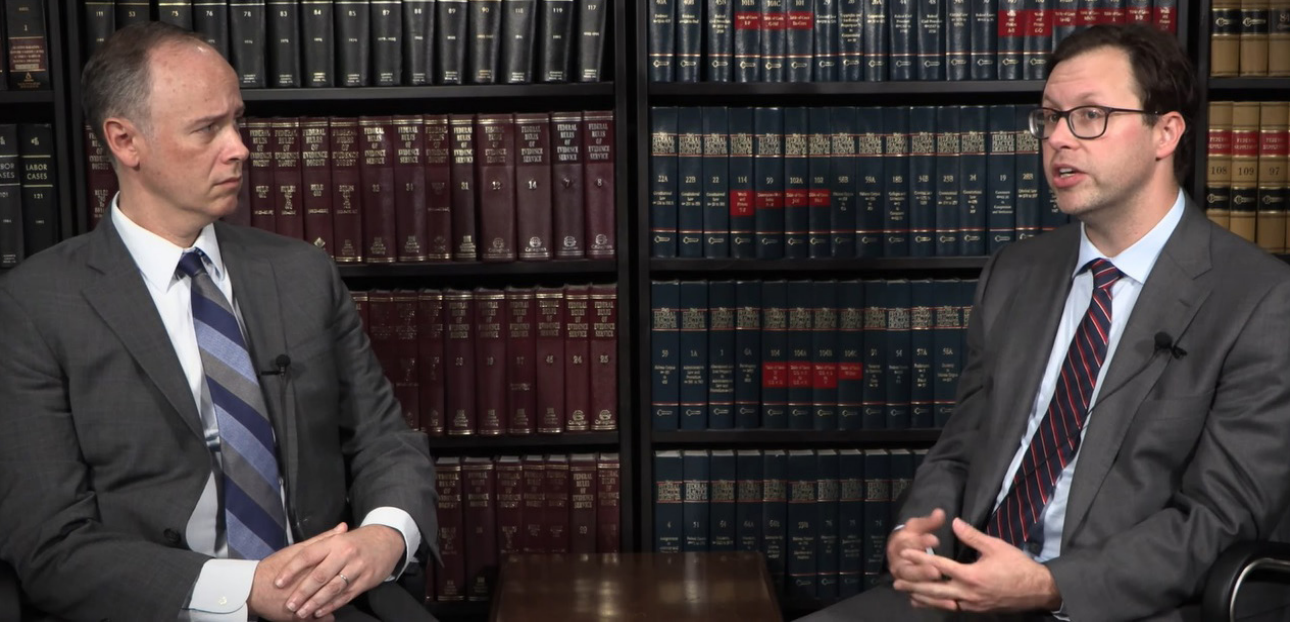
Starbucks employee Ariana Cortes’ Foundation attorney, Aaron Solem (right), is making a cutting-edge argument targeting the NLRB’s lack of accountability.
WASHINGTON, DC – The National Labor Relations Board (NLRB) is supposed to protect the right of workers to freely choose whether to associate with a union or not. The NLRB is also charged with holding unions and employers accountable when they violate worker rights. Too often, however, it has simply acted as an agency that generates policies to entrench union bosses’ power over workers while shielding union bosses from any kind of liability.
A new federal lawsuit from a National Right to Work Foundation-backed Starbucks employee, currently pending at the D.C. District Court, could upend the federal agency and result in a ruling that the current Labor Board’s structure violates the Constitution.
Employee Challenges NLRB Bureaucrats’ Protections from Presidential Removal
Ariana Cortes, a worker at the Buffalo, NY, “Del-Chip” Starbucks branch, hit the NLRB with the groundbreaking lawsuit in October, contending that the federal agency’s current structure violates the separation of powers mandated by the Constitution.
Cortes’ suit follows Foundation attorneys’ defense of her and her coworkers’ petition requesting a vote to remove Starbucks Workers United (SBWU) union officials from their workplace. Regional NLRB officials dismissed Cortes’ majority-backed petition based on SBWU allegations against Starbucks management that have no proven connection to Cortes and her coworkers’ desire for a union decertification vote.
Cortes’ lawsuit argues that because NLRB members cannot be removed at-will by the President, the NLRB’s structure violates Article II of the Constitution. Under Article II, the lawsuit contends, the President must have the power to remove officials that exercise substantial executive power.
Because the NLRB enforces federal labor law, manages union elections, and can issue legally binding rules and regulations, the lawsuit contends that the agency exercises substantial executive power. Therefore, it falls within the scope of the President’s power to remove officials at will. However, the National Labor Relations Act (NLRA), the law that established the NLRB, restricts the President’s ability to remove Board members except for neglect of duty or malfeasance.
“[T]hese restrictions are impermissible limitations on the President’s ability to remove Board members and violate the Constitution’s separation of powers. Thus, the Board, as currently constituted, is unconstitutional,” the complaint states.
Lawsuit: Unconstitutional NLRB Proceedings Must Stop
Cortes’ new federal lawsuit seeks a declaration from the District Court that the structure of the NLRB as it currently exists is unconstitutional.
“For too long the NLRB, especially the current Board, has operated as a union boss-friendly kangaroo court, complete with powerful bureaucrats who exercise unaccountable power in violation of the Constitution,” commented National Right to Work Foundation Vice President and Legal Director William Messenger. “The NLRB’s operation outside constitutional norms is easily exploited by Big Labor.”
“But as the story of Ms. Cortes shows, the NLRB’s unchecked power creates real harms for workers’ rights, especially when workers seek to free themselves from the control of union bosses they disagree with,” Messenger added.
Right to Work Foundation SCOTUS Brief: Workers Exercising Right to Oppose Unions Isn’t “Harm” to Be Eliminated
In case to be heard by Court, Foundation argues NLRB wrongly asserts that independent-minded opposition to unions can justify injunctions
Washington, DC (February 29, 2024) – The National Right to Work Foundation has filed an amicus brief in Starbucks Corporation v. McKinney, a case set to be argued before the U.S. Supreme Court later this term that has major implications for the rights of workers who oppose union power in their workplaces.
In the brief, Foundation staff attorneys argue that federal courts should reject National Labor Relations Board (NLRB) requests for preliminary injunctions when the Labor Board claims employee discontent with a union is a “harm” that should be redressed. These injunctions, called 10(j) injunctions, are frequently used by the NLRB to force employers into certain union-demanded behavior, despite the NLRB not having fully adjudicated the underlying union allegations.
The brief points out that an employee’s decision not to support a union is not a harm that needs to be addressed, but rather a “legitimate choice employees have a right to make” under both the National Labor Relations Act (NLRA) and the First Amendment to the Constitution.
“Only if the NLRB can prove an employee was coerced by an employer to oppose a union against his or her will can that employee’s lack of support for the union be considered any sort of a harm to be redressed,” the brief says. “If the NLRB cannot muster such evidence, then the fact that employees are exercising their statutory and constitutional rights…provides no basis for [an] injunction.”
Foundation: Courts Shouldn’t Accept NLRB’s Assumption that Workers Want to Join Unions
In the Starbucks v. McKinney case, the NLRB sought an injunction at the behest of Starbucks Workers United (SBWU-SEIU) union officials against Starbucks for unfair labor practices the company allegedly committed at a location in Memphis, Tennessee. A major reason cited by the NLRB for the requested injunction was the fact that workers may choose to oppose the union if the injunction isn’t issued.
The case presents the question of what standard courts should use when evaluating whether to grant NLRB-requested injunctions under the NLRA. The Foundation brief opposes the lax standard that the NLRB and union officials are urging courts to use when deciding whether to issue injunctions.
That standard asks only whether alleged unfair labor practices could potentially coerce workers into not supporting a union. Foundation attorneys argue that “the Court must require the NLRB to prove employees were unlawfully coerced not to support a union because, absent such proof, employees have every right to make that choice” (emphasis added).
Foundation-Backed Starbucks Workers Disprove Specious NLRB Theory
Foundation staff attorneys are currently representing Starbucks employees at several locations across the country who seek to vote out (or “decertify”) the SBWU union. In the brief, Foundation attorneys point out that the NLRB in a similar case (Leslie v. Starbucks Corp.) cited a Foundation-backed union decertification case as a reason that an injunction should be issued against the company – despite the fact that the workers themselves say their opposition to the union had nothing to do with the conduct the union was challenging in that case.
“In taking this position, the NLRB has created a self-satisfying ‘heads I win, tails you lose’ dynamic for itself,” the brief reads. “Evidence that employees support a union is taken to mean they want to support the union. Evidence that employees oppose a union is taken to mean their employer must have wrongfully caused the employees not to support the union. All evidence conveniently leads to the conclusion desired by current NLRB leadership: employees should support unions.”
The case is set to be argued before the Supreme Court on Tuesday, April 23, with a decision expected by the end of the High Court’s term in June.
“The Biden NLRB is working hand in glove with unions to advance a standard that treats worker dissent from unions as a harm to be eradicated, rather than a decision made by competent adults,” commented National Right to Work Foundation President Mark Mix. “The Supreme Court in Starbucks v. McKinney must reject the idea that NLRB bureaucrats can simply twist evidence of legitimate worker discontent with unions into a tool to aid union bosses in gaining leverage over businesses and employees.”
Foundation Fights For Starbucks Workers Seeking to Oust Union
The following article is from the National Right to Work Legal Defense Foundation’s bi-monthly Foundation Action Newsletter, July/August 2023 edition. To view other editions of Foundation Action or to sign up for a free subscription, click here.
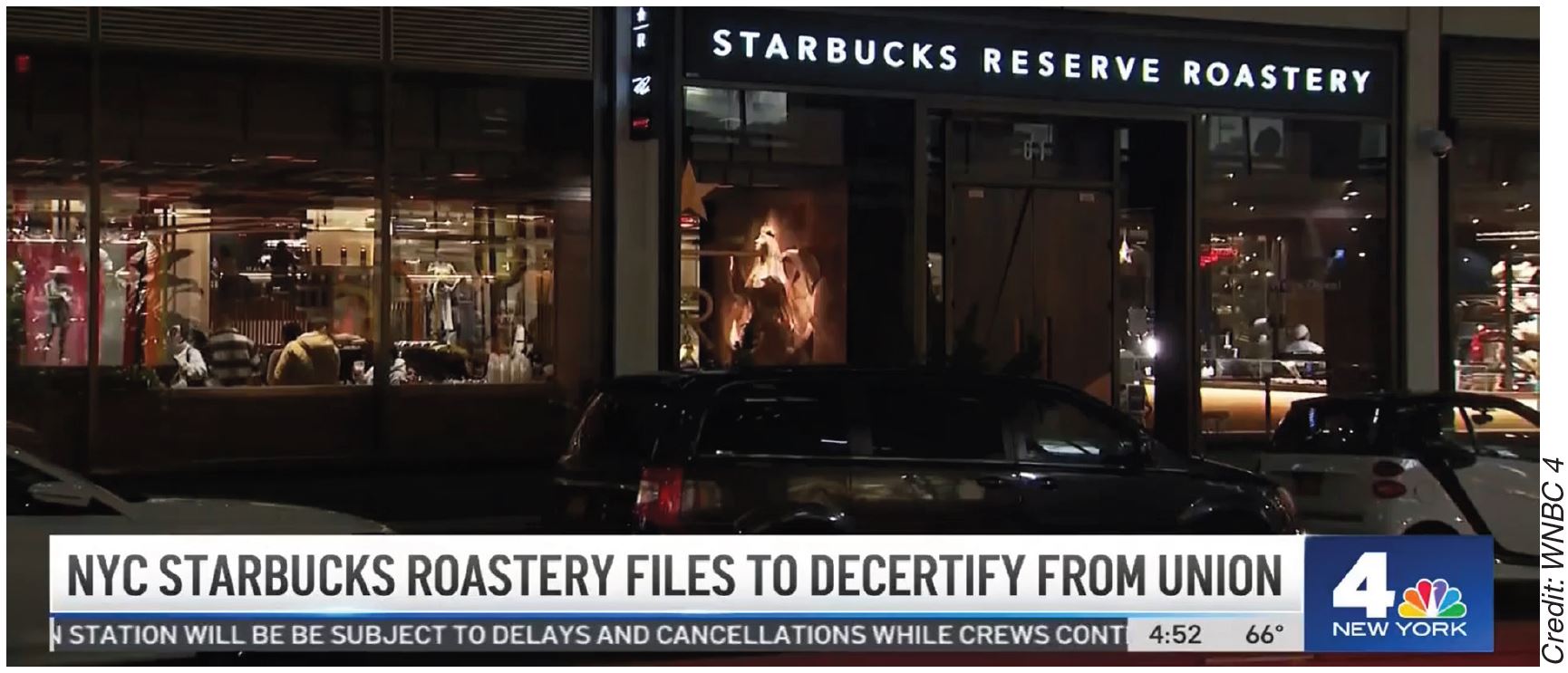
Majority of workers at flagship NYC Starbucks Roastery want decertification vote
NEW YORK, NY – Union bosses and their bought-and-paid-for political allies have been touting Starbucks as the latest and greatest frontier in union organizing. But, as soon as legally permitted after several high-profile Starbucks unionization efforts, workers are already seeking to vote out union officials.
Kevin Caesar, an employee of the high-end Starbucks Reserve Roastery location in Manhattan, sought out Foundation legal aid this May. He sought assistance in submitting a petition backed by a majority of his colleagues to the National Labor Relations Board (NLRB) for a vote to remove, or “decertify,” Starbucks Workers United (SBWU), and their puppet-masters at the Service Employees International Union (SEIU), from the Roastery. Under the National Labor Relations Act (NLRA), workers must wait one year after a union is installed before seeking to remove it, meaning Caesar and his colleagues essentially filed their decertification petition as soon as allowed by the law.
“We have seen our workplace both with and without the union. We believe that the union is looking out for itself more than it is looking out for Starbucks partners, who do not want forced dues and who can advocate for ourselves,” stated Caesar about why he wants to be free of the union.
“That is why a majority of us have decided we would be better off without the union. The fact that the union officials have forced us to go through this decertification process despite the majority of workers stating they do not want to be represented by this union shows how little regard the union has for the will of the workers,” he added. “We call on union officials to respect our rights and not attempt to fight this vote.”
With the petition filed, the NLRB should now promptly schedule a secret ballot election to determine whether a majority of workers want to end union officials’ power to impose a contract, including forced dues, on the workers. However, SBWU officials have already announced they will seek to block the vote, a matter Foundation attorneys quickly opposed in a brief to the NLRB.
Worker Dissatisfaction with Unions Growing Nationwide
The Starbucks workers are just the latest example of growing dissatisfaction with union officials’ so-called “representation.” Currently, worker requests for Foundation aid in decertifying an unwanted union are at an all-time high. NLRB statistics similarly show a 20% increase in decertification petitions last year versus 2021.
Unfortunately, the NLRB’s union decertification process is prone to union boss-created roadblocks, which can impact the Starbucks workers if union officials plot to stay in power regardless of workers’ wishes. Foundation-backed NLRB reforms from 2020, collectively known as the “Election Protection Rule,” have made it somewhat easier for workers to escape unwanted union “representation,” by eliminating the most egregious “blocking charge” tactics used by union bosses to delay or stop decertification elections entirely. “Blocking charges” are unverified union boss allegations of employer misconduct, often unrelated to workers’ desire to decertify.
Currently, the Biden-appointed NLRB majority is conducting rulemaking to roll back these protections and make it much harder for workers to decertify a union.
Foundation Provides Legal Notice to Starbucks Employees
After being in contact with multiple Starbucks workers interested in how to resist union control, the Foundation issued a legal notice informing employees of the coffee chain of their right to petition for a vote to oust an unpopular union.
“No worker anywhere should be forced under so-called union ‘representation’ they oppose,” commented National Right to Work Foundation President Mark Mix. “Starbucks workers around the nation that fall victim to union tyranny should know they can turn to Foundation staff attorneys for assistance.”
“Foundation staff attorneys are now fighting to ensure that these workers are not denied the vote that they are entitled to under federal law to remove union control they oppose,” continued Mix. “Union bosses should not be allowed to keep their grip on power simply by disenfranchising those they claim to ‘represent.’”
Las Vegas Plumbing Designer Wins Case Against Union Over Illegal Retaliatory Fines by UA Union Bosses
In apparent retaliation for participating as an observer in a Labor Board election, union officials attempted to fine Universal Plumbing and Heating employee $4,999
Las Vegas, NV (April 7, 2023) – David Webb, an employee at Universal Plumbing and Heating Inc. has won his legal battle against United Association of Journeymen and Apprentices of the Plumbing and Pipe Fitting Industry (UA) Local 525, after UA union officials illegally attempted to fine him.
Webb exercised his right to participate as an election observer during a National Labor Relations Board (NLRB)-sanctioned election at his workplace, only to be subjected to the fine attempt by UA officials. In response, Webb, with the assistance of National Right to Work Legal Defense Foundation staff attorneys, filed federal unfair labor practice charges at National Labor Relations Board Region 28 against the UA for violating his rights under the National Labor Relations Act.
Unions cannot lawfully discipline nonmembers. Since 2017, Webb has not been a union member and has not paid any dues. Universal Plumbing and Heating Inc. is also not a unionized company. Despite this, UA union officials initiated internal union disciplinary charges against him, attempting to levy a fine of $4,999 for exercising his right to participate in an NLRB-conducted election, including as an official election observer. Union officials apparently initiated the illegal fine attempt after Webb’s coworkers voted against bringing the union into their workplace while Webb served as an election observer.
The charges National Right to Work Foundation staff attorneys filed against the UA union for Webb explained that, because Webb was a non-member since 2017, he could not legally be subject to discipline by the union. Further, the charges noted that the fine was illegal retaliation for his protected NLRA activity in serving as an election observer.
Just 10 days after Foundation attorneys filed Webb’s unfair labor practice charges against the UA, the union capitulated, sending Webb a letter acknowledging they lacked the legal basis for the fine because he was not a union member, and that therefore he was not subject to the fine or any other sanction from the UA Local or national affiliate.
Although union bosses often initiate internal union discipline against voluntary union members, longstanding precedent protects workers who are not union members from being subjected to such retaliatory fines. Further, workers cannot legally be fined by union officials for exercising their protected rights under federal labor law, including participating in an NLRB-supervised election to decide whether or not union officials become the monopoly bargaining “representative” of workers in a given workplace.
Nevada is a Right to Work state, meaning workers cannot legally be required to join or pay dues or fees to a union as a condition of keeping their jobs. However, even in Right to Work states, union officials who have obtained monopoly bargaining control in a workplace are granted the power to impose one-size-fits-all union contracts on all workers, including those who opt out of union membership and would prefer to negotiate their own terms of employment. In the election that triggered the illegal retaliatory fine against Webb, workers voted against granting UA union bosses such monopoly bargaining powers.
“This case was open and shut: Union officials know workers can exercise their rights to participate in an NLRB-sanctioned election and they were caught red-handed violating Webb’s rights,” commented National Right to Work Foundation President Mark Mix. “Although the fine has officially been dropped, Foundation attorneys remain ready to protect all workers’ right to refrain from union activities.”
“Other workers in Nevada and nationwide facing similar backlash from union officials should know they can reach out to Foundation staff attorneys for free legal assistance in challenging union officials who violate their rights,” added Mix.
Workers Nationwide Continue Efforts to Oust Steelworkers Officials
The following article is from the National Right to Work Legal Defense Foundation’s bi-monthly Foundation Action Newsletter, January/February 2023 edition. To view other editions of Foundation Action or to sign up for a free subscription, click here.
Successful ousters in Louisiana and New Jersey emphasize importance of protecting worker votes
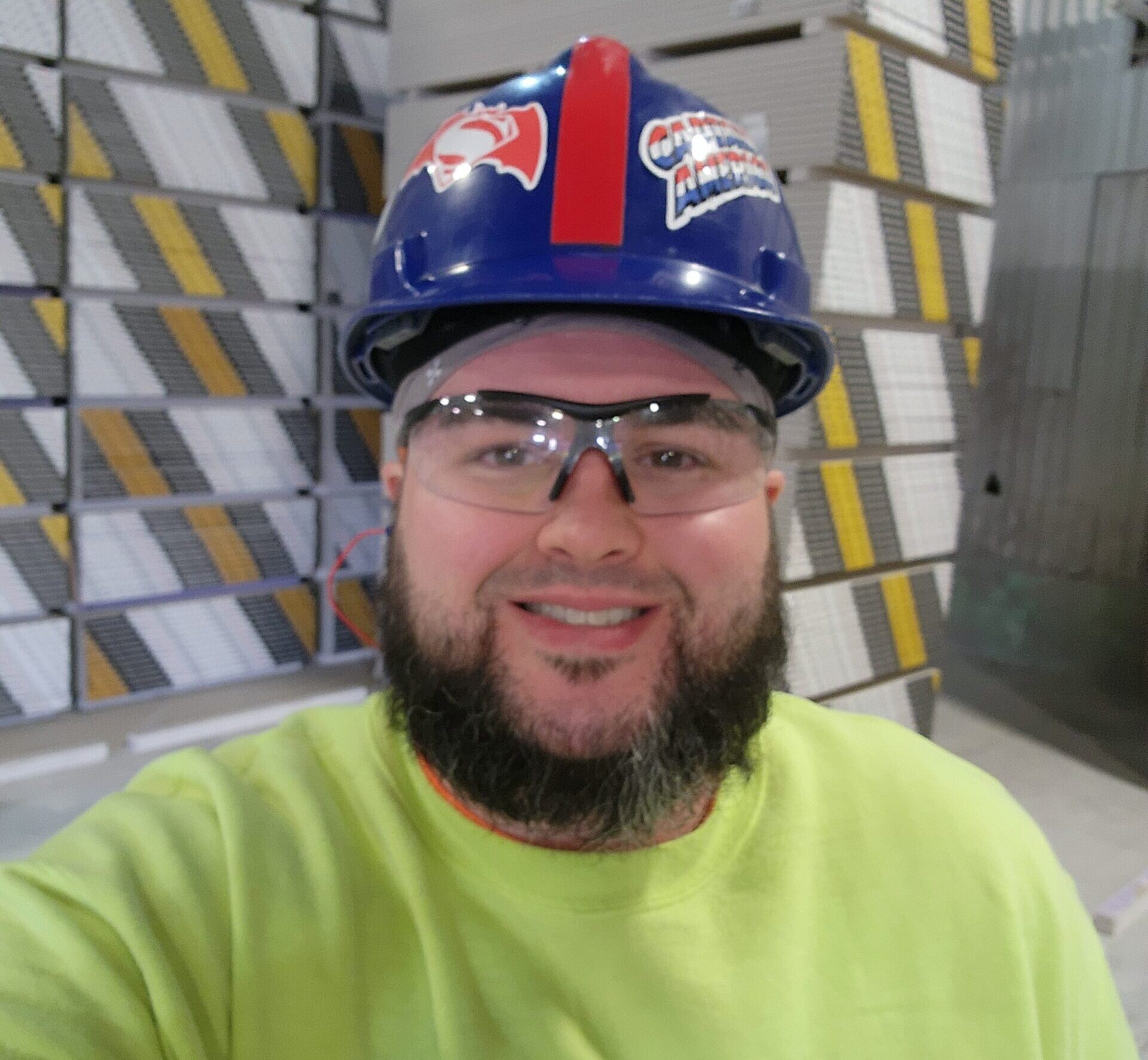
Michael Cobourn and his coworkers were forced to pay union dues while USW union bosses seemed to be loafing it at their workplace. With Foundation aid, they ousted the union.
WASHINGTON, DC – In the space of just a month, National Right to Work Legal Defense Foundation staff attorneys successfully aided groups of workers in New Jersey and Louisiana in voting out United Steelworkers (USW) union officials they opposed. The National Labor Relations Board (NLRB) certified both votes.
In Louisiana, Ryne Fox led his coworkers at GEO Specialty Chemicals to a decisive victory over USW officials, while Michael Cobourn did the same with his fellow workers at Gold Bond Building Products in New Jersey.
Both cases demonstrated the struggles workers face when seeking to “decertify” union officials whom they no longer want in power. In Louisiana, Fox had to time the filing of his coworkers’ petition seeking a decertification vote to fall within a tiny window of days imposed by the “contract bar,” a union boss-friendly NLRB policy that protects union officials from being voted out of a workplace for up to three years after union bosses and management finalize a contract.
Cobourn and his colleagues, in addition to having to deal with the “contract bar,” work in the non-Right to Work state of New Jersey — meaning they were forced to pay money to the union just to keep their jobs during the entire time they were forbidden by the “contract bar” from ejecting the union. In contrast, Right to Work states protect private sector workers from being fired merely for refusal to pay dues or fees to union officials of whom they disapprove. “My coworkers and I were paying money to the Steelworkers union constantly, yet the union didn’t seem to be doing anything for us,” commented Mr. Cobourn.
Although the efforts in Cobourn’s and Fox’s workplaces are evidence that Steelworkers union officials nationwide place their own interests above the workers they claim to “represent,” the most heinous example of such behavior is ongoing in Franklin, Pennsylvania.
There, Foundation-assisted metal workers at Latrobe Specialty Metals/Carpenter Technology are holding their own in defending their decertification petition against Steelworkers officials’ claims that the “contract bar” should invalidate the petition.
PA Workers Score Victory in Fight Against Election-Blocking Steelworkers Chiefs
While invoking the “contract bar” alone is anti-worker, Steelworkers officials in Pennsylvania claimed that a contract they unilaterally “ratified” this past summer after workers had voted against it twice should trigger the “contract bar.” Steelworkers officials had even told workers that the contract would only be “activated” if workers voted for it. But once they got wind of the workers’ decertification push, the officials “ratified” the unpopular contract secretly so they could, as one union official outrageously said during a hearing, “protect the integrity of the union.
Foundation staff attorneys representing the employee who submitted the petition, Kerry Hunsberger, have so far beaten back union officials’ attack on worker free choice. On November 18, 2021, an NLRB Regional Director rejected union bosses’ attempt to block the vote and ordered that an election proceed.
‘Contract Bar’ Encourages Union Officials to Impose Unpopular Contracts
“Workers across the country are increasingly exercising their right to vote out union officials they oppose, and we at the Foundation are happy to aid them,” commented National Right to Work Foundation President Mark Mix. “However, we’re also acutely aware of the obstacles that stand in the way of this freedom, and one of those, which Steelworkers officials seem to have no reservations about exploiting, is the ‘contract bar.’”
“The unjustified ‘contract bar’ is always wrong because it prevents workers from voting out unions they oppose when they want. But even worse, this NLRB-invented doctrine actually incentivizes union officials to rush and impose unpopular, self-serving contracts for the very purpose of insulating the union’s forced representation powers from a vote of the workers union officials claim to ‘represent,’” Mix added.





