
Mark Mix Op-ed: “When Alabama workers fought for years to escape the UAW ‘Roach Motel’”
The following article is from the National Right to Work Legal Defense Foundation’s bi-monthly Foundation Action Newsletter, September/October 2024 edition. To view other editions of Foundation Action or to sign up for a free subscription, click here.

To inform Alabama Mercedes-Benz workers of their rights and the availability of free legal aid as United Auto Workers (UAW) union bosses targeted them with an aggressive unionization campaign, Foundation staff got this opinion piece from Mark Mix published in The Center Square this May. The workers ended up voting against installing the UAW at their workplace.
May 16, 2024 | Mark Mix, president of the National Right to Work Foundation
Although the upcoming vote of Alabama Mercedes-Benz employees over whether or not to affiliate with officials from the Detroit-based United Autoworkers union has been billed as a historic first for the state, in fact it isn’t.
Based in Hamilton, Ala., workers at NTN-Bower, which manufactures roller bearings used in vehicle wheels, were subject to UAW representation from 1976 until the workers kicked the union out in 2015 after a protracted legal fight.
In Hamilton, UAW bosses ordered a divisive, prolonged strike at the plant. When some employees decided to defy union orders and exercise their right to return to work despite the strike, they faced aggressive harassment from UAW partisans, including tacks dropped to flatten tires and even racial slurs.
“Someone had to stand up for families like mine who simply couldn’t risk going on strike,” said Ginger Estes, who would go on to lead a petition to “decertify,” or remove, the UAW. “It didn’t take me long to see firsthand how the UAW was putting the plant at risk.
“The union’s leaders were willing to gamble with the livelihoods of hundreds of workers and were actively protecting lazy and incompetent employees who made the rest of us look bad.”
When workers began collecting decertification petitions at NTN-Bower, the harassment ramped up again.
Estes, whose husband and son also worked at the plant, took the threats personally. “During my signature-gathering process, I frequently had harassing phone calls made to my house and even had three of our family dogs die under mysterious circumstances.”
Eventually, Estes and her coworkers collected enough signatures to get the National Labor Relations Board to schedule a decertification election. However, workers soon found out that UAW officials weren’t willing to accept the results when a majority voted to reject the union.
UAW lawyers got the NLRB to overturn the first election’s result. When a rerun election occurred, a majority again voted against keeping the union, but UAW lawyers got that vote thrown out too. In a third election the UAW supposedly “won,” but that vote was disallowed due to obvious vote fraud, as more votes were cast than there were actual eligible voters.
In the fourth election, the UAW got the vote against them overturned. In the fifth and final vote, the largest majority yet voted to remove the UAW. This time, with free representation from National Right to Work Foundation attorneys, UAW lawyers were unable to overturn the result.
It took multiple years and five votes for the Alabamians at NTN-Bower to finally overcome UAW tactics designed to disenfranchise them. In the process, they saw how union officials had mistreated workers who questioned the union.
Unfortunately, their story is hardly unique.
Take the recent case of employees at a Nissan North America, Inc. parts distribution center in Somerset, New Jersey. After the previous contract expired, workers expressed frustration with how UAW officials openly ignored their voice and treated rank-and-file workers with contempt.
“UAW union officials were far more concerned with hoarding power in the workplace than communicating with or listening to workers,” observed Nissan employee Michael Oliver, who led the effort to remove the UAW. “They kept us completely in the dark about contract negotiations and treated anyone in the workplace who opposed their agenda or questioned their leadership with a huge amount of arrogance, contempt and even intimidation.”
At the election held last month, 70% of workers voted to remove the union, but the vote almost didn’t happen. UAW officials rushed to impose a contract, seemingly in an attempt to halt the decertification vote for years and/or influence its outcome.
Fortunately, the UAW’s tactics failed. The Nissan workers saw the UAW contract and voted overwhelmingly to send union officials packing.
When workers contact the National Right to Work Foundation for legal assistance with decertification, they frequently report that union organizers told workers that “if you don’t like the union, then you can always vote us out later.”
As experiences of workers at NTN-Bower and Nissan demonstrate, union officials often use underhanded legal tactics to disenfranchise the very workers they claim to “represent.”
That’s why, following her multi-year battle with UAW bosses, Alabama NTN-Bower employee Ginger Estes concluded: “The UAW will make lots of promises to workers during its campaign that it’s under no obligation to keep. But like a roach motel, once you check in to the UAW, it’s difficult if not impossible to check out.”
Foundation-Backed Workers Push Back Against UAW Bosses’ Coercive Tactics
The following article is from the National Right to Work Legal Defense Foundation’s bi-monthly Foundation Action Newsletter, July/August 2024 edition. To view other editions of Foundation Action or to sign up for a free subscription, click here.
New Jersey ouster of UAW comes as union bosses wage aggressive nationwide campaign
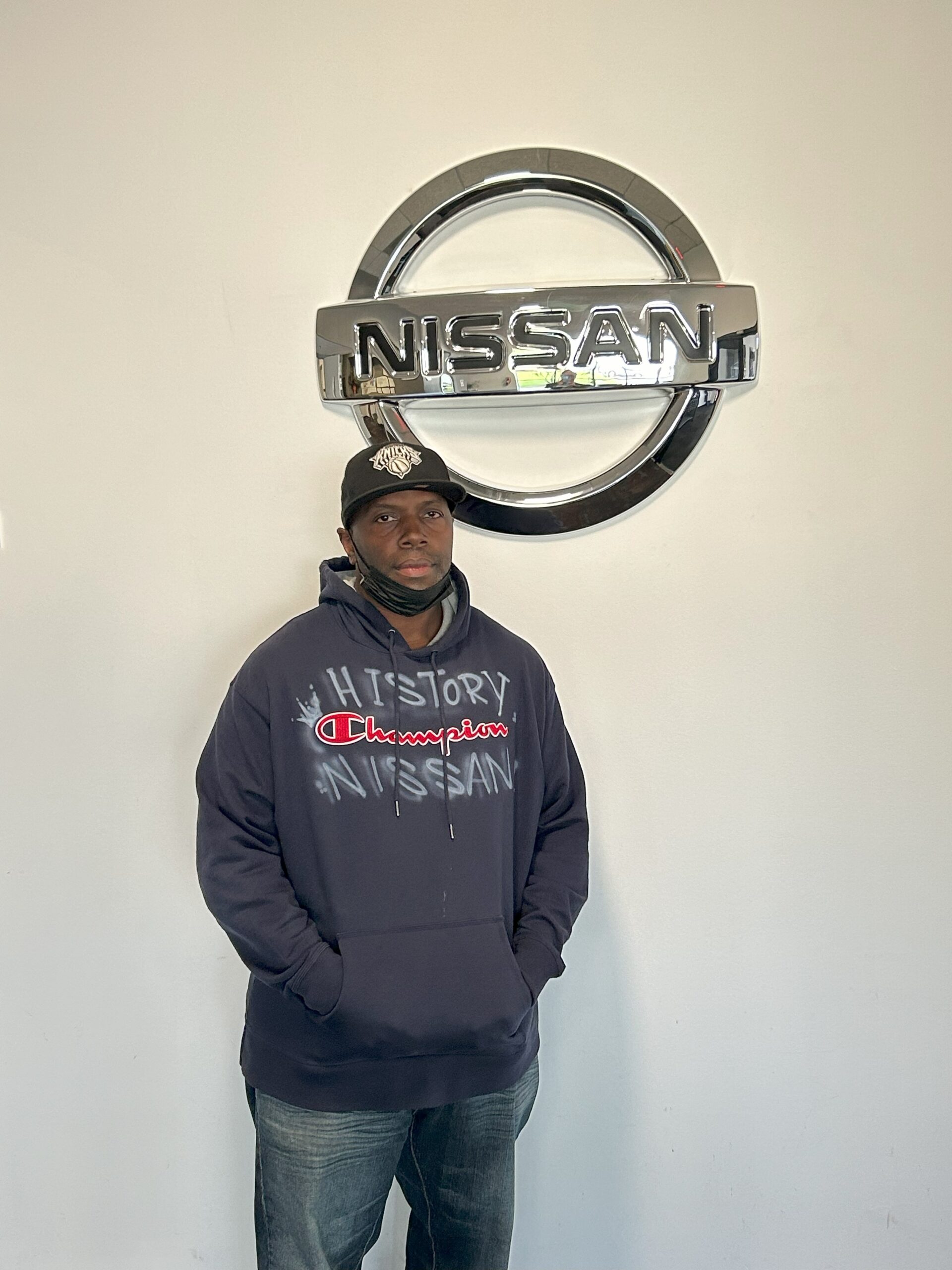
Fain’s Bane: Michael Oliver and his Nissan parts distribution coworkers ousted UAW officials even after they’d tried to force a new contract on the workplace. UAW President Shawn Fain had no response after Oliver’s victory.
SOMERSET, NJ – United Auto Workers (UAW) union bosses this April and May continued marching forward their multi-million-dollar campaign to get auto workers from traditionally nonunion plants under their control. They’ve met with only mixed success — most recently a union election at Mercedes-Benz’s large plant in Vance, Alabama, saw nearly 600 more workers vote against UAW control than for it.
Meanwhile, National Right to Work Foundation staff attorneys helped a large group of New Jersey employees oust the UAW after they’d seen the union’s agenda up close. Michael Oliver and his coworkers successfully exercised their right to vote UAW bosses out of a Nissan parts distribution plant in Somerset, New Jersey. Nearly 70% of the workers who participated in the “decertification vote” at the Nissan facility voted to send the Detroit-based union packing.
“UAW union officials were far more concerned with hoarding power in the workplace than communicating with or listening to workers,” Oliver told The Detroit News of his and his colleagues’ effort. “They kept us completely in the dark about contract negotiations, and treated anyone in the workplace who opposed their agenda or questioned their leadership with a huge amount of arrogance, contempt, and even intimidation.”
Oliver submitted a decertification petition to the National Labor Relations Board (NLRB) in early April, asking the federal agency to hold a vote at his workplace to remove the union. The petition contained signatures from enough of his coworkers to trigger a vote under NLRB rules. The vote took place on April 24.
Even in the midst of widespread worker opposition, UAW officials tried (albeit unsuccessfully) to manipulate NLRB processes in order to remain in power at the Nissan parts distribution plant. Shortly after Oliver submitted the decertification petition, UAW union officials announced that they had ratified a new union contract with Nissan management.
The NLRB’s dubious “contract bar” allows union bosses in many cases to quash decertification efforts for generally up to three years while a union contract is in effect. However, the contract bar didn’t stop Oliver and his coworkers’ requested election, because union officials weren’t able to reach a monopoly bargaining agreement with Nissan before Oliver filed his petition.
Shawn Fain Lost for Words After Nissan Workers Oust UAW Union
Oliver and his coworkers’ endeavor caught UAW President Shawn Fain off-guard. Fain told The Detroit News “I don’t have a response, because that kind of happened under the radar” and claimed that the company somehow played an illicit role in influencing the workers to kick out the union. However, there’s no evidence to support that claim, and UAW officials filed no objections to the election despite having ample time to do so.
Philly-Area Dometic Workers Fight Illegal UAW Strike Threats
Meanwhile, UAW chieftains at the Philadelphia-area plant of auto accessory manufacturer Dometic are facing new worker-filed federal charges for sending a mass text to employees illegally threatening their employment if they exercise their right to continue working during a strike.
These new charges come after several Dometic employees already hit the UAW with charges accusing the union of imposing unlawful disciplinary procedures on them simply because they resigned membership in the union.
Mario Coccie, the Dometic worker who filed the latest round of federal charges against the UAW with free Foundation legal aid, was also in the group of workers who initially charged the union with illegally penalizing workers who resign membership. “The information in this text reveals union officials’ real intentions, which is to hurt anyone willing to stand up for themselves,” commented Coccie. “What is happening in this case is completely unjust.”
“With UAW union bosses spending millions of dollars to expand their influence to nonunion facilities around the country, it’s important to remember that workers who have experienced UAW officials’ ‘representation’ often end up resenting it,” commented National Right to Work Foundation Vice President and Legal Director William Messenger. “Nissan employees in New Jersey and Dometic workers in Pennsylvania are prime examples of this, and their situations demonstrate above all that workers must have more leeway in disaffiliating with or completely voting out union bosses whose agendas harm the workers.”





