
Johns Hopkins Ph.D. Student Slams UE Union With Federal Charges for Demanding She Divulge Private Info
Union demanded student be discharged even though nothing in union contract or federal law requires students to give up such info
Baltimore, MD (October 24, 2025) – Andrea Ori, a molecular biophysics Ph.D. candidate at Johns Hopkins, has filed federal charges against United Electrical (UE) union officials at the university. She maintains that UE union bosses demanded her ouster from the academic program because she refused to turn over confidential financial records protected by the Family Educational Rights and Privacy Act (FERPA). Ori filed her charges at the National Labor Relations Board (NLRB) with free legal aid from the National Right to Work Legal Defense Foundation.
The NLRB is the federal agency responsible for enforcing the National Labor Relations Act (NLRA) and adjudicating disputes between union officials, employers, and employees that arise under the statute. Even though the NLRA doesn’t include graduate students in its definition of “employees,” Obama NLRB appointees ruled in the controversial 2016 Columbia University decision that the NLRA allows union officials to gain monopoly bargaining power over graduate students at private universities, like Johns Hopkins.
Furthermore, Maryland is a state that lacks Right to Work protections, meaning union officials have the government-granted power to force those under their bargaining control to pay union dues or fees as a condition of getting or keeping a job.
At private universities in non-Right to Work states, union bosses can effectively end the graduate programs of students who refuse to pay union dues.
However, graduate students can opt out of dues payment for union political activities by invoking their rights under the Foundation-won Communications Workers of America vs. Beck SCOTUS decision. Federal antidiscrimination law also requires that union officials and university administrators provide religious accommodations for students who oppose union financial support on religious grounds.
Charges: Threatening Student With Termination for Guarding Confidential Financial Info is Illegal “Industrial Capital Punishment” Under Federal Law
Ori, who had successfully obtained a religious accommodation to union dues payment in 2024, now maintains in her charge that UE union officials ordered her for months to turn over pay stubs and other documents that contain private information. Her charges argue that union officials made these demands arbitrarily and in bad faith.
“Nothing in the [union contract], the Charging Party’s religious accommodation, or the NLRA required Charging Party to disclose this private financial information, which was also protected by FERPA,” Ori’s charges say. FERPA generally requires student or parental consent before educational institutions can disclose identifying information to third parties, like unions. Union officials have no right to receive students’ private information.
Even though these demands have no basis, the charges say, UE union bosses are still trying to upend Ori’s academic career. “After months of threatening Charging Party and harassing her to produce these unnecessary and private financial documents containing personal information, the [UE] formally demanded that the University discharge Charging Party,” the charges say. Ori’s attorneys are arguing that the NLRB should consider the union’s wrongful discharge request a form of industrial capital punishment.
“Ms. Ori’s case is just the latest Foundation legal action to show why giving union bosses power over graduate students was never a good idea,” commented National Right to Work Foundation President Mark Mix. “Union officials, who are often radical political operatives, have threatened academic freedom from coast-to-coast with their federally-enforced clout over university administrations. But, as Ms. Ori’s case shows, they are also threatening graduate students’ careers by acting as if they have a right to send them packing for not divulging their private information.
“Foundation attorneys stand ready to defend graduate students anywhere from these and other rights violations by union officials,” Mix added. “The obvious conflict between these union boss power grabs over graduate students and students’ statutory privacy rights under FERPA is yet another reminder that Congress never intended for such students to be subjected to monopoly unionism under the National Labor Relations Act.”
Ascension St. Agnes Hospital Nurses Demand Vote to Remove NNOC/NNU Union Officials
Requested vote would take place in unit of roughly 600 nurses; similar efforts also taking place in New York and New Jersey
Baltimore, MD (November 18, 2024) – Nurses at Ascension St. Agnes Hospital in Baltimore are demanding a federal labor board hold a vote to remove National Nurses United (NNU) union officials from their workplace. St. Agnes Nurse Jennifer Delaney submitted a union decertification petition to the National Labor Relations Board (NLRB) on November 15 on behalf of hundreds of her colleagues. Delaney filed the petition with free legal aid from National Right to Work Legal Defense Foundation staff attorneys.
The NLRB is the federal agency responsible for enforcing federal labor law, which includes administering elections to install (or “certify”) and remove (or “decertify”) unions. Delaney’s decertification petition contains employee signatures well in excess of the threshold needed to trigger a decertification vote under the National Labor Relations Act (NLRA).
According to the petition, Delaney and her coworkers request a vote among all “full-time, regular part-time, and per diem registered nurses” located at Ascension St. Agnes Hospital’s acute care facility in Baltimore. This unit contains approximately 600 nurses.
Because Maryland lacks Right to Work protections for its private sector workers, NNU union officials can enforce contracts that require Delaney and her fellow nurses to pay union dues or fees as a condition of getting or keeping a job. In contrast, in Right to Work states, union membership and all union financial support are strictly voluntary.
A successful decertification vote strips union officials of both their forced-dues power and their ability to impose union monopoly bargaining contracts on every employee in a workplace, even those who oppose the union’s presence.
“This union proved itself to be a divisive force as soon as it began campaigning at our hospital,” commented Delaney. “Many of the nurses opposed its agenda from the very beginning, and a year since it gained power it is still making things difficult for both us and our patients. We are confident that a majority of our coworkers will vote to restore the independence we once had in our workplace.”
Employees in Healthcare and Other Industries Seek to Exit Unions
The St. Agnes Hospital nurses aren’t the only healthcare employees seeking to rid themselves of union monopoly control. In the New York City metro area and Long Island, Foundation staff attorneys are currently assisting nurses at Clara Maass Medical Center and a variety of healthcare workers in the Sun River Health, Inc. system to obtain union decertification elections. If these union removal efforts are successful, over 800 employees will be free from United Healthcare Workers East (1199SEIU) union officials’ forced “association” bargaining powers.
Across all industries, workers are increasingly seeking votes to remove union bosses of whom they disapprove. Despite an over 50% increase in the number of decertification petitions filed annually over the last four years, NLRB bureaucrats recently repealed key reforms (known collectively as the “Election Protection Rule”) that made it easier for workers to request decertification elections.
“Across the country, healthcare workers seem to be discovering that having union bosses in their workplace doesn’t necessarily help them take better care of their patients. We’ve seen many situations where healthcare industry unions needlessly promote union boss priorities ahead of what is best for rank-and-file nurses, or even attempt to force health care providers to abandon their patients during union-instigated strikes,” commented National Right to Work Foundation President Mark Mix. “Unfortunately, union officials often choose to disenfranchise the same workers they claim to ‘represent’ when workers try to exercise their right to vote out a union, a problem made worse by recent Big Labor-backed NLRB rulemaking.
“Regardless, we’ll continue to defend the right of Ms. Delaney, the nurses at St. Agnes Ascension Hospital, and many other healthcare workers across the country to decertify unions they don’t want,” Mix added.
College Park MOM’s Organic Employees Demand Vote to Remove UFCW Local 400 Union Officials
Earlier this year DC-area Union Kitchen workers voted 24-1 to remove Local 400, but union lawyers continue fighting to block certification & overturn result
Washington, DC (November 7, 2024) – Employees from MOM’s Organic Market’s College Park, MD, location are petitioning a federal labor board for an election to remove United Food and Commercial Workers (UFCW) Local 400 union officials from power at the store. MOM’s employee Maria Sanya Dobbins, who is leading the effort, submitted the petition to the National Labor Relations Board (NLRB) at the beginning of the month with free legal assistance from National Right to Work Legal Defense Foundation staff attorneys.
The NLRB is the federal agency responsible for enforcing federal labor law, which includes administering elections to install (or “certify”) and remove (or “decertify”) unions. Dobbins’ decertification petition contains employee signatures well in excess of the threshold needed to trigger a decertification vote under the National Labor Relations Act (NLRA).
According to Dobbins’ petition, the workers’ requested vote should take place among “[a]ll full-time and regular part-time MOM’s team members” at the grocery store’s College Park branch.
Because Maryland lacks Right to Work protections for its private sector workers, UFCW union officials can legally enforce contracts that require Dobbins and her coworkers at MOM’s to pay union dues or fees as a condition of staying employed. In contrast, in Right to Work states, union membership and all union financial support are strictly voluntary.
A successful decertification vote strips union officials of both their forced-dues power and their ability to impose union monopoly bargaining contracts on every employee in a workplace, even those who voted against the union’s presence or otherwise oppose it.
“I have been working for MOM’s for 19 years,” commented Dobbins. “We have an understanding management team that has always been there for us and our families. We do not need a union to come and take money out of our paycheck when we have the best management team.”
DC-Area Union Kitchen Employees Also Seek to Boot UFCW Local 400 Union Officials
This isn’t the first time that DC-area grocery employees have banded together to remove UFCW Local 400 union officials. In January, workers from five locations of regional grocery concept Union Kitchen voted 24-1 to kick out UFCW Local 400, following employee Ashley Silva’s submission of a majority-backed decertification petition.
That effort began amid aggressive union boss-ordered pickets and boycotts against Union Kitchen Grocery locations, which sometimes escalated to the point that police intervention was needed. Despite that overwhelming ouster vote, UFCW union officials have so far successfully blocked the vote from being certified as they seek to cling to power by overturning the workers’ near unanimous vote to remove Local 400.
Biden-Harris NLRB Making It Harder for Workers to Oust Unwanted Unions
Dobbins and her coworkers may face similar stonewalling from UFCW bosses in their case, and unfortunately may face headwinds from the NLRB as well. Despite an over 50% increase in the number of decertification petitions filed annually over the last four years, Biden-Harris NLRB bureaucrats recently repealed key reforms (known collectively as the “Election Protection Rule”) that made it easier for workers to request decertification elections.
Now, under rules that took effect in late September, union officials have a nearly unlimited ability to manipulate unproven allegations against an employer (also known as “blocking charges”) to stop workers from exercising their right to vote out a union. The new rules also end the ability of workers to hold decertification elections as a way to challenge a union’s ascent to power via “card check.” Card check is an unsecure, abuse-prone process that bypasses the protections of a traditional secret-ballot election.
“UFCW Local 400 officials have a track record of stifling the will of the workers they claim to ‘represent,’ and the Biden-Harris NLRB’s cynical policy shifts have unfortunately given them more ways to do that,” commented National Right to Work Foundation President Mark Mix. “While such cases show why workers need more freedom to have secret ballot votes to eliminate union officials that they disapprove of, they also demonstrate the importance of Right to Work protections – workers who find themselves under the control of a union they oppose should never be forced to pay for that ‘representation.’”
Tire Wholesaler Employees Force RWDSU Union Out of 15 Locations
The following article is from the National Right to Work Legal Defense Foundation’s bi-monthly Foundation Action Newsletter, January/February 2024 edition. To view other editions of Foundation Action or to sign up for a free subscription, click here.
RWDSU union officials abandon 500+ employee unit ahead of vote at tire wholesaler

Tire-d of the RWDSU: Chris Dorney submitted a huge number of signatures from his coworkers at tire wholesaler Max Finkelstein when petitioning the NLRB for a vote to remove the RWDSU union.
WINCHESTER, VA – The Biden National Labor Relations Board (NLRB), which includes among its members two former union bosses from the Service Employees International Union (SEIU), is pursuing an agenda that hasn’t exactly been making it easy for workers to vote out a union they don’t want. But that hasn’t stopped workers across the country from going to extraordinary lengths to kick out unions that don’t serve their interests.
In October 2023, Chris Dorney, a Winchester, VA-based employee of tire wholesaler Max Finkelstein, kick-started a cross-country effort to vote the Retail, Wholesale and Department Store Union (RWDSU) out of 15 warehouse facilities across the eastern United States. This work unit included more than 500 employees across Virginia, Maryland, Massachusetts, Pennsylvania, New York, New Jersey, Vermont, Maine, and Connecticut.
Virginia Worker Mustered Strong Showing on Petition for Union Ouster Vote at Tire Wholesaler
With free legal aid from the National Right to Work Foundation, Dorney submitted a petition to the NLRB containing more than enough employee signatures to trigger a vote to remove the union from the large unit.
While Dorney and his fellow Virginia employees enjoyed the Right to Work freedom to opt-out of dues payments to the union, the same couldn’t be said for any of the other employees, all of whom hail from states where dues payments can be mandated as a condition of employment. But voting RWDSU bosses out of power entirely at the tire wholesaler would end the union’s forced-dues power.
“We warehouse workers and drivers at Max Finkelstein may be from many different facilities in many different states, but we are in agreement about one thing: RWDSU union officials don’t represent our interests,” Dorney said of the effort. “It’s our right under federal law to challenge RWDSU’s forced representation power.”
RWDSU Bosses Flee Unit as Union Officials Rack Up Losses Nationwide
However, before the vote could occur, RWDSU union officials disclaimed interest in continuing their monopoly representation powers over the unit, likely to avoid an embarrassing rejection by workers at the ballot box.
Unionized workers are increasingly requesting elections to remove unwanted unions — a potential reason for the Biden NLRB’s efforts to crack down on decertification votes. Additionally, union bosses are increasingly losing these contests. As of last year, filings for union decertification votes had shot up by over 40 percent since 2020. Of decertification elections that occurred, the number which resulted in union bosses losing went up by 72 percent.
“Mr. Dorney and his coworkers’ effort to kick out the RWDSU union, which spanned several states, 15 facilities, and hundreds of workers, is yet another example that workers often want to escape union officials’ one-size-fits-all agenda. It’s also a demonstration that workers will go to great lengths in order to exercise this right,” commented National Right to Work Foundation Vice President Patrick Semmens. “But the Biden NLRB, bent on empowering the President’s union boss political allies, plans to grant unions even more power to defeat workers’ will.”
Union Bosses Caught Red-Handed Illegally Taking Dues from Charter School Teacher
California union officials backed off anti-Janus deductions after Foundation action
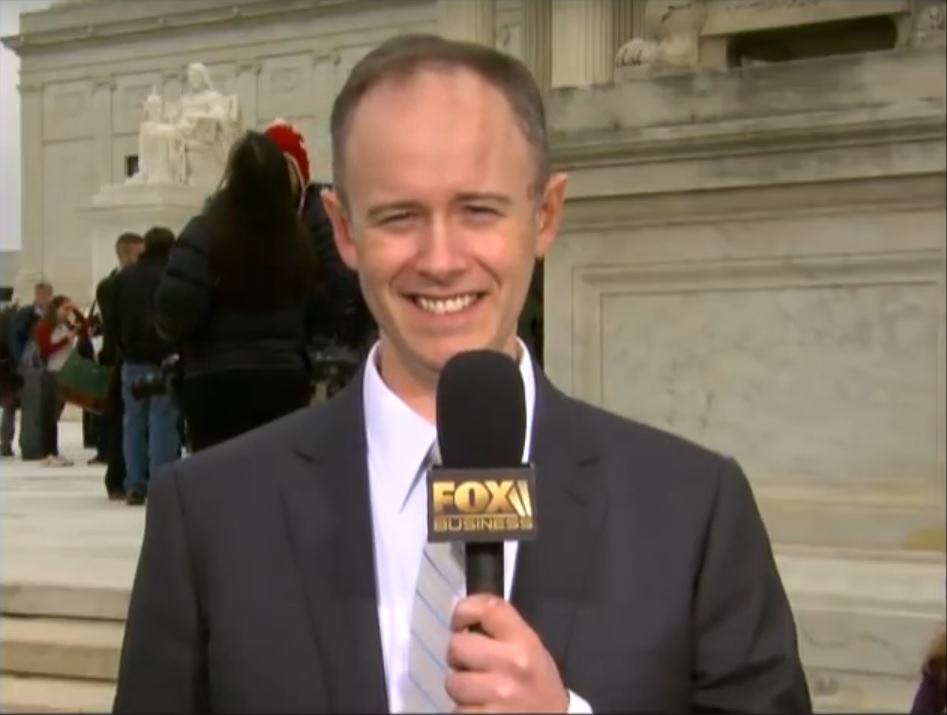
Foundation staff attorney Bill Messenger successfully argued Janus at the Supreme Court. But enforcing the landmark First Amendment victory is an ongoing battle.
LOS ANGELES, CA – A former teacher at Camino Nuevo Charter Academy in Los Angeles, California, is getting a refund of illegally seized union dues with free legal aid from the National Right to Work Legal Defense Foundation. The refund came after Foundation staff attorneys sent a letter to officials with the Camino Nuevo Teachers Association, an affiliate of California Teachers Association, threatening legal action for violating the teacher’s First Amendment rights.
Natalie Bahl, who was a teacher at Camino Nuevo Charter Academy up until recently, attempted to exercise her right as a public employee not to pay any union fees. Ms. Bahl notified the union of her decision in a mass email to several union officials, which reportedly also prompted other teachers to make similar requests. Her email was sent before the union-designated “window period” closed for teachers to revoke their authorization for deducting union dues.
Despite the timely request, Ms. Bahl realized a few months later that union dues were still being deducted from her paycheck. When she asked union officials about it, they suddenly claimed she missed her window period for dues revocation.
At that point, Ms. Bahl reached out to National Right to Work Legal Defense Foundation staff attorneys, who sent a letter demanding a refund of union dues collected in violation of Bahl’s First Amendment rights. Rather than face a potential federal civil rights lawsuit, CNTA union officials refunded all dues taken from Bahl from the time of her request until she left the school’s employment to further pursue her own education.
Union Officials Refuse to Learn Their Janus Lesson
In the Foundation-argued Janus v. AFSCME U.S. Supreme Court case, the Court recognized that forcing public sector workers to pay union dues or fees as a condition of employment violates the First Amendment. The Justices also ruled that public employees must opt in with affirmative consent to any union payments before money can be taken from their paychecks.
Since winning the 2018 Janus Supreme Court decision, Foundation staff attorneys have scored victories across the country for public employees seeking to enforce their First Amendment rights under the Janus decision. For example, Foundation staff attorneys recently successfully defended a public school teacher in Harford County, Maryland, from whom union bosses illegally seized dues for months despite two letters to the local AFSCME affiliate exercising her right to resign union membership and end all dues deductions from her pay.
“Teachers and other public sector workers have Janus rights under the First Amendment and should immediately contact the Foundation for free legal assistance if they believe their rights have been violated,” said National Right to Work Foundation Vice President Patrick Semmens. “Unfortunately we continue to see that even when public employees comply with arbitrary union-created policies designed to stifle their First Amendment rights, union officials still brazenly ignore Janus in order to fill their coffers with union dues seized from employees.





