
Public Servants Across Country Stand Strong in Defending Janus Rights
The following article is from the National Right to Work Legal Defense Foundation’s bi-monthly Foundation Action Newsletter, January/February 2026 edition. To view other editions of Foundation Action or to sign up for a free subscription, click here.
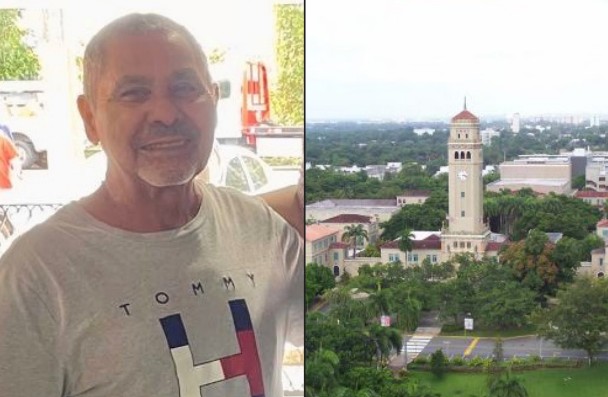
Jose Ramos, a University of Puerto Rico maintenance employee, isn’t going to let union bosses maintain their flimsy defense that they are entitled to keep his hard-earned money in violation of the First Amendment.
As 2025 waned, National Right to Work Foundation staff attorneys brought their expertise to bear as government employees in Washington State and Puerto Rico continued legal battles to get back money that union bosses never should have seized from their paychecks.
These workers are invoking their rights under the Foundation-won Janus v. AFSCME decision, which the Supreme Court handed down in 2018. In Janus, the Justices ruled that all American public sector workers have a First Amendment right to abstain from paying dues to union officials they don’t support.
Despite Janus’ commonsense protections, many union bosses, intent on keeping their coffers stocked with dues money seized from unwilling public employees, are still trying to skirt the Court’s ruling.
AFSCME Bosses Refuse to Return Illegally-Seized Money to Worker
That includes AFSCME union officials in Washington State, whom City of Everett employee Xenia Davidsen is fighting at the Washington State Public Employment Relations Commission (PERC). Davidsen charged AFSCME chiefs with accepting money that City officials had illicitly funneled from her paycheck to the union.
Davidsen had requested dues deductions to stop in 2024 in accordance with Janus, but City officials failed to monitor the email address through which AFSCME directed the City to stop the deductions. This incompetence led to the City seizing dues money from Davidsen at least 12 times without her authorization — and AFSCME union officials have stubbornly refused to admit they must post a notice stating they were wrong to accept the deductions.
“On none of those… instances did the Union stop to question why it was accepting dues that it knew were unauthorized to it,” argue Foundation attorneys in Davidsen’s latest brief before the PERC.
Meanwhile, Foundation attorneys also defended the Janus rights of two groups of Puerto Rico public employees in oral arguments before the First Circuit Court of Appeals last October.
Foundation Challenges Puerto Rico Court’s Refusal to Nix Anti-Janus Statute
In one case, Cruz v. UIA, Puerto Rico Aqueduct and Sewer Authority (PRASA) employee Reynaldo Cruz is trying to reclaim union dues money that officials of the Authentic Independent Union of Water and Sewer Authority Employees (UIA) took in violation of his First Amendment rights.
Cruz’s lawsuit challenges both union bosses’ demands that he pay union dues or lose his job, as well as the Puerto Rico territorial laws that allow such unconstitutional demands. Though UIA union bosses claim they have already deposited the illegally-seized money with a lower federal court, that court confusingly declined to issue a ruling that legally entitles Cruz to collect the funds.
During oral arguments, Cruz’s legal team argued that this legal sleight-of-hand created “a roadmap for civil rights defendants to violate civil rights plaintiffs’ rights.”
Foundation Won’t Let Union Bosses & Bureaucrats Ignore Janus
Also argued before the First Circuit at the end of 2025 was Ramos v. Delgado, in which Foundation attorneys represent Jose Ramos and other University of Puerto Rico maintenance employees who had dues illegally deducted from their paychecks for years.
Ramos and his colleagues are seeking refunds of all dues taken unlawfully since the Janus decision. Puerto Rico continues to be a hotbed for union violations of the Janus decision, but luckily, workers continue to stand up with Foundation legal aid.
Most recently, public employee Luis Rigau filed a federal lawsuit to challenge the Puerto Rico Industrial Commission (PRIC) union’s blatantly illegal reinstatement of automatic forced-dues deductions against nonmembers.
“Despite Janus’ clear constitutional command, union bosses, legislators, and public officials are still trying to do legal gymnastics to end-run the decision,” commented National Right to Work Foundation Vice President and Legal Director William Messenger.
“All public sector workers deserve the free choice that Janus secures, and Foundation attorneys will continue to back them in their court battles for freedom.”
IUOE Union Bosses Hit With Federal Charge for Illegal Termination
The following article is from the National Right to Work Legal Defense Foundation’s bi-monthly Foundation Action Newsletter, January/February 2024 edition. To view other editions of Foundation Action or to sign up for a free subscription, click here.
Longstanding law protects against mandatory dues deductions, formal union membership

Firestop inspector Alexandra Le isn’t going to let IUOE union bosses snuff out her livelihood over her refusal to join or support the union. She’s filed federal charges with Foundation aid.
PLEASANTON, CA – Sometimes, even the extraordinary power to demand payments from workers under threat of termination isn’t enough for union bosses, who frequently go beyond what is legal to coerce workers into membership and dues payment.
Alexandra Le, an employee of Construction Testing Services (CTS), found herself on the receiving end of such illegal demands from International Union of Operating Engineers (IUOE) officials in October. But Le is now fighting back, hitting IUOE bosses and her employer with federal charges at National Labor Relations Board (NLRB) Region 32 with free legal aid from the National Right to Work Foundation.
Union Misinformed Worker About Rights
Le’s charges state that IUOE bosses got her fired after she rebuffed their demands to formally join the union. Additionally, Le’s charges maintain that union officials unlawfully deducted union dues from her paycheck without her permission and failed to inform her of her right to pay reduced union dues as a non-member — a right secured by the Foundation-won CWA v. Beck Supreme Court victory.
Because California lacks Right to Work protections for its private sector workers, Le and her coworkers can be forced to pay some fees to the union to keep their jobs, even if they’ve abstained from formal union membership. However, as per Beck, in non-Right to Work states, union officials can’t force nonmember employees to pay for union expenses (such as union politics) that go beyond what the union claims goes to bargaining.
Other Supreme Court precedents require union bosses to seek workers’ express consent before deducting dues directly from their paychecks.
In Right to Work states, all union financial support is voluntary and the choice of each individual worker.
Employee Demands Federal Injunction to Reverse Illegal Union-Ordered Firing
“It’s outrageous that IUOE union officials believe they can get me fired simply because I don’t agree with their organization and don’t want to support or affiliate with them,” Le said. “IUOE union officials have been far more concerned with consolidating power in the workplace and collecting dues than caring about me and my coworkers, and I hope the NLRB will hold them responsible for their illegal actions.”
Le’s charge against the IUOE union states that, after she refused to affiliate with the union, IUOE bosses “caused Charging Party to be removed from the work schedule by her Employer as of October 2nd.” The NLRB v. General Motors Corp. U.S. Supreme Court decision protects the right of workers to refuse formal union membership, even in a non-Right to Work state.
As a remedy, the charge asks the NLRB Regional Director in Oakland to “invoke its authority under Section 10(j)” of the National Labor Relations Act (NLRA), which empowers the Board to seek an injunction from a federal court to stop IUOE and CTS management from committing the unfair labor practices.
Workers Need More Protections Against Union Boss Coercion
“Ms. Le’s case shows why Right to Work protections are important,” commented National Right to Work Foundation Vice President and Legal Director William Messenger.
“Even if IUOE union officials had followed federal labor law in this case, Ms. Le would still be forced to contribute to the activities of an organization she clearly doesn’t want to be part of.
“As Ms. Le’s case demonstrates, union bosses often value workers merely as sources of dues revenue and will go to extraordinary lengths to keep the money flowing,” Messenger added. “Workers deserve more protections against union boss coercion, not fewer.”
Cases Seeking Millions in Refunds of Forced Fees under Janus Move Forward
The following article is from the National Right to Work Legal Defense Foundation’s bi-monthly Foundation Action Newsletter, November/December 2020 edition. To view other editions or to sign up for a free subscription, click here.
Split Appeals Court decision bolsters petition for Supreme Court to take up issue
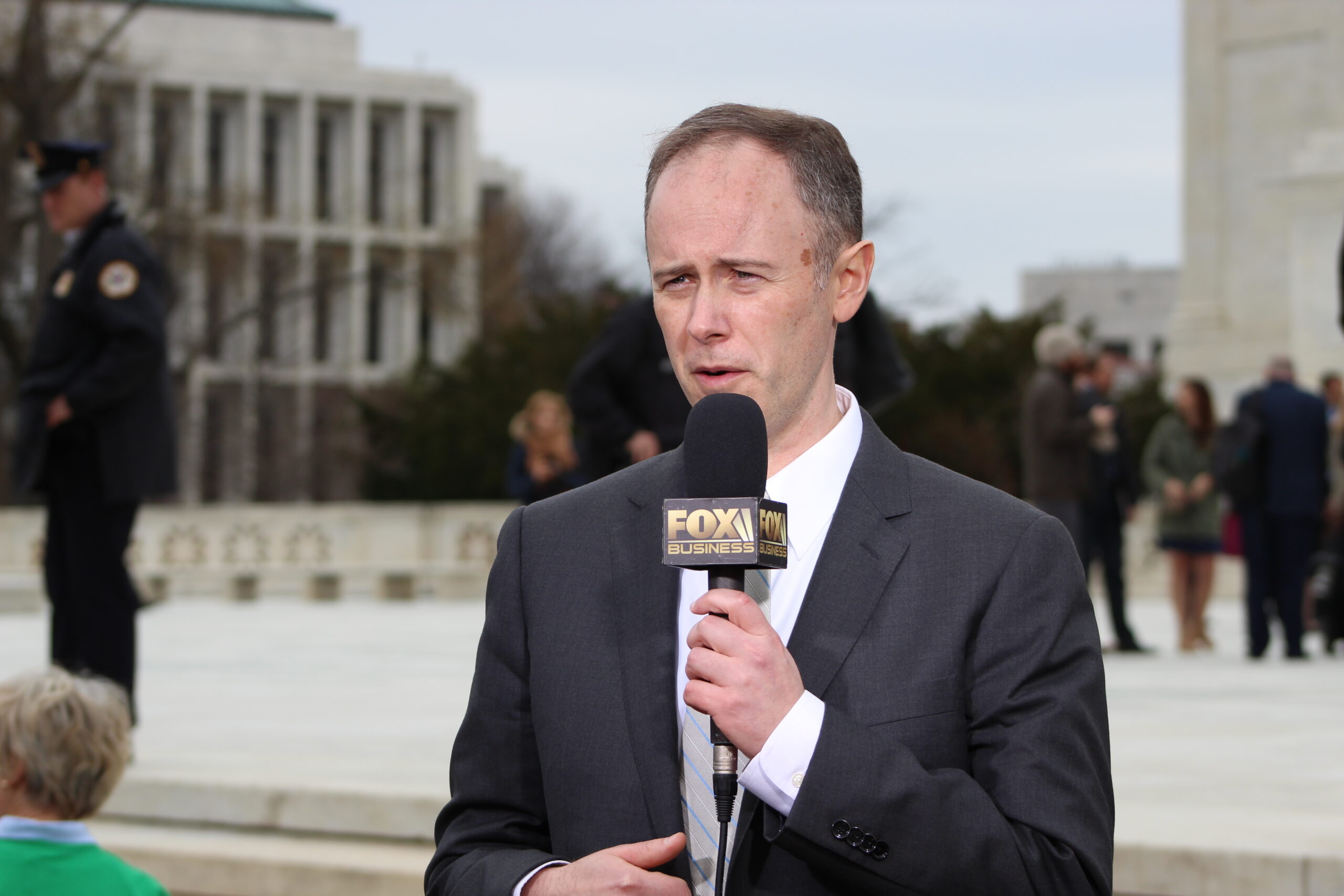
Veteran Foundation staff attorney William Messenger made history when he argued and won the Janus case before the High Court in 2018. He still represents Janus and others demanding forced-fee refunds.
PHILADELPHIA, PA – A National Right to Work Foundation-backed class-action lawsuit for Pennsylvania state employees seeking refunds of unconstitutionally seized union fees resulted in a split decision from the U.S. Third Circuit Court of Appeals in August. This ruling cast serious doubt on a favorite union boss argument used to avoid refunding dues seized in violation of workers’ First Amendment rights.
The employees were defending their rights under the landmark 2018 Foundation-won Janus v. AFSCME Supreme Court ruling. In Janus, the Court sided with former Illinois child support specialist Mark Janus and agreed with Foundation staff attorneys that requiring any public sector worker to pay union dues or fees as a condition of employment is a First Amendment violation. The Court also ruled that union dues can only be taken from public servants with their affirmative and knowing consent.
The plaintiffs in Wenzig v. Service Employees International Union (SEIU) Local 668 are seeking a ruling that SEIU officials must refund dues taken from employee paychecks in contravention of this standard before the Janus ruling came down. Union bosses used, as they have done in almost all similar cases, a dubious “good faith” argument to justify not refunding the dues to the victimized workers. In the split decision, two of the three judges rejected the so-called “good faith” theory.
Supreme Court Asked to End Lower Court Confusion on Janus Refunds
Foundation staff attorneys cited the growing confusion among federal judges on forced-union-fee refunds as a vital reason the Supreme Court should hear the continuation of Janus v. AFSCME. In a supplemental brief, Foundation attorneys wrote that Wenzig “supports granting review here because a majority of the Third Circuit panel rejected the good faith defense recognized by the Seventh Circuit here and by the Second, Sixth, and Ninth Circuits.”
“The Court should finally resolve this important issue and hold there is no good faith defense to Section 1983,” the brief adds. Section 1983 is the federal law requiring that those who deprive people of their constitutional rights “under color of any statute . . . shall be liable to the party injured.”
This September, Foundation staff attorneys also filed the final reply brief supporting the Supreme Court petition in Casanova v. International Association of Machinists (IAM), Local 701, another case seeking review from the High Court. It also cites the Third Circuit’s split decision. Plaintiff Benito Casanova, a Chicago Transit Authority employee, seeks to get back money that IAM bosses took from his paycheck and the paychecks of his colleagues in violation of their First Amendment rights prior to the Janus decision.
Foundation Leading Worker Efforts to Reclaim Fees Seized Against Janus
The workers in these cases and many others are collectively fighting for millions of dollars in pilfered money to be returned to them. Foundation attorneys currently represent these public servants in nearly 20 similar cases, together pursuing about $130 million in refunds to workers.
“Given the clarity of the Janus First Amendment standard, it’s bewildering that federal judges have not yet widely discredited union boss arguments that serve only to deny public sector workers refunds of money that the High Court itself ruled should have never been taken from them in the first place,” observed National Right to Work Foundation President Mark Mix. “The High Court must swiftly disabuse lower courts of their misunderstandings and provide justice to workers who have been waiting years for their hard-earned money to be returned.”





