
Public Servants Across Country Stand Strong in Defending Janus Rights
The following article is from the National Right to Work Legal Defense Foundation’s bi-monthly Foundation Action Newsletter, January/February 2026 edition. To view other editions of Foundation Action or to sign up for a free subscription, click here.
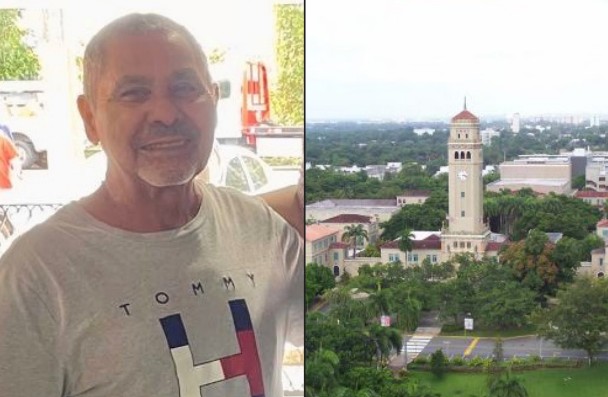
Jose Ramos, a University of Puerto Rico maintenance employee, isn’t going to let union bosses maintain their flimsy defense that they are entitled to keep his hard-earned money in violation of the First Amendment.
As 2025 waned, National Right to Work Foundation staff attorneys brought their expertise to bear as government employees in Washington State and Puerto Rico continued legal battles to get back money that union bosses never should have seized from their paychecks.
These workers are invoking their rights under the Foundation-won Janus v. AFSCME decision, which the Supreme Court handed down in 2018. In Janus, the Justices ruled that all American public sector workers have a First Amendment right to abstain from paying dues to union officials they don’t support.
Despite Janus’ commonsense protections, many union bosses, intent on keeping their coffers stocked with dues money seized from unwilling public employees, are still trying to skirt the Court’s ruling.
AFSCME Bosses Refuse to Return Illegally-Seized Money to Worker
That includes AFSCME union officials in Washington State, whom City of Everett employee Xenia Davidsen is fighting at the Washington State Public Employment Relations Commission (PERC). Davidsen charged AFSCME chiefs with accepting money that City officials had illicitly funneled from her paycheck to the union.
Davidsen had requested dues deductions to stop in 2024 in accordance with Janus, but City officials failed to monitor the email address through which AFSCME directed the City to stop the deductions. This incompetence led to the City seizing dues money from Davidsen at least 12 times without her authorization — and AFSCME union officials have stubbornly refused to admit they must post a notice stating they were wrong to accept the deductions.
“On none of those… instances did the Union stop to question why it was accepting dues that it knew were unauthorized to it,” argue Foundation attorneys in Davidsen’s latest brief before the PERC.
Meanwhile, Foundation attorneys also defended the Janus rights of two groups of Puerto Rico public employees in oral arguments before the First Circuit Court of Appeals last October.
Foundation Challenges Puerto Rico Court’s Refusal to Nix Anti-Janus Statute
In one case, Cruz v. UIA, Puerto Rico Aqueduct and Sewer Authority (PRASA) employee Reynaldo Cruz is trying to reclaim union dues money that officials of the Authentic Independent Union of Water and Sewer Authority Employees (UIA) took in violation of his First Amendment rights.
Cruz’s lawsuit challenges both union bosses’ demands that he pay union dues or lose his job, as well as the Puerto Rico territorial laws that allow such unconstitutional demands. Though UIA union bosses claim they have already deposited the illegally-seized money with a lower federal court, that court confusingly declined to issue a ruling that legally entitles Cruz to collect the funds.
During oral arguments, Cruz’s legal team argued that this legal sleight-of-hand created “a roadmap for civil rights defendants to violate civil rights plaintiffs’ rights.”
Foundation Won’t Let Union Bosses & Bureaucrats Ignore Janus
Also argued before the First Circuit at the end of 2025 was Ramos v. Delgado, in which Foundation attorneys represent Jose Ramos and other University of Puerto Rico maintenance employees who had dues illegally deducted from their paychecks for years.
Ramos and his colleagues are seeking refunds of all dues taken unlawfully since the Janus decision. Puerto Rico continues to be a hotbed for union violations of the Janus decision, but luckily, workers continue to stand up with Foundation legal aid.
Most recently, public employee Luis Rigau filed a federal lawsuit to challenge the Puerto Rico Industrial Commission (PRIC) union’s blatantly illegal reinstatement of automatic forced-dues deductions against nonmembers.
“Despite Janus’ clear constitutional command, union bosses, legislators, and public officials are still trying to do legal gymnastics to end-run the decision,” commented National Right to Work Foundation Vice President and Legal Director William Messenger.
“All public sector workers deserve the free choice that Janus secures, and Foundation attorneys will continue to back them in their court battles for freedom.”
Foundation Slams NLRB, ILA Union Officials in Brief to Fourth Circuit Court
The following article is from the National Right to Work Legal Defense Foundation’s bi-monthly Foundation Action Newsletter, July/August 2023 edition. To view other editions of Foundation Action or to sign up for a free subscription, click here.
Foundation defends union-free SC port workers who would lose their jobs under NLRB ruling

Foundation staff attorneys are fighting to ensure that Charleston’s state-of-the-art Hugh K. Leatherman Terminal doesn’t become a safe harbor for ILA union bosses’ anti-worker schemes.
CHARLESTON, SC – National Right to Work Foundation staff attorneys have joined the fight against the International Longshoremen’s Association (ILA) union’s ongoing gambit to idle Charleston’s state-of-the-art Hugh K. Leatherman Terminal if the union can’t get control of all jobs at the facility.
Hostile Union Power Play Seeks to Put Non-Union Workers Out of Job
The Foundation recently filed a legal brief with the Fourth Circuit Court of Appeals in the case South Carolina Ports Authority (SCPA) v. National Labor Relations Board (NLRB). In the case, the SCPA is challenging the Biden NLRB’s ruling permitting ILA union bosses to file multi-million-dollar lawsuits against any cargo carrier that docks at Leatherman until the union gains control of all crane lift equipment jobs at the facility.
Since its opening in March 2021, some of the work at Leatherman Terminal has been performed by non-union state employees, some of whom have worked for the SCPA for years. The brief argues that if ILA union bosses’ power grab succeeds, it will “cause grievous harm to 270 State port workers and their families.”
The Foundation “submits this brief to provide a voice for the otherwise voiceless non-union State employees, and to give the Court a unique perspective on the stakes involved for those workers and their families,” the brief states. The brief highlights the dire consequences of the ILA maneuver for control of Leatherman’s 270 employees, who are otherwise protected by state law from monopoly union control.
According to the brief, South Carolina spent over $1 billion to develop the terminal, but due to the ILA’s power grab “the only way for South Carolina’s $1 billion Leatherman Terminal to be usable would be for the State to turn the facility over to a private employer with an ILA contract and discharge the 270 State employees.” The devastating effects for current employees and their families wouldn’t stop there if the ILA is victorious in the case. Even if the fired state workers were to seek new employment at Leatherman with a private contractor under the union’s control, the ILA union’s seniority provisions and hiring rules would likely bar them from being rehired.
ILA Union Officials Have History of Corruption
The attempt by ILA union officials to seek total control over workers at the Leatherman terminal is hardly the only underhanded tactic the ILA has been linked to. In 2022, the New York Daily News reported ILA chiefs negotiated “deals” where mob-linked longshoremen in New York and New Jersey could get paid for 27 hours of “work” per day.
“ILA union officials, with assistance from the NLRB, are directly working to destroy the livelihoods of these 270 South Carolinians,” commented National Right to Work Foundation Vice President Patrick Semmens. “The NLRB’s blatant disregard of the rights and wellbeing of workers and siding with union tyrants is outrageous.”
“The non-union port workers who have called Leatherman their workplace for over a decade must be protected,” added Semmens.
Illinois Security Officer Defends Janus Rights Amidst Union Discrimination
The following article is from the National Right to Work Legal Defense Foundation’s bi-monthly Foundation Action Newsletter, March/April 2023 edition. To view other editions of Foundation Action or to sign up for a free subscription, click here.
Union officials sought to coerce membership by preventing non-members from defending their jobs
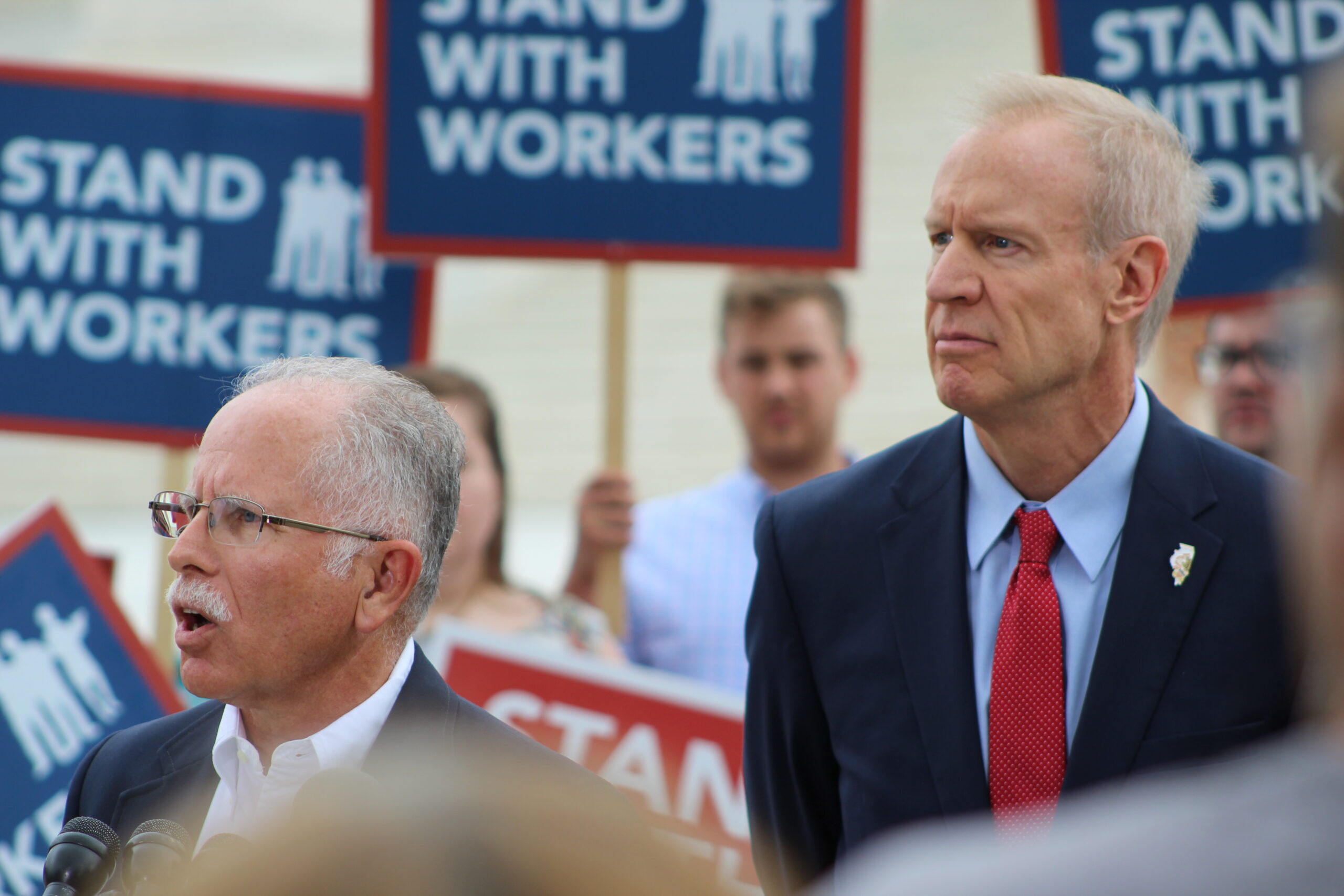
Foundation attorneys aided Illinois public employee Mark Janus with former Illinois Governor Bruce Rauner (right) in his landmark First Amendment victory. But Foundation attorneys often must fight to enforce Janus rights, as in Chris Logan’s case.
CHICAGO, IL – The National Right to Work Foundation’s landmark Supreme Court victory in Janus v. AFSCME was a milestone for public sector workers. For the first time, the Court recognized that every American public sector worker had the constitutional right to cut off dues to a union they oppose.
Even with this important First Amendment protection, however, union bosses unfortunately still wield an enormous amount of power over workers who have ended their affiliation with the union. Because of laws that authorize monopoly union “representation” in the public sector, union officials still have significant control over independent-minded employees’ working conditions, pay, benefits, and more.
City of Chicago aviation security officer Chris Logan discovered just how painful Illinois Council of Police (ICOP) union bosses could make life for him after he exercised his Janus rights. In 2020, following a dispute about his job performance, Logan took action to protect his job under the terms of his employment contract, only to have union bosses exploit the opportunity to attack Logan. The union would not allow Logan to file a grievance to protect his job unless he joined the union.
Officer Challenges Discriminatory Grievance Scheme with Foundation Aid
“ICOP union officials basically tried to force me to join and pay dues to the union by making it impossible for me to defend my job otherwise,” commented Logan. “I exercised my Janus rights and left the union because I didn’t think that ICOP officials were good ‘representatives’ of me or my coworkers.”
“Instead of trying to win back my support voluntarily, union bosses used their power to deprive me of all options when I tried to defend my job — I couldn’t even file or arbitrate a grievance myself,” Logan added. “In my mind, that simply confirms I made the right decision when I left this union.”
However, with free legal representation from National Right to Work Legal Defense Foundation staff attorneys, Logan won a decision from the Illinois Labor Relations Board (ILRB) in late 2022 that decisively declared ICOP officials’ “members only” grievance scheme illegally discriminatory against non-members.
Logan first exercised his Janus rights in October 2019, telling the union by letter that he no longer wished to pay union dues. Throughout 2020, Logan faced allegations about his job — possibly instigated by union militants. Per the union monopoly agreement he was subjected to, he tried to get union officials to fulfill their role, as monopoly “representatives” of the workplace, to file grievances challenging the City of Chicago’s disciplinary actions against him.
Union officials who maintain “monopoly bargaining power” in a workplace can legally impose their control over every worker, even those who have disaffiliated with the union. Because of this privilege, however, they are also legally obligated not to discriminate against non-members when it comes to grievances or other matters. However, as Logan discovered, union officials regularly ignore this “duty of fair representation.”
Union Officials Completely Ignored ‘Fair Representation’ Legal Obligation
ICOP union officials summarily rejected all of Logan’s requests to file grievances, and even told him that he could not file grievances himself. At one point, after an ICOP union official sent Logan an email falsely claiming the union had no legal obligation to participate because Logan had exercised his Janus rights, the ICOP lawyer chimed in to tell Logan, “I concur. Good luck.” The union stated it would not file grievances for Logan simply because he was a non-member.
Logan filed unfair labor practice charges against ICOP and the City of Chicago in August 2020, maintaining that the union’s actions were illegal. An ILRB Administrative Law Judge agreed with Logan’s charges in May 2022, declaring that ICOP “violated [Illinois labor law] when its agents restrained or coerced the Charging Party in the exercise of rights . . . by threatening to deny the Charging Party equal representation in the disciplinary and grievance matters.” The ILRB later adopted this ruling, leading to Logan’s Foundation-won victory when union officials did not attempt to appeal the decision to Illinois state court.
Monopoly Bargaining Powers Open Door to Corruption
“Union bosses maintain unilateral control over workers under a ‘monopoly bargaining’ regime,” commented National Right to Work Foundation Vice President and Legal Director Raymond LaJeunesse. “For public sector workers across the country, Janus is the only check they can use against this power, and even then they could face retaliation for doing so.”
“Cases like Mr. Logan’s, where union bosses used their bargaining powers to discriminate against a worker who exercised Janus rights, ought to make our elected leaders reconsider how much privilege our laws grant unions,” LaJeunesse added.
Foundation Helps Healthcare Workers Remove Unwanted Unions
The following article is from the National Right to Work Legal Defense Foundation’s bi-monthly Foundation Action Newsletter, September/October 2022 edition. To view other editions of Foundation Action or to sign up for a free subscription, click here.
Evidence of union boss “serious financial malpractice” exposed as workers seek to vote out SEIU

Nurse Brittany Burgess (front, center) led her fellow Mayo Clinic nurses in decertifying the Minnesota Nurses Association (MNA) union. She’s “extremely grateful” for Foundation support.
DETROIT, MI – Workers across America are increasingly fed up with union bosses’ self-serving so-called “representation.” National Right to Work Foundation legal aid requests are spiking from workers seeking assistance in filing decertification petitions to end union monopoly bargaining control in their workplaces. In 2021 alone, Foundation attorneys provided legal assistance in 54 National Labor Relations Board (NLRB) decertification efforts, which together sought to end union boss control of more than 7,000 workers.
This increased demand has continued in 2022, with healthcare workers in particular seeking the Foundation’s legal aid in exercising their legal right to free themselves from union ranks. In one such ongoing case, Foundation staff attorneys assisted Crystal Harper, an employee at Detroit’s Sinai-Grace Hospital, who along with coworkers battled to oust SEIU Healthcare Michigan union officials.
Harper’s initial petition was rejected after an NLRB regional official dubiously dismissed the petition on the grounds that “Midnight, February 8th” in the union monopoly contract was actually unambiguously a reference to the minute after 11:59 p.m. on May 7. This questionable interpretation of union officials’ sloppily written contract meant that the petition filed on the 8th was actually late under the controversial NLRB-created “contract bar” policy.
Undeterred, that decision was appealed and a second petition for a decertification vote was filed in May after the contract bar had expired and a vote was scheduled. Meanwhile, “substantiated allegations of serious financial malpractice” have come to light involving the SEIU local that were so glaring even SEIU International President Mary Kay Henry couldn’t ignore them, as she was pushed to use the SEIU’s “trusteeship” procedures to oust local officials and take full control of the local.
As a result, in June, Foundation President Mark Mix formally asked the Department of Labor and Department of Justice to investigate the serious allegations of financial and other wrongdoing by SEIU local officials. The letter calling for the federal investigation noted that “any internal SEIU International investigation will be insufficient [given the] long history of union officials attempting to ignore or downplay corruption in their own ranks.”
Foundation Counters Union Legal Tricks to Block Vote
Elsewhere in Michigan, lab technicians at Ascension Providence Rochester Hospital have finally won their effort to be free of unwanted so-called “representation” by union officials of the Office and Professional Employees International Union (OPEIU) Local 40.
During the protracted process, Foundation staff attorneys successfully fought off OPEIU union lawyers’ efforts to block the vote which cited the pending sale of the facility by Ascension to LabCorp as grounds for rejecting the workers’ request for an election. Union lawyers had urged the NLRB regional office to block a vote whether to remove the union on the grounds of an upcoming “cessation of operations” by the employer, a policy previously applied only to certification elections.
In briefs to the NLRB, Foundation staff attorneys countered that union attempts to block the vote were unjustified as a matter of law. Foundation attorneys also noted that the attempt to block the vote was likely a cynical attempt to keep power over the bargaining unit. If the sale ultimately went through, the union would have likely sought to block a decertification vote citing the NLRB-created “successor bar” that insulates union officials from decertification votes after a workplace’s change in ownership.
The Board ultimately rejected the union lawyers’ arguments and scheduled a decertification vote by mail-in ballot. However, rather than go forward with a vote they seemingly knew they were going to lose, OPEIU officials instead disclaimed interest in the unit, finally giving the workers the freedom from unwanted union representation they sought.
Meanwhile in Minnesota, multiple groups of healthcare workers are seeking decertification votes with Foundation legal aid. At the Mayo Clinic Health System in Mankato, Minnesota, approximately 500 nurses filed a petition for a vote to remove the Minnesota Nurses Association (MNA) union, while two separate units of Cuyuna of the lawsuit, Regional Medical Center healthcare workers located at facilities in Crosby, Baxter, Longville, and Breezy Point, Minnesota, filed for decertification votes to free themselves from the SEIU.
Hundreds of Minnesota Nurses Petition to Be Union Free
“I’m extremely grateful to have the free legal assistance of the National Right to Work Foundation in fighting for our right to hold a vote to remove the union,” commented Mayo Clinic Mankato nurse Brittany Burgess. “I can’t wait until the day when we are all finally free of the MNA.”
One likely reason for the increased decertification activity is Foundation-advocated reforms that were adopted by the NLRB in 2020 to curtail union officials’ abuse of so-called “blocking charges,” which they use to delay or block workers from exercising their right to decertify a union. However, with the Biden-appointed NLRB majority recently announcing it was starting rulemaking to overturn those reforms, Foundation staff attorneys are now gearing up to challenge the Biden Board’s attempt to give union bosses more power to trap workers in union ranks they oppose.
“Foundation staff attorneys will continue to assist workers in exercising their rights under federal law to hold decertification elections to remove so-called ‘representation’ opposed by most workers,” commented National Right to Work Foundation Vice President and Legal Director Raymond LaJeunesse. “The Biden NLRB is clearly prioritizing union boss power to the detriment of the rights of rank-and-file workers. Look no further than the fact that just as the Board seeks to expand the ability of union officials to impose unionization on workers through coercive ‘Card Checks’ without even secret-ballot votes, it simultaneously plans to make it easier for union lawyers to block workers from holding votes to remove a union.”
NLRB Blocks Attempt to Oust Union, Despite Unanimous Call for Union’s Removal
The following article is from the National Right to Work Legal Defense Foundation’s bi-monthly Foundation Action Newsletter, May/June 2021 edition. To view other editions of Foundation Action or to sign up for a free subscription, click here.
Every employee signed a petition for vote to remove Carpenters Union from their workplace

Foundation staff attorneys are defending Neises Concrete Construction Corp. workers’ unanimous call to free themselves from the coercive reign of IKORCC union bosses.
CROWN POINT, IN – Mike Halkias and his coworkers at Neises Construction Corp. in Crown Point, Indiana, are subject to monopoly “representation” by officials of the Indiana/Kentucky/Ohio Regional Council of Carpenters (IKORCC) union.
Every bargaining unit member exercised the right under Indiana’s Right to Work Law to decline formal union membership and to refuse to pay any union dues or fees, but union officials still have the authority under federal law to “negotiate” with Neises for the employees despite their objections to that representation.
NLRB Officials Snub Workers’ Unanimous Petition, Demand Union Bargaining
With free legal aid from the National Right to Work Legal Defense Foundation, Halkias submitted a decertification petition to Region 13 of the National Labor Relations Board (NLRB), signed by every member of his unit, to remove IKORCC union officials from their workplace.
Despite unanimous agreement by the unit’s workers to hold a vote to oust IKORCC bosses, NLRB Region 13 officials rejected the decertification petition. The Regional Director is demanding that the Indiana employer bargain with IKORCC, even though none of its employees want the union to “represent” them.
Union Bosses Won’t Give Up Monopoly Bargaining Power over Non-members
So far union officials have stymied the vote through “blocking charges,” unfair labor practice charges filed by union lawyers that, before they are resolved, prevent a vote from taking place. Union officials claim the vote cannot proceed until the company negotiates “in good faith” with the union.
That demand comes even though federal law makes it illegal for an employer to engage in bargaining with a union that it knows lacks the support of at least a bare majority of workers. The NLRB regional official’s order dismissing the employees’ petition did not even acknowledge that every employee in Mr. Halkias’ bargaining unit has shown a desire to be independent from the union by resigning union membership and asking for a decertification vote.
Foundation Attorneys Bring Fight to National Board
The Foundation staff attorneys who represent Halkias have appealed to the NLRB in Washington to overturn the rejection of the decertification petition and to allow the workers to vote so they can be rid of the union whose so-called “representation” they all oppose. “It is outrageous that in a workplace where every single worker wants nothing to do with a union, federal law still forces workers to accept the so-called ‘representation’ of union bosses,” said National Right to Work Foundation Vice President Patrick Semmens.
“The fact that this appeal is even necessary demonstrates how rigged federal law is against independent-minded workers who seek to exercise their right not to associate with a union.”
“This case is a reminder that, even in Right to Work states that protect workers from being forced to fund a union they don’t support, federal law still forces workers under union monopoly control even when those employees oppose the union and believe they would be better off without it.”





