
Austin Worker Files Federal Constitutional Challenge Against Biden-Harris Labor Board
National Labor Relations Board facing numerous worker-brought lawsuits citing unconstitutional structure
Fort Worth, TX (November 2, 2024) – Dallas Mudd, an employee of Aunt Bertha (d/b/a FindHelp), has launched a federal lawsuit against the National Labor Relations Board (NLRB) on the grounds that the agency’s structure violates the U.S. Constitution. National Right to Work Legal Defense Foundation staff attorneys representing Mudd filed the suit in the U.S. District Court for the Northern District of Texas. The lawsuit joins a string of cases challenging the NLRB’s structure on separation of powers principles.
Mudd’s case comes on the heels of his own employer’s suit against the NLRB. In that case, a federal district court judge ruled in favor of FindHelp and granted an injunction to halt proceedings against the company.
Mudd filed a decertificiation petition with the NLRB back in September, requesting a vote to remove the Office & Professional Employees International Union (OPEIU) from his workplace. Instead of allowing the vote to proceed, NLRB officials blocked the election, leaving the workers indefinitely trapped in a union they oppose. Mudd is appealing that decision to the full Board in Washington DC.
Mudd’s federal lawsuit argues he is entitled to have his appeal adjudicated before a federal agency that is accountable to the president. The case joins four other constitutional challenges to the NLRB’s structure from Foundation-backed rank-and-file workers, including the first-ever such lawsuit challenging NLRB Board Member removal protections, which is currently being briefed at the DC Circuit Court of Appeals by Foundation attorneys representing Buffalo, NY-based Starbucks employees Ariana Cortes and Logan Karam.
Mudd’s lawsuit points to recent Supreme Court rulings, including Seila Law LLC v. CFPB and Collins v. Yellen, which emphasized that the President has direct authority to remove executive officials who exercise significant authority. Mudd argues that the NLRB’s structure, as defined by the National Labor Relations Act (NLRA), places unlawful limitations on the president’s power to oust NLRB officials who exercise significant executive authority.
The complaint, filed in the U.S. District Court for the Northern District of Texas, joins a similar suit at the same court from Reed Busler. Similar to Mudd, Busler, a Starbucks employee, filed a petition asking the NLRB to hold a vote to remove the incumbent Starbucks Workers United (SBWU) union, only to have the vote blocked by NLRB officials. In all the cases the employees argue they are entitled to have their cases heard by Board officials who are not exercising powers in violation of the Constitution.
“Independent-minded workers should not be forced to depend on biased agencies staffed by bureaucrats, that exercise power in violation of the Constitution, just to free themselves of unwanted union affiliation,” said National Right to Work Foundation President Mark Mix. “The Constitution does not permit a powerful federal agency to operate as the judge, jury, and executioner without oversight, and these legal challenges seek to ensure that the Labor Board functions within the law, for the sake of all workers.”
Foundation: Texas Taxpayers Shouldn’t Be Forced to Fund Union Activities
The following article is from the National Right to Work Legal Defense Foundation’s bi-monthly Foundation Action Newsletter, May/June 2023 edition. To view other editions of Foundation Action or to sign up for a free subscription, click here.
Brief says Janus explains why Texas Supreme Court must invalidate ‘official time’ scam
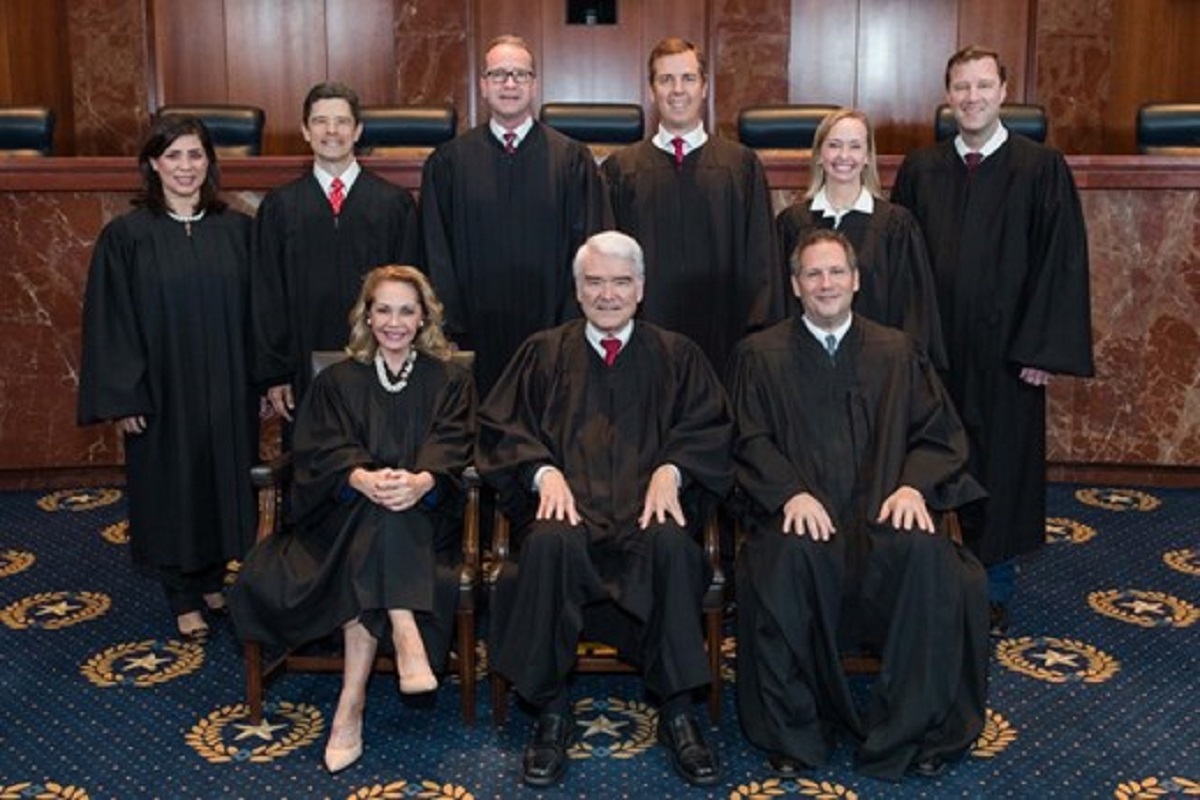
Don’t Mess with Taxes: The Foundation urged the Texas Supreme Court (above) in recent legal briefs to quash the City of Austin’s scheme funneling taxpayer money to union ideological activities.
AUSTIN, TX – Union officials spend billions of dollars to influence the political system every election cycle. This is why they are so desperate for forced-dues power — it gives them a guaranteed stream of revenue to sustain their agendas, regardless of whether workers support the union hierarchy’s aims.
But workers are increasingly taking advantage of their rights under Right to Work laws and the landmark National Right to Work Foundation-won Janus v. AFSCME U.S. Supreme Court decision to refrain from financially supporting union bosses of whom they do not approve.
Union bosses in Austin, TX, have apparently worked around this dilemma by shifting the burden for funding the union agenda to taxpayers. Through a so-called “official time” scheme, City of Austin employees who are union officials receive compensation from the public purse for conducting union business on the clock.
‘Official Time’ Boosts Inherently Political Government Union Agenda
Foundation attorneys recently filed a brief in the Texas Supreme Court case Roger Borgelt v. City of Austin, arguing that the Foundation-won Janus decision definitively shows why Austin’s scheme violates the Texas Constitution’s prohibitions against payouts of public funds to serve private interests (known as the “Gift Clauses”). The High Court ruled in Janus that forcing public sector workers to fund any union activities as a condition of employment violates the First Amendment, and that union dues can only be deducted from a public sector worker’s paycheck with his or her freely given consent.
An “official time” scheme, which instead forces taxpayers into funding those same union activities, “conflicts with the Supreme Court’s reasons for holding in Janus that it violates the First Amendment to require public employees to subsidize union activities,” says the Foundation’s brief.
The Foundation points out in its brief the Court’s Janus holding that all public sector union undertakings “constitute speech and petitioning on matters of political…concern,” and that by funneling taxpayer money into such speech “the City is effectively paying individuals to lobby the City for a private advocacy organization and its members.”
“The notion that this political advocacy predominantly serves a public purpose, as opposed to predominantly benefiting the private organization, is untenable,” the brief reads.
The brief also refutes an assertion from a lower Texas court that “official time” payments made by the city are actually part of union officials’ compensation for their normal job duties. This defies Janus’ reasoning that public employees who are also union officials “do not act as government agents pursuing their official job duties when they act as union officials.”
“For example, in granting paid leave to employee Bob Nicks to act as the Union’s president, the City is not paying Mr. Nicks for his services as a firefighter or as a public servant,” the brief explains. “The City is paying Mr. Nicks for his services as an agent of a private organization.”
The brief also reveals the disturbing implications of the union-backed argument that taxpayer subsidies for “official time” are needed to maintain harmonious relations between the city and the union: “If respondents contend that Union officials would disrupt City services if they did not receive [‘official time’], that would make the benefit akin to the City paying protection money” to union officials, reads the brief.
Union Bosses Should Not Get Public Funds to Pursue Union Interests
“The Texas Supreme Court should recognize that union officials are not entitled to a slice of taxpayer funds to ‘bargain’ against public interests,” commented National Right to Work Foundation Vice President and Legal Director Raymond LaJeunesse. “Texas’ Gift Clauses forbid the payout of public funds for activities that don’t have a tangible public benefit, and it’s hard to think of an arrangement that violates the Clauses more plainly than letting union bosses pursue private union business on the taxpayer dime.”
“Although Janus now protects public employees around the country from being forced to fund union activities and speech against their will, unfortunately many states and municipalities across the country permit union bosses to subsidize those same inherently political activities using direct payment of tax dollars,” LaJeunesse added.
“If union bosses cannot convince rank-and-file workers to voluntarily fund such activities as Janus requires, they should re-examine their priorities, not seek to force taxpayers to pay for what public employees will not.”





