
National Right to Work Foundation Files Brief in Case to Overturn Anti-Worker Biden-Era Labor Board Decision
NLRB’s Cemex precedent conflicts with federal law, wrongly promotes abuse-prone ‘card check’ organizing to detriment of employee rights
Washington, DC (September 11, 2026) – The National Right to Work Legal Defense Foundation filed an amicus brief at the National Labor Relations Board (NLRB) in a case to overturn a Biden-era NLRB decision. The brief argues Cemex must be reversed because it cannot be reconciled with the statutory text of the National Labor Relations Act (NLRA).
The NLRB is the federal agency tasked with enforcing the NLRA and with adjudicating disputes between employers, unions, and individual workers. Under Section 8(b)(7) of the NLRA, Congress said that when a union pickets for recognition, unions have 30 days to file for an election before union picketing becomes an unfair labor practice.
The Foundation’s brief, filed in Amazon.com Services LLC (NLRB Case No. 20-CA-353378), notes that Cemex’s invented 14-day deadline for employers, absent an employer request for an election, to recognize a union after the union demands recognition “cannot be reconciled” with Section 8(b)(7), especially in light of the Supreme Court’s 2024 Loper Bright decision.
The brief notes: “[Cemex] cannot be squared with Section 8(b)(7)…[which] is predicated on the fact that the Act does not obligate employers to recognize unions. And, contrary to Cemex’s requirement that employers petition for an election or recognize the union, Section 8(b)(7) places the burden on unions that picket for recognition to file an election petition to avoid committing an unfair labor practice (‘ULP’).”
The brief also highlights other flaws inherent in Cemex, including that it “incentivizes union recognition based on a mere union demand—regardless of actual majority support—while diminishing use of the best way to determine majority support, secret-ballot elections.”
As the brief points out, Cemex runs contrary to the interests of workers whose votes against unionization are discarded and who have union representation forced on them through the abuse-prone card check method. This disenfranchisement is triggered whenever the Board finds that the employer committed a ULP—even if that violation had no effect on the workers who opposed the union.
Foundation staff attorneys have, and continue to, provide legal assistance for workers in several cases targeted by the abuse-prone card check organizing, including victims of union pressure tactics, lies, and threats. This includes Foundation attorneys specifically challenging the original Cemex decision in a federal court case filed for a Seattle Mariners employee dating back to 2024.
“For roughly three years the Biden Board’s Cemex decision has—in violation of the clear text of federal law—let union bosses’ say-so substitute for what workers actually decide in a private, secret-ballot vote.” commented National Right to Work Foundation President Mark Mix. “The new NLRB majority should quickly overturn Cemex and other biased Biden and Obama-era precedents on the books that promote union boss power to the detriment of the rights and freedoms of workers.”
National Right to Work Foundation Files Brief in Support of Grad Students’ Legal Challenge to Being Forced to Fund Radical Campus Union
Amicus brief at Seventh Circuit Court of Appeals argues NLRB coercion over bargaining means mandatory union dues requirement violates First Amendment
Chicago, IL (July 16, 2026) – The National Right to Work Legal Defense Foundation has filed an amicus curiae brief with the Seventh Circuit Court of Appeals in support of University of Chicago graduate students who are challenging the requirement that they pay fees to a union they oppose. Currently, these students must pay the union in order to keep their research and teaching jobs, which are a requirement of completing their graduate program.
The lawsuit, Graduate Students for Academic Freedom, Inc. v. United Electrical, Radio and Machine Workers of America, was brought by a group that includes Israeli and Jewish graduate students who oppose being forced to fund the union, especially due to UE union officials’ “virulent anti-Israel advocacy.”
The Foundation’s brief, filed on Wednesday, July 15, supports the graduate students by arguing that the compulsory fee requirement they are subjected to violates the First Amendment, because it is the direct result of extensive and coercive bargaining requirements mandated by the National Labor Relations Board (NLRB):
“[T]he First Amendment prohibits the government from coercing one private party to infringe on the speech rights of another private party. This is what the NLRB does when it requires employers to bargain over forced fee requirements—the NLRB coerces one private party (an employer) to agree to compel other private parties (employees) to subsidize union speech.
The NLRB would violate the First Amendment by directly compelling employees to pay for union speech. Three times in the last 25 years the Supreme Court has struck down compelled subsidies for third-party speech… There is no constitutionally meaningful distinction between the compelled payments invalidated in those cases and the compulsory union fees at issue.”
The brief notes that in multiple decisions, including Janus v. AFSCME and Harris v. Quinn (both argued by Right to Work Foundation staff attorneys), the Supreme Court held that the government violates the First Amendment by compelling employees to subsidize union speech. More recently, in the 2024 NRA v. Vullo decision, the court reiterated the “principle that a government official cannot do indirectly what she is barred from doing directly.”
The Foundation amicus brief argues that, under those Supreme Court precedents, the NLRB’s highly coercive requirements that force employers in non-Right to Work states to bargain with union officials over forced fee requirements mean that the resulting mandatory dues requirement is unconstitutional government-compelled speech. As the brief points out, employers face NLRB prosecution for refusing to consider such a requirement, and even seeking to defend the conscience rights or academic freedom of those subjected to forced dues does not allow an employer to escape this requirement.
“Union bosses’ forced dues powers are the direct result of government coercion, and it is past time that federal courts take a closer look at how this results in compelled funding of radical speech in violation of the First Amendment,” commented National Right to Work Foundation President Mark Mix. “These students would have never been forced to fund union boss speech they find abhorrent if it weren’t for the NLRB’s actions, which first controversially subject graduate students to monopoly unionism and then require bargaining with union officials over a forced dues requirement.”
Right to Work Foundation Urges Ninth Circuit to Reject CA Law Granting Union Bosses Massive Power Over Cannabis Industry Workers
Amicus brief: “Labor peace agreement” mandate violates federal law and subjects workers to coercive union organizing tactics
San Francisco, CA (October 8, 2025) – The National Right to Work Foundation has filed an amicus brief at the Ninth Circuit Court of Appeals in the case Ctrl Alt Destroy v. Elliott, arguing that California’s regulatory regime imposing so-called “labor peace agreements” on the cannabis industry violates federal law.
These so-called “agreements,” which cannabis companies must adhere to in order to maintain a license under California law, rig the law against workers opposed to union control by censoring speech critical of unionization. They also mandate that employers grant union campaigners access to employees.
“Since 1968, the Foundation has been the nation’s leading litigation advocate for employee freedom to choose whether to associate with unions,” the amicus brief reads. “The Foundation has an interest in this case because it concerns whether California can lawfully subject employees of cannabis retailers to union organizing agreements.”
The Foundation’s amicus brief argues in particular that the National Labor Relations Act (NLRA) preempts California’s “labor peace agreement” statutes. The NLRA is the federal law that governs most private sector labor relations. The four conditions mandated for cannabis companies under California law, “an agreement with a…union, a ban on disrupting union organizing, a ban on union members picketing, boycotting, or striking, and a clause granting union organizers access to employees at work” all concern activity that the U.S. Congress intended the NLRA to deal with – not state law.
CA Statutes Force Employers to Bargain With Union Bosses Their Employees Never Voted For
Notably, the brief explains that California’s labor law requires cannabis employers to bargain with union officials – even if a majority of employees have not expressed that they want a union in the workplace. “California obligating employers to simply bargain with unions over labor peace agreements runs also afoul of [Supreme Court precedent] because the NLRA contains no such obligation,” the brief says. “The NLRA only requires employers to bargain with unions after a majority of employees choose that union to be their exclusive representative, but not before as California’s law does.”
Federal law also preempts California’s mandate that cannabis employers provide union bosses access to workers, the brief contends. The mandate lets union agitators intrude on private property so they can subject employees to campaign activity whether they want it or not. “This requirement unconstitutionally deprives employers of their property rights,” the brief reads. “The requirement also deprives employees who oppose unions of being able to work free from unwanted solicitations by outside union organizers.”
“California and several other states are pushing forward so-called ‘labor peace agreements’ to appease powerful union special interests, while workers and entrepreneurs in the fledgling American cannabis industry are left in the lurch,” commented National Right to Work Foundation President Mark Mix. “While federal labor law certainly has its flaws, California’s statutes and similar ones around the country provide even less protection for workers, and seemingly treat employees’ free association rights as an obstacle to greater control over the industry.
“California’s scheme has no legal underpinning and will cause employees great harm. The Ninth Circuit should invalidate it,” Mix added.
National Right to Work Foundation Files Appeals Court Brief in Support of Trump Order Cutting Federal Union Bosses’ Coercive Power
Brief emphasizes President’s authority under both Constitution and federal law to reduce scope of union monopoly bargaining control
Washington, DC (September 18, 2025) – The National Right to Work Foundation has filed an amicus brief at the D.C. Circuit Court of Appeals defending the Trump Administration’s efforts to reduce union bosses’ control within the federal government. The Foundation filed its brief in the case NTEU v. Trump, in which National Treasury Employees Union (NTEU) officials are attacking President Trump’s March 2025 executive order titled “Exclusions from Federal Labor-Management Relations Programs”. That order ended union officials’ monopoly bargaining privileges over a substantial number of federal agencies, citing union officials’ interference with the President’s national security objectives.
“Since 1968, the National Right to Work Legal Defense Foundation, Inc., has been the nation’s leading advocate for employee freedom to choose whether to associate with unions,” the brief says. “To this end, Foundation staff attorneys have represented individual employees before the Supreme Court in groundbreaking free speech and association cases.”
The brief explains that Foundation attorneys have represented many federal employees in resisting union bosses’ attempts to impose their agenda in the workplace. Such workers include Department of Justice employee Jeffrey Morrison, whose ongoing case challenging unionization campaigns in various divisions of the Department has been granted and stayed pending the result of NTEU v. Trump.
Lower Federal Court Used Flawed Interpretations of Federal Law to Rule Against Trump EO
The Foundation’s brief argues that a lower federal court was wrong to enjoin President Trump’s cancellation of monopoly bargaining in certain agencies. The brief explains that Article II of the Constitution grants the President wide authority to preserve national security. Furthermore, the brief says, in the Civil Service Reform Act (CSRA), Congress granted the president specific powers to exempt entire agencies from the obligation to accept union boss bargaining power if national security concerns require it.
“This statutory provision authorizes the President to exclude ‘any agency or subdivision thereof’ if the President determines [CSRA] Section 7103(b)(1)’s conditions are met,” the brief says. “The President’s determination that certain agencies or their subdivisions satisfy Section 7103(b)’s criteria is not subject to judicial review.”
The amicus brief also contends that the Trump Administration was justified in reconsidering which agencies should be exempt from monopoly bargaining requirements, primarily due to union officials’ unabated attempts to undercut Trump’s policy goals. “The District Court found the President’s exclusions under Section 7103(b) to be invalid because they supposedly were motivated by NTEU’s and other unions’ resistance to the administration’s policies,” the brief explains. “However, this proposition supports a finding that the President acted reasonably when determining that being forced to deal with NTEU as an exclusive bargaining agent at certain federal agencies would interfere with national security considerations.
“[T]he President does not have to tolerate unions abusing their powers under [federal law] to stymie his agenda when it may implicate national security,” the brief states.
Unaccountable Union Bosses Should Not Wield Special Influence Over Government Policies
“President Trump’s executive order rightly stops union officials from using their government-granted monopoly bargaining privileges to undermine the national security objectives that voters put President Trump into office to accomplish,” commented National Right to Work Foundation President Mark Mix. “The DC Circuit Court should not let union bosses commandeer the levers of the executive branch in violation of both the Constitution and longstanding federal law.
“However, Trump’s executive order should be the first step toward eliminating union bosses’ monopoly bargaining privileges throughout the whole federal government,” Mix added. “Such power gives unelected union bosses control over the services that American citizens fund with their taxes and elect representatives to oversee. It also forces federal employees – many of whom have never even voted for the union in their workplace – to accept workplace ‘representation’ from union bosses that they may bitterly disagree with.”
National Right to Work Foundation Files Legal Brief Defending Wisconsin Act 10 as Union Bosses Seek to Regain Coercive Powers
Amicus brief exposes lower court’s flawed argument that union bosses have “right” to monopoly bargaining powers over workers and government
Washington, DC (July 9, 2025) – The National Right to Work Foundation has submitted an amicus brief to the Wisconsin Court of Appeals in Abbotsford Education Association v. Wisconsin Employment Relations Commission. The case, which is on appeal from the Dane County Circuit Court, is a challenge by a cadre of labor unions against Act 10, a 2011 state law that set important restrictions on public sector union officials’ ability to control Wisconsin public services and public workers.
Act 10, among other provisions, prevents unelected union bosses from enforcing monopoly bargaining contracts that would let them dictate key aspects of work and compensation for large portions of state government – even over the objections of public workers themselves and their managers. It also requires union officials to periodically submit to employee votes (or “re-certification”) to ensure that they still enjoy majority employee support in public workplaces where they are in power. The Wisconsin Supreme Court upheld the statute as constitutional in 2014, but union officials believe that the changed ideological makeup of the Court gives them a new opportunity to get the law overturned and regain power.
“[T]he Foundation has frequently offered its views as amicus curiae in cases impacting upon important aspects of employee freedom,” the Foundation’s amicus brief reads. “Most importantly here, the Foundation has provided free legal aid to employees in other challenges mounted by unions against various provisions of 2011 Wisconsin Act 10.”
Lower Wisconsin Court Ignores Clear Supreme Court Precedent in Flawed Act 10 Ruling
The Foundation’s amicus brief first contends that a state like Wisconsin “can define and limit the parameters of exclusive representation as it sees fit,” and union officials’ public sector monopoly bargaining powers are not a “right” that the U.S. or Wisconsin constitutions require the government to acknowledge.
“The United States Supreme Court recognized this principle long ago” in Smith v. Arkansas State Highway Employees, the amicus brief says. The Dane County Circuit Court erroneously called monopoly bargaining a “right” the Wisconsin legislature could not ban in certain public departments but allow in others.
In 2007, Foundation attorneys won a victory at the United States Supreme Court in Davenport v. Washington Education Association that established a similar point to Smith: Union officials have no constitutional “right” to seize money from nonconsenting workers. Wisconsin’s Right to Work law and the Foundation’s Supreme Court victory in Janus v. AFSCME continue to protect Wisconsin workers from being forced to pay union dues or fees to keep their jobs.
The Foundation’s amicus brief also states that the Dane County Circuit Court failed to consider whether, instead of striking down Act 10 as a whole, it could have expanded the statute’s pro-employee liberty provisions to cover all public departments to correct the alleged imbalances the court perceives in the law. “[T]he Circuit Court could have expanded the protection of Act 10’s re-certification requirements to all public employees in the State,” the brief says.
In addition to Act 10’s benefits for independent-minded public workers, public spending analyses indicate that the law has relieved Wisconsin taxpayers from the enormous financial weight of wasteful union contracts. Some estimates show that Act 10 has saved the state roughly $35 billion since it was enacted.
“Act 10 is a simple recognition that voters and taxpayers – not unelected union bosses – should be in control of how the public services Wisconsinites fund are managed,” commented National Right to Work Foundation President Mark Mix. “But the union boss attempt to nix it is an even more egregious attack on Wisconsin public workers, who under union officials’ proposed regime would be forced to sacrifice to unions the right to freely choose who will speak for them on workplace matters. Even convicted felons have the right to choose their own representation, but union officials seek to deny this right to dissenting public employees.
“The latest attempt to get Act 10 overturned is a power play by Wisconsin union officials that will severely harm the public interest, and no Wisconsin court should be complicit in that scheme,” Mix added.
Right to Work Foundation Submits Legal Brief Opposing Biden “Project Labor Agreement” Rule for Federal Construction Projects
Amicus brief at Eleventh Circuit Court of Appeals exposes rule as discriminating against nonunion workers and contractors in violation of Constitution
Atlanta, GA (June 4, 2025) – The National Right to Work Legal Defense Foundation filed an amicus brief in Associated Builders and Contractors v. General Services Administration, a federal case that concerns the legality of the Biden Administration’s edict ordering federal agencies to contract only with unionized firms on most federal construction projects.
The Foundation’s brief explains that such arrangements, also known as “Project Labor Agreements” (PLAs), violate both the Constitution and conflict with federal law by discriminating against workers and employers who have chosen not to associate with a labor union. The case is currently pending at the Eleventh Circuit Court of Appeals in Atlanta.
“Foundation attorneys have represented [employees] in cases to protect their right to refrain from subsidizing unions,” the amicus brief reads. “The Foundation has an interest in this case because it concerns whether the federal government can lawfully require construction workers to abide by union project labor agreements (PLAs) to work on certain federal projects.”
Biden PLA Order Violates Constitutional Rights of Workers and Employers
The amicus brief contends that the Biden Administration’s PLA mandate contravenes the Constitution in a number of ways, including by “forc[ing] workers into a mandatory agency relationship with a union” under which union officials become their sole “voice” on workplace issues. The brief cites both the Supreme Court’s decision in the Foundation-won Janus v. AFSCME case and similar Eleventh Circuit precedent, which hold that workers’ First Amendment right of free association is violated by compulsory union “representation” for employees who don’t want and never asked for a union.
The Biden Administration’s PLA mandate is also inconsistent with federal law, the amicus brief maintains, because it requires employers and unions to enter into labor contracts with one another. According to the brief, this is a power that the National Labor Relations Act (NLRA), which governs private employers, denies to the federal government. The Federal Property and Administrative Services Act (FPASA), which controls federal contracts, “does not empower federal agencies to take actions that are impermissible under the NLRA,” the brief says.
Foundation Comments: PLA Rule Is ‘Naked Political Payback’
The Foundation submitted comments opposing the Biden Administration’s rule in 2022, exposing that “[t]here is no legitimate legal or policy basis for forcing employees and contractors to abide by union-only PLAs to work on major federal construction projects,” and that the executive order was “naked political payback by the current administration to its union supporters.”
“The Biden Administration’s PLA mandate is a slap in the face to nearly 90 percent of American construction workers, who have chosen not to affiliate with a union,” commented National Right to Work Foundation President Mark Mix. “It also forces taxpayers to pick up the tab on the enormous costs of inefficient union work rules.
“Nonunion employers and construction workers who refrain from union membership deserve a fair shake at working on important federal projects. The Biden Administration’s bald-faced attempt to enrich its union boss allies is illegal in a multitude of ways and should be blocked immediately,” Mix added.
Foundation to Justices: Workers Opposing Unions Isn’t ‘Harm’ to be Eliminated
The following article is from the National Right to Work Legal Defense Foundation’s bi-monthly Foundation Action Newsletter, May/June 2024 edition. To view other editions of Foundation Action or to sign up for a free subscription, click here.
Brief in Starbucks-related SCOTUS case counters Labor Board attempts to impose union control
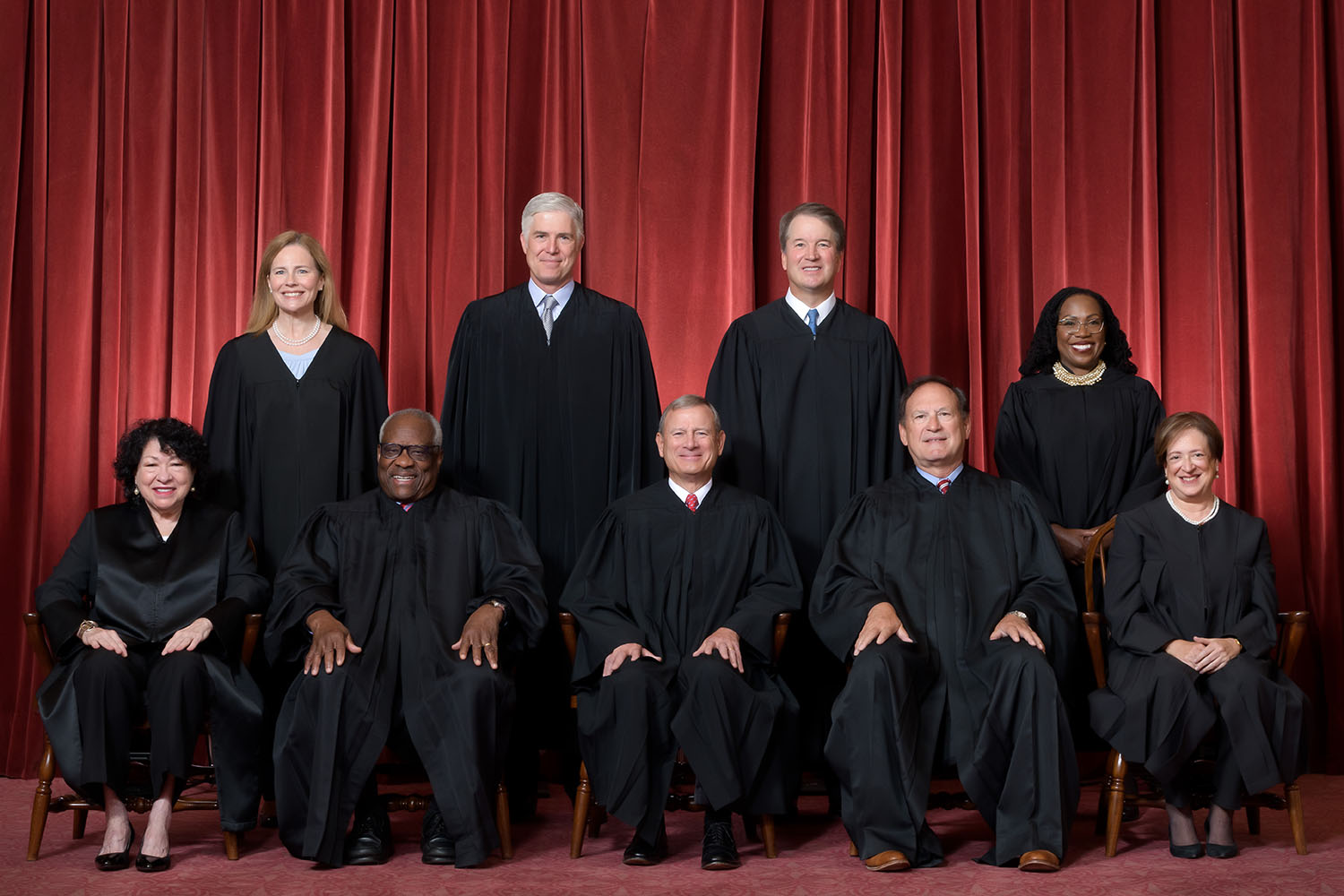
With the Supreme Court reviewing the standard used when the NLRB seeks injunctions that cement unions in power, the Foundation told the High Court such injunctions should not be allowed to infringe on workers’ legitimate right, under federal labor law and the Constitution, to oppose unionization.
WASHINGTON, DC – “Heads I win, tails you lose”: That’s how a brief filed by National Right to Work Foundation staff attorneys with the U.S. Supreme Court describes the Biden National Labor Relations Board’s (NLRB) argument that worker opposition to a union should count as a reason to impose union bosses’ demands on a workplace. The Supreme Court agreed to hear a case on this issue in January, with arguments scheduled for late April.
“Evidence that employees support a union is taken to mean they want to support the union,” the brief says. “Evidence that employees oppose a union is taken to mean their employer must have wrongfully caused the employees not to support the union. All evidence conveniently leads to the conclusion desired by current NLRB leadership: employees should support unions.”
The Foundation’s brief before the High Court in Starbucks v. McKinney discusses how NLRB officials use this radical assumption to urge federal courts to hit employers with “10(j) injunctions” that coerce the employers to give into certain union-demanded behavior. As Foundation attorneys explain, the NLRB often tells courts that worker discontent with a union is a “harm” that the courts should rectify with a 10(j) injunction.
Foundation in Starbucks Case: Worker Opposition to a Union is a Basic Right
Foundation staff attorneys push back on this theory in their legal brief, arguing that an employee’s decision to not support a union is not a “harm,” but a “legitimate choice [they] have a right to make” under both the National Labor Relations Act (NLRA) and the First Amendment to the Constitution.
Union bosses and their allies in the NLRB want the U.S. Supreme Court to establish a rule in Starbucks v. McKinney that permits injunctions against employers if their alleged conduct could potentially coerce workers into not supporting a union. Foundation attorneys instead argue that “the Court must require the NLRB to prove employees were unlawfully coerced not to support a union because, absent such proof, employees have every right to make that choice” (emphasis added).
Starbucks Workers Challenging NLRB Constitutionality
In addition to fighting cynical attempts by Biden NLRB bureaucrats to turn worker opposition to unions into a reason to beef up union officials’ coercive power, Foundation attorneys are assisting two groups of Starbucks workers with federal lawsuits challenging the constitutionality of the Biden NLRB as a whole.
The newest effort comes from San Antonio, TX-area Starbucks employee Reed Busler and his coworkers. They submitted a petition to the NLRB containing enough employee signatures to prompt a vote to “decertify,” or remove, the SBWU union. But an NLRB Regional Director blocked the vote based on union allegations of employer misconduct that have no proven connection to Busler and his colleagues’ effort to vote out the union. Busler himself noted in an NLRB filing that the move to decertify started “because the Union was a divisive force in our store” and ignored workers.
Busler has filed a federal lawsuit against the NLRB arguing its structure violates the Constitution’s separation of powers doctrine because NLRB Board Members are insulated from at-will removal. The lawsuit seeks an injunction that halts the NLRB from proceeding with his decertification case until his federal lawsuit is resolved.
“Starbucks is becoming ‘ground zero’ for several key battles over worker freedom,” commented National Right to Work Foundation Vice President Patrick Semmens. “Underlying a large portion of the drama is the NLRB’s flawed theory that workers’ exercise of their right to oppose unions is an evil to be eradicated, which unions and their allies in the NLRB bureaucracy are trying to use to force down their agenda on workplaces across the country.
“An even bigger issue, however, is the fact that the NLRB has for decades operated as a kangaroo court run by powerful bureaucrats who exercise unaccountable power in violation of the Constitution,” Semmens added. “American employees shouldn’t be forced to fight for their rights in such a pro-union boss environment.”
Foundation: Under Janus, Union Boss “Release Time” Violates AZ Constitution
The following article is from the National Right to Work Legal Defense Foundation’s bi-monthly Foundation Action Newsletter, March/April 2024 edition. To view other editions of Foundation Action or to sign up for a free subscription, click here.
So-called “official time” scheme puts tax dollars toward union politics, says Foundation brief
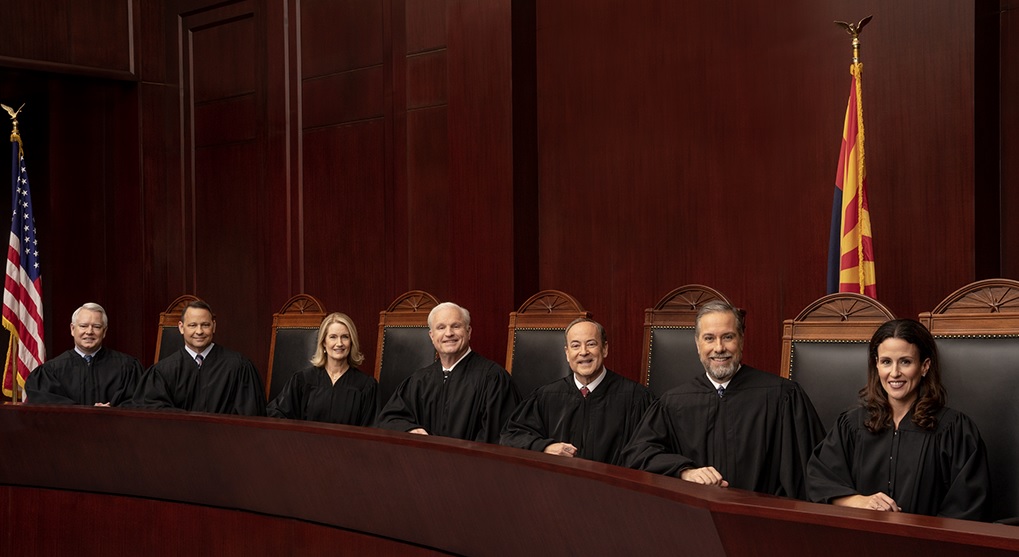
Foundation attorneys argue before the Arizona Supreme Court (above) and Texas Supreme Court that Janus’ ban on forcing public workers to fund union activities shows why state constitutions forbid the same coercion applied to taxpayers.
PHOENIX, AZ – The National Right to Work Foundation-won Janus v. AFSCME Supreme Court decision provided massive new protections for American public employees’ free association rights. In 2018, the Court recognized for the first time that forcing a public employee to pay union dues just to keep his or her job is a First Amendment violation.
The Janus decision, buoyed by National Right to Work Foundation follow-up enforcement actions, means today well over half a million public employees are free of mandatory union payments. Yet, the implications of Janus go even beyond the billions of dollars in previously mandatory dues payments that union bosses can no longer force workers to pay.
Underpinning the Janus ruling was Foundation attorneys’ core argument that all public sector union activities involve influencing the government, and are therefore inherently political speech. Because of this, Foundation staff attorneys now argue that applying Janus to the practice known as union “official time” or “release time” — where government union officials are paid tax money to conduct union business instead of government work — shows how the scheme violates multiple state constitutions.
Foundation Attorneys Bring Janus Expertise to Public Employee Lawsuit
In Arizona for example, Phoenix city employees Mark Gilmore and Mark Harder sued Phoenix mayor Kate Gallego in 2023 for engaging in a scheme that redirects taxpayer funds intended for public employees’ compensation toward political advocacy conducted by American Federation of State, County and Municipal Employees (AFSCME) Field II agents.
That case, Gilmore v. Gallego, is now before the Arizona Supreme Court, where Foundation attorneys filed a legal brief arguing that this so-called “release time” scheme violates Arizona’s Gift Clause, which forbids the government from paying out benefits to private parties that serve no public purpose.
The brief points out that, in Janus, the Supreme Court found that all government union bargaining is a form of lobbying designed to influence public policy for the benefit of the union. That means taxpayer subsidies of such union activities inherently violate the Arizona Constitution’s Gift Clause.
Phoenix’s Arrangement Pays Union Bosses to Lobby City
Phoenix’s “release time” scheme funnels taxpayer money into four full-time positions for union officials for the purpose of conducting union business, creates a bank of over 3,000 paid hours to be used by other union official employees for union purposes, and provides multiple other perks for union agents.
The policies unions lobby for “often are matters of substantial public concern, such as how much money the government expends on wages and benefits,” the Foundation’s brief reads. With its release time policy, the City is effectively paying individuals to lobby the City for a private advocacy organization and its members. The notion that this political advocacy serves a public purpose is untenable.”
Foundation attorneys are backing a similar lawsuit at the Texas Supreme Court. In Roger Borgelt v. City of Austin, Texas taxpayers are fighting a scheme that City of Austin officials are using to direct taxpayer dollars to Austin Firefighters Association union officials to conduct union business.
“Union bosses, who will often screech about ‘corporate welfare,’ are more than happy to arrange so-called ‘release time’ schemes in which taxpayer dollars are funneled toward supporting their massive lobbying efforts,” stated National Right to Work Foundation Vice President and Legal Director William Messenger. “Janus made it plain and simple that compelling public sector employees to fund union activities constitutes forced political speech, and courts everywhere have an obligation to declare such compulsion illegal when foisted on taxpayers.”
Buffalo Starbucks Baristas Blast National Labor Relations Board’s Move to Trap Workers in Union at Court of Appeals
NLRB lawyers claim workers’ opposition to union “justifies” union being imposed on unwilling employees
Buffalo, NY (November 28, 2023) – Ariana Cortes and Logan Karam, Starbucks partners in the Buffalo area, have just filed an amicus brief in the Second Circuit Court of Appeals case Leslie v. Starbucks Corp. In the case, NLRB officials are attempting to prosecute Starbucks for misconduct alleged by SEIU-affiliated Workers United union officials. The NLRB cites a petition that Cortes and her coworkers filed seeking a vote to remove the union as a reason why Starbucks management should be subjected to a court-ordered injunction.
Cortes and Karam, who are represented for free by National Right to Work Legal Defense Foundation staff attorneys, challenge this legal maneuver in their brief. The employee’s brief argues that the NLRB’s strategy treats workers as if they have no agency of their own and have no independent reasons for wanting to get rid of a union.
“Given the biases of the current Board, it is disheartening ― but not surprising ― to see the NLRB claim Cortes’ petition is the product of Starbucks’ alleged unfair labor practices,” the brief states. “Its own records show that nothing could be further from the truth. In reality, Cortes collected her petition because of the Union’s anti-employee behavior.”
The employees’ brief also contends that the relief NLRB lawyers are seeking from the Second Circuit – a 10(j) injunction under the National Labor Relations Act (NLRA) that will force Starbucks managers into working with SBWU union bosses to craft a monopoly bargaining contract – is extreme. Such injunctions can only be ordered when the harm done to workers in their absence would be “irreparable.” Foundation attorneys argue that the fact that Cortes and other employees have attempted to decertify does not make any injuries suffered by the union “irreparable.”
“The NLRB’s argument it needs an injunction to suppress decertification efforts already underway―which have already garnered majority support―is a tacit admission it is seeking to alter the status quo, not preserve it,” states the brief.
Cortes is also receiving Foundation legal aid in a case challenging the constitutionality of the NLRB’s structure. That case, currently pending at the D.C. District Court, argues that the structure of the NLRB is unconstitutional.
Dangerous Precedent Set If Court Grants Anti-Worker Injunction
If the Second Circuit grants the NLRB’s request for an injunction on behalf of SBWU union bosses, it would be the first time that a federal court has ordered a Starbucks store to engage in bargaining with union bosses on the basis of an employee’s decertification petition. This would be a horrendous precedent for independent-minded Starbucks workers across the country.
Starbucks workers all across the country have submitted decertification petitions seeking votes to remove SBWU union bosses, including at least nine groups of employees who are utilizing free Foundation legal aid. The NLRB would be able to use the federal court precedent to make the dubious argument that union bargaining should be mandated simply because employees want a chance to oust the union.
“The NLRB is digging an even deeper grave for employees trying to exercise their rights to remove an unwanted union from their workplace,” commented National Right to Work Foundation President Mark Mix. “The Board’s attempt to twist employees’ desire to exercise their right to throw out a union into a reason to force a union upon them is a new low.”
“Ariana Cortes and Logan Karam are taking a courageous stand to ensure their coworkers aren’t disenfranchised and trapped under a union hierarchy they oppose, and we’re proud to support them,” Mix added.





