
Public Servants Across Country Stand Strong in Defending Janus Rights
The following article is from the National Right to Work Legal Defense Foundation’s bi-monthly Foundation Action Newsletter, January/February 2026 edition. To view other editions of Foundation Action or to sign up for a free subscription, click here.
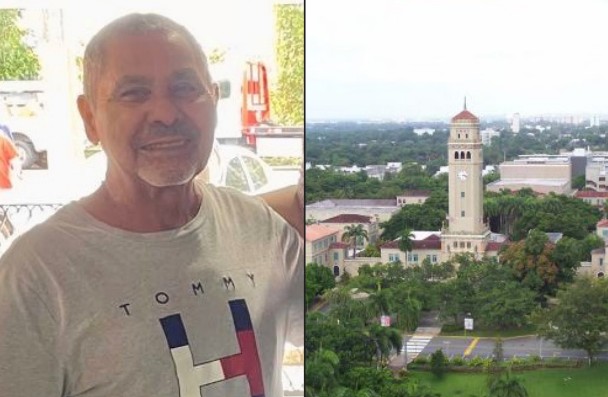
Jose Ramos, a University of Puerto Rico maintenance employee, isn’t going to let union bosses maintain their flimsy defense that they are entitled to keep his hard-earned money in violation of the First Amendment.
As 2025 waned, National Right to Work Foundation staff attorneys brought their expertise to bear as government employees in Washington State and Puerto Rico continued legal battles to get back money that union bosses never should have seized from their paychecks.
These workers are invoking their rights under the Foundation-won Janus v. AFSCME decision, which the Supreme Court handed down in 2018. In Janus, the Justices ruled that all American public sector workers have a First Amendment right to abstain from paying dues to union officials they don’t support.
Despite Janus’ commonsense protections, many union bosses, intent on keeping their coffers stocked with dues money seized from unwilling public employees, are still trying to skirt the Court’s ruling.
AFSCME Bosses Refuse to Return Illegally-Seized Money to Worker
That includes AFSCME union officials in Washington State, whom City of Everett employee Xenia Davidsen is fighting at the Washington State Public Employment Relations Commission (PERC). Davidsen charged AFSCME chiefs with accepting money that City officials had illicitly funneled from her paycheck to the union.
Davidsen had requested dues deductions to stop in 2024 in accordance with Janus, but City officials failed to monitor the email address through which AFSCME directed the City to stop the deductions. This incompetence led to the City seizing dues money from Davidsen at least 12 times without her authorization — and AFSCME union officials have stubbornly refused to admit they must post a notice stating they were wrong to accept the deductions.
“On none of those… instances did the Union stop to question why it was accepting dues that it knew were unauthorized to it,” argue Foundation attorneys in Davidsen’s latest brief before the PERC.
Meanwhile, Foundation attorneys also defended the Janus rights of two groups of Puerto Rico public employees in oral arguments before the First Circuit Court of Appeals last October.
Foundation Challenges Puerto Rico Court’s Refusal to Nix Anti-Janus Statute
In one case, Cruz v. UIA, Puerto Rico Aqueduct and Sewer Authority (PRASA) employee Reynaldo Cruz is trying to reclaim union dues money that officials of the Authentic Independent Union of Water and Sewer Authority Employees (UIA) took in violation of his First Amendment rights.
Cruz’s lawsuit challenges both union bosses’ demands that he pay union dues or lose his job, as well as the Puerto Rico territorial laws that allow such unconstitutional demands. Though UIA union bosses claim they have already deposited the illegally-seized money with a lower federal court, that court confusingly declined to issue a ruling that legally entitles Cruz to collect the funds.
During oral arguments, Cruz’s legal team argued that this legal sleight-of-hand created “a roadmap for civil rights defendants to violate civil rights plaintiffs’ rights.”
Foundation Won’t Let Union Bosses & Bureaucrats Ignore Janus
Also argued before the First Circuit at the end of 2025 was Ramos v. Delgado, in which Foundation attorneys represent Jose Ramos and other University of Puerto Rico maintenance employees who had dues illegally deducted from their paychecks for years.
Ramos and his colleagues are seeking refunds of all dues taken unlawfully since the Janus decision. Puerto Rico continues to be a hotbed for union violations of the Janus decision, but luckily, workers continue to stand up with Foundation legal aid.
Most recently, public employee Luis Rigau filed a federal lawsuit to challenge the Puerto Rico Industrial Commission (PRIC) union’s blatantly illegal reinstatement of automatic forced-dues deductions against nonmembers.
“Despite Janus’ clear constitutional command, union bosses, legislators, and public officials are still trying to do legal gymnastics to end-run the decision,” commented National Right to Work Foundation Vice President and Legal Director William Messenger.
“All public sector workers deserve the free choice that Janus secures, and Foundation attorneys will continue to back them in their court battles for freedom.”
Workers Nationwide Urge Trump NLRB to End Policies Trapping Them Under Union Power
The following article is from the National Right to Work Legal Defense Foundation’s bi-monthly Foundation Action Newsletter, May/June 2025 edition. To view other editions of Foundation Action or to sign up for a free subscription, click here.
NLRB-invented policies currently allow union bosses to block worker-requested votes

Theresa Hause, an Oregon-based school bus driver, wants the Trump NLRB to end the so-called “merger doctrine” that grants union officials the power to combine workplaces into giant, inescapable mega-units.
WASHINGTON, DC – During the Biden Administration, biased, pro-Big Labor National Labor Relations Board (NLRB) bureaucrats went out of their way to undermine the idea that workers and workers alone should choose whether or not they want a union. Rolling back multiple National Right to Work Foundation-backed reforms that made it easier for workers to vote out unions they didn’t want was a prime example of this.
But the Biden NLRB’s extremism is only the latest example of how federal labor law is biased against workers opposed to union affiliation. The truth is that biased bureaucrats on the NLRB have, for decades, burdened independent-minded workers with arbitrary barriers to freeing themselves from union influence. Many of these policies — which are the inventions of NLRB decisions and appear nowhere in the National Labor Relations Act’s (NLRA) text — let union bosses block workers from exercising their statutory right to vote to remove a union.
Bus Drivers Fight Forced Dues in Huge, Inescapable Teamsters Unit
The Trump Administration taking control of the NLRB in Washington, D.C., has presented workers around the country who want to escape union influence with a new opportunity to attack these restrictions. Foundation attorneys are already helping workers lead the charge for reform to create precedents that will allow others to remove unions opposed by most workers.
Last December, Theresa Hause, a Washington State-based school bus driver, submitted to the NLRB a deauthorization petition which contained employee support well over the necessary threshold needed to trigger a vote to strip Teamsters Local 58 bosses of their forced-dues power in Hause’s workplace. Hause and her fellow drivers are employed by First Student, Inc.
She was surprised to learn during NLRB proceedings that First Student management and Teamsters union officials had covertly signed an agreement “merging” Hause’s small unit of workers into a much larger national unit, composed of thousands of Teamsters-controlled bus drivers across the country.
Because of the NLRB’s so-called “merger doctrine” policy, Hause and her colleagues are now in this “mega-unit,” and any petition to end the union’s forced-dues power (or remove the union completely) needs to contain signatures from at least 30% of the “mega-unit” — thousands of people Hause has never met — to be considered valid. The NLRB official that dismissed Hause’s petition even ruled that the fact employees were kept in the dark about this merger was irrelevant, outrageously saying “there is nothing in the merger doctrine that requires acquiescence or even notification of employees of a change in a bargaining unit.”
Hause’s Foundation-provided attorneys are challenging the merger doctrine in an appeal of Hause’s case to the NLRB in D.C., arguing among other things that the policy violates employee free choice and that it serves as a protection racket for established unions.
While Hause and her colleagues are fighting for a vote to free themselves from forced dues, attacking the merger doctrine also has significant ramifications for workers seeking to decertify a union. Foundation attorneys have represented many workers who have been shanghaied into huge, inescapable work units against their will. That includes a group of less than 10 Wisconsin First Student workers who filed a majority-backed petition to remove Teamsters officials as soon as allowed by federal law, only to be stymied by the merger doctrine because they had been secretly “merged” into a multi-company unit of around 24,000 workers in multiple states.
WV Homecare Workers Not ‘Settling’ for ‘Settlement Bar’
Meanwhile, in West Virginia, a Foundation-assisted employee of senior homecare nonprofit McDowell County Commission on Aging is attacking the NLRB’s use of another union boss-friendly policy to block his and his coworkers’ effort to kick out Service Employees International Union (SEIU) bosses: the so-called “settlement bar,” which lets unions and employers unilaterally agree in settlements to end employee-led union decertification efforts.
The employee, John Reeves, and his coworkers cast ballots in a July 2024 vote to remove SEIU union officials, but are now battling claims that a settlement SEIU bosses and Commission management signed should relegate those ballots to the trash bin. The SEIU and Commission entered into the settlement to end the decertification and resolve unfair labor practice allegations union agents had filed against the employer. That supposed employer wrongdoing was cited as the impetus for Reeves and his coworkers’ desire to remove the union — even though it was never admitted to by the employer nor proven by union lawyers.
Instead of letting Reeves show why the union’s accusations didn’t cause his employees’ disenchantment with the union, regional NLRB officials instead invoked the settlement bar and dismissed the decertification effort, based on the phony “resolution” of speculative charges by the union. Reeves is asking the NLRB in Washington, D.C., to review his case.
Reform Needed to Undo Coercive Policy
“Ms. Hause’s and Mr. Reeves’ cases provide just a sampling of the grand buffet of privileges the NLRB has granted union bosses over the years,” observed National Right to Work Foundation Vice President Patrick Semmens. “Union bosses and complicit employers should not be able to cut workers off from exercising their basic right to remove unpopular union bosses, yet that’s exactly what both the ‘merger doctrine’ and ‘settlement bar’ allow.
“If members of the Trump NLRB are dedicated to defending the rights of all American workers, they will focus not only on countering the extensive damage done to individual worker rights by the Biden Labor Board, but also on digging deeper to undo the web of non-statutory coercive union boss powers that has been created over decades,” Semmens added.
Bus Driver Asks National Labor Relations Board to Overturn “Merger Doctrine” Used by Union Bosses to Block Worker-Requested Votes
By “merging” smaller individual bargaining units into mega-units, union officials block workers’ right to escape unwanted “representation” and forced dues
Battle Ground, Washington (February 14, 2025) – Theresa Hause, a school bus driver for First Student Inc. in Battle Ground, Washington, has just filed an appeal asking the National Labor Relations Board (NLRB) in Washington, DC, to overturn the so-called “merger doctrine” that is being used to block Hause and her colleagues from holding a vote to end forced union dues at their workplace. Hause’s Request for Review was filed with free legal assistance from National Right to Work Legal Defense Foundation staff attorneys.
The NLRB’s non-statutory “merger doctrine” allows union officials to “merge” employees in a smaller bargaining unit into much larger one. This legal tactic prevents rank-and-file employees exercising their rights under federal law to hold votes to remove unions (known as “decertification elections”) or to end forced-union dues requirements (known as “deauthorization elections”).
Because employees are suddenly part of a much larger and frequently geographically-dispersed “bargaining unit” with workers they have never met and likely don’t even know the names of, once “merged” it becomes effectively impossible for employees to ever reach the 30% threshold of signatures needed to trigger decertificiation or deauthorization elections.
Teamsters and other union officials frequently use non-statutory “merger doctrine” to trap workers in union ranks, forced-dues payments
In previous First Student cases, the “merger doctrine” was wielded by Teamsters officials to block votes at multiple locations on the grounds the workers there were actually part of one massive bargaining unit with over 22,000 drivers in over 100 locations in 33 different states. In another example, a group of less than 10 Wisconsin workers filed a majority-backed petition to remove (i.e. “decertify”) the Teamsters as soon as allowed by federal law, only to be stymied by the “merger doctrine” because they had been secretly “merged” into a multi-company unit of around 24,000 workers.
Hause’s request to end the non-statutory “merger doctrine” follows a decision by a NLRB Regional Director applying the doctrine to her request for a deauthorization election to end Teamsters Local 58 union officials power to require all drivers to pay fees or else be fired. Such a vote is necessary because Hause and her colleagues work in Washington State, which lacks Right to Work protections that make union financial support strictly voluntary.
Hause collected signatures from over 30% of First Student drivers at the facilities in Battle Ground and Hockinson, which is the unit originally organized by Teamsters Local 58 before First Student was even the employer. Rather than let the vote take place, Teamsters lawyers invoked the merger doctrine to disenfranchise the drivers. The Teamsters lawyers argued Hause and her coworkers are only a tiny fraction of First Student drivers under a “National Master First Student Agreement” involving Teamster affiliates across the country.
After the Regional Director sided with the Teamsters to block the workers from voting, an appeal was filed to the five-seat National Labor Relations Board in Washington, DC. Currently the NLRB lacks a quorum to act because there are only two Board members. However, President Trump could appoint three new Members who could then rule on Hause’s request for review once they are confirmed by the United States Senate.
“This case shows how Teamsters bosses, aided by biased NLRB-concocted rules, disenfranchise workers and trap them in union ranks and forced dues payments, effectively in perpetuity,” said National Right to Work Foundation President Mark Mix. “It’s time for the NLRB to overhaul the arbitrary rules, including the so-called ‘merger doctrine,’ that are being used to eviscerate workers’ statutory rights under the National Labor Relations Act to hold a vote to remove a union opposed by a majority of employees or vote to end forced-dues requirements.”
“Quickly ending the ‘merger doctrine’ would be an excellent way for the incoming Trump NLRB majority to signal that, instead of prioritizing coercive union boss power as the Biden NLRB did, the Trump Labor Board will be putting employee rights and freedoms front and center,” added Mix.
Boeing Technician Files Federal Lawsuit Against Machinists Union Over Illegal Forced Dues Demands
Instead of reducing nonmember worker’s payments in accordance with Supreme Court precedent, union bosses charged him arbitrary higher amount
Seattle, WA (May 24, 2022) – With free legal aid from the National Right to Work Legal Defense Foundation, Seattle Boeing technician Don Zueger is suing International Association of Machinists (IAM) union officials in federal court for violating his right to refrain from paying for unwanted union activities.
Zueger, who is not a member of the IAM union, is defending his right under the Foundation-won 1988 CWA v. Beck U.S. Supreme Court decision, in which the Court ruled that union officials cannot charge full union dues to objecting private sector workers who have abstained from formal union membership. Under Beck, union officials can only charge union nonmembers “fees” which exclude expenses for things like union political activities.
Because Washington State lacks Right to Work protections for its private sector workers, nonmembers like Zueger can be forced to pay the reduced amount under Beck as a condition of keeping their jobs. In Right to Work states, in contrast, union membership and all union financial support are strictly voluntary.
IAM Officials Continue to Overcharge Worker in Violation of His Rights
According to Zueger’s lawsuit, filed in the U.S. District Court for the Western District of Washington, he submitted a request to IAM union officials in February resigning his union membership and asking for his dues payments to be reduced under Beck.
Zueger’s lawsuit reports that IAM officials’ response to his Beck request claimed that, under IAM’s nationwide policy, the portion of union dues he is required to pay is based on averages of selected audits that in each case include nine other local and district IAM affiliates. This means the forced union fee amount is not calculated using the actual amounts determined in the audits of the local and district IAM affiliates that Zueger is required to fund as a condition of employment. Unsurprisingly, this resulted in Zueger’s dues reduction being significantly less than it would have been had union officials only used the audits for the district and local affiliates Zueger is forced to fund.
According to his lawsuit, union officials are still demanding from Zueger dues in excess of the amount Beck permits. The lawsuit seeks to force IAM union bosses to return all money demanded in violation of Beck and to properly reduce his future union payments in accordance with Beck.
Workers Should Be Wary of Illegal Union Dues Schemes as Union Political Activity Increases
Zueger’s lawsuit comes after union bosses spent near-record sums on politics during the 2020 election cycle. A report by the National Institute for Labor Relations Research (NILRR) released in 2021 revealed that union officials’ own Department of Labor filings show about $2 billion in political spending during the 2020 cycle, primarily from dues-stocked union general treasuries. Moreover, other estimates strongly suggest that actual union spending on political and lobbying activities actually topped $12 billion in 2019-2020.
“It doesn’t take a rocket scientist to figure out when union officials are trying to strong-arm employees into subsidizing union activities, including politics, against their will. IAM officials’ nonmember dues scheme doesn’t pass the smell test,” commented National Right to Work Foundation President Mark Mix. “While we’re proud to help Mr. Zueger defend his Beck rights, ultimately no American worker should be forced to pay fees determined by the whims of union officials simply in order to keep their jobs.”
“This case shows why Right to Work laws are needed nationwide to ensure that the decision to join or financially support a union is strictly a matter of each individual worker’s own conscience. Workers should be especially aware of attempts by union officials to force them to fund union activities as union political activity heats up in advance of this year’s elections,” Mix added.





