
Foundation to Justices: Workers Opposing Unions Isn’t ‘Harm’ to be Eliminated
The following article is from the National Right to Work Legal Defense Foundation’s bi-monthly Foundation Action Newsletter, May/June 2024 edition. To view other editions of Foundation Action or to sign up for a free subscription, click here.
Brief in Starbucks-related SCOTUS case counters Labor Board attempts to impose union control
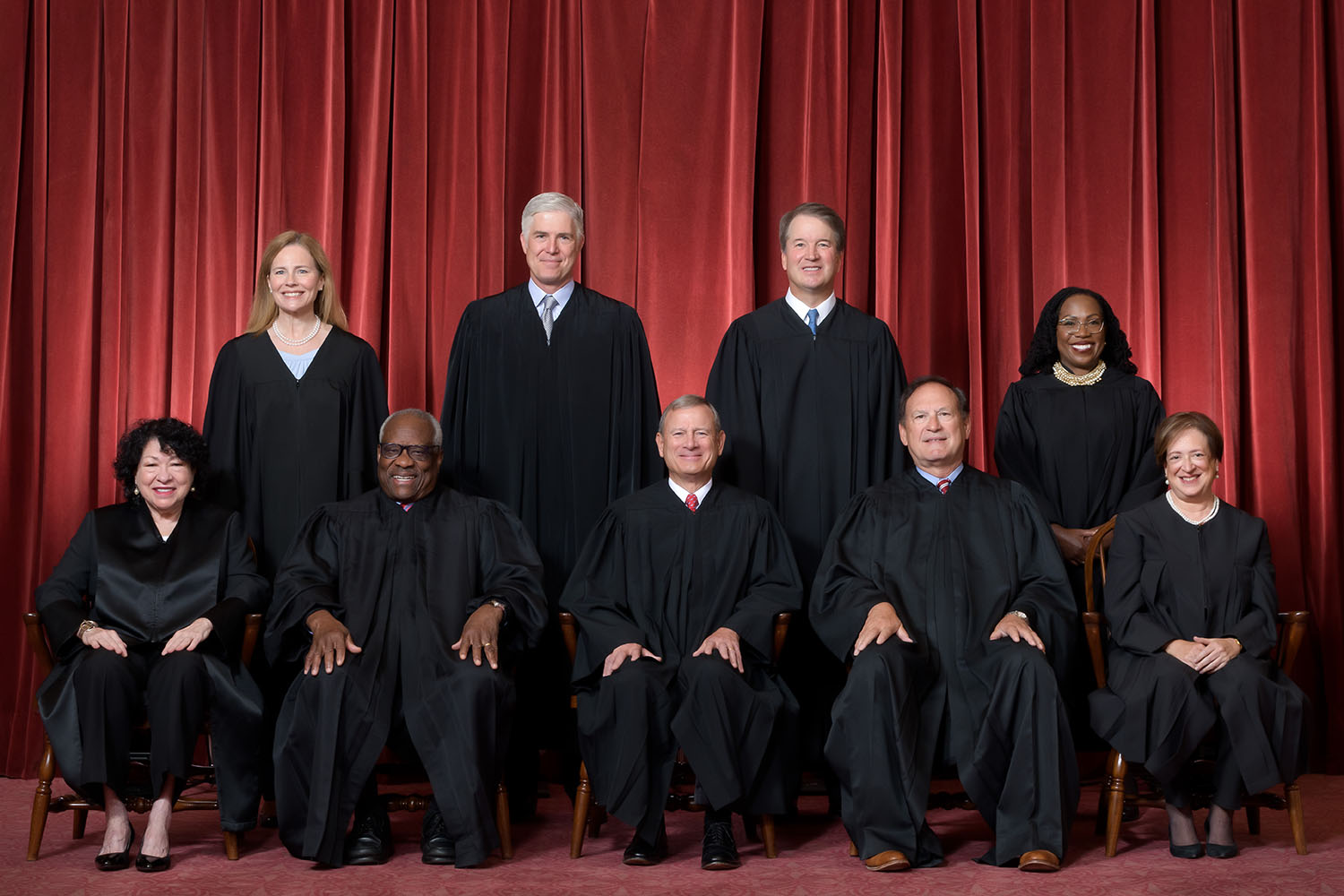
With the Supreme Court reviewing the standard used when the NLRB seeks injunctions that cement unions in power, the Foundation told the High Court such injunctions should not be allowed to infringe on workers’ legitimate right, under federal labor law and the Constitution, to oppose unionization.
WASHINGTON, DC – “Heads I win, tails you lose”: That’s how a brief filed by National Right to Work Foundation staff attorneys with the U.S. Supreme Court describes the Biden National Labor Relations Board’s (NLRB) argument that worker opposition to a union should count as a reason to impose union bosses’ demands on a workplace. The Supreme Court agreed to hear a case on this issue in January, with arguments scheduled for late April.
“Evidence that employees support a union is taken to mean they want to support the union,” the brief says. “Evidence that employees oppose a union is taken to mean their employer must have wrongfully caused the employees not to support the union. All evidence conveniently leads to the conclusion desired by current NLRB leadership: employees should support unions.”
The Foundation’s brief before the High Court in Starbucks v. McKinney discusses how NLRB officials use this radical assumption to urge federal courts to hit employers with “10(j) injunctions” that coerce the employers to give into certain union-demanded behavior. As Foundation attorneys explain, the NLRB often tells courts that worker discontent with a union is a “harm” that the courts should rectify with a 10(j) injunction.
Foundation in Starbucks Case: Worker Opposition to a Union is a Basic Right
Foundation staff attorneys push back on this theory in their legal brief, arguing that an employee’s decision to not support a union is not a “harm,” but a “legitimate choice [they] have a right to make” under both the National Labor Relations Act (NLRA) and the First Amendment to the Constitution.
Union bosses and their allies in the NLRB want the U.S. Supreme Court to establish a rule in Starbucks v. McKinney that permits injunctions against employers if their alleged conduct could potentially coerce workers into not supporting a union. Foundation attorneys instead argue that “the Court must require the NLRB to prove employees were unlawfully coerced not to support a union because, absent such proof, employees have every right to make that choice” (emphasis added).
Starbucks Workers Challenging NLRB Constitutionality
In addition to fighting cynical attempts by Biden NLRB bureaucrats to turn worker opposition to unions into a reason to beef up union officials’ coercive power, Foundation attorneys are assisting two groups of Starbucks workers with federal lawsuits challenging the constitutionality of the Biden NLRB as a whole.
The newest effort comes from San Antonio, TX-area Starbucks employee Reed Busler and his coworkers. They submitted a petition to the NLRB containing enough employee signatures to prompt a vote to “decertify,” or remove, the SBWU union. But an NLRB Regional Director blocked the vote based on union allegations of employer misconduct that have no proven connection to Busler and his colleagues’ effort to vote out the union. Busler himself noted in an NLRB filing that the move to decertify started “because the Union was a divisive force in our store” and ignored workers.
Busler has filed a federal lawsuit against the NLRB arguing its structure violates the Constitution’s separation of powers doctrine because NLRB Board Members are insulated from at-will removal. The lawsuit seeks an injunction that halts the NLRB from proceeding with his decertification case until his federal lawsuit is resolved.
“Starbucks is becoming ‘ground zero’ for several key battles over worker freedom,” commented National Right to Work Foundation Vice President Patrick Semmens. “Underlying a large portion of the drama is the NLRB’s flawed theory that workers’ exercise of their right to oppose unions is an evil to be eradicated, which unions and their allies in the NLRB bureaucracy are trying to use to force down their agenda on workplaces across the country.
“An even bigger issue, however, is the fact that the NLRB has for decades operated as a kangaroo court run by powerful bureaucrats who exercise unaccountable power in violation of the Constitution,” Semmens added. “American employees shouldn’t be forced to fight for their rights in such a pro-union boss environment.”
Right to Work Foundation SCOTUS Brief: Workers Exercising Right to Oppose Unions Isn’t “Harm” to Be Eliminated
In case to be heard by Court, Foundation argues NLRB wrongly asserts that independent-minded opposition to unions can justify injunctions
Washington, DC (February 29, 2024) – The National Right to Work Foundation has filed an amicus brief in Starbucks Corporation v. McKinney, a case set to be argued before the U.S. Supreme Court later this term that has major implications for the rights of workers who oppose union power in their workplaces.
In the brief, Foundation staff attorneys argue that federal courts should reject National Labor Relations Board (NLRB) requests for preliminary injunctions when the Labor Board claims employee discontent with a union is a “harm” that should be redressed. These injunctions, called 10(j) injunctions, are frequently used by the NLRB to force employers into certain union-demanded behavior, despite the NLRB not having fully adjudicated the underlying union allegations.
The brief points out that an employee’s decision not to support a union is not a harm that needs to be addressed, but rather a “legitimate choice employees have a right to make” under both the National Labor Relations Act (NLRA) and the First Amendment to the Constitution.
“Only if the NLRB can prove an employee was coerced by an employer to oppose a union against his or her will can that employee’s lack of support for the union be considered any sort of a harm to be redressed,” the brief says. “If the NLRB cannot muster such evidence, then the fact that employees are exercising their statutory and constitutional rights…provides no basis for [an] injunction.”
Foundation: Courts Shouldn’t Accept NLRB’s Assumption that Workers Want to Join Unions
In the Starbucks v. McKinney case, the NLRB sought an injunction at the behest of Starbucks Workers United (SBWU-SEIU) union officials against Starbucks for unfair labor practices the company allegedly committed at a location in Memphis, Tennessee. A major reason cited by the NLRB for the requested injunction was the fact that workers may choose to oppose the union if the injunction isn’t issued.
The case presents the question of what standard courts should use when evaluating whether to grant NLRB-requested injunctions under the NLRA. The Foundation brief opposes the lax standard that the NLRB and union officials are urging courts to use when deciding whether to issue injunctions.
That standard asks only whether alleged unfair labor practices could potentially coerce workers into not supporting a union. Foundation attorneys argue that “the Court must require the NLRB to prove employees were unlawfully coerced not to support a union because, absent such proof, employees have every right to make that choice” (emphasis added).
Foundation-Backed Starbucks Workers Disprove Specious NLRB Theory
Foundation staff attorneys are currently representing Starbucks employees at several locations across the country who seek to vote out (or “decertify”) the SBWU union. In the brief, Foundation attorneys point out that the NLRB in a similar case (Leslie v. Starbucks Corp.) cited a Foundation-backed union decertification case as a reason that an injunction should be issued against the company – despite the fact that the workers themselves say their opposition to the union had nothing to do with the conduct the union was challenging in that case.
“In taking this position, the NLRB has created a self-satisfying ‘heads I win, tails you lose’ dynamic for itself,” the brief reads. “Evidence that employees support a union is taken to mean they want to support the union. Evidence that employees oppose a union is taken to mean their employer must have wrongfully caused the employees not to support the union. All evidence conveniently leads to the conclusion desired by current NLRB leadership: employees should support unions.”
The case is set to be argued before the Supreme Court on Tuesday, April 23, with a decision expected by the end of the High Court’s term in June.
“The Biden NLRB is working hand in glove with unions to advance a standard that treats worker dissent from unions as a harm to be eradicated, rather than a decision made by competent adults,” commented National Right to Work Foundation President Mark Mix. “The Supreme Court in Starbucks v. McKinney must reject the idea that NLRB bureaucrats can simply twist evidence of legitimate worker discontent with unions into a tool to aid union bosses in gaining leverage over businesses and employees.”





