
Public Servants Across Country Stand Strong in Defending Janus Rights
The following article is from the National Right to Work Legal Defense Foundation’s bi-monthly Foundation Action Newsletter, January/February 2026 edition. To view other editions of Foundation Action or to sign up for a free subscription, click here.
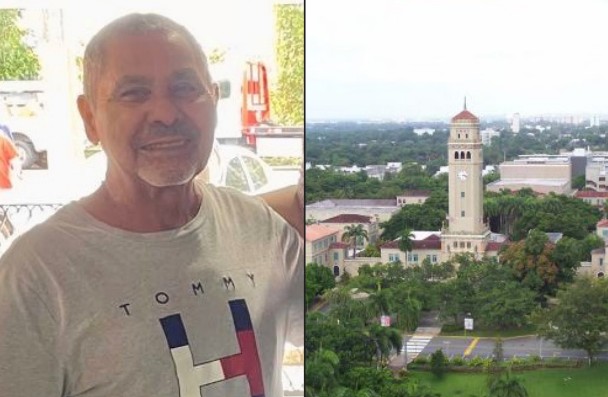
Jose Ramos, a University of Puerto Rico maintenance employee, isn’t going to let union bosses maintain their flimsy defense that they are entitled to keep his hard-earned money in violation of the First Amendment.
As 2025 waned, National Right to Work Foundation staff attorneys brought their expertise to bear as government employees in Washington State and Puerto Rico continued legal battles to get back money that union bosses never should have seized from their paychecks.
These workers are invoking their rights under the Foundation-won Janus v. AFSCME decision, which the Supreme Court handed down in 2018. In Janus, the Justices ruled that all American public sector workers have a First Amendment right to abstain from paying dues to union officials they don’t support.
Despite Janus’ commonsense protections, many union bosses, intent on keeping their coffers stocked with dues money seized from unwilling public employees, are still trying to skirt the Court’s ruling.
AFSCME Bosses Refuse to Return Illegally-Seized Money to Worker
That includes AFSCME union officials in Washington State, whom City of Everett employee Xenia Davidsen is fighting at the Washington State Public Employment Relations Commission (PERC). Davidsen charged AFSCME chiefs with accepting money that City officials had illicitly funneled from her paycheck to the union.
Davidsen had requested dues deductions to stop in 2024 in accordance with Janus, but City officials failed to monitor the email address through which AFSCME directed the City to stop the deductions. This incompetence led to the City seizing dues money from Davidsen at least 12 times without her authorization — and AFSCME union officials have stubbornly refused to admit they must post a notice stating they were wrong to accept the deductions.
“On none of those… instances did the Union stop to question why it was accepting dues that it knew were unauthorized to it,” argue Foundation attorneys in Davidsen’s latest brief before the PERC.
Meanwhile, Foundation attorneys also defended the Janus rights of two groups of Puerto Rico public employees in oral arguments before the First Circuit Court of Appeals last October.
Foundation Challenges Puerto Rico Court’s Refusal to Nix Anti-Janus Statute
In one case, Cruz v. UIA, Puerto Rico Aqueduct and Sewer Authority (PRASA) employee Reynaldo Cruz is trying to reclaim union dues money that officials of the Authentic Independent Union of Water and Sewer Authority Employees (UIA) took in violation of his First Amendment rights.
Cruz’s lawsuit challenges both union bosses’ demands that he pay union dues or lose his job, as well as the Puerto Rico territorial laws that allow such unconstitutional demands. Though UIA union bosses claim they have already deposited the illegally-seized money with a lower federal court, that court confusingly declined to issue a ruling that legally entitles Cruz to collect the funds.
During oral arguments, Cruz’s legal team argued that this legal sleight-of-hand created “a roadmap for civil rights defendants to violate civil rights plaintiffs’ rights.”
Foundation Won’t Let Union Bosses & Bureaucrats Ignore Janus
Also argued before the First Circuit at the end of 2025 was Ramos v. Delgado, in which Foundation attorneys represent Jose Ramos and other University of Puerto Rico maintenance employees who had dues illegally deducted from their paychecks for years.
Ramos and his colleagues are seeking refunds of all dues taken unlawfully since the Janus decision. Puerto Rico continues to be a hotbed for union violations of the Janus decision, but luckily, workers continue to stand up with Foundation legal aid.
Most recently, public employee Luis Rigau filed a federal lawsuit to challenge the Puerto Rico Industrial Commission (PRIC) union’s blatantly illegal reinstatement of automatic forced-dues deductions against nonmembers.
“Despite Janus’ clear constitutional command, union bosses, legislators, and public officials are still trying to do legal gymnastics to end-run the decision,” commented National Right to Work Foundation Vice President and Legal Director William Messenger.
“All public sector workers deserve the free choice that Janus secures, and Foundation attorneys will continue to back them in their court battles for freedom.”
California and Georgia Truck Drivers Petition for Votes to Remove Teamsters Union Bosses
Efforts come in the face of Teamsters-backed Biden-Harris Labor Board rule designed to disenfranchise workers
California and Georgia (December 9, 2024) – Two sets of trucking employees have filed petitions seeking elections to remove International Brotherhood of Teamsters (Teamsters) union officials from power in their workplaces. Stockton, CA-based PepsiCo driver Edward Kilgore and Georgia-based BFI Waste Services driver James Shiflett submitted decertification petitions to the National Labor Relations Board (NLRB) with free legal aid from National Right to Work Legal Defense Foundation staff attorneys.
Edward Kilgore, a truck driver for PepsiCo Beverages North America in Stockton, CA, submitted a petition in December, in which the majority of his coworkers asked the National Labor Relations Board (NLRB) to hold a vote to remove Teamsters Local 439 union bosses. Soon after, a group of Georgia-area BFI Waste Services, LLC truckers led by James Shiflett also filed a petition demanding the same kind of NLRB election to oust Teamsters Local 728. The NLRB is the federal agency responsible for enforcing federal labor law, which includes administering elections to install (or “certify”) and remove (or “decertify”) unions.
Both Kilgore’s and Shiflett’s decertification petitions contain employee signatures well in excess of the threshold needed to trigger a decertification vote under the National Labor Relations Act (NLRA). If a majority of Kilgore’s and Shiflett’s coworkers vote against retaining the Teamsters union officials, they will lose their monopoly bargaining powers in the workplace.
For the California workers, their continued effort is especially critical because they are based in a state that lacks Right to Work protections. In such states, union officials can impose union contracts that require workers to pay dues or fees as a condition of getting or keeping a job. In contrast, in Right to Work states like Georgia, union membership and dues payment are strictly voluntary.
However, in both Right to Work and non-Right to Work jurisdictions, union bosses can use their monopoly bargaining privileges to subject all workers in a unionized facility to one-size fits-all contracts – even those workers who voted against the union or otherwise oppose it. A successful decertification election ends union officials’ forced-dues and monopoly bargaining powers in a workplace.
“My coworkers and I are not just opposed to Teamsters officials so-called ‘representation’ but especially offended that currently the union has the power to enter into a contract that forces us to fund the very union we oppose,” said Edward Kilgore, who filed the petition against Teamsters Local 439. “This is about giving workers the power to make their own decisions.”
Pro-Union Boss Shifts in NLRB Policy Disenfranchise Workers
Despite an over 50% increase in the number of decertification petitions filed annually over the last four years, Biden-Harris NLRB bureaucrats recently repealed key reforms (known collectively as the “Election Protection Rule”) that made it easier for workers to request decertification elections. Under the Teamsters-backed change, union officials can manipulate often-unproven allegations against management (also known as “blocking charges”) to stop workers from exercising their right to vote out a union, and can also stop workers from requesting decertification elections to challenge a union’s ascent to power via “card check,” an unsecure process that bypasses the traditional secret-ballot vote process.
“Workers across the country are rejecting union officials top-down agendas both inside and outside the workplace,” commented National Right to Work Foundation President Mark Mix. “While Teamsters bosses like Sean O’Brien are advocating for more power over rank-and-file workers, including by advocating for the elimination of Right to Work protections nationwide, America’s working men and women are increasingly seeking to vote out union officials that don’t serve their interests.”





