
Public Servants Across Country Stand Strong in Defending Janus Rights
The following article is from the National Right to Work Legal Defense Foundation’s bi-monthly Foundation Action Newsletter, January/February 2026 edition. To view other editions of Foundation Action or to sign up for a free subscription, click here.
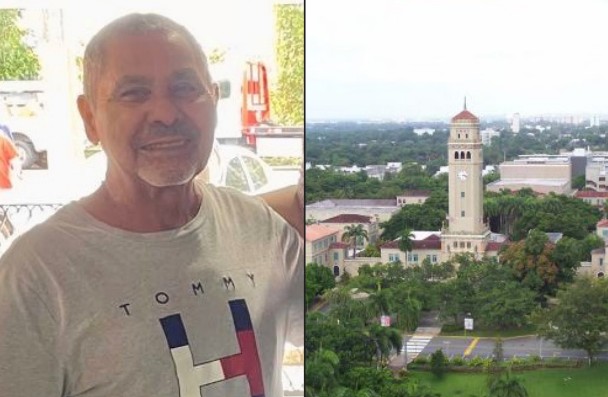
Jose Ramos, a University of Puerto Rico maintenance employee, isn’t going to let union bosses maintain their flimsy defense that they are entitled to keep his hard-earned money in violation of the First Amendment.
As 2025 waned, National Right to Work Foundation staff attorneys brought their expertise to bear as government employees in Washington State and Puerto Rico continued legal battles to get back money that union bosses never should have seized from their paychecks.
These workers are invoking their rights under the Foundation-won Janus v. AFSCME decision, which the Supreme Court handed down in 2018. In Janus, the Justices ruled that all American public sector workers have a First Amendment right to abstain from paying dues to union officials they don’t support.
Despite Janus’ commonsense protections, many union bosses, intent on keeping their coffers stocked with dues money seized from unwilling public employees, are still trying to skirt the Court’s ruling.
AFSCME Bosses Refuse to Return Illegally-Seized Money to Worker
That includes AFSCME union officials in Washington State, whom City of Everett employee Xenia Davidsen is fighting at the Washington State Public Employment Relations Commission (PERC). Davidsen charged AFSCME chiefs with accepting money that City officials had illicitly funneled from her paycheck to the union.
Davidsen had requested dues deductions to stop in 2024 in accordance with Janus, but City officials failed to monitor the email address through which AFSCME directed the City to stop the deductions. This incompetence led to the City seizing dues money from Davidsen at least 12 times without her authorization — and AFSCME union officials have stubbornly refused to admit they must post a notice stating they were wrong to accept the deductions.
“On none of those… instances did the Union stop to question why it was accepting dues that it knew were unauthorized to it,” argue Foundation attorneys in Davidsen’s latest brief before the PERC.
Meanwhile, Foundation attorneys also defended the Janus rights of two groups of Puerto Rico public employees in oral arguments before the First Circuit Court of Appeals last October.
Foundation Challenges Puerto Rico Court’s Refusal to Nix Anti-Janus Statute
In one case, Cruz v. UIA, Puerto Rico Aqueduct and Sewer Authority (PRASA) employee Reynaldo Cruz is trying to reclaim union dues money that officials of the Authentic Independent Union of Water and Sewer Authority Employees (UIA) took in violation of his First Amendment rights.
Cruz’s lawsuit challenges both union bosses’ demands that he pay union dues or lose his job, as well as the Puerto Rico territorial laws that allow such unconstitutional demands. Though UIA union bosses claim they have already deposited the illegally-seized money with a lower federal court, that court confusingly declined to issue a ruling that legally entitles Cruz to collect the funds.
During oral arguments, Cruz’s legal team argued that this legal sleight-of-hand created “a roadmap for civil rights defendants to violate civil rights plaintiffs’ rights.”
Foundation Won’t Let Union Bosses & Bureaucrats Ignore Janus
Also argued before the First Circuit at the end of 2025 was Ramos v. Delgado, in which Foundation attorneys represent Jose Ramos and other University of Puerto Rico maintenance employees who had dues illegally deducted from their paychecks for years.
Ramos and his colleagues are seeking refunds of all dues taken unlawfully since the Janus decision. Puerto Rico continues to be a hotbed for union violations of the Janus decision, but luckily, workers continue to stand up with Foundation legal aid.
Most recently, public employee Luis Rigau filed a federal lawsuit to challenge the Puerto Rico Industrial Commission (PRIC) union’s blatantly illegal reinstatement of automatic forced-dues deductions against nonmembers.
“Despite Janus’ clear constitutional command, union bosses, legislators, and public officials are still trying to do legal gymnastics to end-run the decision,” commented National Right to Work Foundation Vice President and Legal Director William Messenger.
“All public sector workers deserve the free choice that Janus secures, and Foundation attorneys will continue to back them in their court battles for freedom.”
Foundation to High Court: Time to End Union Boss Vandalism Exemptions
The following article is from the National Right to Work Legal Defense Foundation’s bi-monthly Foundation Action Newsletter, January/February 2023 edition. To view other editions of Foundation Action or to sign up for a free subscription, click here.
Case asks if Teamsters are immune from liability for property destruction during strike
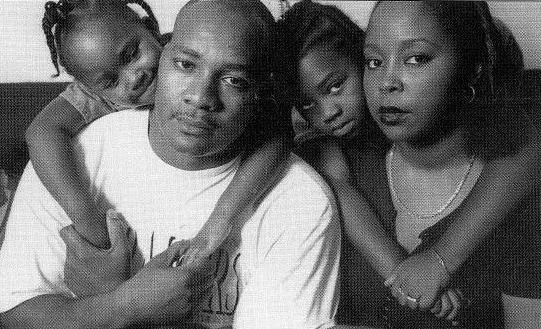
Rod Carter sought Foundation help after he was stabbed and beaten by Teamsters militants in 1997. The Foundation still fights union violence and opposes union bosses’ attempts to dodge property damage lawsuits.
WASHINGTON, DC – Unions and union officials already have an enormous number of special privileges under the law enjoyed by no other private organization or individual. Yet those special powers — including forcing workers under monopoly “representation” and union dues payments they oppose — haven’t stopped union lawyers from arguing for even more special exemptions.
In a case now before the U.S. Supreme Court, the Justices are set to decide whether the Washington State Supreme Court was correct when it granted Teamsters union officials immunity from lawsuits filed under state law. The lawsuit in this case concerned vandalism and property damage against an employer that occurred during a union boss-ordered strike.
Union Chiefs Want Blank Check to Target Workers with Property Damage
In Glacier Northwest Inc. v. International Brotherhood of Teamsters Local 174, a construction company sued the Teamsters union over property damage deliberately caused as part of a strike, only to see the Washington Supreme Court overturn the lower court and agree with union bosses’ argument that unions were exempt from such lawsuits.
With the issue now before the nation’s highest court, the National Right to Work Foundation filed a brief in the case arguing that creating such a carve-out is wrong under the law. The Foundation brief says this exemption is dangerous not only to businesses but first and foremost to independent-minded workers, and that union officials’ abundance of government-granted powers should be pared back, not extended. Oral arguments are set for January 10, 2023.
The Foundation explains in the amicus brief that “states’ interest in protecting life, limb, and private property must be respected under principles of federalism” because federal courts usually don’t offer relief for crimes like vandalism and property damage, making state courts the only place where lawsuits can be filed for such behavior. Far from being a concern only for employers who face union strike efforts, the Foundation argues, employees are often targeted by hostile or violent strike behavior and state courts often are the only forum in which they can receive justice.
“For example, in Clegg v. Powers, employees sought damages in state court for union violence and property damage during a strike,” the brief says. “Cases like Clegg demonstrate that the Court should limit” unions’ ability to dodge being sued in state court, it continues.
Foundation: Union Officials’ Special Legal Privileges Shouldn’t Be Expanded
The Foundation’s brief then points out that the Teamsters bosses’ attempt to gain this new legal privilege should be shut down given “the extraordinary privileges and exemptions already granted to unions” by Congress and courts all over the country.
These include, but are not limited to, an exemption from federal law prohibiting extortionate violence, the power to force employees in non-Right to Work states to pay union dues or fees just to stay employed, and the privilege to foist monopoly “representation” over workers against their will — powers no other private entity or individual has.
“This Court should treat unions like all other citizens or entities, clarifying that they can be liable for damages in state courts under ‘the common law rule that a man is held to intend the foreseeable consequences of his conduct,’” the brief concludes.
Unions Shouldn’t Get More Rights Than Regular Citizens
“Union officials’ theory that they should be off the hook in state court for damaging or vandalizing property is outrageous on its face. The law already has plenty of carve-outs and privileges for union hierarchies that no other private organization or citizen gets to enjoy, least of all the workers union bosses claim to ‘represent,'”” commented National Right to Work Foundation Vice President Patrick Semmens.
“Union officials regularly force millions of workers to pay union fees or be fired, and force their ‘representation’ on millions of workers who bitterly oppose it. The Supreme Court should reject this new ploy seeking another union-only exemption to regular laws, and begin to scrutinize and ultimately roll back the many existing union boss special powers.”





