
Public Servants Across Country Stand Strong in Defending Janus Rights
The following article is from the National Right to Work Legal Defense Foundation’s bi-monthly Foundation Action Newsletter, January/February 2026 edition. To view other editions of Foundation Action or to sign up for a free subscription, click here.
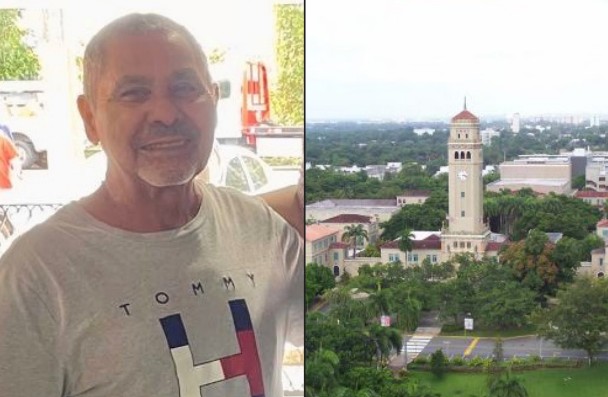
Jose Ramos, a University of Puerto Rico maintenance employee, isn’t going to let union bosses maintain their flimsy defense that they are entitled to keep his hard-earned money in violation of the First Amendment.
As 2025 waned, National Right to Work Foundation staff attorneys brought their expertise to bear as government employees in Washington State and Puerto Rico continued legal battles to get back money that union bosses never should have seized from their paychecks.
These workers are invoking their rights under the Foundation-won Janus v. AFSCME decision, which the Supreme Court handed down in 2018. In Janus, the Justices ruled that all American public sector workers have a First Amendment right to abstain from paying dues to union officials they don’t support.
Despite Janus’ commonsense protections, many union bosses, intent on keeping their coffers stocked with dues money seized from unwilling public employees, are still trying to skirt the Court’s ruling.
AFSCME Bosses Refuse to Return Illegally-Seized Money to Worker
That includes AFSCME union officials in Washington State, whom City of Everett employee Xenia Davidsen is fighting at the Washington State Public Employment Relations Commission (PERC). Davidsen charged AFSCME chiefs with accepting money that City officials had illicitly funneled from her paycheck to the union.
Davidsen had requested dues deductions to stop in 2024 in accordance with Janus, but City officials failed to monitor the email address through which AFSCME directed the City to stop the deductions. This incompetence led to the City seizing dues money from Davidsen at least 12 times without her authorization — and AFSCME union officials have stubbornly refused to admit they must post a notice stating they were wrong to accept the deductions.
“On none of those… instances did the Union stop to question why it was accepting dues that it knew were unauthorized to it,” argue Foundation attorneys in Davidsen’s latest brief before the PERC.
Meanwhile, Foundation attorneys also defended the Janus rights of two groups of Puerto Rico public employees in oral arguments before the First Circuit Court of Appeals last October.
Foundation Challenges Puerto Rico Court’s Refusal to Nix Anti-Janus Statute
In one case, Cruz v. UIA, Puerto Rico Aqueduct and Sewer Authority (PRASA) employee Reynaldo Cruz is trying to reclaim union dues money that officials of the Authentic Independent Union of Water and Sewer Authority Employees (UIA) took in violation of his First Amendment rights.
Cruz’s lawsuit challenges both union bosses’ demands that he pay union dues or lose his job, as well as the Puerto Rico territorial laws that allow such unconstitutional demands. Though UIA union bosses claim they have already deposited the illegally-seized money with a lower federal court, that court confusingly declined to issue a ruling that legally entitles Cruz to collect the funds.
During oral arguments, Cruz’s legal team argued that this legal sleight-of-hand created “a roadmap for civil rights defendants to violate civil rights plaintiffs’ rights.”
Foundation Won’t Let Union Bosses & Bureaucrats Ignore Janus
Also argued before the First Circuit at the end of 2025 was Ramos v. Delgado, in which Foundation attorneys represent Jose Ramos and other University of Puerto Rico maintenance employees who had dues illegally deducted from their paychecks for years.
Ramos and his colleagues are seeking refunds of all dues taken unlawfully since the Janus decision. Puerto Rico continues to be a hotbed for union violations of the Janus decision, but luckily, workers continue to stand up with Foundation legal aid.
Most recently, public employee Luis Rigau filed a federal lawsuit to challenge the Puerto Rico Industrial Commission (PRIC) union’s blatantly illegal reinstatement of automatic forced-dues deductions against nonmembers.
“Despite Janus’ clear constitutional command, union bosses, legislators, and public officials are still trying to do legal gymnastics to end-run the decision,” commented National Right to Work Foundation Vice President and Legal Director William Messenger.
“All public sector workers deserve the free choice that Janus secures, and Foundation attorneys will continue to back them in their court battles for freedom.”
Cincinnati-Area Kroger Worker Secures Victory Against Illegal Union Dues Deductions
The following article is from the National Right to Work Legal Defense Foundation’s bi-monthly Foundation Action Newsletter, May/June 2025 edition. To view other editions of Foundation Action or to sign up for a free subscription, click here.
After legal win, grocery employee based near Cincinnati finds job in nearby Right to Work Kentucky to escape forced dues

Northern Kentucky (foreground) might be just across the Ohio River from Cincinnati, OH, but the difference in worker freedom is stark. Without Right to Work, forced dues abuses are rampant compared to Right to Work Kentucky.
CINCINNATI, OH – In a win for employee freedom, James Carroll, a Kroger employee based near Cincinnati, has secured victory in his federal case against United Food and Commercial Workers (UFCW) Local 75 and Kroger. The win comes after Carroll challenged the union and his employer for unlawfully deducting union dues from his paycheck and threatening him with termination for refusing to sign an illegal dues deduction form.
Carroll, with free legal support from the National Right to Work Legal Defense Foundation, filed charges with the National Labor Relations Board (NLRB) Region 9 in Cincinnati. His case exposed the UFCW’s use of an unlawful “dual-purpose” membership form, which combines union membership and dues deduction authorization into a single signature. Under established Supreme Court legal precedents, workers have the right to refrain from formal union membership, and any dues deduction authorizations must be voluntary and separate from membership agreements.
In order to avoid further prosecution, Kroger and UFCW entered into a settlement that requires them to reimburse Carroll for the illegally seized dues and publicly post a notice informing other employees of their rights.
But Carroll didn’t stop there. To protect himself from future union coercion, he secured a transfer to a Kroger store in Right to Work Kentucky. Unlike Ohio, where workers can be forced to pay union fees even as non-members, Kentucky’s Right to Work law ensures that all union payments are voluntary, shielding Carroll from further threats that he pay up or face termination.
This case challenging the UFCW’s forced dues abuse of grocery employees isn’t an isolated incident. In 2023, Houston-area Kroger employee Jessica Haefner, also aided by Foundation attorneys, filed charges against UFCW for using a dual-purpose form and altering her response to falsely indicate consent for dues deductions.
More recently, in 2024, Portland grocery worker Reegin Schaffer won a case against UFCW after union officials ignored her resignation request during a strike and retaliated by attempting to fine her for working.
Another Worker Flees to the Freedom of Right to Work
“We are pleased with this legal win for Mr. Carroll, and that he is now completely free of union bosses’ forced-dues demands in Right to Work Kentucky,” commented National Right to Work Foundation Vice President and Legal Director William Messenger.
“Unfortunately most workers employed in forced dues states don’t have the option to commute to a job in a Right to Work state, which is why workers everywhere need the protection of Right to Work laws.”
St. Louis-Area Worker Battles Illegal Union Threats to Get Non-Members Fired
The following article is from the National Right to Work Legal Defense Foundation’s bi-monthly Foundation Action Newsletter, March/April 2025 edition. To view other editions of Foundation Action or to sign up for a free subscription, click here.
After divisive strike, IAM bosses demand non-members pay illegal ‘reinstatement fee’ to work

Robert Jacobs, an employee of power management company Eaton, filed federal charges showing IAM bosses clearly can’t manage their power: They are threatening union non-members with hundreds in illegal fees.
TROY, IL – “They’re threatening our jobs and livelihoods.”
This is how Robert Jacobs, an employee for power management company Eaton Corporation, described how International Association of Machinists (IAM) union bosses were treating him and his colleagues who dissented from the union’s agenda in an interview with the St. Louis Business Journal.
IAM officials ordered hundreds of Eaton employees at its St. Louis-area facility to strike in October 2024, which alienated many workers and made them question union bosses’ motives. Jacobs described seeing union agents take photos of his license plate during the strike and how he suspected union agents were following him home.
IAM Anti-Worker Activity Only Increased After Disruptive Strike Order
But for Jacobs and other workers, that was only the beginning of IAM’s coercive conduct. After the strike concluded, many Eaton employees chose to exercise their right to resign their union memberships. Even in states like Illinois that lack Right to Work protections, private sector workers are free to end their union memberships, even if union officials enforce a contract that requires non-members to pay some fees as a condition of employment.
Instead of respecting this right, IAM union officials began retaliating against those who wanted to cut ties with the union. With free legal assistance from the National Right to Work Foundation, Jacobs slammed the IAM with federal charges for threatening to get him and other employees who resigned union membership fired unless they pay hundreds in “reinstatement fees” concocted by the union. The National Labor Relations Board (NLRB) is now reviewing his charges.
“I and several of my colleagues don’t want to be part of the IAM union, but we are required by law to pay fees to union bosses just to keep our jobs,” commented Jacobs.
“That’s already something that we don’t want to do. But IAM officials are going even further and hitting us with hundreds of dollars in made-up fees just because we exercised our right to not be union members.”
IL Worker: Mandatory ‘Reinstatement Fee’ Not Permitted by Federal Law
Under federal labor law, which the NLRB is charged with enforcing, private sector employees have an absolute right to resign union membership. This right is codified in the National Labor Relations Act (NLRA), and was affirmed by landmark U.S. Supreme Court decisions such as General Motors v. NLRB.
Federal law further spells out that neither employers nor union officials can compel private sector workers to participate in union activities or refrain from such activities.
According to Jacobs’ federal charge, which was filed on the last day of 2024, “the Union is presently threatening Charging Party and [other employees who resigned from the union] with termination if they fail to pay a $306 ‘reinstatement fee’ by January 2025.” The charge argues that the IAM union is violating Eaton employees’ rights under Section 7 of the NLRA, which safeguards employees’ “right to refrain from any or all of ” union activities.
According to the Business Journal, IAM officials’ letter demanding this payment was what prompted him to contact Foundation attorneys. “[I]f you do not remit the total sum indicated in the enclosed letter within 30 days from receipt of this letter, the Union will be required to seek your termination from employment,” the letter read.
“Instead of seeking to win Eaton employees’ voluntary support, IAM union officials have decided to effectively extort the workers they claim to ‘represent,’” commented National Right to Work Foundation Vice President and Legal Director William Messenger. “Threatening to terminate workers if they don’t pay a fee which is apparently intended to punish those who don’t want union bosses speaking for them tarnishes employee rights and freedom.
“While we’re confident that Foundation attorneys will help Mr. Jacobs prevail in beating this illegal scheme, this case shows what self-interested union bosses will do to demand fealty from workers, and why all American workers deserve the Right to Work freedom to cut off financial support for such union hierarchies,” Messenger added
New York Farmworkers Seek to Challenge ‘Card Check’ & Uproot UFW Union Bosses
The following article is from the National Right to Work Legal Defense Foundation’s bi-monthly Foundation Action Newsletter, January/February 2025 edition. To view other editions of Foundation Action or to sign up for a free subscription, click here.
Farmworkers fight union argument that New York labor law lets union bosses trap workers forever

Porpiglia Farms workers, who were targeted by an aggressive UFW ‘card check’ campaign against the farmworkers, are banding together to vote the union out and ensure that union officials reap what they have sown.
MARLBORO, NY – In 2020, the New York State Assembly passed a Big Labor-backed law that granted union officials sweeping new powers to impose their monopoly bargaining control over the state’s farmworkers. Since New York is one of 24 states that lacks a Right to Work law, the law authorizes union bosses to force farmworkers to pay union dues or else be fired.
But that’s not all: New York labor law went even further by mandating “card check” organizing, in which union officials deny workers a secret ballot union vote and instead claim majority support by submitting cards ostensibly showing worker support. These cards are often collected through pressure tactics, intimidation, or even threats.
But even that dramatic increase in power over the agricultural sector and agricultural workers is not enough for United Farm Workers (UFW) union officials.
UFW tyrants are advancing the cynical argument that, under New York law, workers can be forced into union ranks but can never escape forced unionism. They argue this to counter a recent National Right to Work Foundation-backed union decertification case for employees of Porpiglia Farms, an apple farm in the Hudson Valley of New York.
NY Fruit Farmworkers Seek Union Ouster After ‘Card Check’
Porpiglia employee Ricardo Bell submitted a petition last year in which he and his coworkers asked the New York Public Employment Relations Board (PERB) to hold a vote at the orchard on whether to remove the UFW. (Despite its name, PERB is responsible for enforcing labor law in both New York’s public and agricultural sectors.)
In late 2024, Foundation attorneys filed a brief for Bell countering union officials’ absurd argument that one card check drive should lock employees in a union forever. Additionally, more Foundation-backed decertification cases are sprouting up in both New York and other Big Labor-dominated states for farmworkers who are rejecting UFW officials’ card check schemes.
Brief Challenges Theory That Workers Have No Right to Remove Incumbent Union
Bell filed his decertification petition with Foundation legal aid after UFW union officials seized power at his workplace through a hasty card check unionization drive. His newest filing attacks union bosses’ contention that once a union is certified as the monopoly union “representative” of a work unit, there can be no option to remove it.
“[New York labor law] does not indicate that employees have a single chance at self-organization,” the brief says. “If that were the case, the very action of choosing a representative under [New York labor law] would deprive employees of the ability to exercise [their rights] in perpetuity….”
Foundation-Backed Workers Battle UFW ‘Card Checks’ Across Country
Since Bell’s filing, Foundation attorneys have also assisted in a union decertification effort for workers at Cherry Lawn Fruit Farms near Rochester, NY, who were targeted by a similar UFW card check campaign. These two groups of New York farmworkers join Foundation-backed employees of Wonderful Nurseries in California in challenging the UFW’s tactics.
Wonderful Nurseries workers still have multiple unfair labor practice charges pending against UFW bosses for deceptive behavior during an early 2024 card check drive. The charges detail UFW agents lying about the true purpose of cards that they collected from workers, and harassing workers who now back an effort to vote the union out.
“The aggressive and often demeaning tactics that UFW union officials use to seize control over agricultural workers show clearly why ‘card check’ is a bad idea in the agricultural sector, the public sector, and in any sector,” commented National Right to Work Foundation Vice President and Legal Director William Messenger. “UFW officials are arguing that workers should have little or no chance at all to challenge a union’s ascent to power by this process.
“The idea that workers have no ability to eject a union once it is installed in power further demonstrates that this is not about workers’ choices at all, only about union bosses’ power over workers, even when workers overwhelmingly want nothing to do with union bosses’ so-called ‘representation,’” added Messenger.
Dartmouth, MIT, Vanderbilt Graduate Students Challenge Forced Unionism
The following article is from the National Right to Work Legal Defense Foundation’s bi-monthly Foundation Action Newsletter, January/February 2025 edition. To view other editions of Foundation Action or to sign up for a free subscription, click here.
Foundation-backed students defend rights as union bosses seek more power at universities

Ben Logsdon is a Ph.D. student in mathematics at Dartmouth College. But it doesn’t take a genius to realize that union officials’ refusals to accommodate his religious objections just don’t add up.
HANOVER, NH – Just weeks after National Right to Work Foundation staff attorneys triumphed in anti-discrimination cases for Jewish Massachusetts Institute of Technology (MIT) graduate students who sought to stop forced dues payments to a radically anti-Israel union, union officials began creating other problems for university students.
In nearby New Hampshire, Dartmouth graduate student Benjamin Logsdon sought free Foundation legal aid against Graduate Organized Laborers of Dartmouth (GOLD-UE) union officials. The GOLD union — which is an affiliate of the same United Electrical (UE) union involved in the Foundation’s MIT cases — is forcing Logsdon to accept the union’s monopoly “representation” powers against his will, even after he voiced his religious objections to the union’s radical stances on the conflict against Israel.
Grad Students Exposed to Union Coercion & Privacy Violations
Meanwhile, several graduate students at Vanderbilt University in Nashville, TN, are pushing back against an attempt by Vanderbilt Graduate Workers United (VGWU, an affiliate of United Auto Workers) union bosses to impose union control over them and their colleagues. Specifically, three students are seeking to intervene in a federal case in which VGWU union officials are illegally demanding the university hand over the students’ private information to aid in their unionization campaign. Foundation staff attorneys filed motions for intervention for these students in October 2024.
Foundation attorneys are arguing that union officials severely violate students’ rights in both of these cases. However, the reason that union officials are in power on college campuses at all traces back to flawed rulings from the National Labor Relations Board (NLRB) under both the Obama Administration and Biden Administration. These rulings subject graduate students to pro-Big Labor provisions of the National Labor Relations Act (NLRA), which create issues for students’ freedom both inside and outside the classroom.
Logsdon, a Christian Ph.D. student in mathematics at Dartmouth, slammed the GOLD union with federal anti-discrimination charges in September 2024 at the Equal Employment Opportunity Commission (EEOC). According to those charges, shortly after the GOLD union finalized its first monopoly bargaining contract with the Dartmouth administration, he sent a letter to United Electrical General Secretary-Treasurer Andrew Dinkelaker explaining that he objected to being affiliated with GOLD on religious grounds and needed an accommodation.
“I sought to be removed from the UE and GOLD-UE bargaining unit as a reasonable accommodation,” Logsdon’s Foundation-backed charges say.
Dinkelaker refused to offer Logsdon an accommodation that “satisf[ied] [his] religious conscience or beliefs,” according to the charges, which violated his rights under Title VII of the Civil Rights Act of 1964.
Courts have recognized a variety of Title VII religious accommodations over the years for men and women who have religious objections to union affiliation, including paying an amount equivalent to union dues to a charity instead of union bosses. However, Logsdon seeks a different accommodation: to remove himself from union bosses’ control entirely.
At Vanderbilt, three students who identify themselves in legal documents as “John Doe 1,” “John Doe 2,” and “Jane Doe 1” are contending in their Foundation-backed motions for intervention that the Family Educational Rights and Privacy Act (FERPA) forbids the Vanderbilt administration from disclosing their personal information to any third parties without their permission, including the VGWU union.
At the union’s behest, NLRB Region 10 has already hit the Vanderbilt administration with a pair of subpoenas demanding personal student info, while ignoring objections from several students expressing concern at the disclosure.
So far Vanderbilt has resisted the NLRB’s subpoenas, and fortunately a federal court has temporarily allowed the university to refuse to comply with them.
The Foundation-backed students’ motions to intervene argue that the subpoenas “are an attempt to violate FERPA’s protections, privileging union interests over the graduate students[’] privacy rights.” It also points out that FERPA allows students to seek “protective action” if a university receives a subpoena seeking their personal information, as in this case.
The Vanderbilt students and their Foundation attorneys are demanding an opportunity to properly defend their privacy interests under FERPA. Foundation attorneys have already filed Requests for Review asking the NLRB in Washington, DC, to weigh in on the matter.
Union Monopoly Power Has No Place at Universities
“Graduate students around the country are discovering that union bosses don’t respect their individual rights and would rather use students as pawns to force their demands on a university administration, or advance an extreme political agenda,” commented National Right to Work Foundation Vice President and Legal Director William Messenger.
“Union monopoly bargaining is a system particularly ill-suited to an academic environment. Indeed, it is wrong for anyone to have a union monopoly imposed on them against their will and then be forced to pay union dues under threat of termination.”
IUOE Union Bosses Hit With Federal Charge for Illegal Termination
The following article is from the National Right to Work Legal Defense Foundation’s bi-monthly Foundation Action Newsletter, January/February 2024 edition. To view other editions of Foundation Action or to sign up for a free subscription, click here.
Longstanding law protects against mandatory dues deductions, formal union membership

Firestop inspector Alexandra Le isn’t going to let IUOE union bosses snuff out her livelihood over her refusal to join or support the union. She’s filed federal charges with Foundation aid.
PLEASANTON, CA – Sometimes, even the extraordinary power to demand payments from workers under threat of termination isn’t enough for union bosses, who frequently go beyond what is legal to coerce workers into membership and dues payment.
Alexandra Le, an employee of Construction Testing Services (CTS), found herself on the receiving end of such illegal demands from International Union of Operating Engineers (IUOE) officials in October. But Le is now fighting back, hitting IUOE bosses and her employer with federal charges at National Labor Relations Board (NLRB) Region 32 with free legal aid from the National Right to Work Foundation.
Union Misinformed Worker About Rights
Le’s charges state that IUOE bosses got her fired after she rebuffed their demands to formally join the union. Additionally, Le’s charges maintain that union officials unlawfully deducted union dues from her paycheck without her permission and failed to inform her of her right to pay reduced union dues as a non-member — a right secured by the Foundation-won CWA v. Beck Supreme Court victory.
Because California lacks Right to Work protections for its private sector workers, Le and her coworkers can be forced to pay some fees to the union to keep their jobs, even if they’ve abstained from formal union membership. However, as per Beck, in non-Right to Work states, union officials can’t force nonmember employees to pay for union expenses (such as union politics) that go beyond what the union claims goes to bargaining.
Other Supreme Court precedents require union bosses to seek workers’ express consent before deducting dues directly from their paychecks.
In Right to Work states, all union financial support is voluntary and the choice of each individual worker.
Employee Demands Federal Injunction to Reverse Illegal Union-Ordered Firing
“It’s outrageous that IUOE union officials believe they can get me fired simply because I don’t agree with their organization and don’t want to support or affiliate with them,” Le said. “IUOE union officials have been far more concerned with consolidating power in the workplace and collecting dues than caring about me and my coworkers, and I hope the NLRB will hold them responsible for their illegal actions.”
Le’s charge against the IUOE union states that, after she refused to affiliate with the union, IUOE bosses “caused Charging Party to be removed from the work schedule by her Employer as of October 2nd.” The NLRB v. General Motors Corp. U.S. Supreme Court decision protects the right of workers to refuse formal union membership, even in a non-Right to Work state.
As a remedy, the charge asks the NLRB Regional Director in Oakland to “invoke its authority under Section 10(j)” of the National Labor Relations Act (NLRA), which empowers the Board to seek an injunction from a federal court to stop IUOE and CTS management from committing the unfair labor practices.
Workers Need More Protections Against Union Boss Coercion
“Ms. Le’s case shows why Right to Work protections are important,” commented National Right to Work Foundation Vice President and Legal Director William Messenger.
“Even if IUOE union officials had followed federal labor law in this case, Ms. Le would still be forced to contribute to the activities of an organization she clearly doesn’t want to be part of.
“As Ms. Le’s case demonstrates, union bosses often value workers merely as sources of dues revenue and will go to extraordinary lengths to keep the money flowing,” Messenger added. “Workers deserve more protections against union boss coercion, not fewer.”
Foundation Lawsuit: Biden NLRB Structure Violates the U.S. Constitution
The following article is from the National Right to Work Legal Defense Foundation’s bi-monthly Foundation Action Newsletter, November/December 2023 edition. To view other editions of Foundation Action or to sign up for a free subscription, click here.
Groundbreaking suit filed for Starbucks employee who was denied vote to oust unwanted union bosses
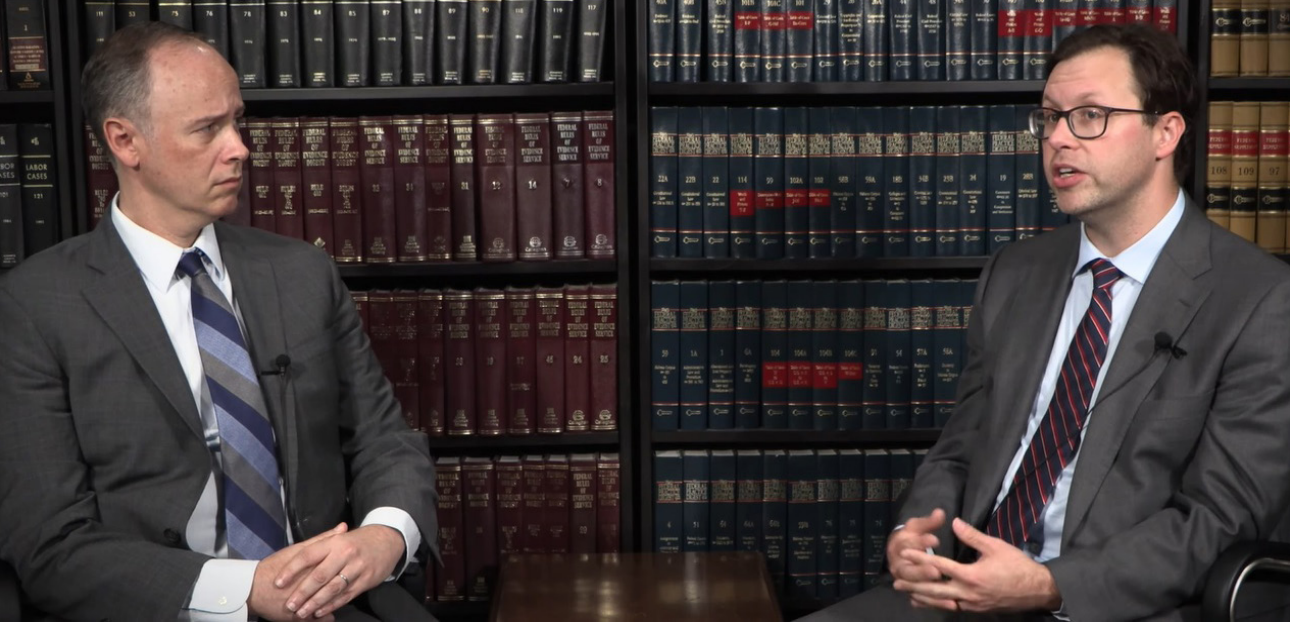
Starbucks employee Ariana Cortes’ Foundation attorney, Aaron Solem (right), is making a cutting-edge argument targeting the NLRB’s lack of accountability.
WASHINGTON, DC – The National Labor Relations Board (NLRB) is supposed to protect the right of workers to freely choose whether to associate with a union or not. The NLRB is also charged with holding unions and employers accountable when they violate worker rights. Too often, however, it has simply acted as an agency that generates policies to entrench union bosses’ power over workers while shielding union bosses from any kind of liability.
A new federal lawsuit from a National Right to Work Foundation-backed Starbucks employee, currently pending at the D.C. District Court, could upend the federal agency and result in a ruling that the current Labor Board’s structure violates the Constitution.
Employee Challenges NLRB Bureaucrats’ Protections from Presidential Removal
Ariana Cortes, a worker at the Buffalo, NY, “Del-Chip” Starbucks branch, hit the NLRB with the groundbreaking lawsuit in October, contending that the federal agency’s current structure violates the separation of powers mandated by the Constitution.
Cortes’ suit follows Foundation attorneys’ defense of her and her coworkers’ petition requesting a vote to remove Starbucks Workers United (SBWU) union officials from their workplace. Regional NLRB officials dismissed Cortes’ majority-backed petition based on SBWU allegations against Starbucks management that have no proven connection to Cortes and her coworkers’ desire for a union decertification vote.
Cortes’ lawsuit argues that because NLRB members cannot be removed at-will by the President, the NLRB’s structure violates Article II of the Constitution. Under Article II, the lawsuit contends, the President must have the power to remove officials that exercise substantial executive power.
Because the NLRB enforces federal labor law, manages union elections, and can issue legally binding rules and regulations, the lawsuit contends that the agency exercises substantial executive power. Therefore, it falls within the scope of the President’s power to remove officials at will. However, the National Labor Relations Act (NLRA), the law that established the NLRB, restricts the President’s ability to remove Board members except for neglect of duty or malfeasance.
“[T]hese restrictions are impermissible limitations on the President’s ability to remove Board members and violate the Constitution’s separation of powers. Thus, the Board, as currently constituted, is unconstitutional,” the complaint states.
Lawsuit: Unconstitutional NLRB Proceedings Must Stop
Cortes’ new federal lawsuit seeks a declaration from the District Court that the structure of the NLRB as it currently exists is unconstitutional.
“For too long the NLRB, especially the current Board, has operated as a union boss-friendly kangaroo court, complete with powerful bureaucrats who exercise unaccountable power in violation of the Constitution,” commented National Right to Work Foundation Vice President and Legal Director William Messenger. “The NLRB’s operation outside constitutional norms is easily exploited by Big Labor.”
“But as the story of Ms. Cortes shows, the NLRB’s unchecked power creates real harms for workers’ rights, especially when workers seek to free themselves from the control of union bosses they disagree with,” Messenger added.





