
More Minnesota Nurses Send MNA Union Bosses Packing
The following article is from the National Right to Work Legal Defense Foundation’s bi-monthly Foundation Action Newsletter, March/April 2025 edition. To view other editions of Foundation Action or to sign up for a free subscription, click here.
Politics-motivated union faces string of successful decertification votes in Minnesota

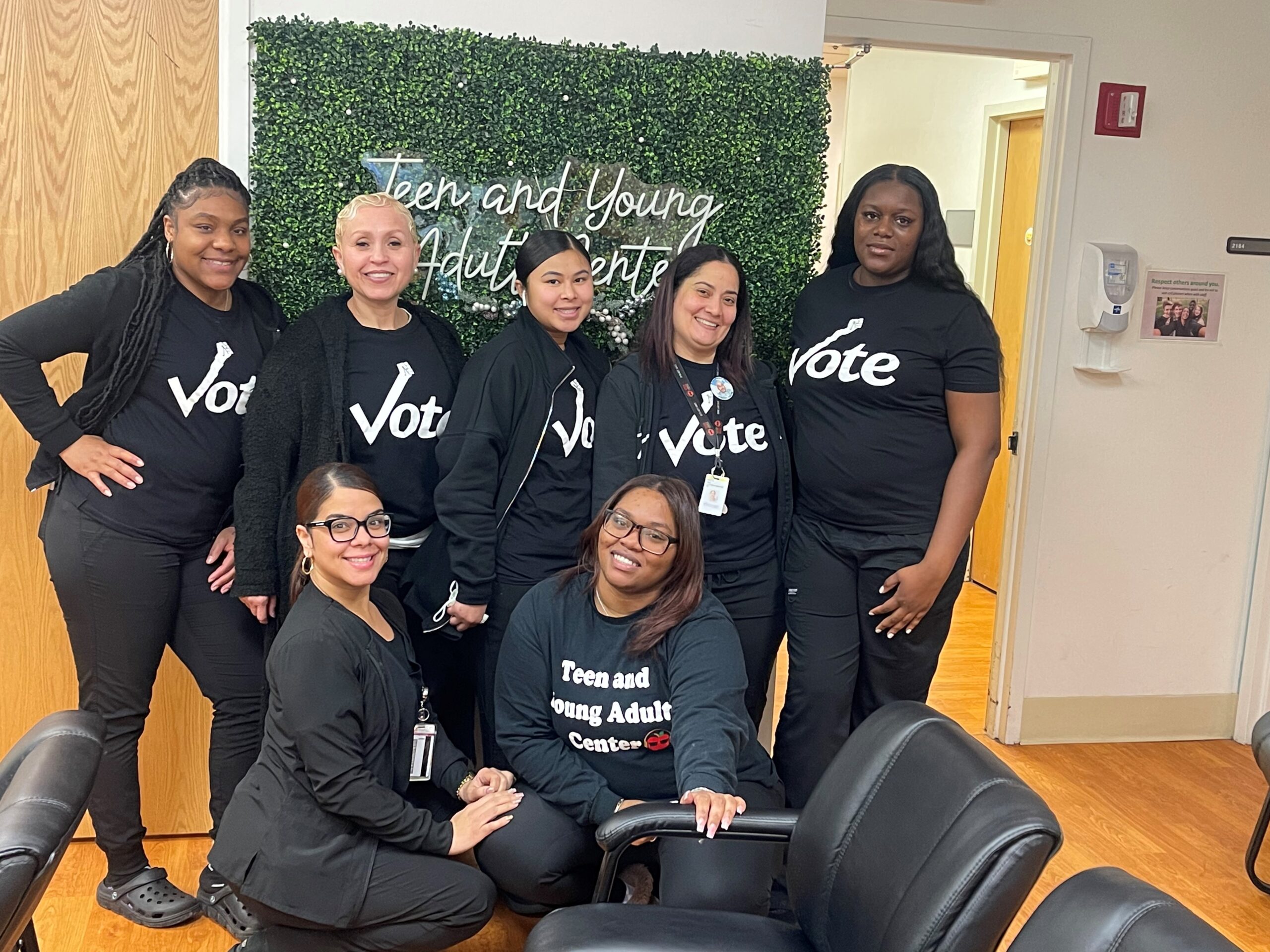
Brittany Burgess (front, center) and her coworkers at Mayo Clinic’s Mankato, Minnesota, branch sparked a wave of Foundation-backed efforts across Minnesota to declare independence from union bosses, with the most recent success in Fairmont, Minnesota.
FAIRMONT, MN – In 2022, then-President of the Minnesota Nurses Association (MNA) union Mary Turner expressed to the Minnesota Reformer her ambition to continue pushing the MNA’s political agenda in the Minnesota state legislature and eventually vie for the presidency of the National Nurses United (NNU) union, MNA’s parent.
The NNU is also known for its ardent political activity — in 2016, the union’s super PAC spent roughly $1 million on promoting self-proclaimed socialist Bernie Sanders for president.
When asked whether the union’s politics played a role in the fact hundreds of nurses, backed by the National Right to Work Foundation, had just voted MNA union bosses out of power at Mayo Clinic in Mankato, Minnesota, Turner had this to say: “They’re going to have to prove to us that they want the union because they lost it.”
Fast-forward to 2025, and the MNA’s obsession with politics hasn’t changed — and neither has nurses’ opposition to the alienating nature of the union. This January, with free Foundation legal aid, nurses at Mayo Clinic’s Fairmont, Minnesota, location voted by over 60% to remove MNA union officials from their facility.
“The MNA was a very divisive force in our workplace, and I think we’ll be able to better serve our patients and the community without the union,” commented nurse Jamie Campbell on the vote.
Foundation Backs Another Grassroots Effort to Nix MNA
Campbell kick-started the union removal effort by submitting a petition to the National Labor Relations Board (NLRB) in December 2024 requesting a union decertification vote.
The NLRB is the federal agency responsible for enforcing federal labor law, which includes administering elections to install (or “certify”) and remove (or “decertify”) unions. Campbell’s union decertification petition contained well over the number of employee signatures needed to trigger a decertification vote under NLRB rules.
Because Minnesota lacks Right to Work protections for its private sector workers, MNA union officials had the legal power to require all the Fairmont Mayo nurses to pay at least a portion of union dues as a condition of keeping their jobs. In contrast, in Right to Work jurisdictions, union membership and all union financial support are voluntary and the choice of each individual worker.
However, in both Right to Work and non-Right to Work states, union officials are able to impose one-size-fits-all contracts on all employees in a work unit, even those who voted against or otherwise oppose the union.
Fairmont Victory Follows Others in Mankato, St. James
The election took place in January, and within a week, the NLRB certified the nurses’ successful ouster of the union.
Since 2022, several sizable units of healthcare workers in Minnesota have sought out Foundation legal aid to obtain removal votes against the MNA and other unions, and have often been successful in freeing themselves. After Mankato Mayo Clinic nurses voted MNA out, nurses at Mayo’s St. James branch did the same with AFSCME Council 65 in August 2022. Support staff at the Mankato facility kicked out American Federation of State, County, and Municipal Employees (AFSCME) Local 1856 union officials in 2023.
“MNA union bosses’ influence and political connections did not shield them from suffering another defeat by rank-and-file nurses at the ballot box,” commented National Right to Work Foundation Vice President Patrick Semmens.
“Ironically, Minnesota’s lack of Right to Work protections — which are vociferously opposed by the MNA — likely removed an important accountability tool from the relationship between the MNA and the nurses they claim to ‘represent.’ It’s no surprise that union bosses who can force workers to pay union dues or fees on pain of termination wind up being far less effective and more out-of-touch than union officials who must earn the voluntary financial support of each worker.”
Workers in Missouri and Minnesota Challenge Union Bosses’ Scheme to Coerce Workers into Funding Union Political Activities
Cases against AFSCME, Guards Union, are latest to argue federal law prohibits “window periods” that trap nonmembers in full union dues payments
Kansas City, MO & Bloomington, MN (August 14, 2025) – Tina Delkamp, an employee of Honeywell FM&T in Kansas City, MO, and Meriem LeClair, an employee of Cornerstone Advocacy Center in Bloomington, MN, have each filed federal charges challenging union officials’ policies in their respective workplaces that coerce nonmember workers into funding union political activities. Delkamp and LeClair filed their charges at the National Labor Relations Board (NLRB) with free legal aid from National Right to Work Legal Defense Foundation staff attorneys.
Both charges state that union officials breached federal labor law by demanding that the employees “affirmatively opt-out of paying for political and ideological activities, instead of opting-in to make political and ideological contributions.” Under the Foundation-won Communications Workers of America v. Beck Supreme Court decision, union bosses cannot force workers who have opted out of union membership to pay fees for union political or ideological expenditures.
While the National Labor Relations Act (NLRA) protects workers’ right to abstain from formal union membership, states like Minnesota and Missouri that lack Right to Work laws permit unions to force workers to pay dues or fees just to keep their jobs. However, Beck limits this forced-dues amount to only what union bosses spend on bargaining functions, and these so-called “chargeable expenses” can never include money for union political or ideological activities. In both cases, union officials have attempted to get around Beck by neglecting to inform the employees of their rights.
Unions Can’t Force Funding for Political Activities Automatically
Delkamp’s charges, filed against International Guards Union of America Local 172, state that union officials are unlawfully withholding financial information she needs to verify what she has to pay as a non-member under Beck. Additionally, the charges challenge union officials for telling Delkamp that her inclusion of her employer on emails concerning her Beck rights was somehow a violation of federal law.
“I tried to exercise my right not to fund political activities I oppose, and the union threatened me for it,” said Delkamp. “Union officials shouldn’t be able to take my wages for their partisan activities without asking me first. They need to take responsibility for respecting my rights, instead of making me fight them on it.”
Union officials often neglect to inform workers of their Beck rights, and sometimes don’t even seek worker consent before deducting full dues (including dues for political expenses) from their paychecks. Recent federal charges filed by Delkamp, LeClair, and other workers with free Foundation legal aid give the NLRB an opportunity to enforce a new federal standard that would require union officials to seek clear consent from workers before extracting full union dues payments from their paychecks.
Union Used “Window Periods” to Keep Worker Trapped
LeClair’s charges, filed against AFSCME Council 5, also allege that the union “refused to recognize withdraw of union membership, except during ‘window periods,’” imposing an arbitrary restriction on the exercise of her Beck rights. Union-created “window periods,” in which union members can withdraw membership, are a stonewalling tactic with no basis in federal law.
“I didn’t want my union dues funding political activities I oppose, so I tried to resign my union membership, only for officials to tell me I had to wait,” commented LeClair. “If I have a right guaranteed under federal law, that right should apply all the time, not only on the days and weeks convenient for union bosses.”
“Across the country, Big Labor officials are using legally dubious schemes to force unwilling workers to fund a radical political agenda that is completely contrary to the priorities of most rank-and-file employees,” commented National Right to Work Foundation President Mark Mix. “The best way to ensure workers’ freedom is, of course, through Right to Work protections that make all union payments completely voluntary.
“Until Right to Work is the law of the land, the NLRB needs to step up to protect workers from being trapped in full forced dues, including the portion used for union political activism,” added Mix. “Workers who have already declined formal union membership should not have to also navigate arbitrary ‘window periods’ just to ensure they are not funding union boss political spending.”
Minnesota Electric Utility Employee Challenges IBEW Nationwide Policy Coercing Worker Contributions to Union’s Political Activity
Worker charges union with blocking her right under CWA v. Beck Supreme Court decision to end payments for union politics
Benson, MN (April 8, 2025) – An employee of Agralite Electric Cooperative, an electric utility company in Western Minnesota, has just filed federal charges against the International Brotherhood of Electrical Workers (IBEW) union, challenging nationwide restrictions union officials impose on workers who wish to cut off financial support for union political activities. The worker, Theresa Klassen, filed charges against both the IBEW international union and IBEW Local 160 at the National Labor Relations Board (NLRB) Region 18 in Minneapolis. Klassen is represented for free by National Right to Work Legal Defense Foundation staff attorneys.
The NLRB is the federal agency responsible for enforcing federal labor law and adjudicating disputes between employers, union officials, and individual employees. In her charges, Klassen is defending her rights under the landmark Foundation-won Communications Workers of America (CWA) v. Beck Supreme Court decision, which forbids union officials from forcing workers who have refrained from formal union membership to pay dues for anything beyond the union’s monopoly bargaining functions. Union political expenditures are one expense employees can opt out of paying by invoking their Beck rights.
Because Minnesota lacks Right to Work protections for its private sector workers, IBEW union officials can impose contracts that force Klassen and her coworkers to pay union dues as a condition of keeping their jobs. However, nonmember workers like Klassen can object to paying full dues and instead pay a reduced amount under Beck. In contrast, in Right to Work states like all of Minnesota’s neighbors, union membership and all union financial support are strictly voluntary.
“It’s disappointing that IBEW union officials can legally force me to fork over even a little bit of my paycheck to them after I resigned my membership, but refusing to pay for union politics is my right and the IBEW isn’t respecting it,” commented Klassen. “They’ve put a bunch of time limitations on when I can exercise this right, and are also requiring me to contact union bosses in Washington, D.C. who I have never met just to prevent my money from going toward union politicking I oppose. This is wrong.”
Filings: IBEW Officials Illegally Rebuffed Worker Twice After Receiving Requests to Stop Funneling Money to Union Politics
Klassen’s charges state that she first contacted her local union to resign her union membership in October 2024. While Local 160 union officials acknowledged her resignation letter, they claimed that the IBEW’s national policy is to “not allow nonmembers automatic Beck objector status,” and for that reason she would need to send a letter to the union’s international headquarters to opt out of paying for union politics. Local 160’s reply also stated that Beck objections would only be accepted during “window periods” of time comprising only 8-16% of the year, according to her charges.
Klassen’s charges also state that she sent a Beck objection letter to the IBEW international headquarters again in February 2025. IBEW union agents rejected this request as well, alleging that Klassen’s request fell outside the arbitrary time restrictions set by the union. Klassen is charging both IBEW Local 160 and the IBEW international union with enforcing these illicit limits on her Beck rights.
Window period restrictions on when employees can exercise their Beck rights allow union officials to extract money from workers who have already objected to financially supporting union activities. The creation of window periods is not authorized or otherwise mentioned in the National Labor Relations Act (NLRA), the federal labor law governing the private sector. Foundation attorneys are assisting multiple AT&T workers in Florida battle a similar scheme concocted by CWA officials.
“That IBEW union bosses are enforcing a nationwide policy making it needlessly difficult to stop supporting the union’s political activities should tell workers exactly what the union’s priorities are,” observed National Right to Work Foundation President Mark Mix. “While Beck rights are an important protection for workers in non-Right to Work states, no American worker should be forced to subsidize any union activities that they disagree with, whether political or not.”
Fairmont, MN, Mayo Clinic Nurses Vote to Remove MNA Union From Facility
Latest in string of union ejections by Mayo Clinic healthcare professionals across state
Fairmont, MN (January 8, 2025) – Nurses at Mayo Clinic’s Fairmont Medical Center have just voted 26-15 to eject Minnesota Nurses Association (MNA) union officials from their facility. The push to remove the union was spearheaded by Mayo Fairmont employee Jamie Campbell, who submitted to the National Labor Relations Board (NLRB) in December 2024 a petition seeking a union decertification vote among her colleagues.
The NLRB is the federal agency responsible for enforcing federal labor law, which includes administering elections to install (or “certify”) and remove (or “decertify”) unions. Campbell’s union decertification petition contained well over the number of employee signatures needed to trigger a decertification vote under NLRB rules. According to Campbell’s petition, the work unit covered by the vote included all “registered general duty nurses and charge nurses.”
Because Minnesota lacks Right to Work protections for its private sector workers, MNA union officials had the legal power to require all the Fairmont Mayo nurses to pay at least a portion of union dues as a condition of keeping their jobs. In contrast, in Right to Work jurisdictions, union membership and all union financial support are voluntary and the choice of each individual worker. However, in both Right to Work and non-Right to Work states, union officials are able to impose one-size-fits-all contracts on all employees in a work unit, even those who voted against or otherwise oppose the union.
Pending a certification of the vote result by NLRB officials, Fairmont Mayo nurses will be free from both the forced-dues and monopoly bargaining power of the MNA union.
“The MNA was a very divisive force in our workplace, and I think we’ll be able to better serve our patients and the community without the union,” commented Campbell on the vote. “We hope the NLRB quickly certifies the vote and that union officials respect our decision.”
Fairmont Nurses Join Other Healthcare Professionals Across MN in Ousting Unwanted Unions
Since 2022, several sizable units of healthcare workers in Minnesota have sought out Foundation legal aid to obtain removal votes against the MNA and other unions, and have often been successful in freeing themselves. Nurses and nurse support staff at Mayo Clinic’s Mankato branch voted MNA and American Federation of State County, and Municipal Employees (AFSCME) Local 1856 union officials out of their facility between 2022 and 2023, and nurses at Mayo’s St. James branch did the same with AFSCME Council 65 in August 2022. Employees from four Cuyuna Regional Medical Center locations across the Brainerd Lakes region of Minnesota also sought Foundation aid in their decertification effort against Service Employees International Union (SEIU) officials in 2022.
“MNA union bosses’ influence and political connections did not shield them from suffering another defeat by rank-and-file nurses at the ballot box,” commented National Right to Work Foundation President Mark Mix. “Ironically, Minnesota’s lack of Right to Work protections – which are vociferously opposed by the MNA – likely removed an important accountability tool from the relationship between the MNA and the nurses they claim to ‘represent.’ It’s no surprise that union bosses who can force workers to pay union dues or fees on pain of termination wind up being far less effective and more out-of-touch than union officials who must earn the voluntary financial support of each worker.”
Healthcare Employees in PA, MN Oust Unions with Foundation Aid
The following article is from the National Right to Work Legal Defense Foundation’s bi-monthly Foundation Action Newsletter, March/April 2024 edition. To view other editions of Foundation Action or to sign up for a free subscription, click here.
Over 270 workers now free of AFSCME at Philly hospital; Steelworkers union booted in MN
After being told by a union official that “the union isn’t going anywhere,” outpatient service coordinator Shidiah Jackson (back right) and her coworkers led a successful effort to kick the AFSCME union out of St. Christopher Hospital.
PHILADELPHIA, PA – In December 2023, National Right to Work Foundation-supported workers added two new victories to the growing string of successful union decertification efforts around the country.
In Philadelphia, a 270+ worker unit comprised of medical assistants, office coordinators, medical secretaries, and many other support employees voted by a nearly 60% margin to remove the American Federation of State, County and Municipal Employees (AFSCME) union from St. Christopher’s Hospital for Children.
Outpatient service coordinator Shidiah Jackson led the union decertification effort with free legal advice from the Foundation.
In Austin, MN, patient care specialist Erin Krulish and other support workers at the Austin Mayo Clinic location forced Steelworkers union officials out of their facility. That ouster follows multiple recent union removals involving other Minnesota healthcare employees, including nurses at Mankato Mayo Clinic, support staff at Mankato Mayo Clinic, and nurses at St. James Mayo Clinic, all of whom received free Foundation legal aid.
Both Krulish and Jackson kick-started these efforts by submitting decertification petitions to the National Labor Relations Board (NLRB). Each petition contained enough signatures from employees interested in having a union removal vote to prompt the NLRB to hold such a vote.
Healthcare Professionals Free of Monopoly Bargaining and Forced Dues
Both Pennsylvania and Minnesota lack Right to Work protections for their private sector workers, meaning that union officials had the power to enter into contracts with management that would force Krulish, Jackson, and their coworkers to pay union dues or fees just to keep their jobs. In contrast, in Right to Work states, union membership and all union financial support are strictly voluntary.
Steelworkers Officials Depart MN Clinic to Avoid Likely Embarrassing Vote
If a majority of workers vote against a union in a decertification vote or otherwise force a union out, the union loses not only its ability to demand forced dues from employees, but also its monopoly bargaining power.
Such power permits union officials to dictate the contract provisions of all employees in a unit, even those who oppose or voted against the union’s presence in the first place.
The effort by Krulish and her coworkers at Mayo Clinic Austin to remove the Steelworkers union was unique in that they had already stripped union officials of their forced dues power through a “deauthorization election,” which can be petitioned for in the same way as a decertification election. In December 2022, Krulish and her fellow employees voted 49-17 to revoke the union’s power to compel them to pay dues.
Deauthorization is the only way employees in non-Right to Work states can stop a union from seizing dues from workers as a condition of employment, outside of completely decertifying the union.
Krulish and her coworkers resorted to this option because the NLRB’s questionable “contract bar” doctrine prevented them from kicking the union out in December 2022, simply because the union’s contract was still active.
After experiencing a big loss in the deauthorization election, Steelworkers officials likely knew another devastating defeat was coming after Krulish filed her decertification petition. They departed the hospital before the election could take place.
Philly Workers Reject One-Size-Fits-All Union Bureaucracy
In an interview with The Philadelphia Inquirer, Jackson related that she had no contact with the union until she tried to ask for a raise she felt she had earned, at which point hospital administrators said her salary and benefits were a union matter. When she voiced her displeasure with the situation to the union and asked what the union actually did for her, a union official suggested her views didn’t matter anyway because “the union isn’t going anywhere.”
“OK, we’ll see about that,” she told the union agent, according to the Inquirer. Soon after, she proceeded with her decertification effort, which ultimately resulted in the overwhelming vote among her colleagues for ending the union’s so-called “representation.”
“It seems that American medical employees are discovering that union officials’ one-size-fits-all ‘representation’ doesn’t always work to their benefit, nor does it help them take better care of their patients,” commented National Right to Work Foundation President Mark Mix. “It’s easy to see why healthcare workers would want to avoid compulsory dues payments, or being ordered to strike and abandon their patients during a busy time.
“Those in the healthcare industry should know that they have a right to petition the NLRB for a vote to remove a union, and that National Right to Work Foundation staff attorneys can assist them through this daunting process,” Mix added.
Austin Minnesota Mayo Clinic Support Staff Vote Overwhelmingly to End Forced Union Dues Requirement
49-17 Labor Board deauthorization vote comes as employees wait for window to hold vote to finally remove unwanted Steelworkers union boss “representation”
Austin, MN (December 19, 2022) – “We are so happy with the way the election turned out,” Mayo Clinic Austin patient care specialist Erin Krulish commented. “I think it really shows that all of us came together to show the union that we don’t want to keep paying them when they are doing nothing for us.”
A group of support employees at Mayo Clinic Health System in Austin, Minnesota, overwhelmingly voted to “deauthorize” United Steelworkers (USW) Local 11-00578 union in their workplace. The workers filed the deauthorization petition with the National Labor Relations Board (NLRB) Region 18 with free legal representation from National Right to Work Legal Defense Foundation staff attorneys.
Krulish filed the deauthorization petition for her coworkers who wanted to get rid of the so-called “union security clause” that authorizes USW union bosses to have clinic employees fired for refusing to financially support union activities. The request seeking the vote to end United Steelworkers union officials’ forced dues powers at Mayo Clinic Austin was signed by 49 of the 66 workers, well over the 30% required to trigger the NLRB-supervised election.
Minnesota is not a Right to Work state, meaning all workers in a unionized workplace can be required to pay dues or fees to a union as a condition of keeping their jobs. However, although winning such a vote can often be an uphill battle as independent workers have to take on professional forced-dues-funded union organizers, federal law does allow workers to hold deauthorization votes to end union officials’ legal authority to force workers to “pay up or be fired.”
The successful deauthorization vote at Mayo Clinic Austin comes as the workers wait for the opportunity to end USW officials so-called “representation” at the facility completely, a process known as decertification. “We plan to decertify come next December when our contract is up and we are ready for another fight!” Krulish said following the deauthorization victory.
Currently the non-statutory NLRB-invented “contract bar” doctrine blocks workers from holding a decertification vote to remove a union’s monopoly representation powers for up to three years when a union boss-imposed contract is in effect, consequently, a deauthorization vote, which isn’t limited by the contract bar was the employees’ only option. If the support staff at the Austin Mayo Clinic do decertify as they plan, they will join Minnesota nurses at Mayo Clinic Mankato and Mayo Clinic St. James in voting to oust union officials from their hospitals in just the six months.
Worker interest in removing unwanted unions is up nationwide. The NLRB’s own data show that, currently, a unionized private sector worker is more than twice as likely to be involved in a decertification effort as a nonunion worker is to be involved in a unionization campaign, with one analysis finding decertification petitions up 42% this year.
“We’re pleased Ms. Krulish and her coworkers are victorious in their effort to strip Steelworkers union bosses of their power to force workers to pay union dues or else be fired,” commented National Right to Work Foundation President Mark Mix. “Ultimately, Minnesota needs a state Right to Work law to ensure that every individual worker has the freedom to decide whether or not to financially support a union, even those who can’t overcome the hurdles required to successfully navigate the complicated deauthorization process.”
“This case also shows why it is time to end the NLRB-concocted ‘contract bar’ that traps workers in union ranks they oppose for years at a time,” added Mix. “No worker anywhere should be forced under so-called union ‘representation’ they oppose.”
Majority of Mankato Mayo Clinic Support Employees Vote to Remove AFSCME Union Officials
Nursing support staff and others in 186-person unit vote to remove AFSCME union following nurses’ vote to remove MNA union last summer
Mankato, MN (June 19, 2023) – A majority of nursing support staff, clerical staff, and environmental staff at Mankato Mayo Clinic have voted to remove American Federation of State, County, and Municipal Employees (AFSCME) Local 1856 union officials from power at the hospital. The effort was spearheaded by Mankato Mayo employee Melody Morris, who submitted a petition on May 9 asking the National Labor Relations Board (NLRB) to hold a union “decertification vote” at the facility. This petition was also supported by the majority of her coworkers.
Morris received free legal aid from the National Right to Work Legal Defense Foundation in submitting the petition. The successful union ouster comes less than a year after nurses at Mankato Mayo clinic voted to send Minnesota Nurses Association (MNA) union officials packing from the hospital.
Workers often seek free legal assistance from the National Right to Work Foundation in exercising their right to vote out an unpopular union because the NLRB’s process for doing so is convoluted and prone to union boss gamesmanship. The right to decertify is especially important for Mankato Mayo Clinic employees and other workers across Minnesota because, due to the state’s lack of Right to Work protections, union officials can force workers under their control to pay dues as a condition of getting or keeping a job. In contrast, in Right to Work states, union membership and all union financial support are strictly voluntary.
“My colleagues and I want to provide the best support we can to the medical staff at Mankato Mayo Clinic Hospital, and we determined that having AFSCME in the workplace wasn’t helping us do so, nor was the union looking out for our interests,” commented Morris. “I’m grateful that we came together to free ourselves from the union, and we’re also grateful for the help of the National Right to Work Foundation in helping us accomplish this.”
Mankato Mayo Clinic Support Staff Remove AFSCME Amid Wave of Decertifications Across MN and Country
Morris and her colleagues’ successful union decertification vote comes as a growing number of Minnesota healthcare employees attempt to exercise their right to vote out unwanted union officials. In addition to Mankato Mayo Clinic nurses, nurses from Mayo’s St. James, MN, branch removed the AFSCME Council 65 union from their hospital last August with Foundation aid. Employees from four Cuyuna Regional Medical Center locations across the Brainerd Lakes region of Minnesota also sought Foundation aid in their decertification effort against Service Employees International Union (SEIU) officials last year. Even amid these efforts, Minnesota union officials seem unwilling to examine why growing numbers of workers want them ousted. A Minnesota Reformer profile on MNA President Mary Turner reported that Turner believes “it’s the nurses in Mankato, not the union, who need to change their approach.”
Interest in decertifying unions is also increasing among Starbucks workers. Just a year after union bosses and union-allied politicians heavily lauded successful unionization campaigns at the coffee chain, Starbucks workers are already attempting to kick out Service Employees International Union (SEIU)-aligned union officials. This includes Foundation-backed efforts at Starbucks locations in Buffalo, NY, and Manhattan, NY, both of which were the targets of high-profile unionization pushes in 2022.
“It’s easy to see why workers across the country are increasingly trying to free themselves from monopoly union ‘representation.’ Workers who prefer to speak for themselves or have interests that deviate from the union’s are all forced to accept the monolithic voice of union officials, who often chase politics or other superficial goals instead of doing what’s best for workers,” commented National Right to Work Foundation President Mark Mix. “Minnesota healthcare workers may additionally be concerned that union boss-ordered strikes might force them to choose between staying with their patients or following the union agenda.”
“Any worker, public or private, who is interested in exercising their right to be free of union control should contact Foundation staff attorneys for free help in exercising their rights,” Mix added.
Foundation-Backed NLRB Rules Make It Easier for Workers to Vote Out Unwanted Unions
The Foundation-backed 2020 NLRB “Election Protection Rule” curtailed the non-statutory “blocking charge” policy that union bosses used to prevent rank-and-file employees from exercising their right to vote out a union. Prior to the rule, union officials could easily manipulate such “blocking charges” to stop workers’ requested votes from taking place for months or even years by making one or multiple unproven allegations against the employer.
The “Election Protection Rule” stopped the most common blocking charge tactics used by union lawyers to stall worker-requested votes, and in most cases permitted the immediate release of the vote tally. Despite numbers showing increased worker interest in voting out unwanted union officials across the country, Biden-appointed NLRB officials in Washington have initiated rulemaking to roll back the Foundation-backed reforms, including those targeting “blocking charges.”
Second Group of Mankato Mayo Clinic Employees Petition for Vote to Oust Union from Workplace
Nursing support staff and others in 200-person unit demand vote to remove AFSCME union officials after nurses voted MNA union out last summer
Mankato, MN (May 12, 2023) – Less than a year after Mankato Mayo Clinic nurses voted the Minnesota Nurses Association (MNA) union out of the facility, Mankato Mayo nursing support staff, clerical staff, and environmental staff are undertaking a similar effort. Mankato Mayo employee Melody Morris, with free legal aid from National Right to Work Foundation staff attorneys, filed a petition on May 9 asking the National Labor Relations Board (NLRB) to hold a vote at the clinic on whether American Federation of State, County, and Municipal Employees (AFSCME) officials should be removed.
A majority of Morris’ colleagues within the work unit under the control of AFSCME union officials supported her petition. Under NLRB rules, a union “decertification” petition containing the signatures of at least 30% of workers in a unit is enough to prompt the NLRB to administer a union decertification election.
Workers often seek free legal assistance from the National Right to Work Foundation in exercising their right to vote out an unpopular union because the NLRB’s process for doing so is convoluted and prone to union boss gamesmanship. The right to decertify is especially important for Mankato Mayo Clinic employees and other workers across Minnesota because, due to the state’s lack of Right to Work protections, union officials can force workers under their control to pay dues as a condition of getting or keeping a job. In contrast, in Right to Work states, union membership and all union financial support are strictly voluntary.
The Foundation-backed 2020 NLRB “Election Protection Rule” curtailed the non-statutory “blocking charge” policy that union bosses used to prevent rank-and-file employees from exercising their right to vote out a union. Prior to the rule, union officials could easily manipulate such “blocking charges” to stop workers’ requested votes from taking place for months or even years by making one or multiple unproven allegations against the employer.
The “Election Protection Rule” stopped the most common blocking charge tactics used by union lawyers to stall worker-requested votes, and in most cases permitted the immediate release of the vote tally. Despite numbers showing increased worker interest in voting out unwanted union officials across the country, Biden-appointed NLRB officials in Washington have initiated rulemaking to roll back the Foundation-backed reforms, including those targeting “blocking charges.”
More and More Minnesota Healthcare Workers Dissociate from Union Officials
Morris and her colleagues’ petition comes amid a surge in interest among Minnesota healthcare employees in exercising their right to vote out union officials they oppose. In addition to Mankato Mayo Clinic nurses, nurses from Mayo’s St. James, MN, branch removed the AFSCME Council 65 union from their hospital last August with Foundation aid. Employees from four Cuyuna Regional Medical Center locations across the Brainerd Lakes region of Minnesota also sought Foundation aid in their decertification effort against Service Employees International Union (SEIU) officials last year.
Minnesota union officials seem unwilling to examine why growing numbers of workers want them ousted. A Minnesota Reformer profile on MNA President Mary Turner reported that Turner believes “it’s the nurses in Mankato, not the union, who need to change their approach,” and also quoted her as saying that Mankato Mayo nurses “[are] going to have to prove to us that they want the union because they lost it.”
“Minnesota healthcare workers may have any number of reasons for opposing monopoly union ‘representation’ in their workplaces: divisive union politics, inefficient work rules, or strikes that take them away from patients,” commented National Right to Work Foundation President Mark Mix. “But one thing is for certain: They are increasingly exercising their right to boot out unwanted unions, and the push from union officials and their allies at the highest levels of government to coerce and trap workers in unions shows a preference for power over worker freedom.”
“Minnesota employees who are interested in exercising their right to be free of union control should contact Foundation staff attorneys for free help in exercising their rights,” Mix added.
Foundation Helps Healthcare Workers Remove Unwanted Unions
The following article is from the National Right to Work Legal Defense Foundation’s bi-monthly Foundation Action Newsletter, September/October 2022 edition. To view other editions of Foundation Action or to sign up for a free subscription, click here.
Evidence of union boss “serious financial malpractice” exposed as workers seek to vote out SEIU

Nurse Brittany Burgess (front, center) led her fellow Mayo Clinic nurses in decertifying the Minnesota Nurses Association (MNA) union. She’s “extremely grateful” for Foundation support.
DETROIT, MI – Workers across America are increasingly fed up with union bosses’ self-serving so-called “representation.” National Right to Work Foundation legal aid requests are spiking from workers seeking assistance in filing decertification petitions to end union monopoly bargaining control in their workplaces. In 2021 alone, Foundation attorneys provided legal assistance in 54 National Labor Relations Board (NLRB) decertification efforts, which together sought to end union boss control of more than 7,000 workers.
This increased demand has continued in 2022, with healthcare workers in particular seeking the Foundation’s legal aid in exercising their legal right to free themselves from union ranks. In one such ongoing case, Foundation staff attorneys assisted Crystal Harper, an employee at Detroit’s Sinai-Grace Hospital, who along with coworkers battled to oust SEIU Healthcare Michigan union officials.
Harper’s initial petition was rejected after an NLRB regional official dubiously dismissed the petition on the grounds that “Midnight, February 8th” in the union monopoly contract was actually unambiguously a reference to the minute after 11:59 p.m. on May 7. This questionable interpretation of union officials’ sloppily written contract meant that the petition filed on the 8th was actually late under the controversial NLRB-created “contract bar” policy.
Undeterred, that decision was appealed and a second petition for a decertification vote was filed in May after the contract bar had expired and a vote was scheduled. Meanwhile, “substantiated allegations of serious financial malpractice” have come to light involving the SEIU local that were so glaring even SEIU International President Mary Kay Henry couldn’t ignore them, as she was pushed to use the SEIU’s “trusteeship” procedures to oust local officials and take full control of the local.
As a result, in June, Foundation President Mark Mix formally asked the Department of Labor and Department of Justice to investigate the serious allegations of financial and other wrongdoing by SEIU local officials. The letter calling for the federal investigation noted that “any internal SEIU International investigation will be insufficient [given the] long history of union officials attempting to ignore or downplay corruption in their own ranks.”
Foundation Counters Union Legal Tricks to Block Vote
Elsewhere in Michigan, lab technicians at Ascension Providence Rochester Hospital have finally won their effort to be free of unwanted so-called “representation” by union officials of the Office and Professional Employees International Union (OPEIU) Local 40.
During the protracted process, Foundation staff attorneys successfully fought off OPEIU union lawyers’ efforts to block the vote which cited the pending sale of the facility by Ascension to LabCorp as grounds for rejecting the workers’ request for an election. Union lawyers had urged the NLRB regional office to block a vote whether to remove the union on the grounds of an upcoming “cessation of operations” by the employer, a policy previously applied only to certification elections.
In briefs to the NLRB, Foundation staff attorneys countered that union attempts to block the vote were unjustified as a matter of law. Foundation attorneys also noted that the attempt to block the vote was likely a cynical attempt to keep power over the bargaining unit. If the sale ultimately went through, the union would have likely sought to block a decertification vote citing the NLRB-created “successor bar” that insulates union officials from decertification votes after a workplace’s change in ownership.
The Board ultimately rejected the union lawyers’ arguments and scheduled a decertification vote by mail-in ballot. However, rather than go forward with a vote they seemingly knew they were going to lose, OPEIU officials instead disclaimed interest in the unit, finally giving the workers the freedom from unwanted union representation they sought.
Meanwhile in Minnesota, multiple groups of healthcare workers are seeking decertification votes with Foundation legal aid. At the Mayo Clinic Health System in Mankato, Minnesota, approximately 500 nurses filed a petition for a vote to remove the Minnesota Nurses Association (MNA) union, while two separate units of Cuyuna of the lawsuit, Regional Medical Center healthcare workers located at facilities in Crosby, Baxter, Longville, and Breezy Point, Minnesota, filed for decertification votes to free themselves from the SEIU.
Hundreds of Minnesota Nurses Petition to Be Union Free
“I’m extremely grateful to have the free legal assistance of the National Right to Work Foundation in fighting for our right to hold a vote to remove the union,” commented Mayo Clinic Mankato nurse Brittany Burgess. “I can’t wait until the day when we are all finally free of the MNA.”
One likely reason for the increased decertification activity is Foundation-advocated reforms that were adopted by the NLRB in 2020 to curtail union officials’ abuse of so-called “blocking charges,” which they use to delay or block workers from exercising their right to decertify a union. However, with the Biden-appointed NLRB majority recently announcing it was starting rulemaking to overturn those reforms, Foundation staff attorneys are now gearing up to challenge the Biden Board’s attempt to give union bosses more power to trap workers in union ranks they oppose.
“Foundation staff attorneys will continue to assist workers in exercising their rights under federal law to hold decertification elections to remove so-called ‘representation’ opposed by most workers,” commented National Right to Work Foundation Vice President and Legal Director Raymond LaJeunesse. “The Biden NLRB is clearly prioritizing union boss power to the detriment of the rights of rank-and-file workers. Look no further than the fact that just as the Board seeks to expand the ability of union officials to impose unionization on workers through coercive ‘Card Checks’ without even secret-ballot votes, it simultaneously plans to make it easier for union lawyers to block workers from holding votes to remove a union.”





