
St. Louis-Area Worker Battles Illegal Union Threats to Get Non-Members Fired
The following article is from the National Right to Work Legal Defense Foundation’s bi-monthly Foundation Action Newsletter, March/April 2025 edition. To view other editions of Foundation Action or to sign up for a free subscription, click here.
After divisive strike, IAM bosses demand non-members pay illegal ‘reinstatement fee’ to work

Robert Jacobs, an employee of power management company Eaton, filed federal charges showing IAM bosses clearly can’t manage their power: They are threatening union non-members with hundreds in illegal fees.
TROY, IL – “They’re threatening our jobs and livelihoods.”
This is how Robert Jacobs, an employee for power management company Eaton Corporation, described how International Association of Machinists (IAM) union bosses were treating him and his colleagues who dissented from the union’s agenda in an interview with the St. Louis Business Journal.
IAM officials ordered hundreds of Eaton employees at its St. Louis-area facility to strike in October 2024, which alienated many workers and made them question union bosses’ motives. Jacobs described seeing union agents take photos of his license plate during the strike and how he suspected union agents were following him home.
IAM Anti-Worker Activity Only Increased After Disruptive Strike Order
But for Jacobs and other workers, that was only the beginning of IAM’s coercive conduct. After the strike concluded, many Eaton employees chose to exercise their right to resign their union memberships. Even in states like Illinois that lack Right to Work protections, private sector workers are free to end their union memberships, even if union officials enforce a contract that requires non-members to pay some fees as a condition of employment.
Instead of respecting this right, IAM union officials began retaliating against those who wanted to cut ties with the union. With free legal assistance from the National Right to Work Foundation, Jacobs slammed the IAM with federal charges for threatening to get him and other employees who resigned union membership fired unless they pay hundreds in “reinstatement fees” concocted by the union. The National Labor Relations Board (NLRB) is now reviewing his charges.
“I and several of my colleagues don’t want to be part of the IAM union, but we are required by law to pay fees to union bosses just to keep our jobs,” commented Jacobs.
“That’s already something that we don’t want to do. But IAM officials are going even further and hitting us with hundreds of dollars in made-up fees just because we exercised our right to not be union members.”
IL Worker: Mandatory ‘Reinstatement Fee’ Not Permitted by Federal Law
Under federal labor law, which the NLRB is charged with enforcing, private sector employees have an absolute right to resign union membership. This right is codified in the National Labor Relations Act (NLRA), and was affirmed by landmark U.S. Supreme Court decisions such as General Motors v. NLRB.
Federal law further spells out that neither employers nor union officials can compel private sector workers to participate in union activities or refrain from such activities.
According to Jacobs’ federal charge, which was filed on the last day of 2024, “the Union is presently threatening Charging Party and [other employees who resigned from the union] with termination if they fail to pay a $306 ‘reinstatement fee’ by January 2025.” The charge argues that the IAM union is violating Eaton employees’ rights under Section 7 of the NLRA, which safeguards employees’ “right to refrain from any or all of ” union activities.
According to the Business Journal, IAM officials’ letter demanding this payment was what prompted him to contact Foundation attorneys. “[I]f you do not remit the total sum indicated in the enclosed letter within 30 days from receipt of this letter, the Union will be required to seek your termination from employment,” the letter read.
“Instead of seeking to win Eaton employees’ voluntary support, IAM union officials have decided to effectively extort the workers they claim to ‘represent,’” commented National Right to Work Foundation Vice President and Legal Director William Messenger. “Threatening to terminate workers if they don’t pay a fee which is apparently intended to punish those who don’t want union bosses speaking for them tarnishes employee rights and freedom.
“While we’re confident that Foundation attorneys will help Mr. Jacobs prevail in beating this illegal scheme, this case shows what self-interested union bosses will do to demand fealty from workers, and why all American workers deserve the Right to Work freedom to cut off financial support for such union hierarchies,” Messenger added
Chicago-Area Chemical Plant Worker Asks National Labor Board to End Policy Letting Union Bosses Trap Workers in Unions
Employees submitted valid petition requesting vote to remove Teamsters union, but union bosses manipulated unproven charges against employer to block vote
Chicago, IL (May 8, 2025) – An employee of Rowell Chemical Corporation, a chemical plant based in Willow Springs, is asking the National Labor Relations Board (NLRB) to overturn a regional labor board’s decision blocking a vote to remove the Teamsters Local 710 union. The worker, Jeffrey Johnston, is receiving free legal aid from the National Right to Work Legal Defense Foundation.
The NLRB, based in Washington, D.C., is the federal agency responsible for administering elections to install (or “certify”) and remove (or “decertify”) unions, as well as adjudicating disputes between employers, union officials, and individual employees. Johnston’s Request for Review argues that regional NLRB officials blocked his and his coworkers’ requested union removal vote based on dubious “blocking charges” Teamsters union officials filed against Rowell management.
Union officials often file blocking charges to delay or cancel union decertification votes, despite the fact that their charges are often unproven and have little, if any, connection to the reasons workers cite for wanting to get rid of a union. The NLRB in 2020 adopted Foundation-backed reforms that gave workers a chance to vote before the agency handled litigation related to the election, but the Biden NLRB adopted a new rule in 2024 that lets union officials manipulate blocking charges to stop election proceedings completely.
Request for Review: NLRB “Blocking Charge” Policy Violates Multiple Federal Laws
Johnston’s Request for Review contends that the NLRB should eliminate the Biden-era rule permitting blocking charges and schedule a union decertification election for him and his coworkers as soon as possible. Johnston argues that holding up an election pursuant to blocking charges violates the text of the National Labor Relations Act (NLRA), the statute that the NLRB is supposed to enforce, which states that a decertification election should occur if there is a question concerning representation. Johnston also argues that the Biden-era rule violates the Administrative Procedure Act (APA) on multiple grounds.
At the very least, Johnston’s Request for Review maintains, the NLRB should hold a hearing into whether the employer misconduct alleged by Teamsters union officials actually has a connection to Johnston and his coworkers’ desire to kick the union out. The regional NLRB did not order such a hearing and simply blocked the vote.
“My coworkers and I requested a vote to remove this union almost two months ago and somehow the NLRB is letting Teamsters bosses throw around specious charges to stop us from doing so,” commented Johnston. “My coworkers and I have spent two years under Teamsters control, and I believe that the vast majority of us agree that the Teamsters don’t represent our interests. It’s not fair that union bosses and the NLRB can trump our free choice.”
“The NLRB, through its ‘blocking charge’ rule has let union officials stifle the rights of the very workers they claim to ‘represent’ in violation of the statute the NLRB is supposed to enforce,” commented National Right to Work Foundation President Mark Mix. “Mr. Johnston speaks for workers across the country in challenging this NLRB-invented policy, which is completely antithetical to the idea expressed in federal labor law that employees should choose the union, not the other way around.”
Dartmouth Ph.D. Student Hits Graduate Student Union With Federal Charges for Illegal Religious Discrimination
Student opposes union’s anti-Israel activities; charges that union officials refused to provide religious accommodation
Hanover, NH (September 30, 2024) – Benjamin Logsdon, a Ph.D. student in mathematics at Dartmouth College, has slammed the Graduate Organized Laborers of Dartmouth (GOLD-UE) union with federal anti-discrimination charges for failing to accommodate him and his religious beliefs. Logsdon filed the charges at the Equal Employment Opportunity Commission (EEOC) with free legal aid from National Right to Work Legal Defense Foundation staff attorneys.
Logsdon is a Christian whose sincere religious beliefs put him at odds with GOLD union officials and the radical activity and ideological positions they are promoting. Logsdon’s charges state that he is opposed not only to being forced to pay union dues, but also to GOLD-UE union officials’ monopoly representation powers that affect him as part of the graduate student body.
A series of rulings by the National Labor Relations Board (NLRB) during the Obama and Biden Administrations gave union officials the ability to seize monopoly bargaining power over graduate students, and at private institutions like Dartmouth, unionized graduate students are subject to federal private sector labor law. Such law allows union officials to force those under their power to pay dues or fees as a condition of employment in a state like New Hampshire (where Dartmouth is located) that lacks Right to Work protections.
However, Title VII of the Civil Rights Act of 1964 requires union officials to provide religious objectors like Logsdon religious accommodations. While such accommodations vary from case to case, they often free the objector from any further obligation to provide financial support to the union.
Logsdon seeks an accommodation in his case that will free him both from any forced union payments and from being forced to accept the GOLD union’s “representation.”
GOLD Union Officials Fail to Provide Reasonable Accommodation to Religious Objector
According to Logsdon’s charges, shortly after the GOLD union finalized its first monopoly bargaining contract with the Dartmouth administration, he sent a letter to United Electrical (UE, GOLD’s parent union) General Secretary-Treasurer Andrew Dinkelaker explaining that he objected to being affiliated with GOLD on religious grounds and needed an accommodation. “I sought to be removed from the UE and GOLD-UE bargaining unit as a reasonable accommodation,” Logsdon’s charges say.
Dinkelaker denied his requested accommodation in an August 30, 2024 message, refusing to offer Logsdon an accommodation that satisfies his sincere religious beliefs. Logsdon’s charges state that the union’s proposal “does not satisfy my religious conscience or beliefs,” and the refusal to accommodate him violates his rights under Title VII.
Foundation Attorneys Recently Scored Victory for Jewish MIT Students in Similar Case
Foundation staff attorneys recently prevailed in a similar batch of cases for five Jewish graduate students at the Massachusetts Institute of Technology (MIT), who objected to the anti-Israel activity of the MIT Graduate Student Union on campus (GSU, also an affiliate of UE). Notably, UE General Secretary-Treasurer Andrew Dinkelaker similarly refused to provide accommodations to each of those students when asked, telling the students that “no principles, teachings or tenets of Judaism prohibit membership in or the payment of dues or fees to a labor union.” However, UE officials quickly backed down after Foundation legal involvement.
“Mr. Logsdon is just one of many university students and staff across the country that are appalled by the divisive and inflammatory activity that union bosses have been engaging in, and have called on the Foundation for help in defending their freedom from these union hierarchies,” commented National Right to Work Foundation President Mark Mix. “Union officials shouldn’t be able to manipulate their forced-dues and forced-representation powers to make graduate students choose between keeping their academic positions and honoring their sincere religious beliefs.
“As the political and ideological temperature skyrockets at college campuses, the frequency of these stories is unfortunately likely to continue growing across the country. We encourage those on college campuses who seek to protect their religious freedom from union boss coercion to contact the Foundation for free legal aid,” Mix added.
Security Guard Wins Groundbreaking ‘Janus’ Religious Accommodation
The following article is from the National Right to Work Legal Defense Foundation’s bi-monthly Foundation Action Newsletter, July/August 2024 edition. To view other editions of Foundation Action or to sign up for a free subscription, click here.
À la Janus, religious objector to union affiliation is free from all forced payments
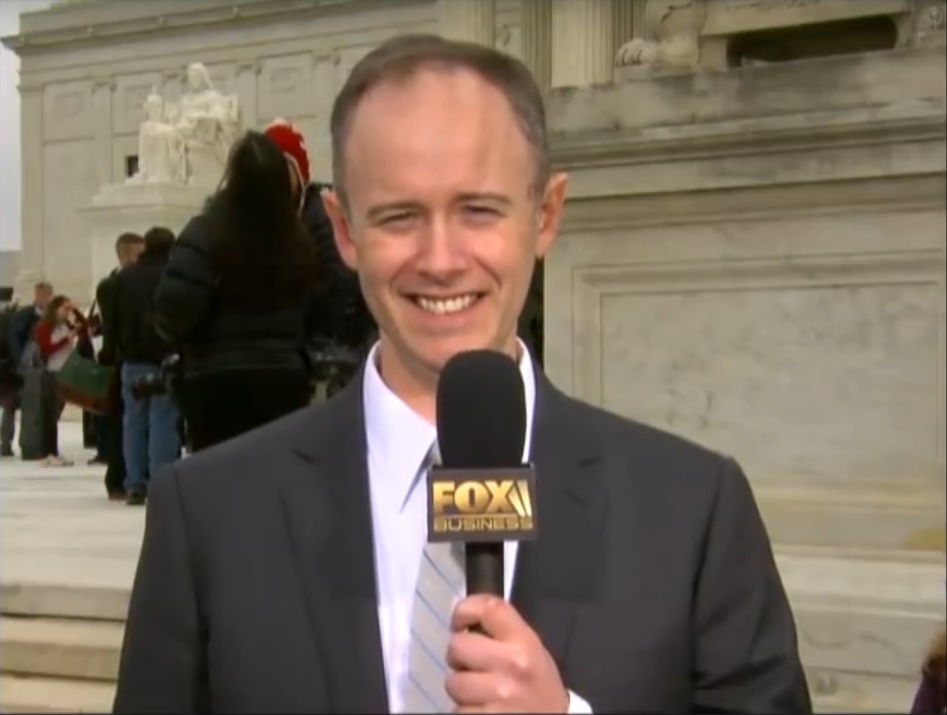
The landmark Janus SCOTUS case, argued by Foundation Legal Director William Messenger, profoundly strengthened public employees’ First Amendment rights. But it appears the impact of the case is just beginning.
SAN FRANCISCO, CA – National Right to Work Foundation staff attorneys have been trailblazers in scoring legal protections for independent-minded workers who oppose joining or paying dues to a union on religious grounds. Over the years, Foundation attorneys have helped workers from a variety of faiths secure religious accommodations to forced-dues payment.
Earlier this year, Foundation attorneys achieved a breakthrough in this area of the law. In their case for Thomas Ross, a San Francisco-based employee of security company Allied Universal who sought a faith-based exemption from paying dues to a Service Employees International Union (SEIU) affiliate, Foundation attorneys won an unprecedented settlement. It not only frees Ross from any requirement to pay dues or fees to the union, but also frees him from any obligation to pay an amount equivalent to dues to a charity, which has been the dominant form of accommodation in the past for religious objectors.
Union Demanded Religious Worker Violate Faith, Breaking Federal Laws
Ross is a Christian who opposes union affiliation on religious grounds. Ross informed both the SEIU union and Allied Universal when he was hired in 2020 that his religious beliefs disallowed union membership and that he needed an accommodation. In addition to ignoring that request, in 2022 his employer told him that union membership was mandatory and “demanded that [he] sign a payroll deduction, join the [union], and pay union dues,” according to filings in his case.
Ross fought back by filing federal discrimination charges against the union and Allied Universal at the Equal Employment Opportunity Commission (EEOC), as well as by filing unfair labor practice charges at the National Labor Relations Board (NLRB). Title VII of the Civil Rights Act of 1964 requires unions and employers to accommodate religious objections to union payments. Additionally, the National Labor Relations Act (NLRA) prohibits mandatory union membership, even in non-Right to Work states like California.
Ross’ Foundation-backed legal battle against SEIU and Allied Universal continued into 2023, when Foundation attorneys appealed a specious NLRB decision which attempted to dispose of the issue as a mere administrative error on the employer’s part. Finally, in 2024, the SEIU and Allied Universal backed down and settled the case, conceding a full religious accommodation to Ross.
The terms of the settlement state that Allied Universal and SEIU “will not enforce the collective bargaining agreement’s union membership and fee provisions against Ross . . . [and] will not force Ross to pay any union fees while he is employed by Allied Universal.”
In an article in the Baylor Law Review following the settlement, Foundation attorneys Bruce Cameron and Blaine Hutchison argue that, in light of the Foundation’s landmark 2018 Supreme Court victory in Janus v. AFSCME, religious accommodations like Ross’ should be the standard for future cases involving religious objectors to union membership and dues payment. In Janus, the Supreme Court ruled that the First Amendment prohibits forcing public sector employees to join or pay dues to a union as a condition of employment.
Janus Shows Right Way to Accommodate Religious Employees
The article points out that the Supreme Court in Janus knocked down the so-called “free-rider” and “labor-peace” arguments that union lawyers typically use to justify forcing religious objectors to pay dues money to a charity. In Janus, the article explains, “The Court showed that nonmembers need not pay fees to compensate the union or to prevent labor unrest.”
The payment-to-charity scheme simply “punishes individuals for following their faith,” the article says. “Janus shows the proper solution: religious objectors need not pay any forced union fees.”
“Mr. Ross fought bravely with help from Foundation attorneys, and has opened up a new horizon for religious employees across the country,” commented National Right to Work Foundation President Mark Mix. “The idea that union officials can force religious objectors to make any kind of payment clearly runs counter to America’s core ideals of freedom of religion and freedom of association, and it’s high time that courts recognize more robust protections for those rights.
“However, it’s important to recognize that, regardless of whether an employee’s objection to union affiliation is religious in nature or not, no American worker should ever be forced to subsidize union activities they oppose,” Mix added.
Nurses at Ascension Genesys Hospital Slam Teamsters Local 332 Officials with Federal Charges for Illegal Dues Demands
In months following repeal of Michigan Right to Work law, workers across the state are standing up to oppose forced dues
Flint, MI (July 19, 2024) – Two nurses at Ascension Genesys Hospital in Grand Blanc Township, MI, have hit the Teamsters Local 332 union with federal unfair labor practice charges, maintaining that union bosses threatened to fire them and other nurses if they didn’t sign forms authorizing union officials to deduct dues straight out of their paychecks. The nurses, Madrina Wells and Lynette Doyle, filed their unfair labor practice charges at the National Labor Relations Board (NLRB) with free legal aid from National Right to Work Foundation staff attorneys.
The charges from Wells and Doyle are the most recent in a flurry of Foundation-backed cases for Michigan workers who are seeking to challenge or escape union bosses’ coercive power in the wake of Michigan’s repeal of its Right to Work law. Since the repeal became effective this February, union bosses have had the legal power to require workers to pay union dues or fees as a condition of employment. In states with Right to Work protections, union membership and all union financial support are strictly voluntary.
The NLRB is the agency responsible for enforcing federal labor law in the private sector. Even in states like Michigan that lack Right to Work protections, and allow for forced-fee requirements, longstanding federal law prohibits union bosses from requiring workers to authorize the direct deduction of union dues from their paychecks. The Foundation-won Communications Workers of America v. Beck Supreme Court decision additionally forbids union bosses in non-Right to Work states from forcing workers to pay money for any activities beyond the union’s bargaining functions, such as political expenditures.
NLRB agents will now investigate Wells’ and Doyle’s charges. According to both, Teamsters officials threatened them “and similarly situated employees with termination of their employment if they refused to complete and submit a dues check-off authorization by July 12th.”
“I already had issues with Teamsters bosses illegally demanding money from me when Right to Work was in force,” commented Mardrina Wells. “Back then, I at least knew that I was defending my right to pay nothing at all to Teamsters bosses I disapprove of. It’s ridiculous that they now have the power to force me to pay them, but I’ll defend what rights I do have.”
Post-Right to Work, Michigan Workers Battle New Union Boss Privileges
In a party-line 2023 vote, Michigan legislators repealed Right to Work at the behest of union special interests, ending workers’ ability to decide for themselves whether or not union officials deserve their dues money. The imposition of union bosses’ power to force employees to “pay up or be fired” came despite polling showing Michiganders, including those in union households, overwhelmingly opposed the elimination of workers’ Right to Work protections.
After the repeal became effective this February, workers from across the Great Lakes State sought help from National Right to Work Foundation staff attorneys in escaping union bosses’ forced-dues demands. Foundation-backed workers from MV Transportation in Ypsilanti and Brown Motors in Petoskey just scored victories earlier this week, as NLRB officials certified their majority votes to strip Amalgamated Transit Union and Teamsters union officials respectively of their power to demand dues as a condition of employment. Such a vote, known as a “deauthorization election,” is triggered when 30% of employees in a work unit express support for one on a petition.
Foundation attorneys are also aiding Grand Rapids-based security guard James Reamsma and his coworkers posted at government buildings across Western Michigan with a deauthorization vote against United Government Security Officers of America (UGSOA) union officials. Reamsma expressed that, in the wake of the Right to Work repeal, “UGSOA union officials have threatened to have everyone who does not join the union fired.”
“Michigan union bosses prioritize seizing dues over respecting workers’ individual rights, and have only been emboldened by the legislature’s partisan repeal of Right to Work,” observed National Right to Work Foundation President Mark Mix. “But Michigan workers have been increasingly standing up to defend what rights they still have against union coercion, and it’s important that every worker learn those rights as union officials continue to exploit the new forced-unionism environment.”
Detroit School Bus Driver Slams Teamsters Union With Federal Charges for Seizing Full Dues Illegally From Paycheck
Teamsters officials ignored First Student driver’s request to opt-out of funding union politics, similar cases increase after MI Right to Work repeal
Detroit, MI (June 14, 2024) – Frances Dennis, a Troy-based school bus driver for First Student, Inc., has just filed federal charges against Teamsters Local 299 union officials for seizing full union dues payments from her wages even though she resigned her membership in the union. Dennis filed the charges at National Labor Relations Board (NLRB) Region 7 in Detroit with free legal assistance from National Right to Work Foundation attorneys.
Dennis is seeking to defend her rights under the Foundation-won Communications Workers of America v. Beck Supreme Court decision, which forbids union officials from forcing employees who have abstained from union membership into paying dues or fees for anything beyond the union’s core bargaining functions. Union political expenditures, which often make up part of full membership dues, are among those expenses that Beck prevents union officials from forcing nonmember workers into funding. Nonmember workers who exercise their Beck rights are also entitled to an independent audit of the union’s finances and a breakdown of how union officials spend forced contributions.
In non-Right to Work states, including Michigan where Right to Work was repealed earlier this year, union officials’ privilege to force workers to pay dues or fees as a condition of employment is limited by the Beck ruling. Under federal law and U.S. Supreme Court precedents like General Motors v. NLRB, union officials also can’t compel workers to maintain formal union membership as a condition of getting or keeping a job.
In Right to Work states, in contrast, both union membership and all union financial support are strictly the choice of each individual worker.
Teamsters Continue to Take Money for Politics Unlawfully From School Bus Driver
According to the charges, in December 2023 Dennis sent a letter to Teamsters union officials exercising both her right to resign union membership and her right to cut off union dues deductions from her paycheck. At the time, Michigan’s Right to Work law was still on the books, meaning Teamsters union officials should have honored both of Dennis’ requests. However, her charges state that Teamsters agents “did not respond to this letter and continued to deduct dues from her wages.”
Knowing that the Michigan Legislature had set the Right to Work repeal for February 2024, Dennis sent another letter in January 2024 “objecting to the demand of any dues or fees without the protections guaranteed by Communications Workers of America v. Beck.” She also objected to union officials taking dues from her paycheck. Even where forced-dues arrangements are legal, federal law prohibits union bosses from requiring the payment of such dues through direct payroll deduction.
Dennis’ charges report that Teamsters union bosses have not responded to her letter, have not provided her with any of her Beck rights, and continue to seize full union dues out of her wages. Even worse, a union recording secretary told Dennis via text that “she was required…to complete and submit a dues checkoff form” authorizing direct dues deduction as a condition of keeping her job.
After MI Right to Work Repeal, Cases Challenging Forced Dues Pile Up
Dennis’ case is just the latest in a string filed by Foundation attorneys for Michigan workers seeking to challenge union bosses’ forced-dues arrangements in the wake of Michigan’s Right to Work repeal. Earlier this month, Sault Ste. Marie Meijer employee Joseph Arnold hit his employer with federal charges for compelling him to sign a United Food and Commercial Workers (UFCW) union membership form. In Milford, Kroger employee Roger Cornett levied federal charges against both a UFCW local and the store for jointly enforcing a scheme that forces employees to contribute to the union’s Political Action Committee (PAC) to stay employed. James Reamsma, a Grand Rapids-area security guard, is defending a “deauthorization vote” by security guards across Western Michigan to end the forced-dues power of a United Government Security Officers of America (UGSOA) union.
“The Michigan Legislature’s cynical and partisan repeal of Right to Work was a blatant power grab for union bosses across the state at the expense of workers’ right to freely decide whether union bosses have earned their financial support,” commented National Right to Work Foundation President Mark Mix. “As Ms. Dennis’ case and an increasing number of cases from around the state show, union bosses often seek to circumvent or flat out ignore workers’ free association rights, which is why those freedoms deserve stronger and not weaker protections.”
“Perhaps more unsettling is the fact that some of these cases involve union officials illegally funneling worker money into union politics – the same political machine that led to the demise of these workers’ free choice under Right to Work,” Mix added.
MI Kroger Employee Hits UFCW Union, Kroger with Federal Charges for Illegally Requiring Dues Payments, PAC Contributions
Worker contends that union lacks valid contract and thus can’t demand any money from workers, despite recent MI Right to Work repeal
Detroit, MI (April 16, 2024) – An employee of Kroger’s supermarket in the Prospect Hill Shopping Center in Milford, MI, has just hit United Food and Commercial Workers (UFCW) Local 876 union officials and Kroger management with federal charges. The employee, Roger Cornett, charges that Kroger declared it would fire him unless he signed a union membership form, and authorized union dues deductions and contributions to the union’s Political Action Committee (PAC) from his paycheck. Cornett notably points out that UFCW lacks a legal basis to demand money from any worker.
Cornett’s charges are now pending with the National Labor Relations Board (NLRB), the federal agency responsible for governing private sector labor relations. Cornett’s charge recounts that, despite his requesting a copy, neither union officials nor Kroger produced a copy of a union contract containing a so-called “union security clause,” more accurately called a “forced-dues clause.”
Under longstanding federal law, even in a state without Right to Work protections, union officials can only enforce a contract requiring employees to pay dues as a condition of employment if the contract contains a forced-dues clause. To be valid, federal law requires that such clauses have a 30-day grace period before union bosses’ “pay-up-or-be-fired” demands can be enforced.
Since Kroger and UFCW cannot produce a contract that contains such a clause, union demands for dues money should be illegal. This is true notwithstanding Michigan’s repeal of its Right to Work law, a provision that made union membership and union financial support strictly voluntary.
Under federal law, no employee can be required to authorize payroll deductions of union dues or to pay money to a union PAC used to fund union boss-backed political candidates. Additionally, the National Labor Relations Act (NLRA) and U.S. Supreme Court cases like General Motors v. NLRB safeguard the right of workers to abstain from formal union membership, while the Foundation-won CWA v. Beck Supreme Court decision forbids union officials from forcing nonmember workers to pay money for any expenses outside the union’s core bargaining functions, which includes political expenses.
UFCW Union Unleashed Pressure Campaign on Nonmember Workers After Right to Work Repeal
Michigan’s Right to Work law, which prevented union officials from having workers fired for refusing to join or pay dues to a union, was officially repealed on February 13, 2024. According to Cornett’s charges, in February he asked if there was an updated version of the union contract that would require him and other nonmembers to pay dues as a condition of employment in light of the repeal. Neither UFCW nor Kroger provided Cornett with such a contract in response to his request.
Union officials threatened Cornett and other workers that it was a condition of employment for them to become union members, authorize direct deductions of union dues from their pay, and “sign all or part of the three-part Union membership application and checkoff form,” the latter of which included a page authorizing deductions for the union’s PAC.
Worker Faced Termination After Being Threatened to Contribute to Union PAC
Cornett’s charges state that he received a letter from management on February 28 “informing him that…Kroger terminated [him] for failure to become a member of the Union.” This termination took place within the statutorily-required 30-day grace period before forced-dues contracts can be enforced against union nonmembers – meaning the firing would be illegal even if the union had a valid contract that allowed it to require dues payments as a condition of employment.
Cornett says in his charges that he signed the three-part form in order to keep his job. His charges state that the union’s threats and pressuring of employees “violate the [NLRA], and threaten, restrain, and discriminate against Charging Party and similarly situated employees in the exercise of their Section 7 right to refrain from [union activity].”
“Here we have yet another example of union bosses browbeating the very Michigan workers they claim to ‘represent’ as soon as Right to Work protections are gone,” commented National Right to Work Foundation President Mark Mix. “Security guards at government buildings across Western Michigan are already banding together to oppose forced-dues demands from UGSOA union officials, and we now see UFCW union officials trying to squeeze dues money out of Kroger employees using coercive tactics that are forbidden even in a non-Right to Work environment.
“Especially concerning is Cornett’s charge that he was forced to sign his money away for the union’s PAC, a demand that blatantly violates several federal laws while paying no regard for workers’ free choice,” continued Mix. “Foundation staff attorneys will get to the bottom of this and defend Mr. Cornett’s rights.”
Federal Charge: East Bay-Area Construction Materials Worker Illegally Fired for Refusing to Join Union
NLRB investigating IUOE union bosses for retaliatory termination and seizing dues from employee’s paycheck in violation of longstanding law
Pleasanton, CA (October 17, 2023) – Alexandra Le, an employee of Pleasanton-based materials testing company Construction Testing Services (CTS), has hit International Union of Operating Engineers (IUOE) officials and CTS with federal charges. The charges state IUOE bosses illegally demanded she join the union as a condition of keeping her job and instigated her firing by CTS when she refused to join. Additionally, Le’s charges maintain that company and union officials violated the law by deducting union dues directly from her paycheck without her permission.
Le, a firestop inspector, filed the charges at National Labor Relations Board (NLRB) Region 32 in Oakland, CA, with free legal aid from the National Right to Work Legal Defense Foundation. She notes in her charges that IUOE officials not only failed to inform her of her right to abstain from union membership, but also never notified her of her right to pay a reduced amount of union dues as a nonmember.
Because California lacks Right to Work protections for its private sector workers, Le and her coworkers can be forced to pay some dues to the union as a condition of keeping their jobs, even if they’ve abstained from formal union membership. However, as per the Foundation-won CWA v. Beck Supreme Court decision, even in non-Right to Work states union officials can’t force nonmember employees to pay for union expenses beyond what the union claims goes to bargaining, such as union politics. Other Supreme Court precedents and federal labor laws protect workers’ right to refrain from formal union membership and require union bosses to seek workers’ express consent before deducting dues directly from their paychecks.
In Right to Work states, union membership and all union financial support are fully voluntary.
“It’s outrageous that IUOE union officials believe they can get me fired simply because I don’t agree with their organization and don’t want to support or affiliate with them,” Le said. “IUOE union officials have been far more concerned with consolidating power in the workplace and collecting dues than caring about me and my coworkers, and I hope the NLRB will hold them responsible for their illegal actions.”
Worker Demands NLRB Step in to Reverse Union-Instigated Firing, Illegal Demands
Le’s charge against the IUOE union states that, after she refused to affiliate with the union, IUOE bosses “caused Charging Party to be removed from the work schedule by her Employer as of October 2nd.” The NLRB v. General Motors Corp. U.S. Supreme Court decision protects the right of workers to refuse formal union membership, even in a non-Right to Work state.
As a remedy, the charge asks the NLRB Regional Director in Oakland to “invoke its authority under Section 10(j)” of the National Labor Relations Act (NLRA), which empowers the Board to seek an injunction from a federal court to stop IUOE and CTS management from committing the unfair labor practices.
“Le’s charges show that IUOE union officials, in their apparent greed for forced dues, have ignored numerous longstanding legal protections for workers opposed to union affiliation,” commented National Right to Work Foundation President Mark Mix. “While the union’s anti-worker actions would be wildly unlawful in any state in the country, they reveal the importance of state Right to Work protections: No worker should be forced to give any amount of their hard-earned paycheck to union officials who threaten and misinform the employees they claim to ‘represent,’ or simply haven’t earned workers’ support.”





