
Following Foundation Legal Arguments, Trump Fires Biden-Appointed NLRB Bureaucrats
The following article is from the National Right to Work Legal Defense Foundation’s bi-monthly Foundation Action Newsletter, March/April 2025 edition. To view other editions of Foundation Action or to sign up for a free subscription, click here.
Foundation constitutional lawsuit first to argue presidents can remove Board members

President Trump appears intent on ending union bosses’ reign at the NLRB. One of his first actions was to axe Jennifer Abruzzo and Gwynne Wilcox, both ex-union bosses who constantly sought to beef up their cronies’ powers over employees.
WASHINGTON, DC – Joe Biden, a career lackey of Big Labor union bosses, spared no moment of his administration ensuring that his cronies at the top of America’s largest unions gained power at the expense of independent-minded workers.
Only minutes after being inaugurated in 2021, he began setting the stage for a Big Labor takeover of the federal government: He immediately fired Peter Robb, the general counsel for the National Labor Relations Board (NLRB) during Donald Trump’s first term. With Robb gone, Biden’s acting general counsel quickly quashed multiple National Right to Work Foundation-backed cases that would have otherwise received full NLRB consideration. When Biden filled the general counsel position, he picked Jennifer Abruzzo — a radical ex-Communications Workers of America (CWA) lawyer who was confirmed only because then-Vice President Kamala Harris broke a party-line deadlock in the Senate.
And Biden wasn’t finished. He filled two vacancies on the Board itself with Gwynne Wilcox and David Prouty — who had both worked for the radical Service Employees International Union (SEIU).
Biden’s crusade against worker freedom arguably culminated in the disastrous Cemex Construction Materials Pacific NLRB decision, which gave union officials the power to seize monopoly bargaining power in a workplace without winning a secret-ballot election among employees. The Biden Board also repealed key Foundation-backed reforms that (among other things) stopped union bosses from using so-called “blocking charges” alleging employer malfeasance to stop workers from voting in union removal elections they had requested.
Sudden End of Radical Biden Majority Creates Opportunities for Foundation Litigation
But, just a week after re-ascending to the White House, President Trump took immediate action to undo the damage to worker freedom caused by the historically-radical Biden NLRB. In late January, Trump took the crucial step of giving both Abruzzo and Wilcox the boot. That, combined with the fact that the Senate did not confirm Biden NLRB Chairman Lauren McFerran for another term, means Trump has the opportunity to appoint a pro-freedom majority to the Board before it considers any other cases.
“We hope that this signals the opening of a new chapter at the NLRB, where the agency will fulfill its statutory mandate to protect workers’ right to associate with unions if they choose, but will equally defend their right to refrain from all union activity,” commented National Right to Work Foundation President Mark Mix.
Trump Admin, Others Follow Foundation Lead in Arguing for Structural Board Change
By removing Wilcox, the Trump Administration is relying on arguments made in the Foundation’s groundbreaking cases challenging the structure of the NLRB. Foundation-backed Starbucks employees Ariana Cortes and Logan Karam filed the first-ever federal suit arguing that, as per the Constitution’s separation of powers principles, the president should be able to remove them at-will.
Cortes and Karam’s suit is currently pending at the D.C. Circuit Court of Appeals. Big Labor backers argue that board members like Wilcox have statutory protections that make them removable only in certain circumstances. But Board member protections are constitutionally questionable.
“President Trump made an excellent and decisive move to protect the freedom of American workers. Abruzzo’s and Wilcox’s track records were devastating for independent-minded employees,” observed Mix.
“We’re also encouraged by the Trump Administration’s apparent reliance on National Right to Work Foundation-backed workers’ cases to affirm the idea that NLRB members — like Wilcox — should be removable by the president at will. “The Foundation still has considerable legal work to do to reverse the damage done by the Biden NLRB, and removing a union partisan like Wilcox from the Board is just the first step towards restoring the rights and freedoms of workers opposed to union affiliation,” added Mix.
NY Starbucks Baristas File Amicus Brief Opposing Reinstatement of Biden-Appointed NLRB Member Removed by President Trump
Starbucks employees have pending federal lawsuit challenging NLRB structure as unconstitutional, argue they could be harmed if member’s removal is blocked
Washington, DC (March 11, 2025) – The National Right to Work Foundation has just filed an amicus brief at the District of Columbia Circuit Court of Appeals for two upstate New York Starbucks baristas in a federal case that could determine the constitutionality of the structure of the National Labor Relations Board (NLRB).
The case, Wilcox v. Trump, concerns whether President Trump properly exercised his executive authority when he removed the Biden-appointed former chair of the NLRB, Gwynne Wilcox. Trump Administration lawyers argue, as baristas Ariana Cortes and Logan Karam have in their own pending lawsuit at the D.C. Circuit Court of Appeals, that the National Labor Relations Act (NLRA, the federal law authorizing the NLRB) violates the Constitution because it prevents the president from removing board members.
Cortes and Karam now join the Administration’s legal team in asking the D.C. Circuit Court to stay a lower court’s ruling that Wilcox be reinstated. Their brief notes that they, and others, could be directly harmed if Wilcox participates in an NLRB decision without being properly accountable to the President.
Cortes and Karam work at two separate Starbucks locations in the Buffalo, NY area. They both submitted petitions on behalf of their coworkers in 2023 with sufficient support to prompt the NLRB to hold votes to “decertify,” or remove, the Starbucks Workers United (SBWU) union from each of their stores. However, NLRB officials indefinitely delayed those union decertification elections on the basis of unproven charges leveled at the Starbucks Corporation by SBWU union officials. This led Cortes and Karam to file their own federal lawsuit – the first in the nation challenging the agency’s structure as unconstitutional as a whole.
The same issue regarding the NLRB’s constitutionality was fast-tracked in federal courts following President Trump’s firing of Biden-appointed NLRB Board Member Gwynne Wilcox, which she challenged as a violation of the NLRA’s board member removal protections. Trump Administration lawyers countered with arguments parallel to those in Cortes and Karam’s lawsuit, contending that NLRB members’ removal protections permit them to exercise substantial executive authority while being immune to presidential removal for the duration of their terms, something forbidden by U.S. Supreme Court decisions like Seila Law v. CFPB and Collins v. Yellen.
NLRB’s Hyper-Partisan Nature and Unique Powers Make Removal Protections Inappropriate
Cortes and Karam’s brief focuses on how the Board’s powers to enforce federal labor law, lack of technical expertise, and the partisan nature of its membership place it outside the Supreme Court’s concept of a federal agency where removal protections might be appropriate. It also argues that reinstating Wilcox would cause chaos because it would let her participate in deciding cases before the NLRB while her continued presence on the Board is still the subject of litigation.
“Cortes and Karam have a vital interest in the outcome of this case, and not only because it concerns the constitutionality of [NLRB member removal protections],” the amicus brief says. “Cortes and Karam do not want an individual the President properly removed from the Board because of her unsound rulings—Gwynne Wilcox—to decide their pending NLRB cases.”
“Ms. Cortes and Mr. Karam’s amicus brief points out what many workers who have litigated cases before the NLRB have learned the hard way – that the NLRB is a hyper-partisan agency often beholden to the interests of union bosses, yet masquerades as an impartial arbiter of workers’ rights,” commented National Right to Work Legal Defense Foundation President Mark Mix. “While the issue of the NLRB’s constitutionality is likely to ultimately end up before the Supreme Court, Ms. Cortes and Mr. Karam speak for many independent-minded workers around the country by urging the D.C. Circuit Court to bar Gwynne Wilcox from participating in Board decisions until this is fully sorted out.”
DC-Area Transdev Driver Takes Case Regarding Union-Instigated Assault to Federal Appeals Court
Biden Labor Board claims ATU union did not violate law even after worker experienced slap and termination attempt from union officials
Washington, DC (July 1, 2024) – Thomas McLamb, a Hyattsville, Maryland-based driver for transportation company Transdev, is appealing his National Labor Relations Board (NLRB) case charging Amalgamated Transit Union (ATU) officials with assaulting him to the D.C. Circuit Court of Appeals. McLamb, whose case concerns retaliatory actions taken against him for being a union dissident, is receiving free legal aid from the National Right to Work Foundation.
McLamb filed charges with the NLRB in November 2021 and January 2022 against ATU for the retaliatory behavior, which in addition to being slapped by an ATU union steward also included a union-instigated termination attempt. McLamb argues that engaging in legally-protected action opposing the union hierarchy – including petitioning for an NLRB-supervised vote to remove the union – made him a target of union officials and adherents.
NLRB Region 5 in Baltimore issued a Complaint and Notice of Hearing on May 11, 2021, stating that the slap and an attempt by an ATU shop steward to get McLamb fired both constituted violations of federal labor law. An NLRB Administrative Law Judge (ALJ) issued a decision declaring that the firing attempt was illegal, but the Biden NLRB reversed, claiming that the union did not violate the law at all.
McLamb is now asking the D.C. Circuit Court of Appeals to review and overturn the decision of the Biden NLRB.
ATU Union President Ordered Adherents to “Slap” Dissenters
In a statement filed in November 2021, McLamb said that the ATU Local 689 president, Raymond Jackson, told other union officers to “slap” employees who were opposing his agenda. McLamb later reported in a federal charge that he had been physically assaulted by ATU shop steward Tiyaka Boone. Both incidents occurred while McLamb was campaigning against the incumbent officers to serve on Local 689’s board.
McLamb reported in another federal charge that, shortly after this incident, ATU official Alma Williams requested that Transdev management fire him over his criticisms of the union steward that assaulted him.
Biden NLRB Decision Claims Physical Assault Was Personal
The Biden NLRB’s decision reversing the ALJ decision against the union claims that Boone’s assault on McLamb was motivated by “personal reasons” and not McLamb’s legally-protected opposition to the union’s chiefs. However, both McLamb’s Foundation attorneys and even the NLRB General Counsel showed the ALJ during trial a video of Jackson, the ATU president at the time, telling employees to slap other workers who spoke out against him.
The NLRB decision also defends Alma Williams’ asking the employer to fire McLamb, claiming that she was merely asking for Boone and McLamb to be disciplined “equally” for their conduct during and leading up to the assault.
“Workers should not have to face violence or retribution in exchange for criticizing or challenging union leadership, and the fact that Mr. McLamb has had to fight for years to defend his right to be free of such retaliation is outrageous,” commented National Right to Work Foundation President Mark Mix. “We believe that this decision by the Biden NLRB is wrong, and is yet another example of how the current administration defends scofflaw union bosses that steamroll employee rights in pursuit of greater power.
“Even worse is the fact that McLamb works in the non-Right to Work state of Maryland, where union officials are legally empowered to require dues payments as a condition of keeping one’s job,” Mix added. “No worker should be forced to fund a union hierarchy they disapprove of, let alone one that is actively fighting the worker in court.”
Foundation Slams Biden Labor Board’s Biased Ruling in Federal Appeals Court
The following article is from the National Right to Work Legal Defense Foundation’s bi-monthly Foundation Action Newsletter, May/June 2023 edition. To view other editions of Foundation Action or to sign up for a free subscription, click here.
Brief contends NLRB distorted precedent to trap workers in union they oppose
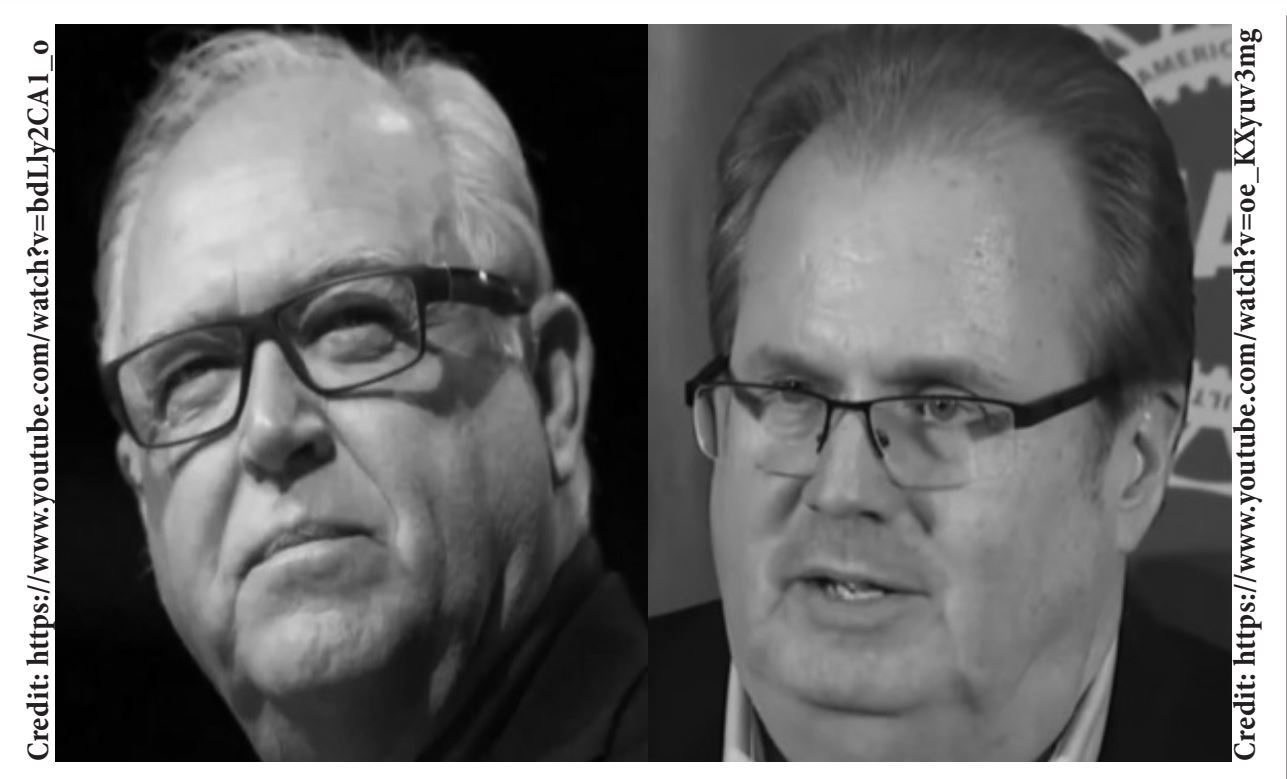
A majority of J.G. Kern employees petitioned to oust the UAW, which has seen two of its former presidents (Gary Jones, right, and Dennis Williams, left) go to jail for corruption. But a biased NLRB ruling trapped the workers in UAW ranks anyway.
WASHINGTON, DC – Foundation staff attorneys recently filed an amicus brief with the D.C. Circuit Court of Appeals in a case challenging a National Labor Relations Board (NLRB) decision reversing workers’ attempt to remove union “representation” they oppose.
In the case, J.G. Kern employees, frustrated with the United Auto Workers (UAW) Local 228 union, decided to petition to decertify, or formally remove, the union from their workplace. The workers presented this majority petition to their employer, leading to the company removing its recognition of the union.
The petition contained overwhelming support from workers in favor of removing the union. Yet, after the company withdrew recognition from the union, UAW officials ran to the Biden Labor Board in an attempt to remain in power. The Biden-appointed NLRB majority sided with the union officials by re-imposing the unpopular union over the workers’ objections.
With the case now in the federal court of appeals, the Foundation filed an amicus brief arguing the NLRB’s April 2022 ruling ignores precedent and misapplies longstanding law in siding with union officials.
Decertification Rules Already Rigged Against Workers Opposed to Union Affiliation
As the brief points out, workers looking to file a petition to remove a union they oppose already face numerous hurdles due to NLRB rules, most of which are contained nowhere in the federal statute the NLRB is charged with enforcing.
For example, a petition must be gathered outside of work hours, and outside of work-related areas. Also, unless employees use certain Board-specified language in their petition, the petition is invalid. Furthermore, employees cannot ask their employer for further information regarding the decertification process or the petition will be invalid.
The Foundation’s brief observes how workers must operate “in the dark, without help from their employer, and even if they do everything right, their efforts might come to naught through no fault of their own.” It also shows how the Biden Board has made it more difficult for individual workers to express their right to decertify unwanted, unpopular unions.
Biden NLRB Aims to Force Union on Workers Who Overwhelmingly Object
Under the Board’s “certification bar” doctrine, a union that wins a secret ballot election cannot be challenged for one year after its victory is certified by the NLRB. In this case, the UAW’s certification bar ended on October 3, 2019. In November 2019, J.G. Kern employees delivered a majority-backed petition to their employer.
The Biden Board claimed, however, that because J.G. Kern did not bargain in good faith during a three-month period at the beginning of the certification year, the employees’ majority petition was invalid. According to the Biden Board, the employer’s alleged unfair labor practices prospectively “extended” the certification year beyond its normal 12-month period.
The brief highlights the disingenuousness of the Board, pointing out that “the employees would have to divine the future to know they were collecting a petition during the ‘extended certification year.’” The Foundation urges the D.C. Circuit to command the Board to follow precedent that requires the Board to determine whether there was a “nexus” between the employer’s unfair labor practices and the decertification petition.
NLRB’s Power Grab Takes Away Workers’ Rights
The Foundation’s brief emphasizes how the Board’s decision can abolish employees’ rights guaranteed by the National Labor Relations Act. An example of that is the J.G. Kern workers’ petition, where it was only after the petition was gathered that the Board extended the union’s certification bar period.
The brief notes that usually “an employee’s decertification petition is presumptively valid unless there is a causal nexus between the unfair labor practice and the petition.” However, this is not the case under the J.G. Kern ruling.
Should the NLRB’s ruling be upheld, it “will further incentivize incumbent unions to file unfair labor practice charges to chill employees’ Section 7 ability to collect petitions,” the brief concludes.
“The NLRB’s blatant disregard for the rights of workers who don’t want anything to do with coercive unionism is on full display in this case,” commented Mark Mix, president of the National Right to Work Foundation. “The arbitrary cherry-picking of legal precedents to fit the Board’s agenda is outrageous, while expected, given the Biden Administration’s all-out effort to expand Big Labor’s coercive ranks.
Foundation Winning Protections Against Forced Unionism at Trump NLRB
The following article is from the National Right to Work Legal Defense Foundation’s bi-monthly Foundation Action Newsletter, September/October 2019 edition. To view other editions or to sign up for a free subscription, click here.
Series of victories adds protections against illegal forced dues, being trapped in union ranks
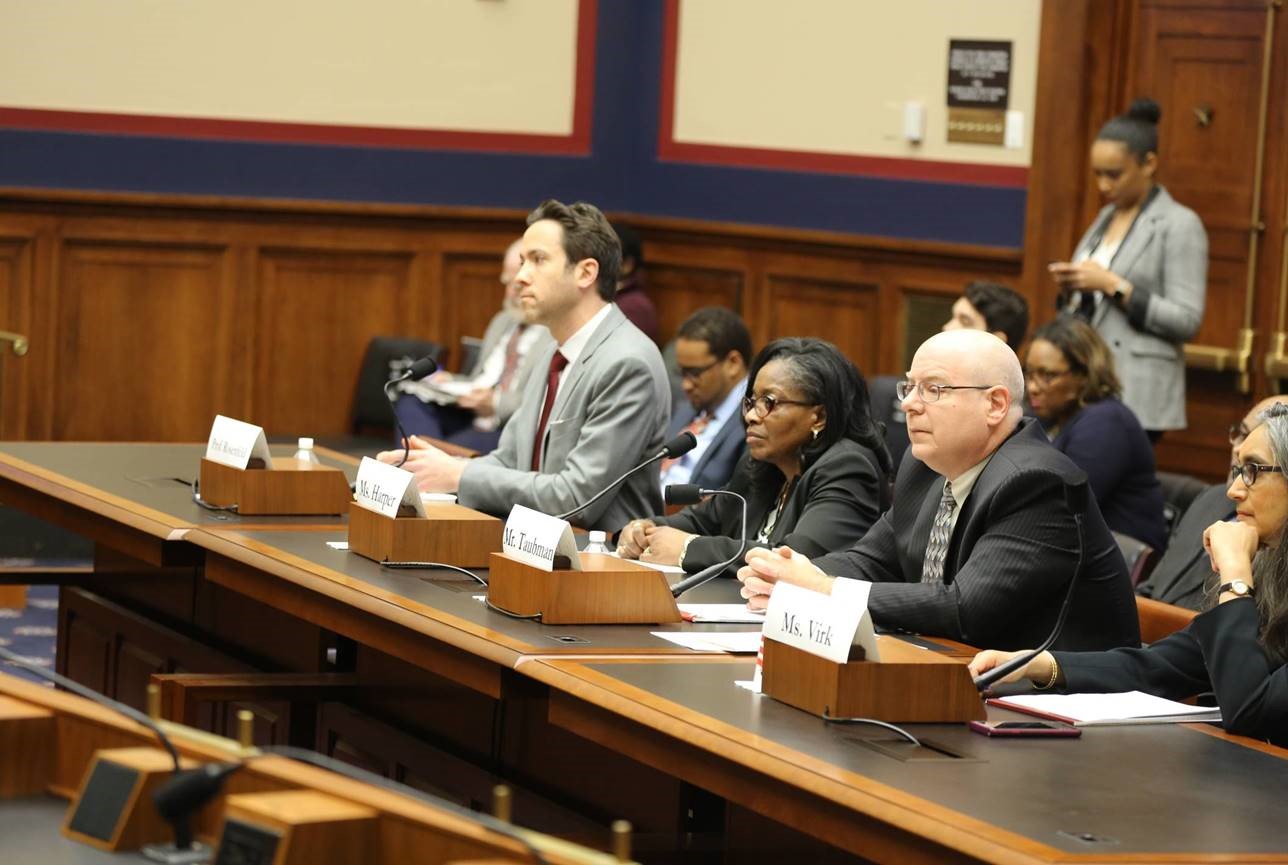
Staff attorney Glenn Taubman testified before Congress in July that existing NLRB rules wrongly favor union bosses over workers.
WASHINGTON, D.C. – In a series of recent victories, the National Labor Relations Board (NLRB) ruled in favor of workers challenging coercive union official practices, with free legal aid provided by the National Right to Work Foundation. The rulings are a stark departure from the Obama NLRB, which regularly stymied the rights of independent-minded employees opposed to associating with union bosses.
Foundation Wins Appeals in Dues Checkoff Cases
In separate cases brought by Foundation staff attorneys for Kacy Warner, a hospital worker, and Shelby Krocker, a Kroger grocery employee, the NLRB General Counsel ruled for the workers and ordered Regional Directors to prosecute union officials’ actions related to language in union dues checkoff forms.
The General Counsel’s decision to sustain Warner’s appeal concerning the checkoff authorized even more additions to the charges, saying the National Nurses Organizing Committee (NNOC) union violated the NLRA by “maintaining confusing and ambiguous dual-purpose authorization forms that unlawfully restrained employees in the exercise of their Section 7 rights.”
The General Counsel noted that the union’s forms failed to tell workers they can revoke authorizations for dues deductions after the union’s contract expires, failed to give workers adequate time to revoke authorizations, unlawfully required workers to use certified mail to send revocation requests, and failed to give “any indication to employees that payroll deduction authorization is voluntary.”
This came just a week after the General Counsel sustained another Foundation-led appeal for Krocker, who charged United Food and Commercial Workers (UFCW) union officials with illegally forcing her to sign a dues checkoff authorization. In both cases, the NLRB General Counsel authorized even more charges against union officials for misleading and confusing language regarding union dues deductions.
NLRB Regions Instructed to Prosecute Beck Violations
Also in July, the NLRB Division of Advice and General Counsel instructed regional directors to issue complaints against unions when union officials fail to inform employees of the amount of reduced union fees they can pay by objecting under the Communication Workers of America v. Beck U.S. Supreme Court decision.
The memos instruct NLRB Regional Directors to more stringently enforce workers’ Beck rights which protect workers from being forced to fund nonchargeable union activities such as union political activities. A memo issued to the Director of NLRB Region 32 read in part that “it is difficult for an employee to make an informed decision about whether to become a Beck objector without knowing the amount of savings that would result from the decision.”
“The Foundation is proud to have represented the California employee whose charge against the UFCW resulted in this Advice Memo, as well as necessitating this heightened disclosure standard by winning the Beck decision at the Supreme Court and the Penrod decision at the D.C. Circuit Court of Appeals,” National Right to Work Foundation Vice President and Legal Director Ray LaJeunesse said. Foundation staff attorneys are currently litigating several additional cases to secure and expand workers’ protections under Beck.
Ruling Aids Workers Trapped in Union Ranks They Oppose
In another Foundation victory for independent-minded workers in July, the NLRB issued a decision that limits union officials’ ability to game the NLRB system to trap workers in monopoly union ranks. The ruling allows employers to withdraw recognition from a union when a majority of its workers sign statements opposing unionization.
Foundation staff attorneys represented two workers, Brenda Lynch and Anna Marie Grant, who spearheaded the collection of signatures from a majority of workers opposed to union representation. Their employer complied with their wishes and sent the union bosses packing. After United Auto Workers (UAW) union officials sought to foist the union back onto the workers despite their clear opposition, Foundation staff attorneys persuaded the NLRB to uphold the UAW’s ouster.
“Instead of union lawyers playing legal games for months or even years to block the removal of a union that lacks majority support, the Board majority takes the common sense approach of asking union officials to prove their claim of support in a secret ballot vote of the workers,” said LaJeunesse.





