
UAW Faces Prosecution For Illegal Firing of Worker Who Objected to Funding Union Boss Political Activities
Without Right to Work to ensure dues payments are voluntary, Michigan employees are having to take legal action to defend their legal rights against Big Labor
Grand Rapids, MI (February 19, 2026) – A recent legal action by National Right to Work Foundation staff attorneys on behalf of a Grand Rapids-based General Electric (GE) Aviation worker demonstrates United Auto Workers (UAW) union bosses’ greed for dues money and disregard for workers’ individual rights in the Great Lakes State.
Richard Howard, a GE Aviation Systems employee, recently scored a victory in his Foundation-backed case challenging UAW Local 330 officials’ demands that he be terminated for declining to join the union and pay full union dues by direct paycheck deduction. The National Labor Relations Board (NLRB), the federal agency responsible for enforcing private sector labor law, has just issued a complaint against the UAW and GE Aviation to formally prosecute them for their behavior.
According to unfair labor practice charges Howard filed at the NLRB, GE management fired Howard at UAW chiefs’ behest when he refused to sign a UAW membership and dues “checkoff” form that would have given UAW bosses direct access to his paycheck. Howard’s charges noted that UAW officials also violated his rights under the Foundation-won CWA v. Beck Supreme Court decision. Under Beck, union officials cannot force workers who have opted out of union membership to pay dues for the union’s “nonchargeable” expenses, which include political and ideological activities.
Michigan legislators repealed the state’s popular Right to Work protections in a party-line vote in 2023. Michigan’s Right to Work law prevented union bosses from enforcing contracts that require workers to pay union dues or fees as a condition of keeping their jobs. After the repeal, union officials can force the firing of workers for refusal to pay money to the union, although this union privilege is somewhat limited by Beck. In addition, federal law forbids forcing workers to authorize the deduction of union dues directly from their paychecks.
Howard’s charges alleged that union officials never informed him of or granted him his Beck rights, even after he had specifically objected to paying dues for politics and other nonchargeable expenses on several grounds. The UAW’s unlawful demands came immediately after the repeal of Michigan’s Right to Work law took effect.
Grand Rapids UAW Bosses Face Prosecution For Getting GE Aviation Worker Fired
At the end of January, the NLRB issued a complaint prosecuting UAW bosses for making these illegal demands, and for forcing GE management to terminate Howard’s employment. The complaint, which will soon go before an NLRB Administrative Law Judge (ALJ), asks that the ALJ order UAW Local 330 to “make [Howard] whole for any loss of earnings and other benefits suffered as the result of his discharge” and return any dues taken from his paycheck illegally for nonchargeable expenses, among other forms of relief. The complaint also prosecutes GE Aviation Systems for its role in Howard’s illegal firing.
“Mr. Howard’s case is Exhibit 1 for why workers need more – not less – protection from union boss coercion,” commented National Right to Work Foundation President Mark Mix. “UAW officials apparently view Michigan’s lack of Right to Work as a license to make any demands they want of workers – including unlawful demands to fund the UAW’s radical politics. The bottom line is that Michigan workers deserve protection from being forced to subsidize unwanted union bosses, whether they oppose them for political reasons, corruption-related reasons, or any other reason. Michigan’s Right to Work law provided that protection, and the decision to repeal it was a sop to union special interests, plain and simple.
“Workers like Rick Howard are now paying the price,” Mix added.
Cornell Ph.D. Student’s Appeal to NLRB’s Top Prosecutor Urges Agency to End Union Control Over Graduate Students
Case attacks Obama-era federal ruling that exposed graduate students to union boss power and forced dues
Ithaca, NY (February 18, 2026) – Russell Burgett, a Ph.D. candidate in chemistry and chemical biology at Cornell University, is asking newly-seated National Labor Relations Board (NLRB) General Counsel Crystal Carey to issue a complaint and ask the NLRB to free graduate students across the country from being forced to fund and associate with union bosses.
Burgett filed an Appeal to the General Counsel on February 10, with free legal aid from National Right to Work Foundation staff attorneys. In his filing, Burgett presses the General Counsel to have the NLRB reconsider the disastrous 2016 Columbia University decision, a controversial Obama-era ruling that classified graduate students as “employees” subject to the National Labor Relations Act (NLRA). Under Columbia University, union bosses are permitted to gain one-size-fits-all exclusive “representation” powers over graduate students at private universities.
“A graduate student’s primary relationship with his or her school is as a customer of that school’s educational instruction and services, not as a statutory employee,” reads Burgett’s Appeal. “[U]niversities forcing graduate students to pay union dues to act as teaching and research assistants interferes with their ability to complete their course of studies and earn their degrees. Here, the [union contract] effectively makes financially supporting [the union] a condition of receiving a Cornell graduate degree.”
Burgett, who is not a member of the Cornell Graduate Student Union (CGSU-UE, an affiliate of United Electrical), opposes the radical ideology and agitation of CGSU agents on campus. Because New York, where Cornell is located, is not a Right to Work state, CGSU bosses can legally force students (mischaracterized as “employees”) to pay money to the union to complete their graduate programs.
Adding insult to injury, CGSU union officials rejected Burgett’s request to opt-out of paying the portion of dues that goes toward the union’s politics, which is a right guaranteed to workers under the Foundation-won CWA v. Beck Supreme Court decision. CGSU union bosses speciously claimed that Beck objections could only be submitted during a narrow, union-concocted “window period” of 30 days per year.
NLRB Must Reexamine Union Powers Over Students, Including Forced-Dues Mandates
Burgett’s Appeal asks the NLRB General Counsel to prosecute CGSU union officials and Cornell management on the grounds that the union contract is blocking the university from doing business with students who abstain from union membership or union financial support. Union agreements that require an entity to cease doing business with those who refuse union association blatantly violate the NLRA.
The Appeal’s argument hinges on the Board reaffirming that students have a “business and academic” relationship with their universities and are not “employees” was wrongly held in Columbia University.
In addition to his primary argument, Burgett’s Appeal contends that the NLRB should prosecute CGSU union officials for arbitrarily limiting when students can exercise their Beck right to opt out of funding union politics.
“It is unconscionable that current NLRB case law allows union officials, like those from CGSU-UE, to upend the academic careers of students who refuse to associate with them,” commented National Right to Work Foundation President Mark Mix. “Union bosses’ one-size-fits-all bargaining schemes have no place in the world of academia, where freedom of thought and association should be paramount.
“We’re proud to stand behind Mr. Burgett, and urge the Board to affirm the commonsense idea that graduate students are students and were never intended to be subjected to the NLRB’s forced unionism regime,” Mix added.
Counselor at IL Correctional Facility Slams Union With Federal Charges For Illegally Seizing Money From Paycheck
AFSCME union officials told worker that formal membership and full dues payments are required just to keep her job
East Saint Louis, IL (February 11, 2026) – A mental health professional employed by University Correctional Healthcare Solutions has just filed a federal charge against the American Federation of State, County, and Municipal Employees (AFSCME) Council 31 union, maintaining that union officials are forcing her to join the union and pay full union dues – including dues for union politics.
The employee, J. Denise Bradley, is pursuing her case at the National Labor Relations Board (NLRB) with free legal aid from National Right to Work Foundation staff attorneys. The NLRB is the federal agency responsible for enforcing private sector labor law. Ms. Bradley works primarily at the Illinois Youth Center Pere Marquette in Grafton, IL.
Even though federal labor law permits union bosses in many states to force workers to pay money to a union to keep their jobs, the Supreme Court’s decision in NLRB v. General Motors forbids mandatory formal union membership. Additionally, the Foundation-won CWA v. Beck Supreme Court decision prohibits union officials from requiring workers who opt out of union membership to pay dues for the union’s “nonchargeable” expenses, which include political and ideological actions.
Illinois lacks Right to Work protections for its private sector workers, meaning union officials can enforce union contracts that require workers to pay money to the union or else be fired. However, this legal privilege is limited by Beck. In contrast, in Right to Work states like Illinois’ neighbors Wisconsin, Iowa, Indiana, and Kentucky, all union financial support is voluntary and the choice of each individual worker.
“My colleagues and I are very proud of the services we provide, as challenging as our jobs are. The last thing I need is AFSCME union officials threatening my livelihood because I refuse to support their regime inside the workplace and their political agenda outside the workplace,” commented Bradley. “No worker in any profession deserves to be bullied into funding a union they oppose, especially if they feel that the union isn’t doing anything to improve their work.”
Council 31 is notably the same AFSCME affiliate that Foundation attorneys faced in the 2018 Janus v. AFSCME Supreme Court decision. In Janus, the Supreme Court issued a landmark ruling establishing that public sector employees have a First Amendment right to refrain from paying dues to union officials. While Bradley works for a private contractor and is not under the purview of Janus, federal law still protects her from being forced to pay full dues or authorize automatic deduction of union dues for AFSCME Council 31.
AFSCME Union Officials Ignore Supreme Court Precedent, Use Unlawful Dues Forms
According to Bradley’s charge, AFSCME union officials told her and her coworkers that “it was a condition of employment to: (1) be a member of the Union; (2) pay full Union dues and/or (3) sign the Union’s unlawful dual-purpose membership and dues deduction authorization form.” Federal law prohibits the use of “dual-purpose” union membership forms, which confusingly demand that workers assent to both membership and direct paycheck deduction of union dues with only one signature.
In late 2025, Bradley attempted to exercise her right to refrain from union membership and her right to pay a reduced amount of union dues as per Beck. AFSCME union officials sent correspondence to Bradley rejecting her attempts to exercise her right under federal law to refrain from membership. Those communications also stated “the Union [does] not permit employees to pay a reduced fee.”
“Solely to preserve her employment, [Bradley] involuntarily signed the Union’s unlawful dual-purpose membership and dues deduction authorization form ‘under protest,’” the charges read. Bradley’s charges finally report that the union has never made any attempt to respect her rights under Beck and that full union dues are now flowing from her paycheck to AFSCME Council 31.
“AFSCME Council 31 union officials are just as intent on attacking workers’ free association rights as they were when Janus was being litigated,” commented National Right to Work Foundation President Mark Mix. “Instead of trying to win the support of Ms. Bradley and her coworkers voluntarily, they are ignoring federal laws to fund union political and ideological activities.
“Unions that disrespect employees like this don’t deserve a cent of employees’ hard-earned pay, which is why all American workers deserve the Right to Work freedom to choose for themselves whether or not to fund a union,” Mix added.
Veolia Environmental Services Employee Slams Teamsters With Federal Charges for Illegal Termination Threats
Worker maintains that Teamsters Local 63 officials threatened to have her fired for not joining the union and refusing to pay for union politics
Colton, CA (February 2, 2026) – An employee of medical waste management firm Veolia Environmental Services has just hit Teamsters Local 63 union officials with federal charges, maintaining that union officials threatened to have her fired for refusing to join the union. The employee, Alexus Villanueva, also charges Teamsters bosses with unlawfully forcing her to pay full union dues, including dues for union political activities, via paycheck deduction.
Villanueva filed her charges at the National Labor Relations Board (NLRB) with free legal aid from National Right to Work Legal Defense Foundation staff attorneys.
The NLRB is the federal agency responsible for enforcing federal labor law in the private sector. Under federal labor law and Supreme Court decisions like NLRB v. General Motors, union officials cannot enforce contracts that mandate formal union membership as a condition of employment. Furthermore, the Foundation-won CWA v. Beck Supreme Court decision bars union bosses from compelling workers to pay for “nonchargeable” union expenses, like the union’s political or ideological doings.
California lacks Right to Work protections for its workers, meaning that union chiefs can force workers under their control to pay union dues or fees as a condition of keeping their jobs. In contrast, in Right to Work states like neighboring Nevada and Arizona, union membership and all union financial support are strictly voluntary for workers.
Teamsters Union Officials Blatantly Ignore Federal Labor Law
According to Villanueva’s charges, Teamsters Local 63 officials threatened to have her fired if she didn’t join the union and authorize the deduction of union dues from her paychecks. Federal law forbids union officials from requiring workers to pay union dues by direct deductions from their paychecks.
Villanueva’s charges also detail that Teamsters bosses violated other elements of the Beck decision, including by “fail[ing] to provide her with…a notice of the calculation of the amount of non-chargeable fees verified by an independent certified public accountant” and “an opportunity to challenge its calculation and have it reviewed by an impartial decisionmaker.”
Case Follows String of Actions by SoCal Workers Against Teamsters Local 63
In recent years, Foundation attorneys have helped numerous other workers in Southern California challenge Teamsters Local 63 union officials. In 2024, Dependable Highway Express driver John Cwiek slammed the union with charges after he faced retaliation for revealing publicly available data about Teamsters bosses’ salaries. Cwiek and his coworkers later sought a “decertification vote” with free Foundation aid and successfully forced the union out of their workplace. Foundation attorneys also aided Ozvaldo Gutierrez and his Los Angeles-based XPO Logistics colleagues in removing Teamsters Local 63 from power in 2021.
“Instead of seeking to win workers over voluntarily, Teamsters Local 63 union bosses continue to flout federal labor law in pursuit of more control and more dues money,” commented National Right to Work Foundation President Mark Mix. “But worker opposition to Teamsters control is not limited just to Southern California – recent NLRB statistics suggest that no union faces more employee-backed removal attempts than the Teamsters.
“While it’s especially heinous that Teamsters officials are attempting to get Ms. Villanueva fired for refusing to pay for union political activity, ultimately no worker should be forced to subsidize any part of union bosses’ agenda just to keep their job,” Mix added.
Workers in Missouri and Minnesota Challenge Union Bosses’ Scheme to Coerce Workers into Funding Union Political Activities
Cases against AFSCME, Guards Union, are latest to argue federal law prohibits “window periods” that trap nonmembers in full union dues payments
Kansas City, MO & Bloomington, MN (August 14, 2025) – Tina Delkamp, an employee of Honeywell FM&T in Kansas City, MO, and Meriem LeClair, an employee of Cornerstone Advocacy Center in Bloomington, MN, have each filed federal charges challenging union officials’ policies in their respective workplaces that coerce nonmember workers into funding union political activities. Delkamp and LeClair filed their charges at the National Labor Relations Board (NLRB) with free legal aid from National Right to Work Legal Defense Foundation staff attorneys.
Both charges state that union officials breached federal labor law by demanding that the employees “affirmatively opt-out of paying for political and ideological activities, instead of opting-in to make political and ideological contributions.” Under the Foundation-won Communications Workers of America v. Beck Supreme Court decision, union bosses cannot force workers who have opted out of union membership to pay fees for union political or ideological expenditures.
While the National Labor Relations Act (NLRA) protects workers’ right to abstain from formal union membership, states like Minnesota and Missouri that lack Right to Work laws permit unions to force workers to pay dues or fees just to keep their jobs. However, Beck limits this forced-dues amount to only what union bosses spend on bargaining functions, and these so-called “chargeable expenses” can never include money for union political or ideological activities. In both cases, union officials have attempted to get around Beck by neglecting to inform the employees of their rights.
Unions Can’t Force Funding for Political Activities Automatically
Delkamp’s charges, filed against International Guards Union of America Local 172, state that union officials are unlawfully withholding financial information she needs to verify what she has to pay as a non-member under Beck. Additionally, the charges challenge union officials for telling Delkamp that her inclusion of her employer on emails concerning her Beck rights was somehow a violation of federal law.
“I tried to exercise my right not to fund political activities I oppose, and the union threatened me for it,” said Delkamp. “Union officials shouldn’t be able to take my wages for their partisan activities without asking me first. They need to take responsibility for respecting my rights, instead of making me fight them on it.”
Union officials often neglect to inform workers of their Beck rights, and sometimes don’t even seek worker consent before deducting full dues (including dues for political expenses) from their paychecks. Recent federal charges filed by Delkamp, LeClair, and other workers with free Foundation legal aid give the NLRB an opportunity to enforce a new federal standard that would require union officials to seek clear consent from workers before extracting full union dues payments from their paychecks.
Union Used “Window Periods” to Keep Worker Trapped
LeClair’s charges, filed against AFSCME Council 5, also allege that the union “refused to recognize withdraw of union membership, except during ‘window periods,’” imposing an arbitrary restriction on the exercise of her Beck rights. Union-created “window periods,” in which union members can withdraw membership, are a stonewalling tactic with no basis in federal law.
“I didn’t want my union dues funding political activities I oppose, so I tried to resign my union membership, only for officials to tell me I had to wait,” commented LeClair. “If I have a right guaranteed under federal law, that right should apply all the time, not only on the days and weeks convenient for union bosses.”
“Across the country, Big Labor officials are using legally dubious schemes to force unwilling workers to fund a radical political agenda that is completely contrary to the priorities of most rank-and-file employees,” commented National Right to Work Foundation President Mark Mix. “The best way to ensure workers’ freedom is, of course, through Right to Work protections that make all union payments completely voluntary.
“Until Right to Work is the law of the land, the NLRB needs to step up to protect workers from being trapped in full forced dues, including the portion used for union political activism,” added Mix. “Workers who have already declined formal union membership should not have to also navigate arbitrary ‘window periods’ just to ensure they are not funding union boss political spending.”
Philly-Area Manufacturing Employees Triumph Over UAW Intimidation Campaign
The following article is from the National Right to Work Legal Defense Foundation’s bi-monthly Foundation Action Newsletter, January/February 2025 edition. To view other editions of Foundation Action or to sign up for a free subscription, click here.
UAW bosses now required to attend federal training after trying to fire non-striking workers
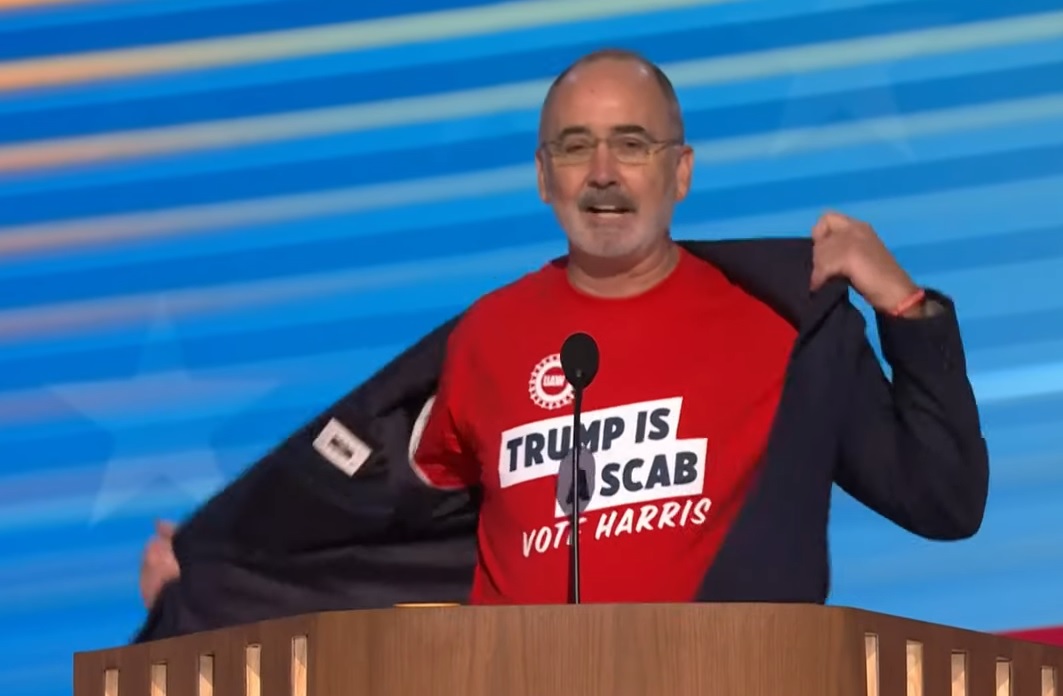
Despite an active federal corruption investigation, UAW President Shawn Fain and his underlings continue to push a radical political agenda using workers’ dues money while ignoring the rights of the rank-and-file employees union bosses claim to “represent.”
PHILADELPHIA, PA – It’s not particularly difficult to see why United Auto Workers (UAW) union officials are having trouble convincing workers that the union has their best interests in mind.
The union’s upper echelon is still reeling from a federal probe that hit about a dozen top union bosses with prison sentences for embezzling workers’ dues, and to this day it appears that UAW President Shawn Fain — a so-called “reformer” — is being scrutinized by federal monitors for manipulating his position to secure personal benefits.
But the corruption within the UAW goes far beyond the union’s top executives. Throughout 2024, National Right to Work Foundation-backed workers for auto accessory manufacturer Dometic fought illegal UAW demands that they strike or be fired.
UAW Union Used Mass Texts, Social Media to Bully Workers
In March 2024, seven Philadelphia-area Dometic employees filed unfair labor practice charges against the UAW Local 644 union, detailing that UAW bosses had ordered a strike and threatened to get fired anyone who decided to keep working.
Despite the employees’ resignation of their union memberships, UAW officials began internal proceedings against each of them soon after the strike began. Federal labor law forbids unions from imposing internal discipline on those who abstain from union membership.
The Dometic workers didn’t back down. With free Foundation legal aid, all the workers won settlements in October 2024 that fully vindicated their rights. UAW officials must now make postings correctly informing workers of their right to abstain from union activities, and the settlement even requires union chiefs to undergo mandatory training on the limits of “a union’s right to impose internal discipline,” among other topics.
As the workers’ legal battle dragged on, the Dometic workers continued to expose ugly details of the UAW’s intimidation campaign surrounding the strike. In April 2024, Dometic employee Mario Coccie filed a second round of charges against UAW Local 644 for a mass text message that threatened all Dometic employees — not just those who had filed charges against the union — with termination if they didn’t strike.
“The information in this text reveals union officials’ real intentions, which is to hurt anyone willing to stand up for themselves,” said Coccie at the time. “What is happening in this case is completely unjust.”
UAW officials also refused to respect Coccie and his coworkers’ rights under the Foundation-won CWA v. Beck Supreme Court decision, which prohibits union officials from requiring workers to pay for the union’s political expenditures just to keep their jobs. Because Pennsylvania lacks Right to Work protections for its private sector workers, UAW bosses can force workers to pay union fees as a condition of employment, but must abide by Beck.
Legal Privileges Enable UAW Corruption
In addition to the notice postings and required training, the Foundation-won settlement orders union officials to delete social media posts threatening workers who refused to strike.
“We’re proud to have helped Mario Coccie and his coworkers vindicate their rights,” commented National Right to Work Foundation Vice President Patrick Semmens. “But it has become all too clear that union corruption — which can take the form of anything from stealing millions in worker dues to intimidating workers to join a picket line — is only made easier when union bosses are granted more legal privileges.
“Policymakers need to protect workers’ freedom to cut off funding for union bosses who don’t serve their interests, and to fully abstain from union activities that individual employees do not see as in their own best interest,” Semmens added.
Minnesota Electric Utility Employee Challenges IBEW Nationwide Policy Coercing Worker Contributions to Union’s Political Activity
Worker charges union with blocking her right under CWA v. Beck Supreme Court decision to end payments for union politics
Benson, MN (April 8, 2025) – An employee of Agralite Electric Cooperative, an electric utility company in Western Minnesota, has just filed federal charges against the International Brotherhood of Electrical Workers (IBEW) union, challenging nationwide restrictions union officials impose on workers who wish to cut off financial support for union political activities. The worker, Theresa Klassen, filed charges against both the IBEW international union and IBEW Local 160 at the National Labor Relations Board (NLRB) Region 18 in Minneapolis. Klassen is represented for free by National Right to Work Legal Defense Foundation staff attorneys.
The NLRB is the federal agency responsible for enforcing federal labor law and adjudicating disputes between employers, union officials, and individual employees. In her charges, Klassen is defending her rights under the landmark Foundation-won Communications Workers of America (CWA) v. Beck Supreme Court decision, which forbids union officials from forcing workers who have refrained from formal union membership to pay dues for anything beyond the union’s monopoly bargaining functions. Union political expenditures are one expense employees can opt out of paying by invoking their Beck rights.
Because Minnesota lacks Right to Work protections for its private sector workers, IBEW union officials can impose contracts that force Klassen and her coworkers to pay union dues as a condition of keeping their jobs. However, nonmember workers like Klassen can object to paying full dues and instead pay a reduced amount under Beck. In contrast, in Right to Work states like all of Minnesota’s neighbors, union membership and all union financial support are strictly voluntary.
“It’s disappointing that IBEW union officials can legally force me to fork over even a little bit of my paycheck to them after I resigned my membership, but refusing to pay for union politics is my right and the IBEW isn’t respecting it,” commented Klassen. “They’ve put a bunch of time limitations on when I can exercise this right, and are also requiring me to contact union bosses in Washington, D.C. who I have never met just to prevent my money from going toward union politicking I oppose. This is wrong.”
Filings: IBEW Officials Illegally Rebuffed Worker Twice After Receiving Requests to Stop Funneling Money to Union Politics
Klassen’s charges state that she first contacted her local union to resign her union membership in October 2024. While Local 160 union officials acknowledged her resignation letter, they claimed that the IBEW’s national policy is to “not allow nonmembers automatic Beck objector status,” and for that reason she would need to send a letter to the union’s international headquarters to opt out of paying for union politics. Local 160’s reply also stated that Beck objections would only be accepted during “window periods” of time comprising only 8-16% of the year, according to her charges.
Klassen’s charges also state that she sent a Beck objection letter to the IBEW international headquarters again in February 2025. IBEW union agents rejected this request as well, alleging that Klassen’s request fell outside the arbitrary time restrictions set by the union. Klassen is charging both IBEW Local 160 and the IBEW international union with enforcing these illicit limits on her Beck rights.
Window period restrictions on when employees can exercise their Beck rights allow union officials to extract money from workers who have already objected to financially supporting union activities. The creation of window periods is not authorized or otherwise mentioned in the National Labor Relations Act (NLRA), the federal labor law governing the private sector. Foundation attorneys are assisting multiple AT&T workers in Florida battle a similar scheme concocted by CWA officials.
“That IBEW union bosses are enforcing a nationwide policy making it needlessly difficult to stop supporting the union’s political activities should tell workers exactly what the union’s priorities are,” observed National Right to Work Foundation President Mark Mix. “While Beck rights are an important protection for workers in non-Right to Work states, no American worker should be forced to subsidize any union activities that they disagree with, whether political or not.”
DHS Security Guard’s Federal Lawsuit Forces IGUA Union Bosses to Stop Illegal Forced Union Dues Demands
After union officials did not provide legally required financial disclosures, guard wins reduction in mandatory union fees
Washington, DC (June 6, 2024) – Rosa Crawley, a security guard at the Department of Homeland Security’s Nebraska Avenue Complex, has triumphed after filing a federal lawsuit charging the International Guards Union of America (IGUA) with unlawfully demanding and seizing union dues from her paycheck. Crawley, who is employed by Master Security, forced the union to back off its illegal dues demands with free legal aid from National Right to Work Foundation staff attorneys.
Crawley is not a member of the IGUA union, but is still subject to IGUA’s monopoly bargaining power over the security guards at the DHS Nebraska Avenue Complex. As part of the settlement, IGUA union bosses must reduce the compulsory fee that they seize from Crawley as a condition of keeping her job. Before she filed suit, union bosses demanded the equivalent of full membership dues from her.
In her federal lawsuit, which she filed at the U.S. District Court for the District of Columbia, Crawley sought to defend her rights under the 1988 Right to Work Foundation-won CWA v. Beck Supreme Court decision.
While union officials can force private sector workers in non-Right to Work jurisdictions like the District of Columbia to pay dues or fees just to keep their jobs, the Beck decision prevents union bosses from forcing employees who have abstained from union membership to pay for anything beyond the union’s core bargaining functions, such as union bosses’ political activities. Full membership dues often contain charges for these unrelated items.
Beck also requires union bosses to furnish nonmembers who invoke their rights under the decision with an independent audit of the union’s finances and a breakdown of how union officials spend forced contributions.
Beck protections aren’t necessary in Right to Work states like neighboring Virginia, where union membership and all union financial support are fully voluntary.
IGUA Union Bosses Took Full Dues from Guard, Provided No Financial Disclosures
According to the suit, Crawley sent a letter to union officials resigning her union membership back in July 2023. Instead of immediately providing her with her Beck rights, union officials informed her that she would be charged a so-called “agency fee” which “is the same exact cost as what the union members pay.”
“So there will be absolutely no change in a financial sense,” the union’s reply letter stated.
Not satisfied with that explanation, Crawley in September 2023 formally invoked her Beck rights and asked union officials to reduce her dues payments in accordance with the decision. She also asked them to “provide [her] with an accounting, by an independent certified public accountant, that justifies Local 160’s calculation of its agency [forced] fee,” according to her lawsuit.
In an October 2023 reply to her Beck request, union officials used a confusing percentage averaging calculation to determine a fee amount that contradicted what they told Crawley when she resigned her membership. An independent audit of the union’s finances was nowhere to be found. Despite that, Crawley’s lawsuit reported that IGUA bosses continued to collect full union dues from her paycheck, and tried to impose extra steps that would need to be completed if she wanted to see the union’s financial info.
Workers Must Be On Guard for Illegal Union Uses of Worker Funds as Election Nears
After the filing of her lawsuit, Crawley expressed concern that her money was flowing toward union politics while IGUA bosses dragged their feet on honoring her Beck rights. “I shouldn’t have to pay for the IGUA union’s political activity just so I can continue to do my job,” commented Crawley. “Union officials have a legal obligation to stop charging me for politics and provide me with an accounting of how they are using my money, and so far they have done neither. This isn’t how they should treat the workers they say they ‘represent.’”
“We’re pleased that Ms. Crawley was able to terminate IGUA union officials’ outrageous seizure of full union dues from her paycheck,” commented National Right to Work Foundation President Mark Mix. “However, IGUA union officials’ inability to follow even the modest limitations that Beck places on their ability to impose mandatory dues on workers is ridiculous, and no worker should have to file a federal lawsuit to force union bosses into recognizing those rights.
“Workers’ right to prevent their money from going toward unwanted union activities, particularly politics, is especially important as union bosses try to push forward their agendas in advance of the 2024 election,” Mix added. “So workers should be vigilant of Beck violations, and remember they can contact Foundation attorneys for free legal aid in exercising their rights under that decision.”





