
Workers Nationwide Continue Efforts to Oust Steelworkers Officials
The following article is from the National Right to Work Legal Defense Foundation’s bi-monthly Foundation Action Newsletter, January/February 2023 edition. To view other editions of Foundation Action or to sign up for a free subscription, click here.
Successful ousters in Louisiana and New Jersey emphasize importance of protecting worker votes
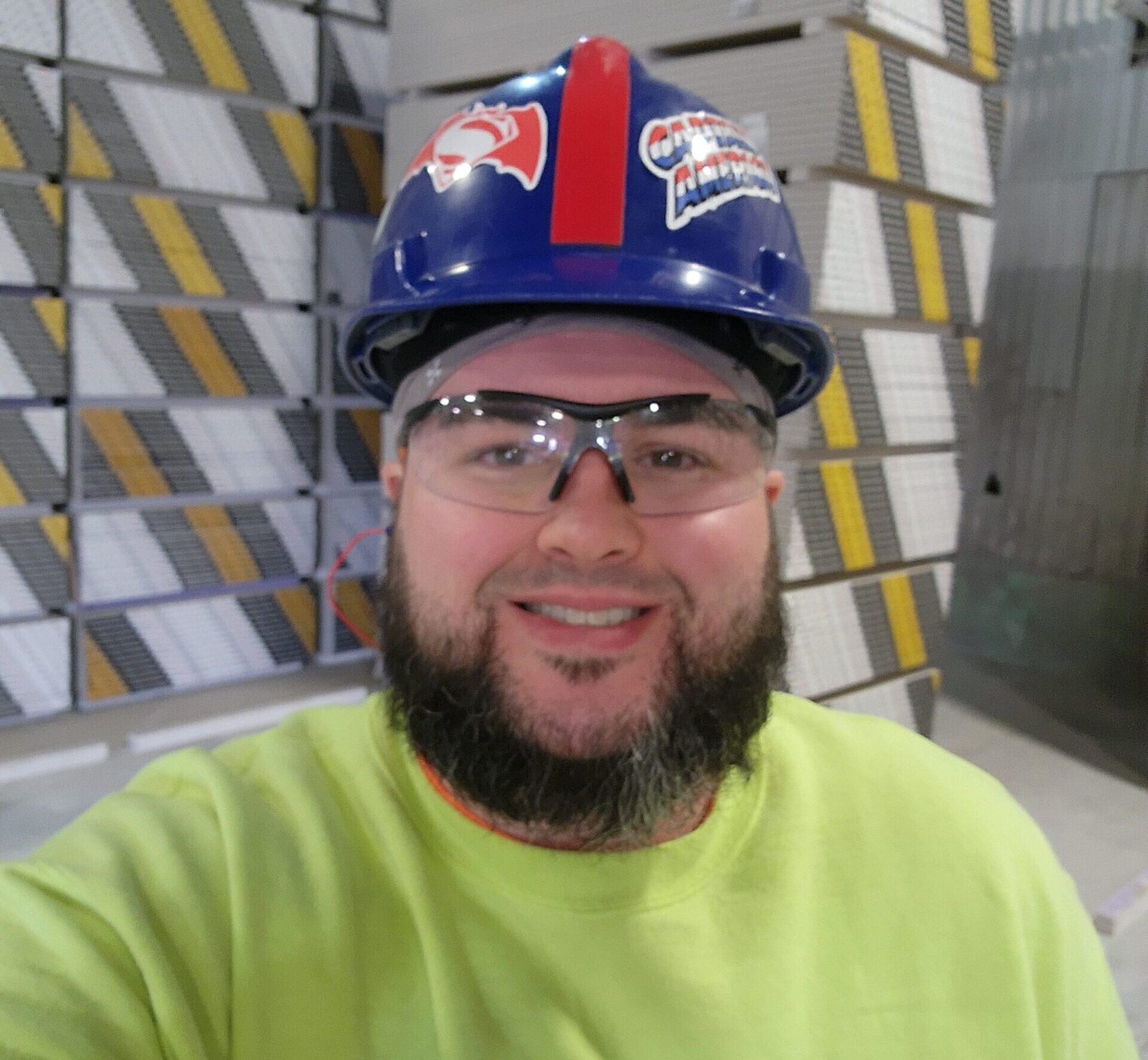
Michael Cobourn and his coworkers were forced to pay union dues while USW union bosses seemed to be loafing it at their workplace. With Foundation aid, they ousted the union.
WASHINGTON, DC – In the space of just a month, National Right to Work Legal Defense Foundation staff attorneys successfully aided groups of workers in New Jersey and Louisiana in voting out United Steelworkers (USW) union officials they opposed. The National Labor Relations Board (NLRB) certified both votes.
In Louisiana, Ryne Fox led his coworkers at GEO Specialty Chemicals to a decisive victory over USW officials, while Michael Cobourn did the same with his fellow workers at Gold Bond Building Products in New Jersey.
Both cases demonstrated the struggles workers face when seeking to “decertify” union officials whom they no longer want in power. In Louisiana, Fox had to time the filing of his coworkers’ petition seeking a decertification vote to fall within a tiny window of days imposed by the “contract bar,” a union boss-friendly NLRB policy that protects union officials from being voted out of a workplace for up to three years after union bosses and management finalize a contract.
Cobourn and his colleagues, in addition to having to deal with the “contract bar,” work in the non-Right to Work state of New Jersey — meaning they were forced to pay money to the union just to keep their jobs during the entire time they were forbidden by the “contract bar” from ejecting the union. In contrast, Right to Work states protect private sector workers from being fired merely for refusal to pay dues or fees to union officials of whom they disapprove. “My coworkers and I were paying money to the Steelworkers union constantly, yet the union didn’t seem to be doing anything for us,” commented Mr. Cobourn.
Although the efforts in Cobourn’s and Fox’s workplaces are evidence that Steelworkers union officials nationwide place their own interests above the workers they claim to “represent,” the most heinous example of such behavior is ongoing in Franklin, Pennsylvania.
There, Foundation-assisted metal workers at Latrobe Specialty Metals/Carpenter Technology are holding their own in defending their decertification petition against Steelworkers officials’ claims that the “contract bar” should invalidate the petition.
PA Workers Score Victory in Fight Against Election-Blocking Steelworkers Chiefs
While invoking the “contract bar” alone is anti-worker, Steelworkers officials in Pennsylvania claimed that a contract they unilaterally “ratified” this past summer after workers had voted against it twice should trigger the “contract bar.” Steelworkers officials had even told workers that the contract would only be “activated” if workers voted for it. But once they got wind of the workers’ decertification push, the officials “ratified” the unpopular contract secretly so they could, as one union official outrageously said during a hearing, “protect the integrity of the union.
Foundation staff attorneys representing the employee who submitted the petition, Kerry Hunsberger, have so far beaten back union officials’ attack on worker free choice. On November 18, 2021, an NLRB Regional Director rejected union bosses’ attempt to block the vote and ordered that an election proceed.
‘Contract Bar’ Encourages Union Officials to Impose Unpopular Contracts
“Workers across the country are increasingly exercising their right to vote out union officials they oppose, and we at the Foundation are happy to aid them,” commented National Right to Work Foundation President Mark Mix. “However, we’re also acutely aware of the obstacles that stand in the way of this freedom, and one of those, which Steelworkers officials seem to have no reservations about exploiting, is the ‘contract bar.’”
“The unjustified ‘contract bar’ is always wrong because it prevents workers from voting out unions they oppose when they want. But even worse, this NLRB-invented doctrine actually incentivizes union officials to rush and impose unpopular, self-serving contracts for the very purpose of insulating the union’s forced representation powers from a vote of the workers union officials claim to ‘represent,’” Mix added.
Push to Remove UFCW Union Could End Pro-Union Boss “Contract Bar” Policy
The following article is from the National Right to Work Legal Defense Foundation’s bi-monthly Foundation Action Newsletter, September/October 2020 edition. To view other editions or to sign up for a free subscription, click here.
Non-statutory NLRB policy hinders workers’ right to vote out an unwanted union
 Employees at the Selbyville, DE, Mountaire Farms plant rally to vote out unpopular UFCW honchos from their workplace, as union lawyers scramble to block the workers’ votes from being counted.
WASHINGTON, DC – The National Labor Relations Board (NLRB) has announced that it will review the so-called “contract bar” doctrine, which prevents employees from exercising their right to vote an unpopular union out of their workplace for up to three years if union officials and their employer have finalized a monopoly bargaining contract.
This is the latest development in a case by a Selbyville, Delaware-based Mountaire Farms poultry employee, Oscar Cruz Sosa, against the United Food and Commercial Workers (UFCW) Local 27 union. Cruz Sosa submitted a petition in February for a vote on whether Local 27 should be removed as monopoly bargaining agent in his workplace. The petition was signed by hundreds of his coworkers, more than the percentage required to trigger such a vote.
Worker Obtains Foundation Help after Union Attempts to Block Vote
After he submitted the petition, UFCW bosses immediately claimed that the “contract bar” should block Cruz Sosa and his coworkers from even having an election, because the monopoly bargaining agreement between Mountaire and the union had been signed less than three years earlier.
Cruz Sosa then obtained free legal assistance from National Right to Work Foundation staff attorneys in defending his and his coworkers’ right to vote. With Foundation aid, he also hit UFCW agents with federal unfair labor practice charges for imposing an illegal forced-dues clause on the workplace and threatening him after he submitted the petition.
When the NLRB Regional Director in Baltimore heard the election case, he ruled that the union contract contains an unlawful forced-dues clause that mandates workers immediately pay union dues upon hiring or be fired. Under NLRB precedent, an illegal forced-dues clause means the “contract bar” cannot apply, allowing the vote to proceed.
UFCW’s Desperate Attempt to Block Vote Triggers NLRB Review of “Contract Bar”
Despite the longstanding precedent supporting the Regional Director’s ruling, UFCW union lawyers filed a Request for Review, asking the full NLRB to reverse the Regional Director and halt the election.
In response, Cruz Sosa’s Foundation staff attorneys opposed the union’s efforts to block the vote. They also argued that, if the Board were to grant the union’s Request for Review, it should also reconsider the entire “contract bar” policy, which has no statutory basis in the NLRA. The Foundation’s legal brief noted that the “contract bar” runs counter to the rights of workers under the NLRA, which explicitly include the right to vote out a union a majority of workers oppose.
Just hours after the voting process in the decertification election had begun, the NLRB issued its order granting the union’s Request for Review, while also accepting the Foundation’s request to reconsider the entire “contract bar” doctrine. The order noted “that it is appropriate for the Board to undertake in this case a general review of its ‘contract bar’ doctrine.”
Given the precedential import of this case, the NLRB solicited amicus briefs on whether the “contract bar” should be allowed to stand. UFCW officials, still desperate to throw a wrench in Cruz Sosa and his coworkers’ effort to vote them out, demanded that the NLRB rescind its request for amicus briefs in the case, but that effort was quickly rebuffed.
“We urge the NLRB to swiftly overturn this outrageous non-statutory policy, which lets union bosses undermine for up to three years the free choice of workers that is supposed to be at the center of federal labor law,” commented National Right to Work Foundation Vice President and Legal Director Raymond LaJeunesse. “The very premise of the NLRB-created ‘contract bar,’ that union bosses should be insulated from worker decertification efforts, is completely backwards.”
LaJeunesse added: “Union officials across the country use all types of tactics to get workers into unions but rely on government power and legal tricks to prevent them from getting out.”





