
Windham Community Memorial Hospital Employees Vote Overwhelmingly to Remove AFT Union ‘Representation’
Despite last-ditch effort by teacher union lawyers to overturn vote, over 300 hospital employees are officially union free
Willimantic, CT (April 7, 2026) – Employees at Windham Community Memorial Hospital are officially free from the unwanted “representation” of American Federation of Teachers (AFT) Local 5099 union officials. Following an initial delay, the National Labor Relations Board (NLRB) certified the result, after an overwhelming majority of the Hospital’s workers voted to “decertify” the union in a February secret ballot vote.
The decertification effort was spearheaded by Windham Hospital employee Sara Doner, who received free legal aid from National Right to Work Foundation staff attorneys during the decertification process.
NLRB Region 1 certified the election results, officially ending AFT union bosses’ exclusive monopoly representation of the Windham Community Memorial Hospital employees. The NLRB is the federal agency responsible for enforcing the National Labor Relations Act, a task that includes administering elections to install (or “certify”) and remove (or “decertify”) unions.
Days after the landslide 168-70 vote to remove the union, AFT filed objections with the NLRB, seeking to overturn the workers’ election result. However, AFT union officials soon reversed course and dropped their objections, perhaps recognizing the futility of their efforts to maintain monopoly control of the employees after the overwhelming statement sent by the one-sided result.
Connecticut is one of 24 states that lack Right to Work protections for workers, which means that prior to the decertification, AFT union bosses were empowered to impose monopoly bargaining contracts that force employees to pay union dues or fees as a condition of employment. By contrast, in Right to Work states, union membership and union financial support are strictly voluntary.
“Headed by longtime top boss Randi Weingarten, the AFT is best known for the divisive role union officials have played undermining student and taxpayer interests in the classrooms of public schools nationwide,” commented National Right to Work Foundation President Mark Mix. “While lesser known, the targets of AFT union boss coercion also includes thousands of healthcare providers.
“We are pleased to have been able to assist this group of hundreds of Windham Community Memorial employees as they exercise their legal right to send AFT union bosses packing, and we encourage anyone else – whether educator or healthcare worker – trapped under AFT control they oppose to reach out for legal aid,” Mix added.
Pratt & Whitney Employee Slams IAM Union With Federal Charges For Imposing Illegal Post-Strike Discipline
Union officials insulted worker for wanting to resign membership and keep working, incorrectly told workers P&W was “closed shop”
Middletown, CT (October 6, 2025) – An employee of jet engine manufacturer Pratt & Whitney’s Middletown facility is filing federal charges against International Association of Machinists (IAM) Local Lodge 700 union officials at the facility. The worker, Christopher Utley, is charging IAM union bosses with unlawfully imposing internal union discipline on him because he exercised his right to resign his union membership and continue working during a May strike. He also details IAM officials telling him that Pratt & Whitney is an illegal “closed shop” in which he needed to maintain union membership or be fired.
Utley filed his charges at the National Labor Relations Board (NLRB) with free legal assistance from the National Right to Work Legal Defense Foundation. The NLRB is the federal agency charged with enforcing federal labor law in the private sector, a task that includes adjudicating disputes between employers, union officials, and individual workers.
Federal labor law and U.S. Supreme Court decisions like NLRB v. General Motors forbid union officials from enforcing “closed shop” union contracts that require formal union membership as a condition of employment. Workers who abstain from formal union membership are immune from internal union rules and discipline regarding things like strikes.
Because Connecticut lacks Right to Work protections for its private sector workers, however, IAM union officials can impose contract provisions that require every employee in a workplace (even those who are not union members) to pay union dues or fees as a condition of employment. In contrast, union membership and all union financial support are strictly voluntary in Right to Work states.
“Instead of letting me exercise my right to leave the union and go back to work during the strike, IAM union bosses just insulted me and kept stonewalling,” commented Utley. “It’s almost like they wanted to trap me in the union just so they could subject me to internal discipline and punish me for daring to disagree with them.”
“Good Luck With That”: IAM Union Officials Ignore Resignation and Threaten Discipline on Worker
According to Utley’s charges, he called IAM Local Lodge 700 President Wayne McCarthy one day before the May strike began and informed him that he wanted to resign from the union. McCarthy “responded with various invectives, refused to identify any process to resign, said ‘good luck with that,’ and hung up the phone,” Utley’s charges say. After trying other methods of resigning, the charges read, IAM Local Lodge 700’s Vice President Chuck Hermann informed Utley that Pratt & Whitney was a “closed shop” and “he would have to be and remain a formal member of the union or face termination from his employment.”
On September 19 – months after the strike had concluded – Utley learned that IAM union bosses were “processing internal union disciplinary charges against him” for continuing to do his job during the strike. The charge argues that union officials calling Utley before a union tribunal, after he exercised his right to end union membership, violates his rights under the National Labor Relations Act (NLRA).
“Instead of convincing workers to voluntarily support their agenda, IAM union officials are trying to turn Mr. Utley into an example of what happens when workers defy them,” commented National Right to Work Foundation President Mark Mix. “Federal labor law unambiguously permits workers to decline formal union membership and to continue to work during union-ordered strikes. But IAM bosses misled Mr. Utley about his rights so they could attempt to subject him to their illegal retaliation.
“Foundation attorneys stand ready to provide legal aid anywhere in the country to defeat union bosses’ attempts to discipline workers for making decisions about their own livelihoods,” Mix added.
Tire Wholesaler Employees Force RWDSU Union Out of 15 Locations
The following article is from the National Right to Work Legal Defense Foundation’s bi-monthly Foundation Action Newsletter, January/February 2024 edition. To view other editions of Foundation Action or to sign up for a free subscription, click here.
RWDSU union officials abandon 500+ employee unit ahead of vote at tire wholesaler
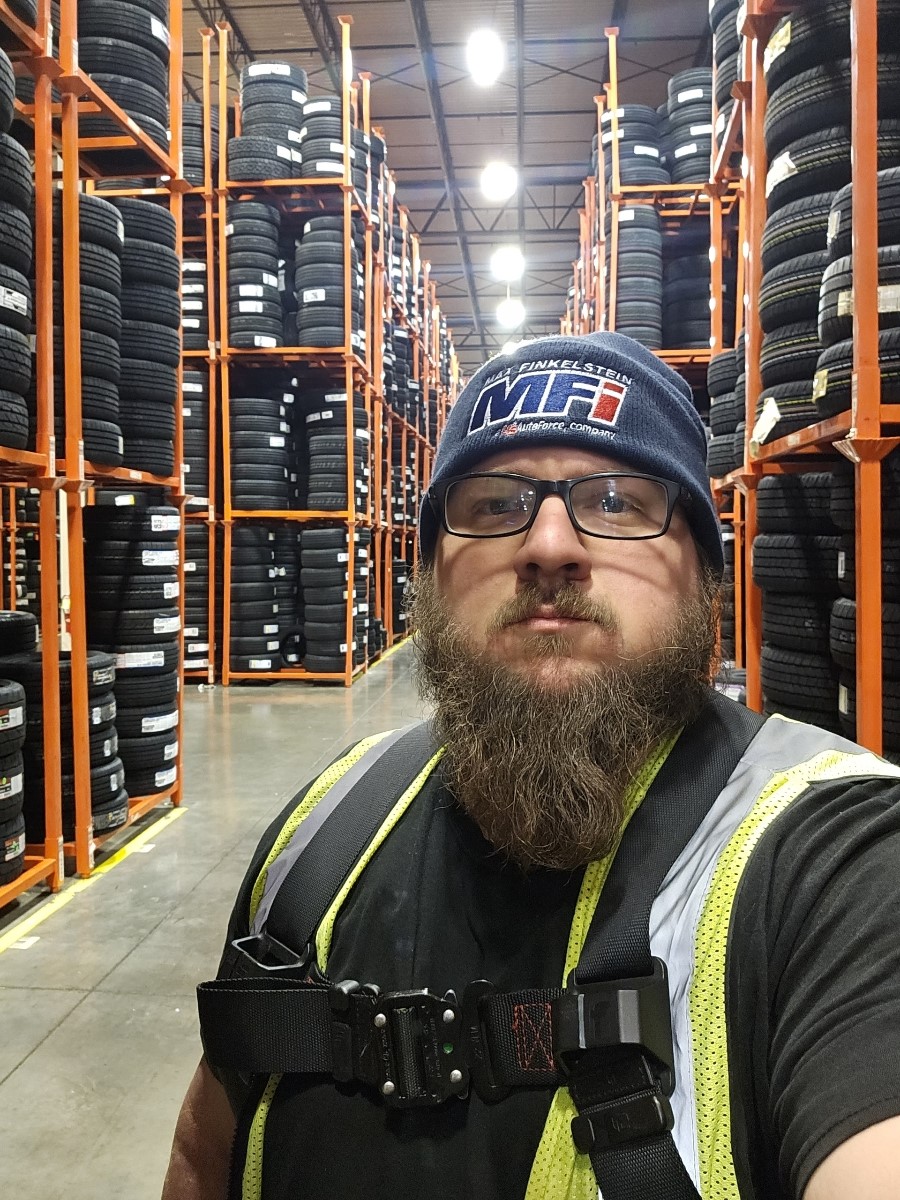
Tire-d of the RWDSU: Chris Dorney submitted a huge number of signatures from his coworkers at tire wholesaler Max Finkelstein when petitioning the NLRB for a vote to remove the RWDSU union.
WINCHESTER, VA – The Biden National Labor Relations Board (NLRB), which includes among its members two former union bosses from the Service Employees International Union (SEIU), is pursuing an agenda that hasn’t exactly been making it easy for workers to vote out a union they don’t want. But that hasn’t stopped workers across the country from going to extraordinary lengths to kick out unions that don’t serve their interests.
In October 2023, Chris Dorney, a Winchester, VA-based employee of tire wholesaler Max Finkelstein, kick-started a cross-country effort to vote the Retail, Wholesale and Department Store Union (RWDSU) out of 15 warehouse facilities across the eastern United States. This work unit included more than 500 employees across Virginia, Maryland, Massachusetts, Pennsylvania, New York, New Jersey, Vermont, Maine, and Connecticut.
Virginia Worker Mustered Strong Showing on Petition for Union Ouster Vote at Tire Wholesaler
With free legal aid from the National Right to Work Foundation, Dorney submitted a petition to the NLRB containing more than enough employee signatures to trigger a vote to remove the union from the large unit.
While Dorney and his fellow Virginia employees enjoyed the Right to Work freedom to opt-out of dues payments to the union, the same couldn’t be said for any of the other employees, all of whom hail from states where dues payments can be mandated as a condition of employment. But voting RWDSU bosses out of power entirely at the tire wholesaler would end the union’s forced-dues power.
“We warehouse workers and drivers at Max Finkelstein may be from many different facilities in many different states, but we are in agreement about one thing: RWDSU union officials don’t represent our interests,” Dorney said of the effort. “It’s our right under federal law to challenge RWDSU’s forced representation power.”
RWDSU Bosses Flee Unit as Union Officials Rack Up Losses Nationwide
However, before the vote could occur, RWDSU union officials disclaimed interest in continuing their monopoly representation powers over the unit, likely to avoid an embarrassing rejection by workers at the ballot box.
Unionized workers are increasingly requesting elections to remove unwanted unions — a potential reason for the Biden NLRB’s efforts to crack down on decertification votes. Additionally, union bosses are increasingly losing these contests. As of last year, filings for union decertification votes had shot up by over 40 percent since 2020. Of decertification elections that occurred, the number which resulted in union bosses losing went up by 72 percent.
“Mr. Dorney and his coworkers’ effort to kick out the RWDSU union, which spanned several states, 15 facilities, and hundreds of workers, is yet another example that workers often want to escape union officials’ one-size-fits-all agenda. It’s also a demonstration that workers will go to great lengths in order to exercise this right,” commented National Right to Work Foundation Vice President Patrick Semmens. “But the Biden NLRB, bent on empowering the President’s union boss political allies, plans to grant unions even more power to defeat workers’ will.”
Former Connecticut State Trooper Wins Over $250,000 in Political Discrimination Suit
The following article is from the National Right to Work Legal Defense Foundation’s bi-monthly Foundation Action Newsletter, July/August 2023 edition. To view other editions of Foundation Action or to sign up for a free subscription, click here.
CSPU union upended trooper’s career after he refused to fund union politics
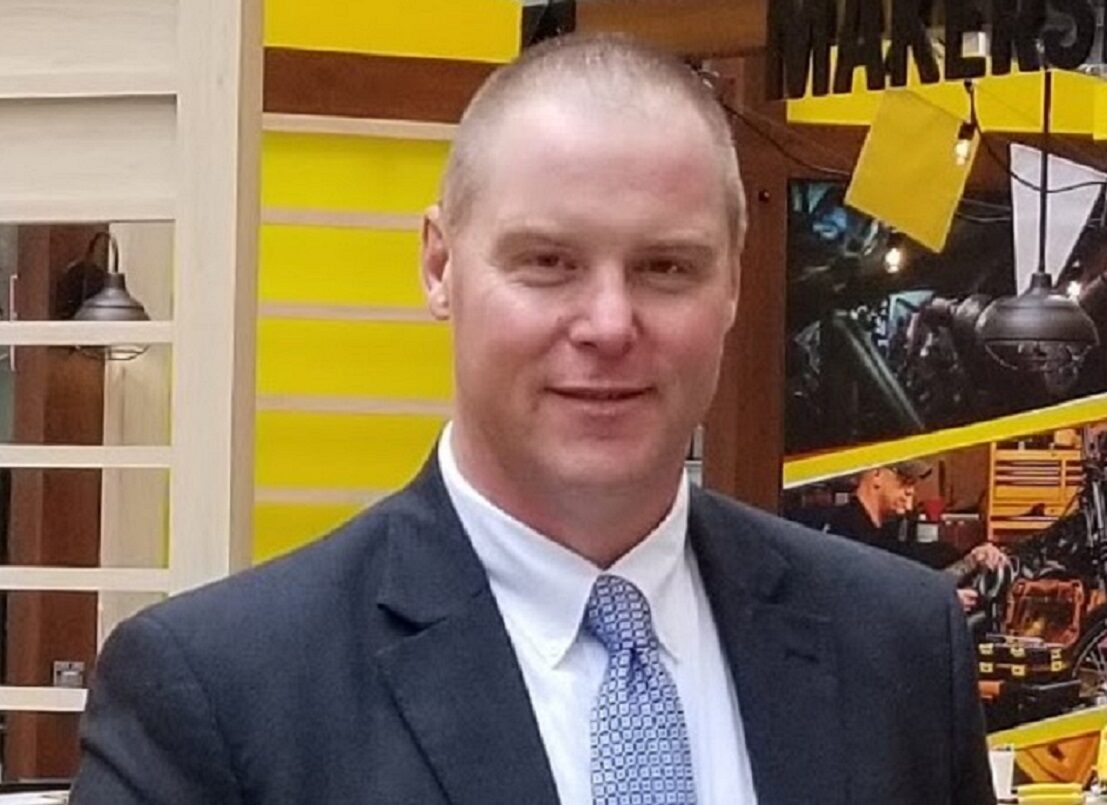
Joseph Mercer fought back with free Foundation legal aid when the CSPU union blocked his promotion because he challenged union political activities and told others about their rights.
HARTFORD, CT – In 2015, then-Connecticut State Trooper Joseph Mercer received a promotion to Operations Sergeant of the Emergency Services Unit, a position that gave him significant responsibility over emergency services training and field operations. Mercer gained this prestigious position through his seventeen years of experience as a trooper, which included a tense situation with an armed suspect barricaded in a hotel.
But behind the scenes, Mercer was a target of Connecticut State Police Union (CSPU) officials, who resented Mercer because of his resistance to funding union politics with his own money. After CSPU President Andrew Matthews filed two baseless grievances against Mercer, the Department of Emergency Services and Public Protection (DESPP) demoted him to a position that offered fewer overtime opportunities and involved less time in the field.
Mercer slammed CSPU and DESPP officials with a federal lawsuit in 2016 with free legal aid from the National Right to Work Foundation, accusing police union officials of retaliating against him for exercising his right to stop funding union politics.
This April, Foundation attorneys forced CSPU and DESPP to back down and settle the case. Both parties must now pay $260,500 as a condition of ending the suit.
CSPU Union President Targeted Dissident Trooper Immediately After Promotion
Just a month after Mercer received his promotion, CSPU President Matthews filed a grievance over Sergeant Mercer’s appointment.
Matthews’ grievance claimed that there had been no “selection process” to fill the position, despite the fact that none of Sergeant Mercer’s union-member predecessors had undergone any particular kind of selection process before they got the job. Matthews also filed a second baseless grievance, alleging Mercer had mismanaged the incident involving the armed suspect barricaded in a hotel. State police officials had never expressed dissatisfaction with how Mercer handled the situation.
In October 2015, after meeting in private with the union president, then-DESPP Commissioner Dora Schriro transferred Mercer out of his Operations Sergeant position to an administrative post. Prior to this demotion, Mercer had received no warnings, reprimands, or other disciplinary actions regarding the incident referenced in Matthews’ grievance. Mercer filed his lawsuit with Foundation aid in February 2016.
Mercer’s Foundation attorneys cranked up the heat on both the union and DESPP officials in May 2022, when a District Court judge ordered DESPP Commissioner James Rovella, who had replaced Schriro, to turn over additional documents that might provide insight into the circumstances surrounding Mercer’s firing.
Rather than follow through with the judge’s discovery order and continue the fight against Mercer, CSPU and DESPP reversed course and settled the case in April 2023. The settlement categorizes the vast majority of the $260,500 payout as “compensatory damages” due directly to Mercer.
Settlement Underscores Importance of Public Servants’ Janus Rights
“We are proud to have defended Sergeant Mercer’s rights and secured him a settlement that vindicates his free association,” commented National Right to Work Foundation Vice President and Legal Director William Messenger. “However, it’s disgraceful that CSPU union officials targeted Mercer, a dedicated public safety officer, with such a retribution scheme in the first place. Public servants should not have to endure multi-year lawsuits just so they can refrain from supporting union politics they oppose.”
“Situations like these demonstrate why the Foundation-won Janus v. AFSCME decision, which the U.S. Supreme Court decided while Mercer’s case was ongoing, is so important,” Messenger added. “As demonstrated in Mercer’s case, unelected union officials often wield their enormous clout over government to serve the union’s self interests over the public interest and employee interests. That’s why it’s vital that public employees can exercise their First Amendment Janus right to cut off all financial support for union officials this way.”
Connecticut State Trooper Wins $260,500 Settlement in Federal Lawsuit Against Police Union and Department Officials
Trooper was demoted after he abstained from funding union politics, CSPU union has now backed down and settled case
Hartford, CT (April 28, 2023) – Connecticut State Trooper Joseph Mercer has won a settlement in his federal civil rights lawsuit against the Connecticut State Police Union (CSPU) and Department of Emergency Services (DESPP) officials, in which he charged them with illegally demoting him for opposing union membership and politics. Mercer received free legal aid from staff attorneys at the National Right to Work Legal Defense Foundation.
Mercer’s suit began in 2016, when he accused the CSPU union, CSPU President Andrew Matthews, and DESPP Commissioner Dora Schriro of knocking him out of a prestigious Operations Sergeant position after he exercised his First Amendment rights to abstain from CSPU membership and not pay dues to support the union’s political activities. The department placed Mercer in a position that offered fewer overtime opportunities and involved less time in the field.
In August 2018, the U.S. District Court for the District of Connecticut denied motions to dismiss the case filed by CSPU and state officials, allowing the case to proceed. Pressure on defendants increased in May 2022, when the District Court ordered DESPP Commissioner James Rovella, who had replaced Schriro, to turn over additional discovery.
Now, CSPU and DEPP officials have backed down and settled the case. As part of the settlement, Mercer will receive more than two hundred thousand dollars from CSPU and DEPP.
Connecticut State Trooper Groundlessly Fired After Objecting to Union Politics
In May 2015, Sergeant Mercer was appointed Operations Sergeant of the Emergency Services Unit, a prestigious command position that entails significant responsibility for Emergency Services training and field operations. Although Sergeant Mercer had seventeen years of experience, in June 2015, CSPU President Matthews filed a grievance over Sergeant Mercer’s appointment.
Matthews’ grievance claimed that there had been no “selection process” to fill the position, despite the fact that none of Sergeant Mercer’s union-member predecessors had undergone any particular kind of selection process before they got the job.
Mathews filed a second baseless grievance, alleging Mercer had mismanaged an incident involving an armed suspect barricaded in a hotel. State police officials had never expressed dissatisfaction with how Mercer handled the situation.
In October 2015, after meeting in private with the union president, the then-Commissioner of the DESPP transferred Mercer out of his Operations Sergeant position to an administrative post. That new position gave Mercer substantially fewer opportunities to work in the field or to accrue overtime pay. Prior to this demotion, Mercer had received no warnings, reprimands, or other disciplinary actions regarding the incident referenced in Matthews’ grievance. Mercer filed his lawsuit with Foundation aid in February 2016.
Mercer’s Foundation-won settlement now requires CSPU and the State to pay $260,500.00.
Public Servants Have First Amendment Right to Stop Supporting Union Politicking
“We at the Foundation are proud to have defended Sergeant Mercer’s rights and secured him a settlement that vindicates his free association,” commented National Right to Work Foundation President Mark Mix. “However, it’s disgraceful that CSPU union officials targeted Mercer, a dedicated public safety officer, with such a vicious retribution scheme in the first place. Public servants should not have to endure multi-year lawsuits just so they can refrain from supporting union politics they oppose.”
“Situations like these demonstrate why the Foundation-won Janus v. AFSCME decision, which the U.S. Supreme Court decided while Mercer’s case was ongoing, is so important,” Mix added. “As was obvious in Mercer’s case, unelected public sector union bosses often wield their enormous clout over government to serve the union’s private interests over the public interest. That’s why it’s vital that public employees can exercise their First Amendment Janus right to cut off all financial support of union bosses who are contorting government in this way.”
Connecticut Bus Driver Slams Teamsters Union with Federal Charges for Violating Beck Rights
Teamsters union officials illegally force school bus driver to pay for union political activities
New Milford, CT (March 30, 2023) – Connecticut school bus driver Mary Boland has filed federal charges against Teamsters Local 671 union after union officials violated her rights, as established under the Foundation-won U.S. Supreme Court Beck decision, by illegally charging her union dues in excess of what she must pay in order to keep her job. These charges were filed with the National Labor Relations Board (NLRB). Boland is being represented for free by National Right to Work Legal Defense Foundation staff attorneys.
On October 20, 2022, Mary Boland submitted a letter to Teamsters Local 671 exercising her rights to opt out of union membership and pay a reduced union fee. This forced union fee must be verified by an independent audit of union expenditures. Individuals who opt out of formal union membership cannot be fired from their job by refusing to pay for “non-chargeable” union expenditures, like member-only activities or union political and lobbying spending.
Due to Connecticut lacking Right to Work protections, workers who oppose union boss agendas can still be forced to pay union fees as a condition of their continued employment. However, under the Foundation-won 1988 Beck decision, union officials can never require non-members to fund activities not directly related to union monopoly bargaining. Beck has been interpreted by the lower courts, and the NLRB, to require that union officials provide certain union financial disclosures to justify the amount they claim a worker can be required to pay.
However, in a letter to Boland dated November 2, 2022, the union acknowledged she invoked her rights under Beck, but failed to actually reduce those fees or provide the required audit. Union officials have charged Boland full union dues as of the filing of the NLRB charge on March 17, 2023, and have never provided the required audit to justify any dues deductions.
“In their apparent greed to extract as much money as possible from unwilling workers, Teamsters bosses are blatantly disregarding longstanding Supreme Court precedent,” commented Mark Mix, President of the National Right to Work Foundation. “This case shows why Connecticut workers need the protection of a Right to Work law to make all union financial support strictly voluntary.”
“Had Right to Work protections been in place, Mary Boland and other Connecticut workers would have had the freedom to simply cut off all union dues,” Mix added. “Without these Right to Work Protections, however, workers find themselves having to tangle with union lawyers over what portion of union dues they can be legally fired for not paying.”
District Court Orders Connecticut State Police to Turn Over Evidence in Former Sergeant’s Retaliation Suit
Veteran officer was transferred out of prestigious position for asserting his workplace rights, choosing not to be a union member
Hartford, CT (May 27, 2022) – A federal judge has just ordered Connecticut Department of Emergency Services and Public Protection Commissioner James Rovella to turn over evidence in a federal retaliation lawsuit filed in 2016 by Joseph Mercer, a former Connecticut State Trooper.
Mercer, who is represented for free by National Right to Work Legal Defense Foundation staff attorneys, charged Connecticut State Police Union (CSPU) and state officials with knocking him out of a prestigious command position because he exercised his First Amendment rights to refrain from union membership and oppose the union’s political activity.
The U.S. District Court for the District of Connecticut ordered Rovella to turn over certain documents relevant to Mercer’s claims. According to the orders, these documents could be relevant to determining whether union and state police officials treated Mercer unfairly because he dissociated from CSPU.
Union Officials Fought to Remove Union Opponent from Prestigious Position He Was Qualified For
Mercer, a former state trooper, says he was transferred from his command position with the Emergency Services Unit because he resigned from the union and refrained from supporting its political agenda.
In May 2015, Sergeant Mercer was appointed Operations Sergeant of the Emergency Services Unit, a prestigious command position that entails significant responsibility for Emergency Services training and field operations. Although Sergeant Mercer had seventeen years of experience, in June 2015, CSPU President Andrew Matthews filed a grievance over Sergeant Mercer’s appointment.
Matthews’ grievance claimed that there had been no “selection process” to fill the position, despite the fact that none of Sergeant Mercer’s union-member predecessors had undergone any particular kind of selection process before they got the job.
Mathews also filed a second grievance, alleging Mercer had mismanaged a shooting incident involving an armed suspect barricaded in a hotel. State police officials never expressed dissatisfaction with how Mercer handled the situation.
In October 2015, the then-Commissioner of the Department of Emergency Services transferred Mercer out of his Operations Sergeant position to an administrative post. That new position gave Mercer substantially fewer opportunities to work in the field or accrue overtime pay. Prior to this demotion, Mercer had received no warnings, reprimands, or other disciplinary actions regarding the incident referenced in Matthews’ grievance.
Mercer’s lawsuit seeks his reinstatement as Operations Sergeant in the Emergency Services Division and compensatory damages for the decrease in his overtime pay opportunities. In August 2018, the District Court denied motions to dismiss the case filed by CSPU and state officials, allowing the case to proceed.
Evidence Revealing Unfair Treatment of State Trooper Must Be Handed Over
The court orders compelling discovery state that records about Emergency Services Unit team members in similar “deadly force” situations to Mercer’s “are relevant for the purpose of determining a central issue in the case: whether Plaintiff was treated differently by his employer than others in similar situations.” The orders also say that information concerning whether or not a “selection process” was used to fill the Operations Sergeant position clearly “pertain to the issue of whether Plaintiff was treated differently with respect to his appointment as Operations Supervisor.”
“By compelling discovery in this case, the District Court brings Sergeant Mercer one step closer to defeating openly vindictive and unconstitutional behavior by CSPU union officials and their allies in state government. They wreaked havoc on Mercer’s career simply because he disagreed with the union’s politics,” commented National Right to Work Foundation President Mark Mix. “We’ve been proud to fight alongside Sergeant Mercer the past few years and will continue to do so until his rights and career are restored.”
More Workers Ask Supreme Court to Refund Unconstitutional Forced Dues
The following article is from the National Right to Work Legal Defense Foundation’s bi-monthly Foundation Action Newsletter, January/February 2021 edition. To view other editions or to sign up for a free subscription, click here.
Four Foundation-backed cert petitions now filed at High Court with millions at stake
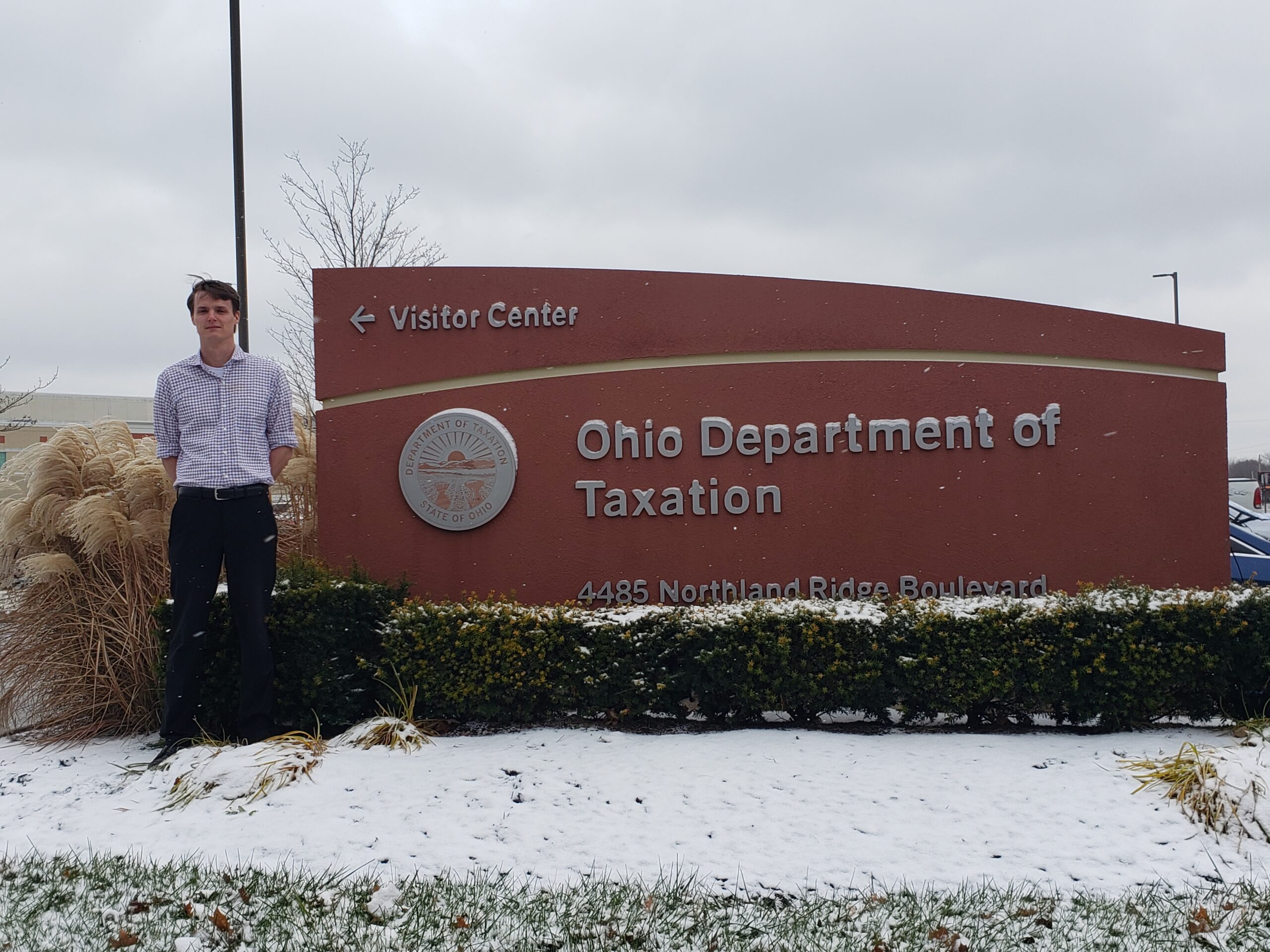
Foundation staff attorneys asked the Supreme Court to hear Nathaniel Ogle’s case, which seeks refunds for him and his coworkers of forced union dues that were seized from their paychecks in violation of the First Amendment.
WASHINGTON, DC – Across the nation, public employees continue to seek free legal aid from National Right to Work Foundation staff attorneys, to fight for their First Amendment rights recognized in the landmark Janus v. AFSCME Supreme Court ruling. Janus was argued and won by Foundation staff attorneys.
Janus affirmed that public employees cannot be required to subsidize union activities as a condition of employment and that union payments can only be deducted with an employee’s freely given consent.
Despite this clear ruling, union bosses have almost without exception refused to return money seized from workers in violation of the First Amendment. In response, Foundation staff attorneys are now assisting workers in more than a dozen cases seeking to force union officials to return illegal forced fees to tens of thousands of employees, with four such cases now pending at the U.S. Supreme Court.
Union Officials Refuse to Refund Illegally Seized Dues Post-Janus
In November, attorneys for Connecticut Department of Energy and Environmental Protection employees Kiernan Wholean and James Grillo filed a petition for writ of certiorari with the Supreme Court. It is asking the Justices to hear their case, seeking back years of union dues that they and their coworkers were forced to pay to Service Employees International Union (SEIU) union bosses in violation of the First Amendment. Their petition follows one filed in October for Ohio Department of Taxation employee Nathaniel Ogle, whose case seeks to require AFSCME union bosses to similarly return forced fees seized in violation of the Janus standard from potentially thousands of Ohio government employees.
With these two new cert petitions, there are now seven pending before the Supreme Court on this issue, four of which were filed for workers by Foundation staff attorneys. That includes the continuation of the original Janus case brought by Mark Janus.
If the Supreme Court decides to hear any one of these cases, a favorable ruling would create another groundbreaking precedent, potentially prompting the return in Foundation cases alone of over $130 million to employees fighting to get back money taken in contravention of their Janus rights.
Wholean and Grillo, who are not members of SEIU,
originally filed their case in 2018 in the U.S. District Court for the District of Connecticut shortly before the High Court decided Janus. The State ceased deducting dues from their paychecks for SEIU following a letter to the State Comptroller from a National Right to Work Foundation attorney, which threatened legal action for any dues deductions from non-members that continued after Janus.
However, SEIU union officials continue to refuse to refund dues that they took from Wholean, Grillo and other non-members in violation of the Janus First Amendment standard before the decision, even though they knew the employees never consented to pay.
Ogle filed his case at the District Court for the Southern District of Ohio just after Janus was decided. Like Wholean and Grillo, he was never a member of the union but had mandatory union fees deducted from his paychecks. The Ohio affiliate of the national AFSCME union has around 30,000 public employees across the Buckeye State under its bargaining monopoly. If a class is eventually certified in Ogle’s case, it could potentially include thousands of workers.
Foundation Attorneys: High Court Must Reject Union Attempts to Dodge Janus
Lower courts in these and other lawsuits have accepted union lawyers’ so-called “good faith” contentions for letting union bosses keep the dues collected in violation of the non-members’ constitutional rights. This is at odds with the Supreme Court’s Janus ruling, which did not proscribe retroactive relief. Indeed, it observed that union officials have been “on notice” for years that mandatory fees likely would not comply with the High Court’s heightened level of First Amendment scrutiny, articulated in the 2012 Supreme Court decision in the Foundation’s Knox v. SEIU case.
Foundation staff attorneys point out in the petitions before the Supreme Court that a “good faith” defense has never existed under Section 1983 of the Civil Rights Act of 1871, the statute under which these lawsuits are brought. Section 1983 specifically imposes liability on those who violate the constitutional rights of others while acting “under color of ” existing law.
Not all judges, however, have been convinced by union officials’ dubious “good faith” argument for keeping the unconstitutionally seized payments. In Wenzig, another Foundation-backed case, a majority of a Third Circuit panel denied the existence of such a defense. In a supplemental brief, Foundation attorneys cited the confusion among lower courts as a significant reason the court should hear the continuation of Janus.
“With seven petitions on this issue now pending with the High Court and more to be filed soon, it is time the Supreme Court hears this issue and ends the denial of justice for tens of thousands of non-member government employees whose First Amendment rights were violated,” commented National Right to Work Foundation President Mark Mix. “Section 1983 of the Civil Rights Act, the federal statute under which all these cases were filed, was specifically intended to allow individuals to remedy the deprivation of their rights when it occurs under color of law. It’s outrageous that union bosses have thus far been allowed to keep money seized in violation of the First Amendment because it was authorized by then-existing but unconstitutional law.
“That result is especially specious because, as the Supreme Court recognized in Janus, union bosses have been ‘on notice’ since 2012 that forcing government employees to pay union fees was likely unconstitutional,” Mix added.





