
Electric Utility Worker Asks Trump NLRB to Prosecute IBEW’s Restrictive Policies That Compel Workers to Fund Union Politics
Electric utility worker asks NLRB General Counsel to seek Board ruling against union policies that force nonmembers to fund union political spending
Benson, MN (September 23, 2025) – Theresa Klassen, an employee of Agralite Electric Cooperative, is asking the National Labor Relations Board (NLRB) to expedite consideration of Big Labor schemes that force workers to pay dues for union political activities. Klassen has filed an appeal with the NLRB’s Acting General Counsel, asking him to issue a complaint in her case after an NLRB Regional Director let International Brotherhood of Electrical Workers (IBEW) union officials off the hook for violating her rights. Klassen is receiving free legal aid from National Right to Work Foundation staff attorneys.
Klassen originally filed charges against both the IBEW international union and IBEW Local 160 to defend her rights under Communications Workers of America v. Beck. In this Foundation-won landmark U.S. Supreme Court decision, the Court ruled that union officials cannot force workers who abstain from membership to pay dues for anything beyond the union’s monopoly bargaining functions – including politics.
Even though Klassen successfully resigned her union membership, union bosses continued to demand full dues payments from her – including dues for union political expenditures. When she invoked her Beck rights with assistance from Foundation staff attorneys, union bosses then claimed that she could only opt out of dues payments for politics within a narrow 30-day “window period” each year in the month of November.
Brief: IBEW Union Clearly Violating National Labor Relations Act
Klassen’s appeal argues that it would violate the National Labor Relations Act (NLRA) “for a union to demand payment for any dues beyond what Section 8(a)(3) requires unless that employee affirmatively consented to pay full union dues.” Under the Beck decision, Section 8(a)(3) only permits union bosses to demand dues for union expenses that are directly related to bargaining.
Now, Klassen is asking the NLRB to uphold this interpretation and end all opt-out requirements, so that union officials must obtain explicit permission from employees to take payments for non-bargaining-related functions, including union political and lobbying activities.
Klassen is also asking the NLRB to end window period practices for becoming Beck objectors, as they similarly violate the NLRA by preventing workers from exercising their rights. Window period restrictions on when employees can exercise their Beck rights allow union officials to extract money from workers after they’ve already objected to financially supporting union political activities.
“The IBEW should be respecting my rights, not throwing up roadblocks so they can continue to use my paycheck dollars to fund their own agenda,” said Klassen. “The NLRB needs to recognize that union officials are violating the law; otherwise, these rights are not rights at all.”
Union Officials Use Restrictive Policies to Consolidate Power
Because Minnesota lacks Right to Work protections for its private sector workers, IBEW union officials can impose contracts that force Klassen and her coworkers to pay union dues as a condition of keeping their jobs, though this amount is limited by the Beck decision. In contrast, in Minnesota’s neighboring Right to Work states, union officials cannot force workers to pay any dues or fees just to keep their jobs.
“Free association is a right of every American, including workers who don’t want to associate with a union,” commented National Right to Work Foundation President Mark Mix. “It’s telling that IBEW officials are using a legally suspect policy to make it needlessly difficult for workers to stop supporting the union’s political activities.
“While the NLRB General Counsel should urge the agency to address these illicit schemes swiftly, ultimately Minnesotans and all Americans deserve Right to Work protections, which would make all union financial support strictly voluntary,” Mix added.
Workers in Missouri and Minnesota Challenge Union Bosses’ Scheme to Coerce Workers into Funding Union Political Activities
Cases against AFSCME, Guards Union, are latest to argue federal law prohibits “window periods” that trap nonmembers in full union dues payments
Kansas City, MO & Bloomington, MN (August 14, 2025) – Tina Delkamp, an employee of Honeywell FM&T in Kansas City, MO, and Meriem LeClair, an employee of Cornerstone Advocacy Center in Bloomington, MN, have each filed federal charges challenging union officials’ policies in their respective workplaces that coerce nonmember workers into funding union political activities. Delkamp and LeClair filed their charges at the National Labor Relations Board (NLRB) with free legal aid from National Right to Work Legal Defense Foundation staff attorneys.
Both charges state that union officials breached federal labor law by demanding that the employees “affirmatively opt-out of paying for political and ideological activities, instead of opting-in to make political and ideological contributions.” Under the Foundation-won Communications Workers of America v. Beck Supreme Court decision, union bosses cannot force workers who have opted out of union membership to pay fees for union political or ideological expenditures.
While the National Labor Relations Act (NLRA) protects workers’ right to abstain from formal union membership, states like Minnesota and Missouri that lack Right to Work laws permit unions to force workers to pay dues or fees just to keep their jobs. However, Beck limits this forced-dues amount to only what union bosses spend on bargaining functions, and these so-called “chargeable expenses” can never include money for union political or ideological activities. In both cases, union officials have attempted to get around Beck by neglecting to inform the employees of their rights.
Unions Can’t Force Funding for Political Activities Automatically
Delkamp’s charges, filed against International Guards Union of America Local 172, state that union officials are unlawfully withholding financial information she needs to verify what she has to pay as a non-member under Beck. Additionally, the charges challenge union officials for telling Delkamp that her inclusion of her employer on emails concerning her Beck rights was somehow a violation of federal law.
“I tried to exercise my right not to fund political activities I oppose, and the union threatened me for it,” said Delkamp. “Union officials shouldn’t be able to take my wages for their partisan activities without asking me first. They need to take responsibility for respecting my rights, instead of making me fight them on it.”
Union officials often neglect to inform workers of their Beck rights, and sometimes don’t even seek worker consent before deducting full dues (including dues for political expenses) from their paychecks. Recent federal charges filed by Delkamp, LeClair, and other workers with free Foundation legal aid give the NLRB an opportunity to enforce a new federal standard that would require union officials to seek clear consent from workers before extracting full union dues payments from their paychecks.
Union Used “Window Periods” to Keep Worker Trapped
LeClair’s charges, filed against AFSCME Council 5, also allege that the union “refused to recognize withdraw of union membership, except during ‘window periods,’” imposing an arbitrary restriction on the exercise of her Beck rights. Union-created “window periods,” in which union members can withdraw membership, are a stonewalling tactic with no basis in federal law.
“I didn’t want my union dues funding political activities I oppose, so I tried to resign my union membership, only for officials to tell me I had to wait,” commented LeClair. “If I have a right guaranteed under federal law, that right should apply all the time, not only on the days and weeks convenient for union bosses.”
“Across the country, Big Labor officials are using legally dubious schemes to force unwilling workers to fund a radical political agenda that is completely contrary to the priorities of most rank-and-file employees,” commented National Right to Work Foundation President Mark Mix. “The best way to ensure workers’ freedom is, of course, through Right to Work protections that make all union payments completely voluntary.
“Until Right to Work is the law of the land, the NLRB needs to step up to protect workers from being trapped in full forced dues, including the portion used for union political activism,” added Mix. “Workers who have already declined formal union membership should not have to also navigate arbitrary ‘window periods’ just to ensure they are not funding union boss political spending.”
MIT Grad Student Charges ‘Marxist’ Union with Illegal Forced Dues for Politics
The following article is from the National Right to Work Legal Defense Foundation’s bi-monthly Foundation Action Newsletter, July/August 2024 edition. To view other editions of Foundation Action or to sign up for a free subscription, click here.
Five other MIT students also filed religious discrimination charges against radical UE
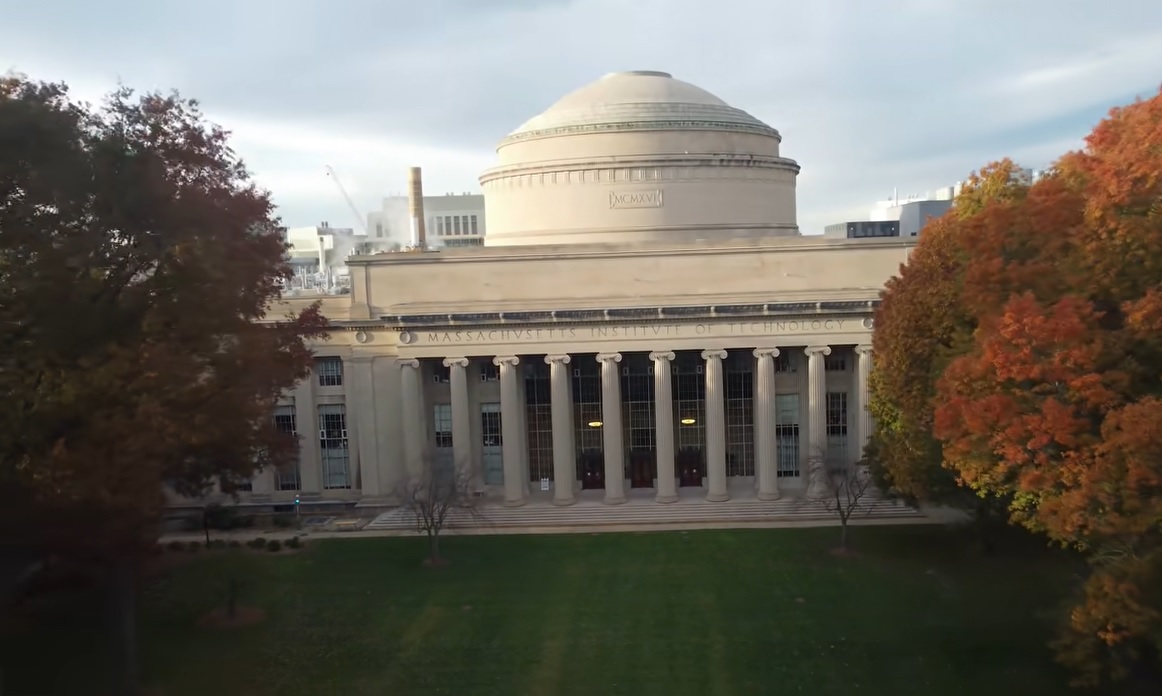
More clouds are gathering over at MIT as yet another graduate student targets the university with federal charges. She maintains the GSU union and MIT administration are illegally funneling student money into union politics.
BOSTON, MA – Following five Jewish students at the Massachusetts Institute of Technology (MIT) filing federal religious discrimination charges against the same union, the MIT Graduate Student Union (GSU-UE, an affiliate of the United Electrical Workers union) is now facing new federal unfair labor practice charges from civil engineering graduate student Katerina Boukin.
Under a series of controversial National Labor Relations Board (NLRB) rulings, graduate students at private universities like MIT are treated as “employees” of the university who can be subjected to forced union “representation.” Boukin’s charges, filed at the NLRB with free legal aid from the National Right to Work Legal Defense Foundation, maintain that union officials are unlawfully seizing money from her research compensation to support union political activities she abhors.
Extremist Union Politics Foisted on Graduate Students
“GSU union officials are going above and beyond what is legal and are forcing me to pay for their political activities, including their opposition to Israel and promotion of Leninist-Marxist global revolution, that I find deeply offensive,” commented Boukin. “The GSU’s political agenda has nothing to do with my research as a graduate student at MIT, or the relationships I have with my professors and the university administration, yet outrageously they demand I fund their radical ideology.”
Boukin’s charges seek to enforce her rights under the Foundation-won 1988 CWA v. Beck Supreme Court decision. This landmark ruling established that even in states like Massachusetts that lack Right to Work protections, union officials cannot legally compel individuals to pay for union expenses unrelated to bargaining activities, like union boss political activities.
According to Boukin’s charge, GSU union officials are violating the law by claiming she cannot exercise her rights under Beck because she missed a union-created annual “window period.” However, her charge asserts this restriction is blatantly illegal.
In fact, the GSU union was already forced to settle a prior Beck case, agreeing there to properly process students’ attempts to exercise their Beck rights. Boukin’s charges against the union argue that the union may be violating not only her rights but also the settlement it made with the NLRB.
GSU Union Bosses Also Charged for Illegal Religious Discrimination
MIT graduate student Will Sussman, along with fellow students Joshua Fried, Akiva Gordon, Tamar Kadosh Zhitomirsky, and Adina Bechhofer, have also filed religious discrimination charges against the GSU union with the Equal Employment Opportunity Commission (EEOC). They’ve also obtained free Foundation legal help.
The students, who are Jewish, oppose the union’s advocacy for the Boycott, Divestment, and Sanctions (BDS) anti-Israel movement. Despite asking union officials for legally-required religious exemptions from union dues payment, GSU officials denied their requests and even attempted to explain in letters how the students didn’t truly understand their faith.
As of this article, those EEOC charges remain pending against the GSU, with a federal lawsuit likely the next step if the union refuses to stop its illegal discrimination.
“Freedom of association is apparently a foreign concept to GSU union officials, who are flouting layers upon layers of federal law to compel students to fund their radical political agenda,” commented National Right to Work Foundation Vice President and Legal Director William Messenger. “However, both this case and Foundation attorneys’ cases for the five Jewish MIT graduate students show on a deeper level that the choice to provide support to a union should rest solely with workers, who may have sincere religious, political, or other objections to funding any or all of a union’s activities.”
DHS Security Guard’s Federal Lawsuit Forces IGUA Union Bosses to Stop Illegal Forced Union Dues Demands
After union officials did not provide legally required financial disclosures, guard wins reduction in mandatory union fees
Washington, DC (June 6, 2024) – Rosa Crawley, a security guard at the Department of Homeland Security’s Nebraska Avenue Complex, has triumphed after filing a federal lawsuit charging the International Guards Union of America (IGUA) with unlawfully demanding and seizing union dues from her paycheck. Crawley, who is employed by Master Security, forced the union to back off its illegal dues demands with free legal aid from National Right to Work Foundation staff attorneys.
Crawley is not a member of the IGUA union, but is still subject to IGUA’s monopoly bargaining power over the security guards at the DHS Nebraska Avenue Complex. As part of the settlement, IGUA union bosses must reduce the compulsory fee that they seize from Crawley as a condition of keeping her job. Before she filed suit, union bosses demanded the equivalent of full membership dues from her.
In her federal lawsuit, which she filed at the U.S. District Court for the District of Columbia, Crawley sought to defend her rights under the 1988 Right to Work Foundation-won CWA v. Beck Supreme Court decision.
While union officials can force private sector workers in non-Right to Work jurisdictions like the District of Columbia to pay dues or fees just to keep their jobs, the Beck decision prevents union bosses from forcing employees who have abstained from union membership to pay for anything beyond the union’s core bargaining functions, such as union bosses’ political activities. Full membership dues often contain charges for these unrelated items.
Beck also requires union bosses to furnish nonmembers who invoke their rights under the decision with an independent audit of the union’s finances and a breakdown of how union officials spend forced contributions.
Beck protections aren’t necessary in Right to Work states like neighboring Virginia, where union membership and all union financial support are fully voluntary.
IGUA Union Bosses Took Full Dues from Guard, Provided No Financial Disclosures
According to the suit, Crawley sent a letter to union officials resigning her union membership back in July 2023. Instead of immediately providing her with her Beck rights, union officials informed her that she would be charged a so-called “agency fee” which “is the same exact cost as what the union members pay.”
“So there will be absolutely no change in a financial sense,” the union’s reply letter stated.
Not satisfied with that explanation, Crawley in September 2023 formally invoked her Beck rights and asked union officials to reduce her dues payments in accordance with the decision. She also asked them to “provide [her] with an accounting, by an independent certified public accountant, that justifies Local 160’s calculation of its agency [forced] fee,” according to her lawsuit.
In an October 2023 reply to her Beck request, union officials used a confusing percentage averaging calculation to determine a fee amount that contradicted what they told Crawley when she resigned her membership. An independent audit of the union’s finances was nowhere to be found. Despite that, Crawley’s lawsuit reported that IGUA bosses continued to collect full union dues from her paycheck, and tried to impose extra steps that would need to be completed if she wanted to see the union’s financial info.
Workers Must Be On Guard for Illegal Union Uses of Worker Funds as Election Nears
After the filing of her lawsuit, Crawley expressed concern that her money was flowing toward union politics while IGUA bosses dragged their feet on honoring her Beck rights. “I shouldn’t have to pay for the IGUA union’s political activity just so I can continue to do my job,” commented Crawley. “Union officials have a legal obligation to stop charging me for politics and provide me with an accounting of how they are using my money, and so far they have done neither. This isn’t how they should treat the workers they say they ‘represent.’”
“We’re pleased that Ms. Crawley was able to terminate IGUA union officials’ outrageous seizure of full union dues from her paycheck,” commented National Right to Work Foundation President Mark Mix. “However, IGUA union officials’ inability to follow even the modest limitations that Beck places on their ability to impose mandatory dues on workers is ridiculous, and no worker should have to file a federal lawsuit to force union bosses into recognizing those rights.
“Workers’ right to prevent their money from going toward unwanted union activities, particularly politics, is especially important as union bosses try to push forward their agendas in advance of the 2024 election,” Mix added. “So workers should be vigilant of Beck violations, and remember they can contact Foundation attorneys for free legal aid in exercising their rights under that decision.”
Michigan Security Guard Slams Union with Federal Charges for Illegal Dues Seizures, Transparency Issues
Union officials fail to provide required information on how dues money is spent, already face vote which could stop forced-dues spigot
Grand Rapids, MI (May 8, 2024) – James Reamsma, a security guard whose posts include the Gerald R. Ford Federal Building and other government sites in the Grand Rapids area, has hit the United Government Security Officers of America (UGSOA) union with federal unfair labor practice charges maintaining that UGSOA union officials are seizing dues money from his paycheck without providing required disclosures on how the union spends worker cash. Reamsma filed the charges at Region 7 of the National Labor Relations Board (NLRB) in Detroit.
Reamsma is also leading his fellow security guards at Triple Canopy Inc. in an effort to vote away the UGSOA’s power to compel guards to pay dues or fees to the union in what is known as a “deauthorization election.” He is receiving free legal aid in both actions from the National Right to Work Legal Defense Foundation.
Reamsma’s charges seek to enforce his rights under the Communications Workers of America v. Beck Supreme Court decision, which was won by Right to Work Foundation attorneys. The Court held in Beck that union officials cannot force workers who have abstained from union membership to pay union dues or fees for expenses not directly germane to contract negotiations, such as union political activities. Workers who exercise their Beck rights are also entitled to an independent audit of the union’s finances, a breakdown of how union officials spend forced contributions, and an opportunity to challenge how the union calculates its reduced “Beck fee.”
Beck rights are only relevant in non-Right to Work jurisdictions like Michigan, where union officials have the legal privilege to force private sector workers to pay dues or fees as a condition of getting or keeping a job. In contrast, in Right to Work states like neighboring Indiana and Wisconsin, union membership and all union financial support are strictly voluntary. Michigan had Right to Work protections until a 2023 repeal rammed through by union partisans on the Michigan Legislature became effective earlier this year.
Union Dubiously Claims No Dues Money Goes to Politics
According to Reamsma’s charge, he submitted a notice to UGSOA union agents in March that requested the union reduce his dues payments in accordance with Beck and provide him with the required financial information. In response, union officials claimed that the amount of dues chargeable to nonmembers was equal to 100% of full union dues. Reamsma’s charge states that UGSOA “failed to provide the required financial disclosures for itself and its affiliated unions, and a chance to object to its alleged reduced fee.”
The charge also notes that, despite Reamsma notifying union officials in April that he prefers to pay union dues by check, UGSOA ignored this request and has continued to take money directly from his paycheck by payroll deduction. Federal labor law forbids union officials from using direct deduction to collect union dues or fees without worker consent.
Foundation attorneys argue in the charge that the union’s continued seizing of dues money from Reamsma’s paycheck “restrain[s] and coerce[s] Charging Party in the exercise of his Section 7 rights” under the National Labor Relations Act (NLRA). The NLRA protects the right of workers to refrain from union activities.
Guards May Vote to End Forced Dues
The NLRB has scheduled May 17 to count the votes in Reamsma’s deauthorization election, which is currently taking place by mail. If a majority of his colleagues vote to deauthorize the union, it will no longer have the legal power to coerce Reamsma and his colleagues to pay dues or fees as a condition of employment. Michigan’s non-Right to Work environment forces workers to either deauthorize a union or vote it out of a workplace completely (via a similar process known as “decertification”) if they want to end union officials’ forced-dues power.
“UGSOA union officials appear to be withholding vital information about how they spend worker money from the very security guards they claim to ‘represent,’” commented National Right to Work Foundation President Mark Mix. “If union bosses won’t respect basic worker rights regarding the collection and spending of dues money, Triple Canopy security guards should rightly be skeptical of whether UGSOA deserves the privilege to force them to pay dues or fees at all.
“While it’s illegal everywhere to force workers to pay for union political expenditures they oppose, the choice to financially back a union at all should rest solely with each individual worker, which is why Right to Work protections are so important,” Mix added.
Federal Lawsuit Hits Guards Union of America for Illegally Forcing DC-Based Security Guard to Pay for Union Politics
Union officials provided contradictory information on amount a guard must pay the union to keep a job
Washington, DC (April 19, 2024) – Rosa Crawley, a DC-based security guard employed by Master Security, has just hit the International Guards Union of America (IGUA) Local 160 with a federal lawsuit, which maintains that full union dues, including dues for union political activities, are being illegally deducted from her paycheck. Crawley filed the complaint in the U.S. District Court for the District of Columbia with free legal aid from National Right to Work Foundation staff attorneys.
Crawley, who with her coworkers provides security services to the Department of Homeland Security’s “Nebraska Avenue Complex,” seeks to enforce her rights under the 1988 Right to Work Foundation-won CWA v. Beck Supreme Court decision. The Court held in Beck that union officials cannot force workers who have abstained from union membership to pay union dues or fees for any expenses not directly germane to contract negotiations. Nonmember workers who exercise their Beck rights are also entitled to an independent audit of the union’s finances and a breakdown of how union officials spend forced contributions.
Beck rights are only relevant in non-Right to Work jurisdictions like the District of Columbia, where union officials have the legal prvivilege to force private sector workers to pay dues or fees as a condition of getting or keeping a job. In jurisdictions that have Right to Work protections, like neighboring Virginia, union membership and all union financial support are strictly voluntary.
“I shouldn’t have to pay for the IGUA union’s political activity just so I can continue to do my job,” commented Crawley. “Union officials have a legal obligation to stop charging me for politics and provide me with an accounting of how they are using my money, and so far they have done neither. This isn’t how they should treat the workers they say they ‘represent.’”
Union Officials Haven’t Revealed How They Spend Worker Money
According to the suit, Crawley sent a letter to union officials resigning her union membership back in July 2023. Instead of immediately providing her with her Beck rights, union officials informed her that she would be charged a so-called “agency fee” which “is the same exact cost as what the union members pay.”
“So there will be absolutely no change in a financial sense,” the union’s reply letter stated.
Not satisfied with that explanation, Crawley in September 2023 formally invoked her Beck rights and asked union officials to reduce her dues payments in accordance with the decision. She also asked them to “provide [her] with an accounting, by an independent certified public accountant, that justifies Local 160’s calculation of its agency [forced] fee,” according to her lawsuit. In an October 2023 reply to her Beck request, union officials used a confusing percentage averaging calculation to determine a fee amount that contradicted what they told Crawley when she resigned her membership. An independent audit of the union’s finances was nowhere to be found.
Crawley’s lawsuit recounts that, since October 2023, union officials have made her reiterate her request for an accounting, pay an initiation fee equal to the initiation fee paid by full members, and “[have] collected and [continue] to collect from Crawley amounts equal to full union dues.”
“Federal labor law’s default position is that union officials are empowered to demand workers’ hard-earned money as a condition of employment. This is problematic because there are any number of reasons workers may not want to support the union, including religious, political, or financial reasons,” observed National Right to Work Foundation President Mark Mix. “While the Beck decision provides important protections, a Right to Work environment is ultimately better because workers are completely free to decide whether or not union officials deserve any of their hard-earned money.”
Connecticut Bus Driver Slams Teamsters Union with Federal Charges for Violating Beck Rights
Teamsters union officials illegally force school bus driver to pay for union political activities
New Milford, CT (March 30, 2023) – Connecticut school bus driver Mary Boland has filed federal charges against Teamsters Local 671 union after union officials violated her rights, as established under the Foundation-won U.S. Supreme Court Beck decision, by illegally charging her union dues in excess of what she must pay in order to keep her job. These charges were filed with the National Labor Relations Board (NLRB). Boland is being represented for free by National Right to Work Legal Defense Foundation staff attorneys.
On October 20, 2022, Mary Boland submitted a letter to Teamsters Local 671 exercising her rights to opt out of union membership and pay a reduced union fee. This forced union fee must be verified by an independent audit of union expenditures. Individuals who opt out of formal union membership cannot be fired from their job by refusing to pay for “non-chargeable” union expenditures, like member-only activities or union political and lobbying spending.
Due to Connecticut lacking Right to Work protections, workers who oppose union boss agendas can still be forced to pay union fees as a condition of their continued employment. However, under the Foundation-won 1988 Beck decision, union officials can never require non-members to fund activities not directly related to union monopoly bargaining. Beck has been interpreted by the lower courts, and the NLRB, to require that union officials provide certain union financial disclosures to justify the amount they claim a worker can be required to pay.
However, in a letter to Boland dated November 2, 2022, the union acknowledged she invoked her rights under Beck, but failed to actually reduce those fees or provide the required audit. Union officials have charged Boland full union dues as of the filing of the NLRB charge on March 17, 2023, and have never provided the required audit to justify any dues deductions.
“In their apparent greed to extract as much money as possible from unwilling workers, Teamsters bosses are blatantly disregarding longstanding Supreme Court precedent,” commented Mark Mix, President of the National Right to Work Foundation. “This case shows why Connecticut workers need the protection of a Right to Work law to make all union financial support strictly voluntary.”
“Had Right to Work protections been in place, Mary Boland and other Connecticut workers would have had the freedom to simply cut off all union dues,” Mix added. “Without these Right to Work Protections, however, workers find themselves having to tangle with union lawyers over what portion of union dues they can be legally fired for not paying.”
Northern PA Metal Worker Prevails in Federal Case Charging CWA Union with Illegal Dues Deductions
CWA officials also refused worker’s membership resignation and sought to force him to remain union steward
Galeton, PA (March 3, 2023) – Curtis Coates, an employee of metal corporation Catalus, has successfully forced Communications Workers of America (CWA) union officials to stop illegally seizing money from his paycheck for union politics and ideological causes. National Right to Work Legal Defense Foundation staff attorneys represented Coates for free before the National Labor Relations Board (NLRB).
Coates charged CWA union officials in May 2022 with unlawfully snubbing both his request to resign from his position as a union shop steward and his request to formally end his union membership. Full union dues deductions also continued to flow out of his paycheck even after his requests. Coates argued that CWA bosses violated his rights under the National Labor Relations Act (NLRA).
Because Pennsylvania lacks Right to Work protections for its private sector workers, unions can legally coerce workers into paying union fees just to keep their jobs even if they choose not to become union members. However, under the U.S. Supreme Court’s decision in CWA v. Beck, won by Foundation attorneys, this is limited to only the part of union dues that union officials claim goes toward a union’s core “representational” functions, and excludes deductions for union political or ideological activities. In contrast, in states with Right to Work protections, union membership and all union financial support are both strictly voluntary.
A Foundation-won settlement now requires CWA union officials to post a notice at Coates’ workplace declaring that they “will not fail and refuse to honor your request to resign your union membership,” and “will not fail and refuse to honor your request to resign your role as a union steward.” CWA union officials have also stopped siphoning money for union politics and ideological activities from Coates’ wages.
CWA Forced Dissenting Worker to Remain Shop Steward, Took Full Dues Illegally from Paycheck
According to his charge, Coates sent a message to CWA union officials on October 20, 2021, declaring that he was resigning from his position as shop steward and terminating his union membership. A union official rebuffed both of Coates’ requests the next day, insisting that he had to remain both a union member and a shop steward.
In December 2021, January 2022, and February 2022, Coates followed up with union officials several times via email and mail. He asked when union officials would cease taking dues money from his wages and what process he had to follow to revoke his dues deduction authorization.
Coates’ charge asserted that CWA union officials, by refusing his repeated requests to resign his union membership, violated his rights under Section 7 of the NLRA, which recognizes workers’ right to “refrain from any or all” union activities.
Foundation President: No Place for Compulsory Union Support in Federal Law
“CWA officials summarily denied Mr. Coates’ valid exercise of his right to refrain from union membership, unlawfully seized money for union politics, and even forced him to remain a union shop steward,” commented National Right to Work Foundation President Mark Mix. “The extreme aversion CWA union officials seem to have to any kind of dissociation with the union shows where their focus lies: maintaining forced worker subsidization of union activities and not on respecting workers’ individual rights.”
“Such union malfeasance is only buoyed by federal labor law, which permits states to deny Right to Work protections to private sector workers,” Mix added. “No American worker should be forced to fund any kind of unwanted union purpose as a condition of keeping his or her job, which is why securing Right to Work protections for all Americans is absolutely vital.”





