
Flight Attendant Asks SCOTUS to Hear Case Challenging Union Boss Scheme to Discriminate Against Nonmembers
Petition: Ninth Circuit wrongly ruled that federal labor law lets union officials take away on-the-job benefits for refusal to pay union fees
Washington, DC (April 23, 2025) – Flight attendant Ali Bahreman has just filed a petition asking the U.S. Supreme Court to hear his case challenging a Transportation Workers Union (TWU) contract that deprived him of his ability to use his seniority to bid on flight assignments and secure other valuable job benefits. Bahreman, who refrained from formal union membership, is arguing that a union monopoly contract between Allegiant Airlines management and TWU union bosses violated the Railway Labor Act (RLA) by conditioning flight attendants’ “bidding privileges” on their payment of fees to the union.
The RLA governs employment arrangements like Bahreman’s in the rail and air industries. The RLA is a federal law that permits union officials and employers to enforce so-called “union security agreements” that require workers in a unionized workplace to pay union fees to keep their jobs.
Bahreman’s petition points out that although the RLA grants union officials the power to enter into contracts that require payment of union fees as a condition of employment, it has long been illegal for unions to enter into contracts that otherwise discriminate against certain classes of workers, like nonmembers. This goes all the way back to the 1944 Steele Supreme Court precedent that created what the court called the “Duty of Fair Representation” (DFR) in order to save the RLA from being declared unconstitutional after union officials used their power to impose a contract that discriminated against workers based on their race.
The petition argues that not only does the Ninth Circuit Court of Appeals’ decision upholding the discriminatory scheme conflict with opinions from other federal courts of appeal, but if left in place, the decision calls into question the constitutionality of union exclusive bargaining powers under both the RLA and the National Labor Relations Act (NLRA):
“Having unraveled the DFR, the Ninth Circuit’s decision allows unions to wield congressionally delegated exclusive representation power without the DFR’s limitations. That raises ‘serious constitutional questions’ regarding exclusive representation’s constitutionality…
“Ensuring that the Ninth Circuit’s decision does not dismantle employees’ RLA and NLRA speech and associational freedoms from forced unionism is of national importance. The Ninth Circuit’s decision jeopardizes employees’ ability to do their jobs free from union coercion, hostility, and discrimination in the workplace.”
Petition Exposes That Lower Court Decision in Favor of TWU Allows Union Bosses to Discriminate in Workplace
The petition comes after the Ninth Circuit Court of Appeals puzzlingly ruled that the RLA permits union officials to enforce contracts that require employers to eliminate on-the-job benefits from workers who refuse to pay union fees. Bahreman’s petition goes on to explain that the Ninth Circuit’s reasoning greenlights discrimination by union bosses in their treatment of union members and nonmembers, which flies in the face of the duty of fair representation that federal law imposes on all union officials.
Federal law permits union officials to extend their monopoly bargaining powers over all workers in a unit, including those who oppose the union, but requires that union officials not discriminate against nonmembers. Therefore, the petition says, monopoly bargaining itself should be reexamined if the Ninth Circuit’s ruling is upheld.
“Mr. Bahreman’s case shows how deep the rabbit-hole of union boss legal privileges goes,” commented National Right to Work Foundation President Mark Mix. “The Ninth Circuit’s decision turns the U.S. Supreme Court’s ‘duty of fair representation’ on its head, and exposes the underlying constitutional tensions that the Court identified long ago in the 1944 Steele High Court decision.
“Originally created in Steele as a bulwark against union bosses wielding their monopoly representation and forced dues powers to discriminate, the Ninth Circuit’s reinterpretation of the DFR doctrine allows union officials to engage in discrimination to coerce fee payment from union dissidents,” added Mix. “The Supreme Court should take Mr. Bahreman’s case to settle the circuit split and make it clear that Big Labor officials cannot wield their extraordinary government-granted powers to undermine the working conditions of workers who oppose union affiliation.”
Flight Attendant Sues Transport Union for Religious Discrimination
The following article is from the National Right to Work Legal Defense Foundation’s bi-monthly Foundation Action Newsletter, January/February 2021 edition. To view other editions or to sign up for a free subscription, click here.
Flight Attendant Sues Transport Union for Religious Discrimination
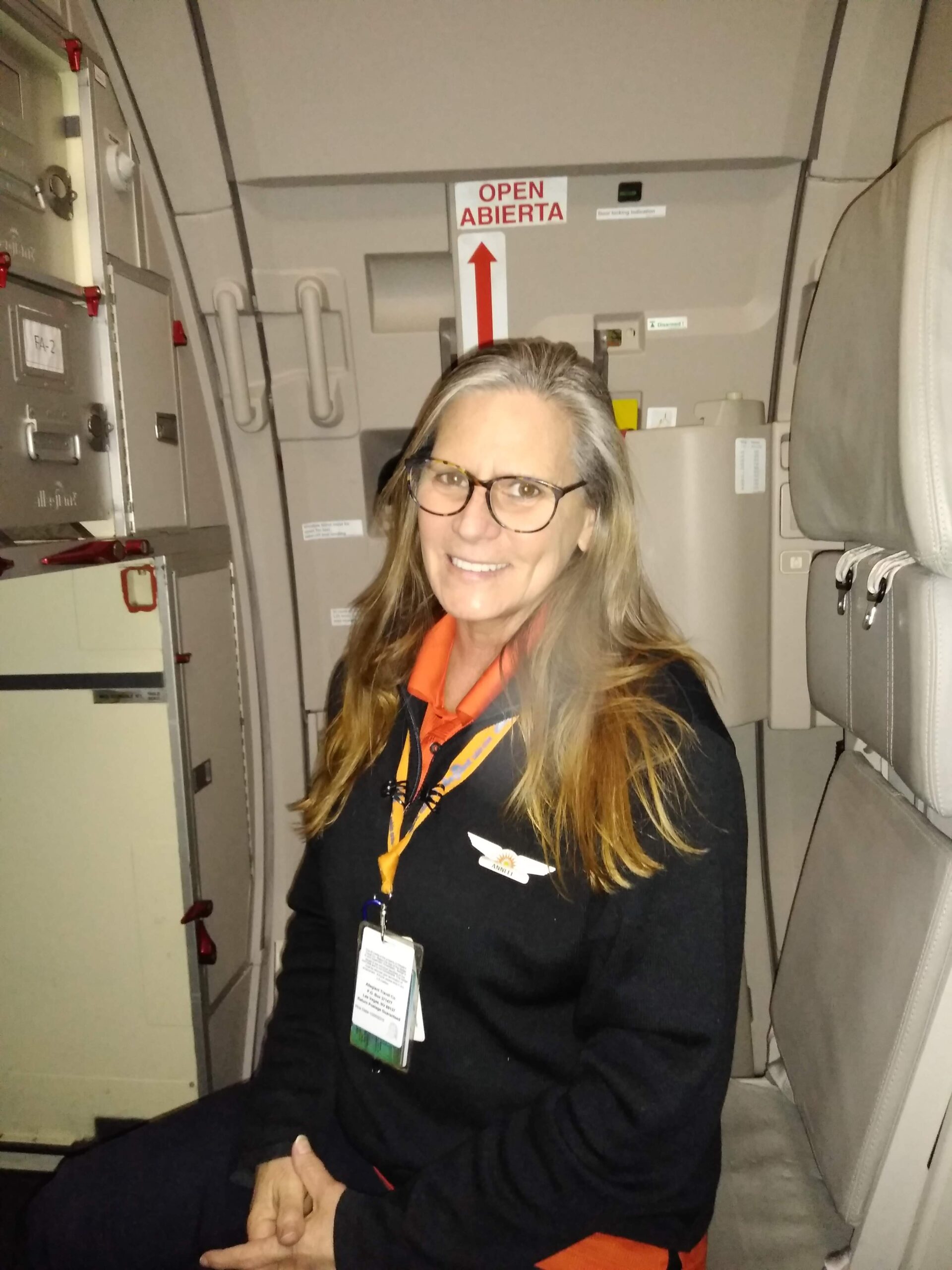
Please stow your religious objections: TWU union bosses forced Allegiant Air flight attendant Annlee Post to fund the union in violation of her religious beliefs and federal law.
KNOXVILLE, TN – Allegiant Air flight attendant Annlee Post filed a federal lawsuit in November against Transport Workers Union of America Local 577 (TWU) because the union refused to accommodate her religious beliefs. She received free legal aid from National Right to Work Foundation staff attorneys.
Post is a Christian, and she objects to funding the TWU on religious grounds. As recognized in the 2015 EEOC v. Abercrombie & Fitch Supreme Court decision, Post is not required to satisfy any special requirements to merit religious accommodation under Title VII of the Civil Rights Act of 1964.
To exercise her rights, Post sent two letters to union officials making them aware of her objection and asking that her dues payments be redirected to charity.
EEOC Issues “Right to Sue” Letter to Union Objector
When TWU officials refused this request, she filed a charge with the Equal Employment Opportunity Commission (EEOC) against the union.
The EEOC was unable to resolve Post’s charge, but it issued a “Right to Sue” letter in August 2020, allowing her to file a federal lawsuit against the union to protect her rights. Post then filed a complaint in federal court alleging TWU officials illegally discriminated against her by refusing to accommodate her and threatening to revoke her bidding privileges.
Bidding privileges control a flight attendant’s ability to schedule trips, work, vacations and days off. Post asked the court for an order stopping TWU officials from requiring her and other employees to pay union fees that violate their sincere religious beliefs.
Post’s lawsuit also alleges that union officials violated the United States Constitution’s First and Fourteenth Amendments, which require union officials to follow specific procedures to demand forced dues payments. The union did not follow those procedures here.
Union officials did not provide a notice of how the forced-fee amount was calculated and an audit of the union’s financial records. Nor did they give a notice of the procedure to challenge the fee amount.
Federal Law Prevents Union Threats to Workplace Privileges
Even though she lives in Tennessee, which has enacted Right to Work protections so workers who object to union membership can freely abstain from funding union activities for any reason, Post is subject to the Railway Labor Act (RLA) because she works for an airline.
The RLA overrides state Right to Work laws and allows union officials to compel union fees, but only “as a condition of continued employment.” The RLA does not permit forced-dues payments based on any other condition — such as bidding privileges. Post’s Foundation staff attorneys argue that TWU’s monopoly bargaining agreement with Allegiant is invalid because it requires dues payments to maintain bidding privileges, whereas payment “as a condition of continued employment” is the only legal forced unionism agreement under the RLA.
“Annlee Post and others like her should not have to choose between privileges at work and their religious beliefs,” said National Right to Work Foundation Vice President Patrick Semmens. “TWU bosses knew about Ms. Post’s objections, but refused to accommodate them as longstanding federal law requires. They instead threatened to take away her bidding privileges, simply because she would not fund their organization in violation of her religious faith.
“This case is a reminder of why no worker should be forced to fund a union with which he or she disagrees, no matter whether their objection is religious or for any other reason,” Semmens said.





