
Hudson Valley Farmworker Challenges PERB Official’s Dismissal of Employee Petition Seeking Removal of UFW Union Officials
Porpiglia Farms workers have been restrained for almost a year from voting union out of farm, new brief challenges suspect union “blocking charges”
Marlboro, NY (August 25, 2025) – Ricardo Bell, an agricultural worker at Porpiglia Farms in the Hudson Valley, is urging New York’s Public Employment Relations Board (PERB) in Albany to overturn a lower board official’s refusal to process a petition he and his coworkers backed seeking a union removal vote. Bell and his colleagues petitioned the PERB to hold a vote to remove United Farm Workers (UFW) union officials from power at Porpiglia Farms, and are receiving free legal aid in their effort from the National Right to Work Legal Defense Foundation.
The PERB is the New York state agency responsible for enforcing labor law in the agricultural sector, a task that includes administering votes to install (“certify”) and remove (“decertify”) unions. Despite the fact he submitted a petition containing enough of his colleagues’ signatures to trigger a union decertification vote, Bell’s latest filing reports that the PERB’s Acting Director of Private Employment Practices and Representation refused to process his petition on the basis of four unproven claims of wrongdoing that UFW union officials filed against Porpiglia Farms management.
At both state and federal labor boards, union officials often file such allegations (usually called “blocking charges”) to stop workers from exercising their right to vote a union out of power at a workplace – even without evidence showing any connection between the employer’s alleged conduct and workers’ desire for an election. Because New York lacks Right to Work protections for its private sector workers, union bosses have the power to enforce contracts that require workers like Bell and his colleagues to pay union dues or fees as a condition of keeping their jobs. In contrast, in 26 states with Right to Work laws, union membership and all union financial support are strictly voluntary.
Farmworker Argues PERB Shouldn’t Let Union Bosses Block Union Removal Election
Bell’s latest filing consists of exceptions to the PERB Acting Director of Private Employment Practices’ decision denying his request to process the petition. It states that the decision is unfounded because nothing in New York’s agricultural labor law or in the PERB’s policy authorizes the use of blocking charges to stop an employee-requested decertification election.
The brief argues that the PERB’s policy “is punitive, punishing the employees for conduct they cannot control… Employees should be free to choose their representative. Blocking charge delays prevent employees from exercising that right to choose.”
Bell’s brief also contends that the Acting Director’s decision violated a basic standard that PERB itself stated in an earlier case involving Bell and his coworkers. In that case – another union decertification attempt that was dismissed on different grounds – the PERB issued a decision explaining that not all charges of employer misconduct justify barring employees from exercising their right to vote out a union, and that if a blocking charge policy were to be applied, union officials must allege conduct that actually harms employees’ ability to choose for or against a union. Now the Acting Director’s dismissal of Bell’s newest decertification petition flies in the face of that standard, Bell’s brief explains, because it “failed to analyze the facts of the four charges” and makes no attempt to show how they might have affected the employees.
PERB Never Gave Employee Opportunity to Respond to Dubious Union Charges
Bell’s brief further points out that the Acting Director dismissed his union decertification petition without holding any formal fact-finding proceedings, and that the PERB agents provided Bell with the union’s blocking charges very late in the game – meaning he was deprived of any meaningful chance to challenge the allegations that blocked his election.
“Whether at the state or federal level, so-called ‘blocking charge’ policies do the exact same thing: Give union bosses the opportunity to stop the workers they claim to ‘represent’ from exercising their right to have an election they have properly requested,” commented National Right to Work Foundation President Mark Mix. “In non-Right to Work states like New York, these delays often mean that union officials can continue to siphon dues money from employees who have already expressed substantial interest in voting them out.
“Mr. Bell and his coworkers’ attempts to vote out the aggressive, politics-obsessed UFW union have been stalled for over a year now, which shows, clearly, how New York’s agricultural labor laws squash workers’ free choice simply to empower union bosses,” Mix added.
Bell and another New York farm employee, Jean Estrame, are also seeking to intervene in a federal lawsuit challenging New York State’s agricultural labor law (the so-called Farm Laborers’ Fair Labor Practices Act, FLFLPA) because it lets union officials bypass traditional union certification votes and sweep to power using the coercive “card check” unionization method.
New York Farmworkers Seek to Challenge ‘Card Check’ & Uproot UFW Union Bosses
The following article is from the National Right to Work Legal Defense Foundation’s bi-monthly Foundation Action Newsletter, January/February 2025 edition. To view other editions of Foundation Action or to sign up for a free subscription, click here.
Farmworkers fight union argument that New York labor law lets union bosses trap workers forever
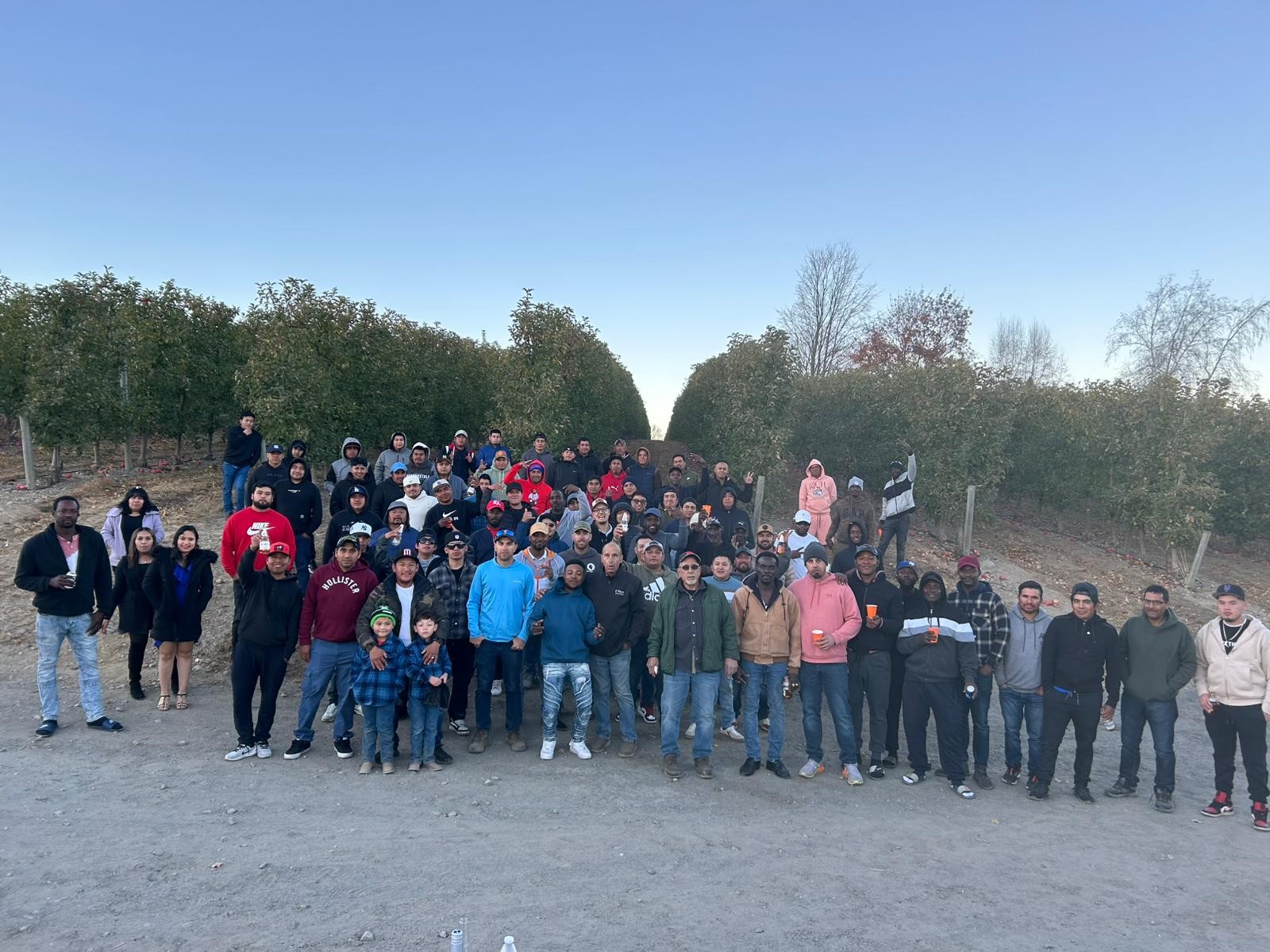
Porpiglia Farms workers, who were targeted by an aggressive UFW ‘card check’ campaign against the farmworkers, are banding together to vote the union out and ensure that union officials reap what they have sown.
MARLBORO, NY – In 2020, the New York State Assembly passed a Big Labor-backed law that granted union officials sweeping new powers to impose their monopoly bargaining control over the state’s farmworkers. Since New York is one of 24 states that lacks a Right to Work law, the law authorizes union bosses to force farmworkers to pay union dues or else be fired.
But that’s not all: New York labor law went even further by mandating “card check” organizing, in which union officials deny workers a secret ballot union vote and instead claim majority support by submitting cards ostensibly showing worker support. These cards are often collected through pressure tactics, intimidation, or even threats.
But even that dramatic increase in power over the agricultural sector and agricultural workers is not enough for United Farm Workers (UFW) union officials.
UFW tyrants are advancing the cynical argument that, under New York law, workers can be forced into union ranks but can never escape forced unionism. They argue this to counter a recent National Right to Work Foundation-backed union decertification case for employees of Porpiglia Farms, an apple farm in the Hudson Valley of New York.
NY Fruit Farmworkers Seek Union Ouster After ‘Card Check’
Porpiglia employee Ricardo Bell submitted a petition last year in which he and his coworkers asked the New York Public Employment Relations Board (PERB) to hold a vote at the orchard on whether to remove the UFW. (Despite its name, PERB is responsible for enforcing labor law in both New York’s public and agricultural sectors.)
In late 2024, Foundation attorneys filed a brief for Bell countering union officials’ absurd argument that one card check drive should lock employees in a union forever. Additionally, more Foundation-backed decertification cases are sprouting up in both New York and other Big Labor-dominated states for farmworkers who are rejecting UFW officials’ card check schemes.
Brief Challenges Theory That Workers Have No Right to Remove Incumbent Union
Bell filed his decertification petition with Foundation legal aid after UFW union officials seized power at his workplace through a hasty card check unionization drive. His newest filing attacks union bosses’ contention that once a union is certified as the monopoly union “representative” of a work unit, there can be no option to remove it.
“[New York labor law] does not indicate that employees have a single chance at self-organization,” the brief says. “If that were the case, the very action of choosing a representative under [New York labor law] would deprive employees of the ability to exercise [their rights] in perpetuity….”
Foundation-Backed Workers Battle UFW ‘Card Checks’ Across Country
Since Bell’s filing, Foundation attorneys have also assisted in a union decertification effort for workers at Cherry Lawn Fruit Farms near Rochester, NY, who were targeted by a similar UFW card check campaign. These two groups of New York farmworkers join Foundation-backed employees of Wonderful Nurseries in California in challenging the UFW’s tactics.
Wonderful Nurseries workers still have multiple unfair labor practice charges pending against UFW bosses for deceptive behavior during an early 2024 card check drive. The charges detail UFW agents lying about the true purpose of cards that they collected from workers, and harassing workers who now back an effort to vote the union out.
“The aggressive and often demeaning tactics that UFW union officials use to seize control over agricultural workers show clearly why ‘card check’ is a bad idea in the agricultural sector, the public sector, and in any sector,” commented National Right to Work Foundation Vice President and Legal Director William Messenger. “UFW officials are arguing that workers should have little or no chance at all to challenge a union’s ascent to power by this process.
“The idea that workers have no ability to eject a union once it is installed in power further demonstrates that this is not about workers’ choices at all, only about union bosses’ power over workers, even when workers overwhelmingly want nothing to do with union bosses’ so-called ‘representation,’” added Messenger.





