
National Right to Work Foundation Slams Biden National Labor Relations Board’s Move to Reverse ‘Election Protection Rule’
Union boss-beholden NLRB to make it easier for union bosses to block workers from exercising right to vote out unpopular unions
Washington, DC (November 3, 2022) – The National Labor Relations Board (NLRB) today announced it was initiating rulemaking to rescind the Board’s Election Protection Rule, a 2020 provision that, among other things, helped protect rank-and-file workers’ statutory right to hold votes to remove unwanted union officials.
National Right to Work Foundation President Mark Mix issued the following statement on the Biden NLRB’s announcement:
“The Biden-appointed NLRB majority – two of whom were union lawyers when nominated for their seats on the Board – is once again protecting union boss power to the detriment of the statutory rights of rank-and-file workers. Make no mistake, reversing the Election Protection Rule will mean more workers trapped in forced union ranks they oppose, and more denials of worker requests for basic secret-ballot votes regarding union status.
“The NLRB’s own statistics indicate that workers are currently seeking to throw out unwanted unions at the highest rate in years. Yet, rather than reflect on why so many workers want nothing to do with union so-called ‘representation,’ the anti-worker response of the Biden Administration and their Big Labor allies is to build a wall to keep workers in unions, or to stop them from even holding votes to oust incumbent union bosses.”
NLRB Seeks to Undermine Right to Vote as Worker Decertification Efforts Increase
The NLRB adopted the Election Protection Rule in 2020 after multiple rounds of comments from Foundation staff attorneys supporting the changes. The rule included reforms to the NLRB process for dealing with union “blocking charges,” which union bosses often file to prevent rank-and-file employees from exercising their right to vote out a union. Union officials manipulate “blocking charges” to stop workers’ requested votes from taking place for months or even years by making one or multiple allegations against the employer.
The 2020 rule stopped union charges from stalling worker-requested votes, and in most cases permitted the immediate release of the vote tally as opposed to ordering ballots to be impounded during litigation over “blocking charges.”
The Election Protection Rule also substantially eliminated the so-called “voluntary recognition bar,” a policy that union officials exploited to block workers from requesting a secret-ballot election after a union is installed through the abuse-prone “card check” process. The NLRB instead adopted a Foundation-backed process in which workers could submit a petition to hold a secret-ballot vote after a union’s installation by “card check,” with the secret-ballot election determining whether the union actually had the majority support union officials claimed in their submission of “union cards.”
Additionally, the Election Protection Rule cracked down on schemes in the construction industry where employers and union bosses installed a union in a workplace without first providing proof of majority union support among the workers. Foundation staff attorneys represented a victim of such a scheme in a case (Colorado Fire Sprinkler, Inc.) that ended when a DC Circuit Court of Appeals panel unanimously ruled for the worker, who had been unionized despite no evidence of majority employee support for the union. As the federal court said, “the rule is that employees pick the union; the union does not pick the employees.”
With the elimination of the Election Protection Rule, workers will not only have a much harder path toward getting a vote on whether a union should be ousted, but even if the vote is held, they will likely be kept in the dark about the results of that vote for months or even years if litigation follows union “blocking charges.” Also, workers forced into union ranks via “card check” would be barred for potentially years from ever holding a secret-ballot vote to determine the level of union support, as the bar following “card check” is often combined with other non-statutory bars like the three-year “contract bar.”
Workers nationwide relied on the Election Protection Rule as they exercised their right to vote out unpopular unions, and the NLRB’s own statistics show a sharp increase in worker decertification efforts. In 2021, the year following the Election Protection Rule’s adoption, Foundation attorneys aided over 7,000 workers at 54 workplaces in exercising their right to hold votes to boot unwanted union officials.
Food Company Employees File Charges Alleging Union Dues Are Being Illegally Deducted From Their Paychecks
Buitoni Food Company aided United Steelworkers bosses by deducting dues after workers revoked authorization and resigned from the union
Danville, VA (November 3, 2022) – Employees at Buitoni Food Company have filed charges against their employer and United Steelworkers (USW) Local 9555 after union dues deductions resumed despite the workers having revoked their authorization for such payments to be taken out of their paychecks. The federal unfair labor practice charges were filed with National Labor Relations Board (NLRB) Region 5 with free legal aid from National Right to Work Legal Defense Foundation attorneys.
The charging workers, Steven Ricketts and Donald Hale, each hand-delivered letters to both USW union officials and to their employer formally resigning their union memberships and revoking their dues check-off authorizations. Because Virginia is one of 27 states with a Right to Work law, union membership and dues payments must be voluntary and cannot be required as a condition of employment. In states without Right to Work laws, workers can legally be fired if they refuse to pay union dues or fees.
After the workers’ letters were delivered, dues deductions briefly stopped. However, union deductions quickly resumed. In the case of Mr. Ricketts, Buitoni Food Company not only restarted union dues deductions but also deducted double the dues amount in a subsequent paycheck. Deductions from Mr. Hale’s paycheck also resumed without his authorization after a short period.
Mr. Ricketts sent an email to the company’s human resources department after the dues seizures restarted and was told to contact union officals about it. Both employees sent another letter to United Steelworkers, specifically requesting a copy of their dues check-off authorization. However, money continues to be deducted without their consent and without the union officials producing a copy of the authorizations that are legally required before any such deductions can occur.
“Living in Right to Work Virginia, it is outrageous that we need to take legal action just to stop union dues from being seized against our will,” Steven Ricketts commented. “I don’t want my money supporting the United Steelworkers union, and it is time union officials accept that no means no when a worker resigns from the union and revokes their dues authorization.”
Donald Hale echoed a similar sentiment: “I’m grateful for the National Right to Work Foundation assistance in enforcing my legal rights, but it really shouldn’t take a federal case to cease the collection of union dues.”
“As this situation shows, arrogant union officials often seize money from a worker’s pockets, despite what the law says,” commented National Right to Work Foundation President Mark Mix. “Despite repeatedly telling their employer and union officials to stop taking their hard-earned money, Buitoni Food Company and United Steelworkers apparently believe they can ignore these workers’ legal rights and get away with it.”
“Foundation staff attorneys will continue to aid Mr. Ricketts and Mr. Hale as they take legal action against Buitoni Food Company and United Steelworkers,” Mix added.
Faced with Prosecution, NY IATSE Film Production Union Bosses Settle Case Over Illegal Discrimination Against Nonmembers
National Labor Relations Board settlement pulls back curtain on pervasive discriminatory practices among entertainment industry unions
New York, NY (November 2, 2022) – New York-based movie production electrician James Harker has scored a victory against International Alliance of Theatrical Stage Employees (IATSE) Local 52 union officials, who have been unlawfully denying jobs to non-union film industry workers. With free legal assistance from the National Right to Work Legal Defense Foundation, Harker has won a settlement requiring IATSE Local 52 officials to stop a series of discriminatory practices designed by union officials to sideline nonmembers in favor of union members.
IATSE Local 52, based in New York City, has monopoly bargaining agreements with film production companies that give it control over movie, television, and commercial shoots in New York, New Jersey, Connecticut, and parts of Pennsylvania and Delaware. Harker filed these NLRB charges against IATSE Local 52 in March 2021 and January 2022.
National Labor Relations Board (NLRB) Region 29 has agreed that many of the practices cited in Harker’s charges violate the law. The NLRB issued a complaint in May 2022 against the union, which is the NLRB’s formal step towards prosecuting infringements of federal law before an NLRB Administrative Law Judge.
The complaint, issued by the NLRB Regional Director, stated that IATSE union officials had broken federal law by forbidding production companies to hire nonmembers without permission from union bosses, forcing nonmembers to go through the union to apply for jobs, requiring union members with hiring authority to exhaust all union member hiring options before hiring nonmembers, and more.
Most notably, IATSE union officials facilitated a practice called “bumping,” in which the union required employers to release from work any crewmembers on a film shoot who were not members of the union when a union member became available to work and wanted that position. The complaint says that this and other practices violate employees’ rights to refrain from all union activity and causes “employers to discriminate against employees,” both of which are prohibited by the National Labor Relations Act (NLRA).
Settlement Requires IATSE Bosses to Stop Letting Members Kick Nonmembers Off Jobs
Now, to stop the case from proceeding to trial, IATSE Local 52 union officials have entered into an NLRB settlement that includes requirements that they cease these illegal activities and notify workers of the rights the union’s practices infringed on. The settlement vindicates Harker, who filed the charges after seeing the ongoing illegal practices harm fellow production workers.
The settlement orders IATSE Local 52 to comply with a number of requirements, including that union bosses will no longer “require nonmember…employees to obtain work through the Union,” “will not interfere with employers and their agents hiring nonmembers without first obtaining approval from the Union,” and “will not require employers to allow members to bump nonmembers off of productions because of the nonmembers’ lack of membership with the Union.”
IATSE union officials are required to disseminate the settlement notice to union members and nonmembers under the union’s control, as well as to production companies. The settlement notice must also appear in IATSE Local 52’s newsletter, and IATSE union officials are ordered to attend mandatory training on employee rights and hiring procedures.
“IATSE union officials’ scheme to keep nonmember production workers off the job is a classic example of union officials prioritizing power and control over workers’ individual rights,” commented National Right to Work Foundation President Mark Mix. “The Foundation was proud to back Mr. Harker, who recognized the patent injustice of this arrangement.”
“Film crew members who have exercised their right not to affiliate with a union should know that they can’t be required to go through union officials to look for work, and can’t be ‘bumped’ off a job just so a union member can get it,” Mix added. “Unfortunately, Foundation attorneys’ experience is that these types of unlawful schemes are ubiquitous in the entertainment industry, where near-total union boss control combined with the fear of union retaliation keeps most victims too scared to defend their rights.”
Western Louisiana Chemical Workers Vote Out Unpopular Steelworkers Union Bosses
Several more efforts by employees are ongoing across the country to vote out union officials
DeRidder, LA (October 31, 2022) – GEO Specialty Chemicals employee Ryne Fox and his coworkers have just voted unwanted United Steelworkers (USW) Local 13-725 union bosses out of power at their workplace. The vote, in which 75% of the work unit voted to remove the union, came after Fox filed a petition for a “decertification vote” with free legal assistance from National Right to Work Legal Defense Foundation staff attorneys.
Fox filed the “decertification petition” on September 24, 2022, asking the National Labor Relations Board (NLRB) to hold a vote among employees on whether the union should be removed. Because of a union boss-friendly NLRB policy known as the so-called “contract bar,” Fox timed the filing of the petition to coincide with the expiration of USW officials’ contract with GEO management. The non-statutory “contract bar” arbitrarily immunizes union officials from being voted out of a workplace during the life of a union contract, typically lasting one to three years.
Though many non-statutory NLRB policies like the “contract bar” still exist which prevent workers from voting out union bosses they oppose, Foundation-supported reforms adopted by the NLRB in 2020 have made the decertification process easier. The reforms pared back union officials’ ability to block decertification votes by filing so-called “blocking charges,” which often contain unrelated and unverified accusations of employer wrongdoing. Now, employees usually have a chance to at least cast ballots before any allegations surrounding the election are resolved.
Foundation Also Aiding Pennsylvania Employees in Ousting Corrupt, Unaccountable Steelworkers Officials
Fox and his coworkers’ endeavor is the third Foundation-assisted employee effort to vote out USW union officials in just the past couple months. Just last week, New Jersey building materials employee Michael Cobourn and his coworkers at Gold Bond Building Products in Burlington, NJ, voted out USW bosses by a nearly 70-30 margin. In Pennsylvania, Foundation attorneys are currently helping Carpenter Technologies/Latrobe Specialty Steel employee Kerry Hunsberger and her coworkers in their bid to decertify USW officials who blatantly ignored two votes by workers rejecting contracts union officials had negotiated.
In the situation at Hunsberger’s workplace, USW officials sought to trigger the “contract bar” and avoid an attempt by employees to vote the union out by secretly “ratifying” a contract that workers had voted against. USW bosses even held a second contract vote after the unpopular contract took effect. Union officials misled the workers, who unsurprisingly voted the contract down again, to believe their second vote would count, even though it was meaningless because the contract had already been “ratified.”
“Workers across the country are increasingly exercising their right to vote out union officials they oppose, and we at the Foundation are happy to aid workers in defending this essential element of free association,” commented National Right to Work Foundation President Mark Mix. “However, we’re also acutely aware of the obstacles that stand in the way of this freedom, and one of those, which Steelworkers officials seem to have no reservations about exploiting, is the ‘contract bar.’”
“The unjustified ‘contract bar’ is always wrong because it prevents workers from voting out unions they oppose when they want to. But even worse, this NLRB-invented doctrine actually incentivizes union officials to rush ahead and impose unpopular, self-serving contracts for the very purpose of insulating the union’s forced representation powers from a vote of the workers they claim to ‘represent,’” Mix added.
Louisville Ford Assembly Plant Worker Slams UAW Union with Federal Charges for Seizing Money from Her Paycheck Illegally
Charge detailing violation of employee’s rights comes after multiple top UAW chiefs have been sentenced to prison for widespread corruption and embezzlement of workers’ dues money
Louisville, KY (October 27, 2022) – Shiphrah Green, an employee at Ford’s Louisville Assembly Plant, has filed federal charges against the United Automobile Workers (UAW) Local 862 union at the plant. Her charges contend that union officials are violating her rights by seizing dues money from her paycheck after she resigned her membership and requested a stop to all dues. Green, who is represented for free by National Right to Work Legal Defense Foundation staff attorneys, also hit Ford with federal charges for their officials’ role in the unlawful deduction of union dues.
National Labor Relations Board (NLRB) Region 9 in Cincinnati will now investigate Green’s charges. The charges detail UAW and Ford officials forcing Green to navigate several unnecessary and unlawful steps to end her financial support for the union. They even state that the Local 862 president made threatening comments regarding Green’s job just because she exercised this basic free choice right. To date, the charges state, Ford and the UAW have not stopped collecting full union dues from Green’s paycheck.
Green’s charges argue that both the UAW union and Ford infringed on her rights under Section 7 of the National Labor Relations Act (NLRA), which protects American private sector employees’ right to refrain from any or all union activities. Additionally, Kentucky is a Right to Work state, meaning union officials are forbidden by state law from getting workers fired merely for refusal to join or financially support a union.
UAW Officials Block Employee from Exercising Basic Rights
According to her charges, Green sent correspondence to both UAW and Ford officials on April 21, 2022 informing them she was resigning her union membership and cutting off union dues deductions from her wages. Neither party granted her request, and Green instead received an email from UAW Local 862’s president notifying her that she needed to be shown the purportedly “correct” method to leave the union.
At a meeting with union officials at the UAW union hall on April 25, UAW officials forced Green to answer questions about why she wanted to leave the union. They also demanded she sign a letter listing “benefits” Green would supposedly forgo if she went through with exiting the union.
The charge contends that NLRB precedent prohibits requiring workers to sign such a document just so they can exercise their right to end their union membership and stop dues deductions. UAW Local 862’s president apparently went even further. According to the charge, he told Green “if it were up to me, you’d lose your job for leaving the union.”
As this chain of events was ongoing, Green was also trying to get Ford management to end the dues deductions. This also proved fruitless, as Ford officials gave her several confusing responses and even told her at one point that she could only cease dues deductions in February 2023 – even though the previously authorized dues deduction document stated it could be revoked at will.
The charges contend that Ford violated federal law by “continuing to take full union dues” from Green’s paycheck at union bosses’ behest even after she had requested that they stop, and that UAW Local 862 violated federal law by continuing to accept those illegally-seized dues, by “restricting her union membership resignation, and by making threatening comments that would chill an ordinary employee’s exercise of Section 7 rights.”
New Evidence of UAW Corruption Emerges After Top UAW Chiefs Receive Jail Sentences
Green’s charges come as the UAW union is still reeling from the effects of a years-long investigation by federal prosecutors into massive corruption within the union hierarchy. The probe, as of July 2022, has already resulted in convictions of at least 17 people, including two former UAW presidents and at least nine other UAW top officials. The convicted former UAW presidents, Gary Jones and Dennis Williams, were sentenced to a combined 49 months in prison.
UAW officials were convicted most notably of embezzling millions from the union’s dues-stocked coffers for luxury golf vacations, expensive liquor and cigarettes, steak dinners, amusement park tickets, and more.
“The past few years have shown how deep anti-worker corruption runs within the UAW hierarchy. Ms. Green’s case is just one more manifestation of a culture that clearly values the ability to siphon money from rank-and-file employees far above respecting employee rights,” commented National Right to Work Foundation President Mark Mix. “Workers under UAW control in Kentucky should know that they have the right to cut off all union dues payments to union officials, and the right to end their memberships at will. Any obstacles created by union officials to hinder the exercise of these rights are illegal, and employees should reach out to Foundation staff attorneys for free legal aid if they encounter such roadblocks.”
South Jersey Bus Drivers Win Back Illegally-Seized Dues Money in First Amendment Lawsuit Against IFPTE Union Officials
IFPTE union bosses continued deducting dues from drivers in violation of Supreme Court’s Janus v. AFSCME precedent
Camden, NJ (October 26, 2022) – Camden-area South Jersey Transportation Authority (SJTA) driver Tyron Foxworth and six of his colleagues have prevailed in their federal lawsuit charging the International Federation of Professional and Technical Engineers Local 196 (IFPTE) union with violating their First Amendment rights.
With free legal representation from National Right to Work Foundation attorneys, Foxworth and his coworkers filed a complaint in May stating that IFPTE union officials had illegally seized dues money from their paychecks after their resignations from the union were supposed to take effect.
A settlement has now required IFPTE union officials to return to Foxworth and several other drivers all dues money taken from their paychecks unconstitutionally, plus interest. The settlement also bars the IFPTE union from demanding or seizing any dues from the drivers going forward.
The drivers argued that IFPTE officials violated their First Amendment rights recognized in the 2018 Foundation-won Janus v. AFSCME Supreme Court decision. In Janus, the Court declared it a First Amendment violation to force public sector workers to pay union dues or fees as a condition of employment. It also ruled that union officials can only deduct money from the paycheck of a public sector employee who has voluntarily waived his or her Janus rights.
The federal civil rights lawsuit explains the drivers signed cards that said employees could request a stop to dues deductions effective either the January or July following the request. The drivers reported that they all resigned and demanded dues cease a few months prior to January 2022, but, in contradiction to the cards, dues money kept flowing from their paychecks after January 1, 2022, passed.
IFPTE Officials Subjected Drivers to Restrictions They Never Knew About, Seized Their Money After Drivers Requested Stop
According to Foxworth and his colleagues, IFPTE union officials maintained a more restrictive dues deduction scheme. The union’s monopoly bargaining contract with SJTA recognizes dues opt-outs only in July, not in January and July as provided by the cards the workers signed. The drivers never consented to this greater restriction.
Foundation attorneys argued that IFPTE union officials, by taking union dues after January 1, 2022, without the workers’ consent, “violate[d] Plaintiffs’ First Amendment right to free speech and association.”
This is the latest of numerous Foundation-won settlements to vindicate American public workers’ First Amendment Janus rights. In the past few years, class-action lawsuits brought by Foundation staff attorneys have led to settlements freeing tens of thousands of Ohio public employees from American Federation of State, County, and Municipal Employees (AFSCME) union schemes illegally restricting the exercise of their Janus rights.
Foundation attorneys have also just filed a petition to the Supreme Court for several Southern California lifeguards. They seek to knock down a so-called “maintenance of membership” scheme that California Statewide Law Enforcement Agency (CSLEA) union officials are using to trap the lifeguards in full dues payments and membership years after they resigned, in clear violation of Janus.
“IFPTE union officials acted like the First Amendment Janus rights of Mr. Foxworth and his colleagues did not even exist. They ignored the drivers’ clear requests to cut off financial support of union activities, all under the guise of a dues policy to which union officials had never gotten workers’ consent,” commented National Right to Work Foundation President Mark Mix. “We’re proud to have helped Mr. Foxworth and his fellow drivers defend their rights, but we’re also acutely aware that union officials across the country are still concocting ways to circumvent the rights protections of Janus.”
“Public employees who are dealing with union officials who ignore or limit the exercise of their Janus rights should not hesitate to contact the Foundation for free legal assistance,” Mix added.
Forced Dues For Politics: CWA Union Hit with Federal Charge by Pennsylvania Metal Worker
The following article is from the National Right to Work Legal Defense Foundation’s bi-monthly Foundation Action Newsletter, July/August 2022 edition. To view other editions of Foundation Action or to sign up for a free subscription, click here.
CWA officials defied decades of law by rejecting worker’s resignation
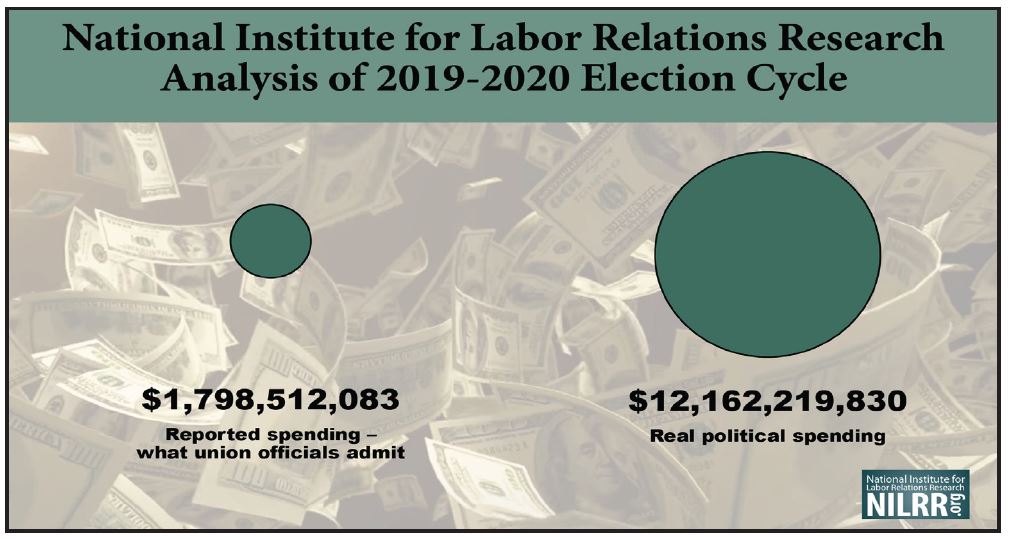
Coates’ case challenging illegal seizure of forced dues for politics comes after one analysis found that union officials likely spent over $12 billion on political activities during the 2019-2020 election cycle, far more than union officials publicly admit.
GALETON, PA – An employee of metal corporation Catalus hit a Communications Workers of America (CWA) union local this May with federal charges for illegally seizing full union dues from his paycheck, including dues for politics. Curtis Coates, a metal worker for Catalus, is receiving free legal aid from the National Right to Work Legal Defense Foundation.
Foundation attorneys filed Mr. Coates’ charges with National Labor Relations Board (NLRB) Region 6 in Pittsburgh, Pennsylvania. The Region is now investigating the charges.
CWA Union Officials Continue to Collect Dues from Worker, Despite Lack of Authorization
On October 20, 2021, Mr. Coates sent a message to CWA union officials declaring that he was resigning from his position as shop steward and terminating his union membership.
Because no union monopoly contract was in effect, under longstanding law, Coates should have been able to immediately cut all financial support for the CWA union which he no longer supports. The charges say a union official rebuffed both of Mr. Coates’ requests the next day, insisting that he had to remain both a union member and a shop steward.
From December 2021 to February 2022, Mr. Coates followed up with union officials several times via email and mail. He repeatedly asked when union officials would cease taking dues money from his paychecks and what process he had to follow to revoke his dues deduction authorization to stop money from being seized from his paychecks.
“To date, the Union has not responded . . . and dues and contributions continue to be deducted from his wages,” the charge reads. Because Pennsylvania currently lacks a Right to Work law, union officials can legally force employees to pay some union fees just to keep their jobs. However, those forced fees cannot be demanded when no union contract is in effect.
Further, even in states without Right to Work protections full union membership cannot be required. Additionally, under the U.S. Supreme Court’s decision in CWA v. Beck (1988), won by Foundation attorneys, forced fees are limited to only the part of union dues that union officials claim goes toward a union’s core “representational” functions and cannot be collected for other activities like union politics and lobbying.
Conflict of Interest: NLRB General Counsel is a Former CWA Union Official
Currently, the NLRB General Counsel is former CWA attorney Jennifer Abruzzo, who has expressed support for a number of policies which give union officials greater power to force workers into dues-paying union ranks, even without a vote. Foundation attorneys requested last year that Abruzzo recuse herself from a case involving an Oregon ABC cameraman who accused another CWA local of demanding illegal dues from him, including dues for politics.
Coates’ case represents another potential conflict of interest for Abruzzo, who has repeatedly sided with union officials against the rights of workers opposed to union affiliation.
“Mr. Coates’ right to refrain from funding union activities is being ignored by CWA union officials as they continue to unlawfully seize full union dues, which includes money used for union political activities,” commented National Right to Work Foundation Vice President Patrick Semmens. “This case shows why Pennsylvania workers need the protection of a Right to Work law to make all union payments strictly voluntary: So union bosses cannot so brazenly collect money to which they are not entitled under longstanding federal law.”
“Further, Mr. Coates’ case demonstrates the obvious conflict of interest that exists as Abruzzo, a former CWA lawyer, is charged with enforcing workers’ rights violated by her former CWA union colleagues,” Semmens added.
Worker Wins $18,000+ for Illegal Firing at IAM Union Bosses’ Behest
The following article is from the National Right to Work Legal Defense Foundation’s bi-monthly Foundation Action Newsletter, July/August 2022 edition. To view other editions of Foundation Action or to sign up for a free subscription, click here.
Union bosses got car dealership to illegally terminate employee for not joining union & paying full dues
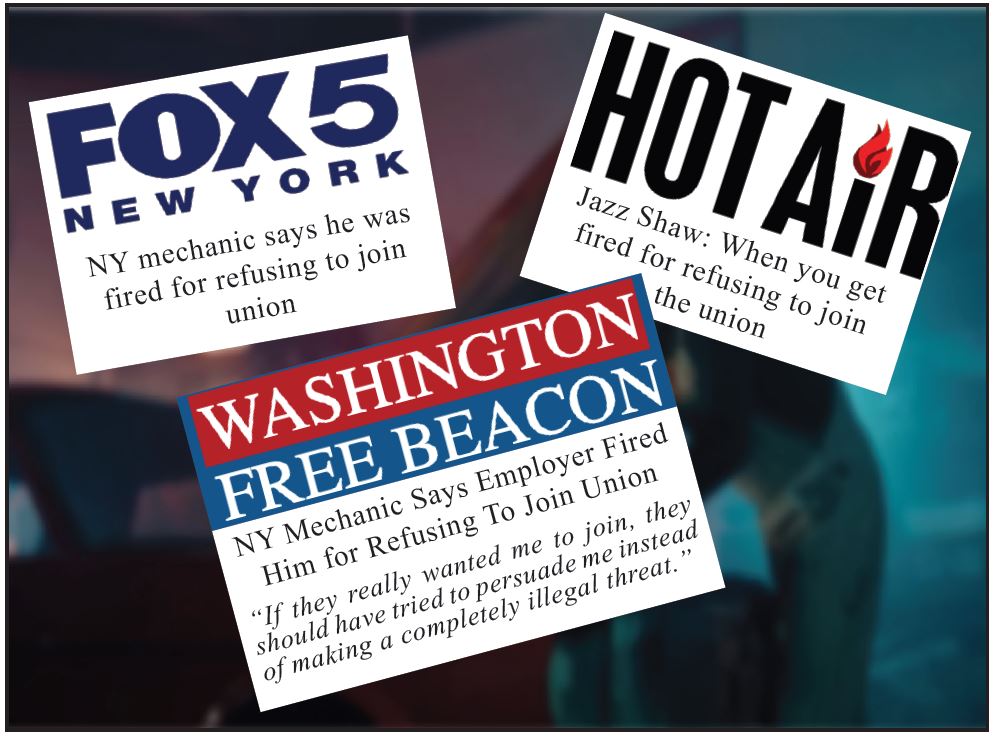
IAM officials illegally demanded full dues and membership from Remmington Duk on pain of discharge. The Foundation helped Duk file his case and got the word out about his struggle, and he has now won thousands in a settlement.
BUFFALO, NY – Fired New York car dealership employee Remmington Duk won more than $18,000 from International Association of Machinists and Aerospace Workers Automotive (IAM) Lodge 447 and Robert Basil Buick GMC. Mr. Duk filed federal charges at the National Labor Relations Board (NLRB) on January 31, 2022, against IAM Lodge 447 and his former employer with free legal representation from National Right to Work Foundation staff attorneys.
Rather than defend the illegal firing, both the car dealership and union hastily settled, paying Duk a combined $18,416 in addition to posting notices informing other workers that they cannot legally be fired for refusing to join the union and pay full union dues.
The charges stated that on October 7, 2021, IAM union officials demanded Mr. Duk sign paperwork authorizing union membership. Union officials threatened that if he did not sign, he would be terminated from the company. After Mr. Duk refused to sign the documents, Robert Basil Buick GMC fired him on October 12, 2021, at IAM officials’ behest.
IAM Settles for Nearly $17,000 for Union Officials’ Role in Illegal Firing
Because New York State lacks Right to Work protections for its private sector workers, employees can be fired for refusing to pay union fees. However, full membership and full union dues cannot legally be required. In contrast, in the 27 states currently with Right to Work laws on the books, union membership and all union financial support are strictly voluntary.
To make the federal unfair labor practice charges against the union go away, IAM officials paid Mr. Duk $16,916 and were required to post a notice in his workplace informing other workers of their right not to be union members. Union officials must also inform future new employees of that right. The union check payable to Mr. Duk reflects the amount of money he would have earned had he not been fired.
Car Dealership Pays Additional $1,500 for Union Instigated Firing
Mr. Duk also won a settlement from Robert Basil Buick GMC for $1,500 for firing him at the IAM union officials’ behest. In that settlement, Robert Basil Buick GMC also agreed to post a notice in the workplace for 60 days informing other workers of their right not to be union members, and to inform future new employees of that right.
“Understandably, Remmington Duk is no longer interested in returning to work for an employer who went along with IAM union officials’ illegal threat to have him fired for refusing union membership and dues payment, even though he was entitled to have his job back under federal law,” commented National Right to Work Foundation Vice President Patrick Semmens. This case is yet more evidence of why Empire State workers need the protection of a Right to Work law to make all union association strictly voluntary.”
National Right to Work Foundation Issues Special Legal Notice for Sysco Foods Employees Impacted by Union Strike Threats
Federal law protects workers’ legal right to rebuff union boss strike demand and continue working to support their families
Boston, MA (October 19, 2022) – The National Right to Work Legal Defense Foundation issued a special legal notice for Sysco Foods employees potentially affected by strikes being threatened by Teamsters union officials at Sysco Foods facilities across the nation. Media reports indicate that the strike began in Syracuse, New York, and while the strike at the Syracuse location reportedly ended, Teamsters boss-ordered strikes continue at other locations with potentially more occurring.
Because of Teamsters’ union monopoly power, these strikes will affect thousands of employees, impacting the lives of workers and their families across the nation. The Foundation’s legal notice informs workers of the rights union officials often conceal, including that workers have the right to continue working in order to support themselves and their families.
Importantly, the notice gives workers who want to exercise their right to work information on how to avoid fines and punishment that would likely be imposed by union officials.
“Teamster union officials have a decades-long history of abusing workers’ rights and disciplining and firing workers who do not kowtow to their dictates,” the legal notice reads. “Sysco workers may want to contact the National Right to Work Legal Defense Foundation to learn how they can avoid fines and other vicious union discipline for continuing to report to work to support themselves and their families.”
The Foundation’s special legal notice highlights workers’ rights to resign union membership and to revoke their union dues check-offs. With free legal assistance from National Right to Work Legal Defense Foundation staff attorneys, numerous workers have won cases challenging illegal Teamster union official actions.
In just the past few years, Foundation staff attorneys have assisted other Sysco Foods workers. With Foundation free legal aid, Alabama Sysco Foods worker Sulane Lowery filed charges against the Teamsters Local 612 challenging unlawful intimidation tactics after Lowery and others attempted to oust the Teamsters from their workplace. In another case filed with Foundation legal aid, a group of Sysco Oklahoma workers signed petitions seeking to remove the Teamsters eventually leading to their being free of unwanted so-called “representation” that they opposed.
The National Right to Work Foundation is the nation’s premier organization exclusively dedicated to providing free legal assistance to employee victims of forced unionism abuse. The full special notice can be found at https://www.nrtw.org/sysco-foods/
“For decades, the Foundation has provided free legal aid to workers to protect them from Big Labor’s coercive tactics, which are especially common during union boss-instigated strikes,” National Right to Work Foundation President Mark Mix said. “Workers always have the right to continue to work during a strike, despite what union officials may tell them or try to pressure them into doing, however there are important steps workers should take to protect themselves from vindictive union boss retaliation.”
Burlington Gold Bond Building Products Employees Decisively Vote Out Steelworkers Union Bosses
Vote to remove union comes as Pennsylvania employees fight legal battle against Steelworkers officials who trapped them under union power and disregarded votes
Burlington, NJ (October 18, 2022) – With free legal aid from the National Right to Work Legal Defense Foundation, Michael Cobourn and his coworkers at Gold Bond Building Products in Burlington, NJ, have successfully exercised their right to vote unwanted Steelworkers (USW) union officials out of their facility. The vote, held by the National Labor Relations Board (NLRB), was decisive, with nearly 70 percent of those participating in the election casting ballots to oust the union.
The vote follows Cobourn’s submission of a “decertification petition” signed by enough of his coworkers to prompt the NLRB to hold a vote on whether to remove the union. Although the NLRB’s decertification process is still prone to union boss-created roadblocks, Foundation-backed reforms the NLRB adopted in 2020 have made the decertification process somewhat easier.
Before the reforms, union officials could stop workers who had requested a decertification vote from casting ballots by filing so-called “blocking charges,” which often contain unverified and unrelated allegations of employer misconduct. The rule changes improved the process so employees can at least have a chance to vote before any allegations surrounding the election are handled.
Because New Jersey lacks Right to Work protections for its private sector employees, USW union officials had the power to force Cobourn and his colleagues to pay dues or fees to the union hierarchy just to stay employed. In contrast, in Right to Work states, union membership and all union financial support are the choice of each individual worker and can’t be required as a condition of employment.
“My coworkers and I were paying money to the Steelworkers union constantly, yet the union didn’t seem to be doing anything for us,” commented Mr. Cobourn. “I’m very grateful to the National Right to Work Foundation for helping us through the union decertification process, and we look forward to being free of the union’s control and influence.”
USW Union Officials in Pennsylvania Fight to Quash Similar Foundation-Backed Employee Effort
Cobourn’s victory comes as USW union officials are battling another employee-led decertification effort in Franklin, PA. There, the USW bosses claim at the NLRB that their rushed and unilateral approval of an unpopular union contract must block Latrobe Specialty Steel/Carpenter Technology employees’ right to vote the union out. In that case, USW officials hastily “ratified” the unpopular contract after getting wind that employees were seeking to remove the union. This was an apparent attempt to deploy the “contract bar,” a non-statutory restriction that blocks workers from voting out unions they oppose for up to three years after union officials sign a contract with management.
USW bosses, by their own admission, held a phony employee “vote” on the contract after it had already been covertly signed by them, tricking workers into thinking their votes would determine the fate of the contract. In sworn testimony, one union boss admitted that USW agents are free to execute contracts despite employees voting them down, and that union officials misled the Latrobe workers and ignored their votes against the contract “to protect the integrity of the union.”
The employee effort to oust the union is being led by Latrobe Specialty Steel employee Kerry Hunsberger, who obtained free legal aid from the National Right to Work Foundation. Foundation attorneys argue for her and her coworkers that the USW bosses’ ploy is “nothing more than a smokescreen, concocted by a desperate and unpopular Union to entrench itself and bar employee free choice” under federal law.
“USW officials openly admit that their modus operandi is to subordinate employee rights and interests to maintain union power, so we’re glad that that Mr. Cobourn and his coworkers were able to exercise their right to kick such union officials out of their workplace,” commented National Right to Work Foundation President Mark Mix. “Still, as the situation in Franklin, PA, demonstrates, more work needs to be done to safeguard employees’ right to decertify unions that they oppose.”
“The Foundation will continue to defend Ms. Hunsberger, her coworkers, and any other American employee who faces union-created roadblocks to exercising their right to eject the USW or any other union officials from their workplace,” added Mix.





